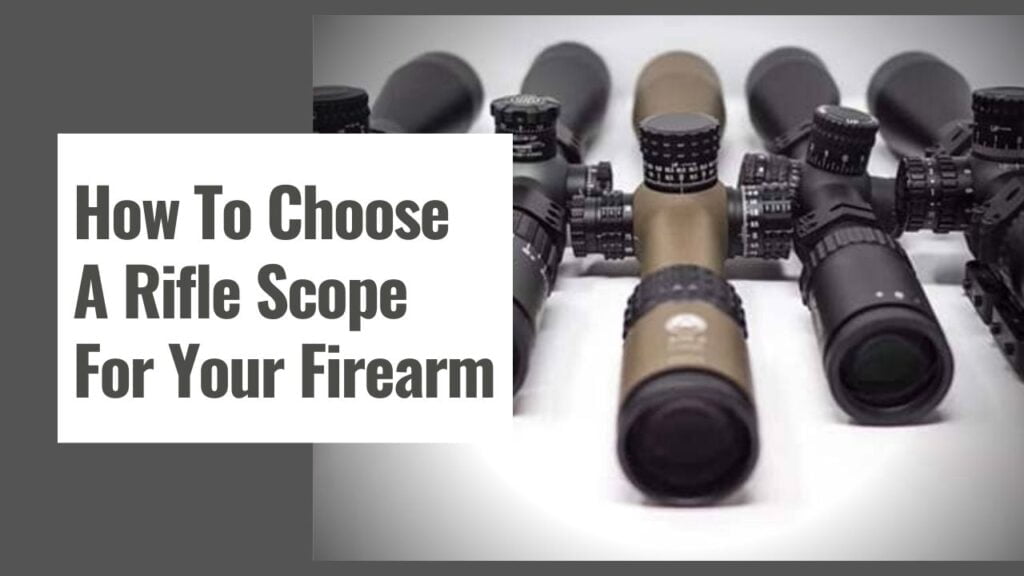
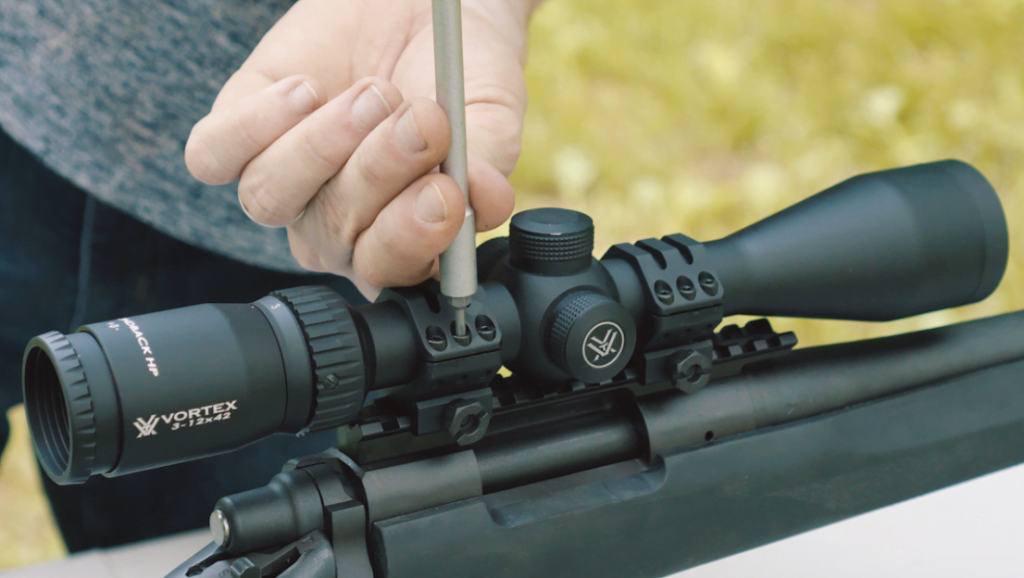
How To Choose A Rifle Scope For Your Firearm: A scope makes hunting, comfortable, and efficient. So, while buying one, you need to keep a few features in mind. Make sure that you have all those features in the scope and, if not, do not go for the rifle scope. So, what are those features, let’s discuss.
Lens
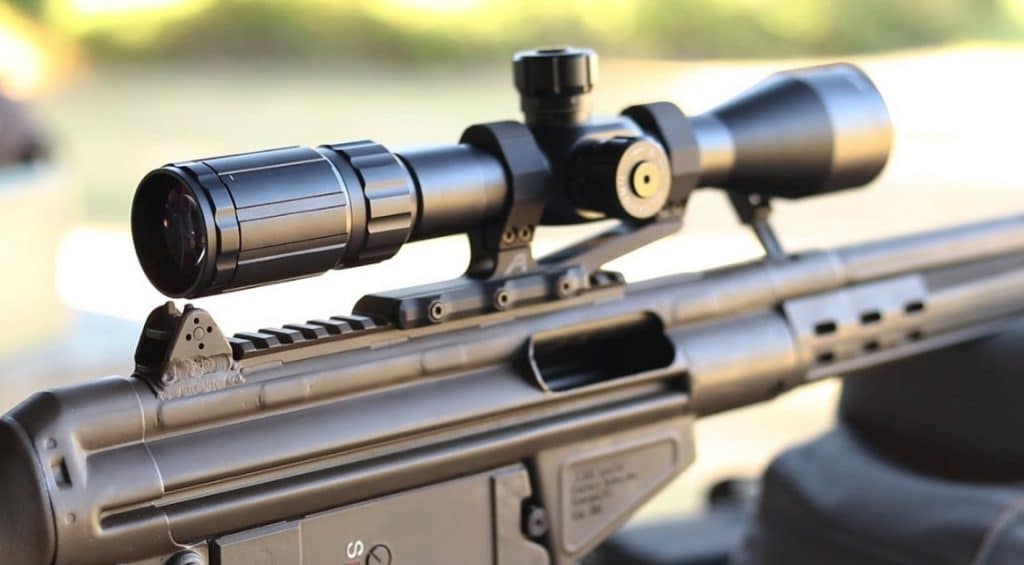
A rifle scope is all about lenses. All the other knobs and features are for the lenses only- the better the lens, the clearer the view. You have an objective lens at the front and an ocular lens at the back.
Make sure you look through the optic with your own eyes to see how clear the image is at first glance. The focus, magnifying, comes later. First, check the optics without any other adjustment.
Lens Coating
Lens coating deducts the glare and increases the sight. It helps to resist weather conditions. So the life of the scope extends.
Sturdy Tube
A one-inch aluminum tube is the perfect size of scope. It is not too big nor too small to hold. The aluminum tube will resist the heavy recoil and vigorous use of the hunters.
Objective Lens
The objective lens is for proper light transmission. A big objective lens will ensure a crisp, clear image. But that doesn’t mean you must buy the biggest one. It depends on what you need the scope for. For a high-power rifle scope, 30-44mm is apt.
Magnification
Make sure when you magnify only the object comes closer. Nothing else must change. The image must be as clear as it was before you magnified. The scope that has high magnification yet provides a crisp view is the one that you should purchase for your firearm. A magnification of 5-12x is enough for any hunting activities at any distance.
Reticle
There are three reticles- duplex, mil-dot, and BDC. All three have different purposes, but the BDC reticle is the best among the three. It is able to gauge the bullet drop. Then, you have a wire reticle and a glass etched reticle too. If you have a high budget, then the latter is the best choice for you.
Focal Plane
Among the First and Second Focal Plane, SFP in a rifle scope will make your job easier. As the size of the reticle will be the same if you magnify the scope. That is not the case in FFP as the reticle changes when you magnify.
Turrets
Windage and elevation adjust the sight. Without the turrets, you cannot move the reticles right and left or up and down. So, make sure you buy a rifle scope that has windage and elevation turrets. You need both on a rifle scope, not just one.
Parallax Adjustment
Correcting parallax is tough but is vital for accurate targeting. The focal plane of the reticle and target needs to be in the same line. Or, the reticle will not stay when you move your head and eyes. There are a few ways to correct parallax. AO and side focus is the most used.
When you have the above features in your rifle scope, then you know you have got the best one. These will ensure that you can use it in any hunting activities.
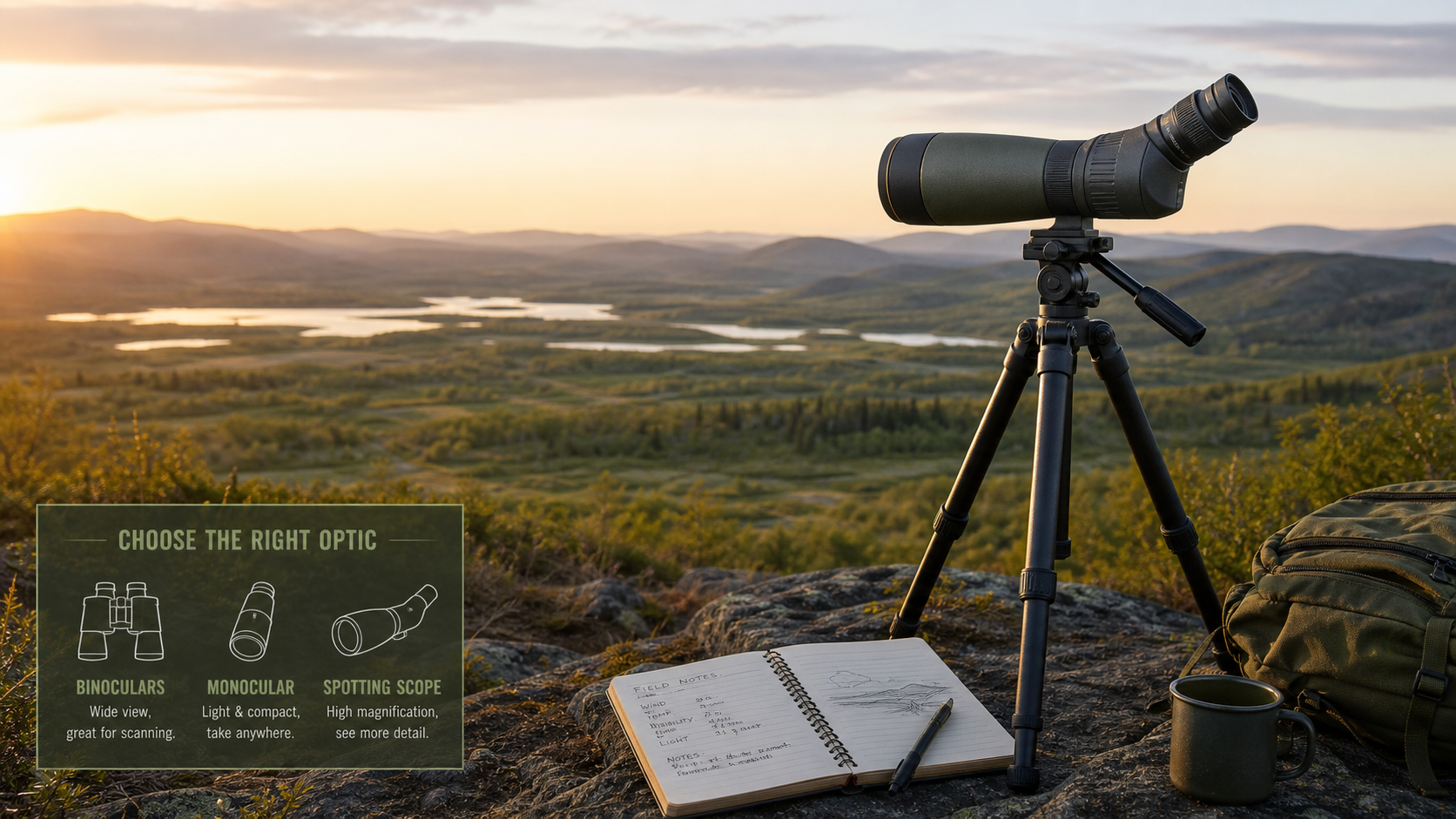
A spotting scope is worth choosing when you need more magnification and detail than handheld binoculars can comfortably provide. It is best for fixed-position viewing: watching distant wildlife, studying birds across open water, checking targets at the range, or glassing far terrain from a stable setup. The tradeoff is simple: a spotting scope gives reach, but it needs a tripod and is slower to use than binoculars or a monocular.
This guide explains seven practical reasons to choose a spotting scope, where it falls short, and how to decide whether binoculars or a monocular would be the better fit. It is an educational buying-support guide, not a product ranking.
Choose a spotting scope when distance and detail matter more than portability and speed. If you mostly scan while walking, binoculars are usually easier. If you want the smallest possible optic, a monocular is simpler. If you set up in one place and study distant subjects, a spotting scope earns its place.
A spotting scope is strongest when you can set up on a tripod and study distant detail from one position.
1. Longer-Distance Observation
The first reason to choose a spotting scope is reach. Most spotting scopes offer much higher magnification than common handheld binoculars, which helps when the subject is far away and mostly stationary. That extra magnification can make terrain features, target impacts, bird markings, and distant movement easier to evaluate.
More magnification is not automatically better, though. High power also narrows field of view and magnifies shake. That is why a spotting scope should be treated as a tripod-supported tool, not a handheld replacement for binoculars.
2. More Detail for Wildlife and Birds
For wildlife watching and birding, detail is often the real advantage. A spotting scope can help you study plumage, body shape, antler structure, or distant movement after you have already found the subject. Birding organizations such as Audubon explain this binocular-plus-scope workflow well: binoculars help you find, and the scope helps you study.
Use Lower Power First
A good habit is to begin at the lower end of the zoom range, find the subject, focus carefully, and then increase magnification only as needed. Starting too high can make the view narrow and frustrating.
3. Easier Range and Target Observation
At a shooting range, a spotting scope can help you observe targets from the bench without walking downrange every time. This can save time during a session and reduce interruptions when the range rules allow observation from the firing line. It is still only an observation tool; it does not change safe range conduct.
For range use, tripod stability, focus control, and eye comfort matter as much as raw magnification. A shaky or uncomfortable scope may look powerful on paper but feel tiring in real practice.
4. Tripod Stability for Long Viewing Sessions
A tripod is not an optional luxury for most spotting-scope use. High magnification needs support. A tripod steadies the image, keeps the optic at a comfortable height, and reduces fatigue during longer glassing sessions. Without support, the high end of the zoom range is usually too shaky to use well.
Tripod Weight Is Part of the System
When comparing spotting scopes, remember to count the tripod in your carry weight and setup time. A compact scope on a poor tripod can be less useful than a slightly heavier setup that stays steady in wind.
5. Angled vs Straight Viewing Options
Spotting scopes commonly come in angled and straight bodies. Angled scopes can be comfortable for sharing, upward viewing, and lower tripod heights. Straight scopes can feel faster to aim and may be easier from vehicles, benches, or higher positions.
Neither design is universally better. The better choice depends on your viewing position, body size, terrain, and whether several people will share the optic. If possible, try both styles before buying.
6. Honest Limits Compared With Binoculars
A spotting scope is not the best tool for every viewing job. It is slower to deploy, less convenient while walking, and narrower in field of view than binoculars. If the subject is moving quickly or close enough for handheld glass, binoculars are usually faster and more natural.
Low-light performance also depends on more than magnification. Objective size, exit pupil, glass quality, coatings, and the magnification setting all affect brightness. Nikon’s optics guide explains field of view, which is one of the key tradeoffs as magnification increases.
7. A Clearer Decision Before You Buy
The final reason to think about a spotting scope is decision clarity. If your main problem is distant detail from one spot, a scope makes sense. If your main problem is scanning while moving, binoculars make more sense. If your main problem is pocketable convenience, a monocular may be enough.
Before buying, answer four questions: how far you usually observe, whether subjects are stationary or moving, whether you are willing to carry a tripod, and whether you need shared viewing. Those answers matter more than chasing the highest zoom number.
Spotting Scope vs Binoculars vs Monocular
Optic
Best for
Main strength
Main tradeoff
Spotting scope
Fixed-position distant viewing
Highest detail at distance
Needs tripod and setup time
Binoculars
Walking, scanning, and general field use
Fast, wide, comfortable two-eye view
Lower magnification than a scope
Monocular
Minimal carry and quick checks
Small and simple
Less comfortable for long viewing
If you are still comparing smaller optics, our monocular vs binocular guide explains that decision in more detail. If you decide binoculars are the better route, our Bushnell binoculars guide gives a product-focused next step.
Frequently Asked Questions
What is the main advantage of a spotting scope?
The main advantage is higher magnification for distant, detailed viewing from a stable position. A spotting scope helps when binoculars do not provide enough reach.
Should I choose a spotting scope or binoculars?
Choose binoculars for fast handheld scanning and moving through the field. Choose a spotting scope for tripod-supported viewing when you want to study distant subjects in detail.
Do I need a tripod for a spotting scope?
In most real use, yes. High magnification magnifies shake, so a tripod is usually necessary for a steady, comfortable view.
Are angled or straight spotting scopes better?
Neither is always better. Angled scopes are comfortable for sharing and upward viewing. Straight scopes can be quicker to aim and easier from certain benches, vehicles, or elevated positions.
Are spotting scopes good in low light?
Some are, but not automatically. Low-light performance depends on objective size, exit pupil, glass quality, coatings, and magnification setting, not just the fact that it is a spotting scope.
Final Recommendation
Choose a spotting scope when you regularly observe distant, mostly stationary subjects from one position and are willing to use a tripod. Choose binoculars or a monocular when speed, movement, and easy carry matter more. The best optic is the one that matches the way you actually look, move, and set up outside.
308 rifle is the best for big games, hunting, and target shooting. For a hunter or target shooter, only the rifle is not enough. He needs a scope to make targeting easy.
For improving the overall performance in hunting or any shooting competition, a pair of durable 308 and high-quality scope is enough. Now, not all are for 308.
So if you are wondering how you can choose the perfect one for your 308, then you are going to get your answer here.
There are quite a few things you will have to consider in scope for your 308 rifles. Lacking any of these can hamper the performance. What they are, let us check them out.
Use
You will have to know for what purpose you are going to use the 308. It can be for tactical purposes, big games, target shooting, long-range shooting, and more. The purpose of the use of your rifle decides how your scope should be.
Sturdy
The purpose might be any big game or paper target, but your scope has to be sturdy. For that, you need a scope that is made of quality materials.
The best is the aluminum tube with a fully multi-coated lens scope. The tube will resist weather, moisture, and vigorous use like no other. And the lens will withstand the toughest of use without a scratch on them.
Size
Do not go overboard with the size of the scope. A large tube doesn’t ensure to work best for your rifle. Most importantly, not for you to handle as well. With the size, the weight comes automatically.
Consider that as well. Choose the scope, depending on the size of the 308. Also, choose it considering your handling capacity. If you fail to pick the rifle due to the weight and find it hard to hold it for long, then even the best scope is useless.
Budget
We often have the wrong idea about a product’s price and quality going hand in hand. We think that when the product is expensive, it has to be high-quality. But keep in mind that there are makers of scope who want to reach to the limited budget consumers as well.
They add all the necessary features yet charge an amount that you can afford. The only thing you need to do here is to research for the one that matches your budget and also has all the features you need.
Shooting Range
Your scope must cover a reasonable range. In hunting or target shooting, it is essential. When you know how far you are going to target, buying the scope becomes easy. Buy the one that covers the distance that you want to shoot at, 100, 800 yards, or above.
Easy To Use
A scope is not an easy device. So go for the ones you think are going to be easy to use. There are windage, elevation, zeroing, magnification, and so much more. If the scope doesn’t make it easy for you, you do not need it. The best one does all the hard work with a few clicks.
You can add your own requirements to that as well. But make sure the one you are buying plays its part in improving your performance.
How to Clean Binoculars: When you have binoculars, dust, fungus on them are inevitable. You can try to keep it clean, but it gets dirt and spores on it. A good pair of binoculars can cost you a good amount of money. So, to make it last, with a clear view, of course, you have to maintain it.
We have all made the mistake of cleaning lenses with a random dry cloth. Sometimes damp as well. We might have rubbed the lenses with dish soap or detergent. But instead of cleaning it, we have distorted the outer coating only. Here, we are going to tell you what you should do to clean the binoculars.
First Thing First
Now the first thing you should strictly follow is not to clean the binocular at all. Trust us when we say binoculars do not need frequent cleaning. They remain best without it. Keep it as it is. Instead of cleaning, it requires maintenance. Use it with utmost care.
Please don’t throw it in a random bag without the lens cover or protective case and airtight bag. By not putting it in the open or with other things, you are ultimately increasing the life of the binoculars. If still, you need to clean it, then let us tell you about the tools that can save you from ruining your favorite pair.
Tools
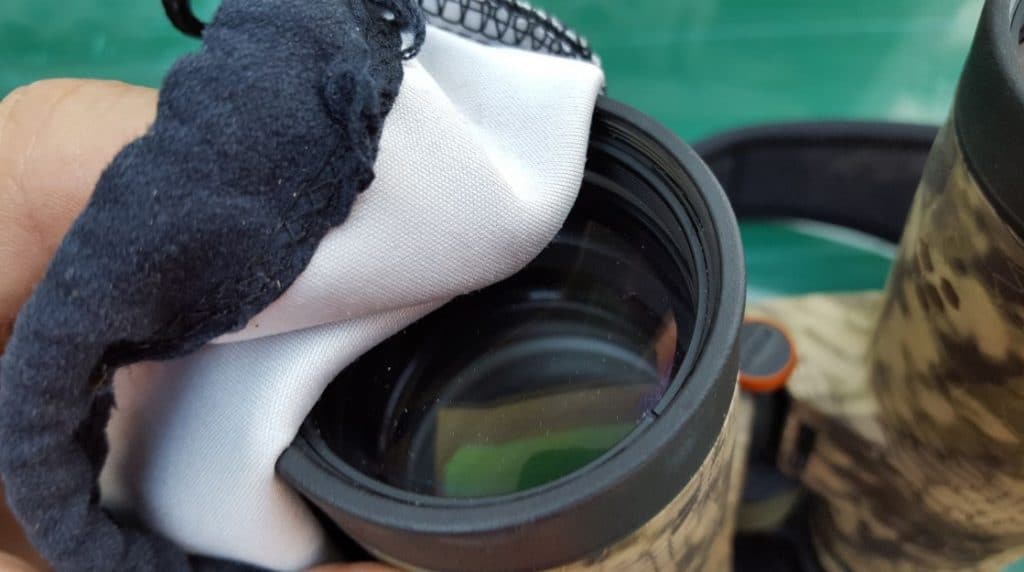
Cleaning the binoculars requires proper cleaning tools and kits. You need a microfiber cloth, mostly included with the binocular itself, a fine bristled lens brush, and also a lens cleaning solution. There are lens pens and canned air available, as well. They work wonders in cleaning binoculars.
Clean It The Right Way
If it has dust, dirt on it, do not blow with your breath. Use a fine bristled brush to clean the dust particles from the sides and corners. Wipe the lenses softly with the cloth. Sometimes, fine soft bristles might not clean it thoroughly. In those cases, go for the dust blower or canned air.
Now, there can be some obstinate debris, which is hard to clean with a brush or cloth. Use the cleaning solution. Either spray the solution on the binoculars and wipe it with the cloth. Or you can dip the brush in the solution and use that to clean it.
For fungus and spores, solution and cloth are enough. But try to store it in a way that can keep it away from those. To clean the foggy lens, wipe it with the cloth and let it dry in the air.
Clean The Inside
Cleaning it inside is tricky. To clean it inside, you will have to dismantle it. That’s a bad idea. So, avoid dismantling. But if you are compelled to clean the inside, then do it carefully. Use the right-sized screwdriver, unscrew the screws slowly. After you finish, screw them again the same way.
Use the solution and a microfiber cloth, nothing else. The focus mechanism is beneath the cap. Remove the cap to clean it, and to clean the prism, remove the eyepieces and cover plate. Unscrew the bottom plate and clean the objective lenses.
Always remember, there is a reason for binoculars coming with their own cleaning manual and cloth. Make sure you use and follow them well.
How to Clean Your Rifle Scope Without Damaging the Lens: Experts always tell you not to clean binoculars or scope too often. Trying to keep it clean by protecting it from dust and dirt is the best way to increase its life. But the purpose of such tools makes them dirty.
Foggy, muddy optics, they are pretty common. The reason, you are using it in hunting. Moisture, debris, all will be there on your lens. So, you have a full-on process of cleaning it, that too, without damaging it.
Tools
You have some standard tools for cleaning lenses. A microfiber cloth, soft bristle brush, canned air, and the right lens cleaning solution are enough. If you have these four, you can clean any lens without damaging them.
Primary Step
The first step is always simple. Make yourself understand that the sleeve or hem of your T-shirt is not for cleaning the lens. Blowing air from the mouth and wiping the lens, forget that process. We all do it and then wonder from where the lens of the scope got that tiny scratch.
Instead, analyze the type of dirt on your lens. If it is dry, use a soft bristle brush or canned air. Keep in mind; you have both ocular and objective lenses to clean. If one is clean, then keep it that way. Only clean the lens, if needed.
Second Step
If it is mud on the lens, the direct use of canned air will not work. Always dry the moisture on the lens before cleaning it. Mud or similar dirt with moisture needs air drying.
Never take a step ahead unless you are sure about it being dry. Then, use the canned air or microfiber cloth to clean it. Do not rub the lens with the microfiber cloth, just pat or dab. If it is not working, try the third step.
Third Step
Use the canned air and soft brush to clean the lens when the cloth is not enough to clean it. A soft brush will not give you the chance of going harsh on the lens by rubbing it.
So the canned air is doing its job the same way. But instead of the cloth, now, you will have to use the brush on the stubborn specks of dirt. Clean the large particles with the brush, and the canned air will tackle the rest.
Fourth Step
This step is for those who are really into absent-minded use of a scope. It is the final way to clean the lens. Using a solution to clean a lens is only needed when there are oil or fingerprints on it. So, now you know why we talked about absent-mindedness.
Always use a high-quality cleaning solution. The low quality of the solution will itself damage the lens. First, make sure to clean the particles with canned air. Then, dip the brush or microfiber cloth in the solution and clean the lens. When you are using the microfiber cloth, make sure to rub it in a circular motion gently.
Final Thoughts
So, it is all about the right quality tools and avoiding harshness. Be it harsh rubbing or harsh chemicals. If you are careful and do not clean the lens too often, it will remain undamaged for years.
What is Eye Relief & How Does It Affect Scopes & Rangefinders: Scope, eye relief, and rangefinders, these are some words that are common for a target shooter or hunter. Eye relief is a prominent feature in any scope and rangefinder.
At first, though, it might seem to be a not so important one. But you realize its importance only when you have to look through the lens. So, let’s talk about eye relief and explain how it affects the scope and rangefinders.
Definition
Eye relief is the distance between your eyes and the eyepiece of the scope. A good range in eye relief ensures your eye comfort, keeps your eyes safe in case of rifle shots, and offers a vast field of view.
If you are new to the scope, you might think the closer your pupil is to the eyepiece, the view will be better, and your eyes will not strain.
But we all know how, when we bring a book to close to our eyes, we see blurry images. So eye relief is the exact distance that helps you to view things clearly.
Effects On Scopes And Rangefinders
An aiming device called a scope brings things at a longer distance closer, and a rangefinder measures distance. Hunters and target shooters greatly need them for a clear view of a long distance.
You have different types of eye relief. Eye relief that can be adjusted depending on the need, short eye relief as well as long eye relief. An adjustable one is good for everyone. It comes handy in many cases, with the right kind of eyecups. Short eye reliefs are for people who don’t wear glasses.
So, if you wear glasses, long eye relief is the best for you. More than short eye relief, the longer one is preferred by maximum people, even those who don’t wear glasses. They are more comfortable to the eyes.
3-3 1/2 inches is the standard eye relief. But in our opinion, a good 4-4 1/2 inches is best in every way. So, as you see, we are pretty much inclining towards longer eye relief scopes. Keep in mind, depending on the brand, the eye relief changes. Sometimes 4-inch eye relief is considered long and 6-inch shorter.
Long-distance shooting needs powerful rifles that produce heavy recoil. So, it is better to have a good distance between your eyes and eyepiece.
High magnification of a scope can affect the field of view and eye relief. So, when you have long eye relief, even the high magnification can cut just an inch from that. So, it remains comfortable for your eyes.
It is true; a longer eye relief affects light transmission. But that is still manageable than losing sight in the field of view or harming eyes with heavy recoil.
A rangefinder does a similar job. You need a clear view to gauge the distance. So, shorter eye relief is going to affect your sight. Instead, have a long one.
Just a 4 inches eye relief is not sufficient. The best is to add high-quality optics for a clear view as well. It is a combo that gives you the optimum clarity in any device with optics.
What Do I Need to Know When Buying Binoculars: Are you aware that having a pair of binoculars can open up a new world of activities and recreation? Well, binoculars can help you view faraway objects with ease and clarity. But not all sets of binoculars are created equal.
When buying a binocular, there are certain aspects to consider, such as magnification power, lens size, resolution or field of view, etc. You should also pay attention to the type of prism used in your pair – Porro Prisms or Roof Prisms – as these impact the cost and quality of the product.
Buying binoculars might seem overwhelming, given all the options available in the market today. Doing adequate research in advance is essential to make an informed purchase decision. In this article, we’ll look at some features to consider and look for when buying binoculars so that you find the perfect match for your needs.
Magnification and Objective Lens Size
Magnification and objective lens size are important factors to consider for binoculars. Generally speaking, the higher the magnification, the more powerful the binoculars will be. When it comes to objective lens size, larger lenses tend to allow more light into the binoculars and result in brighter images. Generally speaking, an 8x or 10x magnification with a 40mm or 42mm objective lens is a good option for most users looking for a well-balanced set of binoculars.
Field of View
When choosing binoculars, the field of view (FOV) is an important factor to consider. The FOV is the width of the area that you can see when looking through your binoculars. Generally, a wider FOV is ideal, but it also depends on the specific use case. For example, if you’re looking for something for stargazing, you’ll want a larger FOV so that you can take in more of the night sky at one time. On the other hand, if you’re using them for long-range birdwatching, then you’ll likely need a narrower FOV, as this allows for greater magnification and detail in your images. Before choosing binoculars, be sure to read up on all their specifications to ensure that they meet your needs in terms of field of view.
Exit Pupil
When selecting binoculars, one of the key factors you should consider is the size of the exit pupil. The exit pupil is a measure of how large the light-gathering diameter is of the binoculars’ eyepieces, and it can affect your viewing experience. The larger the exit pupil, the better your view will be in low-light conditions. Normally, an exit pupil size between 4mm and 7mm is considered ideal for most binoculars – however, this may vary based on your needs and preferences. When selecting your binoculars, be sure to check that they meet those criteria for optimal results!
Close Focus Distance
You should pay close attention to the focus distance of the binoculars. This is the distance at which you can bring objects into clear focus. Most binoculars have a minimum focusing distance of five feet, while some will be able to focus on objects starting from as close as three feet or less. If you want to be able to use your binoculars at very close distances, such as birding recon missions, then it is worth investing in a pair that can focus on objects starting from two feet or less.
Eye Relief
Choosing the right binoculars with the right amount of eye relief is important to ensure comfortable and clear viewing. Eye relief is the distance between the eyepiece and your eye when looking through the lenses. Typically, a longer eye relief allows for more comfortable viewing for people who wear glasses or are far-sighted. If you wear glasses and plan to use binoculars, look for models that have an eye relief of at least 17mm or greater. Alternatively, a lesser amount of eye relief can work if you do not wear glasses and do not require very long-range views. Be sure to check product specifications before buying to ensure your binoculars have enough eye relief for your needs.
Durability and Waterproofing
Durability and waterproofing are key considerations for picking any binoculars. You want to make sure that the binoculars can withstand regular use and exposure to the elements. It’s important to read reviews and look for lenses that have been certified as waterproof or weather-resistant at a minimum. Make sure to check what materials the binocular housing is made out of – aluminum or polycarbonate are great options for durability and weatherization. All-metal housings offer the most in terms of protection from both impacts and moisture. Still, they may be heavier than other types of making materials. Consider other features like rubber coatings for shock resistance and a nitrogen-filled interior for fog proofing in extreme conditions if your uses call for these extra touches.
Image Stabilization
Image stabilization for binoculars is an important feature that can help you better view long-distance objects. There are two main types of image stabilization for binoculars: mechanical and digital. Mechanical image stabilization uses internal components to keep the images in each lens steady while digital image stabilization uses powerful processors to analyze tiny movements in real-time and adjust the lenses accordingly. Both types of image stabilization can provide a clearer, more accurate view of your subject, but they have different price points and benefits. Consider your budget and intended use before choosing between them.
Brand Reputation and Warranty
Brand reputation and warranty are essential factors to consider when accepting binoculars. In terms of brand reputation, look for companies that have a good track record, strong reviews from customers, and a long history of making quality optics. Also, consider the company’s warranty. A good warranty provides you with peace of mind that your purchase is covered in case of any product defects or other issues. Be sure to read the fine print carefully, as different manufacturers may have additional warranties and exclusions. Finally, remember that higher-end products typically come with better warranties than budget models.
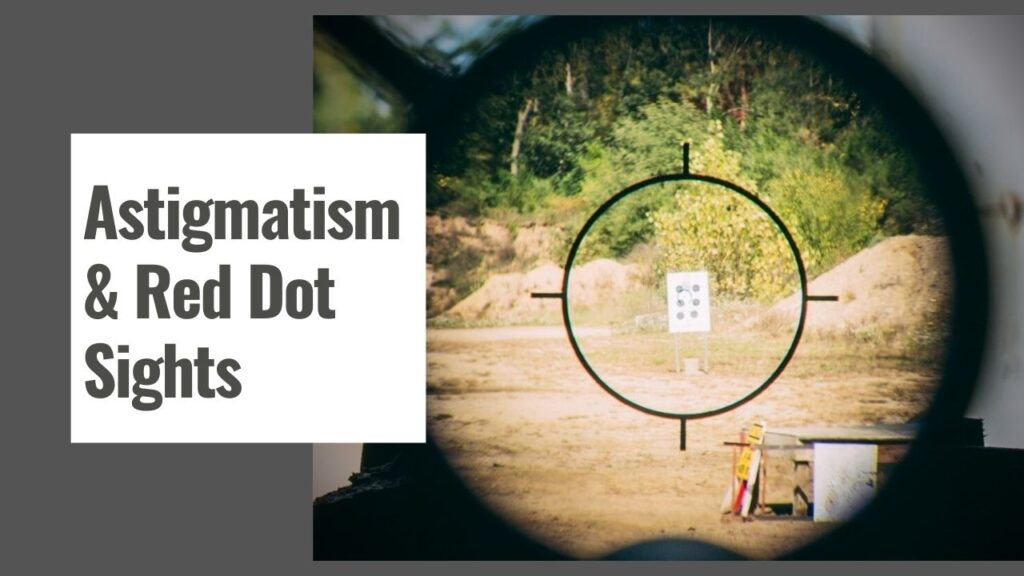
Astigmatism & Red Dot Sights: Many of us might not be familiar with astigmatism. Archers find it tough to target if they have astigmatism. Many a time, they do not even know they have an issue of vision. They think the red dot sights they are using are defective. So, if you are into archery and are facing blurry vision, you need to know a bit about astigmatism.
Astigmatism
Astigmatism is an eye condition, an imperfection in the curvature shape of the cornea. When you have it, the vision blurs. The eyes cannot focus light at a single focal point. So, at every distance, you have blurred vision.
It is the biggest hindrance to an archer. You look through your red dot sight, and you cannot see it properly. You mistake it as an issue with the device. Have a thought, and think if it is your eyes or a defect in the sight.
Issues with Red Dot
We have stated earlier that many archers don’t even know they have an eye problem. The moment they look through the red dot, they can’t see things clearly. Instead, they see a blurry dot or a double dot.
The dot might seem like a comma, star, or apostrophe. Or you see a smeared dot or a clutch of dots. As they are seeing everything pretty clear most of the time, they take it as an issue in the red dot sight. However, it is not the case.
Recognizing Astigmatism
There are a few ways to know you have astigmatism. Recognizing the issue is pretty easy. You can try a few things to see if you have astigmatism or not. Tell someone else to look through the sight.
If that someone sees a bright red dot instead of a weird one, then you need to contact an eye specialist. You can also use a camera. Click a picture of the dot. If it’s a clear dot, then you have eye issues.
Rotate the sight clockwise or counterclockwise. If the red dot doesn’t move and stays in the same position, then you know you have astigmatism.
Overcoming The Issue
It is simple. Contact an ophthalmologist. Upon diagnosed with astigmatism, he will either give you corrected eyeglasses or lens or suggest orthokeratology to reshape the curvature. If it is a severe problem, then you will have to get eye surgery done.
You can also try sights with green illumination as you have issues with red ones. Wearing polarized sunglasses is another way to tackle the problem.
The next you can do is use the lowest of brightness. The more the intensity of the light, the larger you will face problems seeing the dot through the sight.
Best Red Dots for Astigmatism
Now the question arises, what the best red dot sights are. And the answer is holographic and prismatic sights. These are the best for tackling blurry vision due to astigmatism. Now, let’s explain the two types a bit.
Holographic Sights
Such sights create an illuminated pattern in a dot or circular form. The laser bounces off the holographic grate. So, you see a floating holographic image over the target. The grid works like a polarizing filler and solves the issue of a blurred or strange red dot.
Prismatic Sights
The prismatic sights use prisms to focus instead of multiple lenses. Very few lenses and mirror is the reason that it is an excellent option for astigmatism patient.
Instead of taking the matter lightly, contact a doctor when you recognize you might have astigmatism. It is not a matter to ignore, because nurturing will make it severe.
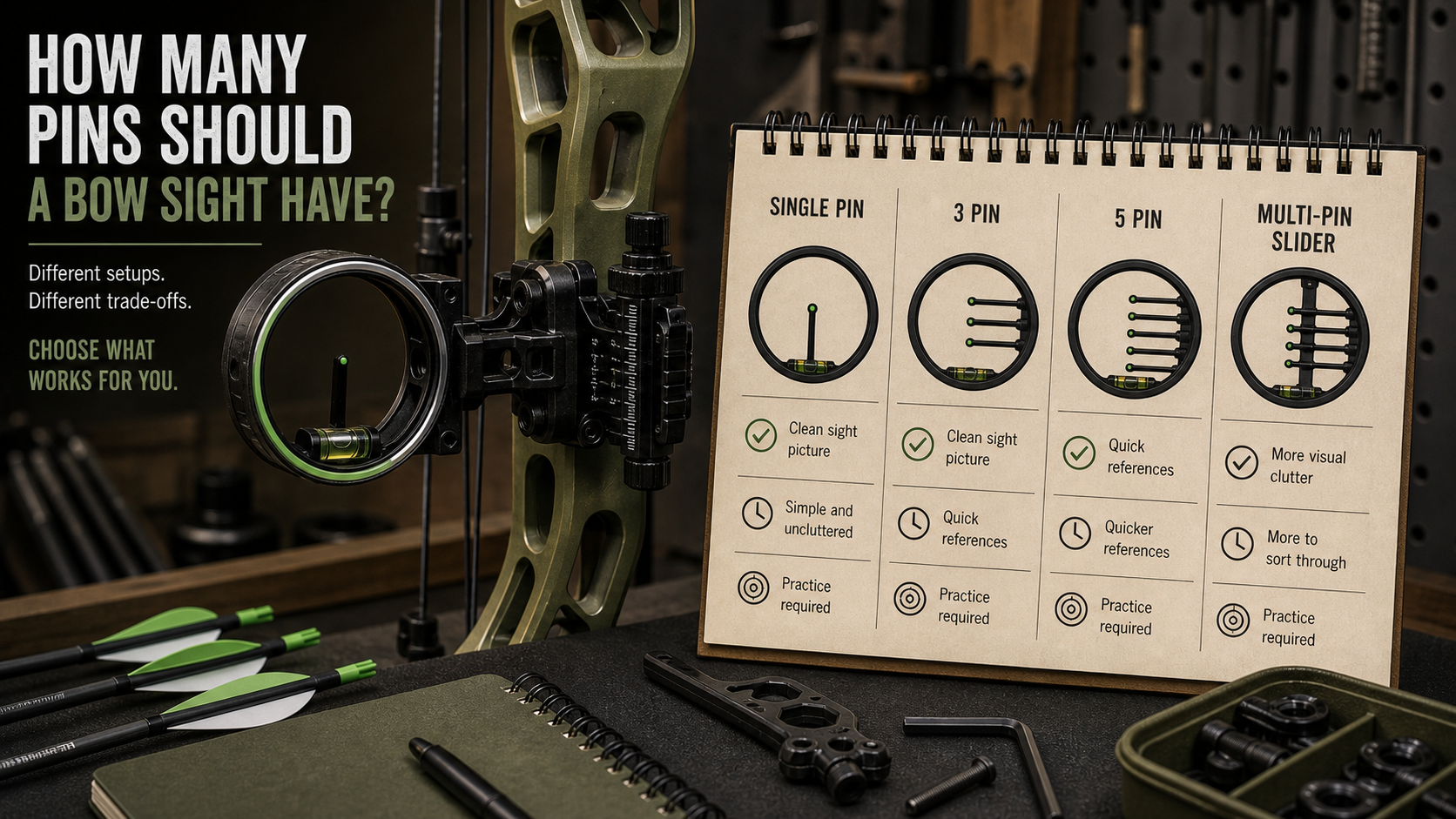
How many pins a bow sight should have depends on how you shoot, not on a single universal answer. Common setups include one adjustable pin, three fixed pins, five fixed pins, and hybrid multi-pin slider sights. Each setup is a tradeoff between a clean sight picture and quick reference points.
More pins do not make a bow more accurate by themselves. Pins only give aiming references for distances you have sighted in and practiced. The best choice is the setup you can use cleanly, safely, and consistently under real range conditions.
Pin count is a tradeoff between more aiming references and a cleaner sight picture.
Single-pin sights are clean but usually require adjustment for distance changes.
Three-pin and five-pin sights give fixed references but add visual clutter.
Competition setups may be limited by event rules.
Practice and safe sight-in matter more than the number of pins.
Pin count is about tradeoffs: clean sight picture, quick references, visual clutter, and practice needs.
Single-Pin, Three-Pin, Five-Pin, and More
Bow sight pins are the small aiming references inside the sight housing. A single-pin sight gives one uncluttered reference and is often adjustable. A three-pin sight gives a few fixed references. A five-pin sight gives more fixed references. Some sights combine fixed pins with a movable slider.
Single-Pin Sights
A single-pin sight keeps the view simple. That can help archers who dislike clutter or who shoot known distances. The tradeoff is that changing distance usually means adjusting the pin, so the archer must range, dial, and confirm the setting before relying on it.
Three-Pin and Five-Pin Sights
Three-pin and five-pin sights give fixed references that do not require dialing between preset distances. Many hunters like that speed. The tradeoff is more visual information inside the sight housing, and the archer must practice enough to choose the correct pin without hesitation.
Why More Pins Are Not Always Better
More pins add references, not skill. If your anchor, grip, release, and distance judgment are inconsistent, extra pins will not fix that. More pins can also make the sight picture busier, especially in low light, shaded cover, or when the target is small.
The better question is not “what is the most pins I can use?” It is “what is the cleanest setup that covers the distances I have proven in practice?” If a simpler sight helps you execute better shots, simpler is not a downgrade.
Single Pin vs Multi Pin Bow Sight
Setup
Sight picture
Strength
Tradeoff
Often suited to
Single adjustable pin
Cleanest
Simple aiming reference
Requires adjustment when distance changes
Known-distance shooting and patient setups
3-pin fixed
Moderately clean
Quick references without much clutter
Fewer fixed holds
General hunting and beginner setups
5-pin fixed
Busier
More preset references
More visual clutter
Varied-distance hunting after practice
Multi-pin slider
Mixed
Fixed holds plus adjustment range
More to manage
Experienced archers wanting flexibility
Hunting vs Target Setup
Hunting and target archery often push pin choice in different directions. Hunters may prefer fixed pins because animal movement and changing distance can make dialing slower. Target and 3D archers may prefer a cleaner single-pin or movable setup when they have time to set the sight and focus on precision.
Pin count is only one part of the sight picture. Pin spacing, pin diameter, fiber brightness, housing size, and peep alignment all affect how easy the sight is to use. Two five-pin sights can feel very different if one has brighter fibers, finer pins, or a cleaner housing.
Avoid Universal Yardage Presets
Do not copy someone else’s yardage pattern as a rule. Your bow speed, arrow weight, peep height, anchor, and sight radius all affect pin spacing. Sight in your own bow under safe range conditions and keep practice within distances you have proven.
How to Choose Without Guessing
List the real distances you practice, hunt, or compete at.
Decide whether you usually have time to adjust a sight.
Choose the cleanest sight picture that still covers your proven distances.
Check event rules if competition matters.
Sight in carefully and practice before relying on the setup.
For a beginner, a three-pin fixed sight or a single adjustable pin often keeps the learning curve manageable. If your setup feels too busy, simplify. If you are missing needed references after plenty of practice, then consider adding pins or moving to a hybrid sight.
Write down your sight-in settings and keep them with your bow notes. If you change arrow weight, draw weight, peep height, release style, or anchor point, recheck the sight instead of assuming the old marks still match. A small setup change can alter how the pins line up, even when the sight itself has not moved.
For fixed-pin sights, discipline matters as much as the hardware. Practice identifying the correct pin without rushing, and learn when the sight picture feels too crowded for you. If you hesitate because the housing is busy, fewer pins or a cleaner setup may help more than adding more references.
Also think about the people who may help you set up the bow. A coach, shop tech, or experienced archer can watch your form while you sight in, which is hard to diagnose alone. Better feedback often matters more than buying a more complicated sight.
Many beginners do well with a three-pin fixed sight or a single adjustable pin. Both keep the sight picture manageable while the archer builds form, range judgment, and confidence with the setup.
Is a single-pin or multi-pin sight better for hunting?
Neither is always better. Multi-pin sights provide quick fixed references. Single-pin sights provide a cleaner view but usually need adjustment when distance changes.
Do more pins make a bow more accurate?
No. More pins add aiming references, not accuracy by themselves. Accuracy comes from form, tuning, sight-in work, and practice.
What is a pin gap on a bow sight?
A pin gap is the vertical space between fixed pins. It reflects your own bow and arrow setup after sight-in, so it should not be copied from another archer.
Do competition rules limit bow sight pins?
They can. Rules vary by organization, event, and equipment class, so check the current rulebook before buying or setting up a competition sight.
Final Recommendation
Choose the number of pins that matches your real distances, practice routine, and shooting environment. Single-pin setups give the cleanest picture. Three-pin and five-pin sights give more fixed references. The best setup is the one you can sight in, practice, and use without confusion.