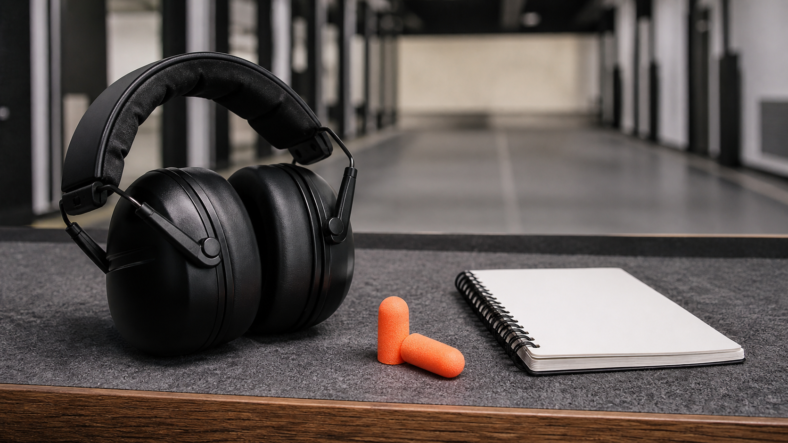
How to Double Up Ear Protection at Indoor Ranges


Doubling up ear protection means wearing properly inserted earplugs underneath properly sealed earmuffs. For indoor shooting ranges and other loud impulse-noise settings, this extra layer may be worth considering because hard walls reflect sound and shooters are often close to other firearms. Doubling up can reduce exposure when both layers fit correctly, but it is not a hearing-loss guarantee, and NRR math does not simply add into a real-world protection number.

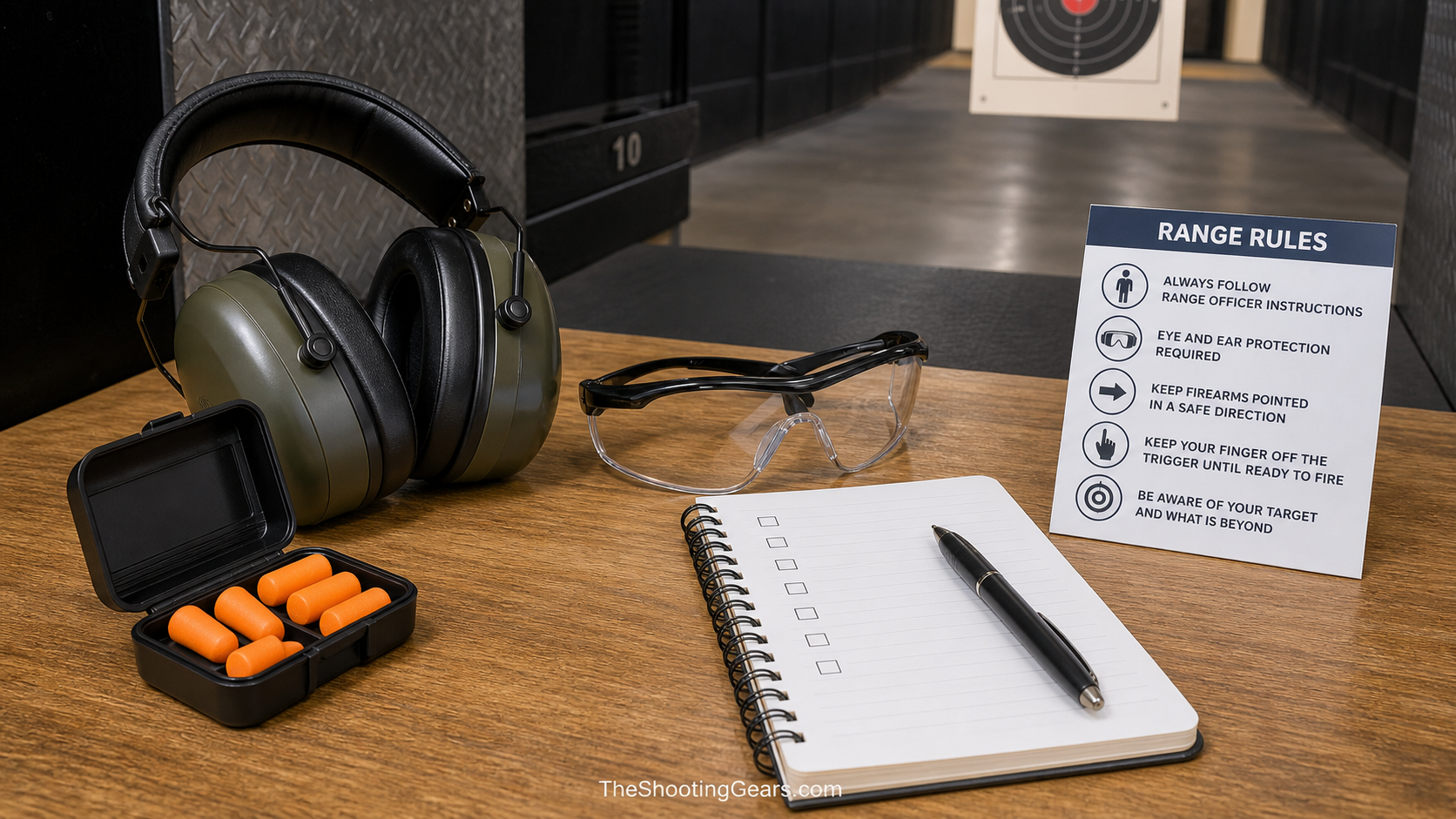
For indoor ranges, double protection usually means correctly inserted foam plugs plus properly sealed earmuffs, with range rules still leading the session.

This guide explains when plugs-plus-muffs make sense, how to wear them correctly, what mistakes reduce protection, and when to ask a range safety officer or qualified hearing professional for help.

Table of Contents

What Double Ear Protection Means

Double ear protection means wearing two protective layers at the same time: earplugs inside the ear canal and earmuffs sealed over the outside of the ears. The order matters. Plugs go in first, then muffs go over them so each layer can keep its own fit.

The CDC/NIOSH hearing protection guidance describes double protection as earmuffs worn over earplugs and recommends it in very loud occupational settings, including impulse-noise exposure. That guidance is useful safety context for range users, but it should not be treated as a recreational shooting law or as a promise of complete protection.

Why Indoor Ranges Raise the Stakes

Indoor ranges are different from open outdoor bays because hard walls, ceilings, and dividers reflect sound instead of letting it dissipate. You may also stand close to other shooters using short barrels, compensators, muzzle brakes, or high-volume firing strings. That combination can make a single layer feel less comfortable and less forgiving.

NRR labels are useful for comparing hearing protectors, but they do not tell you exactly what your ears receive in a real shooting lane. Federal hearing-protector labeling rules in 40 CFR Part 211 Subpart B also warn that NRR may not indicate protection against impulsive noise such as gunfire. That is why this guide focuses on fit, seal, and realistic expectations instead of simple number math.

How to Wear Earplugs Under Earmuffs

To double up correctly, insert the earplugs first, then place the earmuffs over them without breaking either seal. The combination only helps when both layers are worn properly for the full time anyone on the line is shooting.

Insert the Earplugs Correctly

Foam earplugs should sit inside the ear canal, not loosely at the opening. Roll the plug down, insert it, and hold it in place while it expands. Reusable plugs should be seated according to the maker’s instructions. If a plug feels loose, falls out, or leaves sound obviously louder on one side, stop and refit it.

Seat the Earmuffs Without Breaking the Seal

Place the earmuffs so the cushions fully surround each ear. The headband should sit securely, and the cups should not be propped open by hair, hat brims, hoodie fabric, or thick glasses arms. A small gap under the cushion can quietly reduce real-world protection.

Check Eyewear, Hair, Hats, and Stock Fit

Safety glasses are required at many ranges, but thick temples can interfere with earmuff cushions. The 3M hearing protection selection guidance notes that compatibility with eyewear and other equipment matters when selecting protection. Thin safety-glasses arms, careful muff placement, and a quick seal check can help.

Rifle and shotgun shooters should also confirm the muffs do not shift when they mount the firearm. If your cheek weld knocks a cup loose, a lower-profile muff or different setup may be needed.

What Not to Do When Doubling Up

Do not treat the earplug NRR plus earmuff NRR as a single real-world rating. Protection depends on fit, insertion depth, cushion seal, product condition, and how consistently you keep both layers on.

  • Do not leave foam plugs barely seated at the ear opening.
  • Do not wear earmuffs over bulky hats or hair that breaks the seal.
  • Do not remove protection while other shooters are still firing.
  • Do not use cracked muff cushions, dirty plugs, or damaged gear.
  • Do not assume electronics or active noise cancellation replaces rated hearing protection.

Electronic Earmuffs With Earplugs

Electronic earmuffs can still be useful when worn over plugs because they may help you hear range commands and conversation between shots. However, the protective part is still the rated muff cup and seal, not a magic cancellation effect. With plugs underneath, speech and amplified sounds may be quieter, so you may need to adjust volume and listen carefully to range staff.

The NSSF reminds shooters to wear eye and ear protection, and that advice pairs naturally with a practical range habit: keep both layers on whenever firing is active, even if you are not the person shooting.

What Double Protection Does Not Guarantee

Double protection can add margin, but it does not guarantee that your hearing is safe in every indoor lane or with every firearm. Fit, seal, eyewear, hair, hats, product wear, shooter position, and range design all matter. No article can promise a specific decibel reduction for your ears.

If you have ear pain, tinnitus, hearing aids, previous hearing loss, or recurring fit problems, ask a qualified hearing professional. If something feels wrong during a range session, ask the range safety officer for help before continuing.

Indoor Range Double-Protection Checklist

  • Insert earplugs so they seal inside the ear canal.
  • Seat earmuffs so the cushions fully surround each ear.
  • Check that glasses, hair, hats, and clothing do not break the seal.
  • Confirm the muff seal stays in place when you mount the firearm.
  • Keep both layers on whenever anyone on the firing line is shooting.
  • Replace disposable plugs and worn muff cushions before they fail.
  • Ask for help if the setup hurts, leaks sound, or feels uneven.

Frequently Asked Questions

Should you wear earplugs and earmuffs at an indoor shooting range?

It may be worth considering, especially in loud indoor bays, near muzzle brakes, or during high-volume sessions. The second layer can add margin when both layers fit correctly, but it is still not a guarantee against hearing damage.

Can you combine the NRR labels?

No. Treating two labels as one simple number overstates protection. NRR is a comparison label, while real-world protection depends heavily on fit, seal, and consistent use.

Are electronic earmuffs enough at indoor ranges?

Sometimes they may be enough for a particular shooter and range, but electronics do not change the need for a proper rated seal. Many shooters choose plugs under electronic muffs indoors for extra passive protection while still hearing commands better than with passive muffs alone.

Should plugs go under muffs or over muffs?

Plugs go in first, then earmuffs go over the ears. Earplugs protect from inside the ear canal, while earmuffs seal around the outside of the ear.

Can shooting glasses break the earmuff seal?

Yes. Thick eyewear temples can create small gaps under earmuff cushions. Use shooting glasses that fit well under muffs and check the seal before firing starts.

What if double protection still feels uncomfortable?

Stop and refit the plugs and muffs. Do not force a setup that causes pain. If discomfort continues, ask the range safety officer or a qualified hearing professional for help choosing a safer fit.

Final Recommendation

For indoor shooting ranges, properly inserted earplugs under properly sealed earmuffs are a sensible option when noise exposure feels high or when you want extra margin. Focus on fit, seal, and keeping protection on the whole time. Treat double protection as a careful habit, not a mathematical shortcut or a guarantee.

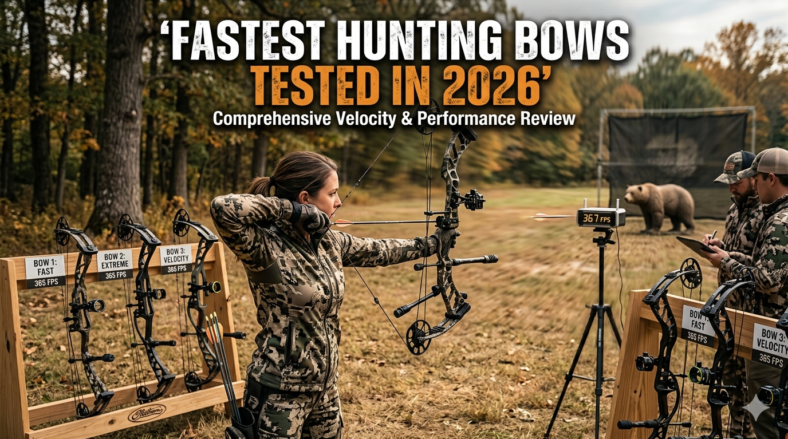
Fastest Hunting Bows Tested in 2026

When it comes to modern bowhunting, speed remains one of the most talked-about specifications among hunters. A faster bow delivers flatter arrow trajectories, reduces range estimation errors, and increases overall effectiveness in the field. While speed isn’t everything, today’s top manufacturers continue pushing the limits of compound bow performance.

For 2026, bow technology has reached new heights with improved cam systems, lightweight materials, enhanced efficiency, and smoother draw cycles. We tested and analyzed some of the fastest hunting bows available to determine which models truly stand out for hunters seeking maximum arrow velocity without sacrificing accuracy and shootability.

In this guide, we’ll explore the fastest hunting bows tested in 2026, explain why speed matters, and help you determine whether a speed-focused bow is right for your hunting style.

Why Bow Speed Matters

Bow speed is typically measured using IBO (International Bowhunting Organization) standards. Most flagship hunting bows advertise speeds between 330 and 370+ feet per second (FPS).

A faster bow offers several advantages:

Flatter Arrow Flight

The faster an arrow travels, the less it drops over distance. This means:

  • Easier shot placement
  • Less need for exact yardage estimation
  • Greater forgiveness at longer ranges

Reduced Animal Reaction Time

Game animals often react to the sound of the shot.

Faster arrows:

  • Reach the target sooner
  • Reduce the chance of “jumping the string”
  • Increase effectiveness on alert animals

Better Long-Range Performance

Hunters who regularly practice beyond 40 yards benefit from:

  • Improved trajectory
  • Less wind drift
  • Greater consistency

Increased Kinetic Energy

Fast bows can generate more kinetic energy when paired with proper arrow setups, improving penetration on larger game.

How We Tested Hunting Bows

Our evaluation focused on:

  • Advertised IBO speed
  • Real-world chronograph testing
  • Draw cycle smoothness
  • Accuracy
  • Vibration and noise
  • Hunting practicality
  • Build quality
  • Overall value

Every bow was assessed with hunting applications in mind rather than speed numbers alone.

1. Bowtech SR 350

IBO Speed: Up to 350 FPS

The Bowtech SR 350 remains one of the fastest production hunting bows available in 2026.

Key Features

  • DeadLock Cam System
  • TimeLock Technology
  • CenterMass Sight Integration
  • Adjustable performance settings

Pros

✔ Exceptional speed

✔ Easy tuning system

✔ Excellent accuracy

✔ Minimal vibration

Cons

✘ Aggressive draw cycle

✘ Premium price tag

Best For

Hunters wanting maximum speed while retaining tuning flexibility.

2. PSE Mach 34 DS

IBO Speed: Up to 336 FPS

PSE continues its reputation for producing high-performance hunting bows.

The Mach 34 DS combines carbon construction with impressive speed and shootability.

Key Features

  • Carbon riser
  • Dual cam system
  • Lightweight design
  • Excellent balance

Pros

✔ Lightweight for mountain hunts

✔ Smooth draw cycle

✔ Excellent stability

✔ Quiet shooting

Cons

✘ Higher cost

✘ Speed-focused bows can feel less forgiving for beginners

Best For

Backcountry hunters who need lightweight performance.

3. Hoyt Alpha AX-2

IBO Speed: Up to 342 FPS

Hoyt’s newest Alpha AX platform delivers a perfect blend of speed and hunting comfort.

Key Features

  • HBX Gen 4 Cam
  • Advanced vibration reduction
  • Compact hunting profile

Pros

✔ Fast and accurate

✔ Great build quality

✔ Comfortable grip

✔ Reliable in harsh conditions

Cons

✘ Premium pricing

Best For

Hunters who value dependability and all-around performance.

4. Mathews Lift X

IBO Speed: Up to 348 FPS

The Mathews Lift X has become one of the most popular bows among serious whitetail hunters.

Key Features

  • SwitchWeight Technology
  • Advanced damping system
  • Lightweight riser

Pros

✔ Extremely quiet

✔ Excellent balance

✔ Great draw cycle

✔ Outstanding accuracy

Cons

✘ Higher purchase cost

Best For

Hunters seeking speed without sacrificing shooting comfort.

5. Elite Omnia Pro

IBO Speed: Up to 347 FPS

Elite has developed a reputation for combining smooth draw cycles with competitive speeds.

Key Features

  • SET Technology
  • Precision grip options
  • Adjustable performance settings

Pros

✔ Easy tuning

✔ Forgiving shooting platform

✔ Strong speed performance

Cons

✘ Slightly heavier than some competitors

Best For

Hunters prioritizing consistency and customization.

6. Bear Persist 33

IBO Speed: Up to 340 FPS

Bear Archery continues offering impressive performance at a more affordable price point.

Key Features

  • Efficient cam system
  • Comfortable grip
  • Excellent value

Pros

✔ Affordable

✔ Good speed

✔ Reliable performance

Cons

✘ Fewer premium features

Best For

Hunters wanting high speed without premium pricing.

Fastest Hunting Bows Comparison Table

Bow ModelIBO SpeedWeightAxle-to-Axle
Bowtech SR 350350 FPS4.4 lbs33″
Mathews Lift X348 FPS3.99 lbs33″
Elite Omnia Pro347 FPS4.5 lbs32″
Hoyt Alpha AX-2342 FPS4.3 lbs32″
Bear Persist 33340 FPS4.2 lbs33″
PSE Mach 34 DS336 FPS3.7 lbs34″

Is Faster Always Better?

Not necessarily.

Many hunters become obsessed with speed ratings, but several factors matter just as much.

Accuracy

A slower bow that you shoot accurately will outperform an ultra-fast bow you struggle to control.

Draw Cycle

Extreme speed bows often have:

  • Harsher draw cycles
  • More aggressive cams
  • Less comfort during extended practice sessions

Noise

Faster bows generally create:

  • More vibration
  • More noise
  • Greater chance of alerting game

Forgiveness

Longer axle-to-axle bows often sacrifice some speed but provide:

  • Better stability
  • Improved forgiveness
  • Easier aiming

What Speed Should Hunters Aim For?

Whitetail Hunters

Ideal range:

330–345 FPS

This offers excellent hunting performance without excessive aggressiveness.

Elk Hunters

Ideal range:

335–350 FPS

Higher kinetic energy can help with larger game.

Western Hunters

Ideal range:

340+ FPS

Longer shots benefit from flatter trajectories.

Beginners

Ideal range:

310–330 FPS

A smoother bow often leads to better shooting habits and more confidence.

Speed vs. Arrow Weight

A common mistake among hunters is chasing maximum FPS using ultra-light arrows.

Instead, consider:

  • Total arrow weight
  • Kinetic energy
  • Momentum
  • Broadhead performance

Many experienced hunters prefer slightly heavier arrows because they:

  • Penetrate better
  • Fly more consistently
  • Perform better in windy conditions

The fastest setup isn’t always the most effective hunting setup.

Choosing the Right Fast Hunting Bow

Before purchasing, ask yourself:

What game do you hunt?

Whitetails, elk, bear, and western game may require different priorities.

How far do you typically shoot?

Most ethical hunting shots occur within 40 yards.

Can you comfortably draw the bow?

A smooth draw cycle often matters more than 10 FPS of additional speed.

Do you hunt from a tree stand or spot-and-stalk?

Bow length and maneuverability become important considerations.

Final Verdict

The fastest hunting bows of 2026 showcase how far archery technology has advanced. While speed remains an important performance factor, the best hunting bow is the one that combines velocity, accuracy, comfort, and reliability.

For pure speed, the Bowtech SR 350 remains one of the top performers available today. Hunters looking for a balanced blend of speed and shootability should consider the Mathews Lift X, Hoyt Alpha AX-2, or Elite Omnia Pro. Budget-conscious hunters will find excellent value in the Bear Persist 33.

Ultimately, the ideal hunting bow isn’t necessarily the fastest—it is the bow you can shoot confidently and accurately when the moment of truth arrives in the field.

Whether you’re pursuing whitetails from a tree stand, chasing elk in the mountains, or preparing for western spot-and-stalk hunts, the fastest hunting bows of 2026 offer more performance than ever before.

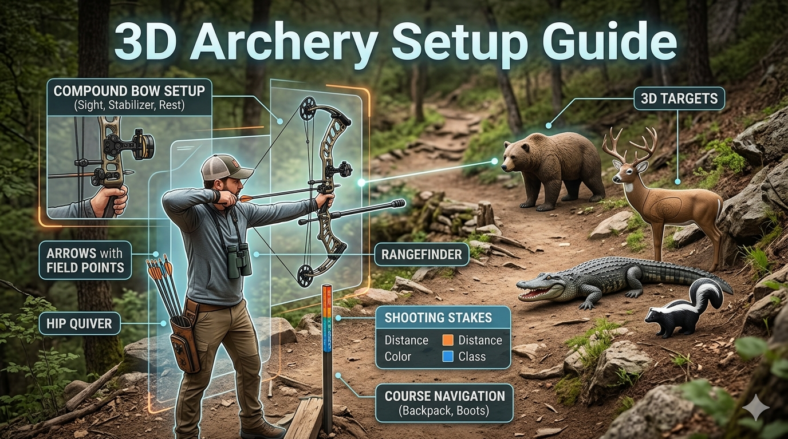
3D Archery Setup Guide: Bow, Targets, Range Safety, and Practice Basics

A safe 3D archery setup starts with three things: a controlled shooting area, a target rated for your bow, and equipment matched to your draw weight and skill level. Get those right and the rest of your practice plan becomes simpler, safer, and easier to repeat.

3D archery uses foam targets placed at varied distances and angles. It can help with distance judgment and repeatable form, but only when you practice in a controlled lane, inspect your gear, and follow the rules of the range, club, or community archery area you are using.

Quick Answer: What You Need For A Safe 3D Archery Setup

A safe 3D archery setup needs a controlled shooting area with a clear lane, a target rated for your bow type and draw weight, and bow accessories that match your skill level. Before each session, inspect your arrows, nocks, bowstring, limbs, target face, and shooting lane. If you are unsure about practicing at home, use a supervised club, range, or community archery park instead.

Start With A Safe Shooting Area

A safe shooting area is the foundation of any 3D setup. Everything depends on knowing where arrows are being launched, where they should stop, and when the lane is clear.

Use A Controlled Range Or Target Area

Practice where you can control the line, the lane, and what is beyond the target. A club range or community archery park is the easiest way to get established rules and a clear shooting flow. USA Archery safety guidance is a useful starting point for basic range habits, and the USA Archery club handbook shows how organized programs think about club and range structure.

Keep the lane clear, define where shooters stand, and use a simple start/stop signal so no one shoots while another person is downrange.

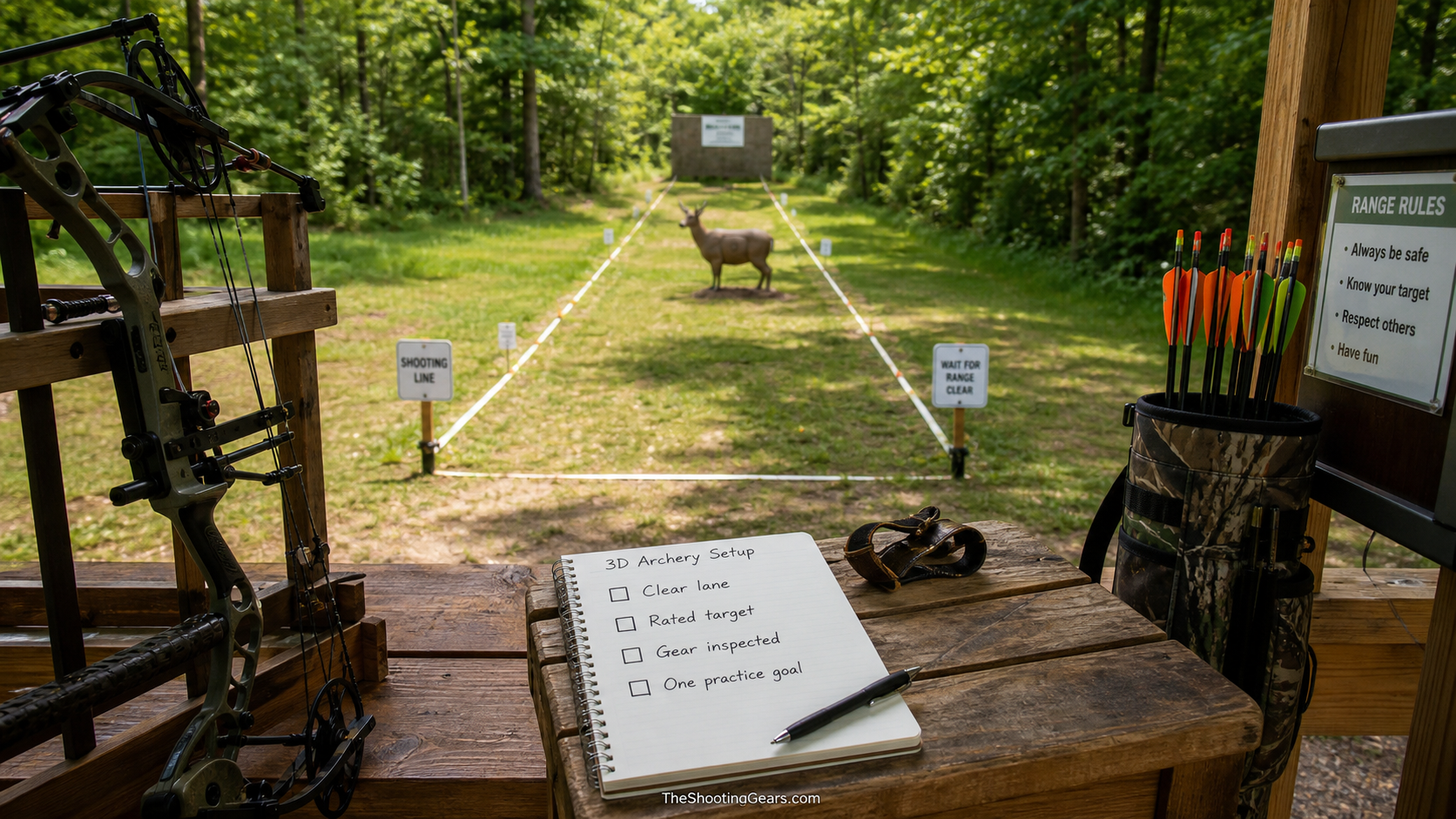
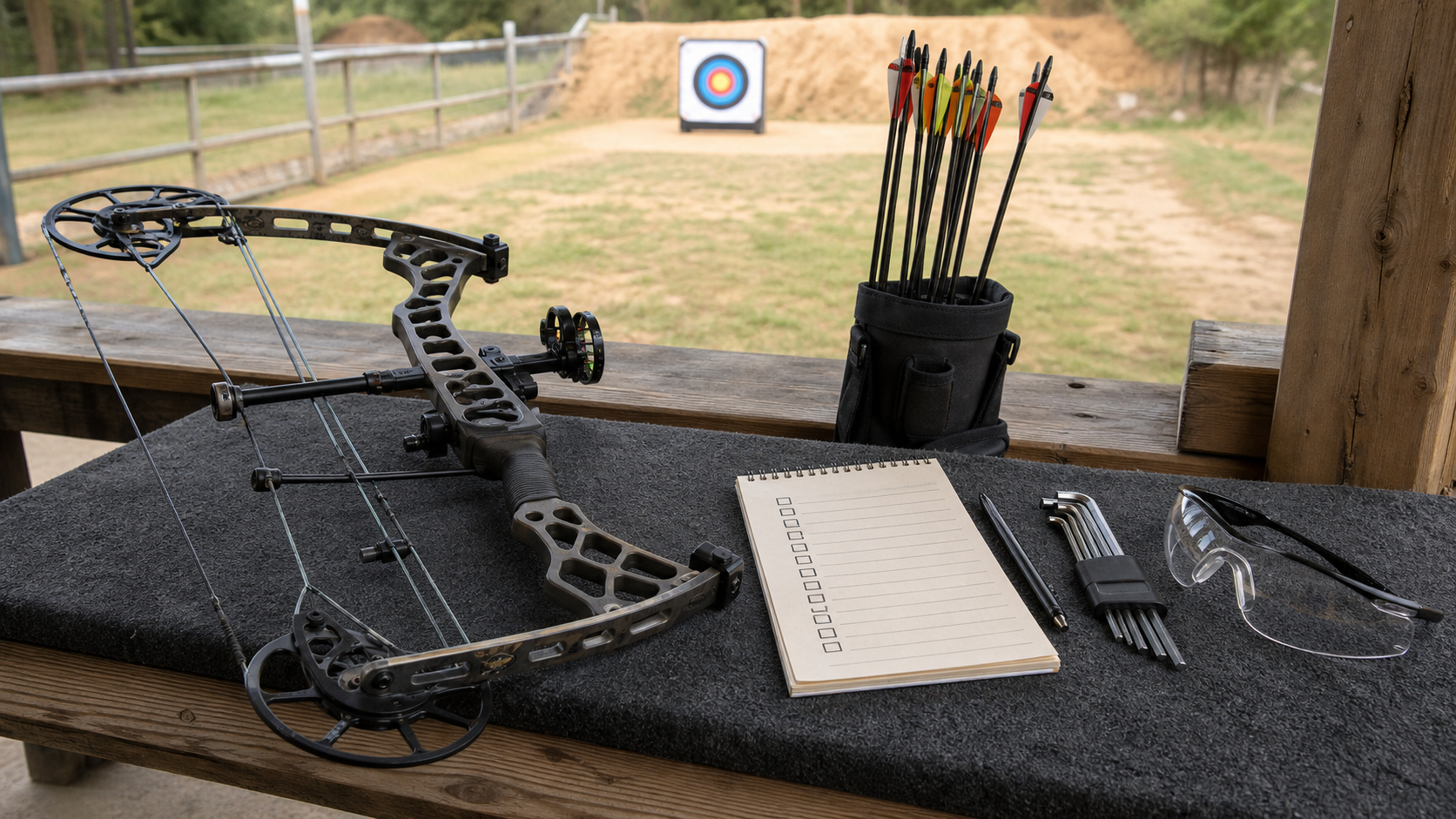
A useful 3D setup starts with a clear lane, a rated target, inspected gear, and one practice goal.

Check Backstop And Local-Rule Caveats

If you practice anywhere other than an established range, treat the backstop and local rules as questions, not assumptions. This guide does not provide backyard range dimensions or backstop construction specs because those depend on space, equipment, target rating, and local rules. When in doubt, use a club or range rather than improvising.

Choose The Right 3D Target For Practice

The right 3D target is one rated for your bow type and draw weight. A target that is too light for your setup can wear quickly or allow pass-throughs, while a target that matches your setup helps protect both your arrows and the range area.

Match Target Rating To Bow Type

Check the target maker’s stated rating against your bow type, draw weight, arrow setup, and point type. A target built for a light recreational bow may not be suitable for a heavier compound bow. Follow the target maker’s instructions instead of guessing.

Inspect Targets Before Shooting

Look over the target before each session. Check that the foam is not shot out in the scoring area, that replaceable cores are seated, and that the target is stable. A worn-out center can increase pass-through risk and make arrows harder to recover.

Set Up Bow, Arrows, And Accessories

A 3D setup works best when the bow, arrows, and accessories fit the archer. Comfortable, repeatable form comes from gear that is manageable, inspected, and adjusted one step at a time.

Bow Fit And Draw Weight

Choose a draw weight you can pull and hold with control through a full session, not the most weight you can pull once. If you are unsure about fit, a pro shop or coach can help with draw length, draw weight, and basic setup.

Arrows, Nocks, And Field Points

Inspect arrows, nocks, and points before every session. Check carbon arrows for cracks, confirm nocks are intact and seated, and use field points suited to 3D practice so you do not damage targets. For more on arrow matching, see our arrow spine guide.

Sight, Stabilizer, And Release Basics

Set up sights, stabilizers, and releases according to the manufacturer manuals for your specific gear. Make one adjustment at a time so you can tell what changed. If stability is your main question, our bow stabilization guide is the natural next read.

Build A Simple Practice Plan

A simple practice plan beats random shooting. Start with a warm-up, pick one focus for the session, and make notes so the next session builds on what you learned.

Warm Up At Known Distances

Begin at known, comfortable distances to settle your form before working on unknown-distance 3D practice. A short warm-up lets you confirm your sight marks and catch gear issues before the harder part of practice begins.

Practice One Change At A Time

Change one thing at a time, whether it is a sight mark, anchor detail, release feel, or practice distance. If you adjust several variables at once, you cannot tell what helped.

Common 3D Archery Setup Mistakes

The most common 3D setup mistakes are setting too much draw weight, skipping gear inspection, using a target not rated for the bow, and practicing in an uncontrolled area. Other frequent issues include adjusting too many things at once, shooting a worn-out target center, and treating a backyard space as range-safe without confirming rules and backstop conditions.

3D Archery Setup Checklist

  • Controlled shooting area with a clear lane confirmed.
  • No one downrange and a clear start/stop signal in place.
  • Target rated for your bow type and draw weight.
  • Target inspected, stable, and not shot out.
  • Arrows, nocks, bowstring, limbs, and accessories inspected.
  • Draw weight you can control through the full session.
  • Field points suited to 3D practice.
  • One practice focus chosen for the session.
  • Local rules confirmed if practicing outside an established range.

After you have the lane and target sorted, review arrow fit with our arrow spine guide and refine steadiness with our bow stabilization guide.

Frequently Asked Questions

What is 3D archery?

3D archery is a form of practice or competition that uses foam targets set at varied distances and angles. It helps archers work on distance judgment, repeatable form, and shot routine in a course-style setting.

What draw weight do I need for 3D archery?

Use a draw weight you can pull and hold with control through a full session. Comfortable, repeatable form matters more than maximum poundage. A coach or pro shop can help set a realistic starting point.

Can I set up a 3D archery range in my backyard?

Maybe, but it depends on your space, backstop, equipment, and local rules. This guide does not assume backyard practice is allowed or safe for your situation. If you are unsure, use a club or established range.

What target should I use for 3D archery practice?

Use a foam 3D target rated for your bow type and draw weight. Check the maker’s rating, inspect the target before each session, and replace shot-out cores or worn targets.

Does 3D practice improve hunting accuracy?

3D practice can help with distance judgment and repeatable form, but results depend on practice quality and safe conditions. This article covers target-practice setup, not hunting shot placement.

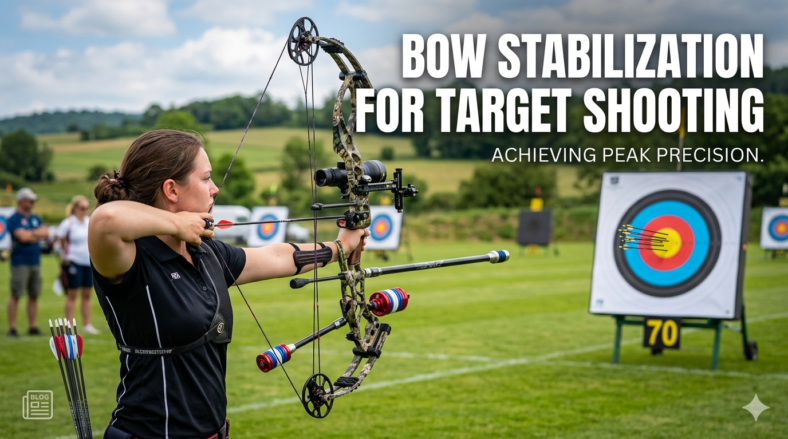
Bow Stabilization for Target Shooting

Bow stabilization for target shooting means using front bars, side bars, and weights to change how a bow balances, aims, and settles during the shot. A stabilizer setup can shift the bow’s center of balance, dampen vibration, and change aiming feel, but it is not a universal accuracy shortcut.

The best stabilizer setup depends on the archer, bow, strength, shooting style, and competition rules. Adjust in small steps, test safely, and check the current rulebook for your class before competing.

What Bow Stabilization Does

Bow stabilization changes how a bow balances, how it absorbs vibration, and how it behaves before and after the shot. By adding mass and extending it away from the riser, stabilizers can alter the bow’s center of balance and the way the sight pin moves while aiming.

Stabilization is a feel-and-balance adjustment, not a guaranteed performance upgrade. It may make a bow feel more settled for one archer and less comfortable for another. Beginner-friendly archery education sources such as Archery 360 are useful for building general context before changing equipment.

Front Bars, Side Bars, and Weight Placement

Front bars, side bars, and weights are the main parts that determine how a stabilizer setup balances a bow. Each piece affects feel differently, so it helps to understand the job of each one.

PartWhat It Usually DoesBeginner Check
Front barAdds weight forward of the riserDoes it feel steadier without tiring your shoulder?
Side/back barOffsets side-to-side or rear balanceDoes the bow sit more level in your hand?
WeightsFine-tune how much mass sits at each pointCan you hold the setup through a full session?

How front weight changes aiming feel

Adding weight to the front bar extends mass forward of the riser. Many archers feel this as a steadier hold or a different sight movement while aiming. Too much weight can also create fatigue, so change front weight in small increments and judge comfort over a full practice session.

Side bars and back bars add weight off to the side and rear. They can help counter how the bow wants to tip or twist in the hand. Adjust side-bar angle and weight one change at a time so you can tell what each change actually did.

Target Setup vs Hunting Setup

Target and hunting stabilizer setups often differ because the priorities are different. Target setups can be longer and heavier because the archer is usually shooting from known positions. Hunting setups usually need to stay shorter, lighter, and easier to carry.

Neither style is automatically better. A long target setup that feels steady on a range may be awkward in the field, while a compact hunting setup may not feel as settled during target practice. Match the setup to how you actually shoot.

How to Test Balance Safely

Testing a stabilizer setup safely means changing one variable at a time and stopping if the setup causes strain or makes the bow hard to control. The goal is repeatable control, not maximum length or maximum weight.

  • Change one variable at a time, such as front weight, side weight, or side-bar angle.
  • Shoot a consistent practice set and note hold, comfort, sight movement, and fatigue.
  • Reduce weight or length if the bow feels awkward or strains your shoulder, arm, or back.
  • Keep notes so you can return to a setup that felt stable.

If you are still learning bow setup basics, review broader setup and tuning steps before changing stabilizer weight. The guides on setting up your bow and bow tuning for beginners are useful companion reads.

Rules and Class Checks

Competition divisions can restrict stabilizer length, weight, attachments, and overall equipment configuration. These rules vary by organization and event, so check the current rulebook for your class before competing.

Useful places to start include the World Archery rulebook, USA Archery, NFAA, and the Archery Shooters Association. Local clubs may also add event-specific instructions.

Frequently Asked Questions

Do stabilizers make you more accurate?

Stabilizers can change how steady a bow feels and how it settles, but they do not automatically create tighter groups. The effect depends on the archer, bow, and setup.

How long should a target stabilizer be?

There is no single correct length. Target setups often run longer than hunting setups, but the right setup depends on your body, bow, shooting style, and competition rules.

What is the difference between a front bar and a side bar?

A front bar extends weight forward from the riser, while a side or back bar adds weight off to the side or rear. Full target setups may use both to tune front-back and left-right balance.

Will a target stabilizer setup work for hunting?

Often not directly. Target setups can be long and heavy, while hunting setups usually need to stay compact and easier to carry. Match the stabilizer to how and where you shoot.

Are there rules about stabilizers in competition?

Yes. Many competition divisions restrict stabilizer length, weight, attachments, or configuration. Always check the current rules for your organization, class, and event.

Final Stabilizer Takeaway

Bow stabilization is a tuning tool for balance, aiming feel, and shot reaction. Start small, change one variable at a time, watch for strain, and verify current competition rules before relying on any setup.

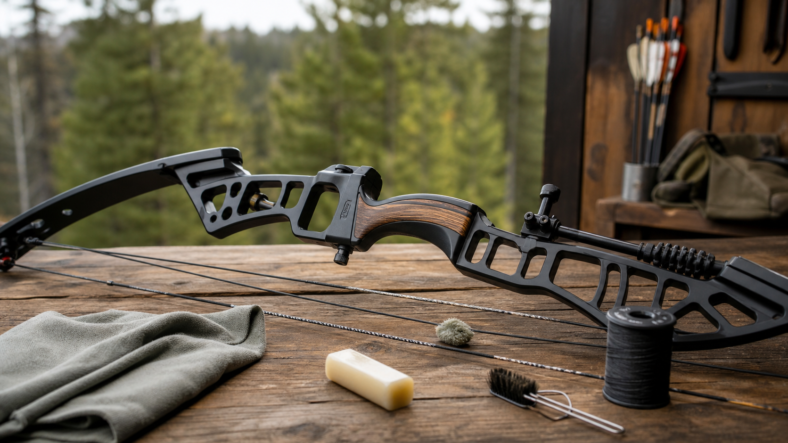
How Often Should Bow Strings Be Replaced?

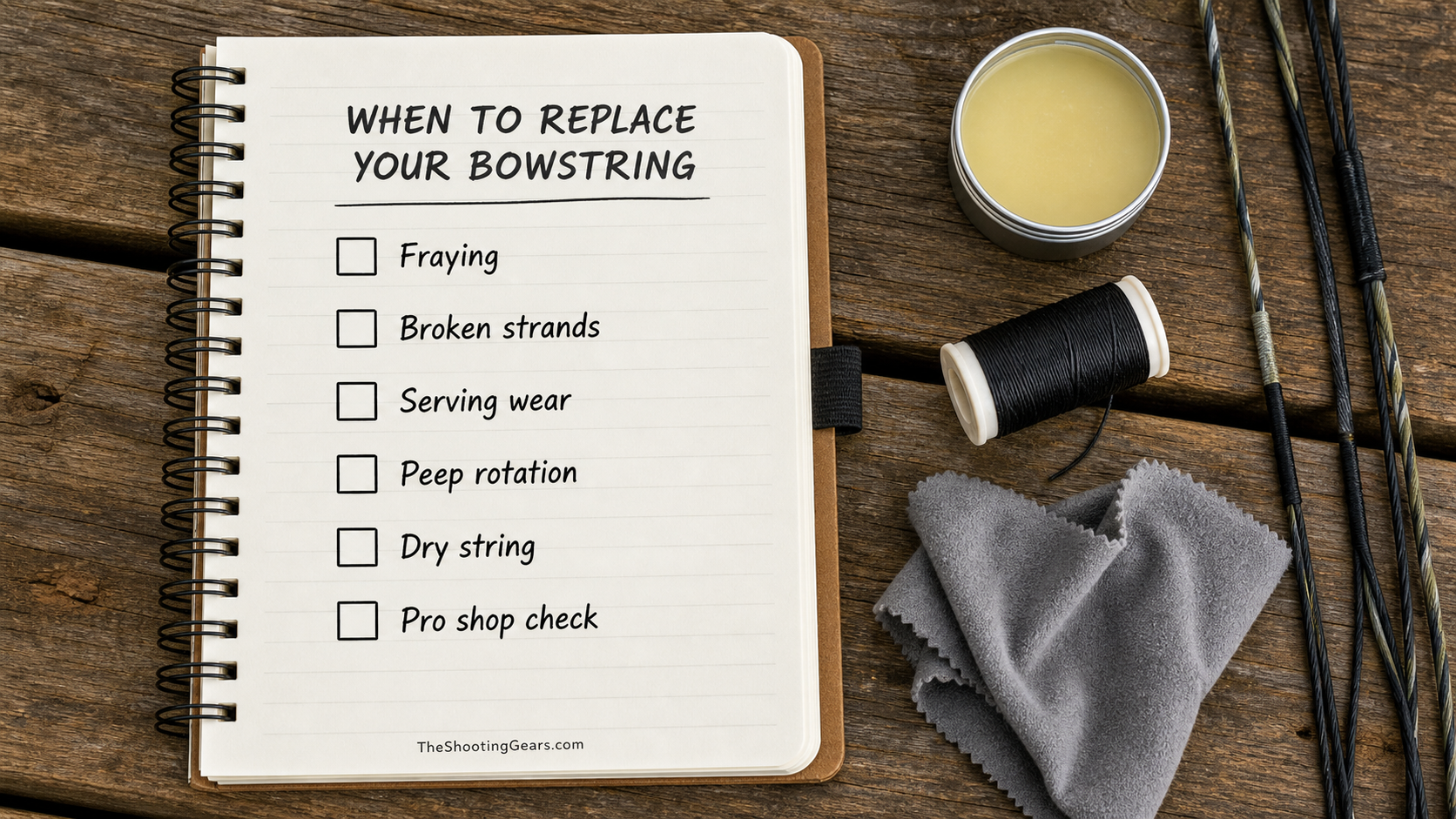
Bow strings should be replaced when they show unsafe wear, when a bow technician recommends replacement, or when the string and cables have aged past the schedule recommended for your bow and shooting volume. There is no universal replacement date for every compound, recurve, or traditional bow. A light-use bow stored well may go longer, while a bow used heavily, hunted in rough weather, or stored in heat may need attention much sooner.

The safest rule is simple: inspect the string often, follow the bow manufacturer’s guidance, and stop shooting if you see broken strands, serious fraying, serving separation, peep rotation, or sudden tuning changes. If you are unsure, have a qualified archery shop inspect the bow before the next session.

Quick Answer

Most archers should think in terms of condition and use, not only calendar age. If the string is clean, waxed when needed, stored well, and inspected by a technician, it may last longer than a heavily used string exposed to rain, sun, heat, and dirt. For compound bows, strings and cables are usually evaluated together because both parts affect timing, tuning, and safety.

Before relying on any general schedule, check the owner’s manual or support page for your bow. For example, manufacturer support and manual libraries from brands such as Bear Archery and Mathews are the better source for model-specific care limits than a generic web article.

Why Bow String Replacement Matters

The bowstring is not just a consumable accessory. It transfers stored energy from the limbs to the arrow and helps keep the bow’s setup consistent. As the string wears, stretches, or loses serving integrity, accuracy and safety can both suffer.

A worn string can cause inconsistent arrow flight, peep rotation, changed brace height, tuning problems, or sudden failure. On a compound bow, string and cable issues can also affect cam timing. That is why routine inspection belongs in the same mental category as checking arrows, rests, sights, and other safety-critical gear.

How Often Should Bow Strings Be Replaced?

There is no single replacement interval that fits every archer. Use the ranges below as planning context only, then compare them with your bow manual, your shooting volume, and the string’s actual condition.

Compound bows

Compound bow strings and cables are often replaced on a planned maintenance cycle, especially for active shooters. The reason is not only visible wear. Stretch, serving movement, peep rotation, and cable wear can affect timing and tune before the string looks completely ruined.

If you shoot often, hunt in harsh weather, or notice tuning changes, have a technician inspect the string and cables sooner. Do not attempt press work or cable service without the right tools and training.

Recurve bows

Recurve strings are simpler than compound string-and-cable systems, but they still wear. Watch for fraying, strand damage, serving wear, nock fit problems, and changes in brace height. Follow the bow maker’s recommended brace-height range and string material guidance.

Traditional bows

Traditional longbows and recurves also depend on string condition, correct string material, and safe setup. Some traditional bows require specific string materials, so do not assume every modern string is safe for every older or traditional bow.

Signs Your Bow String Needs Replacement

Visible wear is the clearest reason to stop and inspect. A little fuzz can be normal, but serious fraying, broken strands, or separation in high-stress areas should not be ignored. When in doubt, stop shooting and let a pro shop inspect it.

Fraying or fuzzy fibers

Small surface fuzz can appear with normal use, but widespread fraying, fibers lifting away from the bundle, or wear near the cams, serving, nocking point, or limb tips deserves attention. Wax may help dryness, but wax does not repair damaged strands.

Broken strands

Broken strands are a stop-shooting warning. Do not keep using the bow to “finish the session.” A damaged string can fail under load and may damage the bow or injure the shooter.

Serving separation

Serving protects the string in high-wear areas. Gaps, loose wrapping, or serving that slides can affect nock fit and string durability. Minor serving issues may be repairable, but the cause should be inspected.

Peep rotation or tuning changes

On a compound bow, sudden peep rotation, changed impact points, altered cam timing, or repeated tuning drift can point to string or cable stretch. A technician can tell whether adjustment or replacement is the safer move.

Dry, dirty, or heat-damaged string

A dry string, grit in the fibers, or heat exposure from storage in a vehicle can shorten string life. Dirt acts like an abrasive, and heat can stress materials and serving. Store the bow in a cool, dry place when possible.

What Affects Bow String Lifespan?

String life depends on shooting volume, storage, weather, maintenance habits, string material, bow setup, and whether the bow is used for casual practice, hunting, or competition.

Shooting frequency

A bow shot weekly or daily wears faster than one used a few times a season. Competitive archers and active bowhunters should inspect more often because small changes can matter before a major event or season.

Weather and storage

Rain, humidity, dust, heat, and direct sun can shorten the life of a bowstring. Outdoor archers should clean and inspect after wet or dirty sessions and avoid long-term storage in hot vehicles or damp spaces.

Maintenance habits

Regular inspection, appropriate waxing, correct storage, and periodic professional checks can extend string life. USA Archery’s safety guidance is a useful reminder that equipment condition and safe habits belong together, especially for beginners and youth programs.

String material and bow setup

Different string materials and bow designs have different requirements. Use the string material and length recommended for your bow. If you changed draw weight, draw length, cams, limbs, or accessories, have the string system checked as part of the setup.

Do Compound Bow Cables Need Replacement Too?

Yes, compound bow cables should be inspected with the string. Cables affect cam timing and overall tune, and they can wear or stretch just like the main string. Many technicians replace strings and cables as a set so the bow returns to a stable baseline.

If your compound bow shows peep rotation, timing problems, serving wear near cams, or repeated tuning drift, do not treat the main string as the only possible issue. A complete bow inspection is smarter than guessing.

How To Help A Bow String Last Longer

Inspect before shooting

Look over the string, cables, serving, nocking area, and cam contact points before practice. This takes less than a minute and catches problems before the bow is under load.

Wax only when appropriate

Use bowstring wax when the string is dry or when the manufacturer recommends it. Avoid over-waxing, which can collect dirt. Do not wax serving unless the string maker or technician specifically advises it.

Store the bow correctly

Keep the bow in a case or protected space, away from excess heat, direct sun, moisture, and grit. Storage habits matter more than many archers realize.

Use a pro shop for compound service

Compound string and cable work often requires a bow press and proper setup knowledge. If you are not trained and equipped, use a qualified technician instead of improvising.

When To Stop Shooting And Get Help

Stop shooting if you see broken strands, serious fraying, serving unraveling, sudden peep rotation, unusual noise, visible limb or cam issues, or any change that makes the bow feel unsafe. The cost of an inspection is small compared with a damaged bow or an injury.

If the bow is used for hunting, competition, or youth instruction, schedule inspections before the season or event rather than waiting for visible failure. A fresh or professionally inspected string system is part of responsible equipment preparation.

Frequently Asked Questions

How many shots can a bow string handle?

It depends on the bow, string material, shooting volume, maintenance, and storage. Some strings handle thousands of shots, but shot count alone is not enough. Inspect the string and follow the bow manufacturer’s guidance.

Is string wax enough to avoid replacement?

No. Wax can protect a dry string and reduce abrasion, but it cannot repair broken strands, severe fraying, serving separation, or material fatigue. Wax is maintenance, not a permanent fix.

Can I replace my own bow string?

Some recurve and traditional string changes are simple when you know the correct method and use the correct string. Compound bow string and cable replacement usually requires a bow press and technician-level setup. If you are unsure, use a pro shop.

Should I replace compound bow cables with the string?

Often, yes. Strings and cables work together on a compound bow, and replacing them as a set can help restore tune and timing. Let a technician inspect both before deciding.

Should bowhunters replace strings before season?

Bowhunters should at least inspect and shoot-test their setup before season. If the string or cables are worn, stretched, or near the end of the recommended service window, replacement before season is smarter than risking failure during a hunt.

Final Takeaway

Replace a bow string when condition, age, shooting volume, or a technician’s inspection says it is time. Do not rely on a single universal number. Inspect often, wax when appropriate, store the bow well, follow the manufacturer’s guidance, and stop shooting if the string shows serious wear. For compound bows, evaluate the string and cables together so the whole system stays safe and consistent.

Compound Bow Mistakes Beginners Make: Safety and Setup Basics

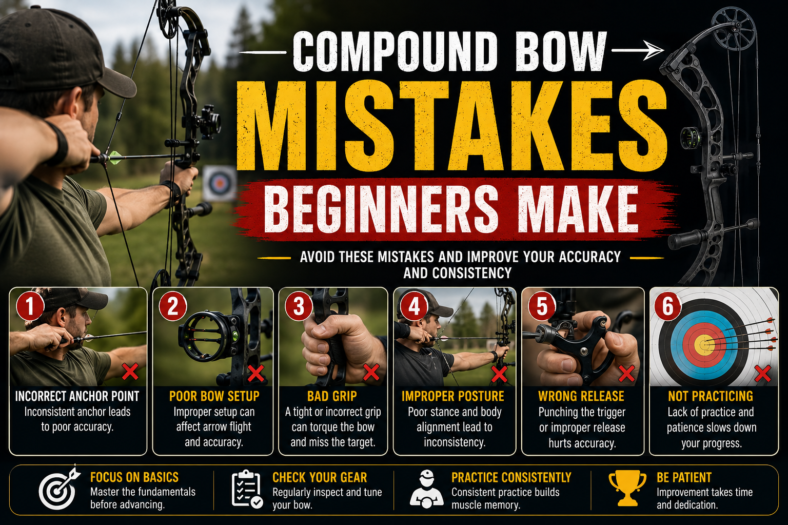
Most beginner compound bow problems come from a few avoidable mistakes: skipping safety checks, using a bow that does not fit, guessing on arrow compatibility, changing too many settings at once, attempting advanced tuning too early, and practicing without a safe target setup. Fix those first and your practice becomes safer, easier to understand, and more consistent.

This guide is for beginner-friendly inspection and setup decisions, not bow-press work or technical tuning. Your owner manual, arrow manufacturer’s chart, and a qualified pro shop should guide anything model-specific or advanced.

Table of Contents
  1. Quick Answer: The Biggest Compound Bow Mistakes Beginners Should Avoid
  2. Skipping Basic Safety Checks
  3. Starting With Poor Bow Fit
  4. Ignoring Arrow Spine and Compatibility
  5. Adjusting Too Many Things at Once
  6. Treating Advanced Tuning as Beginner DIY
  7. Practicing Without a Safe Range Setup
  8. Beginner Compound Bow Mistake Checklist
  9. Related Archery Guides
  10. Frequently Asked Questions

Quick Answer: The Biggest Compound Bow Mistakes Beginners Should Avoid

The biggest beginner compound bow mistakes are shooting without checking the bow and arrows, starting with poor draw length or too much draw weight, buying arrows by guesswork, changing several setup items at the same time, trying advanced tuning at home, and shooting without a controlled target lane and backstop.

The best fix is not complicated: inspect first, keep setup changes simple, use verified charts and manuals, practice where the target and backstop are safe, and send advanced work to a pro shop.

Skipping Basic Safety Checks

The first mistake is assuming the bow is ready because it shot fine last time. A compound bow stores a lot of energy, and small damage can matter. Before each session, look over the bow, arrows, target area, and anything that changed since your last practice.

Bowstring, Cables, Limbs, and Cams

Check the bowstring and cables for fraying, broken strands, and serving separation. Look at the limbs for cracks, splinters, or chips, and check the cams and tracks for anything bent, loose, or out of place. Manufacturer safety pages such as Hoyt’s compound bow safety and warnings show why visible damage should be treated as a stop-use issue.

Arrows, Nocks, Points, and Fletching

Inspect every arrow before shooting. Look for cracked shafts, damaged nocks, loose points, damaged inserts, or torn fletching. A questionable arrow should be set aside, not tested at full draw. USA Archery’s safety resources are a useful reminder that safe shooting habits include both equipment checks and range discipline.

Most compound bow mistakes are easier to prevent when setup, arrows, and range safety are checked before practice starts.

Starting With Poor Bow Fit

A bow that does not fit the archer makes good form harder. Beginners often blame themselves for inconsistency when the real problem is a draw length, draw weight, or anchor position that never gave them a fair start.

Draw Length and Anchor Point

If draw length is too long, the archer may overextend, lean, or float around the anchor point. If it is too short, the archer may feel cramped and inconsistent. Draw length should be set for the archer and the specific bow model, not copied from a friend or guessed from height alone.

Draw Weight and Form Breakdown

Too much draw weight causes beginners to raise the bow, twist the body, punch the release, or rush the shot. A manageable draw weight that allows smooth, repeatable form is better for learning than a number that only looks impressive. Stay within the manual’s adjustment limits and ask a pro shop if you are unsure.

Ignoring Arrow Spine and Compatibility

Arrow spine, arrow length, draw weight, draw length, and point weight all work together. Guessing at arrows can create poor flight and safety risk. Use the current selector or chart from the arrow manufacturer for the exact arrow family you are considering. Tools like the Easton arrow selector help organize the needed inputs, but you should still verify with the product’s current chart or a pro shop.

For a deeper explanation, read our guide on how to choose arrow spine for your bow. Keep the important boundary in mind: no single online rule replaces the current chart for your exact setup.

Adjusting Too Many Things at Once

Another common mistake is changing draw weight, sight position, rest position, release technique, and arrows all at the same time. When everything changes at once, you cannot tell what helped and what hurt.

Make one safe, manual-approved change at a time, then shoot enough arrows to observe the result. Keep notes. This slower method is more useful than chasing a new adjustment every time a group opens up.

Treating Advanced Tuning as Beginner DIY

Basic inspection and manual-approved adjustments are one thing. Bow-press work, cam timing, string or cable replacement, peep work, D-loop installation, module changes, and limb-related service are different. Those jobs belong with a qualified technician. Manufacturer support pages such as Mathews support point owners toward proper service channels rather than guesswork.

If you are learning, use our beginner bow tuning guide for boundaries, but do not turn a beginner tune-up into advanced repair. The safest confidence comes from knowing where your role stops.

Practicing Without a Safe Range Setup

A safe target area is part of the setup, not an afterthought. Shoot only where you have a proper target, reliable backstop, clear lane, and no people, animals, roads, windows, or unsafe property behind the target. Follow range rules and local restrictions.

For more fundamentals, see our archery safety rules. If your practice session includes sights, our guide on how many pins a bow sight should have can help keep aiming setup realistic instead of overly complicated.

Beginner Compound Bow Mistake Checklist

MistakeWhy It MattersBetter Habit
Skipping inspectionDamage can make a bow or arrow unsafeCheck strings, cables, limbs, cams, arrows, and nocks first
Wrong draw lengthAnchor and form become inconsistentSet fit by manual and pro-shop guidance
Too much draw weightForm breaks down and shots get rushedUse a weight you can control smoothly
Guessing arrow spineArrow flight and safety can sufferUse the current manufacturer chart or selector
Changing everything at onceYou cannot diagnose the resultChange one variable and track the outcome
DIY advanced tuningStored energy and setup errors can be dangerousUse a qualified pro shop for advanced work

Frequently Asked Questions

What is the most common beginner compound bow mistake?

Skipping the pre-shoot safety check is one of the most common mistakes. Beginners should inspect the bowstring, cables, limbs, cams, arrows, nocks, points, and target lane before shooting.

How do I know if my draw weight is too high?

If you cannot draw smoothly, hold steady, and aim without straining or lifting the bow awkwardly, the weight is likely too high for learning. Stay within the bow manual’s range and choose control over ego.

Can I tune my compound bow myself as a beginner?

You can handle basic inspection and manual-approved adjustments. Advanced tuning, press work, string and cable service, cam timing, and peep or D-loop work should go to a qualified pro shop.

How do I pick the right arrows for a compound bow?

Use the arrow manufacturer’s current selector or chart for the exact arrow model, then match draw weight, draw length, arrow length, and point weight. A pro shop can help confirm the fit.

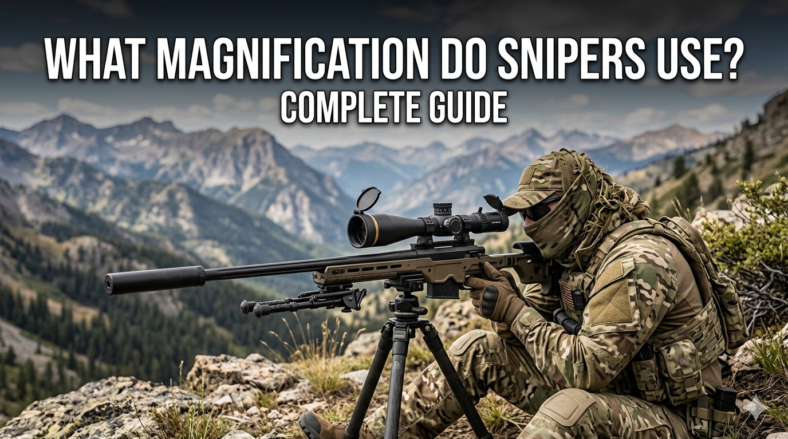
What Magnification Do Snipers Use? Complete Guide

When people think about snipers, they often imagine extremely powerful scopes capable of zooming targets from miles away. Movies often show snipers using unrealistic magnification levels, but in real-world shooting, choosing the right scope magnification is far more practical and technical.

The truth is: professional snipers do not always use maximum zoom. Instead, they select magnification based on distance, mission type, environment, target size, and shooting conditions.

In this detailed guide, you’ll learn:

  • What magnification snipers actually use
  • Military vs police sniper scope preferences
  • Best magnification for different shooting distances
  • Fixed vs variable sniper scopes
  • Why too much magnification can hurt accuracy
  • Recommended scope ranges for long-range shooting

Understanding Scope Magnification

Scope magnification refers to how much closer the target appears through the optic.

For example:

  • A 10x scope makes the target appear 10 times closer
  • A 20x scope makes it appear 20 times closer

If a target is 1,000 yards away:

  • At 10x magnification, it appears like it’s 100 yards away
  • At 20x magnification, it appears like it’s 50 yards away

Most sniper scopes use variable magnification systems such as:

  • 3-15x
  • 5-25x
  • 7-35x

This allows shooters to adjust zoom depending on the situation.

What Magnification Do Military Snipers Use?

Most military snipers commonly use scopes in the range of:

3x to 25x Magnification

However, the “sweet spot” for many real-world sniper engagements is:

10x to 15x Magnification

Even at extremely long distances, many snipers avoid excessive zoom because it can reduce field of view and make tracking targets harder.

Common Military Sniper Scope Magnifications

Scope TypeTypical Magnification
Standard sniper scope3-15x
Long-range sniper scope5-25x
Extreme long-range7-35x
Designated marksman rifle (DMR)1-8x or 2-10x
Urban sniper setups3-12x

Why Snipers Don’t Always Use Maximum Zoom

Many beginners believe higher magnification automatically means better accuracy.

That is not true.

Professional snipers often lower magnification because:

1. Wider Field of View

Lower magnification helps shooters:

  • Spot movement
  • Track targets
  • Observe surroundings
  • Maintain situational awareness

At extremely high zoom levels, the visible area becomes very narrow.

2. Better Stability

Higher magnification exaggerates every tiny movement.

At 25x magnification:

  • Heartbeat movement becomes noticeable
  • Breathing appears amplified
  • Rifle wobble becomes more distracting

Lower magnification provides a steadier sight picture.

3. Faster Target Acquisition

In combat situations, speed matters.

Using excessive magnification can slow down:

  • Target identification
  • Scope alignment
  • Follow-up shots

That’s why many military snipers operate around 10x–15x instead of max power.

4. Mirage Problems

Heat waves and atmospheric distortion become much more visible at high magnification.

This is called mirage.

At long distances, especially in hot environments:

  • 20x+ magnification may produce blurry images
  • Target visibility can worsen
  • Precision becomes harder

Sometimes reducing magnification actually improves clarity.

What Magnification Do Police Snipers Use?

Police snipers usually engage targets at shorter distances compared to military snipers.

Typical law enforcement sniper shots happen within:

  • 50 to 200 yards

Because of this, police snipers often use:

3-12x or 4-16x Scopes

They prioritize:

  • Fast target acquisition
  • Wide field of view
  • Precision at moderate ranges

Urban environments rarely require extreme magnification.

Best Magnification for Different Shooting Distances

100–300 Yards

Recommended magnification:

3x–9x

Perfect for:

  • Hunting
  • Tactical shooting
  • Patrol rifles
  • Beginner long-range practice

300–600 Yards

Recommended magnification:

6x–12x

Ideal for:

  • Precision shooting
  • Mid-range sniper work
  • DMR platforms

600–1,000 Yards

Recommended magnification:

10x–20x

Most sniper systems operate effectively in this range.

This is where scopes like 5-25x excel.

1,000+ Yards

Recommended magnification:

15x–30x

Used for:

  • Extreme long-range shooting
  • Competitive precision rifle shooting
  • Anti-material rifles

However, many shooters still dial back magnification for better clarity.

Fixed Power vs Variable Power Sniper Scopes

Fixed Power Scopes

These scopes stay at one magnification level.

Example:

  • Fixed 10x scope

Advantages:

  • Simpler design
  • More durable
  • Often lighter
  • Reliable tracking

A famous example is the military use of fixed 10x scopes on sniper rifles like the M40.

Variable Power Scopes

These allow zoom adjustment.

Example:

  • 5-25×56 scope

Advantages:

  • Flexible for multiple distances
  • Better adaptability
  • Improved observation capability

Most modern sniper rifles now use variable optics.

Popular Sniper Scope Magnifications Used Today

5-25×56

One of the most popular long-range sniper configurations.

Used for:

  • Military applications
  • Precision rifle competitions
  • Long-range hunting

Excellent balance of:

  • Low-end usability
  • High-end precision

3-18×50

A versatile tactical setup.

Popular among:

  • Tactical shooters
  • Law enforcement
  • Designated marksmen

Good for both close and long-range engagements.

7-35×56

Designed for extreme long-range precision.

Typically used in:

  • PRS competitions
  • ELR (Extreme Long Range) shooting

Not always practical for combat use.

Does Higher Magnification Improve Accuracy?

Not directly.

Magnification only helps you see the target more clearly.

Accuracy actually depends on:

  • Rifle quality
  • Ammunition consistency
  • Shooter skill
  • Wind reading
  • Trigger control
  • Ballistic knowledge

A poor shooter with a 35x scope will still miss.

An experienced sniper can make accurate shots with moderate magnification.

What Magnification Did Famous Snipers Use?

Carlos Hathcock

Legendary U.S. Marine sniper.

Used a fixed:

8x Unertl Scope

Despite the relatively low magnification, he achieved incredible long-range accuracy.

Modern U.S. Army Snipers

Commonly use optics like:

  • 3-20x
  • 5-25x

Depending on rifle platform and mission.

Competitive Precision Shooters

Often use:

  • 7-35x
  • 8-40x

Because competition environments differ from combat situations.

Best Magnification for Beginners

If you are new to long-range shooting, a scope around:

4-16x or 5-25x

is usually ideal.

These provide:

  • Enough zoom for distance shooting
  • Practical low-end magnification
  • Flexibility for learning

Avoid starting with ultra-high magnification optics unless you specifically shoot extreme long range.

Choosing the Right Objective Lens Size

Magnification works together with objective lens size.

Examples:

  • 5-25×56
  • 3-18×50

The last number represents the objective lens diameter in millimeters.

Larger objective lenses:

  • Gather more light
  • Improve low-light performance
  • Increase image brightness

But they also:

  • Add weight
  • Require higher mounting positions

Most sniper scopes use:

  • 50mm
  • 56mm objectives

First Focal Plane vs Second Focal Plane

Many sniper scopes also differ in reticle design.

First Focal Plane (FFP)

The reticle scales with magnification.

Advantages:

  • Accurate holdovers at all zoom levels
  • Preferred for tactical shooting

Most professional sniper scopes use FFP.

Second Focal Plane (SFP)

The reticle stays the same size.

Advantages:

  • Easier reticle visibility
  • Often cheaper

Common in hunting scopes.

Realistic Sniper Engagement Distances

Despite Hollywood portrayals, most sniper engagements occur at moderate ranges.

Typical military sniper shots:

  • 300–800 yards

Most law enforcement sniper shots:

  • Under 100 yards

This is why practical magnification matters more than extreme zoom.

Common Myths About Sniper Magnification

Myth 1: More Zoom Is Always Better

False.

Too much zoom can reduce effectiveness.

Myth 2: Snipers Use 50x Scopes

Rarely.

Most professional sniper optics stay below 25x.

Myth 3: High Magnification Eliminates Skill Requirements

False.

Wind calls, breathing control, and fundamentals matter far more.

Recommended Magnification by Use Case

Use CaseRecommended Magnification
Hunting3-9x
Tactical shooting3-15x
Police sniper4-16x
Military sniper5-25x
PRS competition5-25x or 7-35x
ELR shooting7-35x+

Final Thoughts

In conclusion, snipers typically use scope magnifications ranging from 10x to 20x, depending on the mission, distance, and environment. While high magnification can help with long-range targeting, professional shooters prioritize clarity, stability, and field of view over extreme zoom. Choosing the right magnification is about balance, not simply using the highest power available.

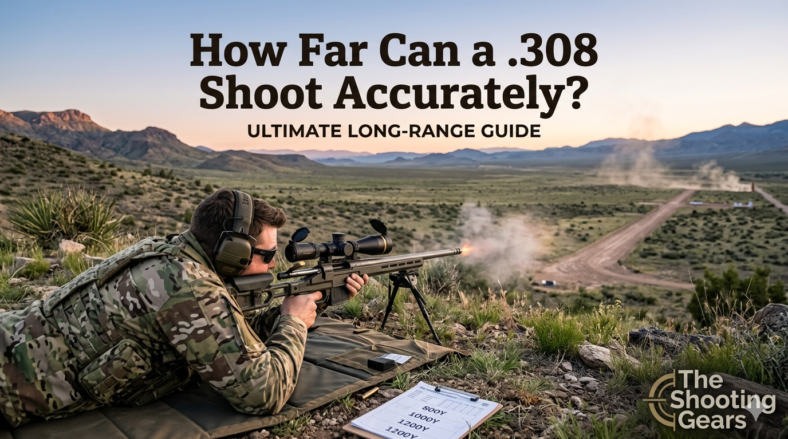
How Far Can a .308 Shoot Accurately? Complete Guide for Hunters

The .308 Winchester is one of the most respected rifle cartridges ever created. Whether you’re a hunter, competitive marksman, tactical shooter, or beginner exploring long-range rifles, chances are you’ve asked this question:

How far can a .308 shoot accurately?

The simple answer is:

  • A skilled shooter can accurately shoot a .308 at 800–1,000 yards
  • Hunters typically use it effectively within 300–500 yards
  • Elite marksmen can push it beyond 1,200 yards

However, the real answer is much more complex.

Accuracy depends on:

  • Rifle quality
  • Barrel length
  • Ammunition
  • Shooter skill
  • Optics
  • Wind conditions
  • Elevation
  • Target size

The .308 Winchester has remained dominant for over 70 years because it delivers a rare combination of:

  • Accuracy
  • Power
  • Reliability
  • Moderate recoil
  • Long barrel life
  • Affordable ammunition

In this complete guide, you’ll learn everything about the effective range and accuracy of the .308 Winchester, including real-world shooting performance, hunting capabilities, long-range ballistics, bullet drop, and how it compares to modern precision cartridges.

What Is the .308 Winchester?

The .308 Winchester was introduced commercially in 1952 by Winchester Repeating Arms Company. Shortly afterward, the military adopted a nearly identical version called the 7.62×51mm NATO.

The cartridge became extremely popular because it offered:

  • Excellent accuracy
  • Strong terminal performance
  • Compact cartridge size
  • Manageable recoil
  • Versatility for hunting and combat

Today, the .308 is used in:

  • Hunting rifles
  • Precision rifles
  • Military sniper systems
  • Police marksman rifles
  • Competitive shooting platforms

Famous rifles chambered in .308 include:

  • Remington 700
  • M24 Sniper Weapon System
  • M40 Rifle
  • Ruger Precision Rifle
  • Tikka T3x CTR

The Real Meaning of “Accurate Range”

Before discussing numbers, it’s important to understand what “accurate” actually means.

For some shooters, accurate means:

  • Hitting steel targets

For hunters, accurate means:

  • Delivering an ethical kill shot

For military snipers, accurate means:

  • Consistently hitting human-sized targets under difficult conditions

For competition shooters, accurate means:

  • Tiny sub-MOA groups at long distances

This is why there is no single universal answer.

Practical Accuracy Range of a .308

Here’s a realistic breakdown:

PurposePractical Accurate Range
Beginner target shooting100–500 yards
Intermediate shooters600–800 yards
Experienced precision shooters800–1,000 yards
Hunting deer-sized game300–500 yards
Expert long-range shooters1,200+ yards

The majority of shooters find the .308 performs best between:

300≤x≤800300 \leq x \leq 800300≤x≤800

Within this range, the cartridge still maintains:

  • Good velocity
  • Stable flight
  • Manageable wind drift
  • Reliable terminal energy

Maximum Distance a .308 Can Travel

A .308 bullet can physically travel several miles if fired at an upward angle.

However, maximum travel distance is very different from accurate effective range.

Most shooters focus on:

  • Precision hits
  • Energy retention
  • Bullet stability
  • Wind resistance

At extremely long distances, the .308 begins to lose efficiency compared to newer cartridges.

Why the .308 Is So Accurate

Several characteristics make the .308 inherently accurate.

1. Consistent Bullet Stability

The .308 has a relatively efficient case design and moderate recoil impulse, which helps shooters maintain stability during firing.

Heavy match bullets like:

  • 168-grain HPBT
  • 175-grain MatchKing

are especially stable at long distances.

2. Moderate Recoil

Compared to magnum calibers, the .308 has manageable recoil.

Less recoil means:

  • Better shooter control
  • Faster follow-up shots
  • Reduced flinching
  • Improved spotting of impacts

This is one reason the .308 became so popular in military sniper schools.

3. Excellent Barrel Life

Some high-performance cartridges burn out barrels quickly.

The .308 is known for outstanding barrel longevity.

Typical barrel life:

  • 5,000–8,000 rounds

Some precision cartridges lose accuracy after:

  • 1,500–2,500 rounds

This makes the .308 economical for heavy practice.

How Barrel Length Affects Accuracy

Barrel length plays a huge role in long-range performance.

Common Barrel Lengths

Barrel LengthCharacteristics
16-inchCompact, tactical use
18-inchBalanced performance
20-inchExcellent versatility
24-inchBest long-range velocity

Longer barrels produce:

  • Higher muzzle velocity
  • Better long-range energy
  • Reduced bullet drop

Short barrels sacrifice velocity for maneuverability.

Understanding Bullet Drop

Gravity constantly pulls the bullet downward during flight.

As distance increases, bullet drop becomes dramatic.

A common 175-grain .308 match load may experience:

DistanceApproximate Drop
200 yards-3 inches
300 yards-13 inches
500 yards-60 inches
800 yards-250 inches
1,000 yards-400 inches

Projectile motion is governed by the trajectory equation:

y=xtan⁡(θ)−gx22v02cos⁡2(θ)y = x\tan(\theta)-\frac{gx^2}{2v_0^2\cos^2(\theta)}y=xtan(θ)−2v02​cos2(θ)gx2​

thetathetatheta

ggg

v0v_0v0​

Because of this massive drop, long-range shooters use:

  • Scope elevation adjustments
  • Ballistic apps
  • Laser rangefinders
  • DOPE charts

Wind Drift: The Biggest Challenge

Many beginners assume bullet drop is the hardest part of long-range shooting.

In reality, wind is usually far more difficult.

Even small crosswinds can dramatically affect a .308 bullet at long distances.

Example:

  • 10 mph crosswind
  • 175-grain bullet
  • 1,000 yards

The bullet may drift over:

  • 80 inches sideways

That’s nearly 7 feet.

This is why elite long-range shooters spend years mastering wind reading.

Supersonic Range of a .308

A bullet performs best while traveling faster than the speed of sound.

Once the bullet drops below supersonic velocity, instability increases.

Most .308 match loads remain supersonic until approximately:

  • 800–1,000 yards

This is one reason why many shooters consider 1,000 yards the practical limit for consistent precision.

Best Ammo for Long-Range Accuracy

Not all .308 ammunition performs equally.

Cheap bulk FMJ ammunition may be acceptable for practice but often lacks consistency.

Precision shooters usually choose:

  • Match-grade ammunition
  • Hollow point boat tail bullets
  • High ballistic coefficient bullets

Popular long-range loads include:

  • Federal Premium Gold Medal Match
  • Hornady Match
  • Black Hills Ammunition Match

Hunting Accuracy of a .308

The .308 Winchester is one of the best all-around hunting cartridges ever made.

It is commonly used for:

  • Deer
  • Hogs
  • Elk
  • Black bear

Ethical Hunting Range

Although the cartridge can travel much farther, ethical hunting range depends on:

  • Shooter skill
  • Energy retention
  • Shot placement

Typical ethical ranges:

AnimalRecommended Range
Deer300–500 yards
Elk300–400 yards
Hogs200–400 yards

Beyond these distances, wind and bullet drop increase the risk of poor shot placement.

Can the .308 Reach 1,000 Yards?

Yes — absolutely.

The .308 has been used successfully at 1,000 yards for decades.

Military snipers using systems like the M24 Sniper Weapon System routinely trained at these distances.

However, consistent 1,000-yard shooting requires:

  • Match-grade ammo
  • Precision rifle
  • High-quality optic
  • Advanced wind-reading skills
  • Extensive practice

For beginners, 1,000 yards is extremely challenging.

Best Optics for .308 Long-Range Shooting

Quality optics are critical.

Popular long-range scope brands include:

  • Vortex
  • Leupold
  • Nightforce
  • Primary Arms

Key features:

  • First focal plane reticle
  • MIL or MOA adjustments
  • Clear glass
  • Reliable tracking
  • High magnification

Comparing .308 vs 6.5 Creedmoor

The 6.5 Creedmoor has become the biggest competitor to the .308.

Why Some Shooters Prefer 6.5 Creedmoor

Advantages:

  • Flatter trajectory
  • Less wind drift
  • Lower recoil
  • Better long-range ballistics

Why .308 Still Dominates

Advantages:

  • More affordable ammo
  • Greater availability
  • Longer barrel life
  • Proven military history
  • Better short-barrel performance

For extreme long-range shooting, many competitors now prefer 6.5 Creedmoor.

But the .308 remains one of the most versatile cartridges ever made.

Comparing .308 vs .300 Winchester Magnum

The .300 Winchester Magnum delivers:

  • Higher velocity
  • More energy
  • Better long-range performance

However:

  • Recoil is much heavier
  • Ammo is more expensive
  • Barrel wear increases

Many shooters prefer the .308 because it is easier to shoot consistently.

Tips for Shooting a .308 More Accurately

Learn Your Rifle

Every rifle behaves differently.

Practice at Multiple Distances

Do not jump directly to 1,000 yards.

Invest in Good Ammo

Ammo consistency matters enormously.

Use Stable Shooting Positions

A bipod or rear bag improves precision.

Study Wind Reading

Wind is the defining skill of long-range shooting.

Record Your Data

Serious shooters maintain DOPE charts for elevation and wind holds.

Is the .308 Still Good in 2026?

Despite newer cartridges entering the market, the .308 remains extremely relevant.

Reasons shooters still love it:

  • Proven reliability
  • Massive ammo availability
  • Excellent hunting capability
  • Precision shooting performance
  • Moderate recoil
  • Affordable practice costs

Very few cartridges balance all these strengths so effectively.

Final Verdict: How Far Can a .308 Shoot Accurately?

The .308 Winchester remains one of the most reliable and versatile rifle cartridges ever designed, offering an outstanding balance of accuracy, power, recoil control, and long-range capability. While the cartridge is fully capable of reaching targets beyond 1,000 yards in the hands of experienced shooters, its most practical and effective range for consistent precision typically falls between 300 and 800 yards. For hunters, the .308 provides excellent performance on medium and large game at ethical distances, while precision shooters continue to trust it for tactical and competitive applications. Although newer cartridges like the 6.5 Creedmoor may offer flatter trajectories and reduced wind drift, the .308 continues to dominate because of its proven battlefield history, affordable ammunition, long barrel life, and widespread availability. Whether you are a beginner learning long-range fundamentals or an experienced marksman pushing distance limits, the .308 Winchester remains a dependable choice that delivers impressive accuracy in almost every shooting scenario.

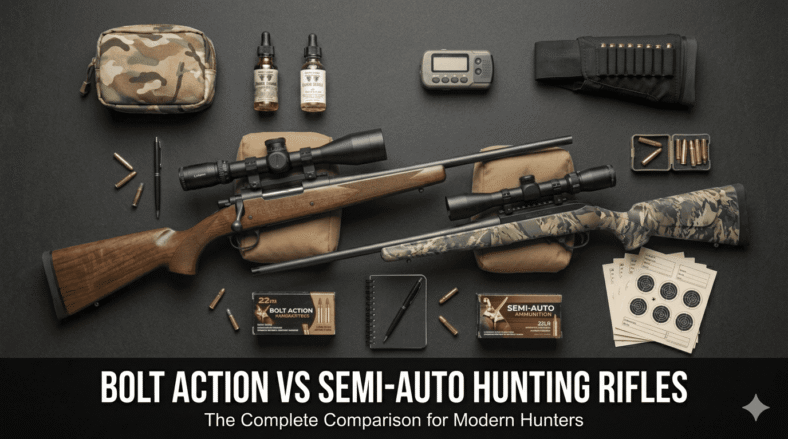
Bolt Action vs Semi-Auto Hunting Rifles: A Complete In-Depth Guide

When it comes to hunting rifles, few debates are as common or as important as the choice between bolt action and semi-automatic rifles. Whether you’re a beginner trying to buy your first hunting rifle or an experienced hunter looking to upgrade, understanding the real differences between these two systems can significantly impact your success in the field.

This isn’t just about preference it’s about accuracy, reliability, speed, maintenance, and even hunting style. In this detailed guide, we’ll break down everything you need to know about bolt action vs semi-auto hunting rifles so you can confidently choose the right one.

Understanding the Basics: How Each Rifle Works

To truly understand the difference between bolt action and semi-automatic rifles, you first need to understand how each system operates.

A bolt action rifle is built around a simple but highly effective manual mechanism. After firing a shot, the shooter must physically lift and pull back the bolt handle to eject the spent casing. Then, by pushing the bolt forward and locking it down, a new round is chambered. This process repeats for every shot. While this might seem slow compared to modern firearms, it provides unmatched control and consistency.

On the other hand, a semi-automatic rifle automates this entire process. When you pull the trigger, the rifle uses either gas pressure or recoil energy generated by the fired round to eject the spent casing and load a new cartridge into the chamber. This means you can fire consecutive shots quickly without manually cycling the action. All you need to do is pull the trigger again.

This fundamental mechanical difference shapes everything else from performance to reliability to real-world hunting use.

Accuracy: The Biggest Deciding Factor for Hunters

Accuracy is often the most critical factor for hunters, and this is where bolt action rifles traditionally shine.

Bolt action rifles are known for their exceptional accuracy because they have fewer moving parts during the moment of firing. When you pull the trigger, the system is completely locked in place. This stability allows for better consistency shot after shot, especially at long distances. That’s why bolt action rifles are commonly used in precision shooting and long-range hunting scenarios such as deer or elk hunting.

Semi-automatic rifles, while still accurate, tend to have slightly more internal movement due to their cycling mechanism. This movement can introduce minor inconsistencies, especially at longer ranges. However, it’s important to note that modern semi-autos have improved significantly, and many high-quality models can deliver impressive accuracy just not usually at the same level as a good bolt action rifle.

For hunters who prioritize making a single, precise shot especially at longer distances the bolt action rifle remains the preferred choice.

Speed and Follow-Up Shots: Where Semi-Auto Excels

While bolt action rifles dominate in accuracy, semi-automatic rifles take the lead when it comes to speed.

In real hunting scenarios, not every shot goes perfectly. Sometimes animals move, shots miss, or a follow-up shot is necessary for an ethical kill. With a bolt action rifle, you must manually cycle the bolt before firing again. Even with practice, this introduces a delay.

Semi-automatic rifles eliminate this delay almost entirely. The next round is chambered instantly after each shot, allowing for rapid follow-up shots. This can be incredibly useful when hunting fast-moving animals like wild boar or predators, where speed can make a big difference.

This advantage is also important for hunters in dense environments where visibility is limited and quick reactions are necessary.

Reliability in Harsh Conditions

Reliability is where bolt action rifles truly prove their worth, especially in challenging environments.

Because of their simple design, bolt action rifles are incredibly dependable. They can function in mud, rain, snow, and dust with minimal risk of malfunction. The lack of complex moving parts means fewer things can go wrong.

Semi-automatic rifles, while generally reliable, are more sensitive to environmental conditions and ammunition quality. Dirt or debris can interfere with the gas system, and certain types of ammunition may not cycle properly. This doesn’t mean semi-autos are unreliable—it just means they require more attention and care.

For hunters venturing into rugged terrains or extreme weather conditions, a bolt action rifle offers peace of mind that the firearm will work when it matters most.

Maintenance and Ease of Use

Maintenance is another area where these two rifle types differ significantly.

Bolt action rifles are straightforward to clean and maintain. With fewer moving parts and no gas system, the cleaning process is simple and less time-consuming. This makes them ideal for beginners or hunters who prefer low-maintenance equipment.

Semi-automatic rifles, in contrast, require more detailed cleaning. The gas system, bolt carrier group, and other internal components need regular attention to ensure smooth operation. Neglecting maintenance can lead to performance issues over time.

While experienced users may not mind this extra effort, beginners often find bolt action rifles easier to manage.

Weight, Handling, and Portability

When you’re out in the field for hours or even days every ounce matters.

Bolt action rifles are typically lighter and more streamlined. Their simpler construction makes them easier to carry, especially during long hunts or mountain treks. This can reduce fatigue and improve overall hunting efficiency.

Semi-automatic rifles tend to be heavier due to their additional components. While the weight difference may not seem significant at first, it becomes noticeable during extended use.

For hunters who prioritize mobility and endurance, bolt action rifles often have the advantage.

Magazine Capacity and Practical Use

Magazine capacity is another important factor, particularly depending on your hunting style.

Bolt action rifles usually come with lower capacity magazines, often holding between three to five rounds. This is generally sufficient for most traditional hunting scenarios, where precision matters more than volume.

Semi-automatic rifles typically offer higher magazine capacities. This allows hunters to take multiple shots without reloading, which can be beneficial in certain situations, such as hunting groups of animals or dealing with fast-moving targets.

However, it’s important to consider local hunting laws, as some regions impose restrictions on magazine capacity or the use of semi-automatic rifles altogether.

Cost Considerations

Budget is always a factor when choosing a hunting rifle.

Bolt action rifles are generally more affordable. Their simpler design makes them less expensive to manufacture, and there are many high-quality options available at reasonable prices. This makes them an excellent choice for beginners or budget-conscious hunters.

Semi-automatic rifles tend to be more expensive, both in terms of initial purchase and long-term maintenance. The added complexity of the design contributes to the higher cost.

For those looking for value and performance without overspending, bolt action rifles often provide the best balance.

Real-World Hunting Applications

The best rifle for you ultimately depends on how and where you hunt.

If your focus is on long-range shooting in open environments, such as hunting deer or elk across large fields or mountains, a bolt action rifle is typically the better choice. Its accuracy and reliability make it ideal for these conditions.

On the other hand, if you hunt in dense forests or pursue fast-moving animals, a semi-automatic rifle can offer a significant advantage. The ability to take quick follow-up shots can improve your chances of success in dynamic situations.

Your experience level also plays a role. Beginners often benefit from the simplicity of bolt action rifles, while more experienced hunters may appreciate the versatility of semi-autos.

Final Verdict: Which One Should You Choose?

There is no universal answer to whether a bolt action or semi-automatic rifle is better it all depends on your specific needs and hunting style.

Bolt action rifles stand out for their accuracy, reliability, simplicity, and affordability. They are ideal for hunters who value precision and consistency, especially in long-range scenarios.

Semi-automatic rifles, on the other hand, excel in speed and versatility. They are well-suited for situations where quick follow-up shots are necessary and can be a powerful tool in the hands of an experienced hunter.

In the end, the best choice is the one that aligns with your hunting goals, environment, and personal preferences.

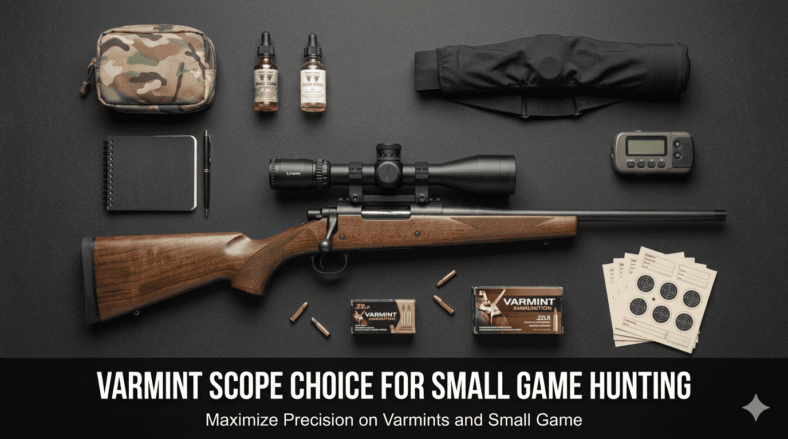
Varmint Scope Choice for Small Game Hunting: The Complete Guide

Small game hunting is one of the most rewarding yet technically demanding forms of hunting. Unlike large game, where targets are bigger and more forgiving, small animals such as rabbits, squirrels, and prairie dogs require exceptional precision. That precision does not come only from your rifle or your shooting skillsit comes heavily from your scope. Choosing the right varmint scope is not just about buying an optic; it is about matching your equipment to the behavior of your target, the environment you hunt in, and the distances you shoot.

🎯 Why the Right Scope Makes All the Difference

When hunting small game, you are often dealing with animals that are quick, alert, and small in size. A squirrel’s vital zone, for example, is tiny compared to that of a deer. This means even slight inaccuracies can result in a miss or, worse, an unethical shot. A good scope helps you see clearly, aim precisely, and react quickly.

In dense forests, your target may appear suddenly and disappear just as fast. In open fields, you may be taking longer shots where bullet drop becomes a factor. A well-chosen scope bridges these different scenarios by giving you clarity, flexibility, and confidence. Without it, even a high-quality rifle cannot perform to its full potential.

🔍 Understanding Magnification in Real Hunting Situations

Magnification is often the first thing hunters focus on, but it is also one of the most misunderstood aspects of a scope. Many beginners assume that higher magnification automatically means better performance. In reality, magnification is about balance.

At lower magnification levels, such as 3x or 4x, your field of view is much wider. This makes it easier to locate and track moving animals, especially in wooded areas. It also allows for faster target acquisition, which is critical when hunting animals that rarely stay still.

As you increase magnification, you gain the ability to see fine details at longer distances. This is particularly useful in open terrain where targets may be 100 yards or more away. However, higher magnification narrows your field of view and can make it harder to find your target quickly. It can also amplify small movements, making your sight picture less stable.

For most small game hunters, a variable scope in the range of 3-9x or 4-12x provides the best versatility. It allows you to stay at low magnification when scanning for targets and then zoom in when you are ready to take a precise shot.

🎯 The Role of Objective Lens Size in Visibility

The objective lens, located at the front of the scope, plays a crucial role in how much light enters your optic. This directly affects how bright and clear your image appears, especially during low-light conditions such as early morning or late evening hunts.

A larger objective lens, such as 50mm, allows more light to enter, resulting in a brighter image. This can be beneficial when hunting at dawn or dusk. However, larger lenses also add weight and can make your rifle feel less balanced. They may also require higher mounting, which can affect your shooting comfort.

On the other hand, a 40mm objective lens strikes an excellent balance between brightness and practicality. It provides sufficient light for most hunting conditions while keeping your setup lightweight and easy to handle. For the majority of small game hunters, this size is more than adequate.

🧠 Reticle Choice and Its Impact on Accuracy

The reticle is your point of reference inside the scope, and its design can significantly influence your shooting experience. A simple duplex reticle, with its thicker outer lines and fine center crosshair, is often the preferred choice for beginners. It is easy to use and allows for quick target acquisition without unnecessary complexity.

More advanced reticles, such as mil-dot or BDC (bullet drop compensation), provide additional information that can be used for range estimation and holdover adjustments. These reticles become particularly useful when shooting at varying distances, as they help you compensate for bullet drop without adjusting your turrets.

While advanced reticles offer more functionality, they also require practice and understanding. For small game hunting, where shots are often taken within moderate distances, many hunters find that a simple reticle is more than sufficient. However, if you frequently hunt in open areas and take longer shots, a BDC reticle can be a valuable tool.

🔧 Parallax Adjustment and Why It Matters More Than You Think

Parallax is a phenomenon where the reticle appears to shift relative to the target when you move your eye behind the scope. This can lead to inaccuracies, especially when shooting at small targets.

Many basic scopes come with a fixed parallax setting, often set at 100 yards. While this may work reasonably well for general hunting, it is not ideal for small game, where shots may be taken at much shorter distances. In such cases, parallax error can become more noticeable and affect your accuracy.

Scopes with adjustable parallax, either through an adjustable objective (AO) or a side focus knob, allow you to fine-tune the focus for different distances. This not only improves clarity but also ensures that your reticle remains aligned with the target. For varmint hunting, where precision is critical, having parallax adjustment can make a significant difference.

💡 Glass Quality: The Hidden Factor Behind Performance

One of the most overlooked aspects of a scope is the quality of its glass. Two scopes may have the same magnification and lens size, but the difference in clarity can be dramatic.

High-quality glass with fully multi-coated lenses provides better light transmission, sharper images, and reduced glare. This is especially important when trying to identify small targets against complex backgrounds. Poor-quality optics can result in a blurry or dim image, making it difficult to distinguish your target clearly.

Investing in good glass does not necessarily mean buying the most expensive scope on the market. Many mid-range scopes offer excellent optical performance and represent great value for money. The key is to prioritize clarity and reliability over unnecessary features.

⚖️ Weight, Durability, and Real-World Use

When you are out in the field for hours, every ounce matters. A heavy scope can make your rifle cumbersome and tiring to carry, especially if you are moving frequently. Lightweight scopes are easier to handle and contribute to better overall balance.

Durability is equally important. Hunting conditions can be unpredictable, and your scope needs to withstand recoil, weather, and rough handling. Features such as waterproofing, fog-proofing, and shock resistance ensure that your optic performs reliably in all conditions.

A well-built scope not only lasts longer but also maintains its zero, which is essential for consistent accuracy.

🎯 Matching Your Scope to Your Hunting Style

Small game hunting is not a one-size-fits-all activity. The environment you hunt in plays a major role in determining the type of scope you need.

In dense forests, where shots are typically short and targets appear quickly, a lower magnification scope with a wide field of view is ideal. It allows you to acquire targets بسرعة and track movement بسهولة.

In open fields, where distances are greater, higher magnification becomes more useful. Here, the ability to zoom in and make precise adjustments can significantly improve your success rate.

For hunters who frequently switch between environments, a versatile variable scope provides the flexibility needed to adapt to different situations.

🏁 Final Thoughts

Choosing the right varmint scope for small game hunting is about understanding your needs and finding the right balance between performance and practicality. While it may be tempting to focus on specifications such as magnification and lens size, the true value of a scope lies in how well it performs in real hunting conditions.

A reliable scope with clear optics, appropriate magnification, and practical features will enhance your accuracy and overall hunting experience. It will allow you to take cleaner shots, reduce missed opportunities, and ultimately become a more effective hunter.

In the end, the best scope is not necessarily the most expensive one, but the one that fits your style, your environment, and your goals in the field.

Exit mobile version