


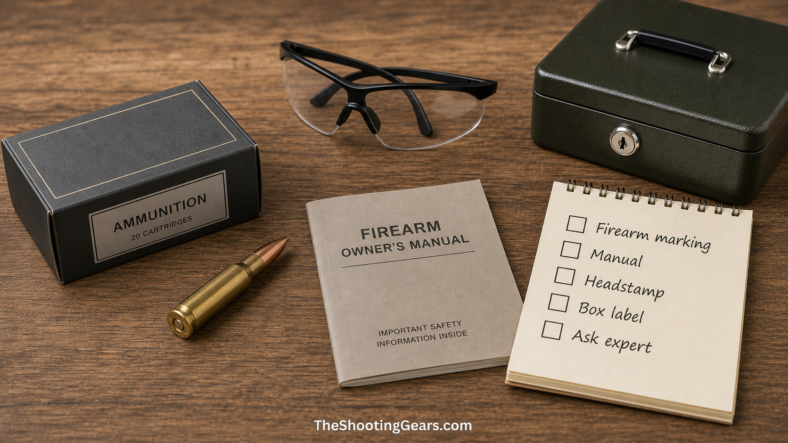
The safe rule for ammunition is simple: use only the ammunition the firearm manufacturer designates for that specific firearm, confirmed by the markings on the gun, the ammunition headstamp, the box label, and the owner’s manual. A cartridge fitting into the chamber or action does not prove it is safe.
This guide explains how to verify a match the right way. It is a safety explainer, not a caliber recommendation, reloading guide, legal guide, or product guide. It does not replace your firearm manufacturer’s instructions, range safety officer, or a qualified gunsmith.
Table of Contents
The Safe Rule: Match the Ammunition to the Firearm
Firearms should be used only with ammunition designated by the manufacturer for that firearm. This is one of the core safety rules published by SAAMI firearm safety rules and echoed in the NSSF rules of safe gun handling. The ammunition must match the firearm manual and the markings on the firearm. If those do not line up clearly, do not shoot it.
Check the Firearm Markings and Ammunition Headstamp
Start by reading the firearm’s own markings, which usually appear on the barrel, frame, slide, or receiver and state the cartridge the firearm is chambered for. Then compare that to the headstamp on the cartridge case and the original ammunition packaging.
According to SAAMI’s ammunition interchangeability guidance, the safest verification path is to check the ammunition headstamp against the firearm markings and manufacturer information. If the designation is uncertain or does not clearly match, do not use it until a qualified person examines it.
Read the Manual and Ammunition Box Warnings
The owner’s manual and ammunition box carry specific warnings. The manual tells you what the firearm is chambered for and may also list cartridges, pressure levels, or ammunition types to avoid. The ammunition box states the cartridge designation and warnings from the ammunition maker.
If you do not have the manual, check the firearm manufacturer’s website or contact the manufacturer. Treat manufacturer documentation as the authority, not a forum comment, a friend’s memory, or a visual guess.
Do Not Trust Fit Alone
A round fitting in the chamber or cycling through the action does not mean it is safe to fire. Some cartridges are dimensionally similar but operate at different pressures or have other compatibility limits. Chambering a round is not proof that it belongs in that firearm.
If you are tempted to try ammunition because it physically fits, stop and verify it by firearm markings, manual, headstamp, box label, and qualified guidance.
Watch for Shotgun Shell Length and Gauge
Shotguns add two specific traps: shell length and gauge. Loading a longer shotshell into a shorter chamber can create dangerous pressure conditions, so the shell length must match what the shotgun chamber is marked for. Gauge matters just as much, and different gauges are not interchangeable.
Confirm both the gauge and chamber length stamped on the barrel before loading any shotshell. If the marking is unclear, stop and ask a qualified person.
Be Careful With Military, +P, Reloaded, or Unknown Ammunition
Some ammunition needs extra caution. Military-standard ammunition should be used only in firearms explicitly marked or documented for that specific cartridge. Higher-pressure loads such as +P should be used only if the firearm manufacturer’s markings or manual support them.
Reloaded, remanufactured, surplus, inherited, or loose unknown ammunition should be treated carefully because the components, storage history, and pressure assumptions may not be clear. When a cartridge’s history or designation is uncertain, do not fire it.
Inspect Every Cartridge Before Use
Examine each cartridge before loading. Look for dents, corrosion, split cases, loose or missing components, oil or solvent exposure, water damage, and anything that looks irregular. Keep solvents and excessive lubricants away from ammunition.
If ammunition has been submerged, badly wet, contaminated, damaged, or stored under unknown conditions, set it aside and follow manufacturer or qualified guidance for disposal. Do not try to test questionable ammunition by firing it.
When to Stop and Ask a Qualified Person
If anything is uncertain, stop. A qualified gunsmith, the firearm manufacturer, a range safety officer, or a knowledgeable retailer can help confirm whether ammunition is correct for your firearm. SAAMI also publishes a library of ammunition and firearm advisories for further safety reading.
There is no downside to checking. The cost of guessing wrong can be severe.
Frequently Asked Questions
How do I know what ammunition my gun takes?
Read the cartridge designation marked on the barrel, frame, slide, or receiver, then confirm it against the owner’s manual, ammunition headstamp, and box label. If anything is unclear, ask the manufacturer or a qualified gunsmith.
If a cartridge fits in the chamber, is it safe to shoot?
No. Fit alone is not proof of safety. Some cartridges are similar in size but not safe in the same firearm. Always verify by manufacturer markings, the manual, the headstamp, and qualified guidance.
Can I shoot +P or military ammunition in my firearm?
Only if the firearm manufacturer’s markings or manual specifically support that ammunition. Higher-pressure +P loads and military cartridges are not universal substitutes.
Is it safe to use ammunition that got wet?
Ammunition that has been very wet, submerged, contaminated, or exposed to oil or solvents should not be fired unless the manufacturer or another qualified source says it is safe. When in doubt, do not use it.
What should I do if I am not sure the ammunition is correct?
Stop and do not fire it. Have the firearm and ammunition checked by a qualified gunsmith, the manufacturer, a range safety officer, or another qualified person.
Final Safety Recommendation
Choosing ammunition is a verification task, not a guessing game. Match the cartridge to the firearm’s markings, confirm it against the manual and headstamp, inspect every round, and treat fit as meaningless on its own. When anything is unclear, stop and ask a qualified person before loading or firing.

