


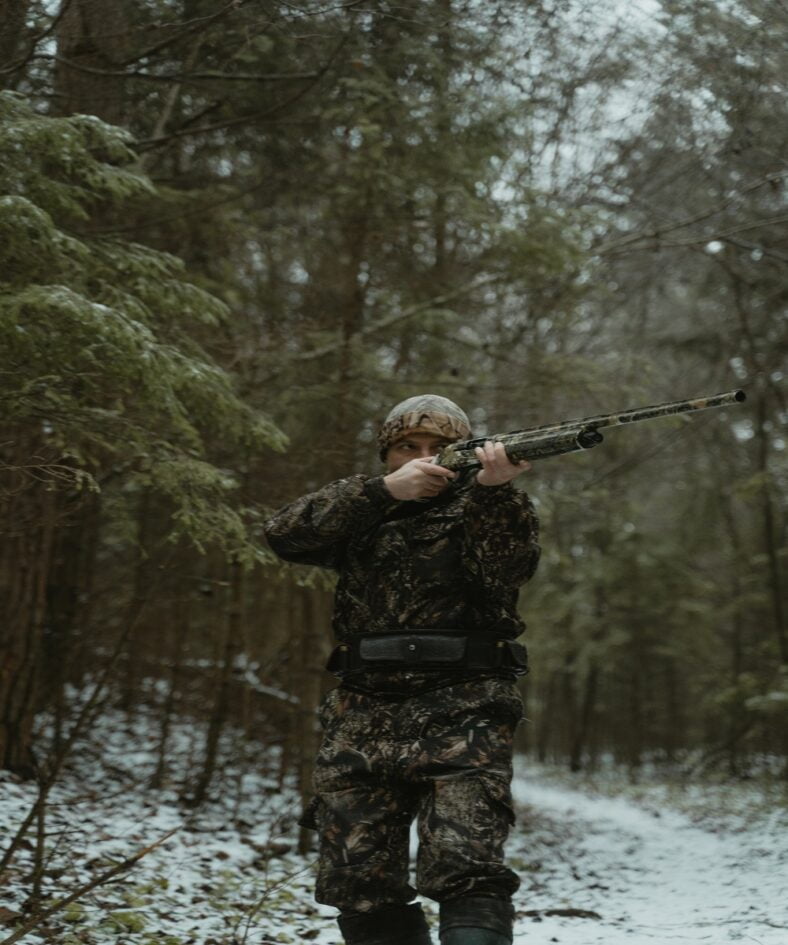
Low-light shooting is harder because the target, sights, background, and safety risks are all less obvious. The safest improvement is not simply “add more light.” It is learning when not to shoot, how to identify the target and what is beyond it, how your sights behave in dim light, and how to practice under controlled range conditions.
This guide is written for responsible range practice, hunting preparation, and general marksmanship awareness. Always follow your firearm manual, local laws, range rules, and the core safety rules. The NSSF firearm safety rules are the baseline before any low-light practice.
Table of Contents
Quick Low-Light Shooting Checklist
| Check | What to confirm | Why it matters |
|---|---|---|
| Legal light | Hunting or range activity is allowed at that time and location | Low light can create legal and ethical problems fast. |
| Target ID | You can clearly identify the target, not just a shape or sound | Never shoot at an uncertain target. |
| Backstop | You know what is behind and around the target | Backgrounds are harder to read in dim light. |
| Sight picture | Your sights, reticle, or dot are visible without covering the target | Aiming errors increase when contrast drops. |
| Light discipline | You know how your light affects vision and target visibility | Too much or too little light can both cause problems. |
| Practice setting | Low-light drills happen only at an approved range or safe setup | Controlled practice beats guessing in the field. |
| Stop rule | You know when visibility is too poor to continue | The best low-light skill is knowing when not to shoot. |
Why Low Light Is Different
Low light reduces contrast. That makes it harder to judge distance, see sight alignment, read terrain, and confirm what is beyond the target. It can also change how your eyes respond to muzzle flash, bright lights, shadows, and reflective surfaces.
Accuracy problems in low light are often decision problems before they are trigger problems. If the target is unclear, the backstop is uncertain, or the sight picture is not reliable, the correct choice is to stop. Better equipment cannot fix a bad identification decision.
Identify the Target Before Shooting
Target identification is the central rule. A shooter must know what the target is, where the safe backstop is, and what else is nearby. Low-light conditions make shapes and movement easier to misread, so do not treat movement, noise, or outline alone as enough information.
For secure storage and safe firearm habits around the home, Project ChildSafe is also worth referencing. Low-light awareness should include the full safety picture, not only aiming technique.
Understand Your Sights and Optics in Dim Light
Iron sights, illuminated reticles, red dots, scopes, and night sights all behave differently as light fades. A bright dot can bloom and cover detail. A non-illuminated reticle may disappear against a dark target. A scope can show a clearer image than the naked eye, but it does not remove the need to identify the target and background.
Practice with the same sighting system you plan to use. Check brightness settings, battery status, reticle visibility, and how the sight appears from different positions. If your optic has illumination, use the lowest setting that gives a clear aiming reference without washing out the target.
Build a Safe Low-Light Practice Plan
Low-light practice should happen only where it is allowed and controlled. Confirm range rules, target setup, backstop, emergency lighting, and supervision if needed. Start with simple drills: clear target identification, slow groups, sight visibility checks, and safe reload or handling practice only if the range permits it.
Do not add speed until safety and visibility are reliable. Record what worked: lighting level, sight setting, distance, target color, and whether you could call your shots. That information is more useful than trying to “win” a dark practice session.
Low-Light Hunting Considerations
Hunting adds legal and ethical limits. Shooting hours, species identification, blaze-orange rules, artificial-light rules, and property boundaries vary by place. Check your local wildlife agency before relying on any general advice. When visibility is marginal, passing the shot is often the responsible choice.
For competitive and formal marksmanship pathways, USA Shooting is a useful authority source. For hunting, pair marksmanship practice with local regulations and hunter education before field use.
Common Low-Light Shooting Mistakes
- Shooting before the target and backstop are clearly identified.
- Using an optic illumination setting that is too bright.
- Assuming a scope can replace safe visual confirmation.
- Practicing low-light handling in an unsafe or unapproved place.
- Ignoring local hunting-hour or artificial-light laws.
- Forgetting that fatigue and darkness make judgment worse.
Related Guides
- Shooting Range Safety Rules
- Trigger Control for Shooting Accuracy
- How To Improve Shooting Accuracy
- Rifle Scope vs Red Dot for Hunting
FAQ
What is the most important low-light shooting rule?
The most important rule is target identification. If you cannot clearly identify the target and what is beyond it, do not shoot.
Do illuminated reticles help in low light?
They can help, but only when set correctly. Too much brightness can cover detail or reduce your ability to see the target clearly.
Can I practice low-light shooting at home?
Live-fire practice belongs only in approved safe locations. Dry practice should follow your firearm manual, strict unloading procedures, safe direction, and secure ammunition separation.
Is low-light hunting always legal?
No. Legal shooting hours, artificial-light rules, and species rules vary by location. Check your local wildlife agency before hunting in low-light conditions.
Final Recommendation
Low-light shooting should be treated as a decision-making and safety problem first, and an accuracy problem second. Practice in controlled settings, learn how your sights behave, verify every target and backstop, and stop when visibility is not good enough. That discipline matters more than any single piece of gear.

