Best Rangefinder for Bowhunting Under $200

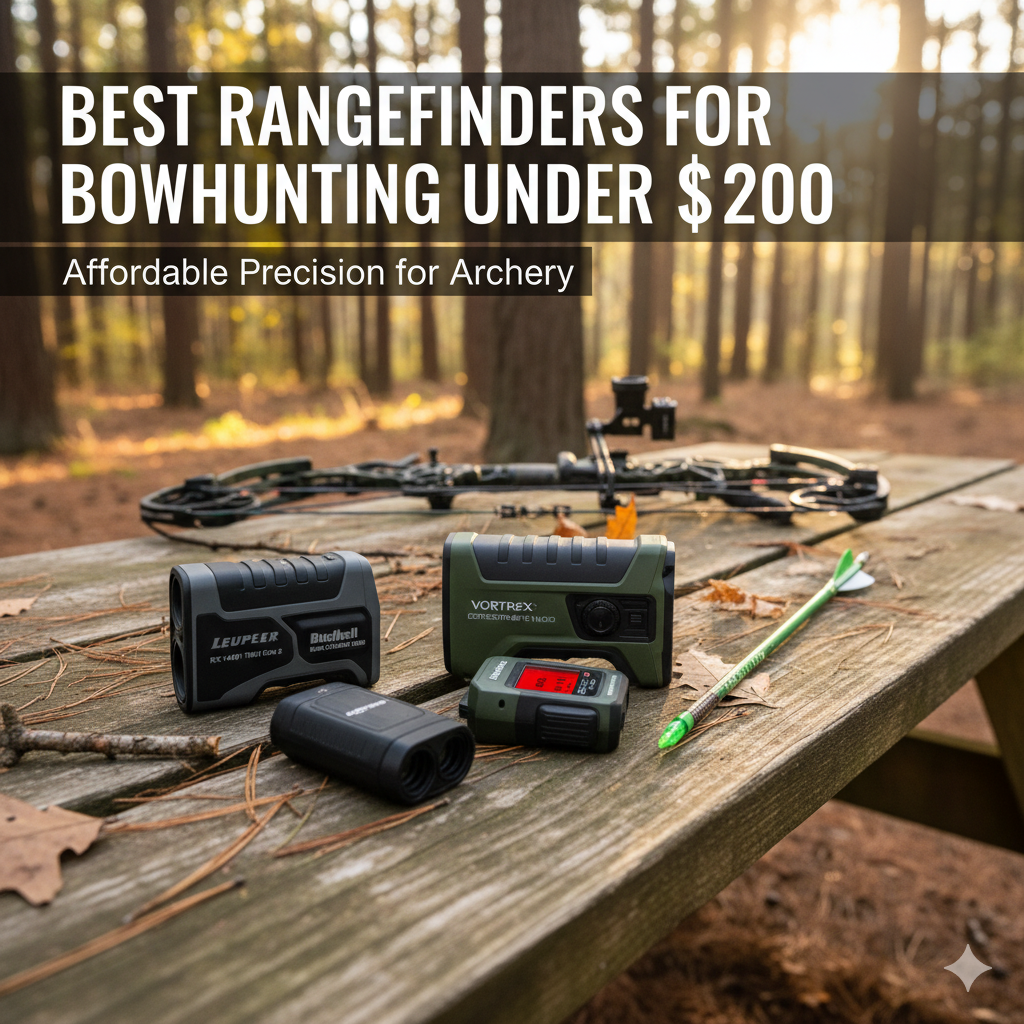
If you’re out bowhunting, you know that estimating yardage isn’t just helpful it’s essential. A few yards off and your arrow might fall short or sail over the back. That’s why investing in a solid laser rangefinder makes sense. But you don’t necessarily need to spend $300+, especially for bowhunting scenarios. In this post we’ll walk through what to look for, and then highlight some great options under $200.

What to look for in a bowhunting rangefinder

Before diving into picks, here are the features that matter most for a bowhunter:

  • Angle compensation: If you’re shooting from a tree-stand or on a slope, you need a true horizontal (or hold-over) distance rather than line-of-sight. As one guide puts it: “Most budget models … will not have angle compensation, which is a bowhunter’s best friend.”
  • Quick, reliable ranging: With a deer moving or heavy brush, you want near-instant feedback. One review warns to avoid units where you hit the button and get no response.
  • Durability / optics quality: In woods, pre-dawn, wet leaves and rough terrain—good glass, waterproofing or at least resistant housing matter.
  • Close-range accuracy: Most bow shots are <100 yards (even <50 in many cases). You need accuracy and confidence at these shorter ranges, not just “1000-yard max” specs.
  • Value for money: Since you’re under $200 budget, you’ll likely get fewer bells and whistles than the high-end units—but you can still hit the sweet spot.

From reviews:

  • One guide says: “For bowhunters … having a quality rangefinder is a must-have.” f
  • Another forum: “I’m getting started … My budget for accessories is tight and I’ve pinpointed three main options for a range finder below $200…”

Top Picks Under $200

Here are some models worth your attention. They might not offer everything the ultra-premium units do, but for bowhunting they hit the key criteria.

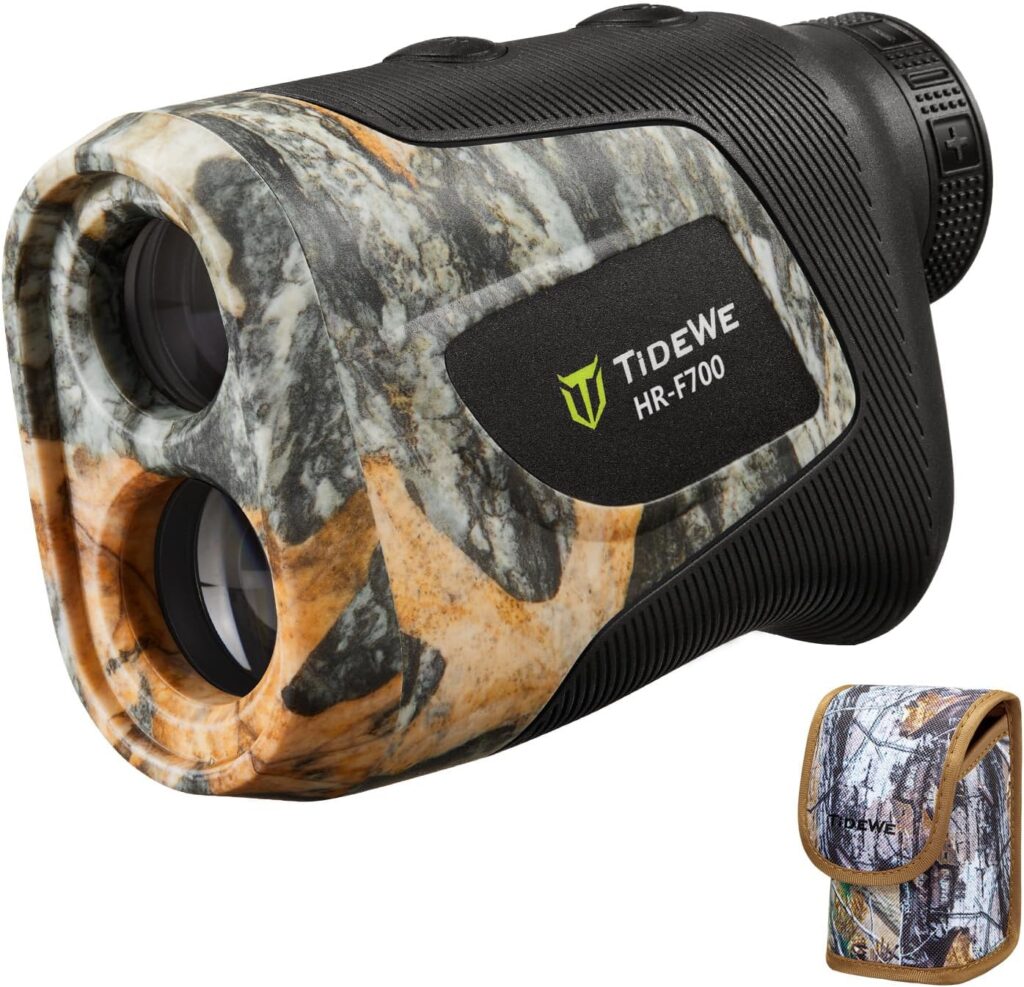
🦌 1. TIDEWE Hunting Rangefinder

Key Features:

  • 6× magnification, 700–1000 yd range
  • Rechargeable USB battery
  • Multiple modes: distance, angle, speed, scan

Pros:
✅ Budget-friendly & lightweight
✅ Angle and speed mode
✅ Rechargeable—no extra batteries

Cons:
❌ No illuminated display
❌ Basic weather resistance only

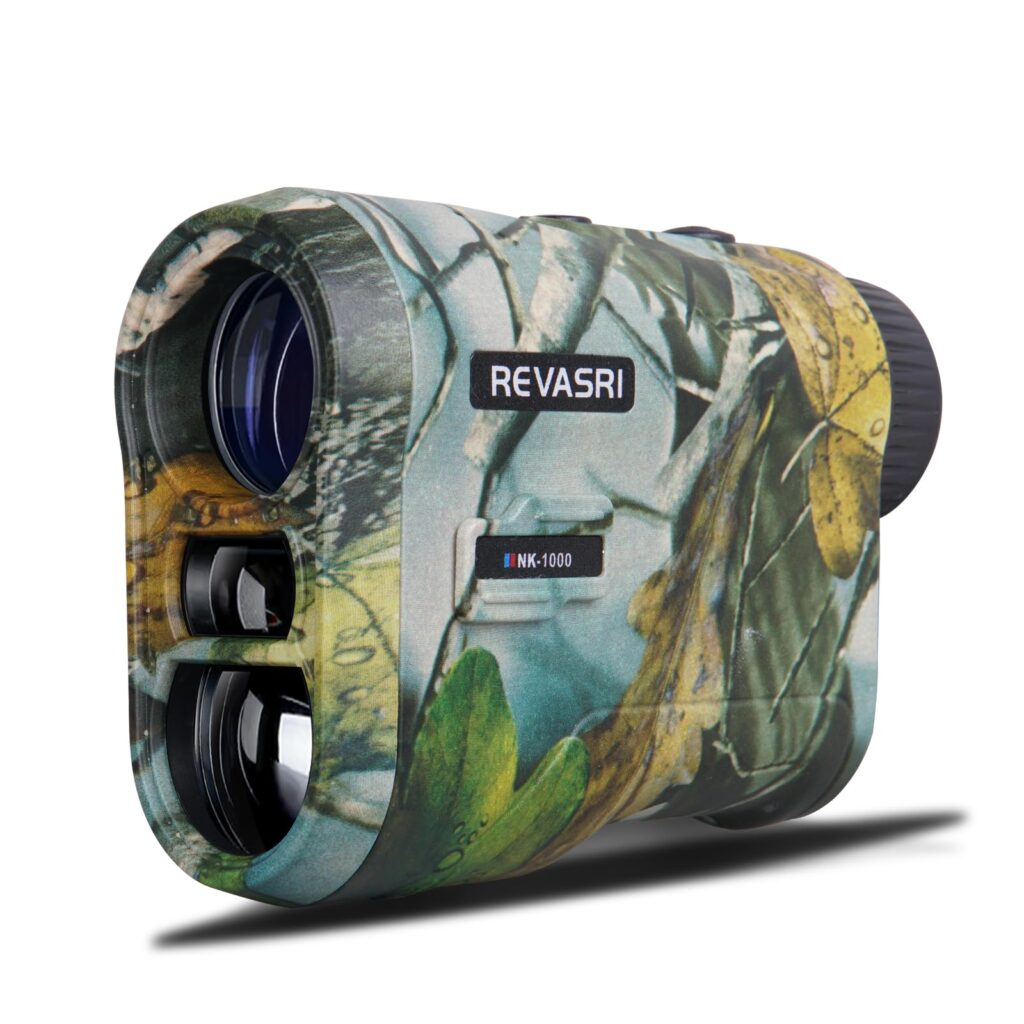
🎯 2. REVASRI 1000Y Rangefinder

Key Features:

  • Up to 1000 yd range, ±1 yd accuracy
  • Rechargeable lithium battery
  • Golf & hunting modes, slope compensation

Pros:
✅ Dual use (golf + hunting)
✅ Compact & fast reading
✅ Vibration and slope modes

Cons:
❌ Build feels cheaper than premium brands
❌ Real range shorter than claimed

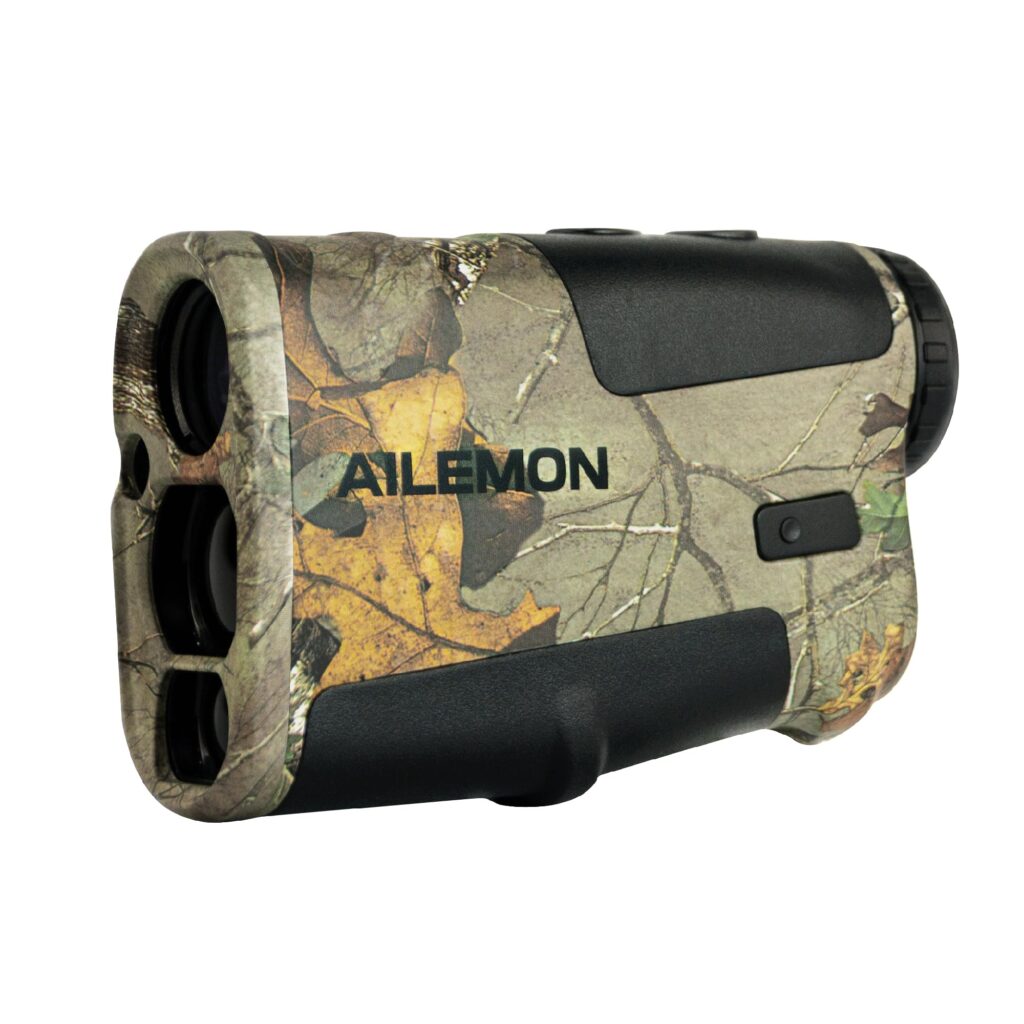
🌲 3. AILEMON AL51 Rangefinder

Key Features:

  • 900 yd range, 6× magnification
  • Waterproof camo body
  • Angle range compensation (ARC)

Pros:
✅ Durable waterproof design
✅ Accurate within 1 yd
✅ Great for archery & rifle hunting

Cons:
❌ Slightly slower readout time
❌ Focus ring needs manual adjustment

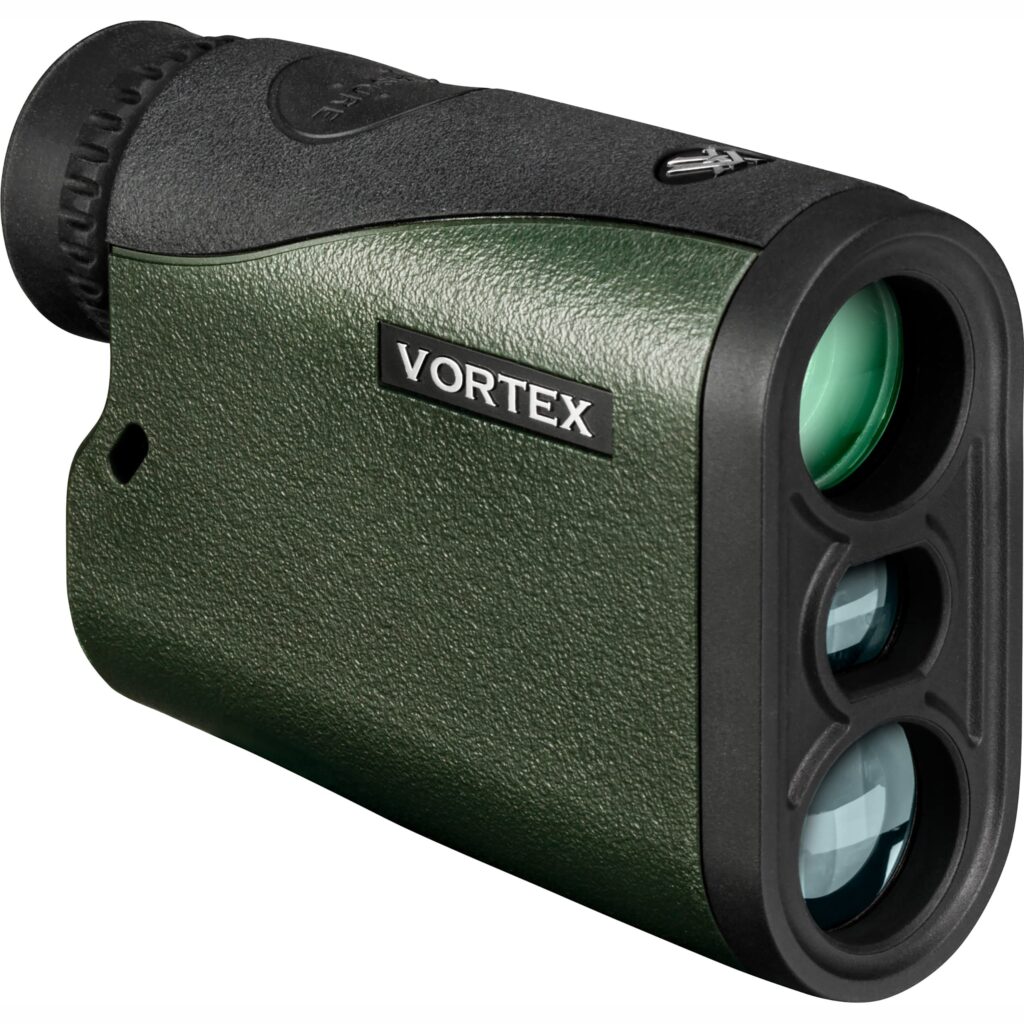
🏹 4. Vortex Crossfire HD 1400

Key Features:

  • 1400 yd max, 750 yd on deer
  • HD optics, 5× zoom
  • HCD/LOS modes, waterproof & shockproof
Pros:
✅ Premium glass & clarity
✅ Trusted brand & warranty
✅ Works great in harsh conditions

Cons:
❌ Higher price tag
❌ Limited display brightness in sunlight


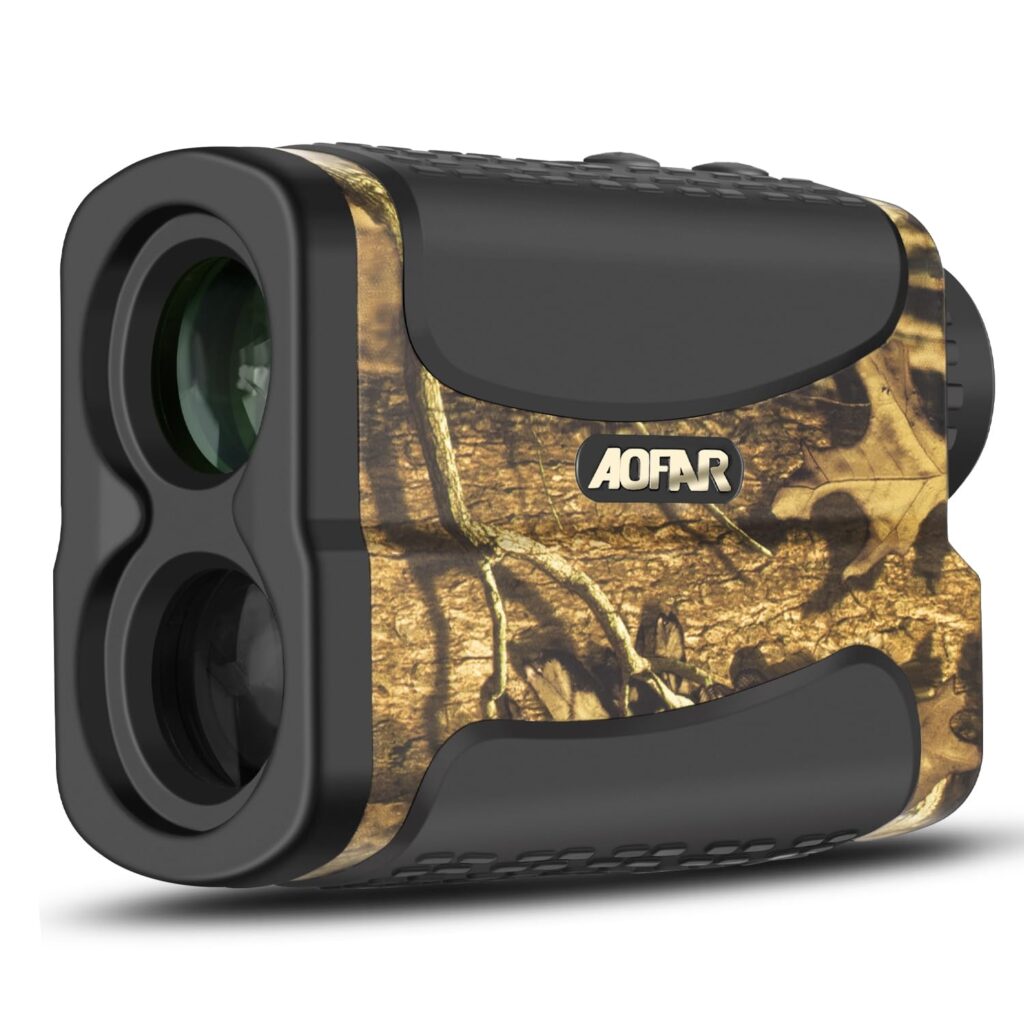
🐾 5. AOFAR HX-700N

Key Features:

  • 700 yd range, 6× magnification
  • Two modes: range & speed
  • Lightweight & waterproof

Pros:
✅ Very affordable
✅ Simple & beginner-friendly
✅ Includes pouch & battery

Cons:
❌ No angle compensation
❌ Not ideal for long-range use


Conclusion

each of these five rangefinders offers distinct strengths depending on your hunting or outdoor needs. The AOFAR HX-700N is ideal for beginners thanks to its simplicity and low price, while the TIDEWE and REVASRI models deliver great value with rechargeable batteries and multiple measuring modes suitable for both hunting and golfing. The AILEMON AL51 stands out as a reliable mid-range option, combining waterproof protection with accurate angle compensation perfect for archers and rifle users alike. For professionals seeking unmatched clarity, durability, and long-term reliability, the Vortex Crossfire HD 1400 is the premium choice.

Ultimately, your best pick depends on how often and where you use it. If you want affordability and simplicity, go with AOFAR or TIDEWE; if you want versatility, choose REVASRI; for rugged performance, AILEMON; and for top-tier optics and precision, Vortex Crossfire HD 1400 delivers every time.

Gun Ownership by State: Understanding the Laws and Regulations Across the United States

Table of Contents

Introduction

Gun ownership laws and regulations in the United States vary from state to state, reflecting the diverse attitudes and perspectives on firearms across the nation. Whether you’re considering owning a firearm for self-defense, recreational shooting, or other purposes, understanding the specific laws in your state is essential. In this comprehensive guide, we will explore the different categories of gun ownership laws by state, highlighting examples from each category and shedding light on additional considerations. So, let’s navigate the complex landscape of gun ownership laws in the United States.

2. Permissive States: Easy Access to Firearms

In permissive states, the laws and regulations surrounding gun ownership are generally more relaxed, making it easier for individuals to obtain firearms. Here are some examples:

2.1 Alaska

Alaska is known for its permissive gun laws, with a strong emphasis on the right to bear arms. In Alaska, residents enjoy the freedom to purchase and possess firearms without the need for a permit or license. Background checks are not required for private sales, and there are no restrictions on magazine capacity or certain types of firearms.

2.2 Arizona

Arizona is another state with permissive gun laws, embracing the rights of gun owners. In Arizona, residents can purchase firearms without a permit or license. Background checks are conducted for sales from licensed dealers, but private sales do not require a background check. Arizona also allows open carry without a permit for individuals aged 18 and older.

2.3 Wyoming

Wyoming is often recognized as a state with a favorable environment for gun owners. In Wyoming, residents have the freedom to purchase, possess, and openly carry firearms without a permit. The state does not require background checks for private sales, and there are no restrictions on magazine capacity or assault weapons.

2.4 Texas

Texas has a strong gun culture and permissive gun laws. In Texas, residents aged 18 and older can purchase and possess firearms without a permit. Texas allows open carry of long guns without a permit and concealed carry with a permit. Background checks are required for purchases from licensed dealers, but private sales do not require a background check.

3. May-Issue States: Meeting Specific Requirements

In may-issue states, authorities have the discretion to grant or deny permits for gun ownership based on specific requirements. Here are some examples:

3.1 California

California is known for having stricter gun control laws compared to other states. In California, individuals must obtain a Firearm Safety Certificate (FSC) and undergo a background check to purchase firearms. The state operates on a may-issue basis for concealed carry permits, requiring applicants to demonstrate a justifiable need, such as showing a specific threat or working in certain professions.

3.2 New York

New York also operates on a may-issue basis for concealed carry permits. Applicants must demonstrate a proper cause or a justifiable need to carry a concealed firearm. The decision is left to the discretion of local authorities, and requirements can vary across different counties.

3.3 Maryland

Maryland requires individuals to obtain a Handgun Qualification License (HQL) before purchasing a handgun. Applicants must complete a background check, fingerprinting, and training courses to qualify for the HQL. Maryland operates on a may-issue basis for wear and carry permits, which require applicants to demonstrate a good and substantial reason to carry a concealed firearm.

4. Shall-Issue States: Meeting Criteria for Permits

Shall-issue states have laws that require authorities to issue permits if the applicants meet specific criteria. Here are some examples:

4.1 Florida

Florida is a shall-issue state, where individuals can obtain a concealed carry permit if they meet the eligibility requirements. Applicants must complete a background check, undergo fingerprinting, and complete a firearms training course approved by the state.

4.2 Georgia

Georgia is also a shall-issue state for concealed carry permits. Applicants must meet the eligibility requirements, which include being at least 21 years old, completing a background check, and providing proof of firearms training.

4.3 Pennsylvania

Pennsylvania operates as a shall-issue state, where residents can obtain a concealed carry permit if they meet the specified criteria. Applicants must be at least 21 years old, complete a background check, and complete a certified firearms training course.

5. Unrestricted States: No Specific Regulations

Unrestricted states have no specific laws or regulations regarding gun ownership. Here are some examples:

5.1 Vermont

Vermont is often cited as an unrestricted state, as it has no specific laws or permits required for gun ownership or concealed carry. Vermont residents aged 16 and older can legally possess and carry firearms without a license or permit.

5.2 Alaska (Residents Only)

In addition to being permissive, Alaska is considered an unrestricted state for its residents. Alaska residents aged 21 and older can possess and carry firearms without a permit or license.

5.3 Arizona (Residents Only)

Similar to Alaska, Arizona is an unrestricted state for its residents. Arizona residents aged 21 and older can possess and carry firearms without a permit or license.

6. Restricted States: Stricter Gun Control Laws

Restricted states have more stringent gun control laws and regulations. Here are some examples:

6.1 California

California has some of the strictest gun control laws in the country. The state requires background checks for all firearm sales, including private transactions. It has restrictions on assault weapons, high-capacity magazines, and requires a “good cause” to obtain a concealed carry permit.

6.2 New York

New York has implemented various gun control measures, including background checks for all firearm sales and a ban on certain assault weapons. The state requires a pistol permit for handguns, and obtaining a concealed carry permit can be challenging, with stringent requirements varying by county.

6.3 New Jersey

New Jersey has strict regulations on firearm ownership. The state requires permits to purchase handguns, which involve background checks and fingerprinting. New Jersey also has restrictions on assault weapons and high-capacity magazines, and obtaining a concealed carry permit can be difficult.

6.4 Massachusetts

Massachusetts has some of the toughest gun laws in the United States. The state requires a Firearms Identification (FID) Card or License to Carry (LTC) to possess firearms, including long guns and handguns. Massachusetts has restrictions on assault weapons, high-capacity magazines, and imposes stringent licensing requirements.

7. Additional Considerations: Local Laws and Regulations

In addition to state laws, it’s crucial to consider local laws and regulations regarding gun ownership. Cities, counties, and other local jurisdictions may have their own restrictions, permits, or additional requirements. It’s important to be aware of and comply with these local laws to ensure legal and responsible gun ownership.

8. Conclusion

Gun ownership laws and regulations in the United States vary significantly from state to state. It’s crucial for individuals to understand and abide by the laws in their specific state and locality. Whether you reside in a permissive state with easy access to firearms, a may-issue state with specific requirements, or a restricted state with stricter regulations, it’s important to stay informed and comply with the applicable laws.

Always consult official government sources or legal professionals to ensure you have the most accurate and up-to-date information regarding gun ownership laws in your state and locality.

FAQs (Frequently Asked Questions)

Q1: Can gun ownership laws change in a state over time?

A1: Yes, gun ownership laws can change in states over time. It’s important to stay updated with any new legislation or amendments that may impact gun ownership regulations.

Q2: Can I transport firearms across state lines?

A2: Transporting firearms across state lines requires compliance with federal and state laws. It’s essential to familiarize yourself with the specific regulations of the states you are traveling to and through.

Q3: Are there federal laws that govern gun ownership in the United States?

A3: Yes, federal laws, such as the Gun Control Act of 1968 and the National Firearms Act, establish certain regulations on firearms, including background checks, firearms sales, and restrictions on specific firearms.

Q4: Can I legally own a firearm if I have a criminal record?

A4: Federal and state laws generally prohibit individuals with certain criminal records from owning firearms. It’s essential to understand the laws in your jurisdiction and consult legal professionals for guidance if you have a criminal record.

Q5: Can non-U.S. citizens legally own firearms in the United States?

A5: Non-U.S. citizens have restrictions on firearm ownership in the United States. The specific regulations vary based on immigration status and other factors. It’s important to consult legal professionals or government sources for accurate information on firearm ownership for non-U.S. citizens.

5 Best Seat Back Gun Racks: Your Ultimate Guide

For hunters and shooting enthusiasts, having a secure and organized way to transport firearms is crucial. A well-designed gun rack not only keeps your guns safe but also ensures they are easily accessible when needed. Gun racks come in various designs, each catering to different needs and preferences. Among these, seat back gun racks have gained popularity for their convenience and practicality.

Understanding Seat Back Gun Racks

What is a Seat Back Gun Rack?

A seat back gun rack is a type of gun storage system that attaches to the back of a vehicle seat. These racks are designed to hold firearms securely, keeping them organized and easily accessible. They typically come with straps or hooks that can be adjusted to fit various types of vehicles and gun sizes.

Benefits of Using Seat Back Gun Racks

Safety and Accessibility

One of the primary benefits of seat back gun racks is the enhanced safety they provide. By securing firearms in a designated place, they prevent guns from moving around during transit, reducing the risk of accidental discharge or damage. Additionally, these racks keep guns easily accessible, allowing for quick retrieval when needed.

Organization and Space-Saving

Seat back gun racks help keep your vehicle organized by providing a specific place for your firearms. This not only frees up space in your vehicle but also makes it easier to locate your guns when needed. With seat back gun racks, you can avoid the clutter and confusion of having loose firearms and accessories scattered around your vehicle.

Ease of Installation and Removal

Most seat back gun racks are designed for easy installation and removal. They typically come with adjustable straps or hooks that can be quickly attached to the headrests and bottom of the seat. This makes them a convenient option for those who need a temporary or portable gun storage solution.

Key Features to Consider When Choosing a Seat Back Gun Rack

Material Quality

The quality of materials used in the construction of a gun rack is crucial for durability and safety. Look for gun racks made from high-quality materials such as heavy-duty nylon, polyester, or ABS plastic. These materials are not only durable but also resistant to wear and tear.

Compatibility with Different Vehicles

When choosing a seat back gun rack, it’s essential to ensure it is compatible with your vehicle. Most gun racks are designed to fit a wide range of vehicles, including SUVs, trucks, and sedans. However, it’s always a good idea to check the product specifications to ensure a proper fit.

Capacity and Security Features

Different gun racks have varying capacities, with some designed to hold multiple firearms. Consider how many guns you need to store and choose a rack that can accommodate them. Additionally, look for security features such as straps, buckles, and locks that will keep your guns secure during transit.

Key Features to Consider When Choosing a Seat Back Gun Rack

Material Quality

The quality of materials used in the construction of a gun rack is crucial for durability and safety. Look for gun racks made from high-quality materials such as heavy-duty nylon, polyester, or ABS plastic. These materials are not only durable but also resistant to wear and tear.

Compatibility with Different Vehicles

When choosing a seat back gun rack, it’s essential to ensure it is compatible with your vehicle. Most gun racks are designed to fit a wide range of vehicles, including SUVs, trucks, and sedans. However, it’s always a good idea to check the product specifications to ensure a proper fit.

Capacity and Security Features

Different gun racks have varying capacities, with some designed to hold multiple firearms. Consider how many guns you need to store and choose a rack that can accommodate them. Additionally, look for security features such as straps, buckles, and locks that will keep your guns secure during transit.

Top 5 Seat Back Gun Racks

1. MYDAYS Seat Back Gun Rack

The MYDAYS Seat Back Gun Rack is a versatile and practical solution for hunters and shooting enthusiasts. This gun rack is designed to hold rifles, shotguns, and other elongated items securely in place.

Key Features and Specifications

  • Material: Polyester
  • Color: Camo
  • Special Features: Portable, Foldable
  • Product Dimensions: 7.48″D x 1.57″W x 7.87″H
  • Unit Count: 1.0 Count
  • Number of Items: 2

Pros:

  • Versatile Storage: Can hold rifles, umbrellas, crutches, and other elongated items.
  • Easy to Install: No tools required, just hang the straps across the headrests.
  • Universal Fit: Compatible with most vehicles, including SUVs, sedans, jeeps, and mini-vans.
  • Easy to Store: Foldable design allows for easy storage when not in use.

Cons:

  • Limited Capacity: May not hold more than two rifles securely.
  • Material Concerns: Polyester may not be as durable as other materials like nylon.

2. Automotive Gun Racks Vehicle Seat Back Rifle Gun Holder

The Yawayda Automotive Gun Rack is designed specifically for hunters and shooting enthusiasts who need a reliable and sturdy gun holder for their vehicles. This rack combines durability with a practical design, making it a popular choice.

Key Features and Specifications:

  • Material: Nylon
  • Special Feature: U.S. Patent D931187S
  • Color: Black
  • Finish Type: Nylon Oxford
  • Product Dimensions: 2″D x 14.5″W x 22.5″H
  • Shape: Rectangular
  • Number of Items: 2

Pros:

  • Durable Material: Made from heavy-duty nylon, ensuring long-lasting use.
  • Patent-Approved Design: Features a unique design that has been patented, offering added reliability.
  • Spacious Storage: Large dimensions allow for the storage of multiple rifles and accessories.
  • Versatile Use: Can be used to store other hunting accessories and tools in addition to firearms.

Cons:

  • Complex Installation: Some users have reported that installation can be slightly challenging without clear instructions.
  • Limited Aesthetic Options: Available only in black, which might not suit everyone’s preference.

3. Automotive Gun Racks Vehicle Seat Back Rifle Gun Holder

This model from Yawayda is similar to the previously mentioned rack, with a few additional features that make it stand out. It’s designed to be a reliable companion for hunters, ensuring their rifles are safely stored and easily accessible.

Key Features and Specifications:

  • Material: Nylon
  • Special Feature: U.S. Patent D931187S
  • Color: Black
  • Finish Type: Nylon Oxford
  • Product Dimensions: 2″D x 14.5″W x 22.5″H
  • Shape: Rectangular
  • Number of Items: 2

Pros:

  • High Durability: Constructed from heavy-duty nylon for extended durability.
  • Patent-Protected Design: Features a unique, patented design for enhanced reliability.
  • Ample Storage: Can store multiple rifles and additional hunting gear.
  • Multi-Use: Suitable for storing various hunting accessories alongside firearms.

Cons

  • Installation Difficulty: Some users find the installation instructions unclear, making setup challenging.
  • Color Limitation: Only available in black, limiting aesthetic choices.

4. HXXF Car Seat Back Gun Rack (2‑Pack)

This is a dual-pack seat-back gun rack designed to fit in trucks, SUVs and other vehicles. The organizers are constructed from heavy-duty 900D Oxford cloth and feature MOLLE-style paneling plus storage pockets to hold rifles/shotguns and accessories while keeping the back-seat area tidy and accessible.

Key Features and Specifications:

  • Material: 900D Oxford cloth (durable and wear-resistant)
  • Pack quantity: 2 units (for front/back or both seats)
  • Storage features: MOLLE-panel rows for gear attachment + multiple storage pockets for accessories
  • Compatibility: Universal fit for most car seats, SUVs, pickups/trucks.
  • Intended for: Holding up to two rifles/shotguns and related gear in vehicle back-seat organizer format.

👍 Pros

  • Durable construction: The 900D Oxford cloth material offers ruggedness and longer service life.
  • Good value: Comes as a 2-pack, which increases utility (either two seats or twin vehicles).
  • Versatile storage: MOLLE panel provides flexibility for mounting accessories; storage pockets add organization.
  • Universal fit: Can adapt to many vehicles, which is convenient for users with trucks, SUVs, etc.
  • Helps tidy the vehicle’s rear seat area while securing gear in motion.

👎 Cons

  • Fit may be less ideal for very compact vehicles or sedans where back-seat space is limited.
  • While built for rifles/shotguns, bulky firearms with large scopes or unusual form-factors may not fit as neatly. Reviewers mention limitations.
  • Being fabric/strap-based rather than a rigid frame means there may be some movement/shift of firearms during driving unless securely fastened.
  • If used in family vehicles where children sit in back, this rack takes space and may interfere with passenger comfort or safety.
  • Installation might require adjustment to make sure the rack mounts firmly to the seat back to prevent sagging or movement.

5. Hunthor Truck Gun Rack (A Pair)

The Hunthor Truck Gun Rack is a two-piece seat-back storage system designed for vehicles like trucks, SUVs, jeeps and other off-road vehicles. Made from rugged 900D Oxford cloth, it features adjustable straps and pockets to securely hold up to two long guns and related gear while keeping the back-seat organized and accessible.

Key Features and Specifications:

  • Material: 900D Oxford cloth heavy duty yet lightweight fabric, scratch-proof for hunting or rugged use.
  • Pack: Includes two units (a “pair”) giving you flexibility for both driver and passenger seat backs (or both front seats) in many vehicles.
  • Fit / Compatibility: Universally designed to fit a wide variety of vehicles (sedans, SUVs, pickups, Jeeps) via headrest and back-strap mounting.
  • Gun Capacity & Support: Can hold two long guns; features double adjustable hook & loop straps to secure the firearms and prevent falling during transport.
  • Additional Storage: Includes one or more deep storage pockets for pistols, small hunting accessories or other gear.
  • Installation: Simple installation: upper strap around headrest, lower strap around seat-back.

Pros

  • Durable build quality: The 900D Oxford cloth material is robust and built to withstand rougher use (hunting vehicles, off-road) rather than delicate fabrics.
  • Good value with pair: Two units in the pack give flexibility to use both seats or an extra unit for another vehicle.
  • Universal vehicle fit: Because it uses straps and is adjustable, it works for many different seat shapes and vehicle types.
  • Secure support for firearms: Adjustable double hook & loop straps help keep the firearms from shifting during transit.
  • Extra storage for accessories: The pockets add utility beyond just holding guns — ideal for small gear, ammo boxes or other hunting accessories.

Cons

  • Fabric rather than rigid frame: Because it’s fabric/strap-based instead of a rigid mounting panel, there may be more movement or sag under heavy load or aggressive driving.
  • Limited to two guns & size constraints: While it holds up to two guns, very large firearms with long scopes or wide/long barrels may not fit as comfortably or may need custom arrangement.
  • Installation depends on seat and headrest design: Some vehicles’ headrest or seat-back geometry may make the fit less ideal (e.g., seats without removable headrests, or extremely contoured backs).
  • May occupy back-seat space: If used in a vehicle where passengers sit in the back, the rack will take up back-seat surface area and may interfere with passenger comfort.
  • Potential wear at straps/stitching: Some user reviews mention issues with stitching or strap wear over time (e.g., one review said “poor stitching … strap fell off”).

Conclusion: Choosing the Right Seat Back Gun Rack

When it comes to transporting your firearms safely and conveniently, a seat back gun rack is one of the most practical accessories for hunters, sport shooters, and tactical drivers alike. From premium modular panels like the Grey Man Tactical RMP to budget-friendly nylon organizers such as the Kolpin Tactical Holder, each option offers its own balance of security, accessibility, and versatility.

Before buying, consider your vehicle type, firearm size, and intended use whether that’s daily transport, hunting trips, or tactical readiness. Soft racks are ideal for quick, lightweight setups, while rigid systems provide superior stability and professional-grade organization.

Ultimately, the best gun rack is the one that keeps your firearms secure, discreet, and ready when you need them most. With the right choice, you’ll protect your gear, save space, and stay compliant with local transport laws all while traveling with confidence.

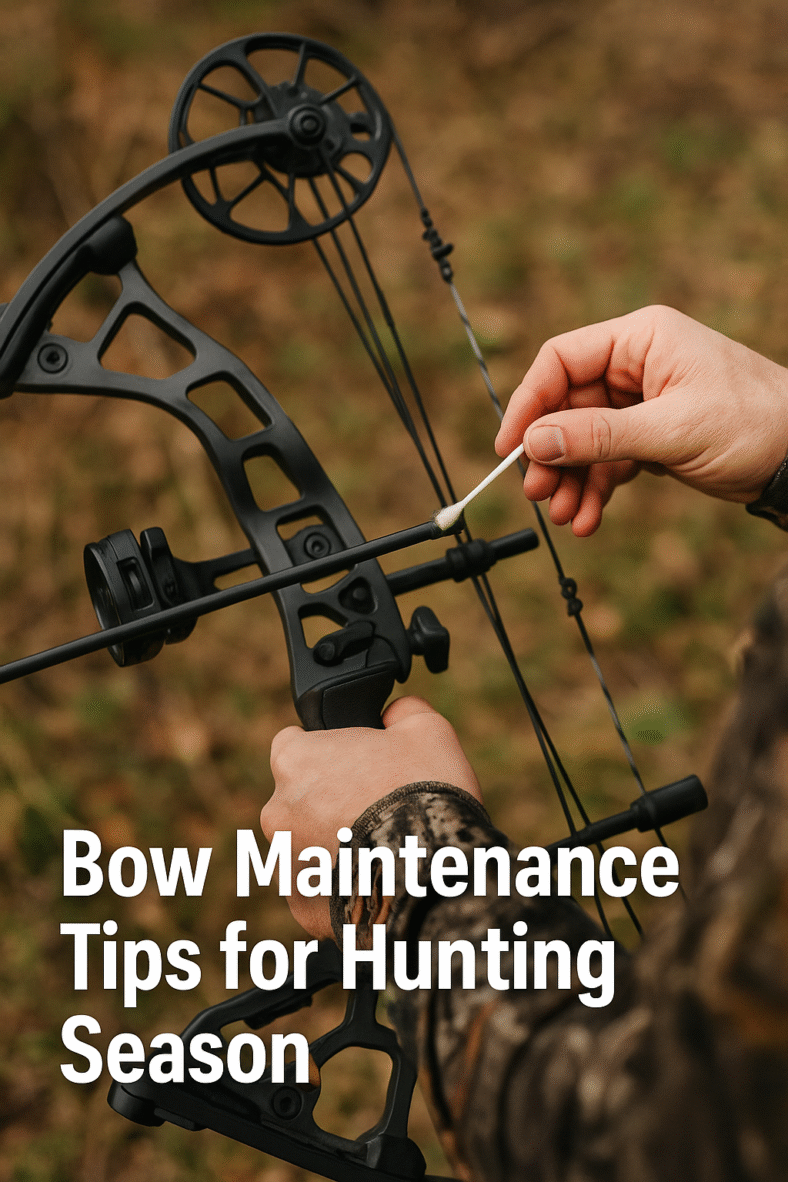
Bow Maintenance Tips Before Hunting Season

Pre-season bow maintenance is mostly inspection, clean storage, and knowing when to stop. Before hunting season, read the owner manual for your exact bow, check the string, cables, serving, limbs, cams, arrows, nocks, points, rest, sight, and quiver mounts, then confirm the bow shoots normally at a safe range. Anything damaged, unusual, or beyond basic care belongs with a qualified bow technician.

This guide is not a repair manual or a safety clearance. Compound bows store serious energy, and different models have different service limits. Treat the manual and a qualified pro shop as the final authority for your setup.

Table of Contents
  1. Quick Answer: What To Check Before Hunting Season
  2. Start With The Owner Manual and Safety Inspection
  3. Inspect Arrows, Nocks, Points, and Broadhead Storage
  4. Basic Cleaning and Storage Habits
  5. What To Test At A Safe Range
  6. When To Stop Shooting and Visit a Pro Shop
  7. Pre-Season Bow Maintenance Checklist
  8. Common Bow Maintenance Mistakes
  9. Related Bow Setup Guides
  10. Frequently Asked Questions

Quick Answer: What To Check Before Hunting Season

Before hunting season, check the bow in this order: manual, string and cables, serving, limbs, cams, rest, sight, quiver mounts, arrows, nocks, points, broadhead storage, cleaning, dry storage, and safe range confirmation. Stop shooting if you see fraying, broken strands, serving separation, limb damage, cam damage, unusual noise, or any issue you do not understand.

Keep the work simple. Visual inspection, clean handling, safe storage, and range confirmation are reasonable owner tasks. Press work, string or cable replacement, timing, limb adjustment, module work, peep work, and D-loop service should be handled by a pro shop.

Start With The Owner Manual and Safety Inspection

Start with the owner manual for your exact bow model. The manual tells you what the manufacturer considers normal, what checks are allowed, and which warning signs mean the bow should not be used. If you do not have a current manual, manufacturer manual pages such as Hoyt’s manuals page are a good reminder to find the correct document before doing anything more than a visual check.

Strings, Cables, Serving, and Limbs

Look closely at the string and cables. Watch for broken strands, heavy fraying, flattened areas, unusual separation, or serving that has shifted or opened up. Then inspect the limbs for cracks, splinters, chips, or delamination. Manufacturer safety pages such as Hoyt’s compound bow safety and warnings explain why damaged parts are a stop-use issue, not something to test for “one more shot.”

Cams, Modules, Rest, Sight, and Quiver

Check that cams, modules, and tracks look normal, with no visible bending, chips, or loose hardware. Look over the rest, sight, stabilizer mount, and quiver connection so nothing is obviously loose or shifted from your last setup. If a cam, module, cable path, or limb bolt looks questionable, stop and get service help. Manufacturer support pages such as Mathews support point owners toward model-specific assistance rather than guesswork.

Use pre-season bow maintenance as a structured inspection, not a home repair session.

Inspect Arrows, Nocks, Points, and Broadhead Storage

Check every arrow before the season. Look for cracked shafts, damaged fletching, loose inserts, damaged nocks, and points that are not seated correctly. If your arrow manufacturer recommends a specific inspection method, follow that method. If an arrow looks or sounds suspicious during inspection, remove it from use rather than trying to “test” it at full draw.

Broadheads should be stored covered, organized, and away from loose gear. This article does not cover broadhead tuning or shot setup; it only covers safe storage and inspection habits. Replacement arrows, nocks, inserts, and broadheads should match your bow setup and manufacturer guidance.

Basic Cleaning and Storage Habits

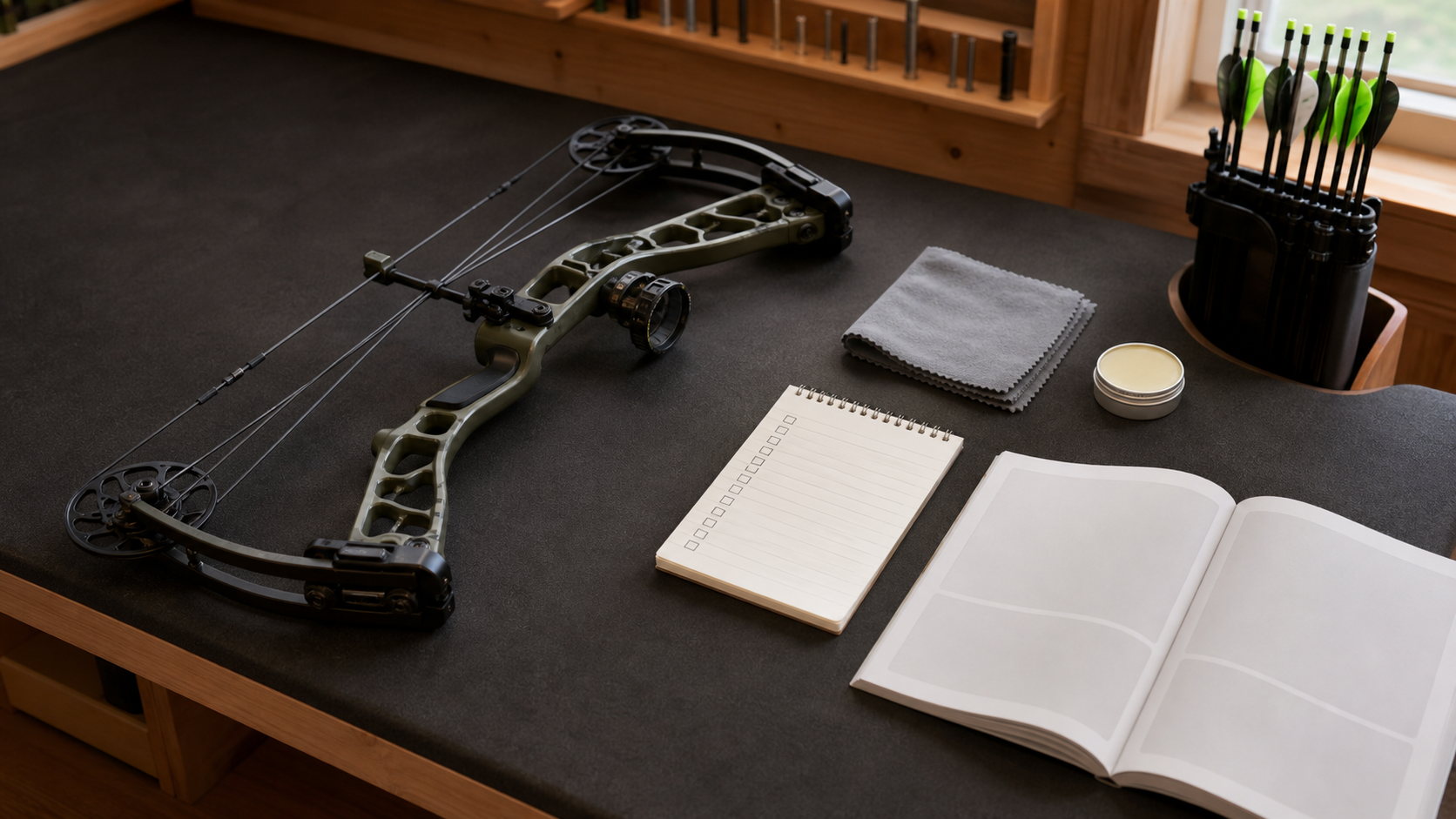
Basic bow care is simple: wipe away dirt and moisture, keep the bow dry, and store it in a stable place where it will not be knocked over, crushed, or exposed to harsh chemicals. A soft cloth is usually enough for normal surface cleaning. Avoid solvents, oils, sprays, or abrasive cleaning unless your owner manual specifically allows them.

String wax is another manual-led item. If your manual gives waxing guidance, follow it exactly. If the string is damaged, serving is separating, or you are unsure whether wax is appropriate, do not use wax as a fix. Get the bow inspected.

What To Test At A Safe Range

After the visual inspection, confirm the bow at a safe range with a proper target, backstop, and normal shooting routine. Watch for unusual sound, vibration, feel, arrow flight changes, or shifted accessories. Never dry fire a bow. USA Archery’s safety resources are a useful high-level reference for safe practice habits.

The range check is not a license to ignore warning signs. If anything seems different from normal, stop shooting and investigate with a qualified technician. A bow that feels “mostly fine” can still have a serious problem.

When To Stop Shooting and Visit a Pro Shop

Visit a pro shop if you see fraying, broken strands, serving separation, limb damage, cam damage, unusual noise, derailment, dry-fire history, a hard drop, or anything that makes you uncertain. A qualified technician should handle string and cable service, press work, timing, limb adjustments, module changes, peep work, D-loop service, and any repair that changes the bow’s setup.

When in doubt, choose the slower and safer path. Manufacturers such as BowTech direct owners toward customer service or authorized support for issues that should not be solved by guesswork.

Pre-Season Bow Maintenance Checklist

CheckWhat To Look ForSafe Action
Owner manualExact model guidance and warningsFollow the manual before any maintenance decision
String and cablesFraying, broken strands, serving separationStop and use a pro shop if damaged
Limbs and camsCracks, chips, bent parts, loose hardwareDo not shoot if anything looks abnormal
Arrows and nocksCracks, loose inserts, damaged nocks or fletchingRemove questionable arrows from use
AccessoriesShifted rest, sight, quiver, or stabilizerConfirm secure mounting without forcing adjustments
Range confirmationUnusual sound, feel, vibration, or arrow flightStop if the bow does not feel normal

Common Bow Maintenance Mistakes

The biggest mistake is treating maintenance as repair. A quick inspection does not prove a bow is safe, and a small warning sign can matter. Other common mistakes include skipping the owner manual, dry firing during checks, shooting a questionable arrow, using wax to hide string damage, ignoring serving separation, or attempting press work at home.

Another mistake is waiting until the night before the hunt. Do the inspection early enough that you have time for a pro-shop visit, replacement arrows, or range confirmation without rushing.

Frequently Asked Questions

What bow maintenance should I do before hunting season?

Read the owner manual, inspect the string, cables, serving, limbs, cams, accessories, arrows, nocks, and points, then confirm normal shooting at a safe range. Send anything damaged, advanced, or uncertain to a pro shop.

How often should I replace my bowstring?

There is no universal replacement interval that fits every bow and archer. Use your manual, usage level, visible condition, and a technician’s inspection. Fraying, broken strands, or serving separation are reasons to stop and get professional help.

Can I wax or service my own bowstring?

You can follow your manual if it gives clear string-waxing instructions. Do not treat wax as a repair. String replacement, cable replacement, twisting, timing, and press work should be handled by a qualified technician.

When should I take my bow to a pro shop?

Take it to a pro shop if you see string, cable, serving, limb, or cam damage; if the bow has been dry fired, derailed, dropped, or struck; if it sounds or feels unusual; or if you are unsure whether it is safe to shoot.

Night Vision Monocular vs Binocular: In-Depth Comparison Guide


A night vision monocular is the lighter, lower-cost, more versatile choice for most casual users, while a night vision binocular gives you two-eye comfort and a more natural sense of depth for longer observation sessions. A monocular uses a single optical channel and one eye, which keeps it compact and lets you keep your other eye adjusted to ambient light. A binocular uses two channels for both eyes, which is more comfortable over time and gives better depth perception, at the cost of more weight and a higher price. The best pick depends on how long you observe, whether depth perception matters, your budget, and what your local rules allow.

Contents

The Quick Answer

Choose a monocular if you want light weight, lower cost, and flexibility, and if your sessions are short or you move often. Choose a binocular if you do long, stationary observation, value two-eye comfort, and want a more natural sense of depth, and your budget allows it. Both are observation tools. Neither replaces the rules and safety judgment that come with any after-dark activity.

How Night Vision Monoculars and Binoculars Work

Both devices amplify available light so you can see in low-light conditions. A monocular has a single objective lens, a single intensifier or sensor, and one eyepiece, so you view through one eye. A binocular has two complete optical paths, one for each eye. There are also biocular designs, which feed a single channel to both eyes for comfort without true stereo depth; the term “binocular” in everyday use can sometimes refer to either, so check the product description.

Night vision also comes in different generations and in digital and thermal-adjacent forms, but for the monocular-versus-binocular decision the optical-channel count is the main difference that affects depth, comfort, weight, and price. For neutral background on how night vision intensifies light, general references such as the overview from this night-vision device summary can help define terms before you shop.

Depth Perception and Situational Awareness

Depth perception is the clearest functional difference. A true two-channel binocular shows each eye a slightly different view, which your brain combines into a stereo image with a more natural sense of distance and terrain. That helps when you are judging footing, moving through uneven ground, or watching an area for a long time.

A monocular gives a flatter, single-eye image with less depth cueing. There is a tradeoff in the other direction, though. Because one eye stays uncovered, a monocular lets you keep that eye adapted to ambient light and aware of your surroundings, which some users prefer for moving between lit and dark areas. So the depth advantage of a binocular and the awareness flexibility of a monocular are both real, just suited to different situations.

Comfort, Eye Fatigue, and Session Length

For long sessions, two eyes are usually more comfortable than one. Viewing through both eyes tends to reduce the strain that comes from squinting or closing one eye for an extended period, which is why binocular and biocular designs are often favored for sustained observation.

A monocular can cause more fatigue over a long watch because one eye is working and the other is closed or idle. For short, intermittent looks it is rarely an issue, and many users carry a monocular precisely because it is quick to raise and lower. Match the format to how long you actually keep the device to your eyes.

Weight, Size, and Portability

Monoculars win on weight and size. With one optical channel they are smaller, lighter, and easier to pocket or mount, which matters if you pack light or move often. A binocular carries two of nearly everything, so it is heavier and bulkier, and head-mounted binocular setups add weight to your head and neck over time.

If portability and quick deployment are priorities, the monocular is the practical choice. If you will mostly observe from a fixed position or use a support, the extra weight of a binocular matters less.

Budget and Value

Monoculars generally cost less than comparable binoculars because there is one optical system instead of two. For a buyer entering night vision, a monocular is usually the lower-cost way to get usable performance, and budget often stretches further toward better glass or a newer sensor in a single channel than in a dual channel at the same price.

A binocular asks you to pay for two channels, so reaching the same image quality across both eyes costs more. The question is whether two-eye comfort and depth perception are worth that premium for your use. For casual or occasional use, many people find a monocular is enough. For frequent, long, or movement-heavy use, the binocular’s comfort can justify the cost.

Use-Case Comparison

SituationBetter fitWhy
Short, intermittent looks; scouting on the moveMonocularLight, fast to use, keeps one eye light-adapted
Long, stationary observationBinocularTwo-eye comfort reduces fatigue over time
Moving over uneven terrainBinocularBetter depth perception helps judge footing and distance
Tight budget or first night-vision purchaseMonocularLower cost for usable performance
Packing light or weight-limitedMonocularSmaller and lighter to carry
Frequent, comfort-critical useBinocularSustained viewing is easier on both eyes
Any after-dark legal or hunting activityConfirm rules firstLocal law governs lawful use, not the device type

Checking Legality Before You Buy or Hunt

Whether and how you can use night vision for hunting or other regulated activity depends entirely on your jurisdiction, not on which optic you choose. Some states restrict or prohibit night vision for hunting certain species, some allow it only for specific animals or seasons, and rules can change. This article cannot give you a current legal answer, and it is not legal advice.

Before you buy with hunting in mind, and again before any after-dark hunt, confirm the current rules with your state wildlife agency. You can locate your state agency and federal land rules through the U.S. Fish and Wildlife Service, then verify the specifics directly with the state authority. If you hunt at night, also confirm safe-shooting requirements, because positive target identification and a safe background are harder in the dark and remain your responsibility regardless of equipment.

Frequently Asked Questions

Is a night vision monocular or binocular better for beginners?

A monocular is usually the easier and more affordable starting point. It is lighter, costs less, and is flexible for short looks. Move to a binocular if you find yourself doing long sessions where comfort and depth perception matter.

Do night vision binoculars give true depth perception?

True two-channel binoculars do, because each eye sees a slightly different image that your brain merges into a stereo view. Some products labeled binocular are actually biocular, feeding one channel to both eyes for comfort without full stereo depth, so check the design.

Which is lighter to carry?

A monocular is lighter and more compact because it has one optical channel. A binocular carries two of nearly everything, so it weighs and bulks more, which matters most for head-mounted use or long carries.

Can I use night vision for hunting?

That depends on your state and the species. Some places allow it in limited cases, others restrict or prohibit it, and rules change. Confirm current regulations with your state wildlife agency before you buy for hunting or head out at night. This is not legal advice.

Why are night vision binoculars more expensive?

Because they contain two complete optical channels instead of one. Matching the image quality of a single channel across both eyes costs more, which is why a comparable binocular usually carries a higher price than a monocular.

Is one safer than the other for moving around at night?

Binoculars offer better depth perception, which can help judge footing and distance while moving. A monocular keeps one eye uncovered and light-aware, which some users prefer. Either way, move carefully and never rely on an optic alone for safety.

Final Takeaway

Pick the format that matches how you observe. A monocular is the light, affordable, flexible choice for short looks, movement, and tighter budgets, and it keeps one eye adapted to ambient light. A binocular costs more and weighs more, but rewards long, stationary, or movement-heavy use with two-eye comfort and better depth perception. Decide based on session length, depth needs, weight, and budget. Then, before any hunting or after-dark use, confirm what is legal with your state wildlife agency, because the rules, not the device, decide what you can lawfully do.

Bowhunting Whitetails In Thick Cover: Safety and Shot Discipline

Bowhunting whitetails in thick cover is mostly a discipline problem: confirm the rules, scout for safe visibility, plan entry and exit, and pass any shot that is obstructed or uncertain. Dense cover can hold deer, but it also shortens sight lines and makes poor decisions easier to justify in the moment.

This is a safety-first and ethics-first guide, not a guarantee of hunting success. Seasons, legal methods, hunter-orange rules, access rules, baiting, cameras, stands, and reporting requirements vary by state and property, so verify current official regulations before every hunt.

Table of Contents
  1. Quick Answer: How To Bowhunt Thick Cover Safely
  2. Check Rules Before Planning A Thick-Cover Hunt
  3. Scout For Visibility, Wind, And Safe Access
  4. Use Shot Discipline In Dense Cover
  5. Hunt Ethically Around Pressure And Habitat
  6. Thick-Cover Bowhunting Checklist
  7. Common Mistakes In Thick Cover
  8. Related Bowhunting And Deer Guides
  9. Frequently Asked Questions

Quick Answer: How To Bowhunt Thick Cover Safely

Bowhunting thick cover safely means checking current rules first, scouting for visibility and safe access, reading the wind honestly, and committing to pass on any obstructed, low-light, or low-confidence shot. The limited sight lines reward patience and clear identification, not aggressive tactics.

Think of thick cover as a place where small mistakes compound. A poor entry route bumps deer. A bad wind exposes your position. A narrow lane tempts a rushed shot. The solution is preparation before the hunt and restraint during the hunt.

Check Rules Before Planning A Thick-Cover Hunt

Rules come before tactics. Do not assume last year’s deer season dates, legal methods, access rules, hunter-orange requirements, or reporting rules still apply. Start with your state wildlife agency’s current regulations for the exact place and season you plan to hunt.

Seasons, Legal Methods, Hunter Orange, And Access

Season timing, legal equipment, blaze-orange requirements, public-land access, and tagging/reporting rules are location-specific. This article intentionally avoids state-specific claims because those details change. Use official current sources for your state and property, and use hunter education as your safety foundation. IHEA-USA is a helpful starting point for hunter-education context.

Baiting, Stands, Cameras, And Property Rules

Rules around baiting, attractants, trail cameras, treestands, ground blinds, trimming lanes, and vehicle access vary widely. Private land also requires clear permission and known boundaries. If you are unsure whether a practice is allowed, treat it as unapproved until an official source or landowner confirms it.

Scout For Visibility, Wind, And Safe Access

Good thick-cover scouting is less about finding a dramatic spot and more about finding a spot you can enter safely, hunt ethically, and leave without creating avoidable pressure. Look for a few workable lanes, a clear route, and wind conditions that do not force a bad setup.

Also think about recovery before you ever hunt the spot. Thick cover can make visibility and follow-up decisions harder, so your setup should leave you with clear landmarks, safe walking paths, and a conservative plan for when you will back out and seek help. A responsible hunt is planned around the shot you might pass as much as the shot you hope to take.

Entry And Exit Routes

Plan entry and exit before dark. Thick cover can become confusing in low light, so carry a light, navigation, and a plan someone else knows. A careful route reduces both safety risk and the chance of bumping bedded deer before you ever settle in.

Shooting Lanes Without Over-Clearing

A few clear lanes inside your practiced range are more useful than a large cleared opening. Over-clearing can change deer movement, violate property rules, or damage habitat. Your goal is to see and identify the deer clearly, not to turn thick cover into open ground.

Plan thick-cover hunts around rules, access, wind, visibility, and shot discipline before the sit begins.

Wind And Thermal Checks

Wind can swirl in cover, draws, creek bottoms, and terrain breaks. Check wind often and be honest about what it means. If the only good lane requires a bad wind, it is usually better to wait, shift, or choose a different sit than to force the hunt.

Use Shot Discipline In Dense Cover

Shot discipline is the most important thick-cover skill. Before drawing, identify the deer, the lane, the angle, and what is beyond. Never shoot at sound, movement, or a partial silhouette in brush. Hunter education resources such as Hunter-Ed’s hunter education overview reinforce the same safety-first mindset.

Pass on brushy, low-light, hurried, or low-confidence shots. Passing is not failure. In thick cover, passing is often the decision that protects the animal, the hunter, and the integrity of the hunt.

Hunt Ethically Around Pressure And Habitat

Thick cover often exists because deer use it for security. Hunt it with respect for the habitat and the other hunters who may share the area. Avoid crowding, leave minimal impact, follow property rules, and do not let pressure push you into unsafe shortcuts.

Ethical hunting is not just about whether something is legal. It is also about restraint, preparation, and respect for the resource. That matters even more when cover limits visibility and decision time.

Thick-Cover Bowhunting Checklist

Before The HuntWhat To ConfirmWhy It Matters
RulesSeason, legal method, orange, reporting, accessPrevents outdated or location-wrong assumptions
PropertyPermission, boundaries, trimming, cameras, standsKeeps the hunt legal and respectful
AccessSafe entry, exit, light, navigation, contact planReduces risk in dense terrain and low light
VisibilityClear identification and limited lanes in practiced rangePrevents obstructed or uncertain shots
WindWind and thermals fit the setupAvoids forcing a marginal sit
DisciplinePlan to pass low-confidence shotsProtects safety and hunting ethics

Common Mistakes In Thick Cover

The biggest mistakes are assuming rules, over-clearing lanes, ignoring wind, entering carelessly, and taking obstructed shots. Another common mistake is treating thick cover like open woods. It is not. You usually have less time, less visibility, and fewer clean options.

Do the boring work first: verify the rules, know the access, mark the safe lanes, and decide ahead of time what shots you will pass. That is the part that makes the hunt more responsible.

Frequently Asked Questions

How do you bowhunt whitetails in thick cover?

Start by checking current rules and access, then scout for safe entry, visibility, wind, and a few clear lanes inside your practiced range. During the hunt, pass on any obstructed, low-light, or uncertain shot.

Is thick cover good for deer hunting?

Thick cover can hold deer because it provides security and bedding, but it also limits visibility and safe shot options. That tradeoff makes planning and restraint especially important.

What is the most important rule for shooting in thick cover?

Clearly identify the deer and what is beyond before you draw. Never shoot at sound, movement, or a partial silhouette in brush. If you are not sure, do not shoot.

Do I need to clear shooting lanes in thick cover?

A few clear lanes can help, but do not over-clear. Confirm what trimming is allowed on the property, and keep lanes limited to places where you can clearly identify the deer and the background.

Are thick-cover hunting rules the same everywhere?

No. Seasons, legal methods, hunter-orange rules, baiting, cameras, stands, access, and reporting requirements vary by state and property. Always check current official regulations for the exact place you hunt.

Night Vision vs Thermal Scope for Hog Hunting: How to Choose


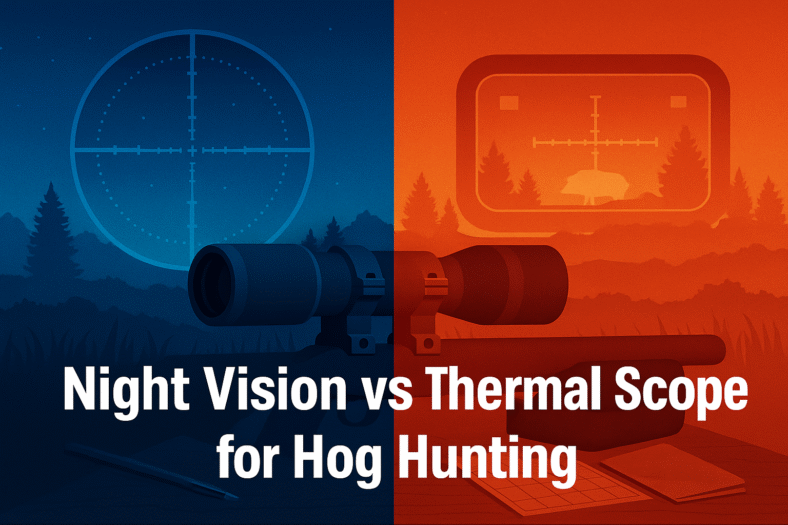
For hog hunting after dark, thermal scopes are usually better at finding hogs, and night vision is often better at clearly identifying what you are looking at. A thermal scope reads heat, so it can spot a warm-bodied hog through brush, in tall grass, and across open fields where a hog would be invisible to the eye. Night vision amplifies available light to give a more familiar picture that can make it easier to confirm exactly what an animal is before any shot. Many experienced hog hunters use both, scanning with thermal and confirming with night vision or a quality light. Before you choose, two things matter more than the gear: whether night hunting and thermal or night vision use are legal where you hunt, and whether you can positively identify your target and a safe background every time.

Contents

Detection vs Identification: The Core Difference

The single most useful way to frame this choice is detection versus identification. Detection means finding that something is there. Identification means confirming exactly what it is. Thermal scopes are detection tools first; they make a warm body stand out against a cooler background, even in cover, so you find hogs faster and at greater distance. Night vision is generally stronger for identification, because the amplified image looks more like a normal scene and shows detail that helps you tell a hog from another animal, a person, livestock, or a structure.

This distinction drives the whole comparison. If your problem is locating hogs across a field at night, thermal solves it well. If your problem is being certain of what you are about to shoot, night vision or a good light is often the better confirmation tool. The two technologies answer different questions.

How Each Technology Works

Thermal Imaging

A thermal scope detects infrared energy, meaning heat, and turns temperature differences into an image. It does not need any visible light, so it works in total darkness and can reveal a warm hog through light brush or tall grass where the animal’s outline would otherwise be hidden. The image is a heat map rather than a normal picture, so fine detail and exact identification can be harder, especially at distance.

Night Vision

Night vision amplifies the small amount of ambient light present, from stars, the moon, or an infrared illuminator, into a viewable image. The result looks more like a familiar scene, which helps with recognizing detail and confirming a target. Night vision needs at least some light or an IR illuminator, and heavy cover or total darkness without an illuminator limits it. For neutral background on the basic technology, compare general references on thermal imaging and night-vision devices before you shop.

Where Thermal Scopes Excel for Hogs

Hogs are warm, often active at night, and frequently in cover, which plays to thermal’s strengths. A thermal scope helps you detect hogs at distance, pick them out of grass and brush, and scan open ground quickly. For hunters whose main challenge is simply finding hogs in the dark across acreage, thermal is usually the faster, more capable detection tool.

The tradeoff is identification. Because the image is heat-based, telling exactly what a heat signature is can be harder, so thermal does not remove your duty to confirm the target by other means before shooting.

Where Night Vision Excels for Hogs

Night vision gives a more natural, detailed picture, which makes it the stronger tool for confirming what you are looking at and reading the scene around the animal. On nights with some ambient light, or with an IR illuminator, it can deliver a clear, recognizable image for the closer, deliberate shots common in hog hunting. Night vision is also often less expensive than comparable thermal at the entry level, though prices for both span a wide range.

The tradeoff is detection. Night vision will not reveal a hog hidden in heavy cover the way thermal can, and it depends on available light or an illuminator. This is why many hunters pair the two, using thermal to find and a night vision device or light to confirm.

Battery Life and Weather Limits

Both are electronic devices, so battery management is part of every hunt. Thermal scopes tend to draw significant power because of the sensor and display, so plan for the unit’s rated runtime and carry spare batteries or a power bank if supported. Night vision power demands vary by type, with digital night vision and any IR illuminator adding draw. Always check the manufacturer’s stated battery life and bring backups; a dead optic ends a hunt.

Weather affects performance too. Thermal can be degraded by heavy rain, fog, and high humidity, and by conditions that flatten temperature differences, since it works on heat contrast. Night vision is limited by very dark, no-light conditions without an illuminator and can be affected by precipitation. Neither sees perfectly through dense obstacles. Match your expectations to the conditions you actually hunt, and follow each maker’s guidance on operating temperatures and water resistance.

Ethical Shots and Positive Target Identification

No optic removes your responsibility to positively identify the target and what lies beyond it before you ever take the safety off. This matters even more at night, when mistakes are easier and a heat signature or dim shape can be misread. Confirm that the animal is a hog, that your background is safe, and that you have a clean, ethical shot angle within a distance where you can place the shot reliably.

The basic firearm safety rules apply fully in the dark. Treat every firearm as loaded, keep the muzzle in a safe direction, keep your finger off the trigger until ready, and be sure of your target and beyond, as summarized by the National Shooting Sports Foundation. If you cannot positively identify the target and a safe background, do not shoot.

Legality: Check Before You Hunt

Whether you can legally hunt hogs at night, and whether you can use thermal or night vision to do it, depends entirely on where you hunt. Rules vary widely by state and sometimes by county or land type, and they cover night hunting, allowed equipment, light and optic restrictions, public versus private land, and how feral hogs are classified. Some states are permissive about hog control at night; others restrict it. These rules change, and this article cannot tell you the current law for your location. It is not legal advice.

Confirm the current regulations directly with your state wildlife agency before you buy gear for night hog hunting and again before each hunt. You can locate your state agency and federal land rules through the U.S. Fish and Wildlife Service, then verify specifics with the state authority and any landowner requirements. When in doubt, do not hunt until you have confirmed it is legal.

Choosing Between Them

PriorityLeaningWhy
Finding hogs fast across open or brushy groundThermalDetects heat through cover, no light needed
Confirming exactly what you are looking atNight visionMore natural, detailed image aids identification
Total darkness with no ambient lightThermalWorks without any visible light
Lower entry costOften night visionEntry thermal usually costs more, though ranges overlap
Rain, fog, or high humidity commonVerify bothConditions can degrade either; check maker specs
Best all-around capabilityBoth, used togetherThermal to detect, night vision or light to confirm
Any night huntConfirm legality firstLocal law decides what is allowed, not the gear

If budget forces one choice and your main problem is finding hogs, many hunters favor thermal for detection and pair it with a quality light or night vision for confirmation as budget allows. If confirmation and a clear picture matter most for your situation, night vision can be the better single tool. Let your terrain, your typical distances, and your local rules decide.

Frequently Asked Questions

Is thermal or night vision better for hog hunting?

Thermal is usually better for detecting hogs, especially in cover or across open ground, because it reads heat. Night vision is often better for identifying exactly what you see. Many hunters use both. The best choice depends on your terrain, distances, budget, and local law.

Can thermal scopes identify a target as well as night vision?

Generally not as clearly. Thermal shows a heat-based image that is excellent for detection but can make precise identification harder, especially at distance. Night vision’s more natural picture usually aids identification. Either way, you must confirm the target and background before any shot.

Do I need both a thermal and a night vision device?

Not necessarily, but many experienced hog hunters use thermal to find and night vision or a light to confirm. If you can only buy one, choose based on whether your main challenge is finding hogs or confirming targets, and what your budget allows.

Is it legal to hunt hogs at night with thermal or night vision?

It depends entirely on your state and sometimes your county or land type, and the rules change. Some places allow it, others restrict or prohibit it. Confirm current regulations with your state wildlife agency before buying gear or hunting. This is not legal advice.

How does weather affect these optics?

Thermal can be degraded by heavy rain, fog, humidity, and conditions that reduce temperature contrast. Night vision struggles in total darkness without an illuminator and can be affected by precipitation. Check each manufacturer’s specs for operating conditions and water resistance.

Which has better battery life?

It varies by model, but thermal scopes often draw significant power for the sensor and display, and any IR illuminator on night vision adds draw too. Always check the rated runtime for the specific unit and carry spare batteries or a supported power source.

Final Takeaway

Think detection versus identification. Thermal finds hogs fast, even in cover and total darkness, and is the stronger scanning tool. Night vision gives a more natural, detailed image that helps you confirm what you see. Many hunters pair the two. Plan for battery life, respect weather limits, and never let any optic substitute for positively identifying your target and a safe background. Above all, confirm with your state wildlife agency that night hunting and your chosen optic are legal where you hunt before you buy or head out, because the law, not the gear, decides what is allowed.

Rifle Cleaning Tips for Beginners

Beginner rifle cleaning starts with safety, the rifle manual, the right tools, and a calm routine. Unload and clear the rifle first, move ammunition away from the bench, work in a ventilated area, and use cleaning products according to their labels. This guide explains beginner-safe rifle cleaning habits without replacing your firearm manual, a qualified instructor, or a gunsmith.

Table of Contents
  1. Quick Answer
  2. Beginner Rifle Cleaning Checklist
  3. Before You Start Cleaning
  4. Tools and Supplies
  5. Safe Cleaning Routine
  6. Oil, Wipe-Down, and Storage
  7. Common Beginner Mistakes
  8. FAQ
  9. Final Takeaway

Quick Answer

To clean a rifle safely as a beginner, unload and clear it, remove ammunition from the cleaning area, follow the manual for any disassembly, use correctly sized rods, brushes, patches, solvent, and oil, clean from the recommended direction, wipe away residue, apply only the amount of oil the manual calls for, and store the rifle securely after inspection.

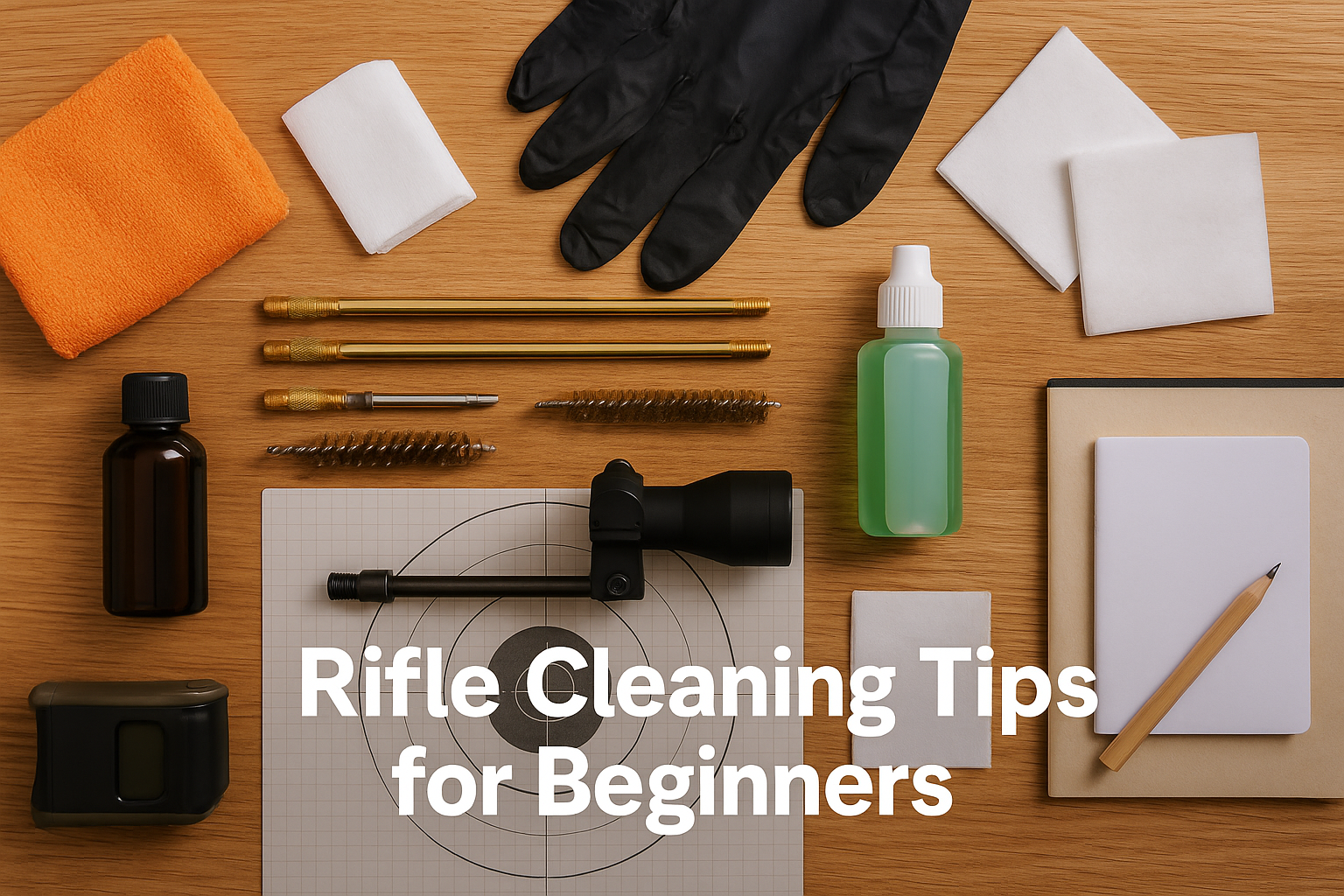
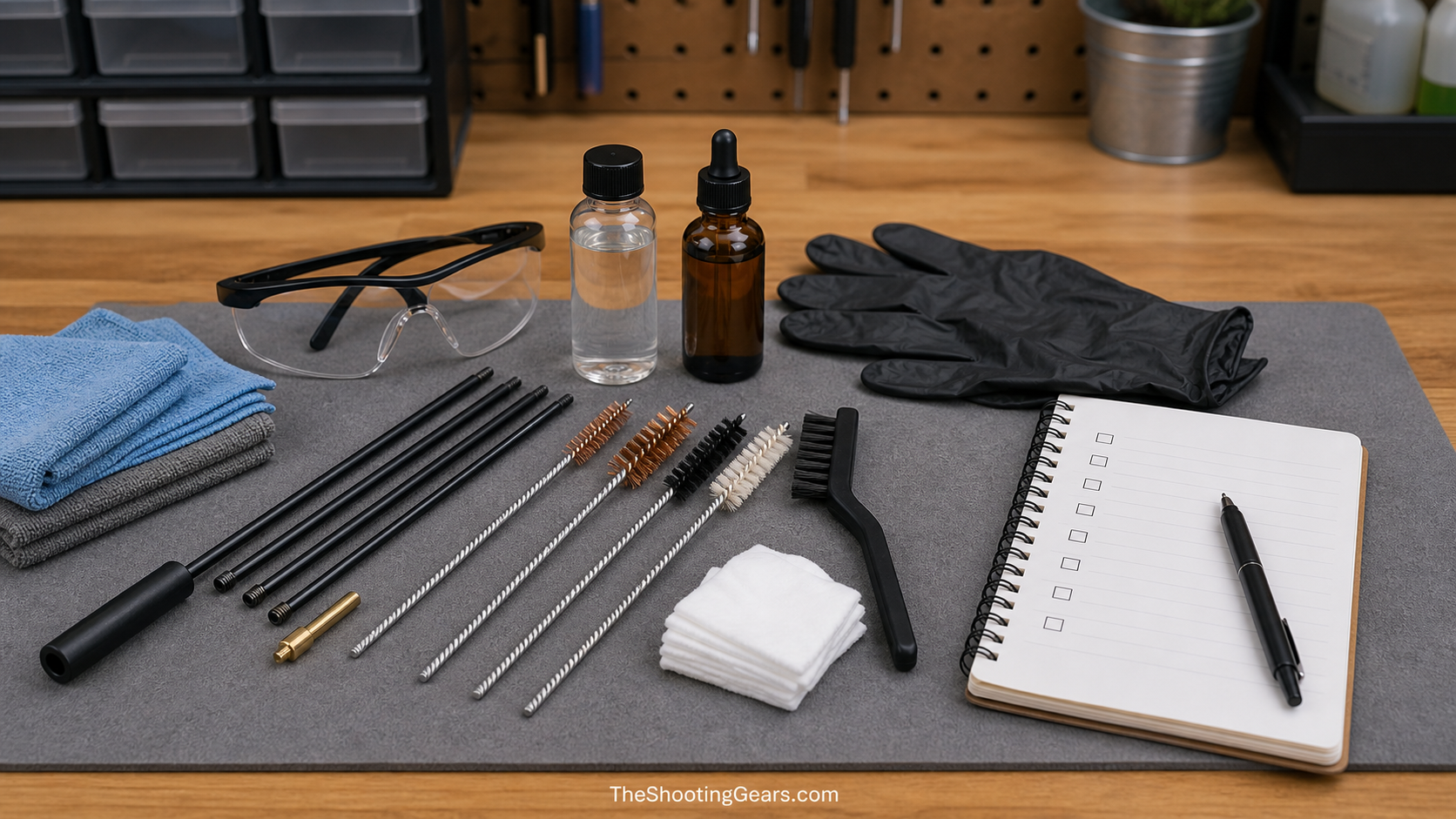
A beginner rifle-cleaning setup should include correct-size tools, patches, solvent, oil, gloves, eye protection, and the firearm manual.

Beginner Rifle Cleaning Checklist

  • Unload and clear: Confirm the rifle is unloaded before any cleaning work.
  • Remove ammunition: Keep ammunition off the cleaning bench and away from solvents.
  • Read the manual: Use the firearm maker’s cleaning and disassembly instructions.
  • Use correct-size tools: Match rods, brushes, jags, and patches to the bore.
  • Ventilate the area: Use solvent and oil in a space with airflow.
  • Protect yourself: Wear eye protection and gloves when using chemicals.
  • Store securely: Return the rifle and cleaning chemicals to safe storage when finished.

Start every cleaning session with firearm safety. The NSSF firearm safety rules are a useful reminder that maintenance begins with safe handling. If you clean after range sessions, residue hygiene matters too; CDC/NIOSH range guidance explains why lead and residue exposure should be taken seriously around shooting environments.

Before You Start Cleaning

Choose a stable bench, good lighting, and a surface you do not mind getting dirty. Put ammunition in another location before opening solvent or oil. Confirm the chamber and magazine are clear, then check again. If your rifle requires disassembly, follow the manual rather than memory or a random shortcut.

When to Stop and Ask for Help

Stop if a part does not move as expected, a screw feels stuck, the bore looks obstructed, the action does not function normally, or you are unsure how to reassemble the rifle. A gunsmith, qualified instructor, or manufacturer support is a better choice than forcing parts.

Tools and Supplies

A beginner kit should include a correctly sized cleaning rod or pull-through cable, bore brush, jag or patch loop, cotton patches, nylon utility brush, microfiber cloth, firearm-safe solvent, firearm oil, gloves, and eye protection. A bore guide can help on compatible rifles, but it must match the firearm and cleaning method.

Do not buy only by piece count. A large kit is not useful if the brushes are the wrong size, the rods are rough, or the case makes parts hard to identify. Correct fit and safe handling matter more than having the biggest kit on the shelf.

Solvent and Oil

Use solvent and oil according to their labels and the firearm manual. Avoid mixing chemicals, avoid over-oiling, and keep products capped when not in use. Eye protection and gloves are simple habits that keep residue and splashes under control.

Safe Cleaning Routine

A safe routine is slow and repeatable. After the rifle is clear and the bench is ready, follow the manual for access to the bore and action. Use properly fitted tools, work from the recommended direction, let solvent do its job, and use clean patches until heavy residue is removed. Do not scrape aggressively or force a brush through a bore that feels wrong.

Clean the chamber, bolt face, and accessible action areas only as your manual allows. Many beginners create problems by taking apart more than necessary. If the rifle has heavy rust, pitting, a bore obstruction, unusual wear, or a malfunction, cleaning is not a substitute for inspection by a qualified professional.

Keep Notes

A small maintenance note helps you remember when the rifle was cleaned, what products were used, and whether anything looked unusual. This is especially useful if you rotate several firearms or store a rifle for a season.

Oil, Wipe-Down, and Storage

Oil should protect parts without leaving the rifle wet or sticky. Too much oil can attract debris and may create problems in cold weather or dusty environments. Wipe exterior metal surfaces as appropriate, keep oil away from optics glass unless the product is made for that use, and check that the rifle functions normally after reassembly.

After cleaning, store the rifle securely and keep chemicals away from children, guests, and heat sources. General safety programs such as Project ChildSafe are useful reminders that safe maintenance and safe storage belong together.

Before putting everything away, do a simple bench reset: cap the chemicals, throw away dirty patches, wipe the mat, check that no small parts or tools are left in the action area, and return the manual and notes to the same place each time. Beginners build confidence faster when the cleaning area is organized and repeatable.

Common Beginner Mistakes

  • Cleaning before fully unloading and clearing the rifle.
  • Keeping ammunition on the bench during cleaning.
  • Using the wrong brush, jag, or patch size.
  • Forcing rods or brushes instead of stopping to diagnose resistance.
  • Over-oiling parts until they feel wet or gummy.
  • Mixing chemicals or ignoring solvent labels.
  • Taking apart more of the rifle than the manual recommends.

FAQ

How often should a beginner clean a rifle?

Follow the firearm manual first. Many rifles benefit from cleaning after range use, exposure to moisture, dusty conditions, or long storage, but the exact routine depends on the firearm and ammunition.

Can too much cleaning hurt a rifle?

Careless cleaning can cause wear or damage if tools are wrong, chemicals are misused, or parts are forced. Careful manual-based maintenance is different from aggressive scrubbing.

Should I clean from the muzzle or chamber end?

Use the direction recommended by your firearm manual and the tools designed for that method. When unsure, ask the manufacturer, a gunsmith, or a qualified instructor.

Do I need expensive cleaning tools?

You need correct, safe, well-finished tools more than expensive tools. A small quality kit that fits your rifle is better than a large kit full of parts you cannot use.

Final Takeaway

Good rifle cleaning habits are simple: unload and clear first, follow the manual, use correct-size tools, respect solvents and residue, avoid forcing parts, apply oil carefully, and store the rifle securely. Beginners do not need a complicated routine; they need a safe, repeatable one.

Improve Your Long Range Shooting: Expert Tips & Guide


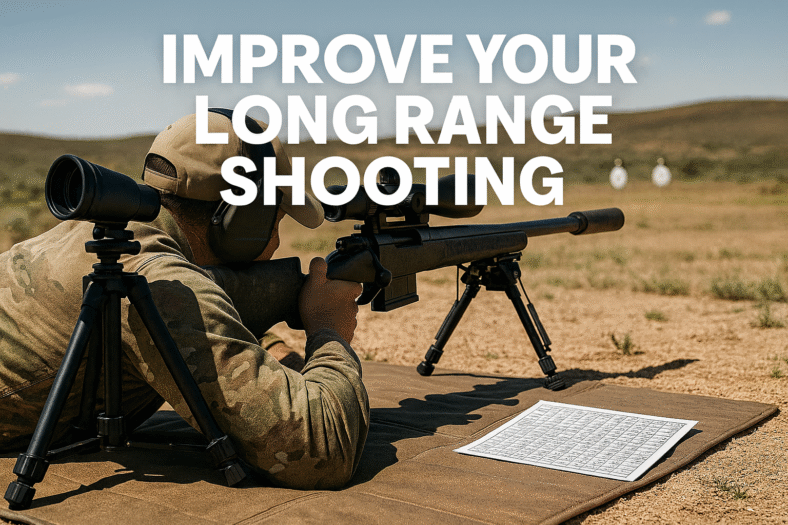
You improve long range shooting by tightening the fundamentals first: a stable position, consistent breathing, a clean trigger press, a steady natural point of aim, and honest reading of wind and distance. Equipment matters less than repeatable technique. The shooters who connect at distance are the ones who do the same simple things the same way on every shot, and who only take a shot when they are confident in it.

This guide stays on the safe, learnable parts of long range shooting. It does not give specific elevation or windage prescriptions, because every rifle, load, and condition is different, and following someone else’s numbers is how people miss or worse. Build your own confirmed data on a controlled range, follow the firearm safety rules from the National Shooting Sports Foundation, and treat every session as practice in discipline as much as accuracy.

Contents

What Counts as Long Range Shooting

Long range shooting generally means engaging targets far enough that bullet drop, wind drift, and your own stability become the limiting factors rather than the rifle’s mechanical accuracy. For many centerfire rifles that begins somewhere past 300 yards, though the exact point depends on the cartridge, the rifle, and the shooter. The label matters less than the principle: at distance, small errors at the trigger turn into large misses downrange.

That is why improvement at distance starts close in. A shooter who cannot hold a tight group at 100 yards will not suddenly tighten up at 500. Earn each step of distance by proving your consistency at the step before it.

Range Safety Comes First

No accuracy tip outranks safety. Long range shooting often happens on larger ranges where targets and impact areas are farther away and harder to see, which makes the basic rules even more important. Always treat every firearm as loaded, keep the muzzle pointed in a safe direction, keep your finger off the trigger until your sights are on target and you have decided to fire, and be certain of your target and what lies beyond it. The full set is laid out by the NSSF firearm safety rules.

  • Confirm a safe, known backstop or berm behind every target. Distance increases the area you are responsible for.
  • Follow the specific range’s rules, cease-fire commands, and downrange procedures without exception.
  • Wear eye protection and hearing protection on every shot, including spotting from beside the firing line.
  • Verify the firearm is clear before transporting, cleaning, or handing it to anyone.

Build a Stable Shooting Position

A stable position is the single largest physical contributor to long range accuracy. The goal is to support the rifle so it returns to the same point of aim with minimal muscular effort from you. The more your bones and gear hold the rifle, and the less your muscles strain to do it, the more repeatable each shot becomes.

Use a Solid Front Rest and Rear Support

A bipod, bench rest, sandbag, or stable improvised rest supports the front of the rifle. A rear bag or your supporting hand stabilizes the buttstock so you can make fine elevation adjustments without straining. The aim is a rifle that sits where you put it.

Find Your Natural Point of Aim

Natural point of aim is where your sights settle when your body is relaxed. Get into position, close your eyes, breathe, then open them. If the reticle has drifted off target, shift your whole body rather than muscling the rifle back. Forcing the rifle onto target with muscle introduces movement that shows up at distance.

Master the Fundamentals Before Distance

The fundamentals of marksmanship are sight alignment, breathing, trigger control, and follow-through. They are simple to describe and take real practice to make automatic. They matter more, not less, as distance grows.

Breathing

Your body moves slightly as you breathe, and that movement is visible through a scope at distance. Most shooters fire during the natural pause at the bottom of an exhale, when the body is briefly still. Do not hold your breath so long that you start to shake or strain.

Trigger Control

Press the trigger straight back with steady, increasing pressure so the shot almost surprises you. Jerking or slapping the trigger pushes the muzzle off target in the instant the bullet leaves. Dry practice with a verified unloaded firearm, following safe handling rules, is one of the best ways to refine a clean press.

Follow-Through

Stay on the rifle and keep your eye on the sight picture through the shot and for a moment after. Reacting before the bullet has cleared the barrel introduces movement. Good follow-through also lets you call your shot, meaning you know where the reticle was at the break.

Read Wind and Conditions

Wind is usually the hardest variable to manage at distance because it pushes the bullet sideways the entire way to the target and can differ between you and the target. Reading it is a skill built over many sessions, not a formula you apply once. The National Weather Service publishes useful background on how wind behaves and is measured.

  • Watch indicators downrange: grass, flags, mirage, dust, and moving vegetation tell you direction and rough strength.
  • Note that wind can vary along the bullet’s path, so the condition at your position is not always the whole story.
  • Build your own feel by observing conditions, making a call, firing, and comparing the result. Honest record keeping teaches faster than guessing.

This guide does not give wind hold values, because they depend on your specific cartridge, velocity, range, and conditions. Learn to read wind and develop your own confirmed corrections on a safe range.

Know Your Rifle and Build Your Own Data

Accuracy at distance depends on knowing how your specific rifle and ammunition behave, which is something only you can confirm. Borrowed numbers from another shooter, a forum, or a different rifle and load are not your data. Use only ammunition that is correct and safe for your firearm, and verify safe cartridge and chamber combinations through the firearm manual and resources such as SAAMI.

  • Confirm your zero at a known distance with the exact ammunition you intend to use, then verify it again on a later day.
  • Keep a simple log of your confirmed results in different conditions so your data reflects reality, not theory.
  • Maintain the rifle and check that the scope and mounts are secure, following the manufacturer’s torque and setup guidance.

Shoot Within Your Ability

Improving at long range is not the same as taking longer shots than you can make. The ethical and safe approach is to extend your maximum distance only as your confirmed, repeatable accuracy supports it. A shot you can make on a calm day at the range is not the same as a shot in wind, in a hurry, or on a live animal.

For hunters, this discipline is part of an ethical, humane approach to the field, and hunter education programs such as Hunter-Ed stress knowing and respecting your effective range. If you are not confident in a shot, the right answer is to pass on it. Confidence should come from proven practice, not optimism.

Common Mistakes That Cost Accuracy

  • Chasing equipment instead of practicing fundamentals. Gear cannot fix an inconsistent position or a poor trigger press.
  • Stretching distance faster than skill, which builds bad habits and unsafe shots.
  • Using another shooter’s drop or wind numbers instead of confirming your own.
  • Ignoring follow-through and reacting to recoil before the shot has cleared.
  • Skipping the wind read and treating a calm-range zero as if it applies everywhere.

Frequently Asked Questions

What is the most important factor in long range accuracy?

Consistent fundamentals applied from a stable position. A repeatable position, steady breathing, and a clean trigger press matter more than any single piece of gear. Master those first, then refine wind reading and your own confirmed data.

How far is considered long range?

It varies by rifle and cartridge, but for many centerfire rifles long range begins past about 300 yards, where drop and wind become the dominant factors. The exact distance depends on your equipment and skill, so judge it by your own confirmed accuracy.

Can I use someone else’s scope settings or drop chart?

No. Settings depend on your specific rifle, ammunition, velocity, and conditions. Using another shooter’s numbers leads to misses and unsafe shots. Build and verify your own confirmed data on a controlled range.

How do I practice wind reading safely?

Observe downrange indicators like flags, grass, and mirage, make a call, fire on a safe range with a proper backstop, then compare the result and keep notes. Reading wind is a skill built over many sessions, not a formula.

Final Takeaway

Improving long range shooting comes down to doing simple things consistently: build a stable position, master the fundamentals, learn to read wind, and confirm your own data on a safe range. Extend your distance only as your proven accuracy allows, follow every range safety rule, and pass on any shot you are not confident in. Discipline is what separates a shooter who hits at distance from one who hopes to.

Bow Sight Setup & Adjustment Guide (Step-by-Step)


Setting up a bow sight comes down to mounting the sight securely, leveling it, and then sighting in one pin at a time by adjusting the sight in the same direction you want the arrow to move. Work at a safe range, start at a close distance, and make small adjustments. This article gives you the overall process so you understand each step and the reason behind it.

This is an overview, not a model-specific manual. Bow sights, risers, and mounting systems differ, and anything involving a bow press, draw weight, draw length, cam timing, or internal adjustment should be handled with your owner’s manual or by a qualified pro shop. If something feels mechanically wrong or you are unsure, stop and get help before drawing the bow. Safe archery practice starts with equipment you trust.

Contents

Understand the Parts of a Bow Sight

A bow sight is the aiming system that mounts to the riser and gives you reference points to align with the target. Knowing the parts makes setup clearer. Most fixed-pin sights share the same basic pieces.

  • Mounting bracket: attaches the sight to the bow riser.
  • Sight housing or ring: holds the pins or aiming points.
  • Pins: the aiming references, often set for different distances on a multi-pin sight.
  • Windage adjustment: moves the pins or housing left and right.
  • Elevation adjustment: moves the pins or housing up and down.
  • Level: a small bubble level that helps you hold the bow upright.

Single-pin and adjustable sights work on the same windage and elevation logic but use a movable pin set against a yardage scale. Your sight’s manual explains its specific controls.

Safety Before You Start

Bow setup happens around a drawn bow and arrows, so treat it with the same care you would any range session. Only shoot on a proper archery range or a safe backyard setup with a reliable backstop and a clear area well beyond the target. Never dry fire a bow, meaning never release it without an arrow, because that can damage the bow and injure you. USA Archery and World Archery both publish range and shooting safety guidance worth reviewing before you practice.

  • Inspect arrows for cracks or damage before every shot, and retire any that are compromised.
  • Confirm nocks, rest, and the sight mount are secure before drawing.
  • Wear eye protection and keep bystanders behind the shooting line.
  • Match arrows to your bow’s specifications. If you are unsure about arrow spine or weight for your draw setup, ask a pro shop rather than guessing.

Mount and Level the Sight

Mounting the sight securely and squarely is the foundation, because a sight that shifts or sits crooked will never hold a reliable zero. Follow the hardware and torque guidance in your sight’s instructions so you do not over-tighten or strip fasteners.

  1. Attach the mounting bracket to the riser using the supplied hardware, snug but not over-tightened per the manual.
  2. Position the sight so the housing sits roughly centered for your draw and anchor, leaving room for later windage adjustment.
  3. Use the sight’s bubble level, and ideally a separate bow level, to set the sight square to the bow.
  4. Double-check that every screw is secure before drawing the bow for the first time.

If your sight requires moving the rest, adjusting the bow’s draw, or any work that calls for a bow press, do not attempt it freehand. That is pro shop territory.

Sight In Your Pins Step by Step

Sighting in means adjusting the sight so your arrows hit where the pin is aimed, starting close and working out. Begin at a short, safe distance so missed arrows stay on the target and backstop while you dial things in.

  1. Set up at a close distance, such as 10 to 20 yards, with a solid backstop and a consistent anchor and form.
  2. Shoot a small group of arrows at the target using your top or chosen pin, keeping your form the same each time.
  3. Note where the group lands relative to your aim point, not where a single stray arrow lands.
  4. Adjust windage and elevation in small increments using the adjustment rule below.
  5. Shoot another group, confirm the change, and repeat until the pin is on.
  6. For a multi-pin sight, move to the next distance and set the next pin, again confirming with groups.

This guide does not prescribe specific pin distances or universal yardage settings, because the right setup depends on your bow, arrows, draw, and the distances you actually shoot. Set pins to the distances you practice and confirm each one yourself.

Understand the Adjustment Rule

The core rule for most pin sights is to move the sight in the same direction you want the arrows to move on the target. If your arrows are landing low, move the sight or pin down to bring impacts up; if they land left, move the sight left. This is the opposite of how some rifle scopes work, so go slowly and verify with a group after each change.

Make one adjustment at a time and confirm it before making another. Chasing single arrows or changing windage and elevation together at once makes it hard to tell what each adjustment did. Always check your sight’s instructions, since some designs differ.

When to See a Pro Shop

A pro shop is the right call any time setup moves beyond mounting and basic sighting in. Archery shops have the tools and experience to handle adjustments that are unsafe or impractical to do at home.

  • Anything requiring a bow press, including string, cam, or limb work.
  • Setting or changing draw weight and draw length.
  • Arrow rest installation, tuning, or paper tuning.
  • Matching arrow spine and weight to your bow’s specifications.
  • Any grinding, cracking, or unusual noise from the bow, which means stop and inspect before shooting.

There is no downside to asking for help. A correctly set up bow is safer to shoot and far easier to sight in.

Common Setup Mistakes

  • Starting at a long distance, so missed arrows fly past the target and backstop.
  • Adjusting to single arrows instead of the center of a group.
  • Changing windage and elevation at the same time, hiding what each change did.
  • Over-tightening sight hardware and stripping the fasteners.
  • Inconsistent form between shots, which looks like a sight problem but is a shooter problem.
  • Attempting press, rest, or draw adjustments without the right tools or knowledge.

Frequently Asked Questions

Which way do I move a bow sight to correct my shots?

For most pin sights, move the sight in the same direction you want the arrows to move. Arrows landing low means move the sight down; arrows landing left means move the sight left. Make one change at a time, confirm with a group, and check your sight’s manual since some designs differ.

What distance should I sight in my pins at?

Start close, around 10 to 20 yards, so missed arrows stay on the target and backstop. Set your pins to the distances you actually practice and confirm each one yourself. There is no universal pin setting because it depends on your bow and arrows.

Can I set up a bow sight myself?

You can usually mount, level, and sight in a pin sight yourself by following the manual and working at a safe range. Anything involving a bow press, draw weight, draw length, or arrow rest tuning should go to a qualified pro shop.

Why won’t my bow hold a consistent zero?

Common causes are loose sight hardware, an unlevel sight, inconsistent form or anchor, or damaged arrows. Check that everything is secure and square, focus on repeatable form, and inspect your arrows. If it persists, have a pro shop check the bow’s tune.

Final Takeaway

Bow sight setup is straightforward when you take it in order: mount and level the sight securely, then sight in one pin at a time from a close, safe distance, moving the sight in the direction you want your arrows to go. Keep your form consistent, make one adjustment at a time, and never dry fire. For any mechanical work beyond mounting and sighting in, your manual and a pro shop are the safe path.

Exit mobile version