Bow Stabilization for Target Shooting

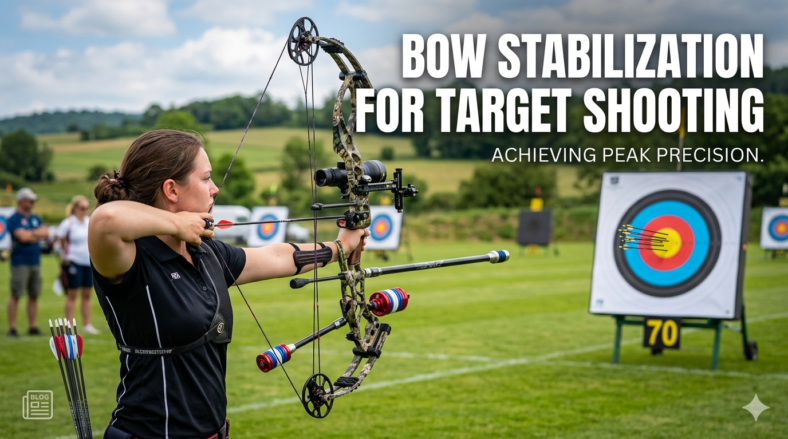
Bow stabilization for target shooting means using front bars, side bars, and weights to change how a bow balances, aims, and settles during the shot. A stabilizer setup can shift the bow’s center of balance, dampen vibration, and change aiming feel, but it is not a universal accuracy shortcut.

The best stabilizer setup depends on the archer, bow, strength, shooting style, and competition rules. Adjust in small steps, test safely, and check the current rulebook for your class before competing.

What Bow Stabilization Does

Bow stabilization changes how a bow balances, how it absorbs vibration, and how it behaves before and after the shot. By adding mass and extending it away from the riser, stabilizers can alter the bow’s center of balance and the way the sight pin moves while aiming.

Stabilization is a feel-and-balance adjustment, not a guaranteed performance upgrade. It may make a bow feel more settled for one archer and less comfortable for another. Beginner-friendly archery education sources such as Archery 360 are useful for building general context before changing equipment.

Front Bars, Side Bars, and Weight Placement

Front bars, side bars, and weights are the main parts that determine how a stabilizer setup balances a bow. Each piece affects feel differently, so it helps to understand the job of each one.

PartWhat It Usually DoesBeginner Check
Front barAdds weight forward of the riserDoes it feel steadier without tiring your shoulder?
Side/back barOffsets side-to-side or rear balanceDoes the bow sit more level in your hand?
WeightsFine-tune how much mass sits at each pointCan you hold the setup through a full session?

How front weight changes aiming feel

Adding weight to the front bar extends mass forward of the riser. Many archers feel this as a steadier hold or a different sight movement while aiming. Too much weight can also create fatigue, so change front weight in small increments and judge comfort over a full practice session.

Side bars and back bars add weight off to the side and rear. They can help counter how the bow wants to tip or twist in the hand. Adjust side-bar angle and weight one change at a time so you can tell what each change actually did.

Target Setup vs Hunting Setup

Target and hunting stabilizer setups often differ because the priorities are different. Target setups can be longer and heavier because the archer is usually shooting from known positions. Hunting setups usually need to stay shorter, lighter, and easier to carry.

Neither style is automatically better. A long target setup that feels steady on a range may be awkward in the field, while a compact hunting setup may not feel as settled during target practice. Match the setup to how you actually shoot.

How to Test Balance Safely

Testing a stabilizer setup safely means changing one variable at a time and stopping if the setup causes strain or makes the bow hard to control. The goal is repeatable control, not maximum length or maximum weight.

  • Change one variable at a time, such as front weight, side weight, or side-bar angle.
  • Shoot a consistent practice set and note hold, comfort, sight movement, and fatigue.
  • Reduce weight or length if the bow feels awkward or strains your shoulder, arm, or back.
  • Keep notes so you can return to a setup that felt stable.

If you are still learning bow setup basics, review broader setup and tuning steps before changing stabilizer weight. The guides on setting up your bow and bow tuning for beginners are useful companion reads.

Rules and Class Checks

Competition divisions can restrict stabilizer length, weight, attachments, and overall equipment configuration. These rules vary by organization and event, so check the current rulebook for your class before competing.

Useful places to start include the World Archery rulebook, USA Archery, NFAA, and the Archery Shooters Association. Local clubs may also add event-specific instructions.

Frequently Asked Questions

Do stabilizers make you more accurate?

Stabilizers can change how steady a bow feels and how it settles, but they do not automatically create tighter groups. The effect depends on the archer, bow, and setup.

How long should a target stabilizer be?

There is no single correct length. Target setups often run longer than hunting setups, but the right setup depends on your body, bow, shooting style, and competition rules.

What is the difference between a front bar and a side bar?

A front bar extends weight forward from the riser, while a side or back bar adds weight off to the side or rear. Full target setups may use both to tune front-back and left-right balance.

Will a target stabilizer setup work for hunting?

Often not directly. Target setups can be long and heavy, while hunting setups usually need to stay compact and easier to carry. Match the stabilizer to how and where you shoot.

Are there rules about stabilizers in competition?

Yes. Many competition divisions restrict stabilizer length, weight, attachments, or configuration. Always check the current rules for your organization, class, and event.

Final Stabilizer Takeaway

Bow stabilization is a tuning tool for balance, aiming feel, and shot reaction. Start small, change one variable at a time, watch for strain, and verify current competition rules before relying on any setup.

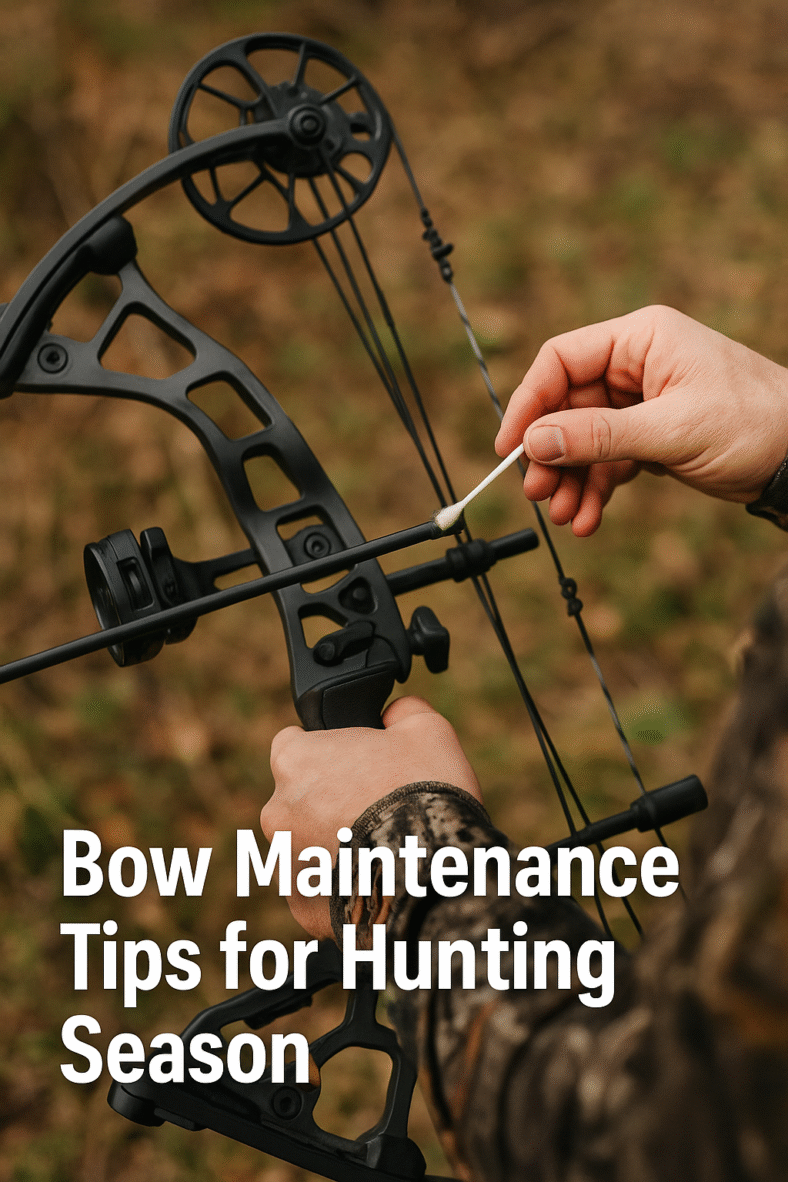
Bow Maintenance Tips Before Hunting Season

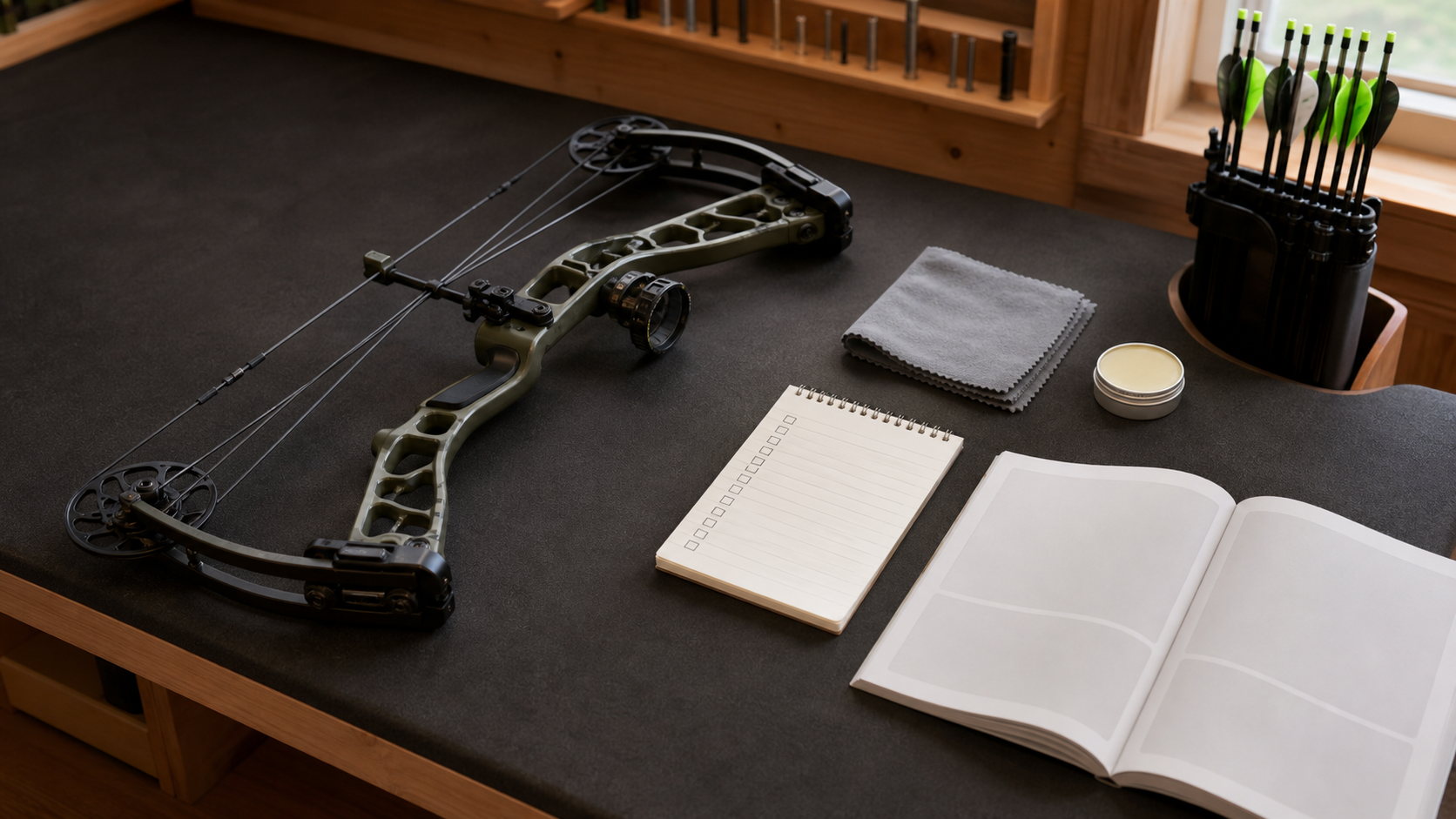
Pre-season bow maintenance is mostly inspection, clean storage, and knowing when to stop. Before hunting season, read the owner manual for your exact bow, check the string, cables, serving, limbs, cams, arrows, nocks, points, rest, sight, and quiver mounts, then confirm the bow shoots normally at a safe range. Anything damaged, unusual, or beyond basic care belongs with a qualified bow technician.

This guide is not a repair manual or a safety clearance. Compound bows store serious energy, and different models have different service limits. Treat the manual and a qualified pro shop as the final authority for your setup.

Table of Contents
  1. Quick Answer: What To Check Before Hunting Season
  2. Start With The Owner Manual and Safety Inspection
  3. Inspect Arrows, Nocks, Points, and Broadhead Storage
  4. Basic Cleaning and Storage Habits
  5. What To Test At A Safe Range
  6. When To Stop Shooting and Visit a Pro Shop
  7. Pre-Season Bow Maintenance Checklist
  8. Common Bow Maintenance Mistakes
  9. Related Bow Setup Guides
  10. Frequently Asked Questions

Quick Answer: What To Check Before Hunting Season

Before hunting season, check the bow in this order: manual, string and cables, serving, limbs, cams, rest, sight, quiver mounts, arrows, nocks, points, broadhead storage, cleaning, dry storage, and safe range confirmation. Stop shooting if you see fraying, broken strands, serving separation, limb damage, cam damage, unusual noise, or any issue you do not understand.

Keep the work simple. Visual inspection, clean handling, safe storage, and range confirmation are reasonable owner tasks. Press work, string or cable replacement, timing, limb adjustment, module work, peep work, and D-loop service should be handled by a pro shop.

Start With The Owner Manual and Safety Inspection

Start with the owner manual for your exact bow model. The manual tells you what the manufacturer considers normal, what checks are allowed, and which warning signs mean the bow should not be used. If you do not have a current manual, manufacturer manual pages such as Hoyt’s manuals page are a good reminder to find the correct document before doing anything more than a visual check.

Strings, Cables, Serving, and Limbs

Look closely at the string and cables. Watch for broken strands, heavy fraying, flattened areas, unusual separation, or serving that has shifted or opened up. Then inspect the limbs for cracks, splinters, chips, or delamination. Manufacturer safety pages such as Hoyt’s compound bow safety and warnings explain why damaged parts are a stop-use issue, not something to test for “one more shot.”

Cams, Modules, Rest, Sight, and Quiver

Check that cams, modules, and tracks look normal, with no visible bending, chips, or loose hardware. Look over the rest, sight, stabilizer mount, and quiver connection so nothing is obviously loose or shifted from your last setup. If a cam, module, cable path, or limb bolt looks questionable, stop and get service help. Manufacturer support pages such as Mathews support point owners toward model-specific assistance rather than guesswork.

Use pre-season bow maintenance as a structured inspection, not a home repair session.

Inspect Arrows, Nocks, Points, and Broadhead Storage

Check every arrow before the season. Look for cracked shafts, damaged fletching, loose inserts, damaged nocks, and points that are not seated correctly. If your arrow manufacturer recommends a specific inspection method, follow that method. If an arrow looks or sounds suspicious during inspection, remove it from use rather than trying to “test” it at full draw.

Broadheads should be stored covered, organized, and away from loose gear. This article does not cover broadhead tuning or shot setup; it only covers safe storage and inspection habits. Replacement arrows, nocks, inserts, and broadheads should match your bow setup and manufacturer guidance.

Basic Cleaning and Storage Habits

Basic bow care is simple: wipe away dirt and moisture, keep the bow dry, and store it in a stable place where it will not be knocked over, crushed, or exposed to harsh chemicals. A soft cloth is usually enough for normal surface cleaning. Avoid solvents, oils, sprays, or abrasive cleaning unless your owner manual specifically allows them.

String wax is another manual-led item. If your manual gives waxing guidance, follow it exactly. If the string is damaged, serving is separating, or you are unsure whether wax is appropriate, do not use wax as a fix. Get the bow inspected.

What To Test At A Safe Range

After the visual inspection, confirm the bow at a safe range with a proper target, backstop, and normal shooting routine. Watch for unusual sound, vibration, feel, arrow flight changes, or shifted accessories. Never dry fire a bow. USA Archery’s safety resources are a useful high-level reference for safe practice habits.

The range check is not a license to ignore warning signs. If anything seems different from normal, stop shooting and investigate with a qualified technician. A bow that feels “mostly fine” can still have a serious problem.

When To Stop Shooting and Visit a Pro Shop

Visit a pro shop if you see fraying, broken strands, serving separation, limb damage, cam damage, unusual noise, derailment, dry-fire history, a hard drop, or anything that makes you uncertain. A qualified technician should handle string and cable service, press work, timing, limb adjustments, module changes, peep work, D-loop service, and any repair that changes the bow’s setup.

When in doubt, choose the slower and safer path. Manufacturers such as BowTech direct owners toward customer service or authorized support for issues that should not be solved by guesswork.

Pre-Season Bow Maintenance Checklist

CheckWhat To Look ForSafe Action
Owner manualExact model guidance and warningsFollow the manual before any maintenance decision
String and cablesFraying, broken strands, serving separationStop and use a pro shop if damaged
Limbs and camsCracks, chips, bent parts, loose hardwareDo not shoot if anything looks abnormal
Arrows and nocksCracks, loose inserts, damaged nocks or fletchingRemove questionable arrows from use
AccessoriesShifted rest, sight, quiver, or stabilizerConfirm secure mounting without forcing adjustments
Range confirmationUnusual sound, feel, vibration, or arrow flightStop if the bow does not feel normal

Common Bow Maintenance Mistakes

The biggest mistake is treating maintenance as repair. A quick inspection does not prove a bow is safe, and a small warning sign can matter. Other common mistakes include skipping the owner manual, dry firing during checks, shooting a questionable arrow, using wax to hide string damage, ignoring serving separation, or attempting press work at home.

Another mistake is waiting until the night before the hunt. Do the inspection early enough that you have time for a pro-shop visit, replacement arrows, or range confirmation without rushing.

Frequently Asked Questions

What bow maintenance should I do before hunting season?

Read the owner manual, inspect the string, cables, serving, limbs, cams, accessories, arrows, nocks, and points, then confirm normal shooting at a safe range. Send anything damaged, advanced, or uncertain to a pro shop.

How often should I replace my bowstring?

There is no universal replacement interval that fits every bow and archer. Use your manual, usage level, visible condition, and a technician’s inspection. Fraying, broken strands, or serving separation are reasons to stop and get professional help.

Can I wax or service my own bowstring?

You can follow your manual if it gives clear string-waxing instructions. Do not treat wax as a repair. String replacement, cable replacement, twisting, timing, and press work should be handled by a qualified technician.

When should I take my bow to a pro shop?

Take it to a pro shop if you see string, cable, serving, limb, or cam damage; if the bow has been dry fired, derailed, dropped, or struck; if it sounds or feels unusual; or if you are unsure whether it is safe to shoot.

Arrow Rest Guide: Rest Types, Fit, and Setup Basics for Archers

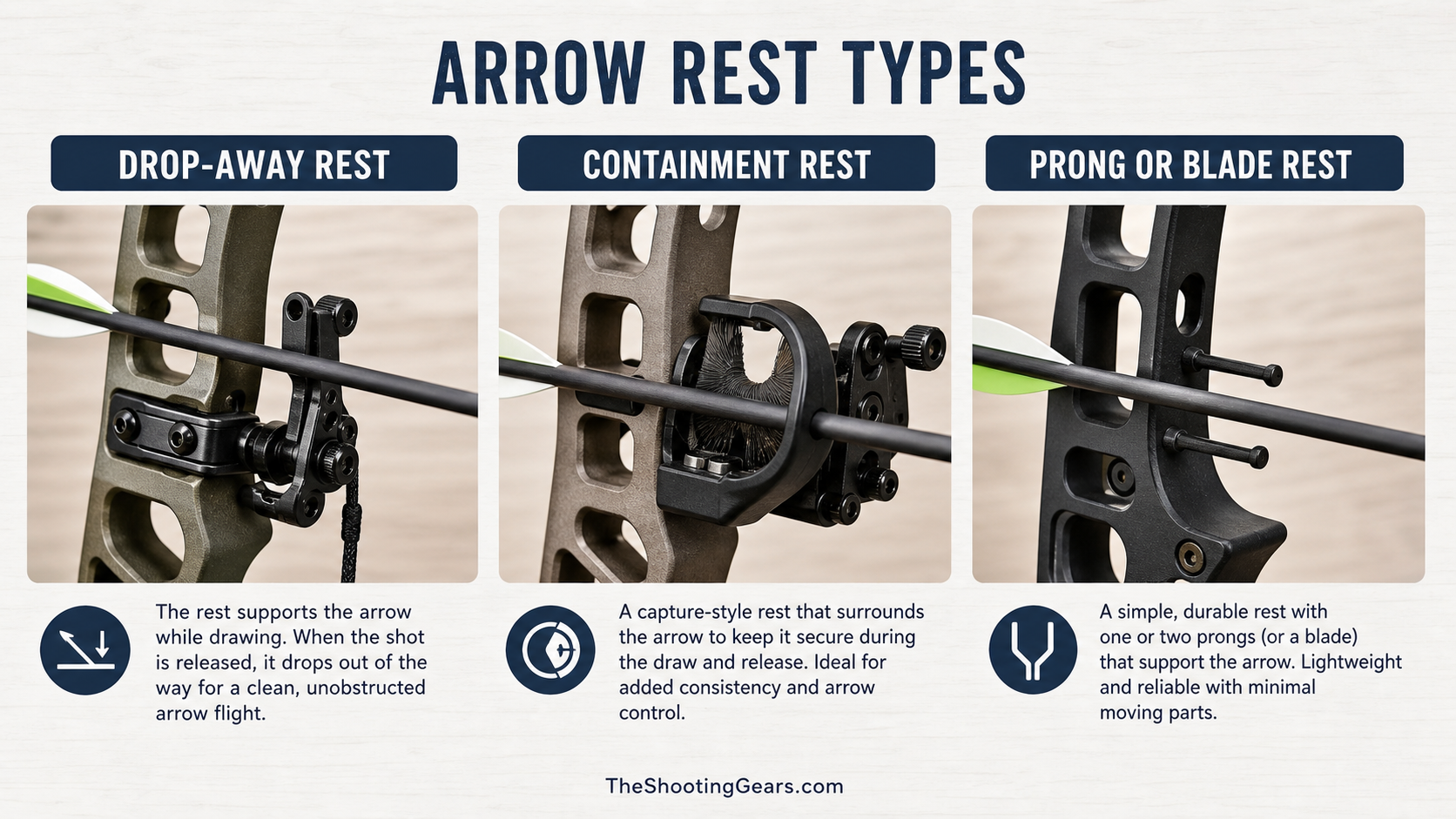
An arrow rest is the part of the bow that supports the arrow until release. The main rest types are drop-away rests, containment or full-capture rests, and prong or blade-style rests. The right choice depends on your bow, arrow setup, shooting style, and how much retention, clearance, and tuning complexity you want.

A better rest can support cleaner arrow flight, but it does not guarantee accuracy by itself. Fit, arrow spine, nocking point, form, and tuning all work together. Use this guide to understand the rest types, then confirm final setup with your bow and rest manufacturer instructions or a qualified pro shop.

What An Arrow Rest Does

An arrow rest holds the arrow in position on the bow and supports it through the shot. A well-matched rest helps the arrow launch consistently. A poorly matched or mistuned rest can create fletching contact, erratic flight, and frustrating groups.

The rest is only one part of the setup. Your arrow spine, point weight, nocking point, draw length, release, and form also matter. For broader shooting form work, see our guide on improving archery shooting.

Common Types Of Arrow Rests

Arrow rests fall into a few practical categories. The descriptions below are general, so confirm exact behavior and compatibility for your specific bow and rest.

Drop-away rests

A drop-away rest supports the arrow during the draw and drops out of the way during the shot. The goal is to reduce contact between the rest and the arrow or fletching. Drop-away rests are common on compound bows, but they need correct setup and timing.

Containment and full-capture rests

Containment rests surround or partly surround the arrow so it stays in place while you move, draw, or hold at an angle. That retention can be useful for hunting, field use, and new archers. The tradeoff is that some designs create more arrow or vane contact than a well-set drop-away rest.

Prong, blade, and shoot-through rests

Prong and blade-style rests support the arrow on small contact points and are often associated with target setups. They can be precise, but they also require careful matching to arrow diameter, spine, point weight, and shooting style.

Traditional shelf rests

Many traditional bows use the shelf or a simple stick-on rest rather than a compound-style rest. Do not assume compound rest advice applies to recurves or longbows. Follow the bow maker’s setup guidance.

How To Choose By Use Case

Choose by how you shoot, not by the most expensive or most complicated design.

  • Hunting and field use: arrow retention matters because you may move, change angles, or draw from uneven positions.
  • Target archery: repeatability, clearance, and fine adjustment usually matter more than maximum retention.
  • 3D archery: balance retention, clearance, and class rules. Our 3D archery setup guide explains the broader setup context.
  • Beginners: simplicity and reliability usually beat complicated tuning until form is more stable.

Compatibility And Fit

Before choosing a rest, confirm it fits your bow and your arrows. Check the riser’s mounting interface, arrow diameter, vane clearance, and whether the rest type matches your shooting discipline. If your rest has timing or activation parts, make sure the bow can support that setup correctly.

Manufacturer support pages and manuals are the safest place for model-specific information. For example, Bear Archery’s product manuals and Mathews customer support are better references for setup limits than a generic article.

Setup And Tuning Cautions

Arrow rest setup is connected to the rest of the bow. Centershot, nocking point, arrow spine, fletching clearance, and drop-away timing can all interact. That is why beginners should treat tuning instructions as equipment-specific, not universal.

Use the rest maker’s instructions, the bow manual, and a pro shop or coach when you are unsure. For safe learning context, USA Archery’s safety guidance is also worth reviewing before working with new equipment.

Maintenance Checks

  • Check mounting screws for looseness.
  • Inspect moving parts on drop-away rests.
  • Look for worn bristles, blades, pads, or launcher arms.
  • Check for fletching contact or unusual arrow marks.
  • Recheck tune after changing arrow spine, point weight, vanes, or draw settings.

If you are also working on overall bow balance, see our bow stabilization guide.

Frequently Asked Questions

What type of arrow rest is best for beginners?

Many beginners do well with a simple containment or full-capture rest because it helps keep the arrow in place. The best choice still depends on the bow, arrow setup, and shooting style.

What is the difference between a drop-away rest and a containment rest?

A drop-away rest moves out of the arrow’s path during the shot to reduce contact. A containment rest holds the arrow more securely during movement. Drop-away rests emphasize clearance; containment rests emphasize retention.

Do I need a pro shop to set up an arrow rest?

Not always, but a pro shop is smart if you are unsure about centershot, vane clearance, drop-away timing, or compound bow setup. Small rest changes can affect the whole tune.

Will a better arrow rest make me more accurate?

A well-matched and well-tuned rest can support more consistent arrow flight, but it does not guarantee accuracy. Form, arrows, bow fit, and practice still matter.

How do I know if a rest is compatible with my bow?

Check the rest and bow manufacturer information for mounting style, bow type, arrow compatibility, and setup instructions. If anything is unclear, ask the manufacturer or a local pro shop before buying.

Final Takeaway

The right arrow rest is the one that fits your bow, supports your arrows, and matches how you shoot. Drop-away rests prioritize clearance, containment rests prioritize arrow retention, and prong or blade-style rests can support precise target setups. Treat the rest as part of a complete bow system, not a standalone accuracy fix.

Exit mobile version