


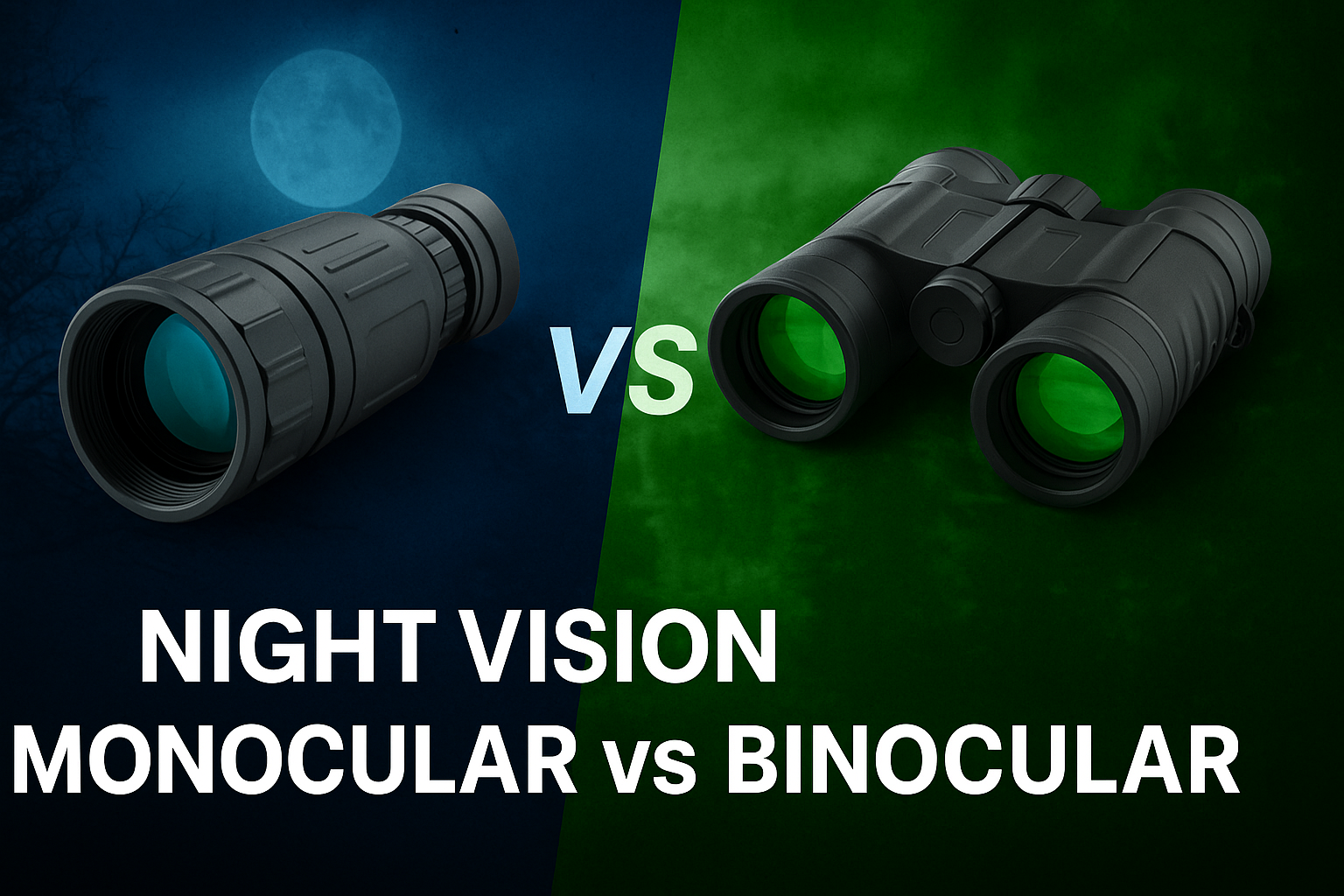
A night vision monocular is the lighter, lower-cost, more versatile choice for most casual users, while a night vision binocular gives you two-eye comfort and a more natural sense of depth for longer observation sessions. A monocular uses a single optical channel and one eye, which keeps it compact and lets you keep your other eye adjusted to ambient light. A binocular uses two channels for both eyes, which is more comfortable over time and gives better depth perception, at the cost of more weight and a higher price. The best pick depends on how long you observe, whether depth perception matters, your budget, and what your local rules allow.
Contents
The Quick Answer
Choose a monocular if you want light weight, lower cost, and flexibility, and if your sessions are short or you move often. Choose a binocular if you do long, stationary observation, value two-eye comfort, and want a more natural sense of depth, and your budget allows it. Both are observation tools. Neither replaces the rules and safety judgment that come with any after-dark activity.
How Night Vision Monoculars and Binoculars Work
Both devices amplify available light so you can see in low-light conditions. A monocular has a single objective lens, a single intensifier or sensor, and one eyepiece, so you view through one eye. A binocular has two complete optical paths, one for each eye. There are also biocular designs, which feed a single channel to both eyes for comfort without true stereo depth; the term “binocular” in everyday use can sometimes refer to either, so check the product description.
Night vision also comes in different generations and in digital and thermal-adjacent forms, but for the monocular-versus-binocular decision the optical-channel count is the main difference that affects depth, comfort, weight, and price. For neutral background on how night vision intensifies light, general references such as the overview from this night-vision device summary can help define terms before you shop.
Depth Perception and Situational Awareness
Depth perception is the clearest functional difference. A true two-channel binocular shows each eye a slightly different view, which your brain combines into a stereo image with a more natural sense of distance and terrain. That helps when you are judging footing, moving through uneven ground, or watching an area for a long time.
A monocular gives a flatter, single-eye image with less depth cueing. There is a tradeoff in the other direction, though. Because one eye stays uncovered, a monocular lets you keep that eye adapted to ambient light and aware of your surroundings, which some users prefer for moving between lit and dark areas. So the depth advantage of a binocular and the awareness flexibility of a monocular are both real, just suited to different situations.
Comfort, Eye Fatigue, and Session Length
For long sessions, two eyes are usually more comfortable than one. Viewing through both eyes tends to reduce the strain that comes from squinting or closing one eye for an extended period, which is why binocular and biocular designs are often favored for sustained observation.
A monocular can cause more fatigue over a long watch because one eye is working and the other is closed or idle. For short, intermittent looks it is rarely an issue, and many users carry a monocular precisely because it is quick to raise and lower. Match the format to how long you actually keep the device to your eyes.
Weight, Size, and Portability
Monoculars win on weight and size. With one optical channel they are smaller, lighter, and easier to pocket or mount, which matters if you pack light or move often. A binocular carries two of nearly everything, so it is heavier and bulkier, and head-mounted binocular setups add weight to your head and neck over time.
If portability and quick deployment are priorities, the monocular is the practical choice. If you will mostly observe from a fixed position or use a support, the extra weight of a binocular matters less.
Budget and Value
Monoculars generally cost less than comparable binoculars because there is one optical system instead of two. For a buyer entering night vision, a monocular is usually the lower-cost way to get usable performance, and budget often stretches further toward better glass or a newer sensor in a single channel than in a dual channel at the same price.
A binocular asks you to pay for two channels, so reaching the same image quality across both eyes costs more. The question is whether two-eye comfort and depth perception are worth that premium for your use. For casual or occasional use, many people find a monocular is enough. For frequent, long, or movement-heavy use, the binocular’s comfort can justify the cost.
Use-Case Comparison
| Situation | Better fit | Why |
|---|---|---|
| Short, intermittent looks; scouting on the move | Monocular | Light, fast to use, keeps one eye light-adapted |
| Long, stationary observation | Binocular | Two-eye comfort reduces fatigue over time |
| Moving over uneven terrain | Binocular | Better depth perception helps judge footing and distance |
| Tight budget or first night-vision purchase | Monocular | Lower cost for usable performance |
| Packing light or weight-limited | Monocular | Smaller and lighter to carry |
| Frequent, comfort-critical use | Binocular | Sustained viewing is easier on both eyes |
| Any after-dark legal or hunting activity | Confirm rules first | Local law governs lawful use, not the device type |
Checking Legality Before You Buy or Hunt
Whether and how you can use night vision for hunting or other regulated activity depends entirely on your jurisdiction, not on which optic you choose. Some states restrict or prohibit night vision for hunting certain species, some allow it only for specific animals or seasons, and rules can change. This article cannot give you a current legal answer, and it is not legal advice.
Before you buy with hunting in mind, and again before any after-dark hunt, confirm the current rules with your state wildlife agency. You can locate your state agency and federal land rules through the U.S. Fish and Wildlife Service, then verify the specifics directly with the state authority. If you hunt at night, also confirm safe-shooting requirements, because positive target identification and a safe background are harder in the dark and remain your responsibility regardless of equipment.
Frequently Asked Questions
Is a night vision monocular or binocular better for beginners?
A monocular is usually the easier and more affordable starting point. It is lighter, costs less, and is flexible for short looks. Move to a binocular if you find yourself doing long sessions where comfort and depth perception matter.
Do night vision binoculars give true depth perception?
True two-channel binoculars do, because each eye sees a slightly different image that your brain merges into a stereo view. Some products labeled binocular are actually biocular, feeding one channel to both eyes for comfort without full stereo depth, so check the design.
Which is lighter to carry?
A monocular is lighter and more compact because it has one optical channel. A binocular carries two of nearly everything, so it weighs and bulks more, which matters most for head-mounted use or long carries.
Can I use night vision for hunting?
That depends on your state and the species. Some places allow it in limited cases, others restrict or prohibit it, and rules change. Confirm current regulations with your state wildlife agency before you buy for hunting or head out at night. This is not legal advice.
Why are night vision binoculars more expensive?
Because they contain two complete optical channels instead of one. Matching the image quality of a single channel across both eyes costs more, which is why a comparable binocular usually carries a higher price than a monocular.
Is one safer than the other for moving around at night?
Binoculars offer better depth perception, which can help judge footing and distance while moving. A monocular keeps one eye uncovered and light-aware, which some users prefer. Either way, move carefully and never rely on an optic alone for safety.
Final Takeaway
Pick the format that matches how you observe. A monocular is the light, affordable, flexible choice for short looks, movement, and tighter budgets, and it keeps one eye adapted to ambient light. A binocular costs more and weighs more, but rewards long, stationary, or movement-heavy use with two-eye comfort and better depth perception. Decide based on session length, depth needs, weight, and budget. Then, before any hunting or after-dark use, confirm what is legal with your state wildlife agency, because the rules, not the device, decide what you can lawfully do.