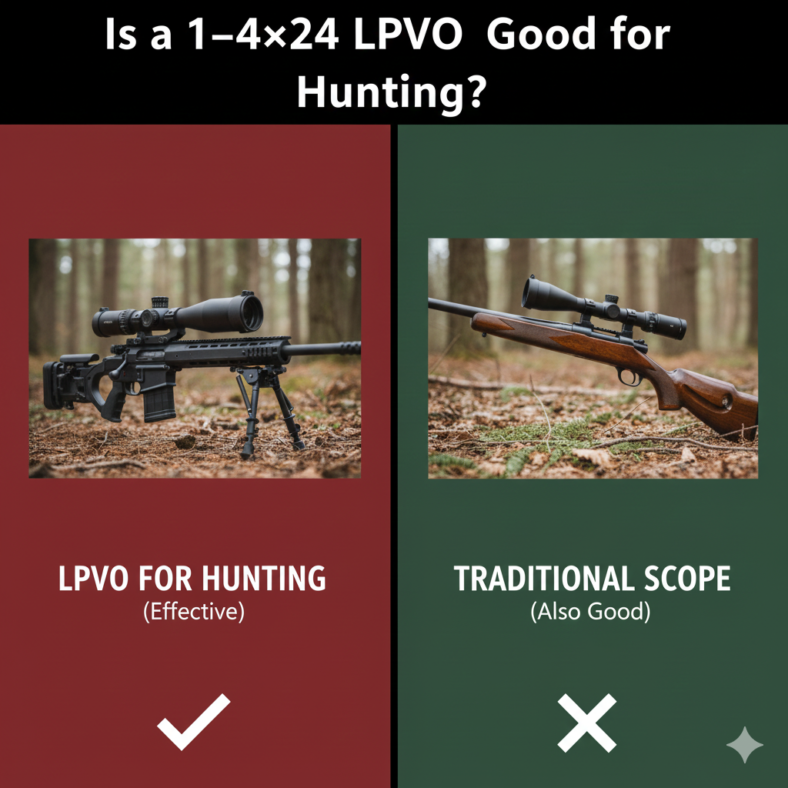
A 1-4×24 LPVO can be good for hunting when most shots are close to moderate range, the cover is thick, and you value fast target acquisition more than high magnification. It is not the best choice for long open-country shots, tiny targets, or hunters who need strong low-light detail at higher magnification.
The short answer: use a 1-4×24 LPVO for woods hunting, driven hunts, hogs, coyotes at closer ranges, and general rifles where speed matters. Choose a higher-magnification scope if your hunting regularly stretches beyond the range where 4x gives you enough target detail for an ethical shot.
A 1-4×24 LPVO is best when your hunting is built around quick shots, brush, timber, food plots, stands, or short lanes. At 1x, it can feel much faster than a traditional high-power scope. At 4x, it gives enough precision for many realistic short-to-mid-range hunting shots. The limitation is simple: it gives up magnification and some low-light performance compared with larger scopes.
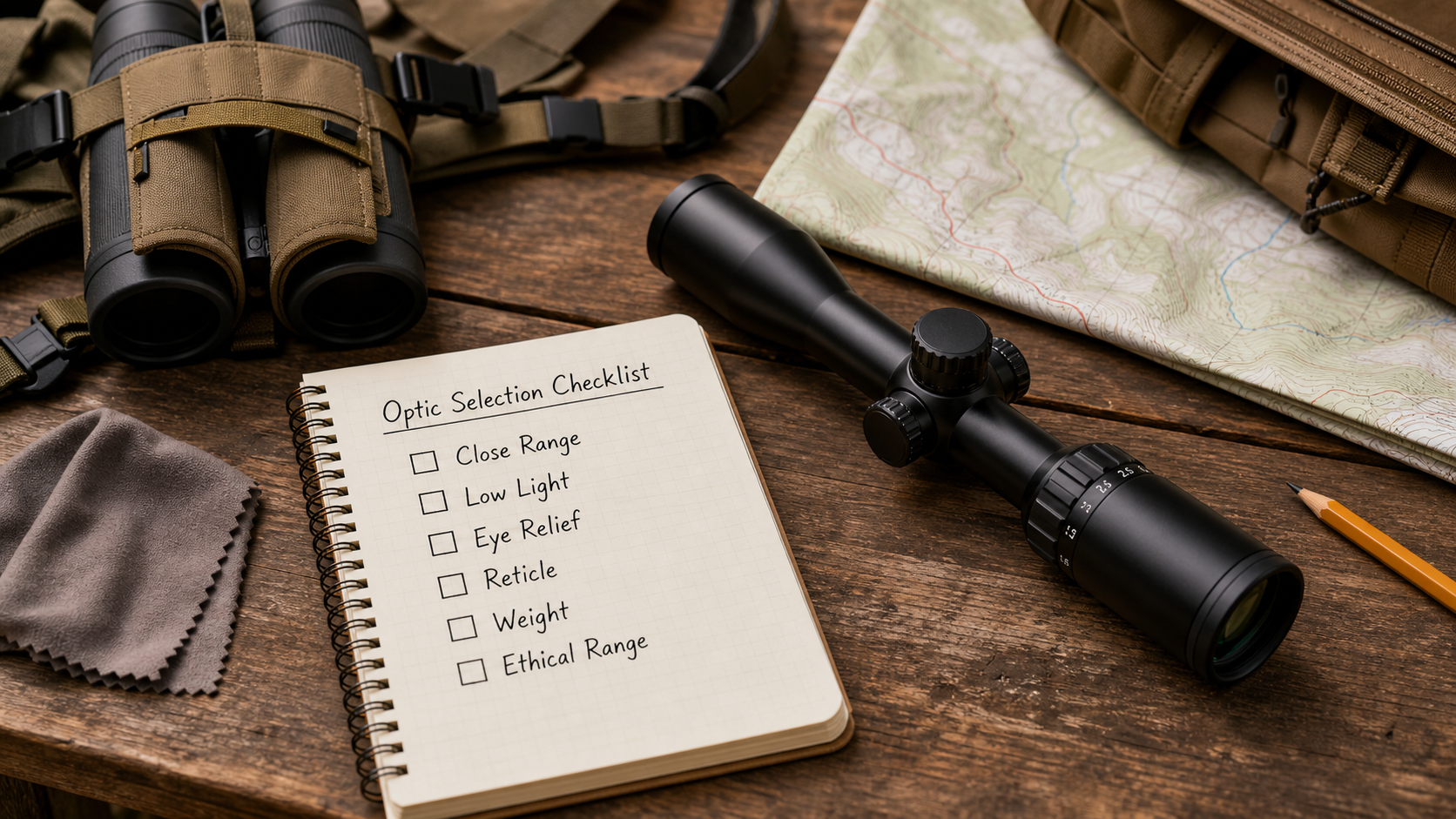
A 1-4×24 LPVO makes the most sense when close range, eye relief, reticle visibility, weight, and ethical shot distance all match your hunt.
LPVO Hunting Selection Checklist
Before choosing a 1-4×24 LPVO, answer these questions. If most answers fit your hunting style, the optic makes sense. If several answers point toward longer distances or low-light identification, consider a 2-10x, 3-9x, 3-12x, or similar hunting scope instead.
Range: Are most shots close enough that 4x gives clear target detail?
Cover: Are you hunting timber, brush, stands, hog blinds, or short shooting lanes?
Speed: Do you need fast target acquisition more than high magnification?
Light: Do you hunt mostly legal daylight with enough visibility to identify the animal clearly?
Reticle: Can you see the aiming point quickly at 1x and precisely enough at 4x?
Ethical range: Can you pass shots when the target is too small or unclear at 4x?
What 1-4×24 Means
The “1-4x” part means the optic can adjust from roughly 1x to 4x magnification. The “24” refers to a 24 mm objective lens. In plain terms, it is a low-power variable optic designed for speed at the low end and modest precision at the high end. For background on how telescopic sights work, the telescopic sight overview is a useful general reference.
Why 1x Matters
At or near 1x, the optic can be faster for close targets because the image appears less zoomed-in. This can help when an animal steps out quickly at close range or when you are tracking movement through brush. It still requires safe firearm handling and target identification; speed is only useful after you know exactly what you are aiming at.
Why 4x Can Be Limiting
Four-power magnification is enough for many close and moderate shots, but it does not show the same detail as a higher-power hunting scope. If you need to judge small antler points, pick a precise spot at longer distance, or see through dim timber at the edge of legal light, 4x may feel limiting.
Where a 1-4×24 LPVO Works Well
This optic class works best when the hunting environment rewards quick handling. Thick woods, hog hunting, short food-plot lanes, and compact rifles are all natural fits. It can also make sense for hunters who keep shots conservative and want one optic that feels fast up close while still offering more precision than a red dot at distance.
Close-Range Deer and Hog Hunting
For close-range deer or hog hunting, a 1-4×24 LPVO can be comfortable because you can leave it low while scanning a lane, then turn up magnification if the animal stops and the shot is still inside your confident range. It is especially useful when targets may appear quickly and high magnification would make it harder to find the animal in the scope.
Compact Rifles and Field Carry
Many 1-4x optics are relatively compact compared with larger hunting scopes. That can help rifle balance, especially on carbines or lightweight field rifles. Balance still depends on the mount, rings, rifle, and optic weight, so check the full setup rather than judging by magnification alone.
Where It Falls Short
A 1-4×24 LPVO is not ideal for every hunt. If you hunt large fields, mountain country, crop edges with long shots, or small varmints, the top-end magnification may be too low. It also may not be the best choice if your biggest need is late-evening brightness and target detail.
The ethical answer is to match the optic to the shot you can clearly identify and place. Hunter education resources emphasize planning and preparation before the hunt; the same idea applies to optics. Use resources such as Hunter Ed for broader hunting safety and planning context, then match your scope to your real conditions.
Low-Light Reality
A 24 mm objective is not automatically bad in low light, but it has limits. Glass quality, coatings, reticle visibility, exit pupil, eye position, and magnification all matter. At lower magnification, the image may still look usable. At 4x, you may notice the difference compared with a larger-objective hunting scope in dim conditions.
Do not use magnification to compensate for poor target identification. If you cannot identify the animal and what is beyond it, do not shoot. The NSSF firearm safety rules are a good reminder that every hunting optics decision still sits under basic safety rules.
Reticle and Eye Relief
The reticle can make or break a 1-4x hunting optic. A center aiming point that is easy to find at low power is helpful for close shots, while enough detail at 4x helps with more deliberate shots. Illumination can help in some light, but it should not be your only way to see the reticle.
Eye Box and Mounting
Eye relief and eye box matter because hunting shots are not always taken from a perfect bench position. The optic should come up naturally when you shoulder the rifle. If you have to crawl the stock or shift your head to see a full image, the scope may be mounted poorly or may not fit your setup.
Who Should Use One
Choose a 1-4×24 LPVO if you hunt close cover, value quick sight acquisition, keep shots inside a conservative range, and want a compact optic with some magnification flexibility. Skip it if your hunts require frequent long shots, detailed antler judging at distance, or stronger low-light performance than a small objective can provide.
A good rule is this: if you would be comfortable with a red dot but want a little magnification, a 1-4x LPVO may be a smart upgrade. If you often wish for more detail than 4x can provide, choose a higher magnification hunting scope instead.
FAQ
Is a 1-4×24 LPVO good for deer hunting?
Yes, for close-range deer hunting in woods, brush, or short lanes. It is less ideal for long fields or situations where you need more magnification for detail.
How far is a 1-4x LPVO good for hunting?
There is no universal distance. It depends on the animal, light, reticle, rifle, shooter skill, and whether you can identify the target clearly. Use 4x only inside your confident ethical range.
Is a 1-4×24 LPVO good in low light?
It can be usable in reasonable light, especially at low magnification, but a larger hunting scope may show more detail in dim conditions. Never shoot if the target is not clearly identified.
Is an LPVO better than a 3-9x scope?
It depends on the hunt. A 1-4x LPVO is faster up close. A 3-9x scope is usually better when you need more magnification and target detail at distance.
Final Takeaway
A 1-4×24 LPVO is a strong hunting choice for close cover, fast shots, and compact rifle setups. It is not a do-everything optic. Buy it when your real hunting distances fit the 1-4x range, and pass on it when low-light detail or longer-range precision matters more.
A spotting scope is worth choosing when you need more magnification and detail than handheld binoculars can comfortably provide. It is best for fixed-position viewing: watching distant wildlife, studying birds across open water, checking targets at the range, or glassing far terrain from a stable setup. The tradeoff is simple: a spotting scope gives reach, but it needs a tripod and is slower to use than binoculars or a monocular.
This guide explains seven practical reasons to choose a spotting scope, where it falls short, and how to decide whether binoculars or a monocular would be the better fit. It is an educational buying-support guide, not a product ranking.
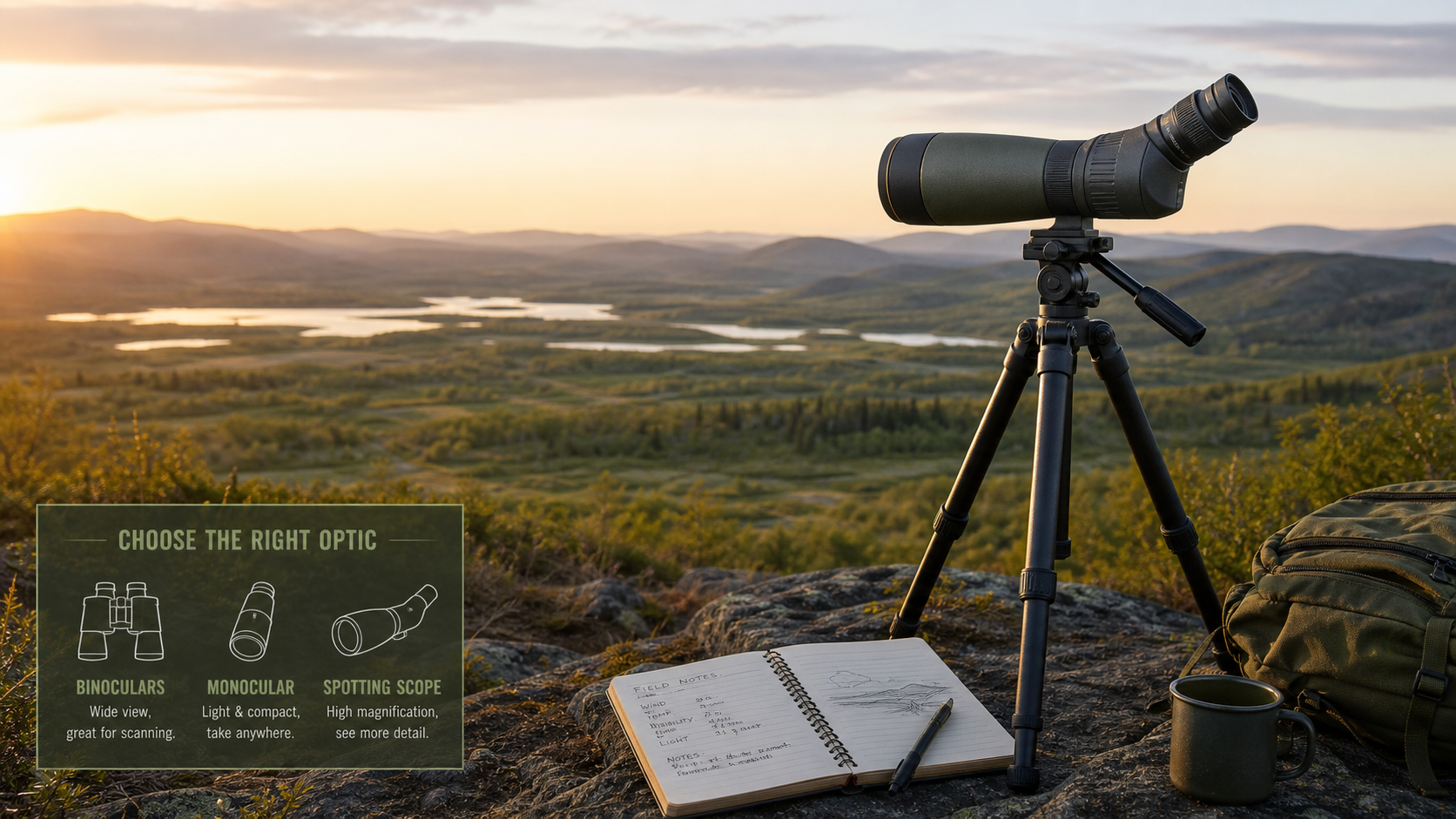
Choose a spotting scope when distance and detail matter more than portability and speed. If you mostly scan while walking, binoculars are usually easier. If you want the smallest possible optic, a monocular is simpler. If you set up in one place and study distant subjects, a spotting scope earns its place.
A spotting scope is strongest when you can set up on a tripod and study distant detail from one position.
1. Longer-Distance Observation
The first reason to choose a spotting scope is reach. Most spotting scopes offer much higher magnification than common handheld binoculars, which helps when the subject is far away and mostly stationary. That extra magnification can make terrain features, target impacts, bird markings, and distant movement easier to evaluate.
More magnification is not automatically better, though. High power also narrows field of view and magnifies shake. That is why a spotting scope should be treated as a tripod-supported tool, not a handheld replacement for binoculars.
2. More Detail for Wildlife and Birds
For wildlife watching and birding, detail is often the real advantage. A spotting scope can help you study plumage, body shape, antler structure, or distant movement after you have already found the subject. Birding organizations such as Audubon explain this binocular-plus-scope workflow well: binoculars help you find, and the scope helps you study.
Use Lower Power First
A good habit is to begin at the lower end of the zoom range, find the subject, focus carefully, and then increase magnification only as needed. Starting too high can make the view narrow and frustrating.
3. Easier Range and Target Observation
At a shooting range, a spotting scope can help you observe targets from the bench without walking downrange every time. This can save time during a session and reduce interruptions when the range rules allow observation from the firing line. It is still only an observation tool; it does not change safe range conduct.
For range use, tripod stability, focus control, and eye comfort matter as much as raw magnification. A shaky or uncomfortable scope may look powerful on paper but feel tiring in real practice.
4. Tripod Stability for Long Viewing Sessions
A tripod is not an optional luxury for most spotting-scope use. High magnification needs support. A tripod steadies the image, keeps the optic at a comfortable height, and reduces fatigue during longer glassing sessions. Without support, the high end of the zoom range is usually too shaky to use well.
Tripod Weight Is Part of the System
When comparing spotting scopes, remember to count the tripod in your carry weight and setup time. A compact scope on a poor tripod can be less useful than a slightly heavier setup that stays steady in wind.
5. Angled vs Straight Viewing Options
Spotting scopes commonly come in angled and straight bodies. Angled scopes can be comfortable for sharing, upward viewing, and lower tripod heights. Straight scopes can feel faster to aim and may be easier from vehicles, benches, or higher positions.
Neither design is universally better. The better choice depends on your viewing position, body size, terrain, and whether several people will share the optic. If possible, try both styles before buying.
6. Honest Limits Compared With Binoculars
A spotting scope is not the best tool for every viewing job. It is slower to deploy, less convenient while walking, and narrower in field of view than binoculars. If the subject is moving quickly or close enough for handheld glass, binoculars are usually faster and more natural.
Low-light performance also depends on more than magnification. Objective size, exit pupil, glass quality, coatings, and the magnification setting all affect brightness. Nikon’s optics guide explains field of view, which is one of the key tradeoffs as magnification increases.
7. A Clearer Decision Before You Buy
The final reason to think about a spotting scope is decision clarity. If your main problem is distant detail from one spot, a scope makes sense. If your main problem is scanning while moving, binoculars make more sense. If your main problem is pocketable convenience, a monocular may be enough.
Before buying, answer four questions: how far you usually observe, whether subjects are stationary or moving, whether you are willing to carry a tripod, and whether you need shared viewing. Those answers matter more than chasing the highest zoom number.
Spotting Scope vs Binoculars vs Monocular
Optic
Best for
Main strength
Main tradeoff
Spotting scope
Fixed-position distant viewing
Highest detail at distance
Needs tripod and setup time
Binoculars
Walking, scanning, and general field use
Fast, wide, comfortable two-eye view
Lower magnification than a scope
Monocular
Minimal carry and quick checks
Small and simple
Less comfortable for long viewing
If you are still comparing smaller optics, our monocular vs binocular guide explains that decision in more detail. If you decide binoculars are the better route, our Bushnell binoculars guide gives a product-focused next step.
Frequently Asked Questions
What is the main advantage of a spotting scope?
The main advantage is higher magnification for distant, detailed viewing from a stable position. A spotting scope helps when binoculars do not provide enough reach.
Should I choose a spotting scope or binoculars?
Choose binoculars for fast handheld scanning and moving through the field. Choose a spotting scope for tripod-supported viewing when you want to study distant subjects in detail.
Do I need a tripod for a spotting scope?
In most real use, yes. High magnification magnifies shake, so a tripod is usually necessary for a steady, comfortable view.
Are angled or straight spotting scopes better?
Neither is always better. Angled scopes are comfortable for sharing and upward viewing. Straight scopes can be quicker to aim and easier from certain benches, vehicles, or elevated positions.
Are spotting scopes good in low light?
Some are, but not automatically. Low-light performance depends on objective size, exit pupil, glass quality, coatings, and magnification setting, not just the fact that it is a spotting scope.
Final Recommendation
Choose a spotting scope when you regularly observe distant, mostly stationary subjects from one position and are willing to use a tripod. Choose binoculars or a monocular when speed, movement, and easy carry matter more. The best optic is the one that matches the way you actually look, move, and set up outside.
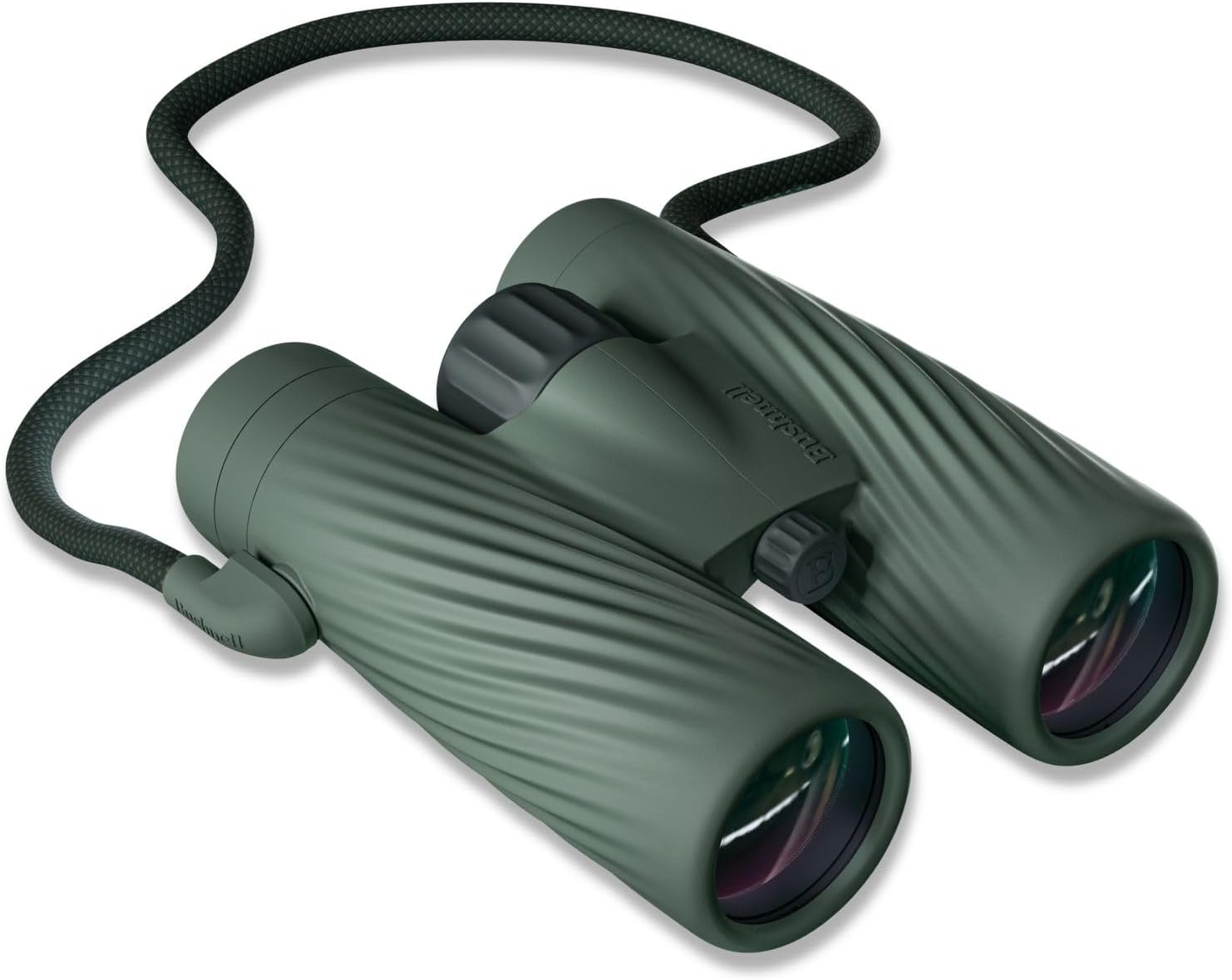
The best Bushnell binoculars for hunting are the ones that match your terrain, light, and carrying style. For most hunters, a current 10×42 model such as the Bushnell A5 10×42, Bushnell H2O 10×42, or Bushnell Prime 10×42 is the safest starting point. If you hunt tight woods or want a steadier view, consider an 8×42. If you glass open country and can hold the view steady, a 12×50 can make sense.
This best Bushnell binoculars guide is research-based and built from current Amazon product pages plus authority optics guidance. We do not claim hands-on field testing. Product availability, exact packaging, and specs can change, so always check the Amazon product page before buying.
We rebuilt this best Bushnell binoculars page around direct Amazon product pages, current Bushnell product identities, and useful buyer roles. Older or unclear models were not kept just to reach a round number. The final list includes ten options because we found enough direct Amazon product pages to support a broader comparison without using search links.
The main comparison factors were magnification, objective size, waterproof/fogproof positioning, packability, likely hunting use case, and whether a direct Amazon product page was available. We also used external authority guidance for optics basics: REI’s binocular buying guide explains common binocular numbers and features, while Nikon’s exit pupil guide helps explain why objective size and magnification affect low-light comfort.
Best Bushnell Binoculars Compared
Best overall current pick: Bushnell A5 10×42 Binoculars
Best for: hunters who want a current full-size Bushnell with waterproofing, phase/dielectric-coated prisms, and a balanced 10×42 format.
The Bushnell A5 10×42 is the strongest all-around starting point here because it keeps the familiar hunting-friendly 10×42 format while staying current in Bushnell’s lineup. For most buyers, this is the format to compare against every other option: enough reach for fields and edges, enough objective size for normal dawn and dusk use, and still manageable for handheld glassing.
For hunting, the main question is not only magnification. A binocular also needs to feel steady in your hands, be comfortable enough to use for more than a few seconds, and fit the light and weather you normally face. This pick is useful when its role matches your conditions, but it is not automatically better than the others just because it has a different magnification number.
Configuration
10×42
Best role
Best overall current pick
Main tradeoff
not the lightest option in this list
Pros
Clear buyer role in the Bushnell lineup.
Direct Amazon product page verified during repair.
Useful option when the configuration matches your hunting style.
Cons
not the lightest option in this list.
Specifications and availability can change on Amazon.
Not a hands-on field-test claim from The Shooting Gears.
Skip this if: another pick better matches your main use. Choose 8x for steadier scanning and wider view, 10x for a common all-around hunting balance, 12x for more reach in open country, 32mm for packability, 42mm for all-around use, and 50mm when you accept more bulk.
Best for: daylight scouting, travel, hiking, and buyers who want less bulk in the pack.
The Bushnell A3 10×32 is the packable pick for hunters who carry binoculars all day but do most serious glassing in daylight. The smaller 32mm objective helps reduce bulk, which matters on long walks, scouting trips, and travel, but it is not the model I would choose first for the last few minutes of legal light.
For hunting, the main question is not only magnification. A binocular also needs to feel steady in your hands, be comfortable enough to use for more than a few seconds, and fit the light and weather you normally face. This pick is useful when its role matches your conditions, but it is not automatically better than the others just because it has a different magnification number.
Configuration
10×32
Best role
Best lightweight packable pick
Main tradeoff
32mm objective is not the best low-light choice
Pros
Clear buyer role in the Bushnell lineup.
Direct Amazon product page verified during repair.
Useful option when the configuration matches your hunting style.
Cons
32mm objective is not the best low-light choice.
Specifications and availability can change on Amazon.
Not a hands-on field-test claim from The Shooting Gears.
Skip this if: another pick better matches your main use. Choose 8x for steadier scanning and wider view, 10x for a common all-around hunting balance, 12x for more reach in open country, 32mm for packability, 42mm for all-around use, and 50mm when you accept more bulk.
Best for: wet-weather use, boating-adjacent glassing, hiking, and budget-minded buyers.
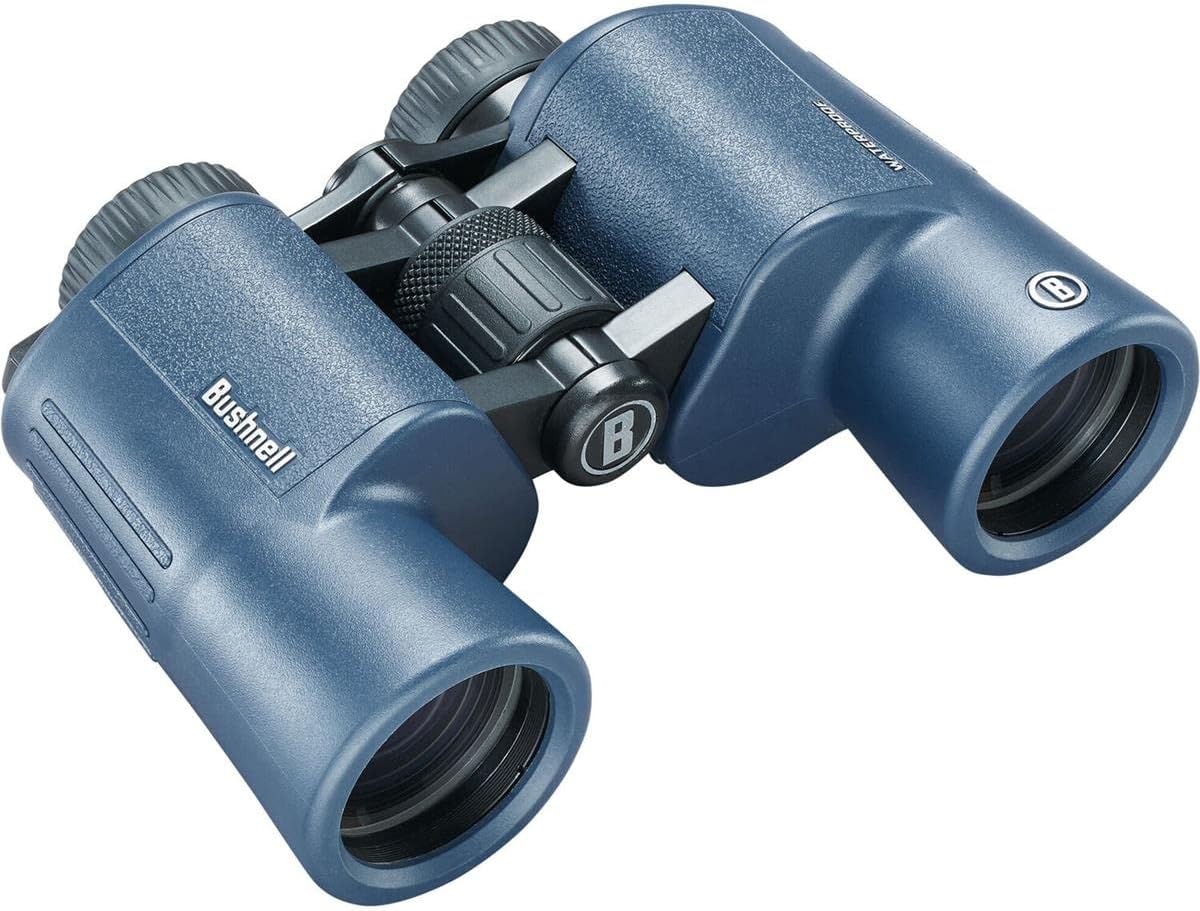
The Bushnell H2O 10×42 belongs near the top for buyers who care about wet-weather confidence without jumping straight into a premium price bracket. It makes the most sense for hunters who move between blinds, boats, damp timber, and truck gear bags where binoculars can get bumped, splashed, or packed away quickly.
For hunting, the main question is not only magnification. A binocular also needs to feel steady in your hands, be comfortable enough to use for more than a few seconds, and fit the light and weather you normally face. This pick is useful when its role matches your conditions, but it is not automatically better than the others just because it has a different magnification number.
Configuration
10×42
Best role
Best value waterproof 10×42
Main tradeoff
not a premium glass/coating model
Pros
Clear buyer role in the Bushnell lineup.
Direct Amazon product page verified during repair.
Useful option when the configuration matches your hunting style.
Cons
not a premium glass/coating model.
Specifications and availability can change on Amazon.
Not a hands-on field-test claim from The Shooting Gears.
Skip this if: another pick better matches your main use. Choose 8x for steadier scanning and wider view, 10x for a common all-around hunting balance, 12x for more reach in open country, 32mm for packability, 42mm for all-around use, and 50mm when you accept more bulk.
Best for: buyers who want a simple waterproof/fogproof Bushnell for hunting, birdwatching, and outdoor use.
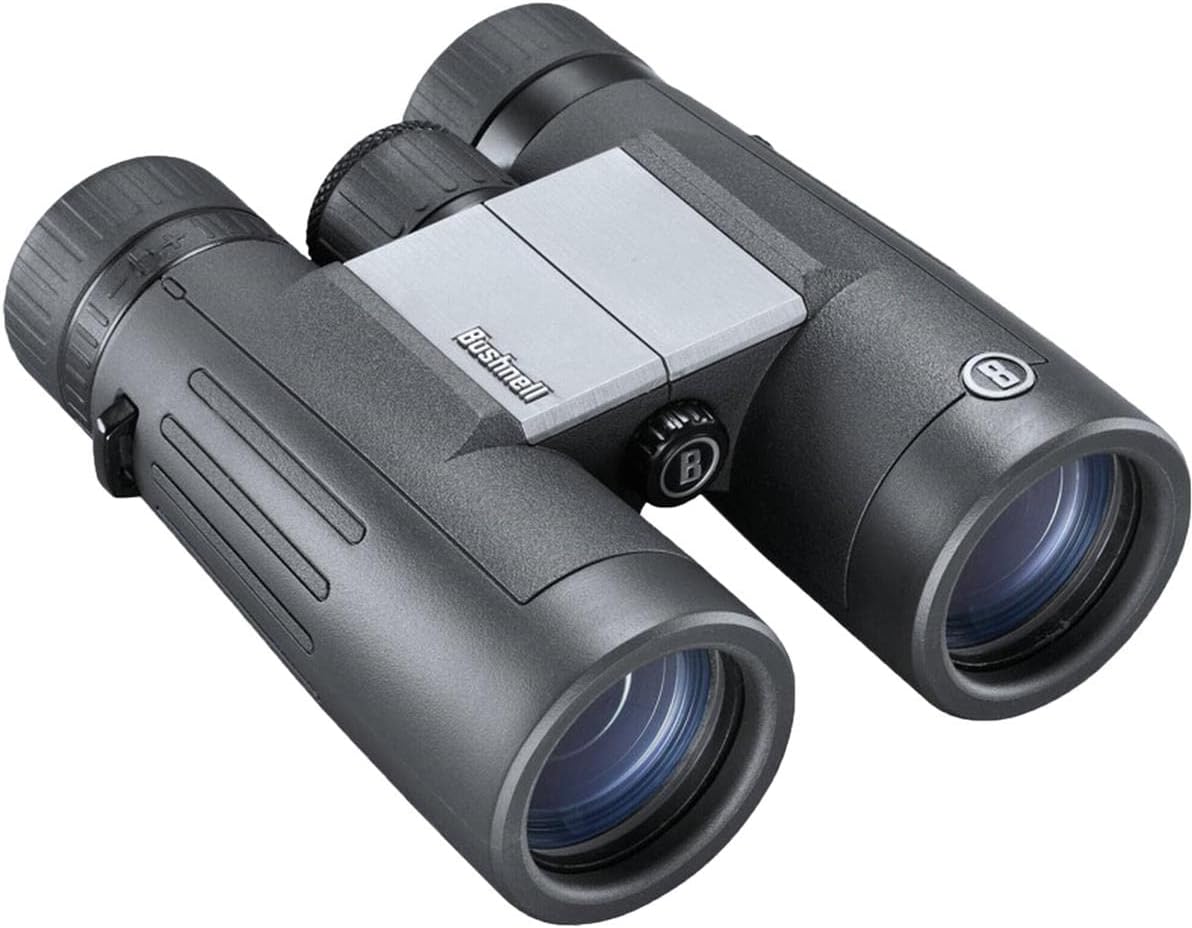
The Bushnell Prime 10×42 is a practical lower-cost 10×42 option when you want the common hunting configuration but do not need the newest A-Series positioning. It is best viewed as a budget-conscious all-rounder: good for general scouting and field use, but still worth comparing carefully against the H2O and A5 if weather sealing or optical upgrades matter to you.
For hunting, the main question is not only magnification. A binocular also needs to feel steady in your hands, be comfortable enough to use for more than a few seconds, and fit the light and weather you normally face. This pick is useful when its role matches your conditions, but it is not automatically better than the others just because it has a different magnification number.
Configuration
10×42
Best role
Best lower-cost 10×42
Main tradeoff
less specialized than the newer A-Series or higher-end glass options
Pros
Clear buyer role in the Bushnell lineup.
Direct Amazon product page verified during repair.
Useful option when the configuration matches your hunting style.
Cons
less specialized than the newer A-Series or higher-end glass options.
Specifications and availability can change on Amazon.
Not a hands-on field-test claim from The Shooting Gears.
Skip this if: another pick better matches your main use. Choose 8x for steadier scanning and wider view, 10x for a common all-around hunting balance, 12x for more reach in open country, 32mm for packability, 42mm for all-around use, and 50mm when you accept more bulk.
Best for: hunting, camping, travel, and readers who want a more refined current Bushnell 10×42.
The Bushnell Engage X 10×42 is the better fit when you want a more refined crossover hunting binocular while staying inside the Bushnell family. It is the one I would compare against the A5 when comfort, coatings, and overall field feel matter more than simply choosing the cheapest 10×42 listing.
For hunting, the main question is not only magnification. A binocular also needs to feel steady in your hands, be comfortable enough to use for more than a few seconds, and fit the light and weather you normally face. This pick is useful when its role matches your conditions, but it is not automatically better than the others just because it has a different magnification number.
Configuration
10×42
Best role
Best premium-style crossover
Main tradeoff
confirm price/value against the A5 and H2O before buying
Pros
Clear buyer role in the Bushnell lineup.
Direct Amazon product page verified during repair.
Useful option when the configuration matches your hunting style.
Cons
confirm price/value against the A5 and H2O before buying.
Specifications and availability can change on Amazon.
Not a hands-on field-test claim from The Shooting Gears.
Skip this if: another pick better matches your main use. Choose 8x for steadier scanning and wider view, 10x for a common all-around hunting balance, 12x for more reach in open country, 32mm for packability, 42mm for all-around use, and 50mm when you accept more bulk.
Best for: buyers who want a larger 50mm objective and do not mind more size and weight.
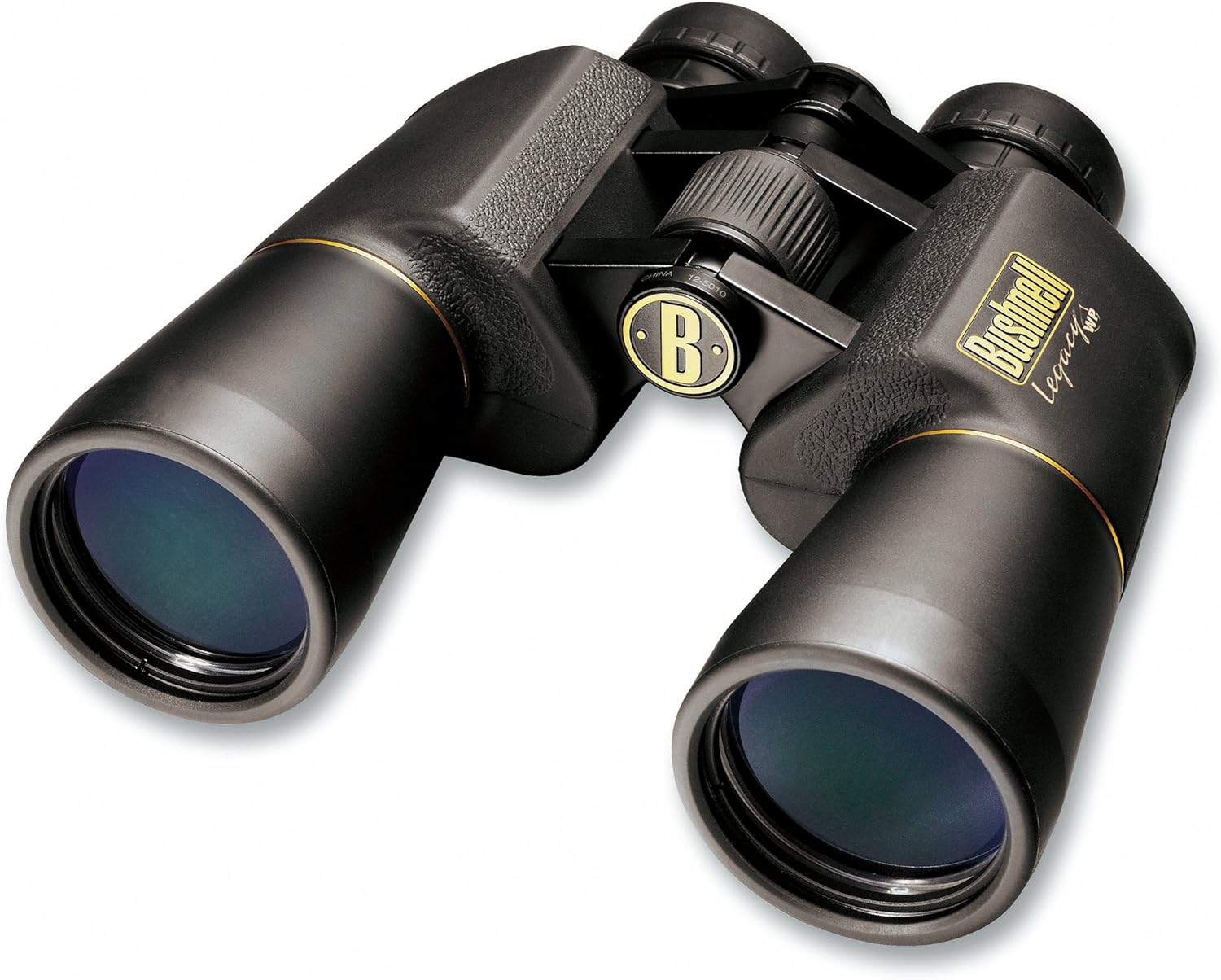
The Bushnell Legacy 10×50 Binoculars fits this list because it gives Bushnell buyers a clear, current role instead of repeating old marketplace models with uncertain relevance. Its 10×50 configuration should be judged by how you actually glass: terrain distance, hand steadiness, pack weight, weather, and whether you need a wider view or more reach.
For hunting, the main question is not only magnification. A binocular also needs to feel steady in your hands, be comfortable enough to use for more than a few seconds, and fit the light and weather you normally face. This pick is useful when its role matches your conditions, but it is not automatically better than the others just because it has a different magnification number.
Configuration
10×50
Best role
Best classic 10×50 Porro option
Main tradeoff
bulkier than roof-prism 10×42 models
Pros
Clear buyer role in the Bushnell lineup.
Direct Amazon product page verified during repair.
Useful option when the configuration matches your hunting style.
Cons
bulkier than roof-prism 10×42 models.
Specifications and availability can change on Amazon.
Not a hands-on field-test claim from The Shooting Gears.
Skip this if: another pick better matches your main use. Choose 8x for steadier scanning and wider view, 10x for a common all-around hunting balance, 12x for more reach in open country, 32mm for packability, 42mm for all-around use, and 50mm when you accept more bulk.
Best for: open-country glassing where extra magnification matters and the included harness is useful.
The Bushnell R5 12×50 Binoculars with Vault Lite Harness fits this list because it gives Bushnell buyers a clear, current role instead of repeating old marketplace models with uncertain relevance. Its 12×50 configuration should be judged by how you actually glass: terrain distance, hand steadiness, pack weight, weather, and whether you need a wider view or more reach.
For hunting, the main question is not only magnification. A binocular also needs to feel steady in your hands, be comfortable enough to use for more than a few seconds, and fit the light and weather you normally face. This pick is useful when its role matches your conditions, but it is not automatically better than the others just because it has a different magnification number.
Configuration
12×50
Best role
Best long-range current Bushnell pick
Main tradeoff
harder to hold steady than 8x or 10x for many buyers
Pros
Clear buyer role in the Bushnell lineup.
Direct Amazon product page verified during repair.
Useful option when the configuration matches your hunting style.
Cons
harder to hold steady than 8x or 10x for many buyers.
Specifications and availability can change on Amazon.
Not a hands-on field-test claim from The Shooting Gears.
Skip this if: another pick better matches your main use. Choose 8x for steadier scanning and wider view, 10x for a common all-around hunting balance, 12x for more reach in open country, 32mm for packability, 42mm for all-around use, and 50mm when you accept more bulk.
Best for: woodland hunting, scanning, beginners, and buyers who prefer a steadier handheld view.
The Bushnell H2O 8x42mm Binoculars fits this list because it gives Bushnell buyers a clear, current role instead of repeating old marketplace models with uncertain relevance. Its 8×42 configuration should be judged by how you actually glass: terrain distance, hand steadiness, pack weight, weather, and whether you need a wider view or more reach.
For hunting, the main question is not only magnification. A binocular also needs to feel steady in your hands, be comfortable enough to use for more than a few seconds, and fit the light and weather you normally face. This pick is useful when its role matches your conditions, but it is not automatically better than the others just because it has a different magnification number.
Configuration
8×42
Best role
Best wide-view 8×42 option
Main tradeoff
less reach than 10x or 12x options
Pros
Clear buyer role in the Bushnell lineup.
Direct Amazon product page verified during repair.
Useful option when the configuration matches your hunting style.
Cons
less reach than 10x or 12x options.
Specifications and availability can change on Amazon.
Not a hands-on field-test claim from The Shooting Gears.
Skip this if: another pick better matches your main use. Choose 8x for steadier scanning and wider view, 10x for a common all-around hunting balance, 12x for more reach in open country, 32mm for packability, 42mm for all-around use, and 50mm when you accept more bulk.
Best for: casual hunting, hiking, and backup binocular use where cost matters.
The Bushnell PowerView 2 8x42mm Binoculars fits this list because it gives Bushnell buyers a clear, current role instead of repeating old marketplace models with uncertain relevance. Its 8×42 configuration should be judged by how you actually glass: terrain distance, hand steadiness, pack weight, weather, and whether you need a wider view or more reach.
For hunting, the main question is not only magnification. A binocular also needs to feel steady in your hands, be comfortable enough to use for more than a few seconds, and fit the light and weather you normally face. This pick is useful when its role matches your conditions, but it is not automatically better than the others just because it has a different magnification number.
Configuration
8×42
Best role
Best budget 8×42 alternative
Main tradeoff
not as weather-focused as H2O or A-Series picks
Pros
Clear buyer role in the Bushnell lineup.
Direct Amazon product page verified during repair.
Useful option when the configuration matches your hunting style.
Cons
not as weather-focused as H2O or A-Series picks.
Specifications and availability can change on Amazon.
Not a hands-on field-test claim from The Shooting Gears.
Skip this if: another pick better matches your main use. Choose 8x for steadier scanning and wider view, 10x for a common all-around hunting balance, 12x for more reach in open country, 32mm for packability, 42mm for all-around use, and 50mm when you accept more bulk.
Best for: buyers who want a familiar low-cost full-size Bushnell for simple daylight viewing.
The Bushnell Falcon 10×50 Wide-Angle Binoculars fits this list because it gives Bushnell buyers a clear, current role instead of repeating old marketplace models with uncertain relevance. Its 10×50 configuration should be judged by how you actually glass: terrain distance, hand steadiness, pack weight, weather, and whether you need a wider view or more reach.
For hunting, the main question is not only magnification. A binocular also needs to feel steady in your hands, be comfortable enough to use for more than a few seconds, and fit the light and weather you normally face. This pick is useful when its role matches your conditions, but it is not automatically better than the others just because it has a different magnification number.
Configuration
10×50
Best role
Best classic budget 10×50
Main tradeoff
older-style design and not the premium hunting pick
Pros
Clear buyer role in the Bushnell lineup.
Direct Amazon product page verified during repair.
Useful option when the configuration matches your hunting style.
Cons
older-style design and not the premium hunting pick.
Specifications and availability can change on Amazon.
Not a hands-on field-test claim from The Shooting Gears.
Skip this if: another pick better matches your main use. Choose 8x for steadier scanning and wider view, 10x for a common all-around hunting balance, 12x for more reach in open country, 32mm for packability, 42mm for all-around use, and 50mm when you accept more bulk.
Start with the binocular numbers. In a 10×42 binocular, 10x is the magnification and 42mm is the objective lens diameter. More magnification can show distant detail, but it can also make the view harder to hold steady. A larger objective can help with a brighter-feeling view, but it usually adds size and weight; our objective-lens explainer is useful if you want the tradeoff in plain language.
For whitetail woods, an 8×42 can be easier to scan with and steadier by hand. If you are still deciding between formats, our deer-hunting binocular guide goes deeper on terrain and magnification. For mixed hunting and scouting, 10×42 is a practical middle ground. For open country, 12×50 can help with reach, but only if you can manage the shake or brace the binocular. Compact 10×32 binoculars save weight for hiking, but they are not the first pick for low-light glassing.
Eye relief matters if you wear glasses. Waterproofing matters if your binoculars ride in a pack, truck, boat, blind, or wet treestand. Weight matters because the binocular you leave at home helps nobody. The best Bushnell binoculars for your hunt are the ones you will actually carry, hold steady, and trust in the weather you face. Before buying, compare the product page, your hunting terrain, and your comfort with the size in hand.
For a second opinion on the optics basics, compare this buying guide with Audubon’s binocular guide. For definitions, the general optics references for exit pupil and eye relief are useful when you want to understand why a 10×42, 8×42, or 12×50 binocular feels different in the field.
FAQ
What are the best Bushnell binoculars for hunting?
The best Bushnell binoculars for most hunters are usually a current 10×42 model because 10×42 balances reach, brightness, size, and handheld control. In this guide, the A5, H2O, Prime, and Engage X are the main 10×42 options to compare first.
Are 10×42 Bushnell binoculars good for hunting?
Yes, 10×42 is one of the most common all-around hunting configurations because it balances reach, objective size, and manageable weight. It is not perfect for every hunter, but it is a practical starting point.
Is 8×42 or 10×42 better for deer hunting?
Use 8×42 if you hunt tighter cover, want a steadier handheld image, or value a wider view. Use 10×42 if you often glass across fields, power lines, clear cuts, or more open terrain.
Are 12×50 binoculars too much for hunting?
Not always. A 12×50 can be useful for open-country glassing, but it is harder to hold steady than 8x or 10x. Many hunters prefer to brace it or use it from a fixed position.
Should I choose waterproof binoculars?
For hunting, waterproof or weather-resistant binoculars are usually worth prioritizing. Rain, fog, snow, boat spray, and wet packs are normal field risks, so check the product page for the exact waterproof/fogproof wording.
Do bigger objective lenses always mean better binoculars?
No. Bigger objective lenses can help with light gathering, but they add size and weight. A 50mm binocular can be useful, but a lighter 42mm or 32mm model may be better if you walk a lot.
Final Verdict
If you want one current Bushnell option to start with, the best Bushnell binoculars shortlist begins with a 10×42 that fits your budget and weather needs. For night-use comparisons, do not treat these daytime hunting binoculars as a substitute for dedicated gear; see our night vision monocular vs binocular guide before buying specialized low-light equipment. The A5, H2O, Prime, and Engage X all serve that core buyer group in different ways. If you prioritize less weight, look at the A3 10×32. If you prioritize steadier scanning, choose an 8×42. If you want more reach for open country, consider the R5 12×50.