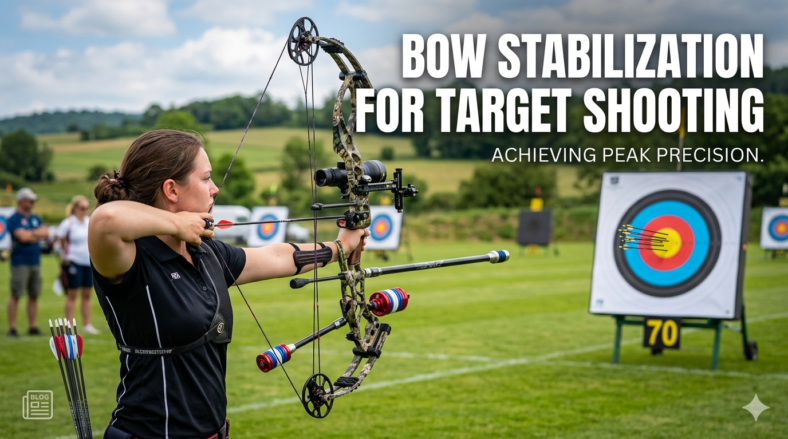
Bow Stabilization for Target Shooting

Bow stabilization for target shooting means using front bars, side bars, and weights to change how a bow balances, aims, and settles during the shot. A stabilizer setup can shift the bow’s center of balance, dampen vibration, and change aiming feel, but it is not a universal accuracy shortcut.

The best stabilizer setup depends on the archer, bow, strength, shooting style, and competition rules. Adjust in small steps, test safely, and check the current rulebook for your class before competing.

What Bow Stabilization Does

Bow stabilization changes how a bow balances, how it absorbs vibration, and how it behaves before and after the shot. By adding mass and extending it away from the riser, stabilizers can alter the bow’s center of balance and the way the sight pin moves while aiming.

Stabilization is a feel-and-balance adjustment, not a guaranteed performance upgrade. It may make a bow feel more settled for one archer and less comfortable for another. Beginner-friendly archery education sources such as Archery 360 are useful for building general context before changing equipment.

Front Bars, Side Bars, and Weight Placement

Front bars, side bars, and weights are the main parts that determine how a stabilizer setup balances a bow. Each piece affects feel differently, so it helps to understand the job of each one.

PartWhat It Usually DoesBeginner Check
Front barAdds weight forward of the riserDoes it feel steadier without tiring your shoulder?
Side/back barOffsets side-to-side or rear balanceDoes the bow sit more level in your hand?
WeightsFine-tune how much mass sits at each pointCan you hold the setup through a full session?

How front weight changes aiming feel

Adding weight to the front bar extends mass forward of the riser. Many archers feel this as a steadier hold or a different sight movement while aiming. Too much weight can also create fatigue, so change front weight in small increments and judge comfort over a full practice session.

Side bars and back bars add weight off to the side and rear. They can help counter how the bow wants to tip or twist in the hand. Adjust side-bar angle and weight one change at a time so you can tell what each change actually did.

Target Setup vs Hunting Setup

Target and hunting stabilizer setups often differ because the priorities are different. Target setups can be longer and heavier because the archer is usually shooting from known positions. Hunting setups usually need to stay shorter, lighter, and easier to carry.

Neither style is automatically better. A long target setup that feels steady on a range may be awkward in the field, while a compact hunting setup may not feel as settled during target practice. Match the setup to how you actually shoot.

How to Test Balance Safely

Testing a stabilizer setup safely means changing one variable at a time and stopping if the setup causes strain or makes the bow hard to control. The goal is repeatable control, not maximum length or maximum weight.

  • Change one variable at a time, such as front weight, side weight, or side-bar angle.
  • Shoot a consistent practice set and note hold, comfort, sight movement, and fatigue.
  • Reduce weight or length if the bow feels awkward or strains your shoulder, arm, or back.
  • Keep notes so you can return to a setup that felt stable.

If you are still learning bow setup basics, review broader setup and tuning steps before changing stabilizer weight. The guides on setting up your bow and bow tuning for beginners are useful companion reads.

Rules and Class Checks

Competition divisions can restrict stabilizer length, weight, attachments, and overall equipment configuration. These rules vary by organization and event, so check the current rulebook for your class before competing.

Useful places to start include the World Archery rulebook, USA Archery, NFAA, and the Archery Shooters Association. Local clubs may also add event-specific instructions.

Frequently Asked Questions

Do stabilizers make you more accurate?

Stabilizers can change how steady a bow feels and how it settles, but they do not automatically create tighter groups. The effect depends on the archer, bow, and setup.

How long should a target stabilizer be?

There is no single correct length. Target setups often run longer than hunting setups, but the right setup depends on your body, bow, shooting style, and competition rules.

What is the difference between a front bar and a side bar?

A front bar extends weight forward from the riser, while a side or back bar adds weight off to the side or rear. Full target setups may use both to tune front-back and left-right balance.

Will a target stabilizer setup work for hunting?

Often not directly. Target setups can be long and heavy, while hunting setups usually need to stay compact and easier to carry. Match the stabilizer to how and where you shoot.

Are there rules about stabilizers in competition?

Yes. Many competition divisions restrict stabilizer length, weight, attachments, or configuration. Always check the current rules for your organization, class, and event.

Final Stabilizer Takeaway

Bow stabilization is a tuning tool for balance, aiming feel, and shot reaction. Start small, change one variable at a time, watch for strain, and verify current competition rules before relying on any setup.

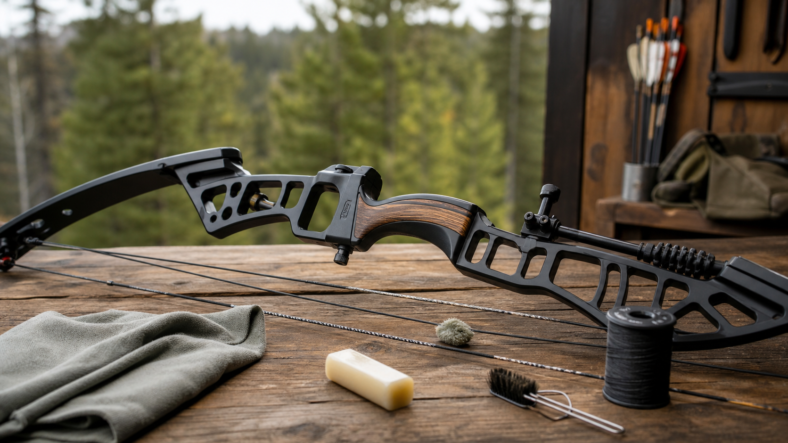
How Often Should Bow Strings Be Replaced?

Bow strings should be replaced when they show unsafe wear, when a bow technician recommends replacement, or when the string and cables have aged past the schedule recommended for your bow and shooting volume. There is no universal replacement date for every compound, recurve, or traditional bow. A light-use bow stored well may go longer, while a bow used heavily, hunted in rough weather, or stored in heat may need attention much sooner.

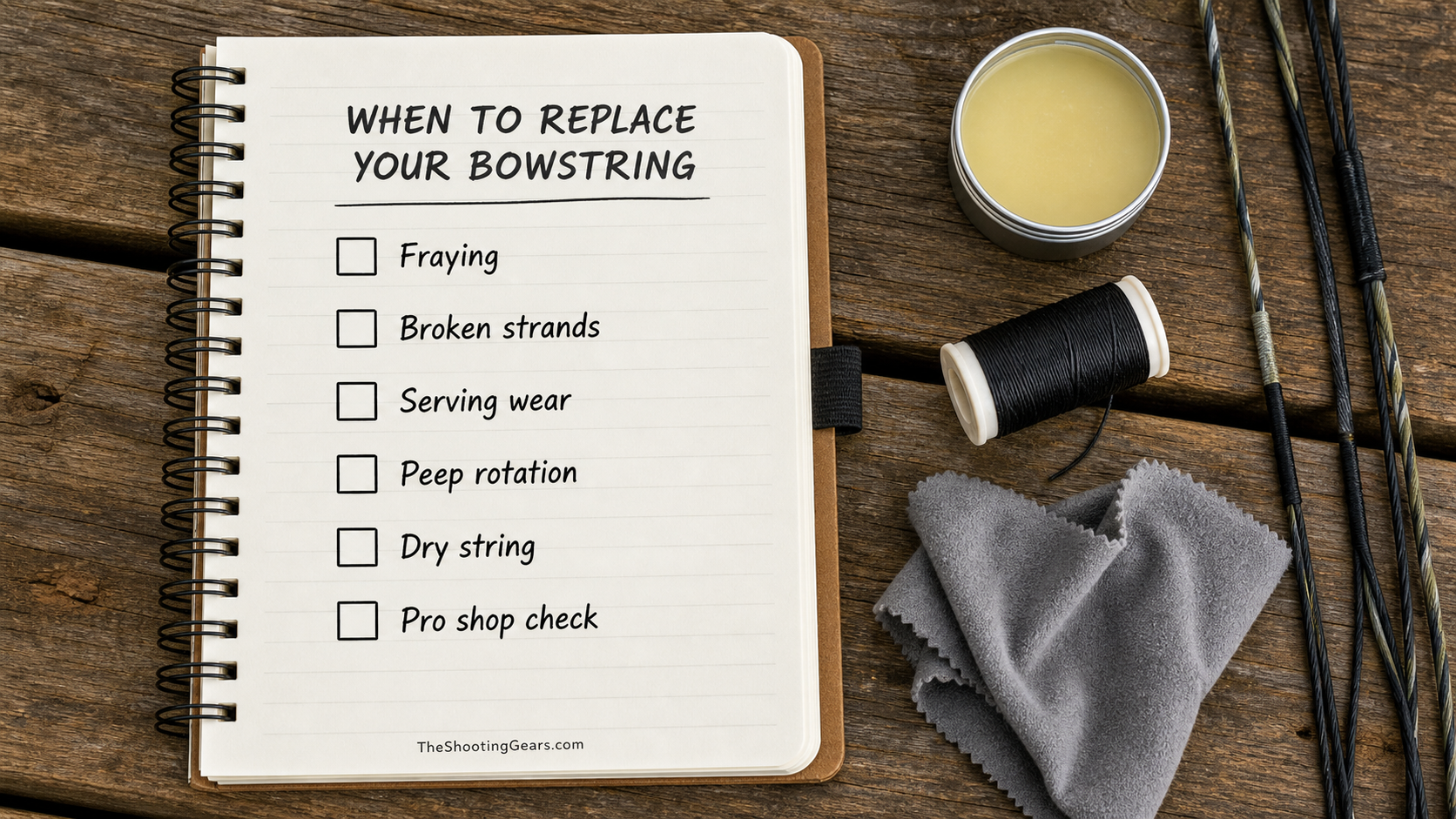
The safest rule is simple: inspect the string often, follow the bow manufacturer’s guidance, and stop shooting if you see broken strands, serious fraying, serving separation, peep rotation, or sudden tuning changes. If you are unsure, have a qualified archery shop inspect the bow before the next session.

Quick Answer

Most archers should think in terms of condition and use, not only calendar age. If the string is clean, waxed when needed, stored well, and inspected by a technician, it may last longer than a heavily used string exposed to rain, sun, heat, and dirt. For compound bows, strings and cables are usually evaluated together because both parts affect timing, tuning, and safety.

Before relying on any general schedule, check the owner’s manual or support page for your bow. For example, manufacturer support and manual libraries from brands such as Bear Archery and Mathews are the better source for model-specific care limits than a generic web article.

Why Bow String Replacement Matters

The bowstring is not just a consumable accessory. It transfers stored energy from the limbs to the arrow and helps keep the bow’s setup consistent. As the string wears, stretches, or loses serving integrity, accuracy and safety can both suffer.

A worn string can cause inconsistent arrow flight, peep rotation, changed brace height, tuning problems, or sudden failure. On a compound bow, string and cable issues can also affect cam timing. That is why routine inspection belongs in the same mental category as checking arrows, rests, sights, and other safety-critical gear.

How Often Should Bow Strings Be Replaced?

There is no single replacement interval that fits every archer. Use the ranges below as planning context only, then compare them with your bow manual, your shooting volume, and the string’s actual condition.

Compound bows

Compound bow strings and cables are often replaced on a planned maintenance cycle, especially for active shooters. The reason is not only visible wear. Stretch, serving movement, peep rotation, and cable wear can affect timing and tune before the string looks completely ruined.

If you shoot often, hunt in harsh weather, or notice tuning changes, have a technician inspect the string and cables sooner. Do not attempt press work or cable service without the right tools and training.

Recurve bows

Recurve strings are simpler than compound string-and-cable systems, but they still wear. Watch for fraying, strand damage, serving wear, nock fit problems, and changes in brace height. Follow the bow maker’s recommended brace-height range and string material guidance.

Traditional bows

Traditional longbows and recurves also depend on string condition, correct string material, and safe setup. Some traditional bows require specific string materials, so do not assume every modern string is safe for every older or traditional bow.

Signs Your Bow String Needs Replacement

Visible wear is the clearest reason to stop and inspect. A little fuzz can be normal, but serious fraying, broken strands, or separation in high-stress areas should not be ignored. When in doubt, stop shooting and let a pro shop inspect it.

Fraying or fuzzy fibers

Small surface fuzz can appear with normal use, but widespread fraying, fibers lifting away from the bundle, or wear near the cams, serving, nocking point, or limb tips deserves attention. Wax may help dryness, but wax does not repair damaged strands.

Broken strands

Broken strands are a stop-shooting warning. Do not keep using the bow to “finish the session.” A damaged string can fail under load and may damage the bow or injure the shooter.

Serving separation

Serving protects the string in high-wear areas. Gaps, loose wrapping, or serving that slides can affect nock fit and string durability. Minor serving issues may be repairable, but the cause should be inspected.

Peep rotation or tuning changes

On a compound bow, sudden peep rotation, changed impact points, altered cam timing, or repeated tuning drift can point to string or cable stretch. A technician can tell whether adjustment or replacement is the safer move.

Dry, dirty, or heat-damaged string

A dry string, grit in the fibers, or heat exposure from storage in a vehicle can shorten string life. Dirt acts like an abrasive, and heat can stress materials and serving. Store the bow in a cool, dry place when possible.

What Affects Bow String Lifespan?

String life depends on shooting volume, storage, weather, maintenance habits, string material, bow setup, and whether the bow is used for casual practice, hunting, or competition.

Shooting frequency

A bow shot weekly or daily wears faster than one used a few times a season. Competitive archers and active bowhunters should inspect more often because small changes can matter before a major event or season.

Weather and storage

Rain, humidity, dust, heat, and direct sun can shorten the life of a bowstring. Outdoor archers should clean and inspect after wet or dirty sessions and avoid long-term storage in hot vehicles or damp spaces.

Maintenance habits

Regular inspection, appropriate waxing, correct storage, and periodic professional checks can extend string life. USA Archery’s safety guidance is a useful reminder that equipment condition and safe habits belong together, especially for beginners and youth programs.

String material and bow setup

Different string materials and bow designs have different requirements. Use the string material and length recommended for your bow. If you changed draw weight, draw length, cams, limbs, or accessories, have the string system checked as part of the setup.

Do Compound Bow Cables Need Replacement Too?

Yes, compound bow cables should be inspected with the string. Cables affect cam timing and overall tune, and they can wear or stretch just like the main string. Many technicians replace strings and cables as a set so the bow returns to a stable baseline.

If your compound bow shows peep rotation, timing problems, serving wear near cams, or repeated tuning drift, do not treat the main string as the only possible issue. A complete bow inspection is smarter than guessing.

How To Help A Bow String Last Longer

Inspect before shooting

Look over the string, cables, serving, nocking area, and cam contact points before practice. This takes less than a minute and catches problems before the bow is under load.

Wax only when appropriate

Use bowstring wax when the string is dry or when the manufacturer recommends it. Avoid over-waxing, which can collect dirt. Do not wax serving unless the string maker or technician specifically advises it.

Store the bow correctly

Keep the bow in a case or protected space, away from excess heat, direct sun, moisture, and grit. Storage habits matter more than many archers realize.

Use a pro shop for compound service

Compound string and cable work often requires a bow press and proper setup knowledge. If you are not trained and equipped, use a qualified technician instead of improvising.

When To Stop Shooting And Get Help

Stop shooting if you see broken strands, serious fraying, serving unraveling, sudden peep rotation, unusual noise, visible limb or cam issues, or any change that makes the bow feel unsafe. The cost of an inspection is small compared with a damaged bow or an injury.

If the bow is used for hunting, competition, or youth instruction, schedule inspections before the season or event rather than waiting for visible failure. A fresh or professionally inspected string system is part of responsible equipment preparation.

Frequently Asked Questions

How many shots can a bow string handle?

It depends on the bow, string material, shooting volume, maintenance, and storage. Some strings handle thousands of shots, but shot count alone is not enough. Inspect the string and follow the bow manufacturer’s guidance.

Is string wax enough to avoid replacement?

No. Wax can protect a dry string and reduce abrasion, but it cannot repair broken strands, severe fraying, serving separation, or material fatigue. Wax is maintenance, not a permanent fix.

Can I replace my own bow string?

Some recurve and traditional string changes are simple when you know the correct method and use the correct string. Compound bow string and cable replacement usually requires a bow press and technician-level setup. If you are unsure, use a pro shop.

Should I replace compound bow cables with the string?

Often, yes. Strings and cables work together on a compound bow, and replacing them as a set can help restore tune and timing. Let a technician inspect both before deciding.

Should bowhunters replace strings before season?

Bowhunters should at least inspect and shoot-test their setup before season. If the string or cables are worn, stretched, or near the end of the recommended service window, replacement before season is smarter than risking failure during a hunt.

Final Takeaway

Replace a bow string when condition, age, shooting volume, or a technician’s inspection says it is time. Do not rely on a single universal number. Inspect often, wax when appropriate, store the bow well, follow the manufacturer’s guidance, and stop shooting if the string shows serious wear. For compound bows, evaluate the string and cables together so the whole system stays safe and consistent.

Compound Bow Mistakes Beginners Make: Safety and Setup Basics

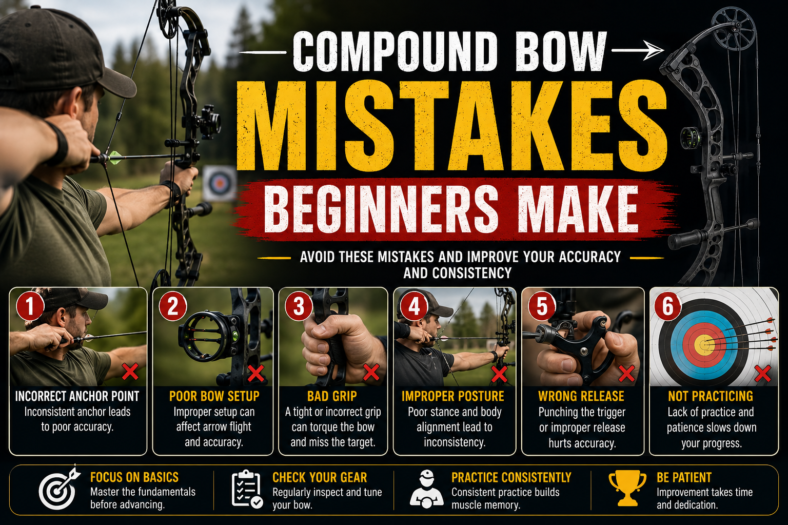
Most beginner compound bow problems come from a few avoidable mistakes: skipping safety checks, using a bow that does not fit, guessing on arrow compatibility, changing too many settings at once, attempting advanced tuning too early, and practicing without a safe target setup. Fix those first and your practice becomes safer, easier to understand, and more consistent.

This guide is for beginner-friendly inspection and setup decisions, not bow-press work or technical tuning. Your owner manual, arrow manufacturer’s chart, and a qualified pro shop should guide anything model-specific or advanced.

Table of Contents
  1. Quick Answer: The Biggest Compound Bow Mistakes Beginners Should Avoid
  2. Skipping Basic Safety Checks
  3. Starting With Poor Bow Fit
  4. Ignoring Arrow Spine and Compatibility
  5. Adjusting Too Many Things at Once
  6. Treating Advanced Tuning as Beginner DIY
  7. Practicing Without a Safe Range Setup
  8. Beginner Compound Bow Mistake Checklist
  9. Related Archery Guides
  10. Frequently Asked Questions

Quick Answer: The Biggest Compound Bow Mistakes Beginners Should Avoid

The biggest beginner compound bow mistakes are shooting without checking the bow and arrows, starting with poor draw length or too much draw weight, buying arrows by guesswork, changing several setup items at the same time, trying advanced tuning at home, and shooting without a controlled target lane and backstop.

The best fix is not complicated: inspect first, keep setup changes simple, use verified charts and manuals, practice where the target and backstop are safe, and send advanced work to a pro shop.

Skipping Basic Safety Checks

The first mistake is assuming the bow is ready because it shot fine last time. A compound bow stores a lot of energy, and small damage can matter. Before each session, look over the bow, arrows, target area, and anything that changed since your last practice.

Bowstring, Cables, Limbs, and Cams

Check the bowstring and cables for fraying, broken strands, and serving separation. Look at the limbs for cracks, splinters, or chips, and check the cams and tracks for anything bent, loose, or out of place. Manufacturer safety pages such as Hoyt’s compound bow safety and warnings show why visible damage should be treated as a stop-use issue.

Arrows, Nocks, Points, and Fletching

Inspect every arrow before shooting. Look for cracked shafts, damaged nocks, loose points, damaged inserts, or torn fletching. A questionable arrow should be set aside, not tested at full draw. USA Archery’s safety resources are a useful reminder that safe shooting habits include both equipment checks and range discipline.

Most compound bow mistakes are easier to prevent when setup, arrows, and range safety are checked before practice starts.

Starting With Poor Bow Fit

A bow that does not fit the archer makes good form harder. Beginners often blame themselves for inconsistency when the real problem is a draw length, draw weight, or anchor position that never gave them a fair start.

Draw Length and Anchor Point

If draw length is too long, the archer may overextend, lean, or float around the anchor point. If it is too short, the archer may feel cramped and inconsistent. Draw length should be set for the archer and the specific bow model, not copied from a friend or guessed from height alone.

Draw Weight and Form Breakdown

Too much draw weight causes beginners to raise the bow, twist the body, punch the release, or rush the shot. A manageable draw weight that allows smooth, repeatable form is better for learning than a number that only looks impressive. Stay within the manual’s adjustment limits and ask a pro shop if you are unsure.

Ignoring Arrow Spine and Compatibility

Arrow spine, arrow length, draw weight, draw length, and point weight all work together. Guessing at arrows can create poor flight and safety risk. Use the current selector or chart from the arrow manufacturer for the exact arrow family you are considering. Tools like the Easton arrow selector help organize the needed inputs, but you should still verify with the product’s current chart or a pro shop.

For a deeper explanation, read our guide on how to choose arrow spine for your bow. Keep the important boundary in mind: no single online rule replaces the current chart for your exact setup.

Adjusting Too Many Things at Once

Another common mistake is changing draw weight, sight position, rest position, release technique, and arrows all at the same time. When everything changes at once, you cannot tell what helped and what hurt.

Make one safe, manual-approved change at a time, then shoot enough arrows to observe the result. Keep notes. This slower method is more useful than chasing a new adjustment every time a group opens up.

Treating Advanced Tuning as Beginner DIY

Basic inspection and manual-approved adjustments are one thing. Bow-press work, cam timing, string or cable replacement, peep work, D-loop installation, module changes, and limb-related service are different. Those jobs belong with a qualified technician. Manufacturer support pages such as Mathews support point owners toward proper service channels rather than guesswork.

If you are learning, use our beginner bow tuning guide for boundaries, but do not turn a beginner tune-up into advanced repair. The safest confidence comes from knowing where your role stops.

Practicing Without a Safe Range Setup

A safe target area is part of the setup, not an afterthought. Shoot only where you have a proper target, reliable backstop, clear lane, and no people, animals, roads, windows, or unsafe property behind the target. Follow range rules and local restrictions.

For more fundamentals, see our archery safety rules. If your practice session includes sights, our guide on how many pins a bow sight should have can help keep aiming setup realistic instead of overly complicated.

Beginner Compound Bow Mistake Checklist

MistakeWhy It MattersBetter Habit
Skipping inspectionDamage can make a bow or arrow unsafeCheck strings, cables, limbs, cams, arrows, and nocks first
Wrong draw lengthAnchor and form become inconsistentSet fit by manual and pro-shop guidance
Too much draw weightForm breaks down and shots get rushedUse a weight you can control smoothly
Guessing arrow spineArrow flight and safety can sufferUse the current manufacturer chart or selector
Changing everything at onceYou cannot diagnose the resultChange one variable and track the outcome
DIY advanced tuningStored energy and setup errors can be dangerousUse a qualified pro shop for advanced work

Frequently Asked Questions

What is the most common beginner compound bow mistake?

Skipping the pre-shoot safety check is one of the most common mistakes. Beginners should inspect the bowstring, cables, limbs, cams, arrows, nocks, points, and target lane before shooting.

How do I know if my draw weight is too high?

If you cannot draw smoothly, hold steady, and aim without straining or lifting the bow awkwardly, the weight is likely too high for learning. Stay within the bow manual’s range and choose control over ego.

Can I tune my compound bow myself as a beginner?

You can handle basic inspection and manual-approved adjustments. Advanced tuning, press work, string and cable service, cam timing, and peep or D-loop work should go to a qualified pro shop.

How do I pick the right arrows for a compound bow?

Use the arrow manufacturer’s current selector or chart for the exact arrow model, then match draw weight, draw length, arrow length, and point weight. A pro shop can help confirm the fit.

80 lb Pistol Crossbow for Target Shooting Guide

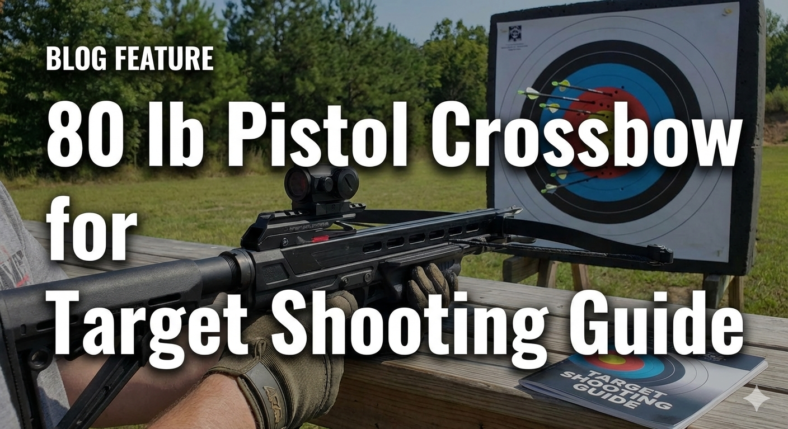
An 80 lb pistol crossbow can be a compact target-shooting tool, but it should be treated as real archery equipment, not a toy. For safe target practice, use a rated target, a clear backstop, eye protection, compatible bolts, and a shooting area where crossbow use is allowed. This guide is for target practice only, not hunting, weapon-use advice, or legal advice.

Table of Contents
  1. Quick Answer
  2. 80 lb Pistol Crossbow Safety Checklist
  3. What an 80 lb Pistol Crossbow Is Best For
  4. Before You Shoot
  5. Target and Backstop Setup
  6. Bolts, Strings, and Basic Accessories
  7. Simple Target-Practice Plan
  8. Common Mistakes to Avoid
  9. FAQ
  10. Final Takeaway

Quick Answer

An 80 lb pistol crossbow is usually best for short-range target practice, backyard-range learning where legal, and basic crossbow handling practice. It is not automatically suitable for hunting, long-range shooting, or non-target use. The most important buying and use checks are bolt compatibility, cocking effort, target rating, backstop safety, local rules, and whether the shooter can load and control the crossbow without unsafe shortcuts.

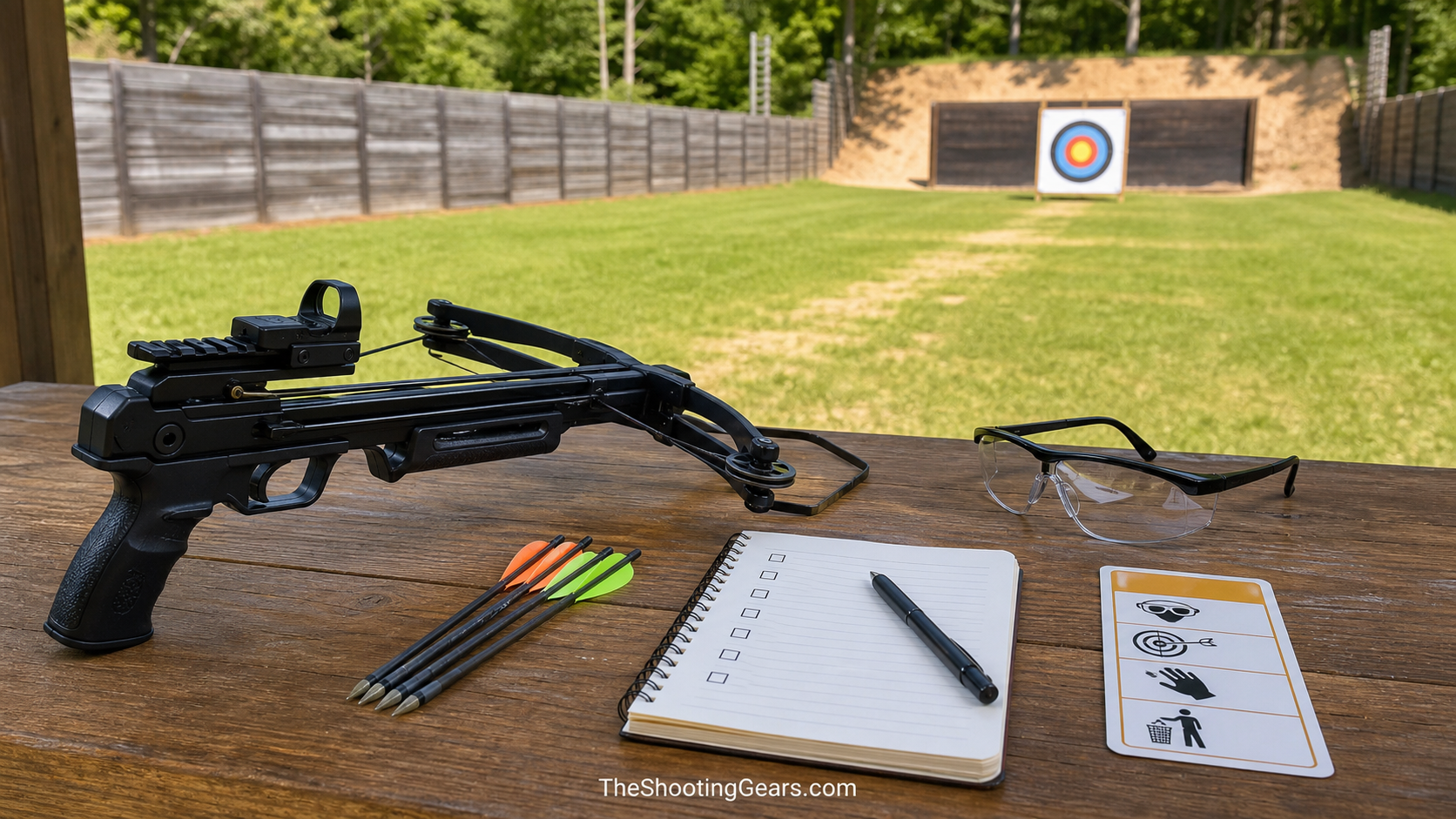
Use an 80 lb pistol crossbow only with a safe shooting lane, compatible bolts, a rated target, eye protection, and a clear backstop.

80 lb Pistol Crossbow Safety Checklist

  • Legal location: Confirm crossbow target practice is allowed where you plan to shoot.
  • Clear backstop: Use a safe backstop behind the target so missed or pass-through shots do not leave the shooting area.
  • Rated target: Use a target designed for crossbow bolts, not a thin archery bag that cannot stop them reliably.
  • Compatible bolts: Match bolt length, nock style, and weight to the crossbow manual.
  • Eye protection: Wear eye protection and keep bystanders behind the shooting line.
  • No dry firing: Do not fire without a compatible bolt loaded unless the manual specifically says otherwise.
  • Manual first: Follow the exact cocking, loading, safety, and maintenance instructions from the manufacturer.

General archery organizations such as World Archery publish formal rule and range-control concepts, while hunter education resources such as Hunter Ed reinforce safe handling and awareness. Use those as safety context, but always follow your actual crossbow manual and local rules.

What an 80 lb Pistol Crossbow Is Best For

The main advantage of an 80 lb pistol crossbow is compact size. It is easier to store and carry than many full-size crossbows, and the lower draw weight can make short target sessions less intimidating for some adults. It can also help new users learn basic crossbow habits: keeping fingers below the rail, pointing only at the target lane, loading carefully, and checking the target area before every shot.

The limitation is that compact does not mean harmless. A pistol crossbow can still damage property or injure someone if used casually. Short limbs, short bolts, and simple sights also make it less forgiving than a larger target bow or full-size crossbow. Treat it as a close-distance practice tool and build your setup around control, not power claims.

Best For

  • Short-distance target practice where crossbow use is allowed.
  • Learning safe loading, aiming, and unloading habits.
  • Casual archery practice with a proper target and backstop.
  • Adults who want a compact crossbow for controlled range use.

Not Best For

  • Hunting unless your state rules, equipment specs, and ethics all support it.
  • Any non-target-use framing.
  • Long-distance accuracy work.
  • Unsupervised youth use.
  • Backyards without a safe target lane and backstop.

Before You Shoot

Before the first shot, inspect the string, limbs, rail, safety, trigger, and bolt retainer. Look for cracks, fraying, loose screws, or anything that feels rough or uncertain. If the crossbow is new, read the manual instead of guessing. If it is used or has been stored for a long time, consider having it checked by a knowledgeable archery shop before shooting.

Also check the shooting location. Many neighborhoods, parks, and public areas restrict projectile use even when the equipment is small. If rules are unclear, do not assume backyard practice is allowed. Crossbow legality and hunting rules can vary by state, city, range, and property type.

Cocking and Loading

Cocking effort matters. An 80 lb draw weight may sound light compared with full-size crossbows, but the short pistol grip can still be awkward. Keep hands, fingers, and loose clothing away from the string path. Load only when pointed safely downrange, and unload according to the manual or range procedure.

Target and Backstop Setup

The target is not the whole safety system. A safe setup includes the target, the area behind the target, the side boundaries, and a shooting line that keeps people behind the shooter. A crossbow bolt that misses, skips, or passes through a worn target can travel farther than a beginner expects.

Use a target rated for crossbow bolts and inspect it often. Replace or rotate targets that no longer stop bolts reliably. Place the target in front of a safe backstop, not in front of fences, roads, windows, pets, livestock, or areas where people may walk unexpectedly.

Bolts, Strings, and Basic Accessories

Do not choose bolts only by price. Use the bolt length, nock type, and weight range listed by the crossbow maker. Short pistol-crossbow bolts can look similar across brands, but small differences in nock shape, diameter, or length can affect safety and reliability. The neutral definition of a crossbow is simple, but compatibility is model-specific.

Basic accessories should support safety, not clutter. A few compatible bolts, a rated target, eye protection, string wax if the manual recommends it, and a simple notebook are enough for most short practice sessions. Avoid modifying the trigger, limbs, string path, or safety mechanism.

Simple Target-Practice Plan

Start close enough that every shot stays in the target face and the backstop is still doing its job. Focus on repeatable setup: same stance, same grip pressure, same sight picture, same safe loading routine. Do not chase speed. A slow, controlled session teaches more than rushing through bolts.

After each group, pause and inspect the target, bolts, and crossbow. Bent bolts, cracked nocks, damaged vanes, loose hardware, or a frayed string are stop signs. Record what distance you used and what worked well. That kind of note is more useful than guessing from memory next time.

Common Mistakes to Avoid

  • Using a target that is not rated for crossbow bolts.
  • Shooting without a real backstop.
  • Letting fingers rise into the string path.
  • Using random bolts because they appear to fit.
  • Dry firing or testing the trigger without following the manual.
  • Practicing in a backyard or public area without checking rules.
  • Treating an 80 lb pistol crossbow as a toy because it is small.

FAQ

Is an 80 lb pistol crossbow good for beginners?

It can be good for careful adult beginners who want short-range target practice, but only with a safe target, backstop, compatible bolts, and manual-based handling. It is not a toy or a shortcut around archery safety.

Can you hunt with an 80 lb pistol crossbow?

Do not assume so. Hunting rules, draw-weight requirements, equipment definitions, and ethical shot limits vary by state and species. Check your current state wildlife agency rules before using any crossbow for hunting.

What target should I use?

Use a target specifically rated for crossbow bolts and inspect it often. If bolts are passing through too easily or the target is badly worn, stop and replace or rotate the target.

Are pistol crossbow bolts universal?

No. Bolt length, diameter, nock style, weight, and tip design should match the crossbow manual. If you are unsure, contact the manufacturer or an archery shop before shooting.

How far should I practice?

Practice at a distance where you can keep every shot safely on the target with the backstop behind it. Increase distance only after your setup, target, and shooting lane remain safe and controlled.

Final Takeaway

An 80 lb pistol crossbow is best treated as a compact target-practice tool. The right setup is simple: legal location, compatible bolts, rated target, clear backstop, eye protection, careful loading, and patient practice. If the location, target, bolt fit, or handling step is uncertain, pause and solve that problem before shooting.

Pistol Crossbow Pros and Cons

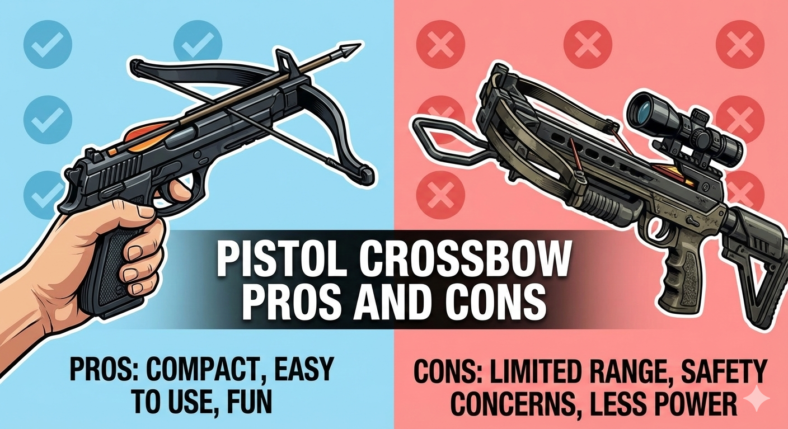
Pistol crossbows, often called mini crossbows or hand crossbows, are compact projectile weapons designed for short-range use. They are significantly smaller and less powerful than traditional hunting crossbows, yet they continue to gain popularity among beginners, hobby shooters, and outdoor enthusiasts. Their appeal lies in their simplicity, affordability, and portability. However, like any tool, pistol crossbows have strengths and weaknesses that should be carefully considered before purchasing or using one.

What Is a Pistol Crossbow?

A pistol crossbow is a scaled-down version of a standard crossbow, featuring a short limb span, lightweight construction, and a simple trigger mechanism. Most models operate within a draw weight range of approximately fifty to eighty pounds and shoot short bolts rather than full-length arrows. These design choices make pistol crossbows easy to handle but limit their power and range. They are not intended for big-game hunting and are primarily used for recreational shooting, training, or light utility purposes.

Portability and Compact Design

One of the most notable advantages of a pistol crossbow is its compact size. Unlike full-size crossbows, which can be heavy and cumbersome, pistol crossbows are lightweight and easy to carry. Their small form factor allows them to fit comfortably into backpacks, vehicle emergency kits, or camping gear. This portability makes them particularly attractive to hikers, campers, and survivalists who prioritize lightweight equipment without sacrificing basic functionality.

Ease of Use and Beginner Accessibility

Pistol crossbows are exceptionally beginner-friendly. Their simple design requires minimal setup, and users can begin shooting with little prior experience. Loading and cocking the crossbow is straightforward, and there is no need for tuning, string adjustments, or complex sight calibration. This ease of use makes pistol crossbows an excellent introduction to archery-style weapons, allowing beginners to develop basic aiming skills and shooting discipline without the steep learning curve associated with traditional bows or advanced crossbows.

Affordability and Low Entry Cost

Another major benefit of pistol crossbows is their affordability. Compared to full-size crossbows or compound bows, which often require a significant financial investment, pistol crossbows are relatively inexpensive. This low entry cost makes them accessible to casual users who want to enjoy target shooting without committing to expensive gear. Replacement parts such as bolts and strings are also inexpensive, helping to keep long-term ownership costs low.

Quiet Operation and Discreet Use

Pistol crossbows operate quietly since they rely entirely on mechanical energy rather than combustion or compressed air. This quiet performance is beneficial for backyard target practice where permitted by local laws. In survival or emergency scenarios, low noise output can be advantageous, as it minimizes attention and disturbance. The quiet nature of pistol crossbows also creates a more controlled and less intimidating shooting experience for beginners.

Maintenance and Reliability

Maintenance requirements for pistol crossbows are minimal. Regular inspection of the string, occasional waxing, and checking bolts for damage are usually sufficient to keep the crossbow in working condition. The absence of complex mechanical or electronic components reduces the risk of malfunction, making pistol crossbows reliable tools in simple or remote environments where advanced maintenance is not possible.

Limited Power and Performance

Despite their advantages, pistol crossbows suffer from limited power. Their relatively low draw weight results in reduced kinetic energy, which significantly limits penetration and stopping capability. This makes them unsuitable for medium or large game and ethically questionable for most hunting applications. In many regions, hunting regulations explicitly prohibit the use of pistol crossbows due to their insufficient power.

Short Effective Range

The effective range of a pistol crossbow is another major limitation. Most models are accurate only within a short distance, typically between ten and twenty meters. Beyond this range, bolt drop becomes more pronounced, accuracy decreases sharply, and environmental factors such as wind have a greater impact. This restricts pistol crossbows to close-range shooting and makes them impractical for long-distance or precision-based activities.

Accuracy Challenges

Accuracy can also be an issue even within the effective range. The short limbs and compact frame provide less stability than larger crossbows, making the weapon more sensitive to hand movement and shooting posture. While some pistol crossbows include basic sights or allow for small optics, they cannot match the consistency and precision of full-size crossbows equipped with advanced targeting systems.

Manual Cocking and User Fatigue

Many pistol crossbows require manual cocking by pulling the string back with the hands. Over extended shooting sessions, this can lead to hand fatigue and reduced shooting comfort. For users with limited grip strength or joint issues, this process may become uncomfortable. Although some models feature cocking levers to reduce strain, this is not a universal feature across all designs.

Bolt Durability and Availability

Pistol crossbow bolts are shorter and lighter than standard arrows, which makes them more prone to bending, breaking, or getting lost. They are also not interchangeable with traditional archery arrows, limiting replacement options. Depending on the brand and region, sourcing replacement bolts locally may be difficult, requiring online purchases or reliance on specific manufacturers.

Legal and Safety Considerations

Legal regulations surrounding pistol crossbows vary widely by location. While they are often less regulated than firearms, some jurisdictions restrict their use in urban areas or prohibit their use for hunting altogether. Carrying a pistol crossbow in public spaces may also be subject to local laws or safety concerns. It is essential for users to understand and comply with applicable regulations before owning or operating one.

Final Verdict: Are Pistol Crossbows Worth It?

Pistol crossbows offer a unique combination of portability, affordability, and ease of use, making them ideal for recreational shooting, beginner training, and lightweight outdoor kits. However, their limited power, short range, and reduced accuracy mean they are not suitable for serious hunting or advanced shooting applications. When used responsibly and within their intended purpose, pistol crossbows can be enjoyable and practical tools, but understanding their limitations is key to making an informed decision.

If you want, I can expand this to 2,000+ words, SEO-optimize it for your niche, or rewrite it for a hunting or survival-focused blog.

Beginner’s Guide to Compound Bow Accessories

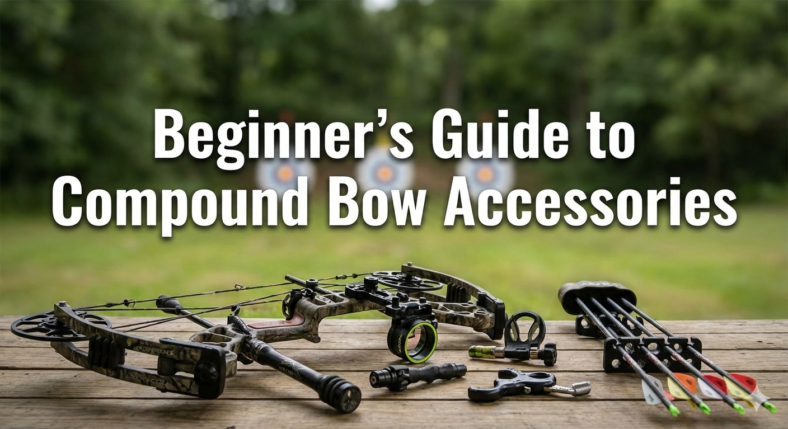
Starting your journey into archery with a compound bow is both exciting and challenging. While choosing the right bow is important, accessories play an equally critical role in determining how comfortable, accurate, and enjoyable your shooting experience will be especially as a beginner.

Many new archers make the mistake of either buying too many unnecessary accessories or skipping essential ones entirely. This detailed guide is designed to help beginners understand what each compound bow accessory does, why it matters, and how to choose the right one without wasting money or slowing progress.

Whether your goal is target practice, bowhunting preparation, or recreational shooting, this guide will help you build a solid foundation.

Understanding Why Accessories Are Crucial for Beginners

Compound bows are precision tools. Unlike traditional bows, they rely on mechanical systems such as cams, cables, and pulleys. Accessories help stabilize these systems, improve accuracy, and protect both the archer and the equipment.

For beginners, accessories are not about performance enhancement alone they are about learning correctly. The right setup reduces inconsistency, builds confidence, and allows you to focus on proper form instead of fighting equipment limitations.

Arrow Rests: Controlling Arrow Flight from the Start

The arrow rest supports the arrow before and during the shot. Even small inconsistencies at this point can lead to poor arrow flight, erratic grouping, and frustration.

For beginners, full-containment arrow rests are ideal. These rests surround the arrow completely, keeping it secure even when the bow is tilted or drawn slowly.

Containment rests are forgiving. They allow beginners to concentrate on stance, anchor point, and release rather than worrying about the arrow falling off the bow. While advanced archers may eventually move to drop-away rests for maximum clearance, containment rests provide unmatched simplicity during the learning phase.

A properly aligned arrow rest ensures that arrows leave the bow cleanly and consistently, which is essential for building confidence early on.

Bow Sights: Learning to Aim with Confidence

A bow sight is one of the most recognizable compound bow accessories. It provides reference points—usually pins—that help aim the bow accurately at different distances.

Beginner archers benefit most from fixed multi-pin sights, commonly configured for 20, 30, and 40 yards. These sights eliminate the need for constant adjustments and allow beginners to focus on learning distance estimation and consistent sight alignment.

Using a bow sight teaches beginners how to align their dominant eye, peep sight, and target in a repeatable way. This consistency is essential for developing muscle memory and improving accuracy over time.

More advanced single-pin or slider sights may seem appealing, but they require a deeper understanding of yardage adjustments and are better suited for experienced archers.

Release Aids: Improving Accuracy and Preventing Bad Habits

A release aid replaces finger shooting by mechanically releasing the bowstring. This results in a cleaner, more consistent release and reduces torque on the string.

For beginners, index finger wrist-strap release aids are the most practical option. They are intuitive, comfortable, and help archers maintain consistent anchor points.

Learning to shoot with a release aid early prevents common beginner issues such as string twisting, uneven finger pressure, and inconsistent releases. It also reduces strain on the fingers and wrist, allowing longer practice sessions without discomfort.

As skills progress, archers may explore thumb releases or back-tension releases, but starting with a simple wrist release builds a strong foundation.

Peep Sights: Ensuring Consistent Alignment

A peep sight is a small circular ring installed in the bowstring. When drawn, the archer looks through the peep sight to align the bow sight pins with the target.

This accessory is critical for consistency. Without a peep sight, beginners often struggle with inconsistent anchor points and vertical alignment issues.

A peep sight ensures that every shot begins with the same eye-to-sight relationship. This repeatability is one of the most important factors in improving accuracy.

Because peep sight installation affects string alignment, beginners should always have it installed and tied in by a professional archery shop to avoid rotation or string damage.

D-Loops: Protecting the String and Improving Releases

A D-loop is a short length of durable cord attached to the bowstring. The release aid clips onto the D-loop instead of the string itself.

For beginners, using a D-loop is essential. It protects the bowstring from wear, ensures a straight pull on the string, and reduces torque during release.

Shooting without a D-loop can lead to inconsistent arrow flight and premature string damage. Once installed correctly, a D-loop requires minimal maintenance and significantly improves shooting consistency.

Stabilizers: Improving Balance and Shot Control

A stabilizer extends from the front of the bow and serves two main purposes: balancing the bow and absorbing vibration.

Beginner archers often experience shaky aiming and excessive hand movement. A stabilizer helps steady the bow by shifting weight forward, making it easier to hold on target.

Short stabilizers, typically between six and eight inches, are ideal for beginners. They offer improved balance without adding excessive weight or complexity.

In addition to improving accuracy, stabilizers reduce post-shot vibration, making shooting more comfortable and reducing fatigue during extended practice sessions.

Arrows: Choosing the Right Match for Your Bow

Arrows are just as important as the bow itself. Using incorrect arrows can lead to poor accuracy and even safety risks.

For beginners, carbon arrows are the best choice. They are durable, consistent, and forgiving of minor form errors. The most important factor when selecting arrows is spine rating, which must match the bow’s draw weight and draw length.

An arrow that is too stiff or too flexible will not fly properly, regardless of shooting skill. Most archery shops can help beginners select the correct arrow spine and cut arrows to the proper length.

Starting with properly matched arrows allows beginners to see real improvement as their form develops.

Quivers: Keeping Arrows Secure and Accessible

A quiver holds arrows when they are not being shot. Bow-mounted quivers are the most common choice for beginners due to their convenience.

Having arrows securely stored on the bow reduces distractions and keeps practice sessions organized. Detachable quivers offer flexibility, allowing archers to remove extra weight when shooting at a range.

While quivers do not directly affect accuracy, they contribute to safety and efficiency, especially for new archers still developing range etiquette and handling skills.

Arm Guards: Preventing Injury While Learning Form

String slap is a common issue for beginners. It occurs when the bowstring strikes the forearm during release, often due to improper grip or stance.

An arm guard protects the forearm from bruising and painful impacts. While correct form reduces the likelihood of string slap, beginners should always use an arm guard until their technique becomes consistent.

Comfortable, lightweight arm guards allow beginners to practice confidently without fear of injury, encouraging longer and more productive training sessions.

Bow Cases: Protecting Your Equipment Investment

Compound bows contain sensitive components such as cams, strings, and sights. A bow case protects these parts during transport and storage.

For beginners, a quality bow case is essential. Hard cases offer maximum protection, especially during travel, while soft cases are lighter and more convenient for short trips to the range.

Protecting your bow ensures consistent performance and reduces the risk of costly repairs caused by accidental impacts or environmental exposure.

String Wax and Basic Maintenance Tools

Bowstring wax keeps strings flexible and prevents fraying. Beginners often overlook maintenance, but neglecting string care can lead to reduced performance and string failure.

Applying wax regularly extends string life and keeps the bow operating smoothly. Learning basic maintenance habits early helps beginners develop responsible equipment ownership.

Accessories Beginners Should Avoid Initially

Not every accessory is necessary at the beginning. Advanced tools such as rangefinders, drop-away rests, and back-tension releases are better introduced after basic skills are mastered.

Focusing on fundamentals rather than upgrades ensures steady improvement and prevents unnecessary spending.

Final Thoughts: Building a Beginner-Friendly Setup

Compound bow accessories are not about buying the most expensive gear—they are about creating a setup that supports learning, safety, and consistency.

By choosing beginner-friendly accessories and understanding their purpose, new archers can progress faster, shoot more accurately, and enjoy the sport with confidence.

A well-balanced setup allows you to focus on technique, form, and enjoyment laying the groundwork for long-term success in archery.

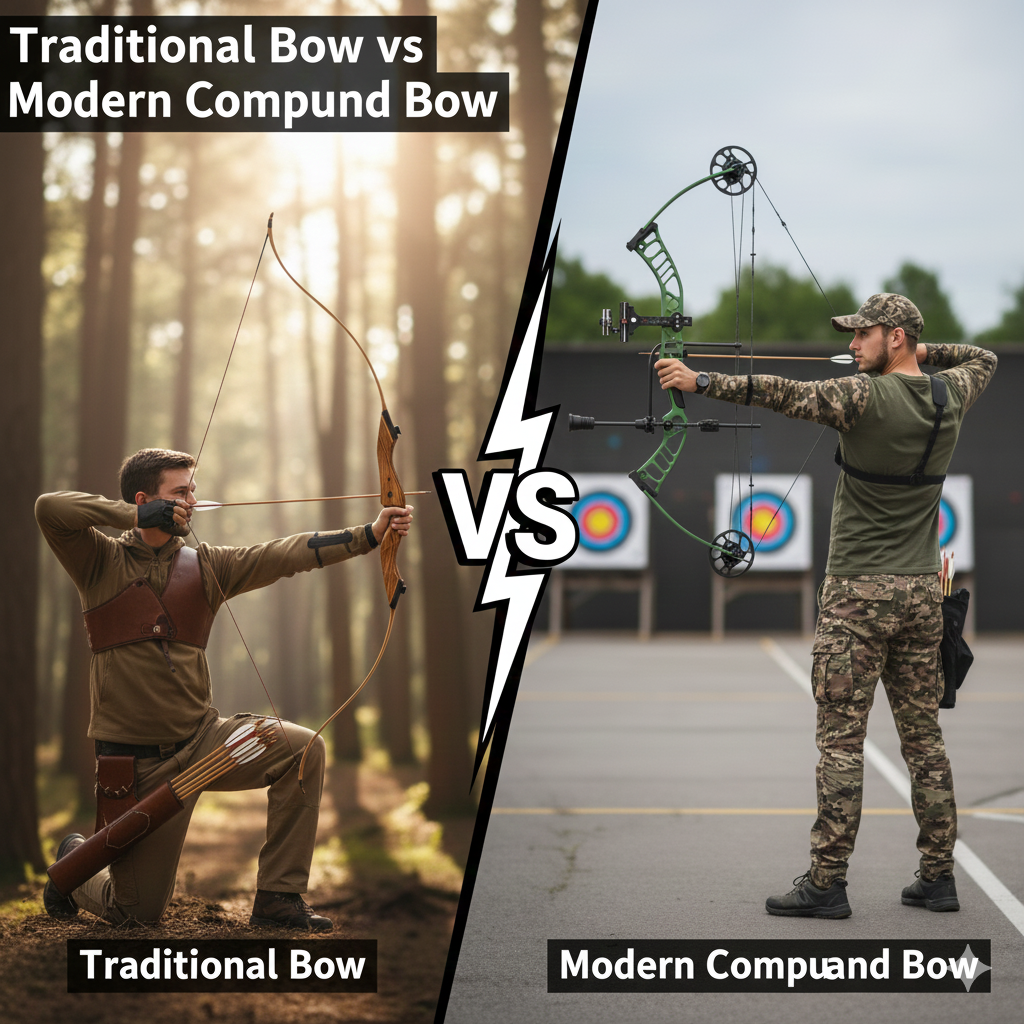
Traditional Bow vs Modern Compound Bow

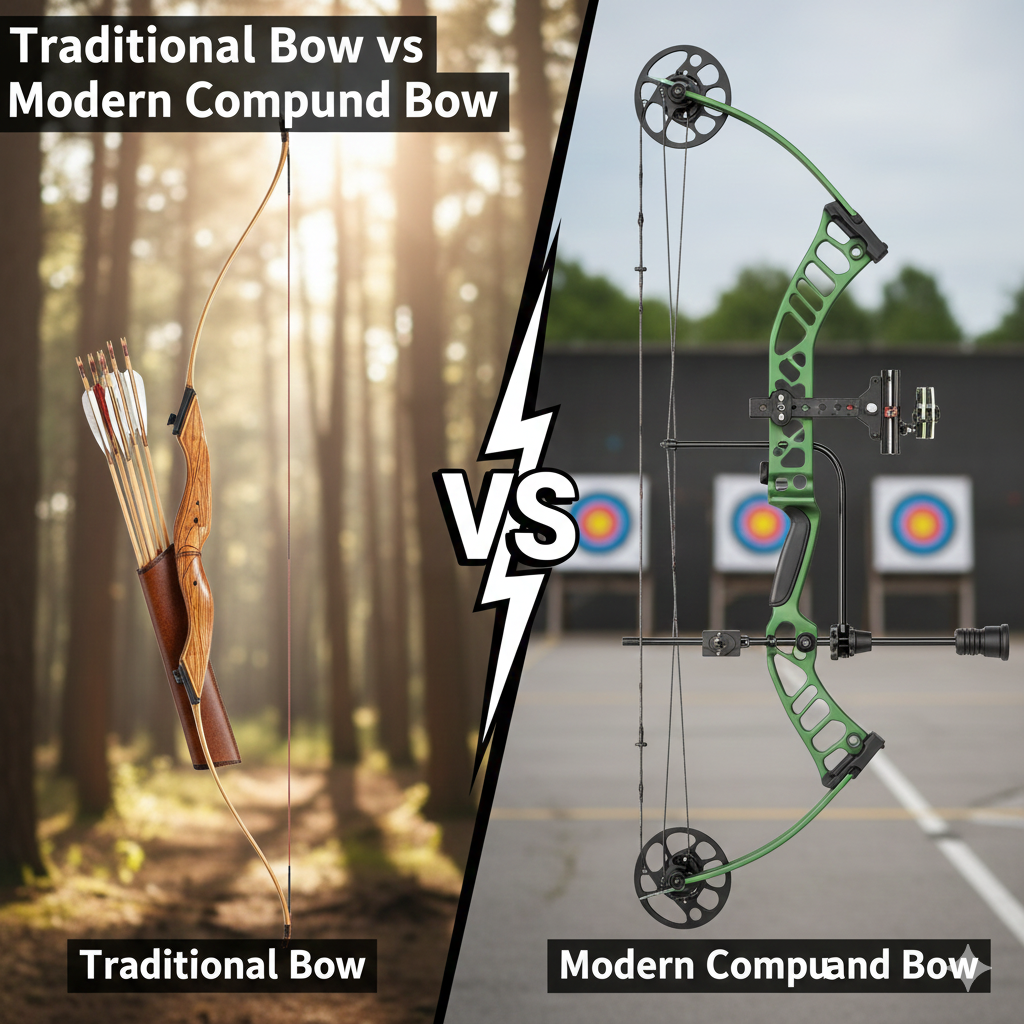
Archery has evolved dramatically over thousands of years, yet one debate continues to spark curiosity among beginners and experienced archers alike: should you shoot a traditional bow or a modern compound bow? Although both tools serve the same purpose propelling an arrow toward a target they are built on entirely different philosophies. One represents centuries of culture, craftsmanship, and instinct, while the other showcases precision engineering and mechanical advantage. Understanding these differences is essential for choosing the best bow for your goals, shooting style, and long-term development as an archer.

What Makes a Traditional Bow “Traditional”?

The traditional bow, whether in the form of a longbow or a recurve bow, connects the archer directly to the roots of the sport. Its simplicity is its most defining feature: a single curved piece of wood or laminated material and a bowstring. There are no pulleys, cables, sights, or mechanical systems. Every shot you take depends entirely on your body’s strength, your instinctive aim, and your technique.

Shooting a traditional bow feels organic and pure. When you draw the bowstring, the full weight of the draw remains in your fingers until the moment you release it. There is no let-off, no mechanical ease, no gadgets to stabilize your aim. Because of this, traditional archery demands a high level of discipline. Archers develop muscle memory, fluid form, and a deep sensitivity to the smallest physical movements.

Most traditional shooters appreciate this challenge. They enjoy the process more than the score. The bow becomes an extension of the body, and every successful shot feels earned. Traditional bows also appeal to those who enjoy historical reenactment, bowhunting with minimal gear, or simply the elegance of a quiet, lightweight bow with minimal maintenance.

The Rise of the Modern Compound Bow

In contrast, the modern compound bow is engineered for maximum efficiency and accuracy. Developed in the 1960s, compound bows use a system of cams or wheels, cables, and limbs designed to reduce the draw weight at full draw a feature known as let-off. Once the bow is fully drawn, the archer holds only a small percentage of the actual draw weight, making it easier to take steady and precise shots.

The compound bow is built around technology. It often includes sights, stabilizers, peep sights, release aids, and many other accessories that refine accuracy. The design allows for faster arrow speeds, flatter trajectories, and significantly greater consistency shot after shot. Hunters particularly prefer compound bows because they deliver high kinetic energy with minimal effort, giving them better penetration and ethical shot capability.

Another major advantage is adjustability. Draw weight and draw length can be fine-tuned to suit the archer, making compound bows more forgiving for beginners and extremely customizable for advanced users. For competitive archers, a compound bow provides the precision and repeatability needed for tournaments where even a millimeter can determine the winner.

Accuracy and Performance: Instinct vs Engineering

Accuracy is one of the biggest differences between the two bow types. Traditional bows rely on instinctive shooting or gap shooting. Over time, archers learn to feel the trajectory, anchor naturally, and release smoothly. The learning curve is steep, but the satisfaction of mastering instinctive archery is unmatched. Each shot carries a sense of craftsmanship.

On the other hand, compound bows are designed to reduce human error. The mechanical let-off allows the archer to take their time at full draw without fatigue. Stabilizers counterbalance the bow. Sights and peeps align your vision. Release aids ensure a clean, controlled release. Everything works together to enhance accuracy. For beginners who want to hit tight groups quickly, a compound bow offers a clear advantage.

In hunting scenarios, the compound bow’s power and efficiency give it even more of an edge. Faster arrow speeds and deeper penetration provide more ethical kills and higher confidence at longer distances. Traditional bows can still be effective hunters, but they require more patience, closer distances, and refined skill to achieve the same results.

The Overall Shooting Experience

Choosing between these two bows often comes down to the experience you want while shooting. Traditional bows feel light, quiet, and responsive. They require little to maintain no cables to tune, no cams to adjust, no gadgets to depend on. Every session becomes a meditative practice focusing on form, breathing, and flow.

Meanwhile, compound bows offer a more structured shooting experience. You can dial in your sights, measure distances, and adjust settings to perfect your performance. Shooting becomes a blend of technique and fine-tuned equipment. For many archers, this creates confidence and satisfaction because improvements are measurable and repeatable.

Traditional archers often speak of the sport as an art, while compound archers view it as a science. Neither is wrong; they simply highlight different aspects of the same discipline.

Which Bow Is Better for Beginners?

Many newcomers assume traditional bows are easier because of their simple design, but the opposite is usually true. A traditional bow requires more skill development to achieve consistent accuracy. Beginners who want early success and visible progress often find the compound bow more motivating. Its mechanical assistance helps them avoid frustration and build confidence.

However, those who are drawn to the heritage of archery, or who want to develop strong foundational habits, may prefer starting with a traditional bow. It teaches discipline and technique from day one and helps shooters feel a deeper connection to the process.

Your personal preference matters most. Are you motivated by technological refinement and precision? Or do you enjoy the challenge of mastering something simple yet demanding?

Maintenance and Durability

Traditional bows require minimal upkeep. As long as the limbs are not cracked and the string is waxed regularly, the bow can last for decades. There are no moving parts to tune or replace. This durability makes traditional bows ideal for archers who value simplicity and reliability.

Compound bows, however, need regular tuning and maintenance. Cables stretch, cams must stay aligned, and accessories need periodic adjustments. Although modern compound bows are incredibly durable, they are machines and machines require care. This is not necessarily a disadvantage; many archers love tuning their bows and pushing their equipment to peak performance.

Price Differences

Traditional bows are generally more affordable. A beginner can start shooting with a well-made traditional bow for a reasonable price, and accessories are minimal. Compound bows often cost more due to their engineering complexity and additional gear sights, rests, releases, stabilizers, and tuning tools.

For people on a tight budget, traditional archery is easier to start. But those who see archery as a long-term investment often appreciate the features and benefits that come with a more expensive compound bow setup.

The Final Decision: Tradition or Technology?

The debate between traditional bows and modern compound bows does not have a universal answer. Instead, it reflects the diversity of archery itself. The traditional bow is perfect for those who want to experience archery in its purest form minimalist, instinctive, and deeply connected to ancient tradition. The compound bow is ideal for those who value accuracy, adjustability, and the advantages of modern engineering.

Think about what inspires you. Do you want each shot to feel like a personal achievement built on instinct and discipline? Or do you want to leverage technology to push your accuracy and consistency to the highest level? Your goals, your style, and even your personality will guide you toward the right choice.

In the end, both bows can provide incredible satisfaction. The true joy of archery comes from the connection between the archer, the bow, and the moment of release whether it is guided by tradition or technology.

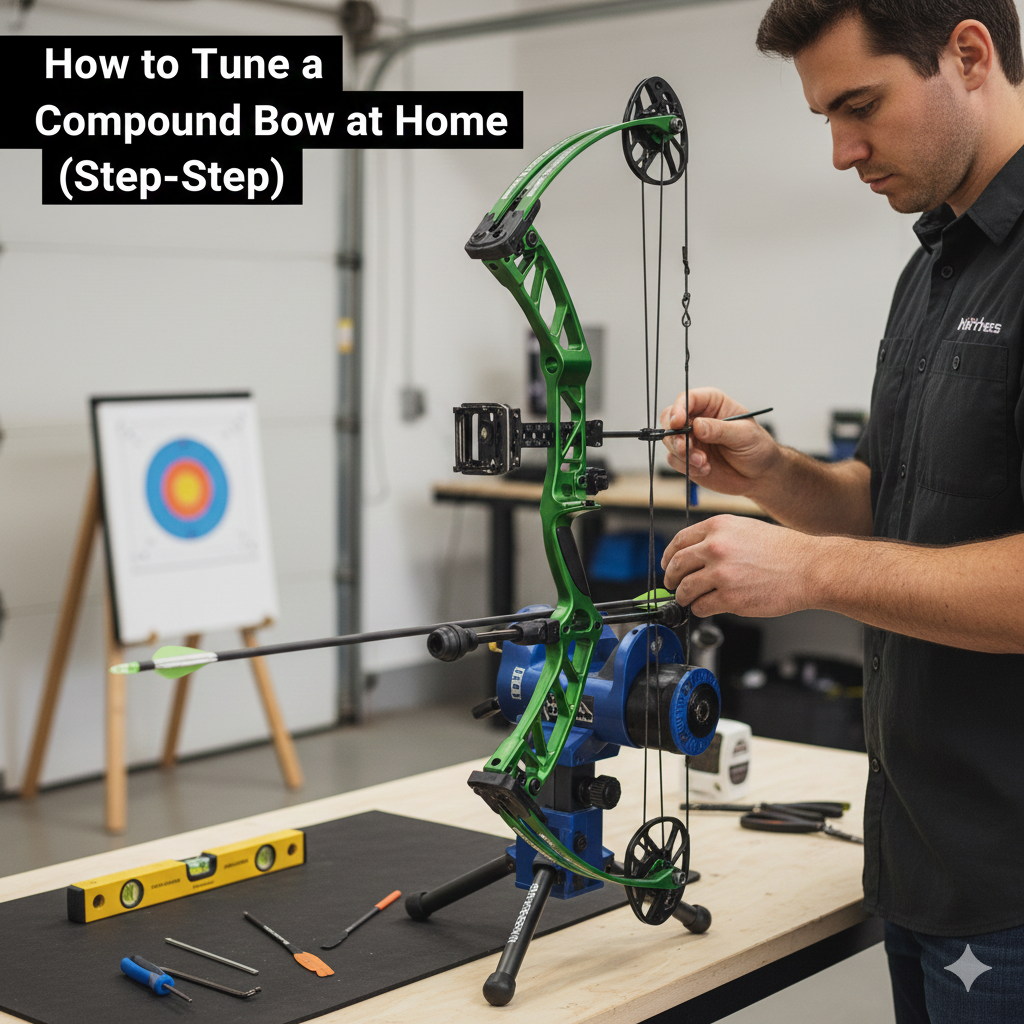
How To Tune A Compound Bow At Home: Safe Checks and Pro-Shop Limits

Tuning a compound bow at home safely means checking the basics that do not require a bow press: draw weight and draw length fit, arrow spine, nocking-point awareness, rest alignment, and consistent shooting form. These checks can help you understand your setup without getting into risky adjustments.

Anything that needs a bow press, cam timing, string or cable work, module changes, or uncertain limb-bolt procedures belongs at a qualified bow shop. This guide is a safe boundary map for home checks, not an advanced tuning manual.

What Compound Bow Tuning Can And Cannot Fix At Home

At home, you can verify fit and alignment basics. You can check whether draw length feels controllable, whether your arrows match the setup, whether the nocking point looks reasonable, and whether the rest appears aligned. You should not attempt press-dependent work, cam synchronization, cable or string twisting, or advanced setup changes unless you have the correct tools and training.

The point is not to turn every archer into a bow technician. The point is to spot simple setup issues, document what you see, and know when the next step belongs to a pro shop.

Safety Checks Before You Start

Before any tuning, inspect the bow and confirm it is safe to draw. Do not draw or shoot a bow with visible damage, abnormal noise, or questionable string, cable, limb, or cam condition.

  • Inspect the limbs, cams, string, and cables for cracks, fraying, separation, or unusual wear.
  • Confirm your draw weight and draw length are set to a level you can control comfortably.
  • Shoot only into a proper target with a safe backstop.
  • Never dry-fire the bow.
  • Stop immediately if the bow feels wrong, sounds wrong, or shows damage.

USA Archery safety guidance is a useful baseline for range habits and equipment awareness. Manufacturer manuals and safety warnings still control your specific bow.

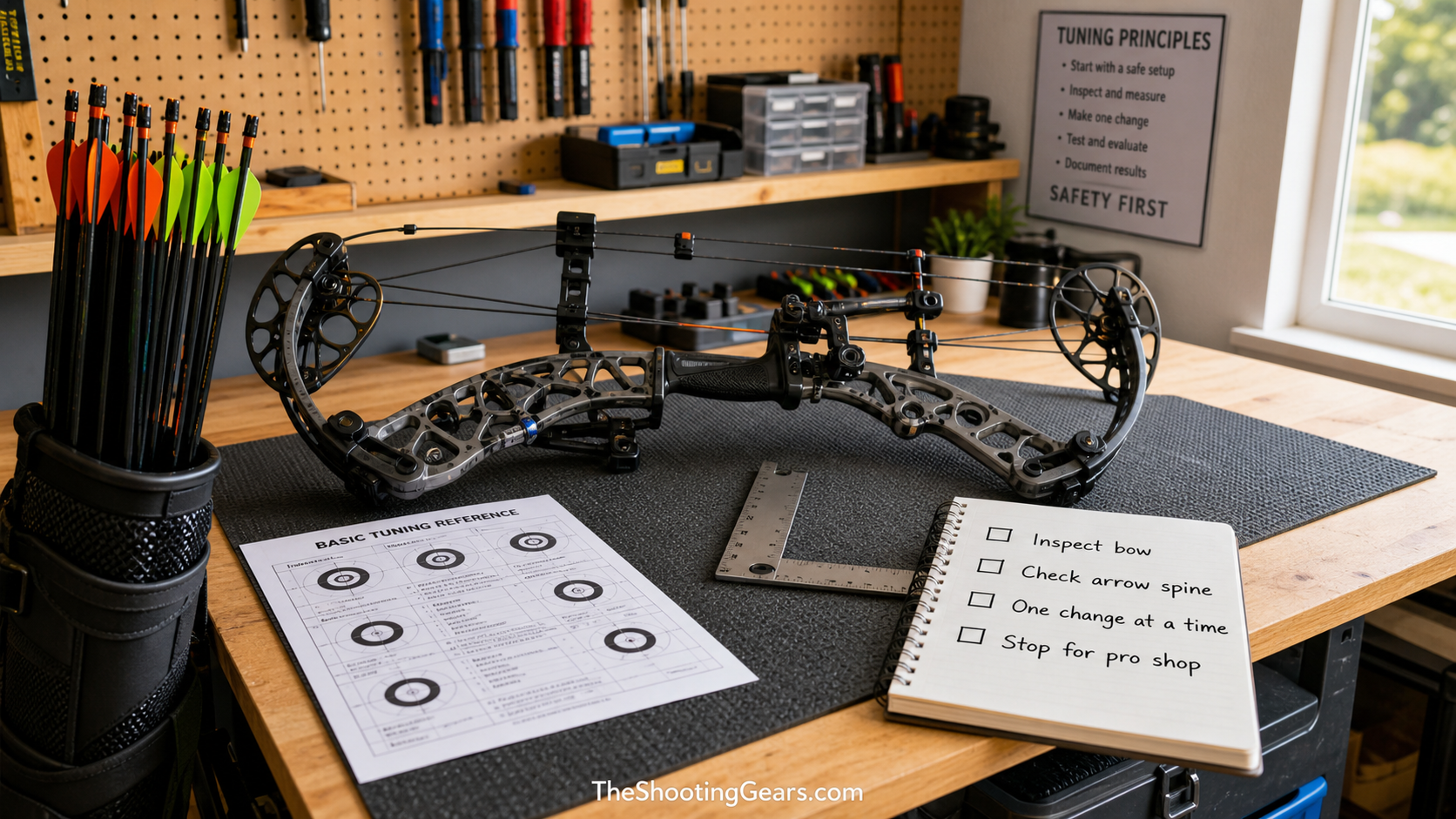
Keep home tuning limited to safe checks: inspect the bow, check arrow spine, change one thing at a time, and stop for a pro shop when work becomes press-dependent.

Tools For Basic Home Bow Tuning

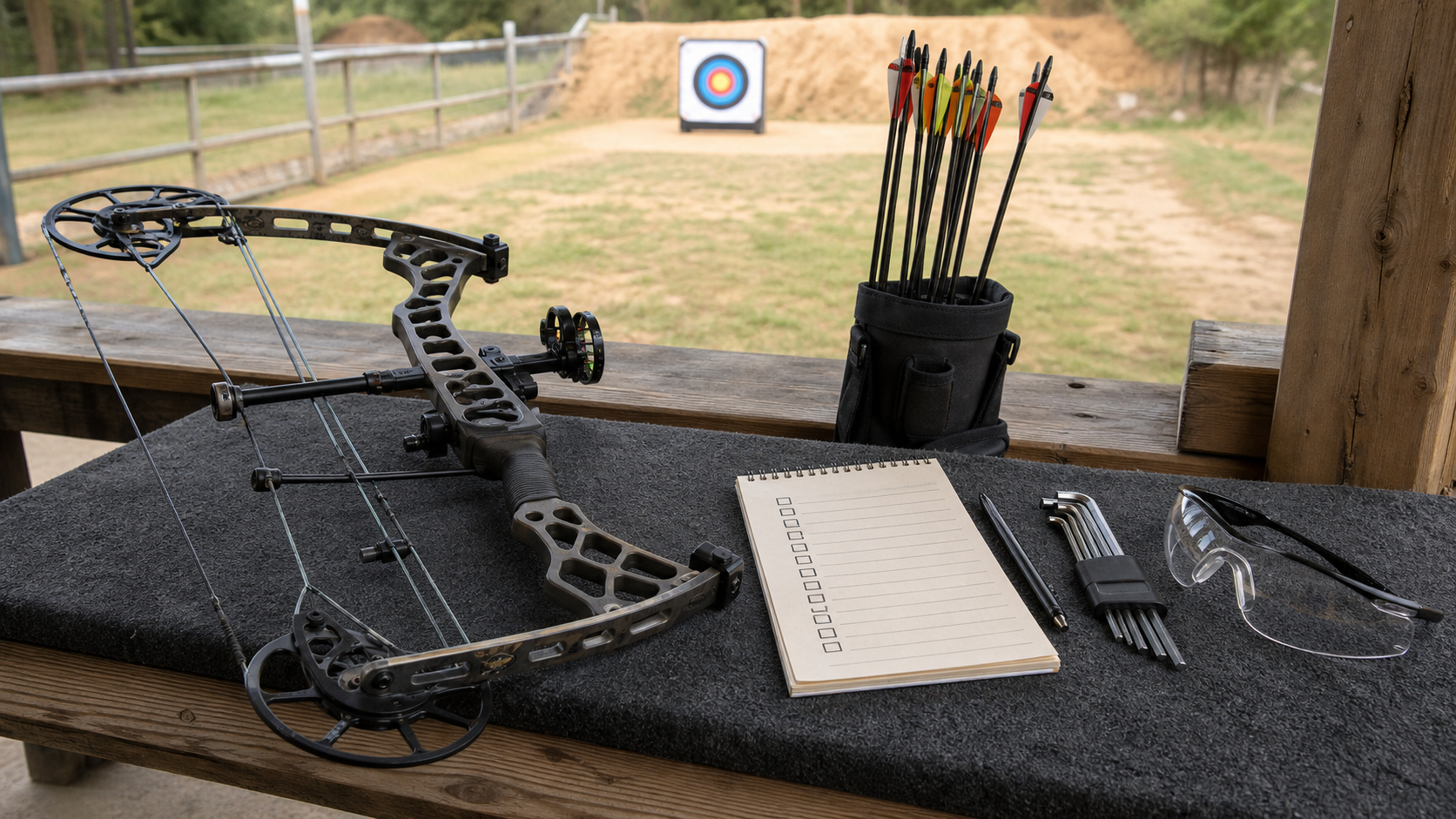
Basic at-home checks use simple reference tools, not press equipment. Useful items include a bow square, manufacturer arrow chart, matched arrows, field points, a proper target, and a notebook for recording one change at a time.

This is not a product list. Use tools that match your bow, arrow setup, and manual. If a task requires a press or manufacturer-specific procedure, stop and route the bow to a qualified technician.

Check Draw Length, Nocking Point, And Rest Alignment

The most useful home checks are confirming draw length fit, checking nocking-point reference with a bow square, and looking at whether the rest appears aligned with the arrow path. Make one change at a time and record what changed before shooting again.

Paper Tuning Basics

Paper tuning is a diagnostic method where an arrow is shot through paper so the tear can offer clues about arrow flight. Easton’s tuning guide is a useful reference for understanding the concept. Treat the tear as information, not as permission to make risky adjustments.

Broadhead And Field-Point Comparison

Comparing field-point and broadhead impact can show whether your setup needs attention, but it should only happen on a proper range with a safe backstop and legal, safe use. If broadheads and field points behave very differently, bring that information to a bow shop instead of chasing the problem with press-dependent changes.

When To Stop And Visit A Bow Shop

Stop and visit a qualified bow technician whenever a check points to press work, cam timing, string or cable issues, module changes, limb concerns, or damage. A technician can confirm whether the bow is in spec before you spend more time trying to tune around a mechanical issue.

Arrow Fit And Spine Checks

Arrow fit and spine should match your bow’s draw weight, draw length, arrow length, and point weight. Check a manufacturer chart or tool such as the Easton arrow selector rather than guessing. An arrow that is too stiff or too weak for the setup can fly poorly no matter how much you adjust the rest.

If you need the concept explained in plain language, our arrow spine guide is the best internal next step.

Common Tuning Mistakes

The most common mistakes are changing several things at once, ignoring arrow spine, continuing to shoot a bow that shows damage, and attempting press-dependent work at home. Chasing a perfect paper tear can also become a trap if the real problem is arrow fit, shooter form, or a bow that needs a technician.

Keep the process simple: inspect, make one safe check, record it, shoot a small group, and stop when the next step requires equipment or training you do not have.

Frequently Asked Questions

Can I tune a compound bow at home without a bow press?

You can do basic checks without a press, including draw-length fit, nocking-point reference, rest alignment observation, and arrow-spine verification. Press-dependent work should go to a bow shop.

Is paper tuning safe to do at home?

Paper tuning can be safe when you shoot into a proper target with a safe backstop and adequate space. Treat the paper tear as a diagnostic clue. If the result points to press work, cam timing, or damage, stop and visit a technician.

How do I know if my arrows are the right spine?

Use a manufacturer arrow chart or selector with your draw weight, draw length, arrow length, and point weight. If the chart suggests a different spine, solve the arrow-fit problem before chasing tuning adjustments.

When should I take my bow to a pro shop?

Take it to a pro shop for bow-press work, cam timing, string or cable changes, module changes, limb concerns, abnormal noise, visible damage, or anything your manual does not clearly authorize you to handle.

Hoyt vs Mathews Compound Bows: A Detailed Comparison for 2025

The world of compound bows is filled with innovation, craftsmanship, and brand loyalty. Among all manufacturers, two names consistently stand above the rest Hoyt and Mathews. These companies have built devoted followings over decades, producing bows that dominate both the hunting fields and competitive archery circuits. The comparison between Hoyt and Mathews has become a classic debate that resurfaces every year, especially when new flagship models are released.

But if you’re trying to decide which brand is right for your shooting style, it can be overwhelming. Both offer premium features, precision engineering, and exceptional performance. To help you navigate this rivalry, this in-depth guide explores the history, performance characteristics, design philosophies, and real-world shooting experience of each brand.

Brand Identity and Design Philosophy

Although both Hoyt and Mathews produce high-performance compound bows, their philosophies and design priorities differ significantly.

Hoyt, founded in 1931, is one of the oldest and most respected names in archery. Their heritage is built on durability, engineering resilience, and high precision. Hoyt bows have a reputation for being tough, stable, and reliable—qualities that appeal strongly to target shooters and bowhunters who need equipment capable of surviving harsh environments and intense use. Hoyt approaches bow building with a performance-first mindset, emphasizing robust construction and advanced riser geometry.

Mathews, founded later in 1992, is driven by a different principle: smoothness, silence, and user-friendly performance. Every bow from Mathews reflects an obsession with comfort, balance, and quietness. Their design philosophy focuses on minimizing vibration, creating the smoothest possible draw cycle, and delivering consistent accuracy through simplicity. While Hoyt bows often feel like precision machines built for strength, Mathews bows feel refined, polished, and almost effortless to shoot.

These two identities shape everything the companies produce—and ultimately play a large role in determining which brand shooters prefer.

Build Quality and Craftsmanship

A major factor that separates Hoyt and Mathews is their riser construction. Hoyt is one of the only brands known for producing both aluminum and carbon risers at advanced engineering levels. Their carbon risers, in particular, are legendary for being lightweight, incredibly stiff, and resistant to temperature changes. Bowhunters who operate in cold weather environments appreciate that Hoyt carbon risers don’t hold cold like aluminum risers do. The bows feel solid in the hand, and this added rigidity contributes to long-range stability and accuracy.

Mathews, on the other hand, uses precision-machined aluminum risers that are renowned for their refinement and aesthetics. What Mathews may lack in carbon riser production, they more than make up for in flawless machining and finish quality. Their bows always look polished and premium, with smooth lines, ergonomic shapes, and advanced vibration-dampening built directly into the riser. While Hoyt leans into rugged strength, Mathews focuses on creating a bow that feels comfortable and controlled from the first draw.

Both brands offer exceptional craftsmanship but the tactile experience differs noticeably. A Hoyt bow feels solid, sturdy, and engineered to take abuse. A Mathews bow feels silky, balanced, and tuned for comfort.

The Draw Cycle Experience

The draw cycle is one of the most important factors in choosing a compound bow, and this is one area where differences between Hoyt and Mathews become immediately apparent.

Hoyt bows typically have what many shooters call a performance-focused” draw cycle. They often start with a bit more resistance early in the draw, with a firmer transition into the valley and a strong, definitive back wall. Hoyt’s cam systems are designed to maximize power and energy transfer, which often gives their bows slightly more aggressive characteristics. For experienced shooters who prioritize speed, efficiency, and control, this type of draw cycle is ideal. It gives the archer a sense of authority over the bow—there’s power behind every inch of movement.

Mathews bows are the opposite. Their draw cycles are famous for being extremely smooth, with a steady, comfortable pull from start to finish. The valley is typically deeper, and the transition to full draw feels natural. This smoothness reduces shooter fatigue, especially during long practice sessions or full days in the treestand. Mathews’ cam systems, such as the Crosscentric cam and SwitchWeight System, are engineered to deliver maximum efficiency while maintaining a silky draw. The overall feeling is more forgiving and pleasant, appealing to hunters and archers who prioritize comfort over raw aggression.

If your shooting style leans toward power, urgency, and performance, Hoyt’s draw cycle may suit you better. But if you want comfort, smoothness, and a bow that feels effortless to hold at full draw, Mathews has the advantage.

Performance, Accuracy, and Consistency

When it comes to accuracy, both brands offer elite-level performance. However, the way they achieve this accuracy differs.

Hoyt bows often feel incredibly stable in the hand due to their construction and balance. The riser stiffness, the grip geometry, and the overall weight distribution contribute to a steady hold on target. Many competitive archers appreciate Hoyt’s ability to remain solid during the aiming process. For shooters who like a heavier bow with a rigid platform, Hoyt delivers world-class consistency. The bow almost feels like it guides the arrow along a fixed path.

Mathews bows excel in forgiving accuracy. Because they produce very little vibration and almost no after-shot hand shock, the shooter experiences minimal disruption during the shot cycle. This silence and smoothness translate directly into improved accuracy, especially for hunters shooting from awkward positions. Mathews bows give the shooter more margin for error, making them ideal for real-world hunting situations where form isn’t always perfect.

Both bows can be tuned to incredible precision, but the way they feel during the shot is what sets them apart: Hoyt is firm and commanding, while Mathews is gentle and controlled.

Vibration and Noise Control

If quietness is your top priority especially for bowhunting Mathews has long been considered the industry leader. Their bows feature advanced dampening systems integrated into the riser and limbs, creating a nearly shock-free experience. When a Mathews bow fires, the shot feels dead in the hand. The lack of noise and vibration boosts shooter confidence and minimizes the chance of startling game animals.

Hoyt has made major strides in vibration reduction, especially in their latest models, but there is still a noticeable difference between the brands. Hoyt bows generally have slightly more feedback in the hand. This doesn’t necessarily mean they’re loud far from it but Mathews bows are simply engineered to be as quiet as modern technology allows.

For hunters who require absolute stealth, Mathews remains the top choice.

Speed, Power, and Energy Output

Hoyt has a reputation for producing bows with strong speed ratings and impressive energy transfer. Their cam systems are built for performance, often delivering fast arrow speeds and high kinetic energy values. This makes Hoyt a strong choice for shooters targeting long distances or hunting larger game such as elk or moose, where arrow penetration is crucial.

Mathews bows deliver excellent speeds as well, but their design philosophy prioritizes efficiency and smoothness over pure speed. While they may not always top Hoyt in IBO ratings, their real-world arrow speeds are extremely consistent and reliable. Their shot efficiency with minimal wasted energy often translates into more accuracy and a smoother shooting process.

If hitting maximum speed is important to you, Hoyt usually has a slight edge. If you prefer efficiency and smooth energy distribution, Mathews may be the better fit.

Tuning and Adjustability

Both Hoyt and Mathews offer bows that can be tuned very precisely, but their systems differ.

Hoyt bows tend to require a bit more tuning knowledge. Experienced archers who enjoy fine-tuning their setup appreciate this because it allows them to dial in the bow perfectly. Once a Hoyt is tuned, it holds its tune extremely well, reflecting the bow’s mechanical stability.

Mathews bows are known for their ease of tuning. The SwitchWeight Cam System allows archers to change draw weights simply by swapping mods without compromising cam performance or requiring a bow press. This user-friendly approach makes Mathews a favorite for beginners and for hunters who want quick adjustments without deep tuning experience.

Which Brand Should You Choose?

Choosing between Hoyt and Mathews ultimately depends on your priorities as a shooter.

If you prefer a bow that feels powerful, rugged, and engineered for long-term stability, and if you enjoy fine-tuning your setup, Hoyt is the ideal choice. Their bows are built for shooters who want something that feels strong and authoritative in hand.

If you value comfort, smooth performance, quiet shooting, and forgiving accuracy, Mathews is the better fit. Their bows provide an unmatched shooting experience, especially for hunters spending long hours in the field.

Both brands deliver exceptional quality and craftsmanship. Your decision should be based on how you prefer a bow to feel, draw, and perform in your hands.

Conclusion

The debate between Hoyt and Mathews compound bows is one that will likely continue for years, and for good reason both brands sit at the very top of the archery industry. They deliver exceptional craftsmanship, cutting-edge technology, and shooting performance that far exceeds the needs of most hunters and target shooters. Yet, their differences are what make this comparison meaningful.

Modern Bow Technology Innovations: What Actually Matters


Modern bow technology is useful only when it helps the archer shoot more consistently, tune more easily, or carry the bow more comfortably. The most important innovations are not flashy buzzwords; they are practical improvements in cam adjustment, riser stability, vibration control, grip design, accessory mounting, and setup repeatability.

This guide explains what those upgrades mean in plain language. It is not a ranking of specific bow models and it does not claim personal field use. Use it as a buyer and setup framework before you compare compound bows, target bows, hunting bows, or upgrades at a local pro shop.

Table of Contents

Quick Answer

The best bow technology upgrades are the ones that make the bow easier to fit and repeat. Adjustable cams help match draw length and draw feel. Better risers and limb systems help stability. Improved damping can reduce vibration after the shot. Integrated mounts can clean up accessories. None of those features replace proper draw length, safe setup, broadhead tuning, or coaching.

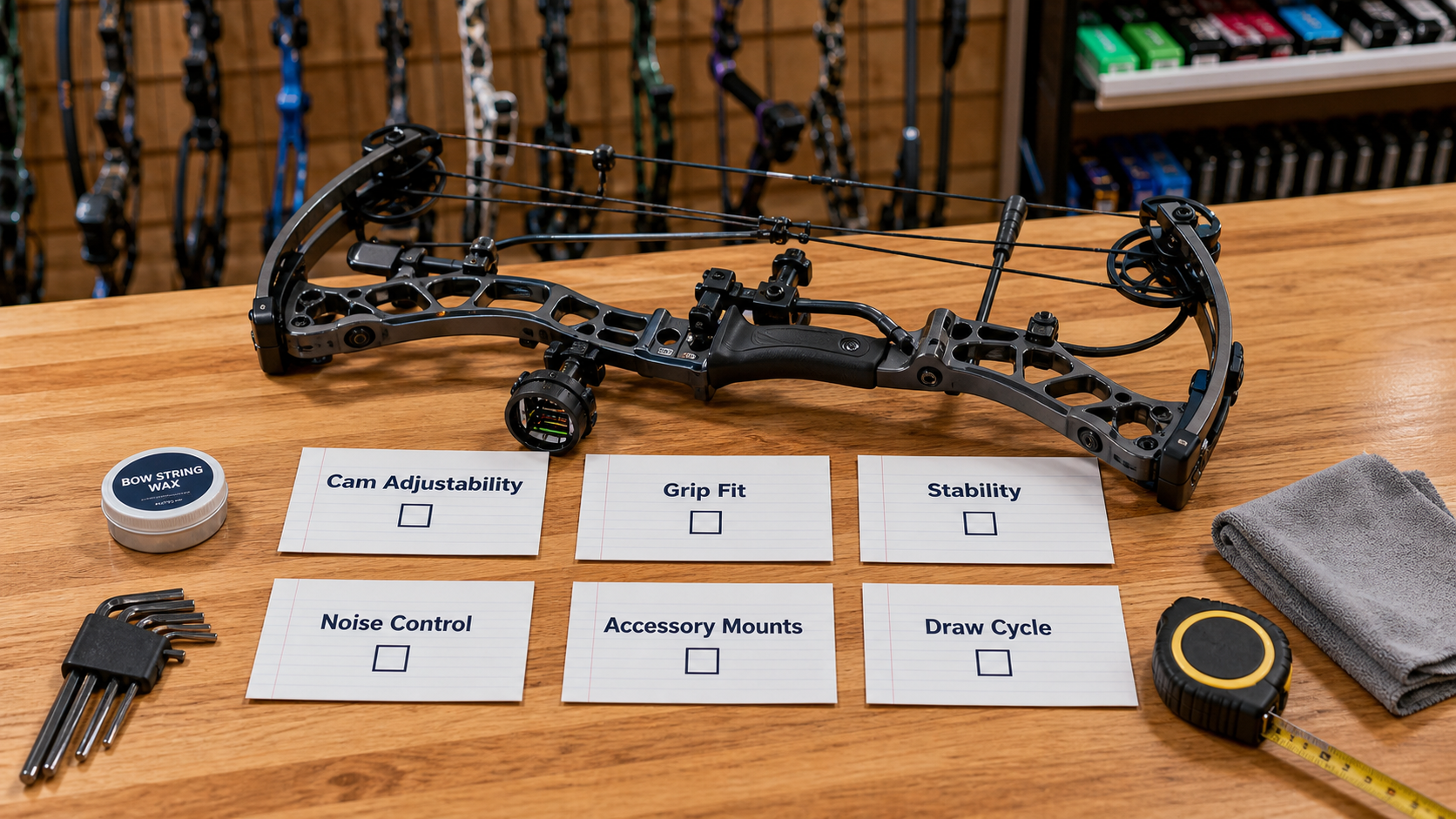
When comparing bow technology, focus on fit, adjustability, stability, noise control, and accessory integration before speed claims.

Bow Technology Checklist

Before you get excited about a new model, check whether the technology solves a real problem for your style of shooting. A hunting bow used from a blind, a compact saddle setup, and a target bow for long practice sessions may all prioritize different features.

  • Fit: Can the bow be set to your correct draw length and draw weight without awkward compromises?
  • Control: Does the grip encourage a repeatable hand position?
  • Stability: Does the riser length, weight balance, and stabilizer setup help you hold steady?
  • Tuning: Can a pro shop tune it cleanly for your arrow, rest, and broadhead setup?
  • Noise and vibration: Does the bow settle after the shot without harsh feedback?
  • Accessory fit: Do the sight, rest, quiver, stabilizer, and sling options mount cleanly?

Cam Adjustability and Draw Modules

Cam systems are one of the biggest areas where modern compound bows have improved. Many bows now offer module-based draw-length adjustment, let-off options, or tuning features that help a shop fit the bow without swapping major parts. That matters because a bow that fits badly will be harder to shoot well, even if it is fast on paper.

What It Means for Buyers

Look for adjustability that helps a real archer, not adjustability for its own sake. A youth archer, new adult archer, or hunter changing layers through the season may benefit from flexible settings. A serious target archer may care more about a very specific draw cycle, wall feel, and repeatable tune.

Where to Be Careful

Do not change cam timing, draw stops, modules, or cable settings casually. Use the bow manual and a qualified shop when the adjustment affects tune or safety. The Archery Trade Association is a useful industry starting point for understanding the archery market, but your specific bow manual is still the authority for your exact model.

Riser and Limb Design

Risers and limbs influence balance, stiffness, weight, and shot feel. Longer risers often feel steadier, while compact hunting bows may trade some stability for easier handling in tight spaces. Carbon and aluminum designs can both work well; the right choice depends on balance, budget, climate, and how the bow feels at full draw.

Stability Over Hype

A stable bow helps the sight picture settle and makes repeatable form easier. That does not mean heavier is always better. It means the bow should balance well with your sight, rest, quiver, stabilizer, and arrow setup. If the bow wants to tip or torque in your hand, the latest material label will not fix the fit problem by itself.

Vibration and Noise Control

Modern bows often use limb pockets, riser geometry, string stops, dampers, and accessories to reduce vibration and post-shot noise. For hunters, a quieter and smoother bow can be helpful. For target shooters, lower vibration can make the bow feel calmer through a long practice session.

Be careful with absolute claims. A bow is not quiet or smooth just because the marketing says it is. String condition, arrow weight, tune, accessories, and shooter form all affect sound and feel. Compare bows in person when possible, and ask a shop to set them close to your real draw length and draw weight before judging.

Grip Fit and Ergonomics

Grip design is easy to overlook, but it can affect left-right misses and long-term consistency. A good grip helps your bow hand settle into the same pressure point without forcing the wrist into a strange angle. Some modern bows use slimmer grips, modular grip panels, or warmer-feeling materials to improve repeatability and comfort.

Try Before You Decide

If possible, shoot or at least draw the bow before buying. A bow that looks perfect in a spec table can feel wrong in your hand. Your local archery shop can also check whether your draw length, peep height, and anchor position match the bow setup.

Accessory Integration

Accessory integration has become a practical upgrade area. Cleaner sight mounts, rest mounting systems, quiver options, stabilizer setups, and cable-management designs can reduce clutter and make the bow easier to carry. The best version of this technology improves function without locking you into accessories that do not fit your hunting or target setup.

Competition and organized archery may also have equipment limits. If you shoot events, check the current World Archery rulebook, your local club rules, or your league rules before adding electronic aids, unusual sight systems, or specialty accessories.

Speed vs. Shootability

Speed sells bows, but shootability keeps arrows in the middle. A very aggressive bow may deliver more speed, but it can also feel less forgiving to draw, hold, or tune. Many archers are better served by a bow they can control cleanly than by chasing the fastest number on a spec sheet.

Hunting vs. Target Priorities

Hunters often balance compact size, quietness, durability, and broadhead tune. Target archers often value stability, repeatability, and a smooth hold. New archers should prioritize fit, coaching, and safe practice over maximum speed. Bowhunter education resources such as Bowhunter Ed can also help frame equipment choices around safety and responsible use.

Who Benefits Most

Technology helps most when it solves a specific problem. A growing archer benefits from adjustability. A tree-stand hunter may benefit from compact handling and quiet setup. A western hunter may care about weight and stability. A target shooter may prioritize hold, grip, and repeatable tune. Start with the use case, then decide which technology is worth paying for.

The safest upgrade path is simple: get the bow fitted, confirm the draw weight is manageable, tune arrows correctly, practice with the exact setup you will use, and make changes one at a time. If a feature makes setup easier and shooting more repeatable, it is useful. If it only makes the spec sheet look exciting, treat it as optional.

FAQ

What bow technology matters most?

Fit and adjustability matter most for most archers. A bow with the right draw length, manageable draw weight, stable grip, and clean tune will usually help more than a bow chosen only for speed.

Are newer bows always better?

No. Newer bows may offer better adjustability or integration, but an older bow that fits well and is safely maintained can still shoot very well. Condition, setup, and tune matter.

Should beginners buy the fastest bow?

Usually not. Beginners should choose a bow they can draw smoothly, hold safely, and practice with consistently. Speed matters less than fit, control, and repeatable form.

Do integrated accessory mounts really matter?

They can, especially if they reduce clutter and improve balance. But they are not automatically better for every archer. Confirm your preferred sight, rest, quiver, and stabilizer options work with the bow before buying.

Final Takeaway

The best bow technology is practical, not just new. Choose features that improve fit, tune, stability, comfort, and safe repeatability. A bow that matches your body and use case will beat a flashier bow that fights your form.

Exit mobile version