


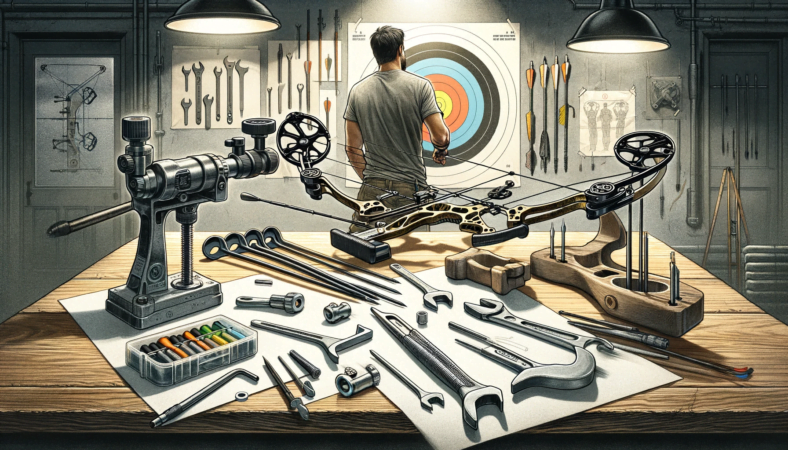
Bow tuning is the process of getting your bow, arrows, rest, string, and shooting form to work together so arrows leave the bow consistently. For beginners, the goal is not to perform every advanced adjustment at home. The goal is to understand the basics, do safe visual checks, match your arrows correctly, and know when the bow belongs in a qualified pro shop.
This guide keeps the process in a safe lane. It explains what tuning means, what a beginner can check, what should be left to a technician, and how to avoid chasing equipment changes when the real issue is fit, form, or arrow match.
Table of Contents
Quick Beginner Tuning Checklist
Use this as a starting point, not as a full setup procedure. Anything beyond these basic checks should go to a qualified bow technician or the manufacturer instructions for your exact bow model.

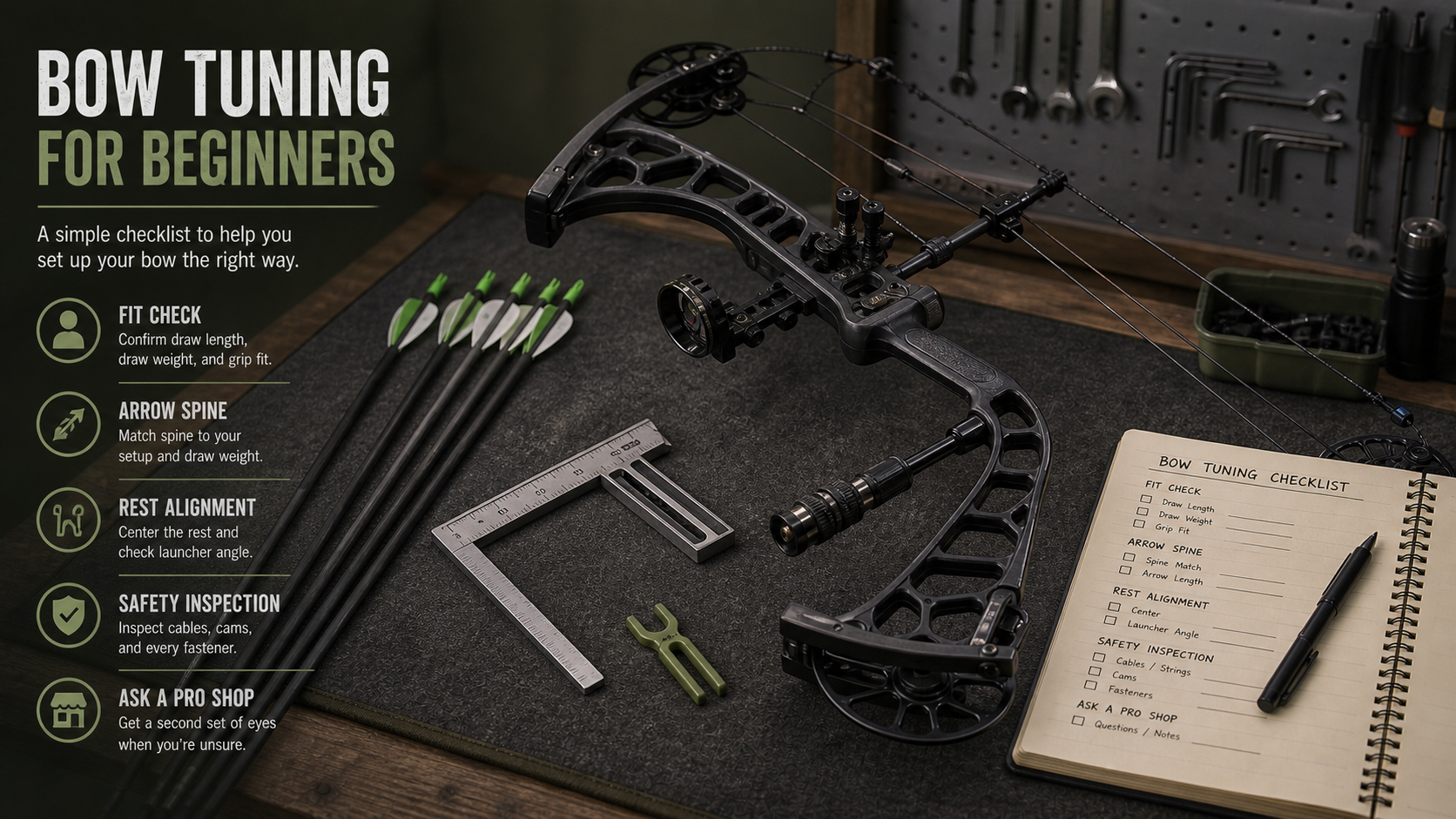
| Check | Beginner-safe action | When to ask a pro |
|---|---|---|
| Fit | Confirm draw weight and draw length feel controlled | If you are guessing or changing modules |
| Arrows | Check arrow spine with a manufacturer selector or shop | If arrow flight stays inconsistent |
| Rest | Confirm the arrow sits the same way each shot | If hardware needs moving or retuning |
| String and cables | Look for fraying, wear, or unusual changes | Any replacement, twisting, timing, or press work |
| Noise or damage | Stop shooting and inspect visually | Any crack, dry fire, hard knock, or abnormal sound |
What Bow Tuning Means
Bow tuning means adjusting and matching the shooting system so the arrow leaves cleanly and repeats. That system includes the bow, arrow spine, point weight, nock fit, rest, string, cables, release, draw length, draw weight, and the archer. Easton’s arrow tuning guide is useful because it frames tuning as a complete setup issue, not one magic adjustment.
For a beginner, tuning is a sequence. Fit and safety come first. Arrow match comes second. Rest and nocking consistency come next. Fine tuning comes last, often with help. If you skip the early steps, advanced tuning methods can send you in circles.
Start With Fit and Safety
A bow that does not fit you cannot be tuned into good shooting. Draw weight should be something you can pull smoothly and hold under control through a full session, not the heaviest number you can force once. Draw length should match your body and anchor point. If you are unsure, a coach or pro shop can measure it properly.
Safety comes before every adjustment. Inspect limbs, riser, string, cables, cams, rest, nocks, and arrows before shooting. If the bow has visible damage, frayed strands, loose hardware, new noise, or anything that feels different, stop shooting. Organizations such as USA Archery and World Archery are useful starting points for safe archery context, but your exact bow manual is still the authority for your equipment.
Check Arrow Spine and Rest Alignment
Arrow spine is one of the first equipment checks to get right. Spine describes how stiff the arrow is, and the correct choice depends on draw weight, draw length, arrow length, point weight, and bow setup. Do not guess from a generic chart without matching it to your own measurements. If you want the deeper explanation, read our arrow spine guide.
Rest Alignment Is a Consistency Check
For a beginner, rest alignment starts with observation. The arrow should sit on the rest the same way every shot, the nock should engage consistently, and nothing should look loose or shifted. Actually moving the rest, setting centershot, or changing nocking-point relationships is best learned with a technician the first time. Our arrow rest guide explains the component without turning it into risky at-home press work.
Understand Paper Tuning Without Overdoing It
Paper tuning is a diagnostic method where an arrow is shot through paper and the tear is read for clues about arrow flight. A clean tear suggests cleaner flight. A left, right, high, or low tear suggests something to investigate. That does not mean every beginner should immediately start moving hardware.
For new archers, inconsistent tears often come from form: grip pressure, anchor changes, release execution, or inconsistent posture. If the same problem appears with good form and matched arrows, a pro shop can help interpret the tear and make safe adjustments.
Write down any changes you test so you can return to the last known good setup.
When to Visit a Bow Shop
Visit a qualified bow shop or authorized retailer any time the work touches stored energy, cams, limbs, strings, cables, or draw-length modules. These parts are under force, and the wrong adjustment can damage the bow or injure someone.
- Anything that needs a bow press
- Cam timing or synchronization
- String or cable twisting, replacement, or adjustment
- Draw-length module changes
- Peep sight or D-loop installation
- Any repair after a dry fire, hard knock, crack, or unusual noise
Common Bow Tuning Mistakes
- Tuning before the bow fits the archer.
- Blaming the bow when inconsistent form is the real issue.
- Using arrow spine, rest, or nock settings copied from someone else.
- Doing press-level work without proper tools and training.
- Ignoring warning signs like new sounds, frayed strands, or visible damage.
- Skipping the manual for the exact model and year.
Related Archery Setup Guides
Bow tuning connects to several other setup basics. Start with archery safety rules, then review how to choose arrow spine, the arrow rest guide, and how to increase draw weight safely.
Frequently Asked Questions
What does bow tuning mean for a beginner?
For a beginner, bow tuning means confirming safe fit, matched arrows, consistent rest and nock behavior, and stable form. Advanced adjustments can wait until the basic setup is safe and consistent.
Can I tune my bow at home?
You can do basic visual checks at home, such as inspecting for damage and confirming the arrow sits consistently. Work involving strings, cables, cams, limbs, modules, or a bow press should go to a qualified technician.
Do I need a spine chart to start?
You need spine information matched to your own bow setup. Use a manufacturer selector, your exact measurements, or a pro shop rather than guessing from a generic chart.
What is paper tuning?
Paper tuning is a diagnostic test that uses the tear in paper to judge arrow flight. It can be helpful, but beginners should be careful about making hardware changes without experienced help.
When should I stop shooting and get help?
Stop shooting if you see cracks, frayed strands, loose hardware, a damaged arrow, a new sound, or anything that feels wrong. Get help after any dry fire, hard impact, or suspected equipment damage.
Final Recommendation
Treat bow tuning as a safe sequence: fit first, safety inspection second, arrow match third, rest consistency fourth, and advanced tuning only when the foundation is stable. When the job touches the bow’s stored energy or press-level components, let a qualified technician handle it. That protects both the archer and the equipment.

