


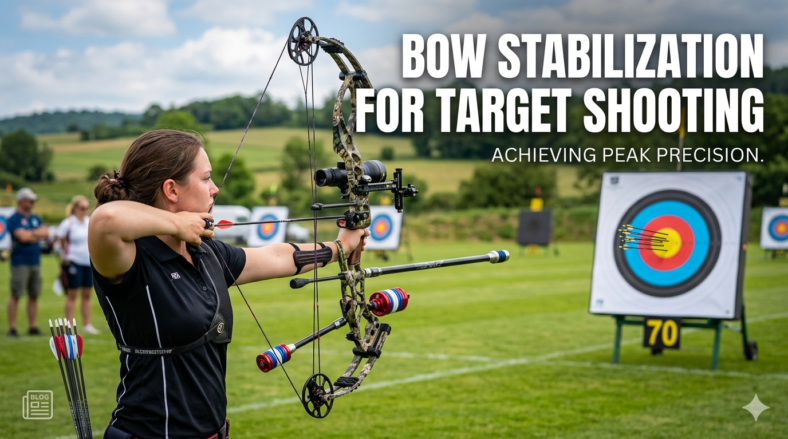
Bow stabilization for target shooting means using front bars, side bars, and weights to change how a bow balances, aims, and settles during the shot. A stabilizer setup can shift the bow’s center of balance, dampen vibration, and change aiming feel, but it is not a universal accuracy shortcut.
The best stabilizer setup depends on the archer, bow, strength, shooting style, and competition rules. Adjust in small steps, test safely, and check the current rulebook for your class before competing.
Table of Contents
What Bow Stabilization Does
Bow stabilization changes how a bow balances, how it absorbs vibration, and how it behaves before and after the shot. By adding mass and extending it away from the riser, stabilizers can alter the bow’s center of balance and the way the sight pin moves while aiming.
Stabilization is a feel-and-balance adjustment, not a guaranteed performance upgrade. It may make a bow feel more settled for one archer and less comfortable for another. Beginner-friendly archery education sources such as Archery 360 are useful for building general context before changing equipment.
Front Bars, Side Bars, and Weight Placement
Front bars, side bars, and weights are the main parts that determine how a stabilizer setup balances a bow. Each piece affects feel differently, so it helps to understand the job of each one.
| Part | What It Usually Does | Beginner Check |
|---|---|---|
| Front bar | Adds weight forward of the riser | Does it feel steadier without tiring your shoulder? |
| Side/back bar | Offsets side-to-side or rear balance | Does the bow sit more level in your hand? |
| Weights | Fine-tune how much mass sits at each point | Can you hold the setup through a full session? |
How front weight changes aiming feel
Adding weight to the front bar extends mass forward of the riser. Many archers feel this as a steadier hold or a different sight movement while aiming. Too much weight can also create fatigue, so change front weight in small increments and judge comfort over a full practice session.
How side bars help balance bow torque
Side bars and back bars add weight off to the side and rear. They can help counter how the bow wants to tip or twist in the hand. Adjust side-bar angle and weight one change at a time so you can tell what each change actually did.
Target Setup vs Hunting Setup
Target and hunting stabilizer setups often differ because the priorities are different. Target setups can be longer and heavier because the archer is usually shooting from known positions. Hunting setups usually need to stay shorter, lighter, and easier to carry.
Neither style is automatically better. A long target setup that feels steady on a range may be awkward in the field, while a compact hunting setup may not feel as settled during target practice. Match the setup to how you actually shoot.
How to Test Balance Safely
Testing a stabilizer setup safely means changing one variable at a time and stopping if the setup causes strain or makes the bow hard to control. The goal is repeatable control, not maximum length or maximum weight.
- Change one variable at a time, such as front weight, side weight, or side-bar angle.
- Shoot a consistent practice set and note hold, comfort, sight movement, and fatigue.
- Reduce weight or length if the bow feels awkward or strains your shoulder, arm, or back.
- Keep notes so you can return to a setup that felt stable.
If you are still learning bow setup basics, review broader setup and tuning steps before changing stabilizer weight. The guides on setting up your bow and bow tuning for beginners are useful companion reads.
Rules and Class Checks
Competition divisions can restrict stabilizer length, weight, attachments, and overall equipment configuration. These rules vary by organization and event, so check the current rulebook for your class before competing.
Useful places to start include the World Archery rulebook, USA Archery, NFAA, and the Archery Shooters Association. Local clubs may also add event-specific instructions.
Frequently Asked Questions
Do stabilizers make you more accurate?
Stabilizers can change how steady a bow feels and how it settles, but they do not automatically create tighter groups. The effect depends on the archer, bow, and setup.
How long should a target stabilizer be?
There is no single correct length. Target setups often run longer than hunting setups, but the right setup depends on your body, bow, shooting style, and competition rules.
What is the difference between a front bar and a side bar?
A front bar extends weight forward from the riser, while a side or back bar adds weight off to the side or rear. Full target setups may use both to tune front-back and left-right balance.
Will a target stabilizer setup work for hunting?
Often not directly. Target setups can be long and heavy, while hunting setups usually need to stay compact and easier to carry. Match the stabilizer to how and where you shoot.
Are there rules about stabilizers in competition?
Yes. Many competition divisions restrict stabilizer length, weight, attachments, or configuration. Always check the current rules for your organization, class, and event.
Final Stabilizer Takeaway
Bow stabilization is a tuning tool for balance, aiming feel, and shot reaction. Start small, change one variable at a time, watch for strain, and verify current competition rules before relying on any setup.

