Compound Bow Mistakes Beginners Make: Safety and Setup Basics

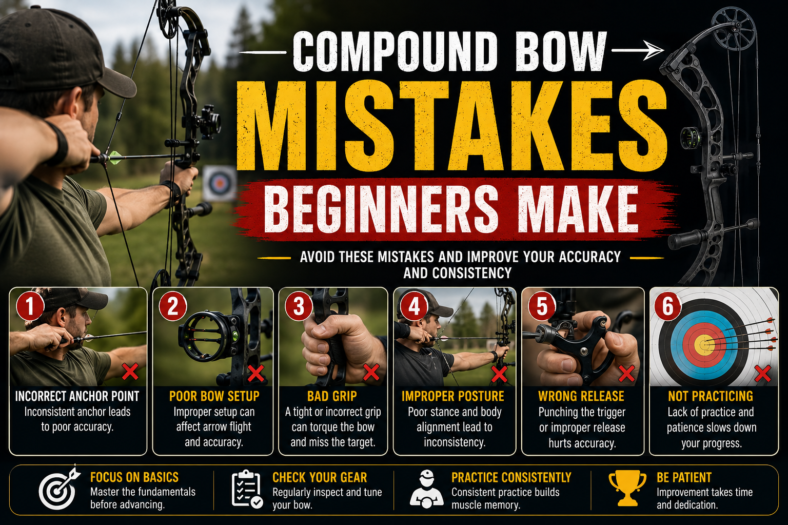
Most beginner compound bow problems come from a few avoidable mistakes: skipping safety checks, using a bow that does not fit, guessing on arrow compatibility, changing too many settings at once, attempting advanced tuning too early, and practicing without a safe target setup. Fix those first and your practice becomes safer, easier to understand, and more consistent.

This guide is for beginner-friendly inspection and setup decisions, not bow-press work or technical tuning. Your owner manual, arrow manufacturer’s chart, and a qualified pro shop should guide anything model-specific or advanced.

Table of Contents
  1. Quick Answer: The Biggest Compound Bow Mistakes Beginners Should Avoid
  2. Skipping Basic Safety Checks
  3. Starting With Poor Bow Fit
  4. Ignoring Arrow Spine and Compatibility
  5. Adjusting Too Many Things at Once
  6. Treating Advanced Tuning as Beginner DIY
  7. Practicing Without a Safe Range Setup
  8. Beginner Compound Bow Mistake Checklist
  9. Related Archery Guides
  10. Frequently Asked Questions

Quick Answer: The Biggest Compound Bow Mistakes Beginners Should Avoid

The biggest beginner compound bow mistakes are shooting without checking the bow and arrows, starting with poor draw length or too much draw weight, buying arrows by guesswork, changing several setup items at the same time, trying advanced tuning at home, and shooting without a controlled target lane and backstop.

The best fix is not complicated: inspect first, keep setup changes simple, use verified charts and manuals, practice where the target and backstop are safe, and send advanced work to a pro shop.

Skipping Basic Safety Checks

The first mistake is assuming the bow is ready because it shot fine last time. A compound bow stores a lot of energy, and small damage can matter. Before each session, look over the bow, arrows, target area, and anything that changed since your last practice.

Bowstring, Cables, Limbs, and Cams

Check the bowstring and cables for fraying, broken strands, and serving separation. Look at the limbs for cracks, splinters, or chips, and check the cams and tracks for anything bent, loose, or out of place. Manufacturer safety pages such as Hoyt’s compound bow safety and warnings show why visible damage should be treated as a stop-use issue.

Arrows, Nocks, Points, and Fletching

Inspect every arrow before shooting. Look for cracked shafts, damaged nocks, loose points, damaged inserts, or torn fletching. A questionable arrow should be set aside, not tested at full draw. USA Archery’s safety resources are a useful reminder that safe shooting habits include both equipment checks and range discipline.

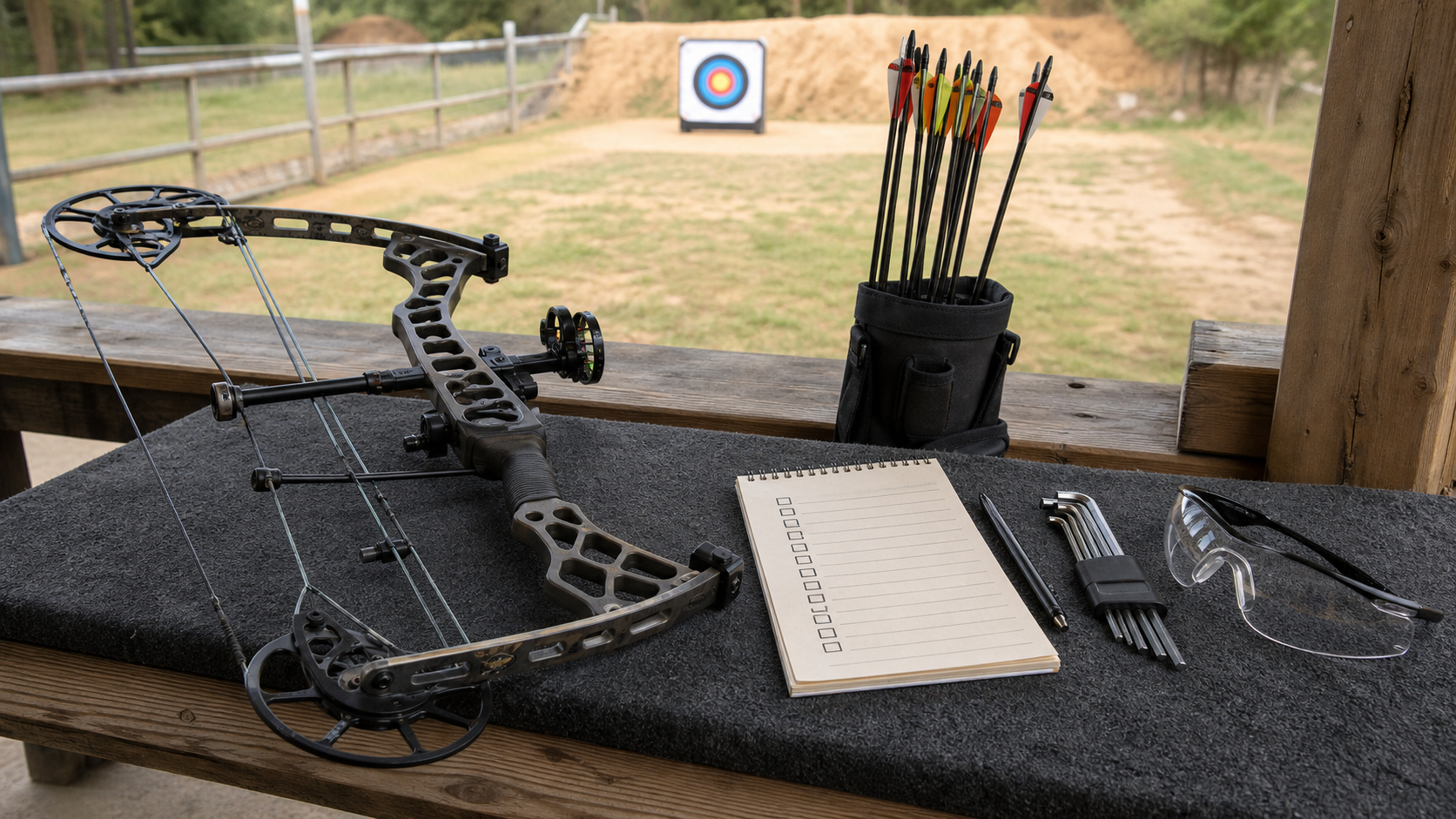
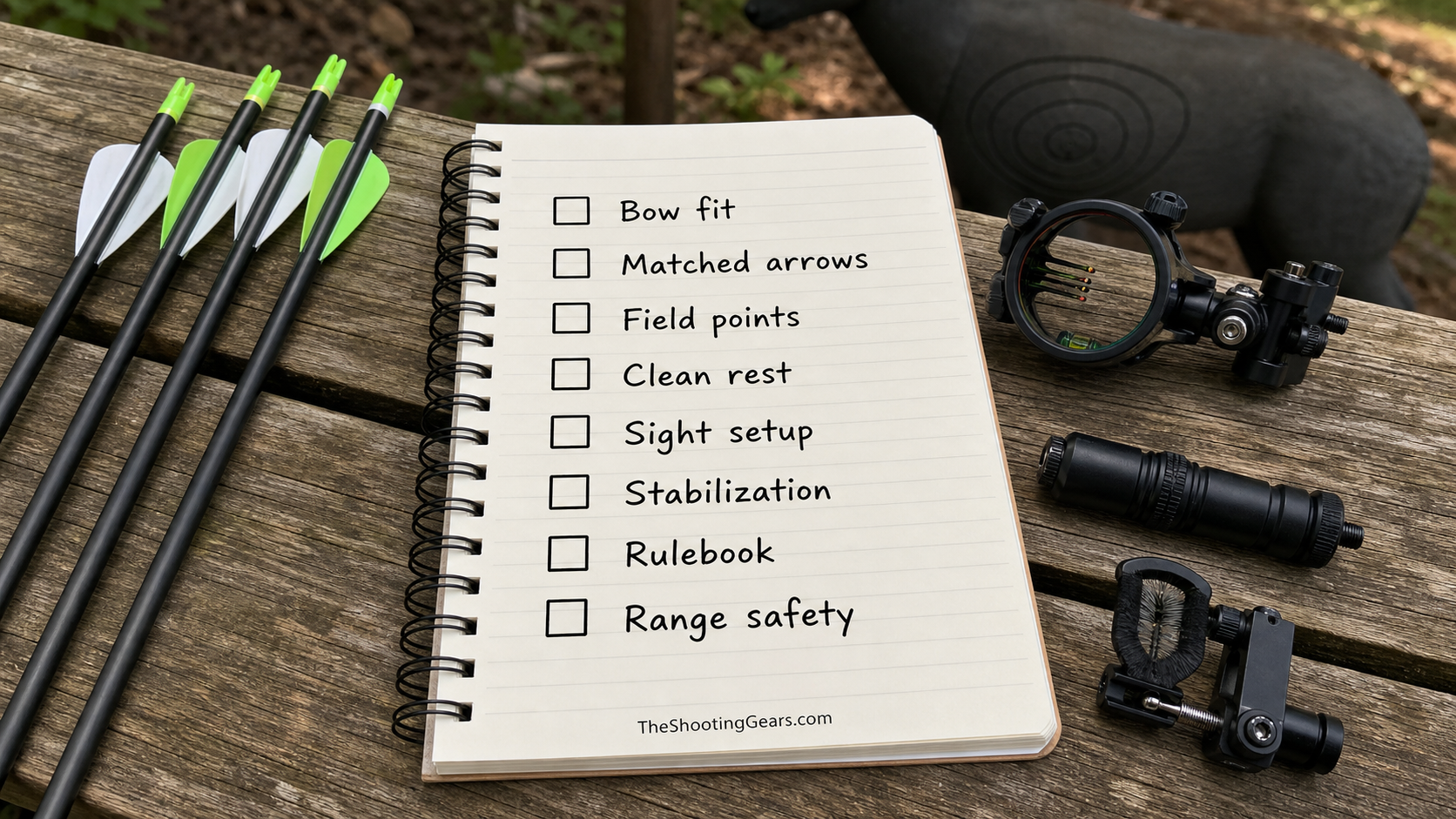
Most compound bow mistakes are easier to prevent when setup, arrows, and range safety are checked before practice starts.

Starting With Poor Bow Fit

A bow that does not fit the archer makes good form harder. Beginners often blame themselves for inconsistency when the real problem is a draw length, draw weight, or anchor position that never gave them a fair start.

Draw Length and Anchor Point

If draw length is too long, the archer may overextend, lean, or float around the anchor point. If it is too short, the archer may feel cramped and inconsistent. Draw length should be set for the archer and the specific bow model, not copied from a friend or guessed from height alone.

Draw Weight and Form Breakdown

Too much draw weight causes beginners to raise the bow, twist the body, punch the release, or rush the shot. A manageable draw weight that allows smooth, repeatable form is better for learning than a number that only looks impressive. Stay within the manual’s adjustment limits and ask a pro shop if you are unsure.

Ignoring Arrow Spine and Compatibility

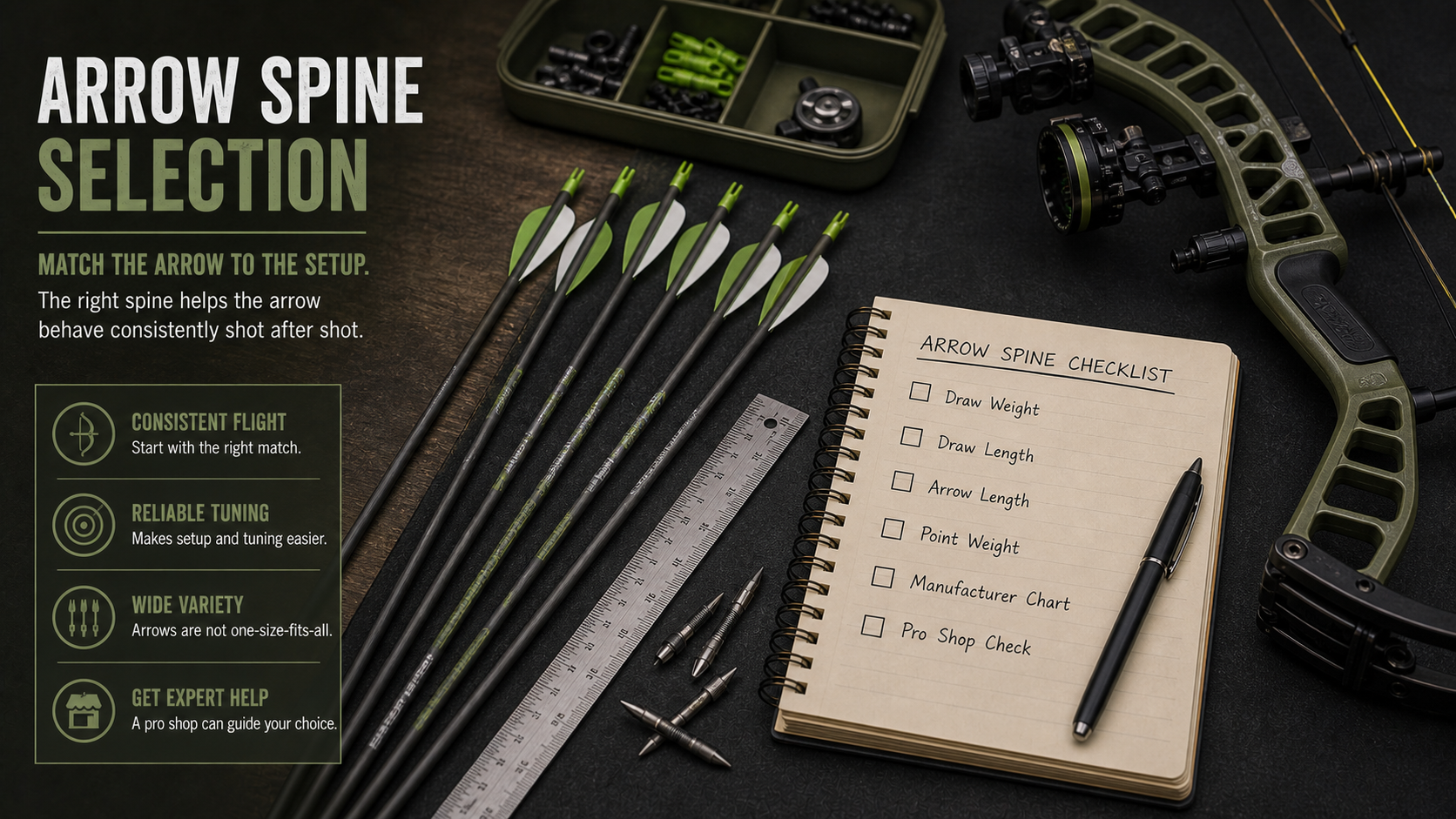
Arrow spine, arrow length, draw weight, draw length, and point weight all work together. Guessing at arrows can create poor flight and safety risk. Use the current selector or chart from the arrow manufacturer for the exact arrow family you are considering. Tools like the Easton arrow selector help organize the needed inputs, but you should still verify with the product’s current chart or a pro shop.

For a deeper explanation, read our guide on how to choose arrow spine for your bow. Keep the important boundary in mind: no single online rule replaces the current chart for your exact setup.

Adjusting Too Many Things at Once

Another common mistake is changing draw weight, sight position, rest position, release technique, and arrows all at the same time. When everything changes at once, you cannot tell what helped and what hurt.

Make one safe, manual-approved change at a time, then shoot enough arrows to observe the result. Keep notes. This slower method is more useful than chasing a new adjustment every time a group opens up.

Treating Advanced Tuning as Beginner DIY

Basic inspection and manual-approved adjustments are one thing. Bow-press work, cam timing, string or cable replacement, peep work, D-loop installation, module changes, and limb-related service are different. Those jobs belong with a qualified technician. Manufacturer support pages such as Mathews support point owners toward proper service channels rather than guesswork.

If you are learning, use our beginner bow tuning guide for boundaries, but do not turn a beginner tune-up into advanced repair. The safest confidence comes from knowing where your role stops.

Practicing Without a Safe Range Setup

A safe target area is part of the setup, not an afterthought. Shoot only where you have a proper target, reliable backstop, clear lane, and no people, animals, roads, windows, or unsafe property behind the target. Follow range rules and local restrictions.

For more fundamentals, see our archery safety rules. If your practice session includes sights, our guide on how many pins a bow sight should have can help keep aiming setup realistic instead of overly complicated.

Beginner Compound Bow Mistake Checklist

MistakeWhy It MattersBetter Habit
Skipping inspectionDamage can make a bow or arrow unsafeCheck strings, cables, limbs, cams, arrows, and nocks first
Wrong draw lengthAnchor and form become inconsistentSet fit by manual and pro-shop guidance
Too much draw weightForm breaks down and shots get rushedUse a weight you can control smoothly
Guessing arrow spineArrow flight and safety can sufferUse the current manufacturer chart or selector
Changing everything at onceYou cannot diagnose the resultChange one variable and track the outcome
DIY advanced tuningStored energy and setup errors can be dangerousUse a qualified pro shop for advanced work

Frequently Asked Questions

What is the most common beginner compound bow mistake?

Skipping the pre-shoot safety check is one of the most common mistakes. Beginners should inspect the bowstring, cables, limbs, cams, arrows, nocks, points, and target lane before shooting.

How do I know if my draw weight is too high?

If you cannot draw smoothly, hold steady, and aim without straining or lifting the bow awkwardly, the weight is likely too high for learning. Stay within the bow manual’s range and choose control over ego.

Can I tune my compound bow myself as a beginner?

You can handle basic inspection and manual-approved adjustments. Advanced tuning, press work, string and cable service, cam timing, and peep or D-loop work should go to a qualified pro shop.

How do I pick the right arrows for a compound bow?

Use the arrow manufacturer’s current selector or chart for the exact arrow model, then match draw weight, draw length, arrow length, and point weight. A pro shop can help confirm the fit.

How To Choose Arrow Spine: Use Manufacturer Charts for Your Bow Setup

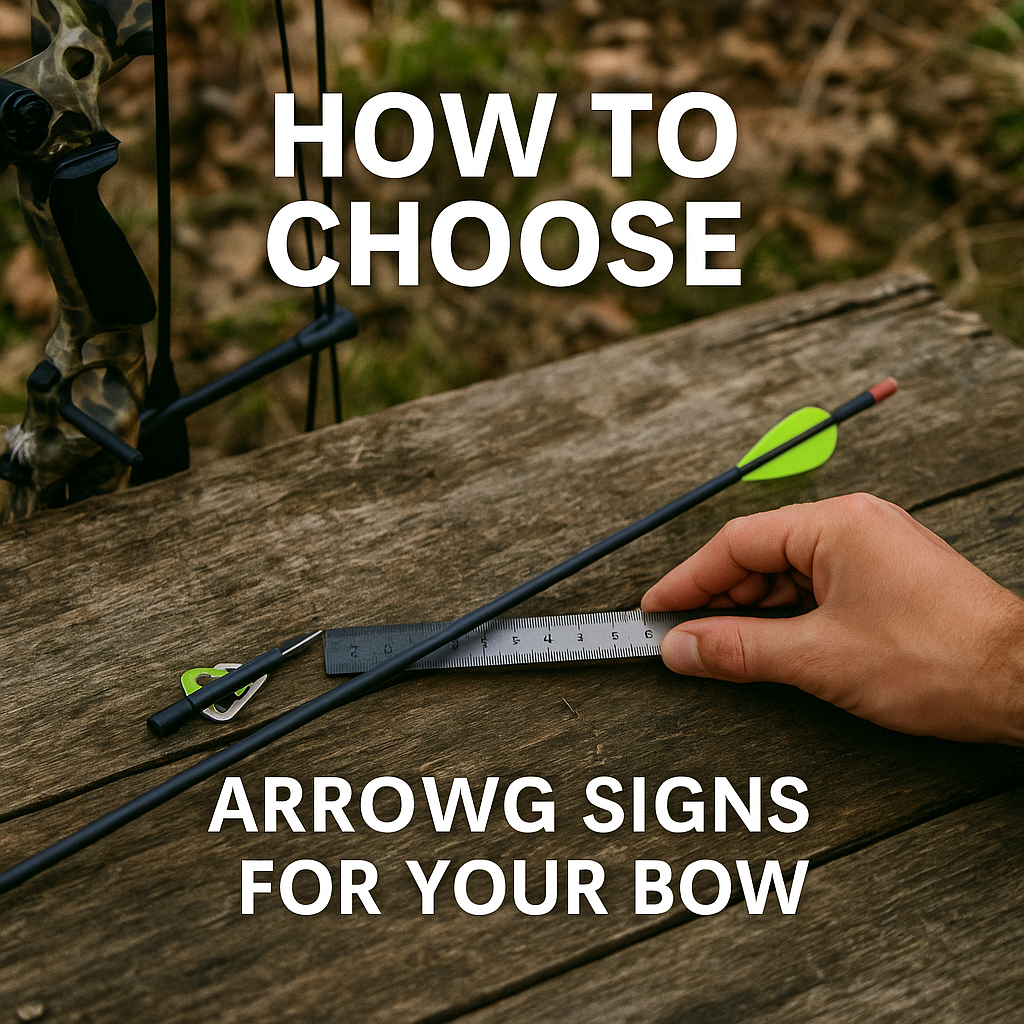
The reliable way to choose arrow spine is to use the current selector or chart from the arrow manufacturer whose arrows you are buying, matched to your specific bow setup. Spine describes how much an arrow shaft flexes, and the right value depends on draw weight, draw length, arrow length, point weight, bow type, bow setup, and release style.

This is not a universal spine chart. Any specific spine number should come from a named manufacturer chart for the exact arrow family, with your real inputs entered. If you are unsure, a qualified archery shop can measure your setup and confirm the fit.

Table of Contents
  1. Quick Answer: Use the Manufacturer Chart
  2. What Arrow Spine Means
  3. Inputs That Affect Arrow Spine
  4. Why Manufacturer Charts Matter
  5. Beginner Arrow Spine Workflow
  6. Common Arrow Spine Mistakes
  7. Related Bow Setup Guides
  8. Frequently Asked Questions

Quick Answer: Use the Manufacturer Chart

To choose arrow spine, gather your bow’s draw weight, draw length, planned arrow length, and point weight. Then enter those details into the current selector or chart for the exact arrow brand and product family you plan to buy. Use that manufacturer’s recommendation instead of mixing values between brands.

Arrow spine depends on your complete bow setup, so start with the right manufacturer chart and the right inputs.

What Arrow Spine Means

Arrow spine describes shaft stiffness. When a bow is shot, the arrow flexes as it leaves the string and then recovers in flight. The goal is not to find a random stiffness number; it is to match the shaft to the bow and arrow setup so the arrow behaves predictably.

Static Spine

Static spine is the measured stiffness rating for the shaft. It is the number printed on many arrows and used in manufacturer charts. Static spine is useful because it gives you a starting rating, but it is not the whole story.

Dynamic Spine

Dynamic spine is how the arrow behaves when actually shot. It changes with arrow length, point weight, draw weight, bow setup, and release style. Two arrows with the same printed spine can behave differently if one is longer, uses a heavier point, or is shot from a different bow.

Inputs That Affect Arrow Spine

Manufacturer charts ask for several inputs because spine selection is setup-dependent. Changing one input can shift the recommended spine, which is why simple shortcuts often fail.

InputWhy it matters
Draw weightMore weight generally needs a stiffer match, but not by itself
Draw lengthAffects the arrow length and energy in the setup
Arrow lengthLonger arrows generally behave weaker dynamically
Point weightHeavier points generally make the arrow behave weaker
Bow type and releaseCompound, recurve, finger release, and mechanical release paths may differ
Arrow modelCharts are brand and product-family specific

Draw Weight and Draw Length

Draw weight is the starting point, but draw length helps determine the arrow length you can safely and practically shoot. A change in draw weight can mean your old arrow setup should be checked again.

Arrow Length and Point Weight

Arrow length and point weight are common reasons two similar bows end up with different recommendations. A longer arrow or heavier point can make the arrow act dynamically weaker, so those details must be entered into the selector instead of guessed.

Why Manufacturer Charts Matter

Manufacturer charts matter because each brand uses its own product lines, spine systems, and selection workflow. A value from one brand’s chart does not automatically transfer to another brand’s arrows. Use the chart for the exact arrows you plan to buy.

For example, Easton provides an arrow selector, and Gold Tip provides a spine selector. Use the Easton workflow for Easton arrows and the Gold Tip workflow for Gold Tip arrows. Do not blend the results into a single homemade chart.

For broader archery participation and safety context, USA Archery is a useful reference. For the actual spine number, though, the arrow maker’s chart and your measured setup are the sources that matter.

Beginner Arrow Spine Workflow

  1. Choose the arrow brand and product family first.
  2. Measure or confirm your draw weight and draw length.
  3. Decide the planned arrow length and point weight.
  4. Open the current manufacturer selector or chart for that arrow family.
  5. Enter the inputs exactly as the selector asks for them.
  6. Use that chart’s recommended spine, then have a shop confirm if anything is unclear.

If your draw weight changes later, repeat the workflow. If you cut arrows shorter, change point weight, or move from field points to a different hunting or target setup, recheck the chart instead of assuming the old recommendation still fits.

Keep your measurements written down with the arrows you buy. A simple note with draw weight, draw length, arrow cut length, point weight, insert weight if known, and the chart used can save confusion later. If your groups suddenly open up after a setup change, those notes help you and a shop see whether the arrow match should be checked again before chasing rest or sight adjustments.

Also separate target and hunting setups when the components differ. A practice arrow with one point weight and a hunting arrow with a different front-end setup may not behave the same. That does not mean one is wrong; it means each setup should be checked through the correct manufacturer workflow.

Common Arrow Spine Mistakes

  • Using a generic “this draw weight equals this spine” shortcut.
  • Mixing chart values between manufacturers.
  • Ignoring arrow length or point weight.
  • Copying another archer’s setup without matching your measurements.
  • Trying to tune around a mismatched arrow instead of fixing the match first.

Arrow spine connects directly to bow setup and tuning. Read bow tuning for beginners, review common compound bow mistakes, check archery safety rules, and keep your gear maintained with our bow maintenance tips.

Frequently Asked Questions

How do I choose the right arrow spine for my bow?

Use the current selector or chart from the manufacturer of the arrows you are buying. Enter your draw weight, draw length, planned arrow length, and point weight, then use the recommendation for that exact arrow family.

Does draw weight alone determine arrow spine?

No. Draw weight is important, but arrow length, point weight, bow setup, bow type, and release style can also affect the recommendation.

Can I use one spine chart for any arrow brand?

No. Use the chart for the exact brand and product family you plan to buy. Manufacturer systems are not interchangeable.

What is the difference between static and dynamic spine?

Static spine is the measured shaft stiffness rating. Dynamic spine is how the arrow behaves when shot from your actual setup, which can change with length, point weight, draw weight, and release style.

Should I ask a pro shop before buying arrows?

Yes, if you are unsure about any input. A shop can measure draw weight, draw length, arrow length, point weight, and bow setup so the chart recommendation starts from accurate information.

Final Recommendation

Choose arrow spine by working through the current manufacturer chart for the exact arrows you plan to buy. Use your real setup inputs, keep each brand’s values separate, and ask a qualified shop when measurements are unclear. That workflow gives you a setup-based recommendation instead of a guess.

Bow Stabilizers Explained: How They Work and How to Choose

A bow stabilizer is a weighted rod, or a set of rods, that attaches to a bow to influence balance, steady the aiming feel, and help manage vibration after the shot. A stabilizer does not guarantee accuracy by itself. It can make a bow easier to hold steady, but good shooting still depends on fit, form, tuning, and practice.

This guide explains what bow stabilizers do, the common types, how hunting and target setups differ, and how to think about balance without chasing unnecessary weight. It is an educational setup guide, not a product ranking or brand recommendation.

Table of Contents
  1. What a Bow Stabilizer Actually Does
  2. Common Types of Bow Stabilizers
  3. How to Fit a Stabilizer to Your Bow
  4. Hunting vs Target Setup Tradeoffs
  5. Setting Balance and Weight
  6. Common Mistakes to Avoid
  7. Related Archery Setup Guides
  8. Frequently Asked Questions

What a Bow Stabilizer Actually Does

A stabilizer adds weight away from the bow’s center. That changes how the bow balances and how it reacts while you aim and after you release. The common goals are steadier holding, better front-to-back balance, less hand shock, and a calmer feel during the shot cycle.

Archery stabilizers are common enough to have their own equipment category in references such as archery stabilizer descriptions, but the important point is practical: a stabilizer is a tuning aid. It helps the bow feel better matched to the archer. It does not replace a repeatable anchor, clean release, correct arrow setup, or practice.

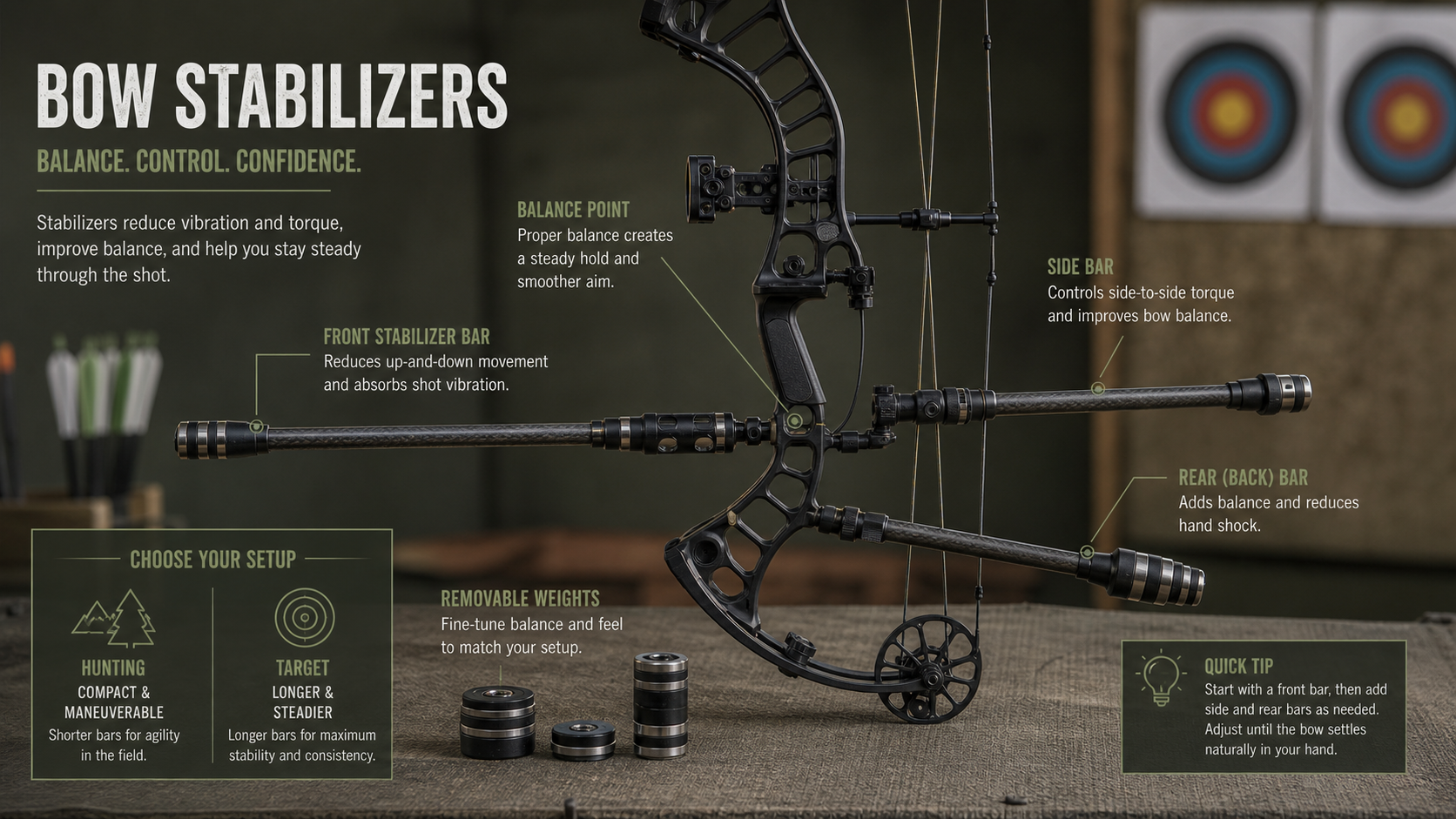
A stabilizer setup can include a front bar, side bar, rear bar, removable weights, and a balance point that matches the archer.

Common Types of Bow Stabilizers

Stabilizers are usually described by where they mount and what role they play. The exact names vary by brand and bow type, but the main categories are consistent enough to understand before you shop or adjust your own bow.

Front Stabilizer Bar

The front bar mounts to the front of the riser and is the stabilizer most archers notice first. A longer front bar increases leverage and can make the bow feel steadier on aim. A shorter front bar is easier to carry and move through cover, which is why compact versions are common on hunting bows.

Side Bar and Rear Bar

Side and rear bars help fine-tune left-right and front-back balance. Target archers often use them to settle the bow more precisely. Hunters may skip them or use a smaller setup if weight, noise, and maneuverability matter more than fine balance control.

Weights and Dampeners

Removable weights let you adjust how the bow holds. Dampening components can change the feel of vibration after the shot. Add weight gradually, shoot groups, and pay attention to fatigue. A setup that feels excellent for three arrows may not feel as good after a full practice session or a long day in the field.

How to Fit a Stabilizer to Your Bow

Most modern compound bows have an accessory bushing for a front stabilizer, but fit still matters. Check your bow manual and stabilizer specifications for thread compatibility, weight guidance, and any installation limits. If you use side or rear bars, confirm that the mount works with your riser, sight, quiver, and rest setup.

Fit is not only about hardware. It also includes how much weight you can hold comfortably, how you carry the bow, whether you shoot from a stand or blind, and whether you compete under rules that limit stabilizer length or configuration. Competition rules can change, so use current rulebooks such as the World Archery rulebook when equipment class matters.

Hunting vs Target Setup Tradeoffs

Hunting and target setups often look different because they solve different problems. A target archer may accept a longer, heavier setup because the bow is used on a range or course. A hunter may choose a shorter stabilizer because the bow needs to move through trees, blinds, treestands, packs, and uneven terrain.

Setup factorHunting tendencyTarget tendency
LengthShorter and easier to maneuverLonger for steadier aim
WeightLighter for carrying and quick handlingHeavier for balance and hold feel
PriorityQuiet, compact, practical in coverMaximum steadiness and repeatability
Side barsOften minimal or skippedCommon for fine balance
EnvironmentStands, blinds, woods, 3D practiceKnown line, target range, tournament setup

These are tendencies, not rules. A hunter who shoots 3D archery may like a longer setup for practice. A target archer may prefer less weight for comfort. The best stabilizer is the one that helps your bow settle without making the whole setup harder to shoot well.

Setting Balance and Weight

The goal is a bow that holds naturally and returns calmly after the shot. Start with a simple front stabilizer, shoot enough arrows to feel the difference, then add or remove weight in small steps. If the bow wants to dip, roll, or fight your hand, balance may need adjustment.

Do Not Chase the Heaviest Setup

More weight can feel steady at first, but too much weight creates fatigue. Fatigue usually hurts form, and poor form can erase the benefit of any stabilizer. If you hunt, also think about carry weight, noise, and how the bow handles when you are wearing layers or moving in tight cover.

Change One Thing at a Time

Adjust stabilizer weight, bar length, or side-bar position one change at a time. Shoot enough arrows to know what changed. If you change the stabilizer, sight, arrow setup, and release routine all at once, you will not know which change helped or hurt.

Common Mistakes to Avoid

  • Expecting a stabilizer to fix weak form or poor tuning.
  • Adding too much weight and creating fatigue.
  • Buying a long target-style bar for tight hunting setups without considering maneuverability.
  • Ignoring thread compatibility, mount clearance, or class rules.
  • Changing too many setup variables at once.

Stabilizers are only one part of a complete setup. For broader practice structure, read the 3D archery setup guide. For other tuning components, see the arrow rest guide and the arrow spine guide. If you are building strength carefully, the guide on increasing draw weight safely is a useful next step.

Frequently Asked Questions

Do bow stabilizers really improve accuracy?

They can support more consistent shooting by improving balance and making the bow easier to hold steady. They do not guarantee accuracy. Form, tuning, fit, and practice are still the foundation.

What length stabilizer should I use?

There is no single correct length. Hunters often prefer shorter stabilizers for easier carrying and movement. Target archers often use longer bars for steadier aiming. Choose based on use, comfort, and any class rules.

Do I need a side bar or back bar?

Not always. A side or rear bar helps fine-tune balance, especially in target setups. Many hunting bows work well with a single compact front stabilizer.

Can I use the same stabilizer for hunting and target archery?

You can, but the ideal setup may differ. A moderate front stabilizer can work for both, while specialized target setups may feel too long or heavy for hunting.

Are stabilizers allowed in competition?

It depends on the organization, class, and current rulebook. Check the rules for the specific event before competing, especially if you use long bars, side bars, or unusual weight setups.

3D Archery Bows: A Practical Setup and Getting-Started Guide

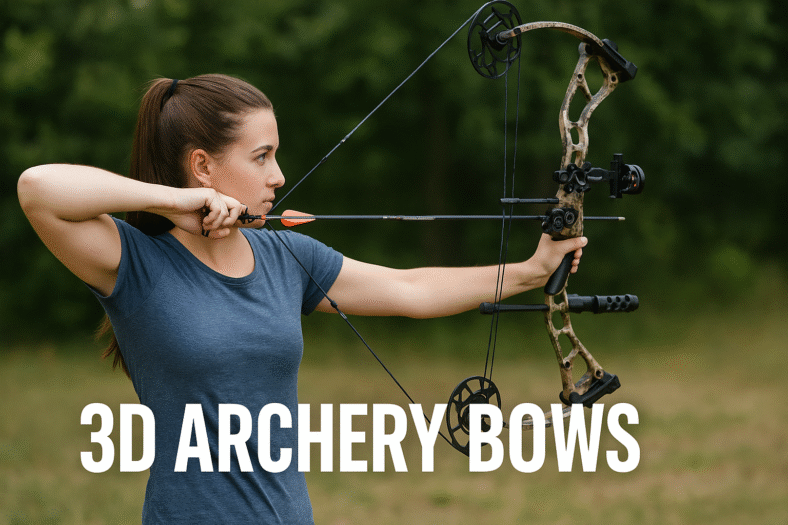
3D archery is a target sport where archers shoot at life-size foam animal targets placed at varied distances along an outdoor course. A good 3D archery bow is not a magic model or a stale yearly pick list. It is a bow that fits you, launches matched arrows consistently, and stays inside the rules for the format or class you plan to shoot.

This guide explains how 3D archery works, what setup choices matter, and how to prepare for a course safely. It does not promise a score, rank products, or tell you that one bow type is best for everyone.

What Is 3D Archery?

3D archery uses three-dimensional foam targets, often shaped like game animals, on a walking course. Unlike a flat target lane, a 3D course may include uphill or downhill angles, changing light, natural terrain, and distances that are sometimes unmarked.

It is still target archery, not hunting. Many bowhunters use 3D as off-season practice, but the event itself is about safe target shooting, range judgment, and consistent form. For broad sport context and participation pathways, USA Archery is a useful starting point, while World Archery’s 3D archery discipline page explains the international discipline at a high level.

3D Archery Bow Setup Factors

A good 3D setup starts with fit and repeatability. Chasing speed, weight, or a model name before fit usually leads to frustration. The goal is a bow you can draw, hold, aim, and shoot repeatedly over a full course without fighting the equipment.

Draw length and draw weight

Correct draw length helps your anchor point, sight picture, and release stay repeatable. Draw weight should be controllable across many shots, not just impressive for one shot. Overbowing yourself can hurt form and consistency.

Balance and holding feel

3D archery often rewards a bow that holds steady on uneven terrain and varied target angles. Bow weight, stabilizer setup, grip feel, and overall balance all influence that hold. For a deeper support article on this piece, see our guide to bow stabilization for target shooting.

Course practicality

A course bow must also be practical to carry. A long, heavy target setup may aim beautifully, but it can be tiring on a walking course. A compact hunting bow may be easier to carry but less stable for some shooters. Fit the setup to the way you will actually shoot.

Bow Types Used In 3D Archery

Different bow types can be used in 3D archery, depending on the event, class, and local rules. Do not assume every club or organization allows the same equipment.

Compound bows

Compound bows are common in 3D because let-off, sights, releases, and stabilizers can support steady aiming. They also require correct setup and periodic service. If your compound needs press-dependent work, use a qualified pro shop.

Recurve bows

Recurve bows bring a simpler equipment path and a more form-focused challenge. They can be a rewarding choice for archers who prefer fewer mechanical parts, but they do not give compound-style let-off at full draw.

Traditional bows

Traditional bows can be used in some 3D contexts, depending on class rules. They reward consistent form, distance judgment, and a realistic understanding of your effective range.

Arrows And Tuning For 3D

Consistent arrow flight matters more than any single accessory. Arrow spine, length, point weight, and fletching should match your bow and draw setup. Use manufacturer spine charts and a pro shop when you are unsure.

3D archery uses field points, not broadheads. Broadheads can damage foam targets and are not part of normal 3D practice or competition. Keep field point weight consistent with the arrow setup you tune. For rest-related setup context, see our arrow rest guide.

Sights, Rests, And Stabilization

Sights, rests, stabilizers, and release aids can help consistency, but they do not guarantee a better score. They must also be legal for your chosen class.

Sights

Some classes allow adjustable sights, some limit sight styles, and some traditional classes may restrict sights heavily. Read the rulebook before buying around a class.

Rests

The rest should support clean, repeatable arrow launch. If arrows are showing contact problems or inconsistent flight, rest setup is one of the areas to inspect.

Stabilizers

Stabilizers can change how the bow balances at full draw and through the shot. A longer target-style stabilizer may hold steadier for one archer, while a shorter setup may be more practical on a walking course for another.

Course And Range Safety Basics

Safety comes before score. Only nock and draw when it is safe, follow the shooting stake and range directions, never shoot when someone is forward of the line, and keep arrows pointed safely downrange. Outdoor courses add terrain and visibility concerns, so follow the host club’s instructions.

For general range-safety thinking, our shooting range safety guide covers habits that transfer well to structured shooting environments. USA Archery’s archery safety page is also worth reviewing, especially for beginners and youth programs.

Formats, Classes, And Rules

3D archery rules vary by organization and event. Equipment class can affect sights, stabilizer length, release aids, rangefinders, arrow type, and scoring. Do not buy gear based on assumptions from a different event.

Before competing, read the current official rulebook for the organization or club hosting the event. If you shoot casually, still ask the range or club about allowed points, walking direction, scoring, and safety procedure before starting.

Getting Started Checklist

Use this checklist as a planning aid before your first course. It is not a replacement for your event’s rulebook or in-person instruction.

  • Confirm draw length and a comfortable draw weight.
  • Match arrows to your bow using spine and point-weight guidance.
  • Use field points only for 3D targets.
  • Check rest contact, sight setup, and broad equipment class rules.
  • Practice at varied known and unknown distances.
  • Read the current event or club rulebook.
  • Follow all course and range safety instructions.

For practice habits that support better consistency, see our guide on improving archery shooting form.

Frequently Asked Questions

What kind of bow is best for 3D archery?

The best bow for 3D archery is one that fits you, shoots matched arrows consistently, and is legal for your chosen class. Many archers use compound bows, but recurves and traditional bows can also fit depending on the format.

Can I use my hunting bow for 3D archery?

Yes, many archers use a hunting compound for 3D practice. Use field points, confirm the setup fits the class or club rules, and tune the bow for consistent arrow flight.

Do I shoot broadheads in 3D archery?

No. Use field points for 3D archery. Broadheads can damage foam targets and are not part of normal 3D target practice or competition.

Are distances marked in 3D archery?

It depends on the event and class. Some 3D formats use unknown distances, while others may allow rangefinders or known-distance formats. Check the event rules before you shoot.

Will a better setup guarantee better scores?

No. A better-fitting, well-tuned setup can support consistency, but scores come from form, practice, range judgment, and following the rules. No bow or accessory guarantees a result.

Final Setup Recommendation

Start with fit, matched arrows, field points, and safe course habits. Then refine the rest, sight, stabilizer, and release setup inside your chosen class rules. A 3D archery bow should help you shoot comfortably and consistently across a course; it should not be chosen from a stale model list or a single spec.

Bow Tuning for Beginners: A Safe, Simple Guide

Bow tuning is the process of getting your bow, arrows, rest, string, and shooting form to work together so arrows leave the bow consistently. For beginners, the goal is not to perform every advanced adjustment at home. The goal is to understand the basics, do safe visual checks, match your arrows correctly, and know when the bow belongs in a qualified pro shop.

This guide keeps the process in a safe lane. It explains what tuning means, what a beginner can check, what should be left to a technician, and how to avoid chasing equipment changes when the real issue is fit, form, or arrow match.

Table of Contents
  1. Quick Beginner Tuning Checklist
  2. What Bow Tuning Means
  3. Start With Fit and Safety
  4. Check Arrow Spine and Rest Alignment
  5. Understand Paper Tuning Without Overdoing It
  6. When to Visit a Bow Shop
  7. Common Bow Tuning Mistakes
  8. Related Archery Setup Guides
  9. Frequently Asked Questions

Quick Beginner Tuning Checklist

Use this as a starting point, not as a full setup procedure. Anything beyond these basic checks should go to a qualified bow technician or the manufacturer instructions for your exact bow model.

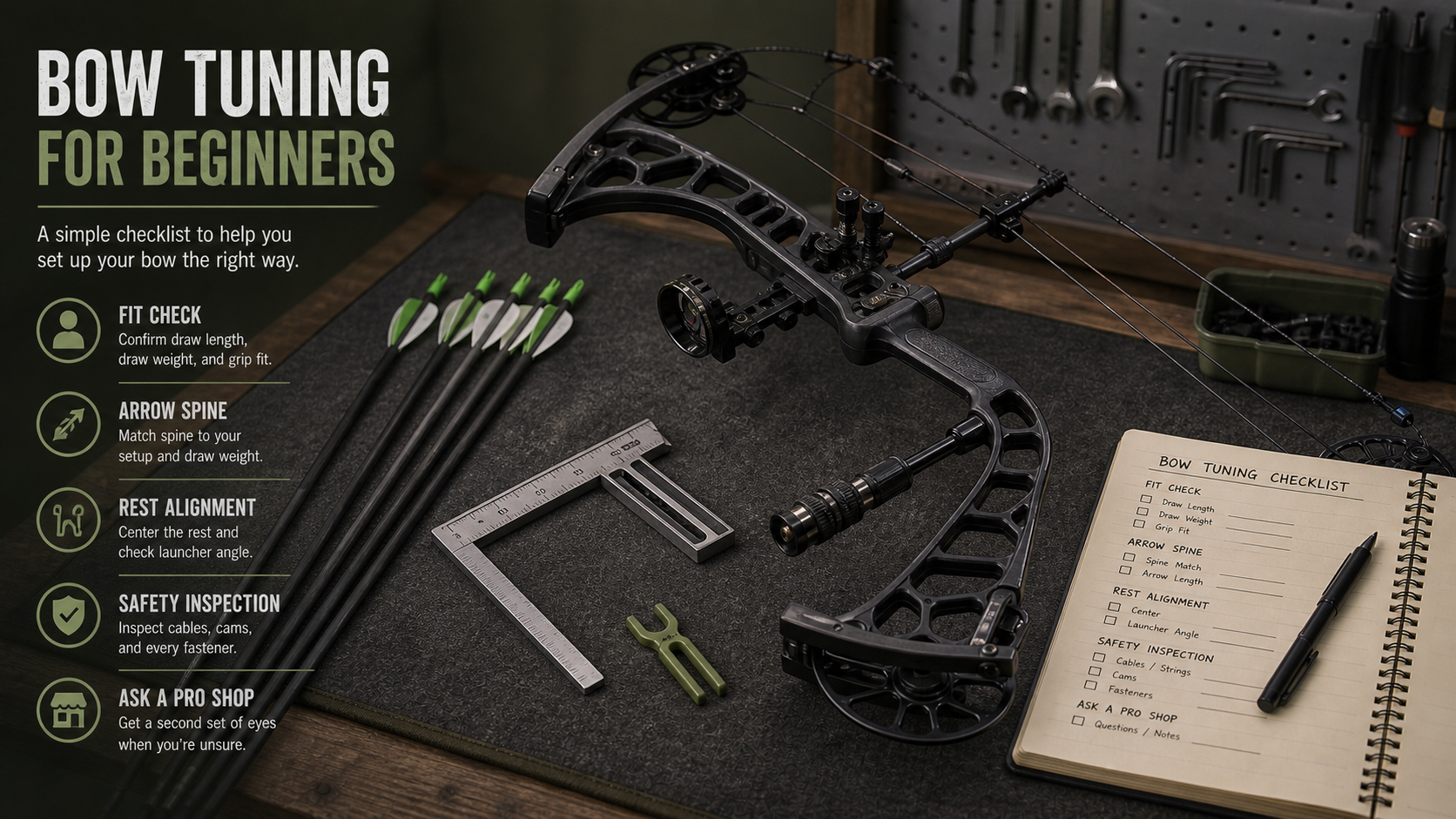
Start with fit, arrow spine, rest alignment, safety inspection, and a pro-shop check when you are unsure.
CheckBeginner-safe actionWhen to ask a pro
FitConfirm draw weight and draw length feel controlledIf you are guessing or changing modules
ArrowsCheck arrow spine with a manufacturer selector or shopIf arrow flight stays inconsistent
RestConfirm the arrow sits the same way each shotIf hardware needs moving or retuning
String and cablesLook for fraying, wear, or unusual changesAny replacement, twisting, timing, or press work
Noise or damageStop shooting and inspect visuallyAny crack, dry fire, hard knock, or abnormal sound

What Bow Tuning Means

Bow tuning means adjusting and matching the shooting system so the arrow leaves cleanly and repeats. That system includes the bow, arrow spine, point weight, nock fit, rest, string, cables, release, draw length, draw weight, and the archer. Easton’s arrow tuning guide is useful because it frames tuning as a complete setup issue, not one magic adjustment.

For a beginner, tuning is a sequence. Fit and safety come first. Arrow match comes second. Rest and nocking consistency come next. Fine tuning comes last, often with help. If you skip the early steps, advanced tuning methods can send you in circles.

Start With Fit and Safety

A bow that does not fit you cannot be tuned into good shooting. Draw weight should be something you can pull smoothly and hold under control through a full session, not the heaviest number you can force once. Draw length should match your body and anchor point. If you are unsure, a coach or pro shop can measure it properly.

Safety comes before every adjustment. Inspect limbs, riser, string, cables, cams, rest, nocks, and arrows before shooting. If the bow has visible damage, frayed strands, loose hardware, new noise, or anything that feels different, stop shooting. Organizations such as USA Archery and World Archery are useful starting points for safe archery context, but your exact bow manual is still the authority for your equipment.

Check Arrow Spine and Rest Alignment

Arrow spine is one of the first equipment checks to get right. Spine describes how stiff the arrow is, and the correct choice depends on draw weight, draw length, arrow length, point weight, and bow setup. Do not guess from a generic chart without matching it to your own measurements. If you want the deeper explanation, read our arrow spine guide.

Rest Alignment Is a Consistency Check

For a beginner, rest alignment starts with observation. The arrow should sit on the rest the same way every shot, the nock should engage consistently, and nothing should look loose or shifted. Actually moving the rest, setting centershot, or changing nocking-point relationships is best learned with a technician the first time. Our arrow rest guide explains the component without turning it into risky at-home press work.

Understand Paper Tuning Without Overdoing It

Paper tuning is a diagnostic method where an arrow is shot through paper and the tear is read for clues about arrow flight. A clean tear suggests cleaner flight. A left, right, high, or low tear suggests something to investigate. That does not mean every beginner should immediately start moving hardware.

For new archers, inconsistent tears often come from form: grip pressure, anchor changes, release execution, or inconsistent posture. If the same problem appears with good form and matched arrows, a pro shop can help interpret the tear and make safe adjustments.

Write down any changes you test so you can return to the last known good setup.

When to Visit a Bow Shop

Visit a qualified bow shop or authorized retailer any time the work touches stored energy, cams, limbs, strings, cables, or draw-length modules. These parts are under force, and the wrong adjustment can damage the bow or injure someone.

  • Anything that needs a bow press
  • Cam timing or synchronization
  • String or cable twisting, replacement, or adjustment
  • Draw-length module changes
  • Peep sight or D-loop installation
  • Any repair after a dry fire, hard knock, crack, or unusual noise

Common Bow Tuning Mistakes

  • Tuning before the bow fits the archer.
  • Blaming the bow when inconsistent form is the real issue.
  • Using arrow spine, rest, or nock settings copied from someone else.
  • Doing press-level work without proper tools and training.
  • Ignoring warning signs like new sounds, frayed strands, or visible damage.
  • Skipping the manual for the exact model and year.

Bow tuning connects to several other setup basics. Start with archery safety rules, then review how to choose arrow spine, the arrow rest guide, and how to increase draw weight safely.

Frequently Asked Questions

What does bow tuning mean for a beginner?

For a beginner, bow tuning means confirming safe fit, matched arrows, consistent rest and nock behavior, and stable form. Advanced adjustments can wait until the basic setup is safe and consistent.

Can I tune my bow at home?

You can do basic visual checks at home, such as inspecting for damage and confirming the arrow sits consistently. Work involving strings, cables, cams, limbs, modules, or a bow press should go to a qualified technician.

Do I need a spine chart to start?

You need spine information matched to your own bow setup. Use a manufacturer selector, your exact measurements, or a pro shop rather than guessing from a generic chart.

What is paper tuning?

Paper tuning is a diagnostic test that uses the tear in paper to judge arrow flight. It can be helpful, but beginners should be careful about making hardware changes without experienced help.

When should I stop shooting and get help?

Stop shooting if you see cracks, frayed strands, loose hardware, a damaged arrow, a new sound, or anything that feels wrong. Get help after any dry fire, hard impact, or suspected equipment damage.

Final Recommendation

Treat bow tuning as a safe sequence: fit first, safety inspection second, arrow match third, rest consistency fourth, and advanced tuning only when the foundation is stable. When the job touches the bow’s stored energy or press-level components, let a qualified technician handle it. That protects both the archer and the equipment.

How to Make Arrows for a Bow Safely

Making arrows for a bow is less about carving random sticks and more about building a safe, straight, properly matched arrow. A usable arrow needs the right spine, length, shaft condition, nock fit, insert, point weight, and fletching alignment for the bow and archer.

This guide explains the process at a high level so beginners understand what matters before buying parts or working on arrows. If you are new to archery, have your finished arrows checked by a qualified archery shop or coach before shooting them.

Table of Contents
  1. Quick Answer
  2. Safety Comes First
  3. Arrow Parts You Need to Understand
  4. Match Spine, Length, and Point Weight
  5. Basic Arrow-Making Process
  6. Arrow Making Checklist
  7. Common Mistakes
  8. Frequently Asked Questions
  9. Final Recommendation

Quick Answer

To make arrows for a bow, choose shafts with the correct spine for your draw weight and arrow length, cut them squarely to a safe length, install inserts and nocks correctly, fletch the shaft evenly, add the correct point weight, and inspect every arrow before shooting. Do not shoot damaged, cracked, underspined, or poorly fitted arrows.

Safety Comes First

An unsafe arrow can fail at release or fly unpredictably. Carbon shafts can splinter, wood shafts can warp, and incorrect spine can make tuning difficult or dangerous. Before shooting a handmade or assembled arrow, flex-test and visually inspect the shaft, check the nock, and confirm the arrow is matched to the bow.

For a deeper inspection habit, read a trusted archery safety guide such as Archery360’s arrow inspection guide. If that page redirects, use the site search for “inspect your arrows” and follow the current version.

Arrow Parts You Need to Understand

A modern arrow is a system, not just a shaft. The main parts are the shaft, nock, insert or outsert, point or broadhead, and fletching. Each part affects fit, weight, balance, and flight.

Shaft

The shaft is the body of the arrow. Common materials include carbon, aluminum, wood, and hybrids. Beginners should avoid improvising shafts for real shooting and should use manufacturer-rated shafts that match their bow setup.

Nock

The nock clips onto the bowstring. It should fit securely without being too tight. A poor nock fit can create release problems, inconsistent flight, or unsafe string separation.

Insert and Point

The insert holds the field point or broadhead. Point weight changes the total arrow weight and dynamic spine, so do not swap point weights casually after building the arrow.

Fletching

Fletching stabilizes the arrow in flight. Vanes or feathers must be placed evenly and bonded cleanly. Uneven fletching can create wobble, poor grouping, or clearance problems.

Match Spine, Length, and Point Weight

Arrow spine is the shaft’s stiffness. It must match the bow’s draw weight, arrow length, point weight, and intended use. A shaft that is too weak or too stiff can be hard to tune and may behave unpredictably.

Use a current manufacturer spine chart for the exact shaft model you buy. Easton maintains an arrow sizing and spine chart, and other arrow makers publish their own charts. Do not assume one chart applies to every shaft brand or model.

A safe arrow build starts with fit: spine, length, point weight, nock fit, straightness, and final inspection.

Basic Arrow-Making Process

1. Choose the Right Shaft

Start with a rated shaft that matches your draw weight, draw length, and point weight. Avoid mystery shafts, cracked shafts, or old arrows with unknown history.

2. Measure Safe Arrow Length

Arrow length should be measured safely with the bow setup and archer in mind. Do not cut arrows too short. A too-short arrow can fall off the rest or create a dangerous draw condition.

3. Cut and Square the Shaft

Use the correct arrow-cutting equipment for the shaft material. After cutting, square the end so inserts seat cleanly. Poor cuts can cause weak insert bonding and inconsistent point alignment.

4. Install Inserts and Nocks

Use the adhesive recommended for the shaft and insert. Keep glue away from areas where it can interfere with fit. Let the adhesive cure fully before shooting.

5. Fletch the Arrow

Use a fletching jig so vanes or feathers are spaced consistently. Match the fletching style to your rest, broadhead choice, and shooting purpose.

6. Inspect Before Shooting

Spin-check the finished arrow, inspect the shaft, verify nock fit, and confirm the point or broadhead is seated correctly. The general arrow reference is useful for terminology, but safety checks should come from the shaft manufacturer or an archery professional.

What to Check If the Arrow Flies Poorly

If a new arrow fishtails, porpoises, groups badly, or makes unusual contact with the rest, do not keep shooting and hope it settles in. First inspect the shaft and nock for damage. Then check whether the arrow length, point weight, fletching clearance, and spine match the bow setup.

Many arrow problems are really setup problems. A nocking point, rest position, cam timing, peep alignment, or release habit can make a good arrow look bad. That is why it helps to test new arrows from a known safe setup and keep notes about shaft model, length, point weight, and fletching.

Do not try to fix poor arrow flight by randomly adding heavier points, cutting shafts shorter, or switching broadheads without checking the full system. Those changes can alter dynamic spine and may make the arrow less safe or less consistent.

Arrow Making Checklist

  • Use shafts with known brand, model, spine, and length specs.
  • Confirm draw weight, arrow length, and point weight before cutting.
  • Use proper cutting and squaring tools for the shaft material.
  • Install inserts with the adhesive recommended for that shaft.
  • Check nock fit on the actual bowstring.
  • Fletch with a jig for consistent spacing and orientation.
  • Inspect every finished arrow before the first shot and after impacts.

Keep one finished arrow as your reference sample. When you build the rest of the set, compare length, nock alignment, point seating, vane placement, and spin before putting the arrows into regular practice.

Common Mistakes

  • Cutting arrows too short.
  • Using the wrong spine for the bow.
  • Changing point weight without checking spine again.
  • Shooting cracked, splintered, or unknown shafts.
  • Skipping insert curing time.
  • Assuming homemade wood shafts are safe for modern high-energy bows.

Frequently Asked Questions

Can beginners make arrows at home?

Beginners can assemble arrows at home if they use rated parts, correct tools, and manufacturer charts. A shop or coach should check the first finished arrows before shooting.

Can I make arrows from sticks?

Primitive arrow making exists, but random sticks are not a safe shortcut for modern bows. For real shooting, use shafts designed and rated for archery.

What is the most important arrow spec?

Spine is one of the most important specs, but it works together with length, point weight, total arrow weight, and bow setup. Treat the arrow as a complete system.

Should I inspect arrows every time?

Yes. Inspect arrows before shooting and after hard impacts. Any cracked, splintered, loose, or questionable arrow should be removed from use.

Final Recommendation

Making arrows is rewarding, but safety and fit come first. Choose rated shafts, match spine correctly, cut and assemble with proper tools, and inspect every arrow before shooting. If you are unsure, let an archery shop build or check your first set.

How Many Pins Should a Bow Sight Have?

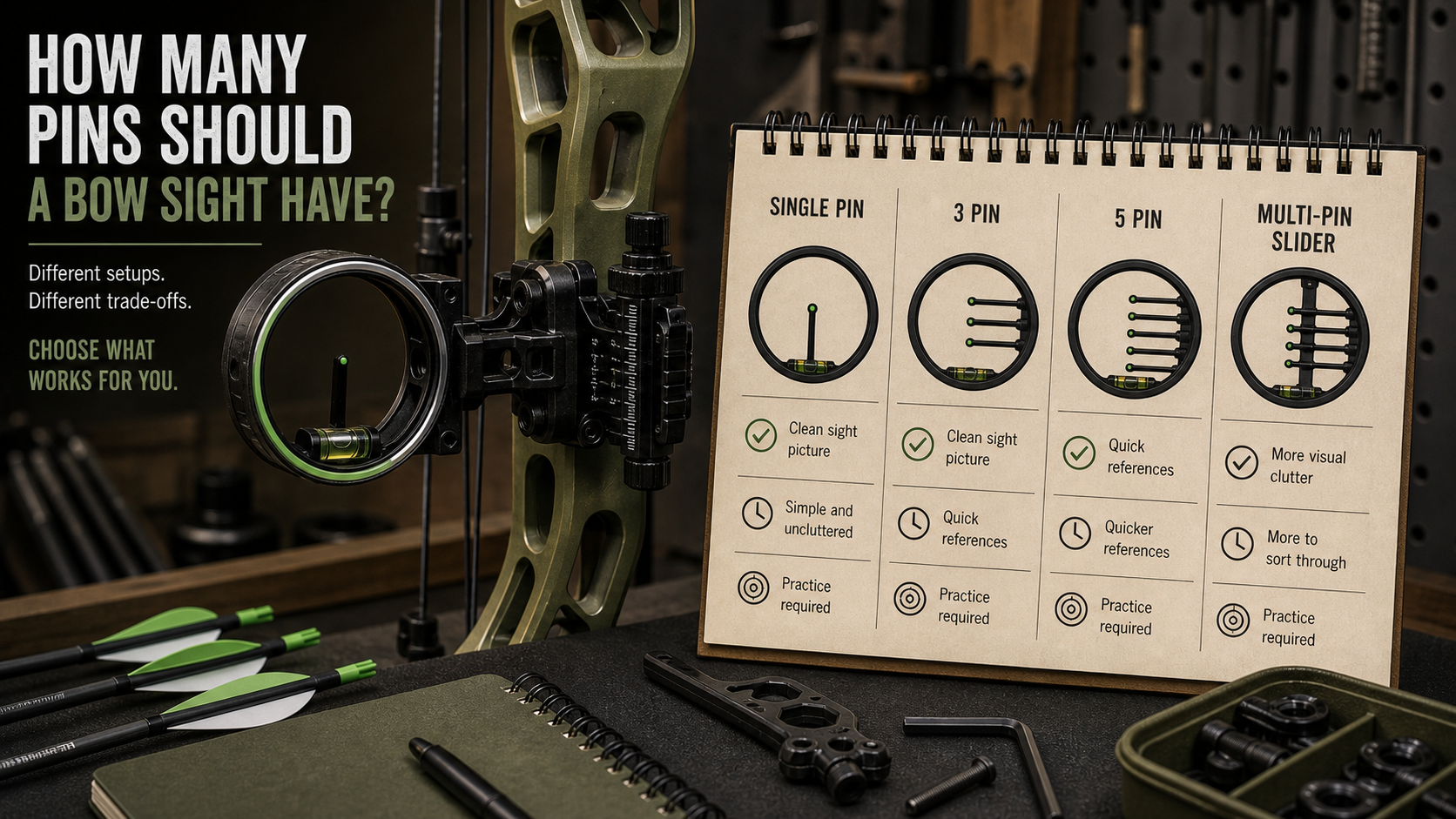
How many pins a bow sight should have depends on how you shoot, not on a single universal answer. Common setups include one adjustable pin, three fixed pins, five fixed pins, and hybrid multi-pin slider sights. Each setup is a tradeoff between a clean sight picture and quick reference points.

More pins do not make a bow more accurate by themselves. Pins only give aiming references for distances you have sighted in and practiced. The best choice is the setup you can use cleanly, safely, and consistently under real range conditions.

Table of Contents
  1. Key Takeaways
  2. Single-Pin, Three-Pin, Five-Pin, and More
  3. Why More Pins Are Not Always Better
  4. Single Pin vs Multi Pin Bow Sight
  5. Hunting vs Target Setup
  6. Pin Gaps, Brightness, and Sight Picture
  7. How to Choose Without Guessing
  8. Related Archery Guides
  9. Frequently Asked Questions

Key Takeaways

  • Pin count is a tradeoff between more aiming references and a cleaner sight picture.
  • Single-pin sights are clean but usually require adjustment for distance changes.
  • Three-pin and five-pin sights give fixed references but add visual clutter.
  • Competition setups may be limited by event rules.
  • Practice and safe sight-in matter more than the number of pins.
Pin count is about tradeoffs: clean sight picture, quick references, visual clutter, and practice needs.

Single-Pin, Three-Pin, Five-Pin, and More

Bow sight pins are the small aiming references inside the sight housing. A single-pin sight gives one uncluttered reference and is often adjustable. A three-pin sight gives a few fixed references. A five-pin sight gives more fixed references. Some sights combine fixed pins with a movable slider.

Single-Pin Sights

A single-pin sight keeps the view simple. That can help archers who dislike clutter or who shoot known distances. The tradeoff is that changing distance usually means adjusting the pin, so the archer must range, dial, and confirm the setting before relying on it.

Three-Pin and Five-Pin Sights

Three-pin and five-pin sights give fixed references that do not require dialing between preset distances. Many hunters like that speed. The tradeoff is more visual information inside the sight housing, and the archer must practice enough to choose the correct pin without hesitation.

Why More Pins Are Not Always Better

More pins add references, not skill. If your anchor, grip, release, and distance judgment are inconsistent, extra pins will not fix that. More pins can also make the sight picture busier, especially in low light, shaded cover, or when the target is small.

The better question is not “what is the most pins I can use?” It is “what is the cleanest setup that covers the distances I have proven in practice?” If a simpler sight helps you execute better shots, simpler is not a downgrade.

Single Pin vs Multi Pin Bow Sight

SetupSight pictureStrengthTradeoffOften suited to
Single adjustable pinCleanestSimple aiming referenceRequires adjustment when distance changesKnown-distance shooting and patient setups
3-pin fixedModerately cleanQuick references without much clutterFewer fixed holdsGeneral hunting and beginner setups
5-pin fixedBusierMore preset referencesMore visual clutterVaried-distance hunting after practice
Multi-pin sliderMixedFixed holds plus adjustment rangeMore to manageExperienced archers wanting flexibility

Hunting vs Target Setup

Hunting and target archery often push pin choice in different directions. Hunters may prefer fixed pins because animal movement and changing distance can make dialing slower. Target and 3D archers may prefer a cleaner single-pin or movable setup when they have time to set the sight and focus on precision.

If you compete, do not choose only by preference. Equipment rules can vary by class and event. Check current rule pages such as USA Archery event rules and the NFAA shooting styles and equipment rules before building a competition setup.

Pin Gaps, Brightness, and Sight Picture

Pin count is only one part of the sight picture. Pin spacing, pin diameter, fiber brightness, housing size, and peep alignment all affect how easy the sight is to use. Two five-pin sights can feel very different if one has brighter fibers, finer pins, or a cleaner housing.

Avoid Universal Yardage Presets

Do not copy someone else’s yardage pattern as a rule. Your bow speed, arrow weight, peep height, anchor, and sight radius all affect pin spacing. Sight in your own bow under safe range conditions and keep practice within distances you have proven.

How to Choose Without Guessing

  1. List the real distances you practice, hunt, or compete at.
  2. Decide whether you usually have time to adjust a sight.
  3. Choose the cleanest sight picture that still covers your proven distances.
  4. Check event rules if competition matters.
  5. Sight in carefully and practice before relying on the setup.

For a beginner, a three-pin fixed sight or a single adjustable pin often keeps the learning curve manageable. If your setup feels too busy, simplify. If you are missing needed references after plenty of practice, then consider adding pins or moving to a hybrid sight.

Write down your sight-in settings and keep them with your bow notes. If you change arrow weight, draw weight, peep height, release style, or anchor point, recheck the sight instead of assuming the old marks still match. A small setup change can alter how the pins line up, even when the sight itself has not moved.

For fixed-pin sights, discipline matters as much as the hardware. Practice identifying the correct pin without rushing, and learn when the sight picture feels too crowded for you. If you hesitate because the housing is busy, fewer pins or a cleaner setup may help more than adding more references.

Also think about the people who may help you set up the bow. A coach, shop tech, or experienced archer can watch your form while you sight in, which is hard to diagnose alone. Better feedback often matters more than buying a more complicated sight.

Pin count connects to broader setup and practice. Read our guide to compound bow sights for hunting when you are ready for product research, then review common compound bow mistakes, bow tuning for beginners, and archery safety rules.

Frequently Asked Questions

How many pins should a beginner bow sight have?

Many beginners do well with a three-pin fixed sight or a single adjustable pin. Both keep the sight picture manageable while the archer builds form, range judgment, and confidence with the setup.

Is a single-pin or multi-pin sight better for hunting?

Neither is always better. Multi-pin sights provide quick fixed references. Single-pin sights provide a cleaner view but usually need adjustment when distance changes.

Do more pins make a bow more accurate?

No. More pins add aiming references, not accuracy by themselves. Accuracy comes from form, tuning, sight-in work, and practice.

What is a pin gap on a bow sight?

A pin gap is the vertical space between fixed pins. It reflects your own bow and arrow setup after sight-in, so it should not be copied from another archer.

Do competition rules limit bow sight pins?

They can. Rules vary by organization, event, and equipment class, so check the current rulebook before buying or setting up a competition sight.

Final Recommendation

Choose the number of pins that matches your real distances, practice routine, and shooting environment. Single-pin setups give the cleanest picture. Three-pin and five-pin sights give more fixed references. The best setup is the one you can sight in, practice, and use without confusion.

Exit mobile version