


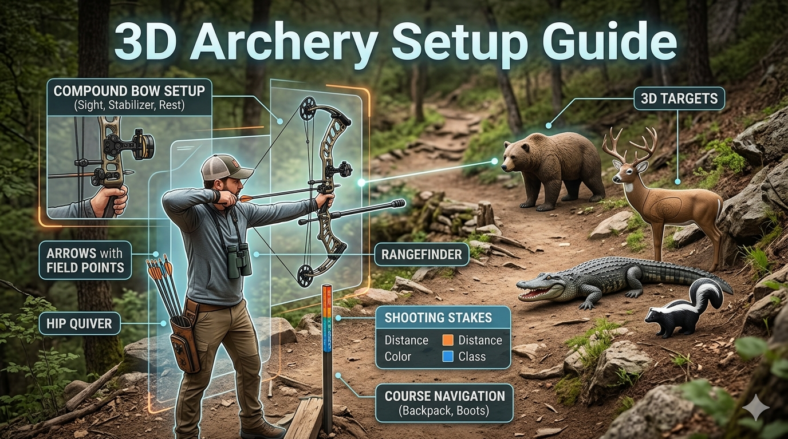
A safe 3D archery setup starts with three things: a controlled shooting area, a target rated for your bow, and equipment matched to your draw weight and skill level. Get those right and the rest of your practice plan becomes simpler, safer, and easier to repeat.
3D archery uses foam targets placed at varied distances and angles. It can help with distance judgment and repeatable form, but only when you practice in a controlled lane, inspect your gear, and follow the rules of the range, club, or community archery area you are using.
Table of Contents
Quick Answer: What You Need For A Safe 3D Archery Setup
A safe 3D archery setup needs a controlled shooting area with a clear lane, a target rated for your bow type and draw weight, and bow accessories that match your skill level. Before each session, inspect your arrows, nocks, bowstring, limbs, target face, and shooting lane. If you are unsure about practicing at home, use a supervised club, range, or community archery park instead.
Start With A Safe Shooting Area
A safe shooting area is the foundation of any 3D setup. Everything depends on knowing where arrows are being launched, where they should stop, and when the lane is clear.
Use A Controlled Range Or Target Area
Practice where you can control the line, the lane, and what is beyond the target. A club range or community archery park is the easiest way to get established rules and a clear shooting flow. USA Archery safety guidance is a useful starting point for basic range habits, and the USA Archery club handbook shows how organized programs think about club and range structure.
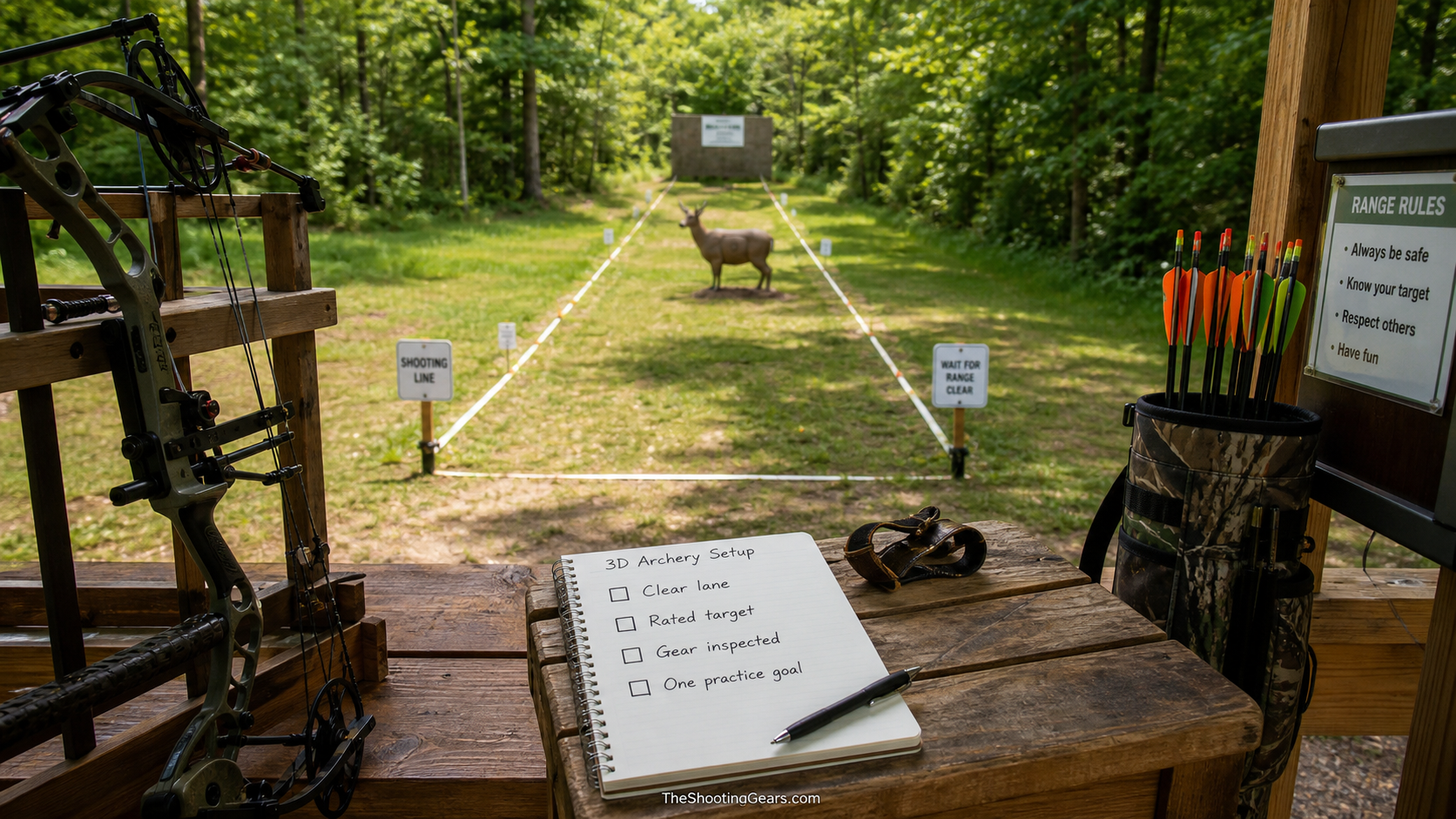
Keep the lane clear, define where shooters stand, and use a simple start/stop signal so no one shoots while another person is downrange.

Check Backstop And Local-Rule Caveats
If you practice anywhere other than an established range, treat the backstop and local rules as questions, not assumptions. This guide does not provide backyard range dimensions or backstop construction specs because those depend on space, equipment, target rating, and local rules. When in doubt, use a club or range rather than improvising.
Choose The Right 3D Target For Practice
The right 3D target is one rated for your bow type and draw weight. A target that is too light for your setup can wear quickly or allow pass-throughs, while a target that matches your setup helps protect both your arrows and the range area.
Match Target Rating To Bow Type
Check the target maker’s stated rating against your bow type, draw weight, arrow setup, and point type. A target built for a light recreational bow may not be suitable for a heavier compound bow. Follow the target maker’s instructions instead of guessing.
Inspect Targets Before Shooting
Look over the target before each session. Check that the foam is not shot out in the scoring area, that replaceable cores are seated, and that the target is stable. A worn-out center can increase pass-through risk and make arrows harder to recover.
Set Up Bow, Arrows, And Accessories
A 3D setup works best when the bow, arrows, and accessories fit the archer. Comfortable, repeatable form comes from gear that is manageable, inspected, and adjusted one step at a time.
Bow Fit And Draw Weight
Choose a draw weight you can pull and hold with control through a full session, not the most weight you can pull once. If you are unsure about fit, a pro shop or coach can help with draw length, draw weight, and basic setup.
Arrows, Nocks, And Field Points
Inspect arrows, nocks, and points before every session. Check carbon arrows for cracks, confirm nocks are intact and seated, and use field points suited to 3D practice so you do not damage targets. For more on arrow matching, see our arrow spine guide.
Sight, Stabilizer, And Release Basics
Set up sights, stabilizers, and releases according to the manufacturer manuals for your specific gear. Make one adjustment at a time so you can tell what changed. If stability is your main question, our bow stabilization guide is the natural next read.
Build A Simple Practice Plan
A simple practice plan beats random shooting. Start with a warm-up, pick one focus for the session, and make notes so the next session builds on what you learned.
Warm Up At Known Distances
Begin at known, comfortable distances to settle your form before working on unknown-distance 3D practice. A short warm-up lets you confirm your sight marks and catch gear issues before the harder part of practice begins.
Practice One Change At A Time
Change one thing at a time, whether it is a sight mark, anchor detail, release feel, or practice distance. If you adjust several variables at once, you cannot tell what helped.
Common 3D Archery Setup Mistakes
The most common 3D setup mistakes are setting too much draw weight, skipping gear inspection, using a target not rated for the bow, and practicing in an uncontrolled area. Other frequent issues include adjusting too many things at once, shooting a worn-out target center, and treating a backyard space as range-safe without confirming rules and backstop conditions.
3D Archery Setup Checklist
- Controlled shooting area with a clear lane confirmed.
- No one downrange and a clear start/stop signal in place.
- Target rated for your bow type and draw weight.
- Target inspected, stable, and not shot out.
- Arrows, nocks, bowstring, limbs, and accessories inspected.
- Draw weight you can control through the full session.
- Field points suited to 3D practice.
- One practice focus chosen for the session.
- Local rules confirmed if practicing outside an established range.
Related Archery Guides
After you have the lane and target sorted, review arrow fit with our arrow spine guide and refine steadiness with our bow stabilization guide.
Frequently Asked Questions
What is 3D archery?
3D archery is a form of practice or competition that uses foam targets set at varied distances and angles. It helps archers work on distance judgment, repeatable form, and shot routine in a course-style setting.
What draw weight do I need for 3D archery?
Use a draw weight you can pull and hold with control through a full session. Comfortable, repeatable form matters more than maximum poundage. A coach or pro shop can help set a realistic starting point.
Can I set up a 3D archery range in my backyard?
Maybe, but it depends on your space, backstop, equipment, and local rules. This guide does not assume backyard practice is allowed or safe for your situation. If you are unsure, use a club or established range.
What target should I use for 3D archery practice?
Use a foam 3D target rated for your bow type and draw weight. Check the maker’s rating, inspect the target before each session, and replace shot-out cores or worn targets.
Does 3D practice improve hunting accuracy?
3D practice can help with distance judgment and repeatable form, but results depend on practice quality and safe conditions. This article covers target-practice setup, not hunting shot placement.

