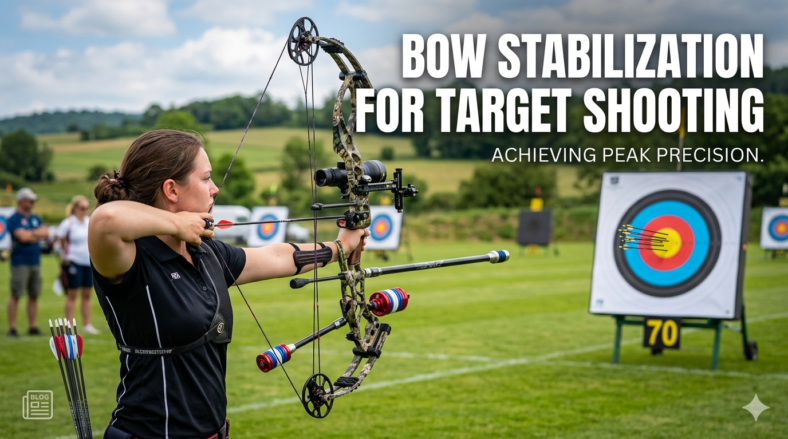
Bow stabilization for target shooting means using front bars, side bars, and weights to change how a bow balances, aims, and settles during the shot. A stabilizer setup can shift the bow’s center of balance, dampen vibration, and change aiming feel, but it is not a universal accuracy shortcut.
The best stabilizer setup depends on the archer, bow, strength, shooting style, and competition rules. Adjust in small steps, test safely, and check the current rulebook for your class before competing.
Table of Contents
What Bow Stabilization Does
Bow stabilization changes how a bow balances, how it absorbs vibration, and how it behaves before and after the shot. By adding mass and extending it away from the riser, stabilizers can alter the bow’s center of balance and the way the sight pin moves while aiming.
Stabilization is a feel-and-balance adjustment, not a guaranteed performance upgrade. It may make a bow feel more settled for one archer and less comfortable for another. Beginner-friendly archery education sources such as Archery 360 are useful for building general context before changing equipment.
Front Bars, Side Bars, and Weight Placement
Front bars, side bars, and weights are the main parts that determine how a stabilizer setup balances a bow. Each piece affects feel differently, so it helps to understand the job of each one.
Part
What It Usually Does
Beginner Check
Front bar
Adds weight forward of the riser
Does it feel steadier without tiring your shoulder?
Side/back bar
Offsets side-to-side or rear balance
Does the bow sit more level in your hand?
Weights
Fine-tune how much mass sits at each point
Can you hold the setup through a full session?
How front weight changes aiming feel
Adding weight to the front bar extends mass forward of the riser. Many archers feel this as a steadier hold or a different sight movement while aiming. Too much weight can also create fatigue, so change front weight in small increments and judge comfort over a full practice session.
How side bars help balance bow torque
Side bars and back bars add weight off to the side and rear. They can help counter how the bow wants to tip or twist in the hand. Adjust side-bar angle and weight one change at a time so you can tell what each change actually did.
Target Setup vs Hunting Setup
Target and hunting stabilizer setups often differ because the priorities are different. Target setups can be longer and heavier because the archer is usually shooting from known positions. Hunting setups usually need to stay shorter, lighter, and easier to carry.
Neither style is automatically better. A long target setup that feels steady on a range may be awkward in the field, while a compact hunting setup may not feel as settled during target practice. Match the setup to how you actually shoot.
How to Test Balance Safely
Testing a stabilizer setup safely means changing one variable at a time and stopping if the setup causes strain or makes the bow hard to control. The goal is repeatable control, not maximum length or maximum weight.
Change one variable at a time, such as front weight, side weight, or side-bar angle.
Shoot a consistent practice set and note hold, comfort, sight movement, and fatigue.
Reduce weight or length if the bow feels awkward or strains your shoulder, arm, or back.
Keep notes so you can return to a setup that felt stable.
If you are still learning bow setup basics, review broader setup and tuning steps before changing stabilizer weight. The guides on setting up your bow and bow tuning for beginners are useful companion reads.
Rules and Class Checks
Competition divisions can restrict stabilizer length, weight, attachments, and overall equipment configuration. These rules vary by organization and event, so check the current rulebook for your class before competing.
Stabilizers can change how steady a bow feels and how it settles, but they do not automatically create tighter groups. The effect depends on the archer, bow, and setup.
How long should a target stabilizer be?
There is no single correct length. Target setups often run longer than hunting setups, but the right setup depends on your body, bow, shooting style, and competition rules.
What is the difference between a front bar and a side bar?
A front bar extends weight forward from the riser, while a side or back bar adds weight off to the side or rear. Full target setups may use both to tune front-back and left-right balance.
Will a target stabilizer setup work for hunting?
Often not directly. Target setups can be long and heavy, while hunting setups usually need to stay compact and easier to carry. Match the stabilizer to how and where you shoot.
Are there rules about stabilizers in competition?
Yes. Many competition divisions restrict stabilizer length, weight, attachments, or configuration. Always check the current rules for your organization, class, and event.
Final Stabilizer Takeaway
Bow stabilization is a tuning tool for balance, aiming feel, and shot reaction. Start small, change one variable at a time, watch for strain, and verify current competition rules before relying on any setup.
Choose a compound bow if you want a more traditional vertical-bow archery experience, more active drawing skill, and a lighter setup for walking or tree-stand hunting. Choose a crossbow if you need a held-at-full-draw design, easier aiming once cocked, or a legal/physical accommodation where crossbows are allowed. Neither is automatically better; the better choice depends on rules, skill, strength, hunting style, and safety discipline.
This comparison is a practical guide, not legal advice. Crossbow seasons, equipment rules, minimum ages, disability permits, broadhead rules, and public-land regulations vary by state and property, so always check current official hunting rules before buying or hunting.
Table of Contents
Quick Comparison
Factor
Crossbow
Compound bow
Best for
Held-at-full-draw aiming, physical accommodation, some hunting setups where legal
Traditional vertical-bow archery, active shooting form, lighter carry
Drawing
Cocked before aiming; requires safe cocking/decocking process
Drawn by the archer before each shot
Carry feel
Bulkier and front-heavy
Usually lighter and easier to carry
Learning curve
Easier to aim once cocked, but safety procedure is strict
More form practice required
Legal caveat
Rules vary strongly by state/season/property
Also regulated, but often treated as standard archery equipment
Maintenance
String/cables, limbs, rail, trigger, scope, bolts, cocking system
A crossbow stores energy after it is cocked, so the shooter can aim without holding draw weight the same way a vertical bow shooter does. That can make it easier for some hunters to settle into the shot, especially from a blind or stable rest.
Held-at-full-draw aiming
The biggest crossbow advantage is that it stays cocked until fired or safely decocked. That helps hunters who struggle to hold a compound bow at full draw while waiting for a clear shot angle.
Blind and rest-friendly setup
A crossbow often works well from a ground blind, shooting rail, tripod, or other stable position. It can feel more familiar to people who are used to firearm-style aiming, though crossbows still require archery-specific safety and range judgment.
Physical accommodation
Some hunters choose crossbows because of age, shoulder strength, injury, or disability. Whether a crossbow is allowed during a given season or under a permit depends on current local rules, so verify before assuming it is legal for your hunt.
What A Compound Bow Does Better
A compound bow is a vertical bow that uses cams or pulleys to reduce holding weight at full draw. It is still more physically active than a crossbow, but that is exactly what many archers enjoy.
Traditional archery skill
Compound bows reward consistent stance, anchor, grip, release, follow-through, and tuning. If you want the skill-building side of archery, the compound bow is usually more satisfying.
Lighter carry and faster handling
Most compound bows are easier to carry through brush, up a tree stand, or across public land than a crossbow. They also avoid some of the front-heavy feel that many crossbows have.
Better fit for archery-first hunters
If you enjoy practicing, tuning, and improving as an archer, a compound bow gives you more room to grow. It also connects naturally to target archery, 3D archery, and bowhunting practice.
Which Is Better For Hunting?
For hunting, the better choice is the one that is legal, ethical, accurate in your hands, and matched to the distance and shot angles you can handle. A crossbow can be easier to aim once cocked, but it is bulkier and has strict cocking/decocking safety requirements. A compound bow is lighter and more archery-centered, but it demands more practice and draw-strength management.
The Archery Trade Association is a useful industry reference point for archery equipment context, but hunting rules themselves should come from current state wildlife-agency sources.
Safety And Legal Checks
Check whether crossbows are legal for your season, age group, permit type, and property.
Confirm minimum draw weight, bolt/arrow, broadhead, and equipment requirements.
Use the correct bolt or arrow for your exact setup.
Practice at realistic hunting distances before the season.
Never dry fire a crossbow or compound bow.
Use safe cocking and decocking methods for crossbows.
Use a haul line and fall protection when hunting from an elevated stand.
Keep fingers and thumbs out of the crossbow string path.
Use-Case Guide
For beginners
A crossbow can feel easier at first because aiming after cocking is simpler. A compound bow builds more archery skill and may be the better choice if the beginner wants to learn archery as a sport, not only hunting.
For tree stands and blinds
Crossbows can work well from blinds and stable rests. Compound bows are easier to carry and maneuver but require drawing at the right moment without being seen. In a tree stand, both require fall protection and careful equipment handling.
For target practice
A compound bow is usually the better long-term skill-building tool for target and 3D archery. A crossbow is better if your goal is crossbow-specific hunting preparation and equipment familiarity.
Frequently Asked Questions
Is a crossbow more powerful than a compound bow?
Not always in a simple way. Crossbows and compound bows use different draw systems, projectile weights, speeds, and energy profiles. Compare complete setups and legal requirements rather than assuming one category is always more powerful.
Is a crossbow easier to shoot?
A crossbow is often easier to aim after it is cocked, but safe cocking, decocking, bolt choice, trigger discipline, and string-path safety still matter. Easier aiming does not remove the need for practice.
Is a compound bow better for archery practice?
Usually, yes. A compound bow develops more of the vertical-bow skill set: stance, anchor, grip, release, follow-through, and tuning. It is better if you want archery as a long-term sport.
Are crossbows legal during archery season?
It depends on the state, season, age, permit type, and property rules. Check current official wildlife-agency regulations before hunting with a crossbow.
Final Recommendation
Choose a compound bow if you want lighter carry, more active archery skill, and a traditional bowhunting path. Choose a crossbow if you need held-at-full-draw aiming, a blind/rest-friendly setup, or an accommodation that is legal where you hunt. The right answer is the one you can use safely, legally, accurately, and ethically.
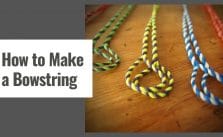
Making a bowstring is a precision job, not just a craft project. The safe answer is this: you can learn what materials, tools, and checks are involved, but a bowstring should only go on a bow when its length, material, strand count, serving size, loop fit, nock fit, and bow setup match the bow manufacturer’s specifications.
If you are new to archery, the smartest path is to use this guide as a buying and inspection checklist, then have a qualified archery shop or experienced bow technician verify the finished string before you shoot it. A poorly matched string can damage the bow, change arrow flight, or create a safety problem.
Quick Answer: What Do You Need To Make a Bowstring?
At a high level, bowstring making involves string material, serving material, a bowstring jig or measured setup, serving tools, wax, nock-fit checks, and final bow setup checks. The exact material and dimensions depend on the bow type. Recurve, longbow, compound, and crossbow strings are not interchangeable, and compound bows are especially sensitive to cable/string specs and cam timing.
Before any string is used, confirm the bow’s manual or manufacturer specs, inspect the limbs and cams, check serving and loops, set brace height or axle-to-axle measurements where applicable, and confirm that arrows/nocks fit correctly. Organizations such as the Archery Trade Association, World Archery, and USA Archery are useful starting points for archery education, safety culture, and participation standards.
Bowstring-Making Checklist
Check
What to verify
Why it matters
Bow type
Recurve, longbow, compound, or crossbow
Each bow type uses different string rules and safety tolerances.
Manufacturer specs
Approved string length, material, strand count, and serving diameter
Guessing can change performance or damage the bow.
String material
Dacron/B-50 style, modern low-stretch material, or manufacturer-approved equivalent
Older bows may need more forgiving materials; modern compounds often need exact specs.
End loops
Loop size and serving quality match limb tips or cam posts
Poor loop fit can slip, wear, or load the bow incorrectly.
Center serving
Nock fit is snug without pinching or falling off
Bad nock fit can cause inconsistent release or unsafe arrow behavior.
Bow setup
Brace height, tiller, axle-to-axle, and cam timing where applicable
The string affects the whole bow tune, not just the part your fingers touch.
Inspection
No fraying, separation, serving gaps, or damaged loops
Visible defects are warning signs before shooting.
Final verification
Qualified shop or experienced technician check if you are unsure
A second check is cheap compared with bow damage or injury.
What This Guide Covers and What It Does Not
This guide explains the parts of a bowstring, common materials, tools, and safety checks so you can make better decisions. It is not a replacement for your bow manual, a pro-shop setup, or hands-on coaching. That matters because a string that looks neat can still be wrong for the bow.
For a simple traditional bow, the process is easier to understand. For a modern compound bow or crossbow, the margin for error is much smaller because the string and cables affect cam timing, draw length, let-off, arrow speed, and safety. If your bow uses cams, cables, or high draw weight, treat string work as technical maintenance.
Materials To Understand Before Making a Bowstring
String material
Bowstrings can be made from different synthetic materials, but the best choice depends on the bow. Dacron-style materials are often more forgiving for traditional and older bows. Modern low-stretch materials can improve efficiency, but they may be too harsh for some older limb designs. Do not choose material only because it is strong; choose the material your bow is designed to handle.
Serving material
Serving protects high-wear sections of the string, especially the center serving where the arrow nock attaches and the end-loop areas that contact limb tips or cams. Serving diameter matters because it controls nock fit. A nock that clicks on too tightly or falls off too easily can create inconsistent and unsafe shooting behavior.
End loops and nocking point
The end loops must fit the bow correctly without twisting, slipping, or creating sharp stress points. The nocking point also needs to be placed and checked with the bow setup, not guessed by eye. Small fit problems can become major accuracy and wear problems after repeated shots.
Tools Commonly Used for Bowstring Work
Common bowstring tools include a string jig, serving jig, bow square, string wax, measuring tape, nock-fit tools or test nocks, and a safe bow press when working on many compound bows. A homemade board-and-post setup may help someone understand how string loops are formed, but it should not be treated as a substitute for accurate bow specs and final tuning.
If the bow requires a press, do not improvise. A compound bow stores serious energy, and the wrong press method can damage limbs, cams, strings, or cables. That is one of the main reasons pro-shop help is worth the cost for many archers.
Why Exact Bow Specs Matter
A bowstring is part of the bow’s tuning system. Changing length, material, strand count, or serving thickness can change brace height, draw length, nock travel, arrow launch, and cam timing. On a compound bow, a string that is close but not correct can make the bow feel wrong even if it technically fits on the cams.
Before replacing or making a string, record the bow model, draw weight, draw length, factory string length, cable length if applicable, and any manufacturer notes. If those details are missing, contact the manufacturer or a qualified archery shop instead of relying on a generic online measurement.
Safety Checks Before Using Any Bowstring
Inspect the full string before every shooting session. Look for broken strands, fuzzy wear, separated serving, loose loops, damaged nock fit, and changes in brace height or timing. Stop shooting if the bow sounds different, feels different, or shows unexpected wear.
Never dry fire a bow, and do not test a questionable string by pulling the bow repeatedly without a proper arrow and safe range setup. If a string has visible damage or unknown history, replacement is safer than trying to stretch its life.
When To Use a Pro Shop
Use a pro shop when the bow is a compound, crossbow, high draw-weight setup, expensive hunting bow, or any bow with unclear specs. Also use a shop if you need cam timing, peep alignment, draw-length confirmation, or a press. The cost of professional setup is small compared with damaged equipment or unsafe shooting.
DIY string knowledge is still useful. It helps you ask better questions, inspect your equipment, understand why a shop recommends certain materials, and catch obvious fit problems before they become failures.
Beginners can learn the terms and process, but they should not trust a first homemade string on a bow without experienced inspection. A bowstring has to match the bow, not just look finished.
What is the safest bowstring material?
The safest material is the one approved for your bow. Dacron-style material may be appropriate for many traditional or older bows, while modern compounds often require specific low-stretch materials and exact dimensions.
Why does nock fit matter?
Nock fit affects safety and consistency. If the nock is too tight, it can interfere with release. If it is too loose, it may fall off the string before or during the shot cycle.
Should I make a compound bow string at home?
Most shooters should use a qualified shop for compound bow strings and cables. Compound bows depend on exact string and cable specs, cam timing, press safety, and final tuning.
Final Recommendation
Learning how a bowstring is made is valuable, but safety comes first. Use the correct material, match the bow’s exact specifications, inspect every wear point, and get professional verification when you are unsure. For most hunters and casual archers, a properly built replacement string from a trusted source or pro shop is the better decision than risking a poorly matched DIY string.
The best crossbow bolts for deer hunting are the bolts or arrows your crossbow manual approves first, then the ones that give you the right length, total finished arrow weight, nock style, broadhead compatibility, and consistent flight. For most hunters, the safest pick is not the fastest or most popular bolt; it is the one the crossbow maker approves for that exact model.
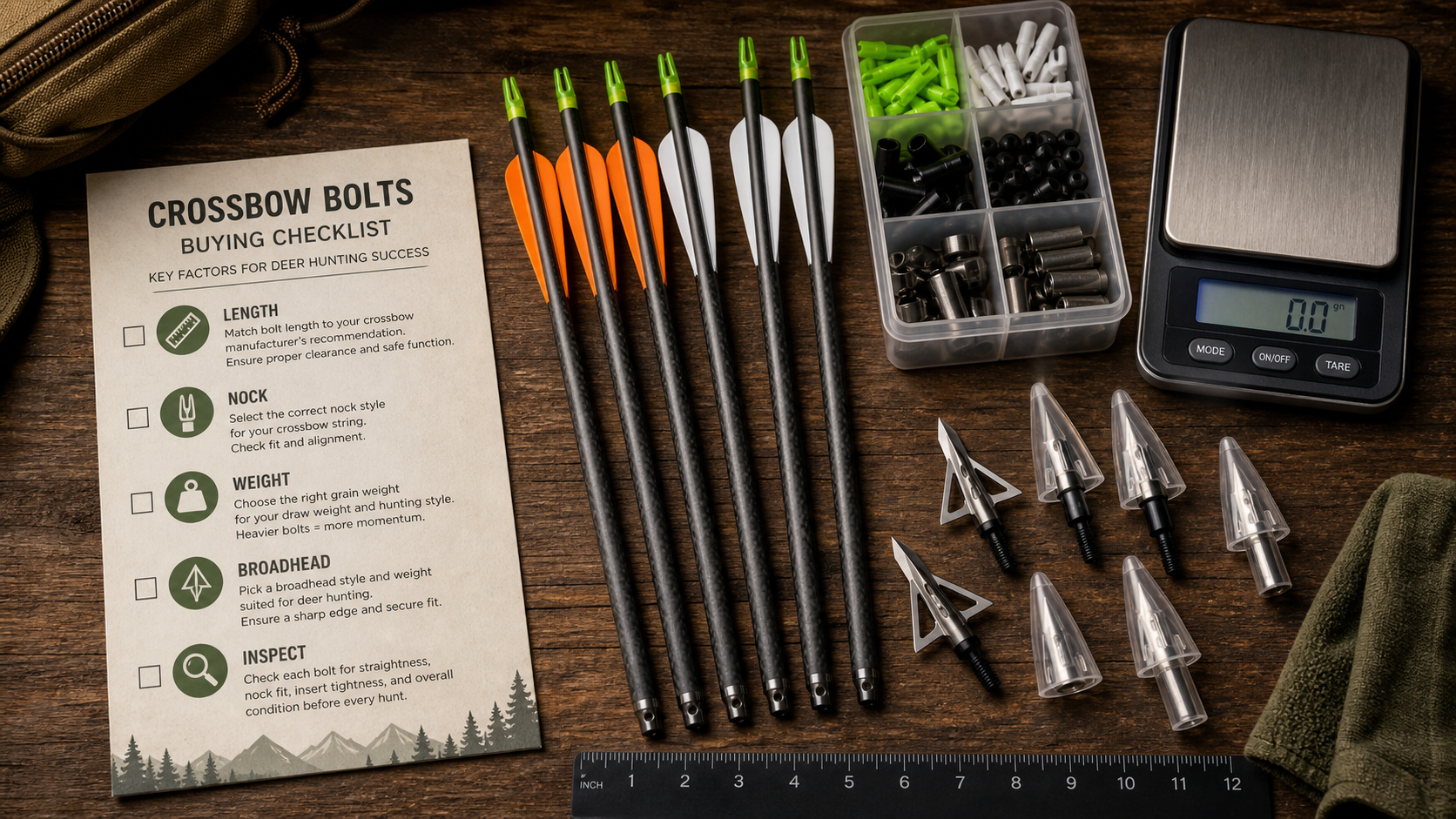
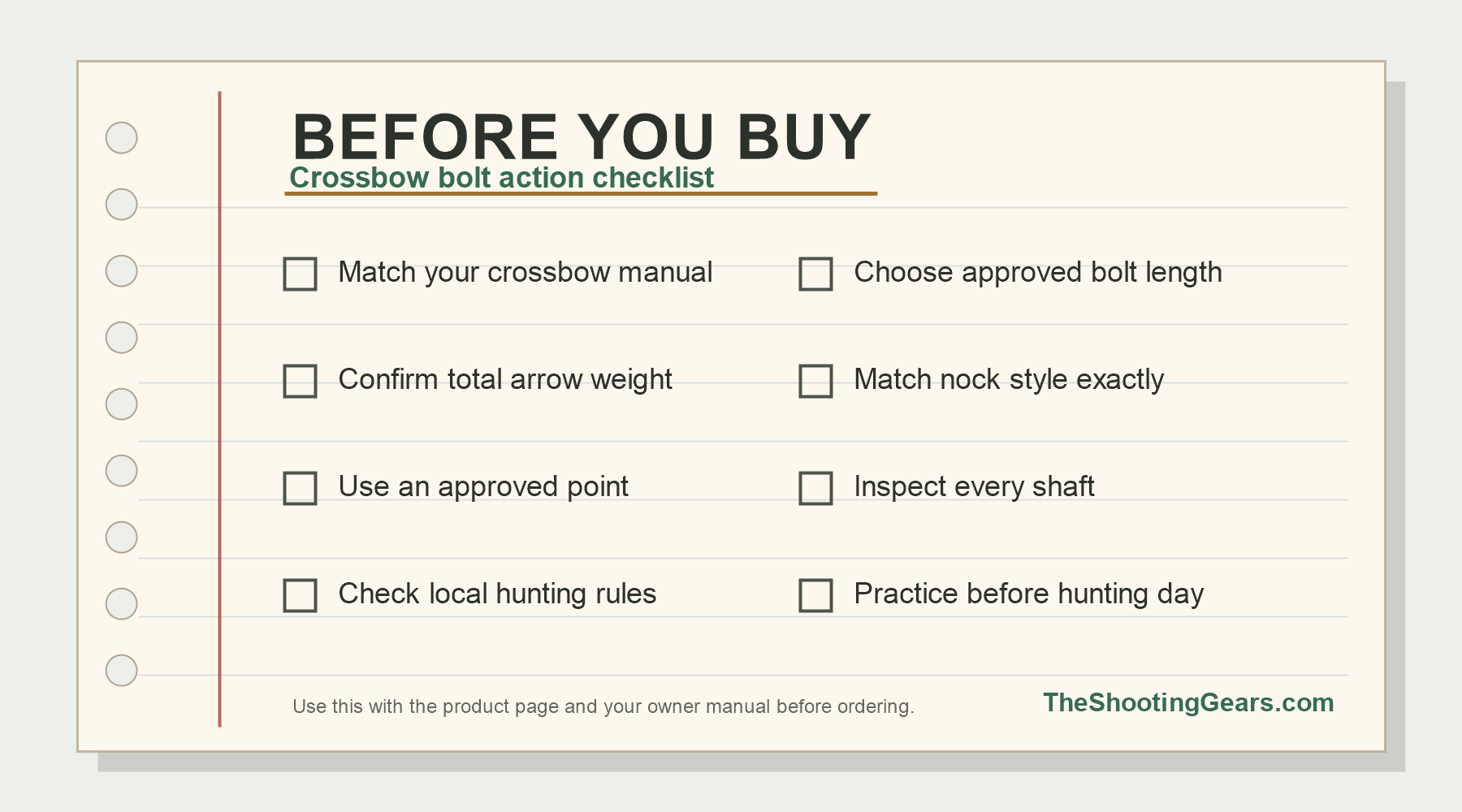
Fit check before you buy: Confirm the bolt length, total finished arrow weight, nock style, broadhead setup, and any minimum arrow-weight warning in your crossbow owner manual. A bolt that looks right online can still be wrong for your crossbow.
Use the crossbow manual as the final authority.
Do not choose by length alone.
Recheck product listings before ordering because pack counts, nocks, and variants can change.
Table of Contents
On This Page
How We Chose
This is a research-based buying guide, not a hands-on field test. We compare source-visible product information, manufacturer specs, merchant-page signals, and compatibility-first buying factors. We do not claim to have personally tested these bolts.
Our selection logic is compatibility-first: we favor products with clear manufacturer information, distinct buyer roles, common hunting lengths, honest fit warnings, and reachable buying information. A bolt earns a place by being easy to match to a real crossbow setup, not by brand alone.
Before buying any option here, compare it against your crossbow manual and your local hunting rules. Treat every pick as a candidate to confirm for your exact crossbow, length, nock style, and finished arrow weight. For broader hunting setup context, see our crossbow deer hunting guide and crossbow deer hunting tips.
Quick Picks
Pick
Best For
Key Fit Check
Product Link
Gold Tip Ballistic Pro Bolts
Most mainstream hunting crossbows that fit a mid-weight bolt setup
Confirm the 22 inch variant, nock style, and finished weight against your manual.
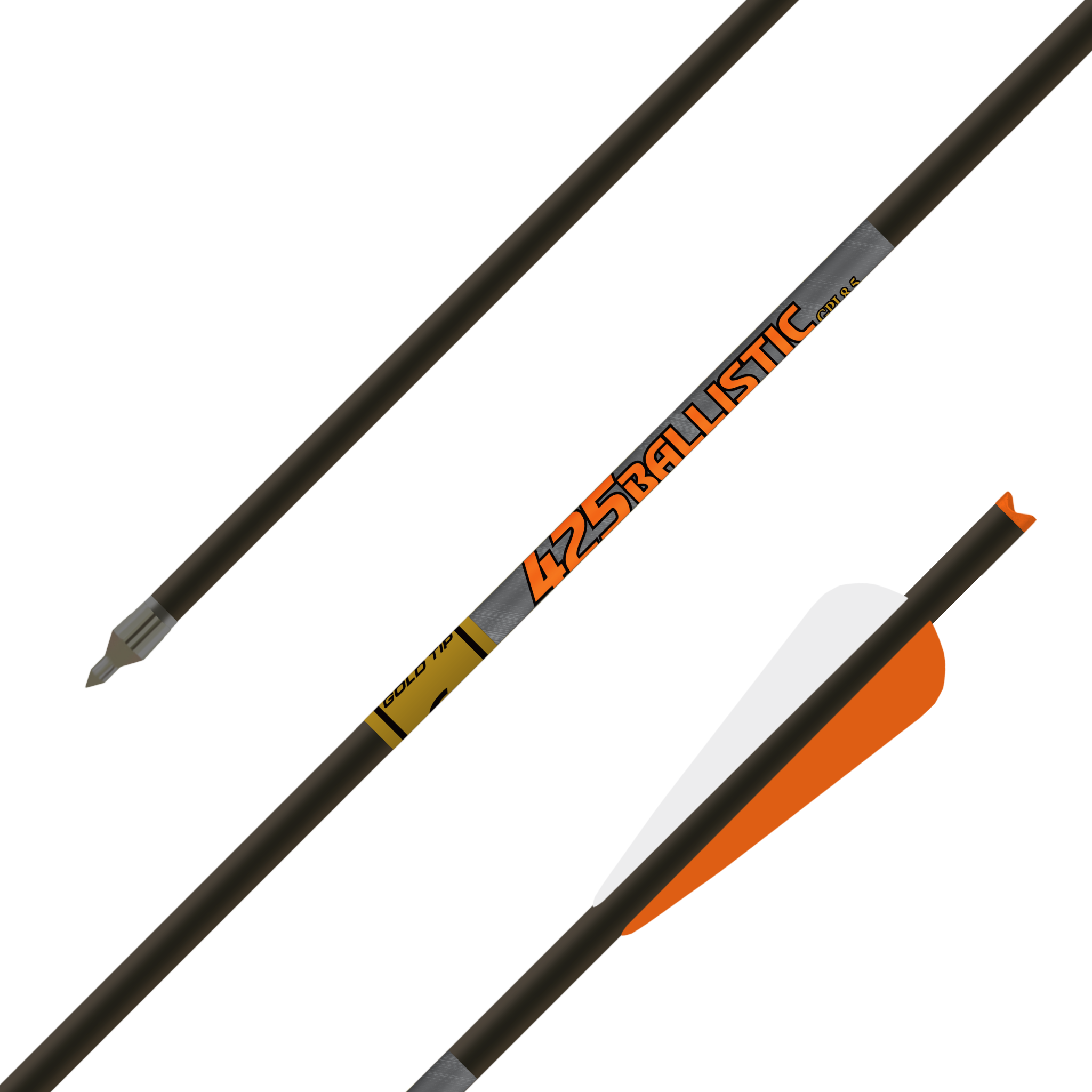
Best Mid-Weight All-Around Pick: Gold Tip Ballistic Pro Bolts
Best for: hunters with a mainstream crossbow who want a balanced mid-weight bolt, after confirming fit in the crossbow manual.
Key specs:
Spine class: .300, per Gold Tip official product information.
Construction: Gold Tip 100% Carbon Technology.
Included components: flat and moon nock; 110 grain insert.
Variant referenced: 22 inch, 4 inch Duravanes, 6-pack, SKU BA22A46.
Manufacturer compatibility boundary: positioned for crossbows up to 175 pounds, or bows that require a 425 grain weight-range bolt.
The Ballistic .300 is the cleanest general deer-hunting starting point in this shortlist because it is built around mid-weight balance rather than only the fastest or highest-draw-weight crossbows. Gold Tip lists it with both flat and moon nocks and a 110 grain insert, which gives you setup flexibility, but the nock that is right for you is the one your crossbow maker approves.
Treat the 425 grain weight-range guidance as a manufacturer compatibility boundary, not a universal fit claim. Your finished arrow weight depends on the point or broadhead you add, so confirm the total against your crossbow manual before hunting. Keep length, nock style, and minimum arrow weight as manual-first checks.
What buyers tend to like
Mid-weight balance suits a wide range of common hunting crossbows.
Both nock types and a defined insert weight are listed by the manufacturer.
Backed by current official Gold Tip product information.
What to weigh
Variant availability differs by length and pack, so the exact 6-pack must be confirmed before ordering.
Not aimed at the highest-draw-weight crossbows that call for a heavier bolt.
Skip this if: your crossbow manual requires a heavier bolt, such as a 500 grain weight-range bolt for a high-draw-weight crossbow, a different length, or a nock style this bolt does not include.
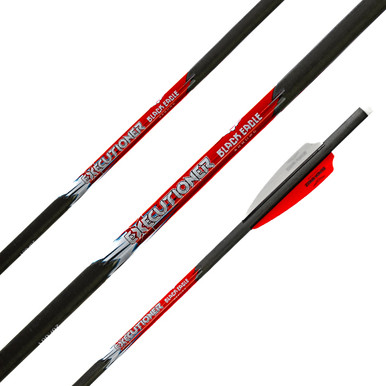
Best Premium Accuracy Upgrade: Black Eagle Executioner Crossbow Fletched Arrows
Best for: hunters who want a higher-tolerance arrow with durable components and are ready to match length, nock, and minimum weight to their crossbow manual.
Included components: half-moon nocks installed and removable, flat nocks on 20 inch, Executioner brass inserts installed, and 3 inch Fusion X-II shield-cut vanes.
Bare-arrow weight: 20 inch and 22 inch arrows weigh 326 grains without a field point or broadhead.
The Executioner is the premium accuracy candidate here because Black Eagle publishes tighter straightness options and a plus or minus 1 grain weight tolerance, which is the kind of consistency many hunters want for confident broadhead flight. The installed brass inserts and shield-cut vanes are useful out of the box, though you should still confirm the nock and insert setup matches your crossbow.
Black Eagle states these arrows work with most major manufacturer crossbows, but the same page tells buyers to check the crossbow manual for arrow weight minimums to avoid voiding the warranty. Follow that instruction. The listed 326 grain bare weight is a starting point only, because your finished weight changes once a point or broadhead is added.
What buyers tend to like
Tight straightness options and a plus or minus 1 grain weight tolerance.
Useful included components: brass inserts and shield-cut vanes.
Two lengths and clear shaft specs from official product information.
What to weigh
Premium positioning means a higher cost than basic practice arrows.
Option-level stock can vary, so the exact length, straightness, and pack needs a final check.
Skip this if: your crossbow manual sets a minimum arrow weight or nock style this arrow does not meet, or you only need budget practice arrows.
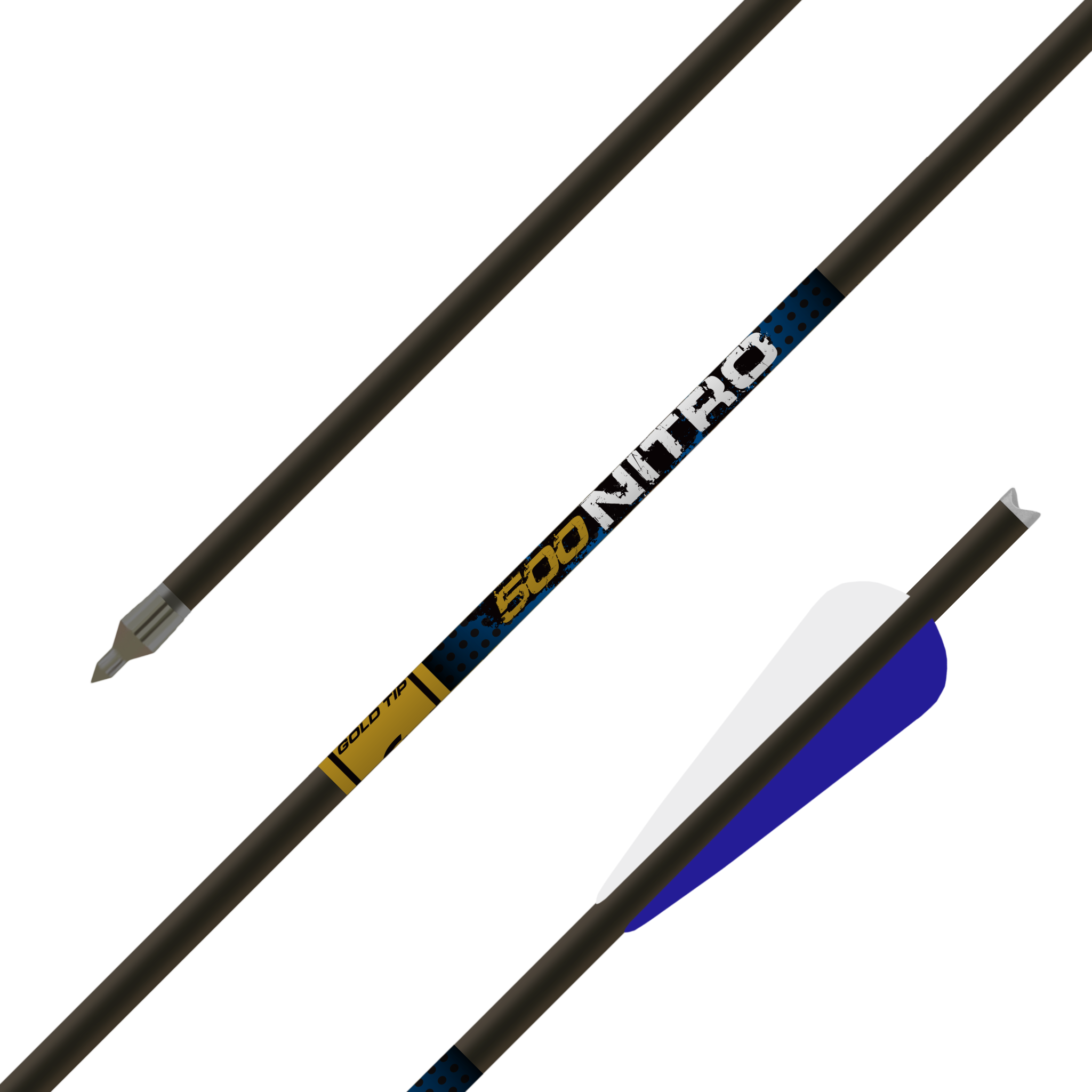
Best Heavy Bolt for Powerful Crossbows: Gold Tip Nitro Pro Bolts
Best for: hunters running a fast or high-draw-weight crossbow that calls for a heavier bolt, confirmed against the crossbow manual.
Key specs:
Spine class: .272, per Gold Tip official product information.
Construction: Gold Tip 100% Carbon Technology.
Included components: moon nock; 60 grain insert.
Variant referenced: 22 inch, 4 inch Duravanes, 6-pack, SKU NI22MA46.
Manufacturer compatibility boundary: positioned for draw weights over 175 pounds, or bows that require a 500 grain weight-range bolt.
The Nitro .272 is the heavy option in this shortlist. Gold Tip positions it for fast and powerful crossbows, which is exactly the case where a heavier, stiffer bolt can help the system run within its intended weight range. It is not meant to be forced onto lower-draw crossbows, so this is a fit-driven pick rather than a default upgrade.
Use the 500 grain weight-range guidance as a manufacturer boundary, and remember that a heavier bolt can change speed, trajectory, and point of impact. If you switch to this bolt, re-zero before hunting and confirm your broadhead and total finished weight against your manual.
What buyers tend to like
Purpose-built heavier bolt for fast or high-draw-weight crossbows.
Clear manufacturer draw-weight guidance.
Backed by current official Gold Tip product information.
What to weigh
Wrong choice for lower-draw crossbows that need a mid-weight bolt.
Several variants can be unavailable, so the exact 22 inch 6-pack must be confirmed.
Skip this if: your crossbow manual calls for a mid-weight bolt, or your draw weight is at or below the range where a lighter bolt is recommended.
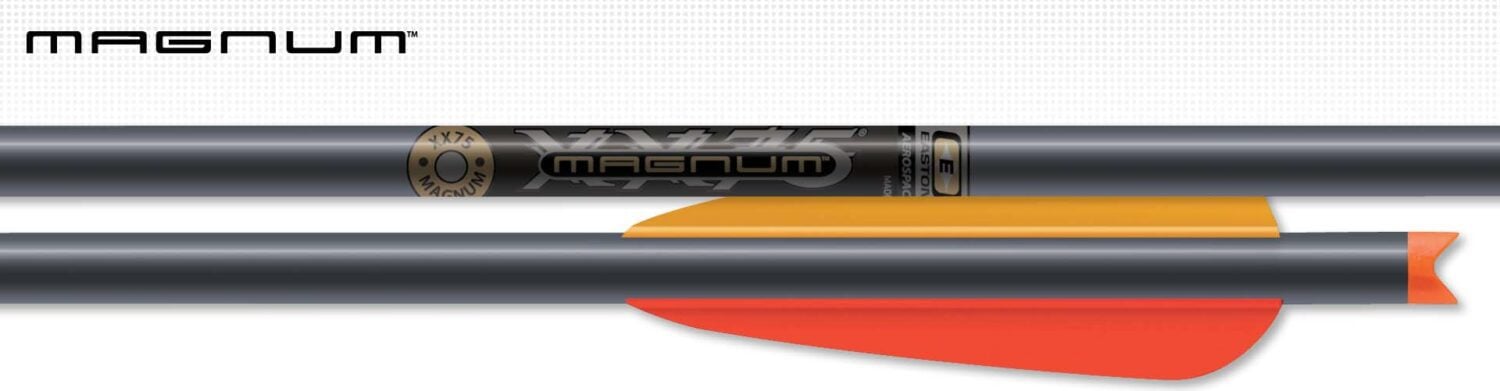
Best Aluminum Backup Option: Easton XX75 Magnum Crossbow
Best for: hunters who prefer traditional aluminum construction and a heavier finished feel, with a crossbow manual that supports the length, nock, and weight.
The XX75 Magnum is the aluminum backup in this shortlist for buyers who like a heavier, traditional bolt and an easy target pull. Easton publishes concrete weight and dimension figures, which makes it easier to compare against your crossbow’s approved setup. It suits hunters who specifically want aluminum rather than carbon.
Aluminum bolts can dent or bend differently than carbon, so inspection before each shot matters. As with every option here, the length, nock style, and finished weight must match your crossbow manual. Easton’s own guidance is to inspect the shaft, nock, and components before each shot, replace damaged nocks, and never shoot a damaged arrow.
What buyers tend to like
Traditional 7075-T9 aluminum construction with published weights.
Heavier finished feel and easy target pull.
Backed by current official Easton product information.
What to weigh
Aluminum behaves differently from carbon and can bend on hard impacts.
Heavier weight is a poor match for crossbows that require a lighter bolt.
Skip this if: your crossbow manual requires a carbon bolt or a lighter finished arrow weight, or you want the lightest fast-shooting setup.
Best Budget Barnett-Compatible Pick: Barnett Headhunter 20-inch Carbon Arrows
Best for: Barnett-compatible hunters who want an affordable 20-inch carbon arrow for practice, backup arrows, and hunting setups after confirming manual fit.
Key specs to verify:
Length: 20 inch listing variant.
Nock style and crossbow compatibility for your Barnett or other approved setup.
Pack count and included components before ordering.
Total finished arrow weight once your point or broadhead is installed.
The Barnett Headhunter belongs back in this roundup because it fills a real buyer role: a common, budget-friendly carbon arrow for compatible Barnett-style setups. It should not be treated as a universal replacement bolt, but it is useful for hunters who want enough arrows for practice and backup without paying premium-arrow prices for every shaft.
Use this only if your crossbow manual approves the length, nock style, and finished arrow weight. If you are changing from another arrow, recheck point of impact before hunting.
What buyers tend to like
Budget-friendly role for practice and backup arrows.
Common 20-inch length for many hunting crossbow setups.
Clear fit for compatible Barnett-style buyers.
What to weigh
Not universal; nock style and weight still matter.
Budget arrows may not be the best fit for premium or system-specific bows.
Skip this if: your crossbow manual requires a different length, heavier finished weight, system-specific arrow, or a nock style this listing does not match.
Best Excalibur System Arrow: Excalibur Diablo 18-inch Carbon Arrows
Best for: Excalibur owners whose manuals approve this Diablo-style 18-inch arrow setup.
Key specs to verify:
Length: 18 inch listing variant.
Exact Excalibur model compatibility.
Nock setup and total finished arrow weight.
Pack count and current listing variant.
The Diablo is a good example of why this article needs compatibility-first recommendations. It is useful for the right Excalibur crossbow, but it should not be bought as a generic substitute for a 20-inch or 22-inch arrow. For Excalibur owners, that specificity is a strength because it narrows the decision to the system the bow was designed around.
Before buying, match the arrow to your exact Excalibur manual and confirm whether the listing variant is the current one you need. If you are moving from practice points to broadheads, confirm flight and zero before hunting.
What buyers tend to like
Clear role for compatible Excalibur systems.
Useful when your manual specifically calls for this shorter arrow style.
Better fit clarity than a generic all-crossbow recommendation.
What to weigh
Shorter 18-inch length is wrong for many other crossbows.
Compatibility must be checked by exact Excalibur model.
Skip this if: you do not own a compatible Excalibur crossbow or your manual calls for a different arrow length, nock, or finished weight.
Best Lighted TenPoint-Compatible Pick: TenPoint Omni-Brite 2 Lighted Pro Elite Arrows
Best for: compatible TenPoint, Wicked Ridge, or Horton users who want a lighted-arrow option for easier arrow visibility and recovery.
Key specs to verify:
Compatibility with your exact TenPoint/Wicked Ridge/Horton model.
Omni-Brite/Pro Elite nock system and listing variant.
Length, pack count, and total finished arrow weight.
Battery/lighted-nock details before ordering.
Lighted arrows can help you see arrow flight and find the arrow after the shot, but they add one more compatibility detail. This pick should stay system-specific: buy it only when the nock system and arrow setup match the crossbow maker’s guidance.
Because lighted arrows can change component details versus standard arrows, confirm the final weight and point of impact before hunting. Do not use a lighted nock as a reason to ignore length, nock, or minimum weight requirements.
What buyers tend to like
Lighted design can help with visibility and arrow recovery.
Useful for compatible TenPoint-family systems.
Clear buyer role when compatibility is confirmed.
What to weigh
Compatibility is system-specific.
Lighted nocks add another part to check and maintain.
Skip this if: your crossbow does not support the Omni-Brite/Pro Elite arrow setup, or you prefer a simpler non-lighted arrow.
Best Heavier Carbon Express Option: Carbon Express PileDriver 20-inch Crossbolts
Best for: hunters comparing a heavier Carbon Express hunting-bolt option after confirming their crossbow supports the finished arrow weight.
Key specs to verify:
20 inch listing variant and exact current product name.
Nock style and pack count.
Total finished weight with your field point or broadhead.
Manual-approved minimum and maximum arrow-weight guidance.
The PileDriver fits the roundup as the heavier Carbon Express-style option. A heavier bolt can be appealing for broadhead setups, but it also changes speed, trajectory, and point of impact. The right way to choose it is to start with the manual, then confirm your final broadhead setup.
If you switch to this from a lighter arrow, treat it as a new setup: re-zero, confirm broadhead flight, and inspect each shaft before hunting. Do not buy it just because heavier sounds better; buy it only if the finished setup fits your bow.
What buyers tend to like
Useful option for hunters who prefer a heavier hunting-bolt feel.
Good role clarity as a 20-inch Carbon Express-style candidate.
Works well in the comparison because it contrasts with mid-weight choices.
What to weigh
May change speed, trajectory, and point of impact.
Finished arrow weight must be checked with the broadhead installed.
Skip this if: your crossbow manual requires a lighter arrow, a different nock style, or a system-specific arrow.
Your crossbow manual is the final authority for which bolts are safe to shoot. It sets the approved length, minimum total arrow weight, nock style, and broadhead guidance for your exact model. A bolt that looks right online can still be wrong for your crossbow, so start here before comparing brands. For terminology, a crossbow bolt is the short projectile used by a crossbow, but product listings may also call it a crossbow arrow.
Check your hunting rules before the season
Crossbow seasons, age rules, disability permits, equipment rules, and broadhead rules can vary by state. Confirm them with a hunter education or wildlife-agency source before you hunt. IHEA-USA is a useful starting point for hunter education, and your state wildlife agency is the final place to confirm local rules.
Length
Pick the length your crossbow manual approves. Many hunting crossbows use about 20-inch arrows, but some systems require 18-inch or 22-inch arrows. Do not assume a close length is safe, because length affects fit, clearance, balance, and how the arrow behaves when fired.
Total finished arrow weight
Total finished weight includes the shaft, insert, nock, vanes, and the broadhead or field point. A bolt that is too light can be unsafe for some crossbows, and a heavier bolt can change trajectory and point of impact. Use your manual’s minimum arrow-weight guidance first, then confirm the complete setup.
Nock style
Match the nock style to the crossbow maker’s guidance. Flat nocks, moon nocks, capture nocks, Omni-style nocks, and lighted nocks are not interchangeable in every crossbow. The wrong nock can create poor string contact or unsafe performance.
Broadhead compatibility
For deer hunting, broadhead choice matters as much as the bolt. Confirm the broadhead weight, total arrow weight, flight consistency, and local broadhead rules. If your broadheads shift the point of impact, re-zero before hunting. For a broader setup discussion, compare fixed and mechanical options in our broadhead comparison guide.
Shaft condition and inspection
Inspect every bolt before and after shooting. Look for cracks, bends, loose inserts, damaged nocks, and torn vanes, and retire any shaft that fails the check. Manufacturer guidance from brands such as Easton is to inspect the shaft, nock, and components before each shot and to never shoot a damaged arrow.
Practice before hunting
Practice with the exact bolt and broadhead setup you plan to hunt with. Confirm your zero at realistic distances and check that broadheads fly with the same point of impact as your practice points. USA Archery’s safety resources are useful background for safe shooting habits, while your crossbow manual and range rules guide the exact setup. If you also shoot target archery, our 3D archery setup guide can help with practice-focused gear thinking.
Crossbow Bolt Compatibility Checklist
Confirm each item below against your crossbow owner manual before you buy or hunt:
Manual-approved bolt length for your exact model.
Minimum total finished arrow weight, including any minimum arrow-weight warning.
Nock style the crossbow maker approves.
Shaft or bolt type the manual allows.
Broadhead or field-point weight that matches your setup.
Insert and broadhead fit for the shaft.
Vane or fletching clearance through your crossbow.
Local hunting rules for crossbow and broadhead use.
Frequently Asked Questions
What is the best crossbow bolt length for deer hunting?
The best length is the one your crossbow manual approves. Many hunting setups use 20-inch bolts, while some crossbows require 18-inch or 22-inch arrows. Never choose by length alone; confirm nock style and total finished weight too.
Are heavier crossbow bolts better for deer?
Not automatically. Heavier bolts can carry more momentum, but they fly slower and can shift your point of impact. The better question is whether the finished arrow weight fits your crossbow’s approved range and your broadhead setup.
Can I use any broadhead with these bolts?
No. Broadhead weight, thread fit, flight behavior, cutting diameter, and local hunting rules all matter. Match the broadhead to the bolt and crossbow, then confirm accuracy before hunting.
Can crossbow bolts be reused?
Yes, but only if they pass inspection. Do not reuse a bolt with a cracked shaft, loose insert, damaged nock, torn vane, or any sign of impact damage. When in doubt, retire it.
How should I inspect crossbow bolts before hunting?
Check each shaft for cracks or bends, flex it gently to feel for damage, and confirm the insert, nock, and vanes are secure. Manufacturer guidance is to inspect before each shot and never shoot a damaged arrow. Retire any bolt that fails the check.
Do crossbow hunting rules vary by state?
Yes. Crossbow seasons, equipment rules, broadhead rules, and permit requirements differ by state and can change. The broader legal status of crossbows varies by jurisdiction, so confirm current hunting rules with your state wildlife agency before each season.
Final Recommendation
The best crossbow bolt for deer hunting is the one that fits your crossbow manual first, then your hunting setup. If you want a balanced starting point, begin with a mid-weight option like the Gold Tip Ballistic .300 and verify the selected length, nock, and finished weight. If your crossbow calls for a heavier setup, compare the Gold Tip Nitro .272 or Carbon Express PileDriver. If you want a premium carbon arrow, compare the Black Eagle Executioner. If you prefer aluminum construction, the Easton XX75 Magnum is the backup option to check. For system-specific bows, the Barnett, Excalibur, and TenPoint-compatible picks should only be used when your exact manual approves that arrow setup.
Do not buy by brand, speed, or product count alone. Match the bolt to your manual, confirm the exact variant before ordering, inspect every shaft before shooting, and check your current hunting rules before the season.









.jpg)
.jpg)
.jpg)
.jpg)