


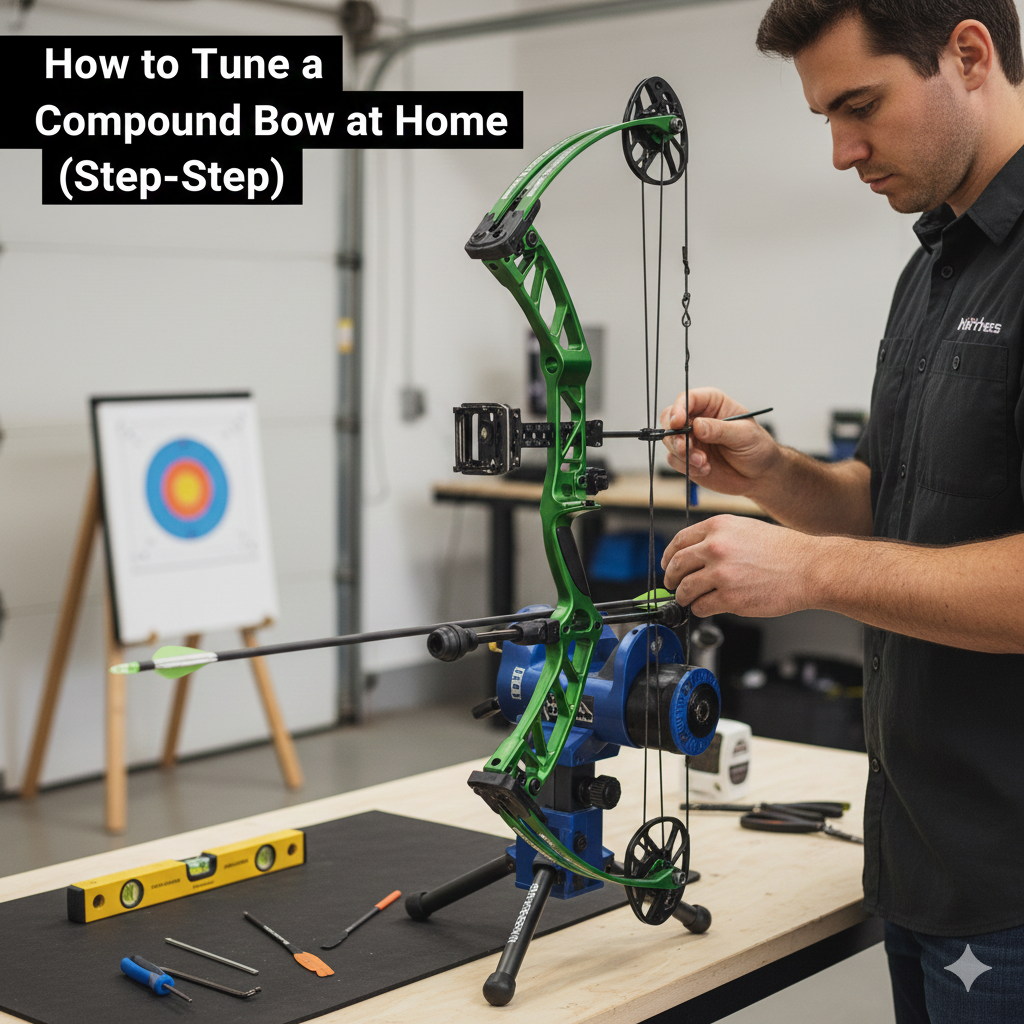
Tuning a compound bow at home safely means checking the basics that do not require a bow press: draw weight and draw length fit, arrow spine, nocking-point awareness, rest alignment, and consistent shooting form. These checks can help you understand your setup without getting into risky adjustments.
Anything that needs a bow press, cam timing, string or cable work, module changes, or uncertain limb-bolt procedures belongs at a qualified bow shop. This guide is a safe boundary map for home checks, not an advanced tuning manual.
Table of Contents
What Compound Bow Tuning Can And Cannot Fix At Home
At home, you can verify fit and alignment basics. You can check whether draw length feels controllable, whether your arrows match the setup, whether the nocking point looks reasonable, and whether the rest appears aligned. You should not attempt press-dependent work, cam synchronization, cable or string twisting, or advanced setup changes unless you have the correct tools and training.
The point is not to turn every archer into a bow technician. The point is to spot simple setup issues, document what you see, and know when the next step belongs to a pro shop.
Safety Checks Before You Start
Before any tuning, inspect the bow and confirm it is safe to draw. Do not draw or shoot a bow with visible damage, abnormal noise, or questionable string, cable, limb, or cam condition.
- Inspect the limbs, cams, string, and cables for cracks, fraying, separation, or unusual wear.
- Confirm your draw weight and draw length are set to a level you can control comfortably.
- Shoot only into a proper target with a safe backstop.
- Never dry-fire the bow.
- Stop immediately if the bow feels wrong, sounds wrong, or shows damage.
USA Archery safety guidance is a useful baseline for range habits and equipment awareness. Manufacturer manuals and safety warnings still control your specific bow.

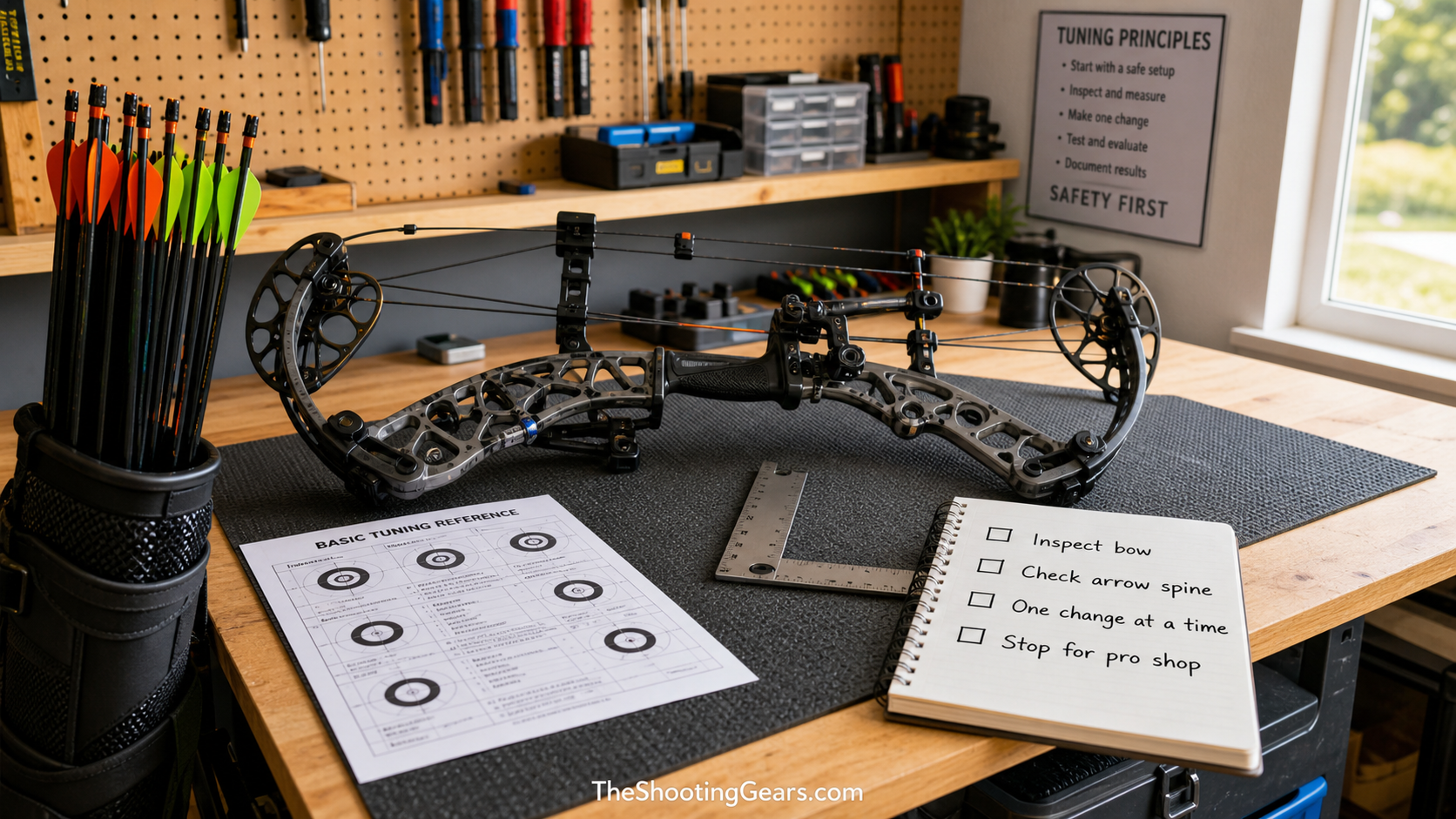
Tools For Basic Home Bow Tuning
Basic at-home checks use simple reference tools, not press equipment. Useful items include a bow square, manufacturer arrow chart, matched arrows, field points, a proper target, and a notebook for recording one change at a time.
This is not a product list. Use tools that match your bow, arrow setup, and manual. If a task requires a press or manufacturer-specific procedure, stop and route the bow to a qualified technician.
Check Draw Length, Nocking Point, And Rest Alignment
The most useful home checks are confirming draw length fit, checking nocking-point reference with a bow square, and looking at whether the rest appears aligned with the arrow path. Make one change at a time and record what changed before shooting again.
Paper Tuning Basics
Paper tuning is a diagnostic method where an arrow is shot through paper so the tear can offer clues about arrow flight. Easton’s tuning guide is a useful reference for understanding the concept. Treat the tear as information, not as permission to make risky adjustments.
Broadhead And Field-Point Comparison
Comparing field-point and broadhead impact can show whether your setup needs attention, but it should only happen on a proper range with a safe backstop and legal, safe use. If broadheads and field points behave very differently, bring that information to a bow shop instead of chasing the problem with press-dependent changes.
When To Stop And Visit A Bow Shop
Stop and visit a qualified bow technician whenever a check points to press work, cam timing, string or cable issues, module changes, limb concerns, or damage. A technician can confirm whether the bow is in spec before you spend more time trying to tune around a mechanical issue.
Arrow Fit And Spine Checks
Arrow fit and spine should match your bow’s draw weight, draw length, arrow length, and point weight. Check a manufacturer chart or tool such as the Easton arrow selector rather than guessing. An arrow that is too stiff or too weak for the setup can fly poorly no matter how much you adjust the rest.
If you need the concept explained in plain language, our arrow spine guide is the best internal next step.
Common Tuning Mistakes
The most common mistakes are changing several things at once, ignoring arrow spine, continuing to shoot a bow that shows damage, and attempting press-dependent work at home. Chasing a perfect paper tear can also become a trap if the real problem is arrow fit, shooter form, or a bow that needs a technician.
Keep the process simple: inspect, make one safe check, record it, shoot a small group, and stop when the next step requires equipment or training you do not have.
Frequently Asked Questions
Can I tune a compound bow at home without a bow press?
You can do basic checks without a press, including draw-length fit, nocking-point reference, rest alignment observation, and arrow-spine verification. Press-dependent work should go to a bow shop.
Is paper tuning safe to do at home?
Paper tuning can be safe when you shoot into a proper target with a safe backstop and adequate space. Treat the paper tear as a diagnostic clue. If the result points to press work, cam timing, or damage, stop and visit a technician.
How do I know if my arrows are the right spine?
Use a manufacturer arrow chart or selector with your draw weight, draw length, arrow length, and point weight. If the chart suggests a different spine, solve the arrow-fit problem before chasing tuning adjustments.
When should I take my bow to a pro shop?
Take it to a pro shop for bow-press work, cam timing, string or cable changes, module changes, limb concerns, abnormal noise, visible damage, or anything your manual does not clearly authorize you to handle.

