


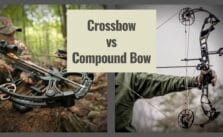
Choose a compound bow if you want a more traditional vertical-bow archery experience, more active drawing skill, and a lighter setup for walking or tree-stand hunting. Choose a crossbow if you need a held-at-full-draw design, easier aiming once cocked, or a legal/physical accommodation where crossbows are allowed. Neither is automatically better; the better choice depends on rules, skill, strength, hunting style, and safety discipline.
This comparison is a practical guide, not legal advice. Crossbow seasons, equipment rules, minimum ages, disability permits, broadhead rules, and public-land regulations vary by state and property, so always check current official hunting rules before buying or hunting.
Table of Contents
Quick Comparison
| Factor | Crossbow | Compound bow |
|---|---|---|
| Best for | Held-at-full-draw aiming, physical accommodation, some hunting setups where legal | Traditional vertical-bow archery, active shooting form, lighter carry |
| Drawing | Cocked before aiming; requires safe cocking/decocking process | Drawn by the archer before each shot |
| Carry feel | Bulkier and front-heavy | Usually lighter and easier to carry |
| Learning curve | Easier to aim once cocked, but safety procedure is strict | More form practice required |
| Legal caveat | Rules vary strongly by state/season/property | Also regulated, but often treated as standard archery equipment |
| Maintenance | String/cables, limbs, rail, trigger, scope, bolts, cocking system | String/cables, cams, rest, sight, release, arrows, tuning |
What A Crossbow Does Better
A crossbow stores energy after it is cocked, so the shooter can aim without holding draw weight the same way a vertical bow shooter does. That can make it easier for some hunters to settle into the shot, especially from a blind or stable rest.
Held-at-full-draw aiming
The biggest crossbow advantage is that it stays cocked until fired or safely decocked. That helps hunters who struggle to hold a compound bow at full draw while waiting for a clear shot angle.
Blind and rest-friendly setup
A crossbow often works well from a ground blind, shooting rail, tripod, or other stable position. It can feel more familiar to people who are used to firearm-style aiming, though crossbows still require archery-specific safety and range judgment.
Physical accommodation
Some hunters choose crossbows because of age, shoulder strength, injury, or disability. Whether a crossbow is allowed during a given season or under a permit depends on current local rules, so verify before assuming it is legal for your hunt.
What A Compound Bow Does Better
A compound bow is a vertical bow that uses cams or pulleys to reduce holding weight at full draw. It is still more physically active than a crossbow, but that is exactly what many archers enjoy.
Traditional archery skill
Compound bows reward consistent stance, anchor, grip, release, follow-through, and tuning. If you want the skill-building side of archery, the compound bow is usually more satisfying.
Lighter carry and faster handling
Most compound bows are easier to carry through brush, up a tree stand, or across public land than a crossbow. They also avoid some of the front-heavy feel that many crossbows have.
Better fit for archery-first hunters
If you enjoy practicing, tuning, and improving as an archer, a compound bow gives you more room to grow. It also connects naturally to target archery, 3D archery, and bowhunting practice.
Which Is Better For Hunting?
For hunting, the better choice is the one that is legal, ethical, accurate in your hands, and matched to the distance and shot angles you can handle. A crossbow can be easier to aim once cocked, but it is bulkier and has strict cocking/decocking safety requirements. A compound bow is lighter and more archery-centered, but it demands more practice and draw-strength management.
The Archery Trade Association is a useful industry reference point for archery equipment context, but hunting rules themselves should come from current state wildlife-agency sources.
Safety And Legal Checks
- Check whether crossbows are legal for your season, age group, permit type, and property.
- Confirm minimum draw weight, bolt/arrow, broadhead, and equipment requirements.
- Use the correct bolt or arrow for your exact setup.
- Practice at realistic hunting distances before the season.
- Never dry fire a crossbow or compound bow.
- Use safe cocking and decocking methods for crossbows.
- Use a haul line and fall protection when hunting from an elevated stand.
- Keep fingers and thumbs out of the crossbow string path.
Use-Case Guide
For beginners
A crossbow can feel easier at first because aiming after cocking is simpler. A compound bow builds more archery skill and may be the better choice if the beginner wants to learn archery as a sport, not only hunting.
For tree stands and blinds
Crossbows can work well from blinds and stable rests. Compound bows are easier to carry and maneuver but require drawing at the right moment without being seen. In a tree stand, both require fall protection and careful equipment handling.
For target practice
A compound bow is usually the better long-term skill-building tool for target and 3D archery. A crossbow is better if your goal is crossbow-specific hunting preparation and equipment familiarity.
Frequently Asked Questions
Is a crossbow more powerful than a compound bow?
Not always in a simple way. Crossbows and compound bows use different draw systems, projectile weights, speeds, and energy profiles. Compare complete setups and legal requirements rather than assuming one category is always more powerful.
Is a crossbow easier to shoot?
A crossbow is often easier to aim after it is cocked, but safe cocking, decocking, bolt choice, trigger discipline, and string-path safety still matter. Easier aiming does not remove the need for practice.
Is a compound bow better for archery practice?
Usually, yes. A compound bow develops more of the vertical-bow skill set: stance, anchor, grip, release, follow-through, and tuning. It is better if you want archery as a long-term sport.
Are crossbows legal during archery season?
It depends on the state, season, age, permit type, and property rules. Check current official wildlife-agency regulations before hunting with a crossbow.
Final Recommendation
Choose a compound bow if you want lighter carry, more active archery skill, and a traditional bowhunting path. Choose a crossbow if you need held-at-full-draw aiming, a blind/rest-friendly setup, or an accommodation that is legal where you hunt. The right answer is the one you can use safely, legally, accurately, and ethically.

