Crossbow deer hunting starts with three checks before you ever sit in a stand: current state regulations, hunter-safety fundamentals, and the setup instructions in your exact crossbow manual. Those three sources decide what is legal, what is safe, and what your equipment is built to do.
This guide covers legal checks, manual-first setup, pre-season practice, and ethical shot planning. It does not give state-specific legal advice, model-specific bolt numbers, guaranteed harvest claims, or product recommendations. Use it as a planning framework, then verify the details for your state, property, crossbow model, and season.
Quick Answer: How To Prepare For Crossbow Deer Hunting
Prepare for crossbow deer hunting by confirming your current legal requirements, reading your crossbow manual, checking bolt and broadhead compatibility, practicing with the actual hunting setup, and setting a personal effective range before the season. A responsible hunter passes any shot that is obstructed, low-light, outside practiced limits, or legally uncertain.
The best crossbow deer hunting tips are not shortcuts. They are habits: verify the rules, handle the crossbow safely, practice early, keep equipment compatible, and let shot discipline matter more than excitement.
Check Crossbow Laws Before You Hunt
Crossbow legality for deer hunting changes by state, season, age or eligibility rules, property type, and equipment definition. Start with your state wildlife agency’s current deer regulations every year. Do not assume a crossbow rule from one state, forum, video, or old article applies where you hunt.
Hunter education is also part of responsible preparation. IHEA-USA provides hunter-education context, and Hunter-Ed explains why hunter education matters for safety, responsibility, and laws.
State Rules, Seasons, Tags, And Legal Equipment
Confirm season dates, tags, reporting, legal equipment, broadhead rules, hunter orange, and crossbow-specific restrictions from official sources. For example, Texas Parks and Wildlife publishes current hunting means and methods, but that is only a Texas example. Check your own state’s current rulebook before you hunt.
Public Land, Private Land, And Access Rules
Land access can add another layer of rules. Public land units, managed areas, leases, and private property may limit stand placement, parking, access hours, trimming, recovery routes, or use of equipment. If you are hunting public land, our public land deer hunting guide is a useful next read.
Start With The Crossbow Manual
Your crossbow manual is the authority for that model. Crossbows differ in draw weight, power stroke, bolt requirements, nock style, cocking method, decocking method, safety mechanism, and maintenance boundaries. General advice should never override the manufacturer’s instructions for your exact crossbow.
Bolt Weight, Length, Nock, And Spine Compatibility
Bolts need to match the manufacturer’s specifications for weight, length, nock style, and spine. Using bolts that are too light, the wrong length, or the wrong nock type can be unsafe and can damage the crossbow. For buying background, see our source-checked guide to crossbow bolts for deer hunting, but always confirm compatibility against your manual.
Broadhead Compatibility And Practice Heads
Broadheads must fit your crossbow setup and state rules. Practice with a setup that matches your hunting weight and point of impact, while handling broadheads carefully and storing them in a protective case. Do not assume a broadhead is safe or legal simply because it fits on the end of a bolt.
Cocking, Decocking, And Dry-Fire Cautions
Follow the manufacturer-approved cocking and decocking process. Dry-firing a crossbow can be dangerous and can damage equipment. Keep fingers and thumbs below the rail and away from the string path, keep the crossbow pointed in a safe direction, and never improvise a decocking method because it seems faster.
A safer crossbow hunt starts with current rules, a manual-first setup, compatible bolts, and a personal shot limit.
Practice Before Deer Season
Practice well before deer season so opening day is not your first real test with the hunting setup. Shoot at known distances with a safe target and backstop. Confirm your scope or sight, your bolts, and your broadhead-weight setup before you rely on them in the field.
Confirm Ranges With The Hunting Setup
Practice with the bolts, point weight, and crossbow you plan to hunt with. Point of impact can change when bolt weight, broadhead style, or range changes. Keep notes on where your groups stay consistent instead of relying on the maximum distance printed in marketing material.
Know Your Personal Limit Before Taking A Shot
Your personal effective range is the distance where you can place shots consistently under realistic conditions. It is usually shorter than the distance a crossbow can physically launch a bolt. Decide that limit during practice, not when a deer is in front of you.
Plan Ethical Shot Opportunities
Ethical shot planning means staying inside your demonstrated ability, the crossbow manufacturer’s instructions, and current legal rules. Wait for a clear, legal, high-confidence opportunity with no obstruction and a safe background. If the shot is low-light, rushed, blocked by brush, or outside your practiced limit, pass.
For broader first-season context, pair this page with our deer hunting tips for beginners. The crossbow is only one part of a safe hunt; scouting, access, weather, recovery planning, and restraint all matter too.
Crossbow Deer Hunting Checklist
Planning Step
What To Confirm
Why It Matters
Rules
State crossbow, deer, tag, reporting, and orange requirements
Prevents outdated or location-wrong assumptions
Manual
Manufacturer setup, cocking, decocking, and bolt requirements
Keeps setup model-specific and safer
Bolts
Weight, length, spine, and nock match the manual
Wrong bolts can be unsafe or damage equipment
Broadheads
Compatible with setup and legal for the season
Prevents bad assumptions about equipment
Practice
Known ranges, safe backstop, actual hunting setup
Builds a real personal shot limit
Shot discipline
Clear, legal, high-confidence opportunity only
Supports ethical hunting and safety
Common Crossbow Deer Hunting Mistakes
The most common mistakes are assuming crossbows are legal without checking rules, buying bolts before reading the manual, practicing with a different setup than the one used for hunting, ignoring decocking instructions, and taking long or obstructed shots beyond practiced ability.
Another mistake is turning equipment confidence into shot confidence. A fast crossbow does not make a poor angle, poor visibility, or uncertain background acceptable. The responsible choice is often to wait.
It depends on the state, season, and sometimes the hunter or property type. Check your state wildlife agency’s current deer regulations before planning a crossbow hunt.
What bolts should I use for crossbow deer hunting?
Use bolts that match your crossbow manufacturer’s specifications for weight, length, spine, and nock style. There is no single correct bolt for every crossbow.
Can I use any broadhead with a crossbow?
No. Broadhead compatibility depends on your crossbow and current state equipment rules. Check the manufacturer’s guidance and legal requirements before hunting.
How far should I shoot at a deer with a crossbow?
Only as far as you can place shots consistently under realistic conditions with your hunting setup. Decide that personal limit during practice and pass shots outside it.
Should I decock a crossbow by firing it?
Follow your manufacturer’s instructions. Dry-firing can damage a crossbow and can be dangerous, so use the approved decocking method for your model.
The best crossbow bolts for deer hunting are the bolts or arrows your crossbow manual approves first, then the ones that give you the right length, total finished arrow weight, nock style, broadhead compatibility, and consistent flight. For most hunters, the safest pick is not the fastest or most popular bolt; it is the one the crossbow maker approves for that exact model.
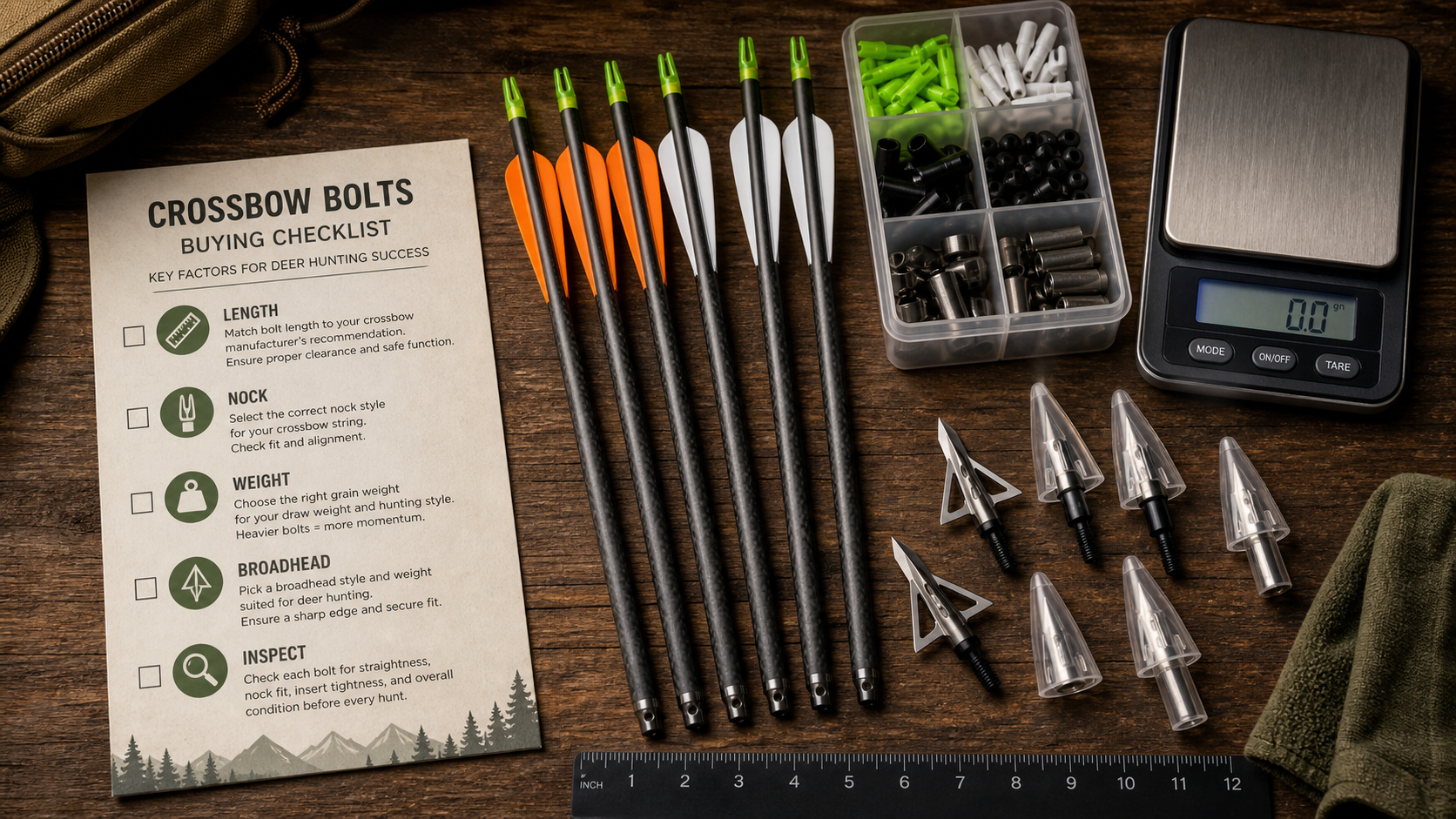
Fit check before you buy: Confirm the bolt length, total finished arrow weight, nock style, broadhead setup, and any minimum arrow-weight warning in your crossbow owner manual. A bolt that looks right online can still be wrong for your crossbow.
Use the crossbow manual as the final authority.
Do not choose by length alone.
Recheck product listings before ordering because pack counts, nocks, and variants can change.
Table of Contents
On This Page
How We Chose
This is a research-based buying guide, not a hands-on field test. We compare source-visible product information, manufacturer specs, merchant-page signals, and compatibility-first buying factors. We do not claim to have personally tested these bolts.
Our selection logic is compatibility-first: we favor products with clear manufacturer information, distinct buyer roles, common hunting lengths, honest fit warnings, and reachable buying information. A bolt earns a place by being easy to match to a real crossbow setup, not by brand alone.
Before buying any option here, compare it against your crossbow manual and your local hunting rules. Treat every pick as a candidate to confirm for your exact crossbow, length, nock style, and finished arrow weight. For broader hunting setup context, see our crossbow deer hunting guide and crossbow deer hunting tips.
Quick Picks
Pick
Best For
Key Fit Check
Product Link
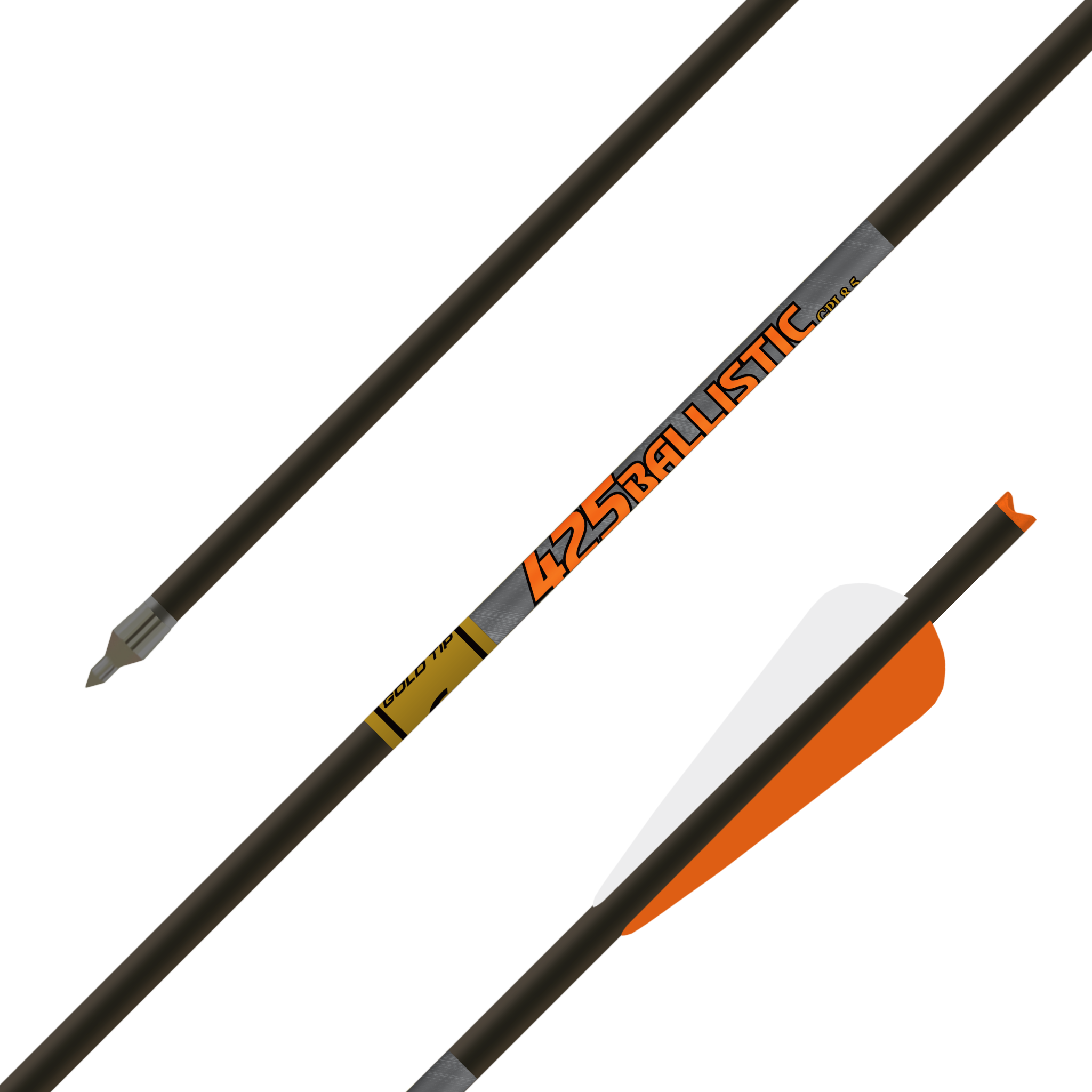
Gold Tip Ballistic Pro Bolts
Most mainstream hunting crossbows that fit a mid-weight bolt setup
Confirm the 22 inch variant, nock style, and finished weight against your manual.
Best Mid-Weight All-Around Pick: Gold Tip Ballistic Pro Bolts
Best for: hunters with a mainstream crossbow who want a balanced mid-weight bolt, after confirming fit in the crossbow manual.
Key specs:
Spine class: .300, per Gold Tip official product information.
Construction: Gold Tip 100% Carbon Technology.
Included components: flat and moon nock; 110 grain insert.
Variant referenced: 22 inch, 4 inch Duravanes, 6-pack, SKU BA22A46.
Manufacturer compatibility boundary: positioned for crossbows up to 175 pounds, or bows that require a 425 grain weight-range bolt.
The Ballistic .300 is the cleanest general deer-hunting starting point in this shortlist because it is built around mid-weight balance rather than only the fastest or highest-draw-weight crossbows. Gold Tip lists it with both flat and moon nocks and a 110 grain insert, which gives you setup flexibility, but the nock that is right for you is the one your crossbow maker approves.
Treat the 425 grain weight-range guidance as a manufacturer compatibility boundary, not a universal fit claim. Your finished arrow weight depends on the point or broadhead you add, so confirm the total against your crossbow manual before hunting. Keep length, nock style, and minimum arrow weight as manual-first checks.
What buyers tend to like
Mid-weight balance suits a wide range of common hunting crossbows.
Both nock types and a defined insert weight are listed by the manufacturer.
Backed by current official Gold Tip product information.
What to weigh
Variant availability differs by length and pack, so the exact 6-pack must be confirmed before ordering.
Not aimed at the highest-draw-weight crossbows that call for a heavier bolt.
Skip this if: your crossbow manual requires a heavier bolt, such as a 500 grain weight-range bolt for a high-draw-weight crossbow, a different length, or a nock style this bolt does not include.
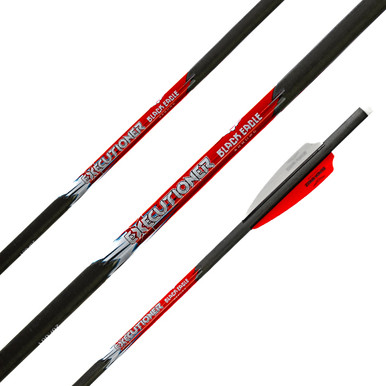
Best Premium Accuracy Upgrade: Black Eagle Executioner Crossbow Fletched Arrows
Best for: hunters who want a higher-tolerance arrow with durable components and are ready to match length, nock, and minimum weight to their crossbow manual.
Included components: half-moon nocks installed and removable, flat nocks on 20 inch, Executioner brass inserts installed, and 3 inch Fusion X-II shield-cut vanes.
Bare-arrow weight: 20 inch and 22 inch arrows weigh 326 grains without a field point or broadhead.
The Executioner is the premium accuracy candidate here because Black Eagle publishes tighter straightness options and a plus or minus 1 grain weight tolerance, which is the kind of consistency many hunters want for confident broadhead flight. The installed brass inserts and shield-cut vanes are useful out of the box, though you should still confirm the nock and insert setup matches your crossbow.
Black Eagle states these arrows work with most major manufacturer crossbows, but the same page tells buyers to check the crossbow manual for arrow weight minimums to avoid voiding the warranty. Follow that instruction. The listed 326 grain bare weight is a starting point only, because your finished weight changes once a point or broadhead is added.
What buyers tend to like
Tight straightness options and a plus or minus 1 grain weight tolerance.
Useful included components: brass inserts and shield-cut vanes.
Two lengths and clear shaft specs from official product information.
What to weigh
Premium positioning means a higher cost than basic practice arrows.
Option-level stock can vary, so the exact length, straightness, and pack needs a final check.
Skip this if: your crossbow manual sets a minimum arrow weight or nock style this arrow does not meet, or you only need budget practice arrows.
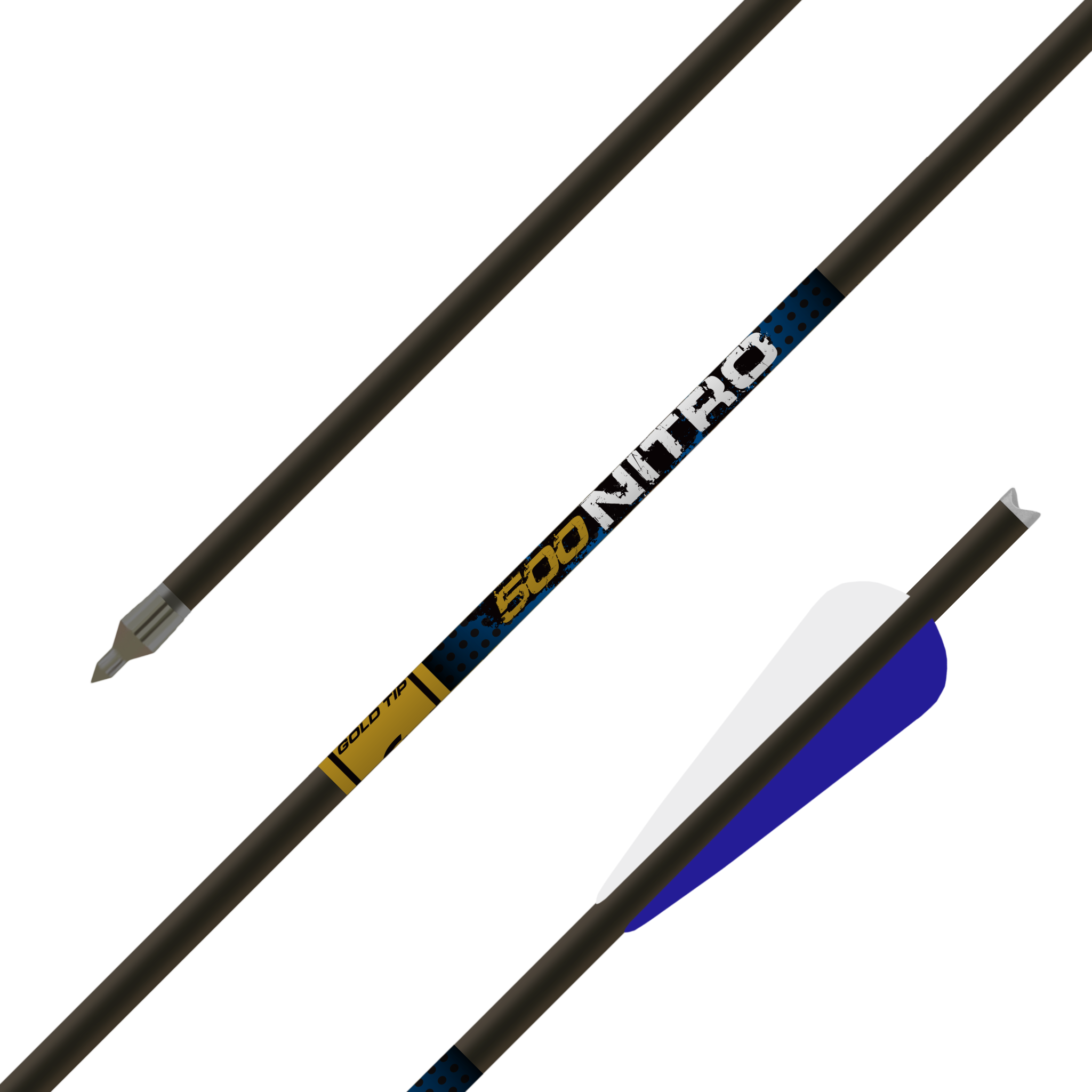
Best Heavy Bolt for Powerful Crossbows: Gold Tip Nitro Pro Bolts
Best for: hunters running a fast or high-draw-weight crossbow that calls for a heavier bolt, confirmed against the crossbow manual.
Key specs:
Spine class: .272, per Gold Tip official product information.
Construction: Gold Tip 100% Carbon Technology.
Included components: moon nock; 60 grain insert.
Variant referenced: 22 inch, 4 inch Duravanes, 6-pack, SKU NI22MA46.
Manufacturer compatibility boundary: positioned for draw weights over 175 pounds, or bows that require a 500 grain weight-range bolt.
The Nitro .272 is the heavy option in this shortlist. Gold Tip positions it for fast and powerful crossbows, which is exactly the case where a heavier, stiffer bolt can help the system run within its intended weight range. It is not meant to be forced onto lower-draw crossbows, so this is a fit-driven pick rather than a default upgrade.
Use the 500 grain weight-range guidance as a manufacturer boundary, and remember that a heavier bolt can change speed, trajectory, and point of impact. If you switch to this bolt, re-zero before hunting and confirm your broadhead and total finished weight against your manual.
What buyers tend to like
Purpose-built heavier bolt for fast or high-draw-weight crossbows.
Clear manufacturer draw-weight guidance.
Backed by current official Gold Tip product information.
What to weigh
Wrong choice for lower-draw crossbows that need a mid-weight bolt.
Several variants can be unavailable, so the exact 22 inch 6-pack must be confirmed.
Skip this if: your crossbow manual calls for a mid-weight bolt, or your draw weight is at or below the range where a lighter bolt is recommended.
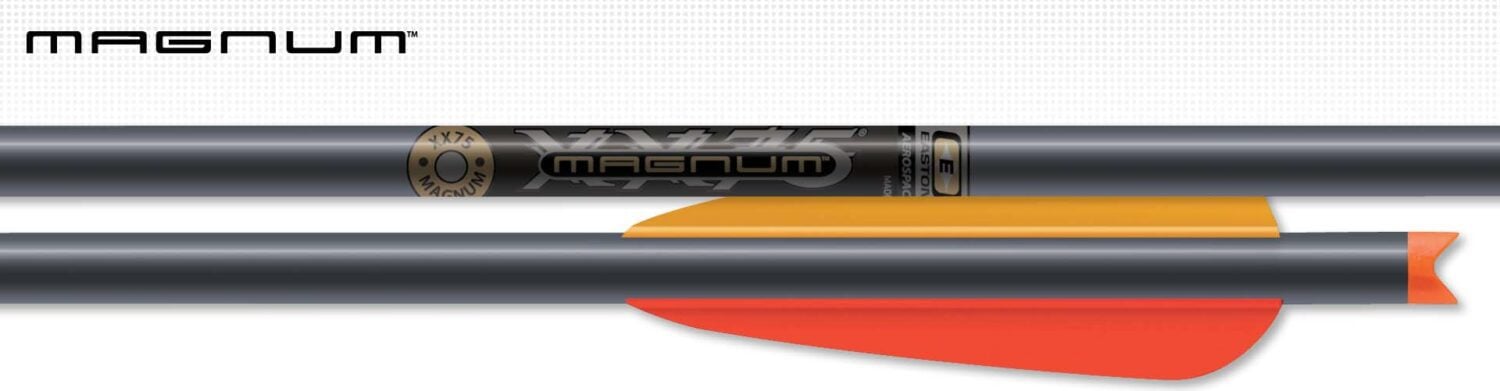
Best Aluminum Backup Option: Easton XX75 Magnum Crossbow
Best for: hunters who prefer traditional aluminum construction and a heavier finished feel, with a crossbow manual that supports the length, nock, and weight.
The XX75 Magnum is the aluminum backup in this shortlist for buyers who like a heavier, traditional bolt and an easy target pull. Easton publishes concrete weight and dimension figures, which makes it easier to compare against your crossbow’s approved setup. It suits hunters who specifically want aluminum rather than carbon.
Aluminum bolts can dent or bend differently than carbon, so inspection before each shot matters. As with every option here, the length, nock style, and finished weight must match your crossbow manual. Easton’s own guidance is to inspect the shaft, nock, and components before each shot, replace damaged nocks, and never shoot a damaged arrow.
What buyers tend to like
Traditional 7075-T9 aluminum construction with published weights.
Heavier finished feel and easy target pull.
Backed by current official Easton product information.
What to weigh
Aluminum behaves differently from carbon and can bend on hard impacts.
Heavier weight is a poor match for crossbows that require a lighter bolt.
Skip this if: your crossbow manual requires a carbon bolt or a lighter finished arrow weight, or you want the lightest fast-shooting setup.
Best Budget Barnett-Compatible Pick: Barnett Headhunter 20-inch Carbon Arrows
Best for: Barnett-compatible hunters who want an affordable 20-inch carbon arrow for practice, backup arrows, and hunting setups after confirming manual fit.
Key specs to verify:
Length: 20 inch listing variant.
Nock style and crossbow compatibility for your Barnett or other approved setup.
Pack count and included components before ordering.
Total finished arrow weight once your point or broadhead is installed.
The Barnett Headhunter belongs back in this roundup because it fills a real buyer role: a common, budget-friendly carbon arrow for compatible Barnett-style setups. It should not be treated as a universal replacement bolt, but it is useful for hunters who want enough arrows for practice and backup without paying premium-arrow prices for every shaft.
Use this only if your crossbow manual approves the length, nock style, and finished arrow weight. If you are changing from another arrow, recheck point of impact before hunting.
What buyers tend to like
Budget-friendly role for practice and backup arrows.
Common 20-inch length for many hunting crossbow setups.
Clear fit for compatible Barnett-style buyers.
What to weigh
Not universal; nock style and weight still matter.
Budget arrows may not be the best fit for premium or system-specific bows.
Skip this if: your crossbow manual requires a different length, heavier finished weight, system-specific arrow, or a nock style this listing does not match.
Best Excalibur System Arrow: Excalibur Diablo 18-inch Carbon Arrows
Best for: Excalibur owners whose manuals approve this Diablo-style 18-inch arrow setup.
Key specs to verify:
Length: 18 inch listing variant.
Exact Excalibur model compatibility.
Nock setup and total finished arrow weight.
Pack count and current listing variant.
The Diablo is a good example of why this article needs compatibility-first recommendations. It is useful for the right Excalibur crossbow, but it should not be bought as a generic substitute for a 20-inch or 22-inch arrow. For Excalibur owners, that specificity is a strength because it narrows the decision to the system the bow was designed around.
Before buying, match the arrow to your exact Excalibur manual and confirm whether the listing variant is the current one you need. If you are moving from practice points to broadheads, confirm flight and zero before hunting.
What buyers tend to like
Clear role for compatible Excalibur systems.
Useful when your manual specifically calls for this shorter arrow style.
Better fit clarity than a generic all-crossbow recommendation.
What to weigh
Shorter 18-inch length is wrong for many other crossbows.
Compatibility must be checked by exact Excalibur model.
Skip this if: you do not own a compatible Excalibur crossbow or your manual calls for a different arrow length, nock, or finished weight.
Best Lighted TenPoint-Compatible Pick: TenPoint Omni-Brite 2 Lighted Pro Elite Arrows
Best for: compatible TenPoint, Wicked Ridge, or Horton users who want a lighted-arrow option for easier arrow visibility and recovery.
Key specs to verify:
Compatibility with your exact TenPoint/Wicked Ridge/Horton model.
Omni-Brite/Pro Elite nock system and listing variant.
Length, pack count, and total finished arrow weight.
Battery/lighted-nock details before ordering.
Lighted arrows can help you see arrow flight and find the arrow after the shot, but they add one more compatibility detail. This pick should stay system-specific: buy it only when the nock system and arrow setup match the crossbow maker’s guidance.
Because lighted arrows can change component details versus standard arrows, confirm the final weight and point of impact before hunting. Do not use a lighted nock as a reason to ignore length, nock, or minimum weight requirements.
What buyers tend to like
Lighted design can help with visibility and arrow recovery.
Useful for compatible TenPoint-family systems.
Clear buyer role when compatibility is confirmed.
What to weigh
Compatibility is system-specific.
Lighted nocks add another part to check and maintain.
Skip this if: your crossbow does not support the Omni-Brite/Pro Elite arrow setup, or you prefer a simpler non-lighted arrow.
Best Heavier Carbon Express Option: Carbon Express PileDriver 20-inch Crossbolts
Best for: hunters comparing a heavier Carbon Express hunting-bolt option after confirming their crossbow supports the finished arrow weight.
Key specs to verify:
20 inch listing variant and exact current product name.
Nock style and pack count.
Total finished weight with your field point or broadhead.
Manual-approved minimum and maximum arrow-weight guidance.
The PileDriver fits the roundup as the heavier Carbon Express-style option. A heavier bolt can be appealing for broadhead setups, but it also changes speed, trajectory, and point of impact. The right way to choose it is to start with the manual, then confirm your final broadhead setup.
If you switch to this from a lighter arrow, treat it as a new setup: re-zero, confirm broadhead flight, and inspect each shaft before hunting. Do not buy it just because heavier sounds better; buy it only if the finished setup fits your bow.
What buyers tend to like
Useful option for hunters who prefer a heavier hunting-bolt feel.
Good role clarity as a 20-inch Carbon Express-style candidate.
Works well in the comparison because it contrasts with mid-weight choices.
What to weigh
May change speed, trajectory, and point of impact.
Finished arrow weight must be checked with the broadhead installed.
Skip this if: your crossbow manual requires a lighter arrow, a different nock style, or a system-specific arrow.
Your crossbow manual is the final authority for which bolts are safe to shoot. It sets the approved length, minimum total arrow weight, nock style, and broadhead guidance for your exact model. A bolt that looks right online can still be wrong for your crossbow, so start here before comparing brands. For terminology, a crossbow bolt is the short projectile used by a crossbow, but product listings may also call it a crossbow arrow.
Check your hunting rules before the season
Crossbow seasons, age rules, disability permits, equipment rules, and broadhead rules can vary by state. Confirm them with a hunter education or wildlife-agency source before you hunt. IHEA-USA is a useful starting point for hunter education, and your state wildlife agency is the final place to confirm local rules.
Length
Pick the length your crossbow manual approves. Many hunting crossbows use about 20-inch arrows, but some systems require 18-inch or 22-inch arrows. Do not assume a close length is safe, because length affects fit, clearance, balance, and how the arrow behaves when fired.
Total finished arrow weight
Total finished weight includes the shaft, insert, nock, vanes, and the broadhead or field point. A bolt that is too light can be unsafe for some crossbows, and a heavier bolt can change trajectory and point of impact. Use your manual’s minimum arrow-weight guidance first, then confirm the complete setup.
Nock style
Match the nock style to the crossbow maker’s guidance. Flat nocks, moon nocks, capture nocks, Omni-style nocks, and lighted nocks are not interchangeable in every crossbow. The wrong nock can create poor string contact or unsafe performance.
Broadhead compatibility
For deer hunting, broadhead choice matters as much as the bolt. Confirm the broadhead weight, total arrow weight, flight consistency, and local broadhead rules. If your broadheads shift the point of impact, re-zero before hunting. For a broader setup discussion, compare fixed and mechanical options in our broadhead comparison guide.
Shaft condition and inspection
Inspect every bolt before and after shooting. Look for cracks, bends, loose inserts, damaged nocks, and torn vanes, and retire any shaft that fails the check. Manufacturer guidance from brands such as Easton is to inspect the shaft, nock, and components before each shot and to never shoot a damaged arrow.
Practice before hunting
Practice with the exact bolt and broadhead setup you plan to hunt with. Confirm your zero at realistic distances and check that broadheads fly with the same point of impact as your practice points. USA Archery’s safety resources are useful background for safe shooting habits, while your crossbow manual and range rules guide the exact setup. If you also shoot target archery, our 3D archery setup guide can help with practice-focused gear thinking.
Crossbow Bolt Compatibility Checklist
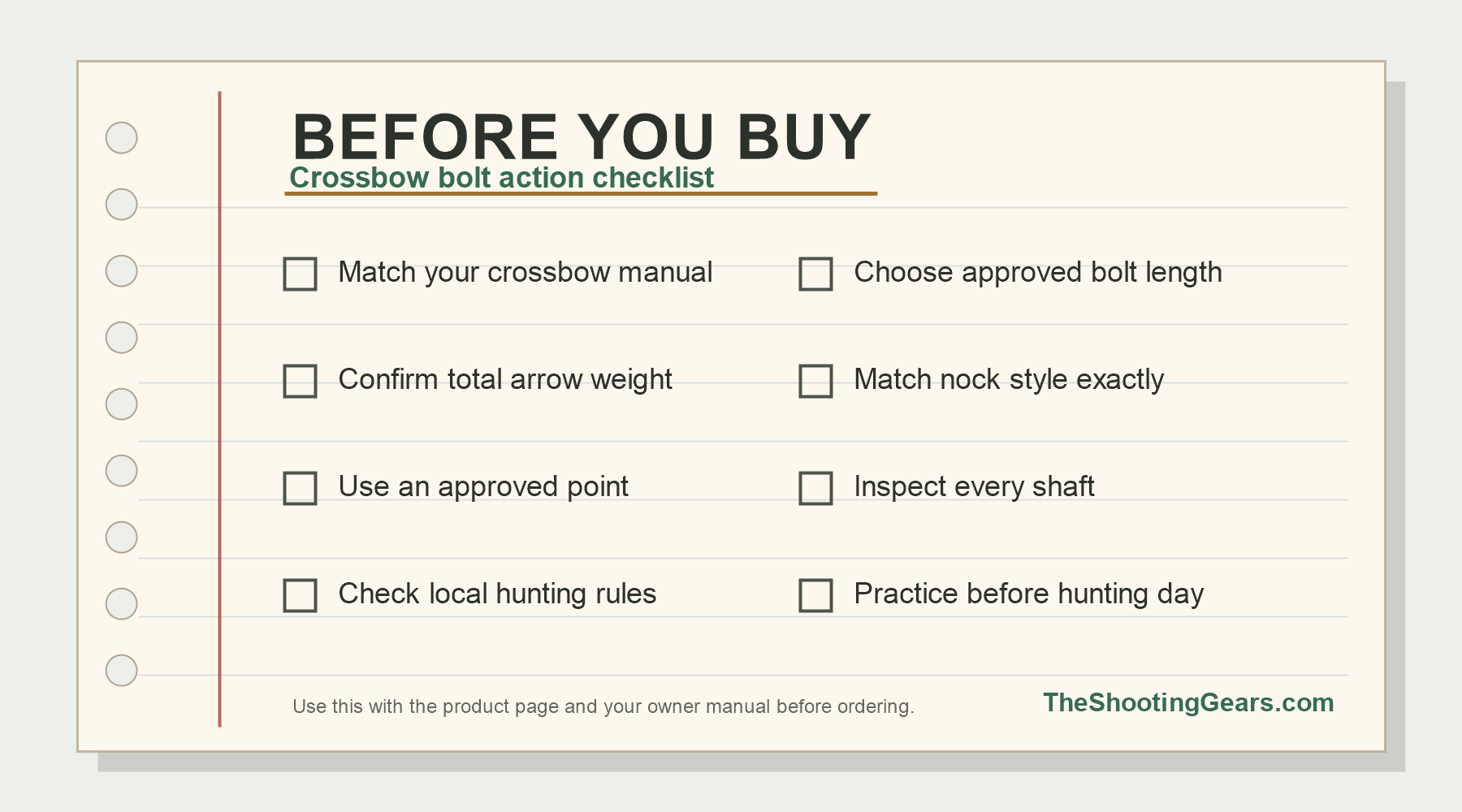
Confirm each item below against your crossbow owner manual before you buy or hunt:
Manual-approved bolt length for your exact model.
Minimum total finished arrow weight, including any minimum arrow-weight warning.
Nock style the crossbow maker approves.
Shaft or bolt type the manual allows.
Broadhead or field-point weight that matches your setup.
Insert and broadhead fit for the shaft.
Vane or fletching clearance through your crossbow.
Local hunting rules for crossbow and broadhead use.
Frequently Asked Questions
What is the best crossbow bolt length for deer hunting?
The best length is the one your crossbow manual approves. Many hunting setups use 20-inch bolts, while some crossbows require 18-inch or 22-inch arrows. Never choose by length alone; confirm nock style and total finished weight too.
Are heavier crossbow bolts better for deer?
Not automatically. Heavier bolts can carry more momentum, but they fly slower and can shift your point of impact. The better question is whether the finished arrow weight fits your crossbow’s approved range and your broadhead setup.
Can I use any broadhead with these bolts?
No. Broadhead weight, thread fit, flight behavior, cutting diameter, and local hunting rules all matter. Match the broadhead to the bolt and crossbow, then confirm accuracy before hunting.
Can crossbow bolts be reused?
Yes, but only if they pass inspection. Do not reuse a bolt with a cracked shaft, loose insert, damaged nock, torn vane, or any sign of impact damage. When in doubt, retire it.
How should I inspect crossbow bolts before hunting?
Check each shaft for cracks or bends, flex it gently to feel for damage, and confirm the insert, nock, and vanes are secure. Manufacturer guidance is to inspect before each shot and never shoot a damaged arrow. Retire any bolt that fails the check.
Do crossbow hunting rules vary by state?
Yes. Crossbow seasons, equipment rules, broadhead rules, and permit requirements differ by state and can change. The broader legal status of crossbows varies by jurisdiction, so confirm current hunting rules with your state wildlife agency before each season.
Final Recommendation
The best crossbow bolt for deer hunting is the one that fits your crossbow manual first, then your hunting setup. If you want a balanced starting point, begin with a mid-weight option like the Gold Tip Ballistic .300 and verify the selected length, nock, and finished weight. If your crossbow calls for a heavier setup, compare the Gold Tip Nitro .272 or Carbon Express PileDriver. If you want a premium carbon arrow, compare the Black Eagle Executioner. If you prefer aluminum construction, the Easton XX75 Magnum is the backup option to check. For system-specific bows, the Barnett, Excalibur, and TenPoint-compatible picks should only be used when your exact manual approves that arrow setup.
Do not buy by brand, speed, or product count alone. Match the bolt to your manual, confirm the exact variant before ordering, inspect every shaft before shooting, and check your current hunting rules before the season.









.jpg)
.jpg)
.jpg)
.jpg)