
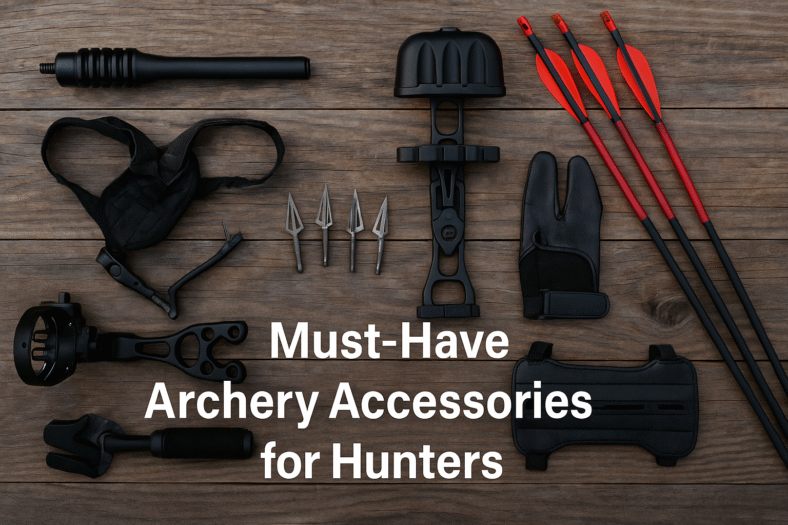
Archery hunting has evolved far beyond the traditional bow and arrow. Today’s hunters rely on a wide range of accessories to improve accuracy, ensure safety, and enhance overall performance in the field. Whether you’re a seasoned bowhunter or just getting started, investing in the right gear can make the difference between a successful hunt and a missed opportunity.
In this guide, we’ll explore 10 must-have archery accessories for hunters covering everything from accuracy tools to comfort upgrades so you’re fully prepared for your next hunt.
1. Bow Sight Precision Targeting Made Simple
A reliable bow sight is arguably the most important accessory for bowhunters. It helps align your shot and improves accuracy at varying distances.
- Fixed Pin Sights: Perfect for beginners, offering multiple preset pins for specific yardages.
- Single Pin Sights: Adjustable for precision shooting at varying distances.
- Digital & Rangefinding Sights: Advanced models with built-in rangefinders to reduce guesswork.
Why Hunters Need It: In real hunting conditions—low light, moving targets, and unpredictable ranges—a bow sight gives you confidence that your arrow will land exactly where you aim.
Pro Tip: For deer and elk hunting, a 3-pin or 5-pin sight usually offers the best balance between simplicity and flexibility.
2. Arrow Rest – Stability for a Clean Release
The arrow rest ensures that your arrow is stable during the draw and release. Without a good rest, even the best shot can go astray.
- Drop-Away Rests: Popular among hunters, these move out of the way after release for maximum accuracy.
- Whisker Biscuit Rests: Beginner-friendly, durable, and hold the arrow securely.
- Full Containment Rests: Keep the arrow locked in place while stalking prey.
Why Hunters Need It: When you’re drawing quietly in the woods, the last thing you want is your arrow slipping off the rest and clattering to the ground.
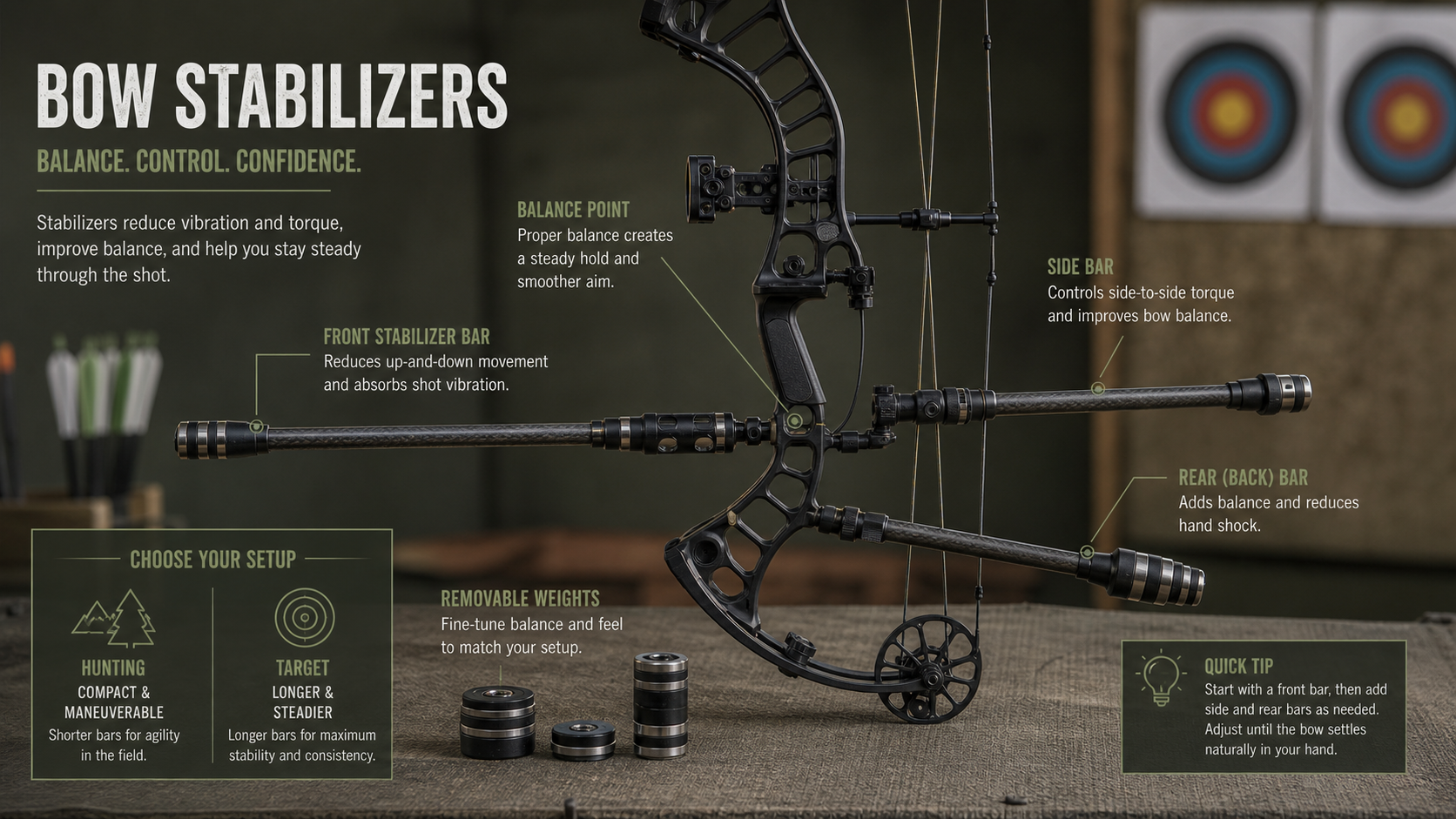
3. Stabilizer – Balance, Control, and Reduced Vibration
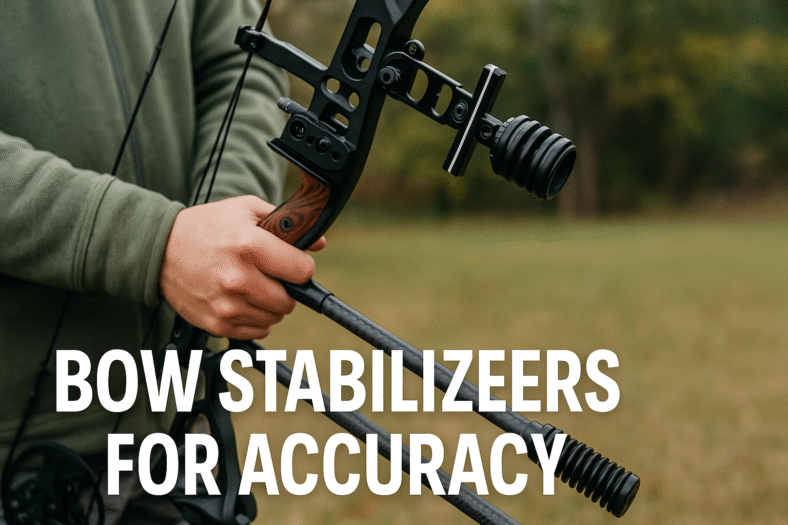
Bow stabilizers are designed to balance your bow, reduce vibration, and dampen noise.
- Short Stabilizers: Compact and lightweight, best for mobile hunters.
- Long Stabilizers: Offer better balance but can be cumbersome in tight spaces.
- Vibration-Dampening Stabilizers: Essential for reducing noise, which can spook game.
Why Hunters Need It: A stable shot is a more accurate shot. Plus, a quiet bow is critical when hunting sharp-eared animals like whitetail deer.
SEO Tip: Many hunters search for “best bow stabilizer for hunting whitetail”—a keyword to target when optimizing your gear reviews.
4. Quiver – Keep Your Arrows Accessible
A quiver holds your arrows securely, whether mounted on the bow, hip, or back.
- Bow-Mounted Quivers: Lightweight and convenient, keeping arrows at your fingertips.
- Hip Quivers: Great for ground hunting and easy access.
- Back Quivers: Traditional style, favored by some hunters for mobility.
Why Hunters Need It: Quick access to arrows can be the difference between a successful second shot and losing your prey.
5. Broadheads – The Business End of the Arrow
No hunting setup is complete without broadheads. These are the sharp tips that deliver lethal impact to your target.
- Fixed-Blade Broadheads: Reliable and durable, best for big game.
- Mechanical Broadheads: Expand on impact, offering larger wound channels.
- Hybrid Broadheads: Combine the strengths of both designs.
Why Hunters Need It: The right broadhead ensures ethical, clean kills. Always check local regulations, as some states restrict mechanical broadheads.
Pro Tip: For elk hunting, fixed-blade broadheads tend to perform better due to deeper penetration.
6. Release Aid – Consistent, Accurate Shooting
A release aid helps you achieve a smoother, more consistent release by reducing finger torque on the string.
- Wrist Strap Releases: Secure and beginner-friendly.
- Thumb Releases: Popular with experienced hunters for precision shooting.
- Back Tension Releases: Advanced option for perfecting form.
Why Hunters Need It: Finger shooting may work for target practice, but when it comes to hunting accuracy, a release aid drastically improves your odds.
7. Rangefinder – Judge Distances with Confidence
Judging distance is one of the hardest parts of bowhunting. A rangefinder eliminates guesswork.
- Basic Rangefinders: Affordable and accurate for typical bowhunting distances.
- Angle-Compensating Models: Essential for treestand hunters, as they calculate true horizontal distance.
- Rangefinding Binoculars: Premium option combining optics and distance measurement.
Why Hunters Need It: A misjudged distance can cause you to miss or, worse, wound an animal. Rangefinders ensure ethical hunting by improving shot placement.
8. Bow Sling – Comfort and Convenience in the Field
When hiking miles to your hunting spot, a bow sling saves energy and keeps your hands free.
- Wrist Slings: Attach to the bow and improve control during release.
- Shoulder Slings: Let you carry the bow across your body for long treks.
- Hybrid Slings: Provide versatility depending on your hunting style.
Why Hunters Need It: A sling reduces fatigue, meaning you’ll be steadier when it’s time to draw on your target.
9. Silencers and Dampeners – Stealth is Key
Wild game has exceptional hearing, and even the smallest bow noise can send them running. String silencers and limb dampeners are cheap but critical accessories.
- Rubber String Silencers: Reduce twang noise.
- Limb Dampeners: Absorb vibration and reduce sound.
- Combination Kits: Cover all areas of bow noise.
Why Hunters Need It: Silence gives hunters the advantage, especially when deer hunting in dense woods.
10. Field Tools & Accessories – Be Prepared for Anything
A successful hunt isn’t just about shooting—it’s also about preparation. Essential field tools include:
- Allen Wrenches: For quick adjustments to your bow.
- Portable Bow Press: Handy for emergencies.
- Arrow Puller: Saves your hands when retrieving arrows from targets or stumps.
- Compact First Aid Kit: Safety should always come first.
Why Hunters Need It: The right tools can save a hunt. Nothing is worse than traveling miles into the backcountry and realizing you can’t fix a loose sight pin.
Additional Accessories Worth Considering
Beyond the top 10, serious hunters often carry:
- Camouflage Face Paint or Mask: To blend into surroundings.
- Hunting Backpack with Hydration Bladder: Keeps gear and water close.
- Headlamp: For navigating before dawn or after dusk.
- Scent Control Products: Reduce human odor to avoid detection.
Choosing the Right Archery Accessories
When selecting hunting gear, consider these factors:
- Your Target Game – Elk hunting requires heavier setups than small game hunting.
- Hunting Environment – Treestand, ground blind, or spot-and-stalk hunting may demand different accessories.
- Experience Level – Beginners should start with simple, durable gear before investing in advanced tech.
- Budget – Quality accessories last longer and perform better, but prioritize essentials first.
SEO Optimized FAQs
What are the most important archery accessories for deer hunting?
For deer hunters, must-have accessories include a bow sight, arrow rest, stabilizer, rangefinder, and broadheads. These improve accuracy, silence your shot, and ensure ethical kills.
Do I need a release aid for bowhunting?
While not mandatory, a release aid improves consistency and accuracy, making it highly recommended for hunters of all levels.
Which broadheads are best for elk hunting?
Fixed-blade broadheads are preferred for elk due to their durability and deep penetration on larger animals.
How do bow stabilizers help hunters?
Stabilizers reduce vibration, balance your bow, and dampen noise—key benefits when aiming for a steady, silent shot.
Are mechanical broadheads legal for hunting?
It depends on your state’s hunting regulations. Always check local laws before purchasing mechanical broadheads.
Final Thoughts
Bowhunting is as much about preparation as it is about skill. By equipping yourself with the 10 must-have archery accessories for hunters, you’ll increase your accuracy, improve your stealth, and set yourself up for a safe and successful hunt.
From the precision of a high-quality bow sight to the reliability of a sturdy arrow rest, every accessory plays a vital role. Remember, the right gear doesn’t just improve your performance—it ensures ethical, responsible hunting that respects both the sport and the animals we pursue.
So before your next trip into the woods, double-check your gear list and make sure these essentials are packed. The difference between frustration and success might just be the accessory you leave behind.