


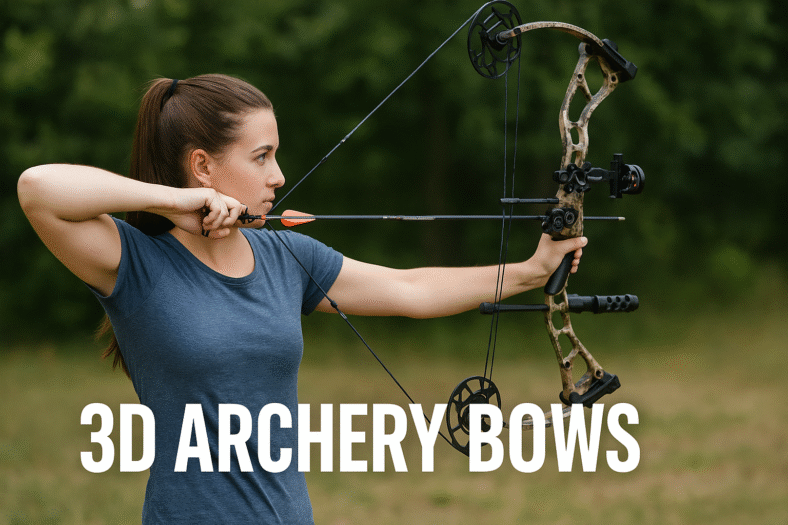
3D archery is a target sport where archers shoot at life-size foam animal targets placed at varied distances along an outdoor course. A good 3D archery bow is not a magic model or a stale yearly pick list. It is a bow that fits you, launches matched arrows consistently, and stays inside the rules for the format or class you plan to shoot.
This guide explains how 3D archery works, what setup choices matter, and how to prepare for a course safely. It does not promise a score, rank products, or tell you that one bow type is best for everyone.
Table of Contents
What Is 3D Archery?
3D archery uses three-dimensional foam targets, often shaped like game animals, on a walking course. Unlike a flat target lane, a 3D course may include uphill or downhill angles, changing light, natural terrain, and distances that are sometimes unmarked.
It is still target archery, not hunting. Many bowhunters use 3D as off-season practice, but the event itself is about safe target shooting, range judgment, and consistent form. For broad sport context and participation pathways, USA Archery is a useful starting point, while World Archery’s 3D archery discipline page explains the international discipline at a high level.
3D Archery Bow Setup Factors
A good 3D setup starts with fit and repeatability. Chasing speed, weight, or a model name before fit usually leads to frustration. The goal is a bow you can draw, hold, aim, and shoot repeatedly over a full course without fighting the equipment.
Draw length and draw weight
Correct draw length helps your anchor point, sight picture, and release stay repeatable. Draw weight should be controllable across many shots, not just impressive for one shot. Overbowing yourself can hurt form and consistency.
Balance and holding feel
3D archery often rewards a bow that holds steady on uneven terrain and varied target angles. Bow weight, stabilizer setup, grip feel, and overall balance all influence that hold. For a deeper support article on this piece, see our guide to bow stabilization for target shooting.
Course practicality
A course bow must also be practical to carry. A long, heavy target setup may aim beautifully, but it can be tiring on a walking course. A compact hunting bow may be easier to carry but less stable for some shooters. Fit the setup to the way you will actually shoot.
Bow Types Used In 3D Archery
Different bow types can be used in 3D archery, depending on the event, class, and local rules. Do not assume every club or organization allows the same equipment.
Compound bows
Compound bows are common in 3D because let-off, sights, releases, and stabilizers can support steady aiming. They also require correct setup and periodic service. If your compound needs press-dependent work, use a qualified pro shop.
Recurve bows
Recurve bows bring a simpler equipment path and a more form-focused challenge. They can be a rewarding choice for archers who prefer fewer mechanical parts, but they do not give compound-style let-off at full draw.
Traditional bows
Traditional bows can be used in some 3D contexts, depending on class rules. They reward consistent form, distance judgment, and a realistic understanding of your effective range.
Arrows And Tuning For 3D
Consistent arrow flight matters more than any single accessory. Arrow spine, length, point weight, and fletching should match your bow and draw setup. Use manufacturer spine charts and a pro shop when you are unsure.
3D archery uses field points, not broadheads. Broadheads can damage foam targets and are not part of normal 3D practice or competition. Keep field point weight consistent with the arrow setup you tune. For rest-related setup context, see our arrow rest guide.
Sights, Rests, And Stabilization
Sights, rests, stabilizers, and release aids can help consistency, but they do not guarantee a better score. They must also be legal for your chosen class.
Sights
Some classes allow adjustable sights, some limit sight styles, and some traditional classes may restrict sights heavily. Read the rulebook before buying around a class.
Rests
The rest should support clean, repeatable arrow launch. If arrows are showing contact problems or inconsistent flight, rest setup is one of the areas to inspect.
Stabilizers
Stabilizers can change how the bow balances at full draw and through the shot. A longer target-style stabilizer may hold steadier for one archer, while a shorter setup may be more practical on a walking course for another.
Course And Range Safety Basics
Safety comes before score. Only nock and draw when it is safe, follow the shooting stake and range directions, never shoot when someone is forward of the line, and keep arrows pointed safely downrange. Outdoor courses add terrain and visibility concerns, so follow the host club’s instructions.
For general range-safety thinking, our shooting range safety guide covers habits that transfer well to structured shooting environments. USA Archery’s archery safety page is also worth reviewing, especially for beginners and youth programs.
Formats, Classes, And Rules
3D archery rules vary by organization and event. Equipment class can affect sights, stabilizer length, release aids, rangefinders, arrow type, and scoring. Do not buy gear based on assumptions from a different event.
Before competing, read the current official rulebook for the organization or club hosting the event. If you shoot casually, still ask the range or club about allowed points, walking direction, scoring, and safety procedure before starting.
Getting Started Checklist
Use this checklist as a planning aid before your first course. It is not a replacement for your event’s rulebook or in-person instruction.

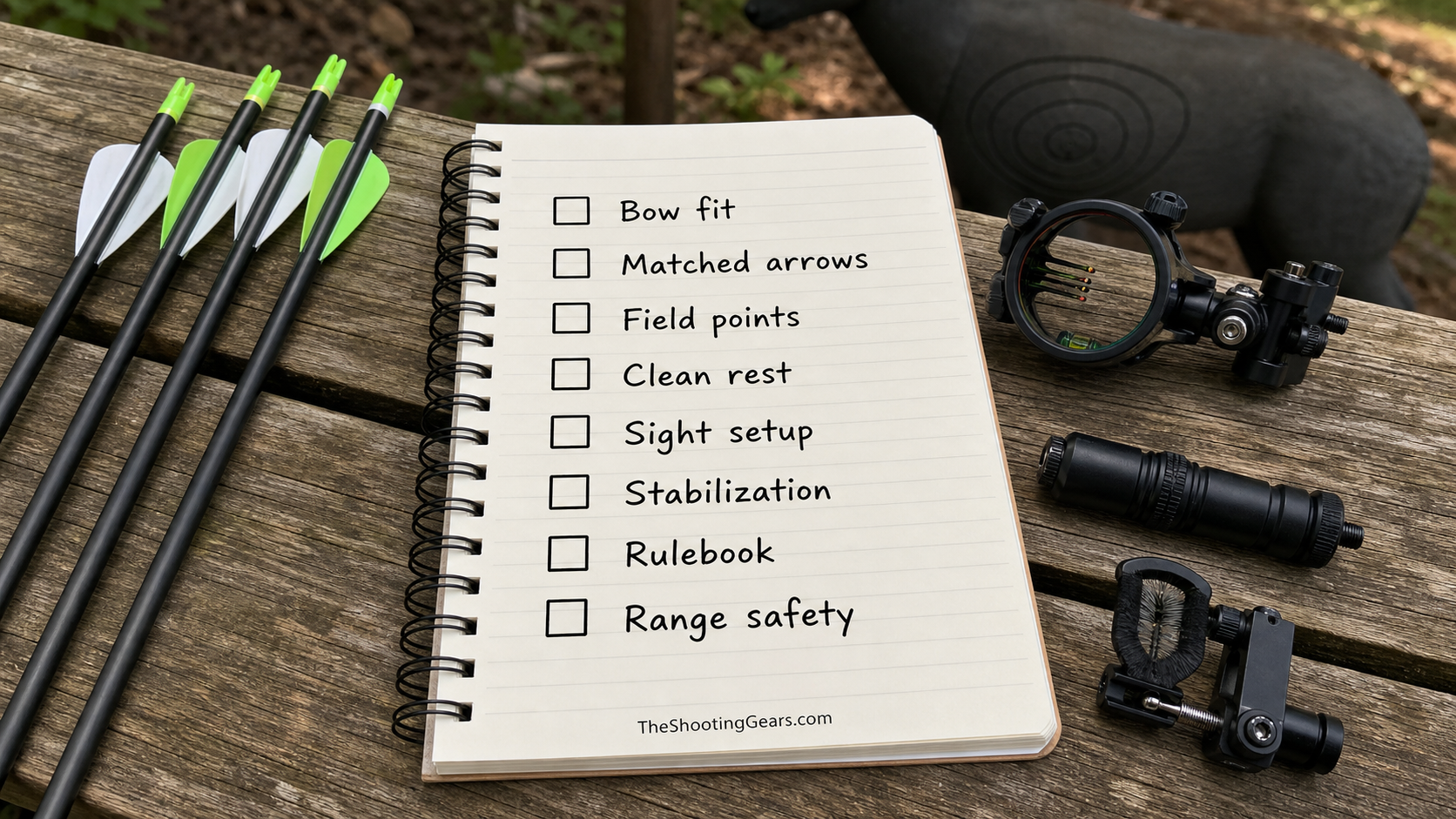
- Confirm draw length and a comfortable draw weight.
- Match arrows to your bow using spine and point-weight guidance.
- Use field points only for 3D targets.
- Check rest contact, sight setup, and broad equipment class rules.
- Practice at varied known and unknown distances.
- Read the current event or club rulebook.
- Follow all course and range safety instructions.
For practice habits that support better consistency, see our guide on improving archery shooting form.
Frequently Asked Questions
What kind of bow is best for 3D archery?
The best bow for 3D archery is one that fits you, shoots matched arrows consistently, and is legal for your chosen class. Many archers use compound bows, but recurves and traditional bows can also fit depending on the format.
Can I use my hunting bow for 3D archery?
Yes, many archers use a hunting compound for 3D practice. Use field points, confirm the setup fits the class or club rules, and tune the bow for consistent arrow flight.
Do I shoot broadheads in 3D archery?
No. Use field points for 3D archery. Broadheads can damage foam targets and are not part of normal 3D target practice or competition.
Are distances marked in 3D archery?
It depends on the event and class. Some 3D formats use unknown distances, while others may allow rangefinders or known-distance formats. Check the event rules before you shoot.
Will a better setup guarantee better scores?
No. A better-fitting, well-tuned setup can support consistency, but scores come from form, practice, range judgment, and following the rules. No bow or accessory guarantees a result.
Final Setup Recommendation
Start with fit, matched arrows, field points, and safe course habits. Then refine the rest, sight, stabilizer, and release setup inside your chosen class rules. A 3D archery bow should help you shoot comfortably and consistently across a course; it should not be chosen from a stale model list or a single spec.