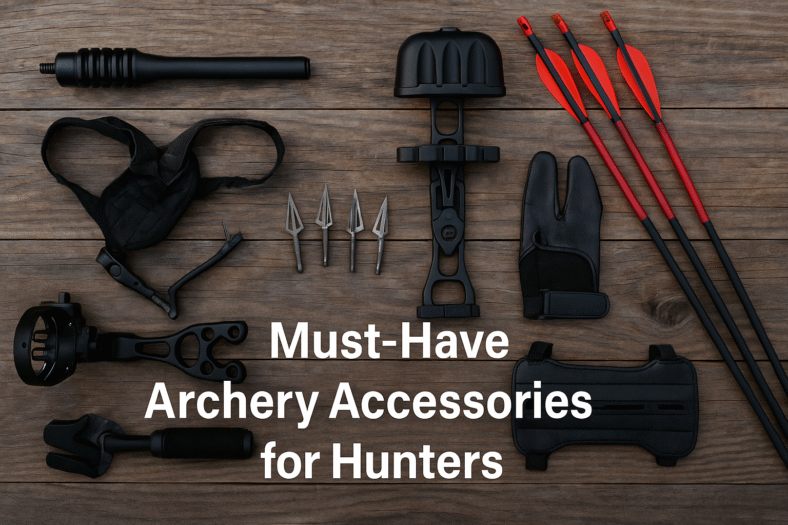
10 Must-Have Archery Accessories for Hunters

The most useful archery accessories for hunters are the items that help you shoot safely, keep arrows organized, protect broadheads, and solve small field problems before they become hunt-ending problems. You do not need every gadget in a catalog. You need a compact kit that supports your bow setup, your arrows, your local rules, and the way you actually hunt.

This checklist is written for bowhunters who want practical, field-ready accessories rather than hype. Start with safety and bow compatibility first, then add comfort and convenience items only when they earn space in your pack.

Table of contents

Quick Answer

A strong bowhunting accessory kit usually includes a quiver, rangefinder, release aid or finger tab, broadhead wrench, arrow puller, bow sling, small repair kit, arm guard, bow hanger or hook, and a compact field checklist. If you shoot traditional gear, swap the release aid for the tab or glove that matches your setup. If you hunt from a stand, prioritize safe storage, quiet handling, and a way to keep broadheads protected.

The best accessory is the one you have practiced with before the season opens. New gear should be tested at the range, from hunting positions, and with the exact arrows or broadheads you plan to carry.

10 Archery Accessories Worth Carrying

1. Quiet Quiver

A quiver keeps arrows protected, organized, and easy to reach. For hunting, the main priorities are secure arrow retention, broadhead coverage, quiet attachment, and a fit that does not change how the bow balances too much. Some hunters prefer a bow-mounted quiver for mobility, while stand hunters may remove the quiver once settled.

Check that the hood fully covers sharp broadheads and that arrows do not rattle while walking. A quiver that is loud, loose, or awkward will bother you more in the field than it did in the store.

2. Rangefinder

A rangefinder helps remove guessing from distance judgment. Bowhunting has less margin for range error than many rifle setups, so knowing the distance to lanes, trees, and likely shot windows can make your practice more honest. Range common landmarks before animals arrive, not while you are rushing.

For more detail on distance tools, see our guide to choosing a hunting rangefinder.

3. Release Aid, Finger Tab, Or Shooting Glove

Compound bowhunters commonly use a release aid. Traditional archers may use a finger tab or glove. The goal is consistency: the same anchor, the same trigger or finger pressure, and the same follow-through every time. Do not switch release style right before a hunt unless you have rebuilt your practice around it.

Carry a backup release if your hunt depends on one. A lost or broken release can end a hunt quickly if you have not practiced an alternative.

4. Broadhead Wrench

A broadhead wrench helps install or remove broadheads without putting fingers near sharp blades. It is a small item, but it supports one of the most important safety habits in bowhunting: handling broadheads with respect. Keep it in the same pocket as your spare blades or broadhead case so it is easy to find.

If you are comparing head styles, our types of arrowheads guide explains the basic differences without treating one design as perfect for every hunter.

5. Arrow Puller

An arrow puller saves your hands during practice and helps remove arrows more cleanly from dense targets. It is especially useful when you are shooting high-volume sessions or practicing with small-diameter shafts. Better practice habits lead to better field confidence, and this is one accessory that makes practice less frustrating.

6. Bow Sling

A bow sling helps secure the bow while walking, climbing, glassing, or using both hands for another task. Wrist slings can also help some shooters keep a relaxed bow hand during the shot. Pick the style based on how you hunt: a simple wrist sling for shooting form, or a shoulder/back sling for moving through terrain.

7. Small Bow Repair Kit

A compact repair kit can include Allen keys that match your bow, serving thread, wax, spare nocks, spare D-loop material if appropriate, and a small microfiber cloth. Keep it realistic. The field kit is for minor fixes and inspection, not for major tuning or unsafe repairs.

If a limb, cam, string, cable, or riser looks damaged, stop shooting and have the bow inspected by a qualified shop. Do not try to force a hunt with questionable equipment.

8. Arm Guard

An arm guard protects clothing and skin from string contact. It is useful for new archers, bulky cold-weather sleeves, and traditional setups where string path can be less forgiving. It also keeps sleeve fabric from interfering with the shot.

9. Bow Hanger Or Hook

A bow hanger or hook keeps the bow accessible in a stand or blind without laying it on the ground. The right setup should hold the bow securely, quietly, and within comfortable reach. Practice moving from rest to ready without scraping, clanking, or making a rushed movement.

10. Compact Field Checklist

A checklist is not exciting, but it prevents forgotten essentials. Use it before leaving home and again before walking in. Include license, tag, release or tab, rangefinder, arrows, broadhead wrench, light, knife, first-aid basics, water, and weather-specific clothing.

For a broader pack system, compare this list with our day hunting packing checklist.

How To Choose Archery Accessories

Choose accessories around your bow type, arrow setup, hunting method, and practice routine. A compound bowhunter in a tree stand may need different gear than a traditional archer still-hunting public land. The accessory should solve a real problem: safety, consistency, organization, quiet movement, or field readiness.

  • Compatibility: Make sure the accessory fits your bow, arrows, broadheads, and hunting style.
  • Noise: Test for rattles and contact points before the hunt.
  • Weight: Avoid adding items you will not use.
  • Practice value: Prioritize gear that helps you train more consistently.
  • Safety: Protect broadheads, keep arrows controlled, and avoid risky field repairs.

A Simple Bowhunting Packing System

Separate accessories into three groups: on-bow, on-body, and in-pack. On-bow items include the quiver, sight, rest, stabilizer, and sling if used. On-body items include release, rangefinder, tag, knife, and safety gear. In-pack items include repair kit, water, first-aid basics, spare layers, and the checklist.

This system makes it easier to find weak points. If a must-have item lives loose in a pocket, give it a dedicated pouch. If your pack is heavy with items you never touch, remove them before the next practice hike.

Safety And Legal Notes

Follow your state hunting regulations for legal equipment, season dates, tagging, blaze orange or pink rules where required, and broadhead requirements. Rules vary by location and can change. Bowhunter education resources such as Bowhunter Ed are useful for reviewing safety basics, responsible shot selection, and field conduct.

The Archery Trade Association is also a helpful industry resource for archery participation, safety culture, and equipment education. Use those broader resources alongside your bow manual and your local wildlife agency’s current regulations.

FAQ

What archery accessories should a beginner hunter buy first?

Start with a safe quiver, release aid or tab/glove, arm guard if needed, rangefinder, broadhead wrench, and a small repair kit. Add comfort items later after you know what your actual hunting setup needs.

Do bowhunters really need a rangefinder?

A rangefinder is not always legally required, but it is very useful because small distance errors matter in archery. If you carry one, practice ranging landmarks before an animal arrives.

Should I carry a backup release?

Compound bowhunters should strongly consider a backup release, especially on travel hunts. Make sure the backup is adjusted and practiced with before the season.

Can too many accessories hurt bowhunting performance?

Yes. Extra weight, noise, and complexity can hurt more than they help. Keep accessories that improve safety, consistency, organization, or readiness, and remove items you never use.

Final Takeaway

The best archery accessories for hunters are practical, quiet, safe, and practiced with before the hunt. Build your kit around a secure quiver, reliable distance checking, consistent release method, broadhead safety, basic repair capability, and a simple checklist. That gives you a cleaner setup and fewer surprises in the field.

Choosing an Arrow to Match Your Bow: Spine, Length, and Weight

Choosing an arrow to match your bow starts with safety and compatibility. The arrow must fit your bow’s draw weight, draw length, arrow rest, point weight, and the type of shooting you plan to do. A random arrow that looks close can still be too weak, too stiff, too short, too light, or unsafe for the setup.

This guide explains the main factors in plain language. It is not a replacement for your bow manual, arrow manufacturer charts, or help from a qualified archery shop or coach.

Table of contents

Quick Answer

To choose an arrow for your bow, match the arrow spine, length, total weight, and point weight to your bow’s draw weight and draw length. Then confirm the choice with the arrow manufacturer’s spine chart and your bow manufacturer’s minimum arrow-weight guidance. When in doubt, ask an archery pro shop before shooting.

The goal is not simply speed. A safe, consistent arrow that tunes well and groups reliably is more useful than a lighter arrow chosen only for a higher number on a spec sheet.

Arrow Spine

Arrow spine describes how much an arrow shaft flexes. A weaker spine bends more. A stiffer spine bends less. The correct spine depends on draw weight, draw length, arrow length, point weight, and bow type.

If the spine is badly mismatched, the arrow may tune poorly, group inconsistently, or behave unpredictably. The safest starting point is the arrow manufacturer’s current spine chart. Many brands provide charts that match bow weight and arrow length to recommended spine ranges.

USA Archery’s education resources are useful for broad safety and skill development, but spine choice should still be checked against the exact shaft manufacturer’s chart and your bow setup.

How To Use A Spine Chart

A spine chart usually starts with your bow’s draw weight and the arrow length you plan to shoot. Some charts also account for point weight or bow type. Use the chart from the arrow brand you are buying because spine labels and recommendations are not always identical across brands.

Do not use peak draw weight alone if your setup is unusual. Long arrows, heavier points, high draw length, and certain cam systems can change the recommendation. If your setup falls between two recommendations, ask the manufacturer or a qualified shop which direction is safer for your bow.

After choosing a spine, confirm the real-world result on target. Paper tuning, bare-shaft checks, broadhead grouping, or shop-assisted tuning can help show whether the arrow is behaving well from your bow.

Arrow Length

Arrow length is not the same as draw length. The arrow must be long enough for your setup, rest, and point system, with safe clearance at full draw. Cutting arrows too short can create a serious safety issue.

For beginners, the best move is to have arrow length measured by a qualified shop or coach. Do not guess by comparing with another person’s arrows unless their bow setup, draw length, and rest are truly the same.

Arrow Weight

Arrow weight affects speed, noise, penetration potential, trajectory, and bow stress. Very light arrows may be fast, but they may not meet the bow manufacturer’s minimum arrow weight. That can be unsafe and hard on equipment.

Heavier arrows are often quieter and can carry momentum well, but they drop more over distance. The right balance depends on target shooting, hunting, bow setup, and the distances you actually practice.

Always check the bow manufacturer’s minimum grains-per-pound or minimum arrow-weight guidance. Shooting arrows below that guidance can stress equipment and may be unsafe.

Point Weight

Point weight includes field points, broadheads, or other arrow tips. Changing point weight changes total arrow weight and can affect dynamic spine, balance, and point of impact. Do not assume the same shaft will tune the same with a much different point weight.

For hunting, broadheads should match your legal requirements, target species, and bow setup. Our guide to types of arrowheads explains common head styles at a high level.

Arrow Materials

Common arrow materials include carbon, aluminum, wood, and hybrid designs. Carbon arrows are common for modern hunting and target setups. Aluminum arrows can be consistent and durable for many uses. Wood arrows are often associated with traditional archery and need careful matching.

The material alone does not make an arrow correct. Spine, length, straightness, total weight, nock fit, and condition still matter. A high-quality shaft in the wrong spine is still the wrong arrow.

Nocks And Fletching

Nocks must fit the bowstring correctly. A nock that is too tight can affect release and consistency. A nock that is too loose can create safety and accuracy problems. Replace cracked or worn nocks immediately.

Fletching helps stabilize the arrow in flight. Vanes and feathers come in different shapes, sizes, and offsets. Broadhead setups may need enough steering to keep flight stable, while target setups may prioritize consistency and clearance.

After changing arrows, nocks, vanes, point weight, or broadheads, recheck tune and point of impact. A setup that worked with one arrow build may not behave the same with another.

Hunting vs Target Arrows

Target arrows are often chosen for consistency and group size. Hunting arrows must also account for broadhead flight, legal requirements, durability, and ethical shot performance. A hunting setup should be tested with the broadheads or practice heads you plan to use.

For bowhunting field setup, see our ground bowhunting guide. Arrow selection matters, but practice, range judgment, and shot discipline matter too.

Safety Checks Before Shooting

Inspect every arrow before shooting. Look for cracks, splinters, loose inserts, damaged nocks, bent shafts, loose points, and damaged fletching. If an arrow looks questionable, do not shoot it.

Archery safety also includes safe direction, backstop, range commands, and equipment checks. See our archery safety rules guide for a broader beginner checklist. For organized safety education, USA Archery safety resources are a useful reference.

FAQ

What happens if arrow spine is too weak?

An arrow with too weak a spine may flex too much, tune poorly, and group inconsistently. In severe mismatches, it can be unsafe. Check a current spine chart before shooting.

What happens if arrow spine is too stiff?

An overly stiff arrow can also tune poorly and produce inconsistent flight. Correct spine depends on the full setup, not just one number.

Can an arrow be too short?

Yes. An arrow that is too short can create a serious safety issue at full draw. Have arrow length measured for your bow, draw length, rest, and point setup.

Can I use the same arrow for target practice and hunting?

Sometimes, but the setup must be checked with the points or broadheads you actually plan to use. Broadhead flight can differ from field-point flight, so test carefully before hunting.

Final Takeaway

Choose arrows by matching spine, length, total weight, point weight, material, and purpose to your bow setup. Use current manufacturer charts, inspect arrows before shooting, and get help from a qualified archery shop when anything is unclear.

Archery Safety Rules: Safe Shooting Tips for Beginners

Archery safety starts with one simple habit: control the bow, arrow, and shooting direction before anything else. Whether you are practicing in the backyard, visiting a range, or preparing for a hunt, every shot should happen in a controlled area with a safe target, safe backstop, and clear communication.

This guide covers beginner-friendly archery safety rules. It is not a replacement for local range rules, coaching, bowhunter education, or the manual for your bow and arrows.

Table of contents

Quick Answer

The most important archery safety rules are: point the bow only in a safe direction, never nock an arrow until you are ready to shoot, know what is beyond the target, inspect equipment before shooting, retrieve arrows only when the range is clear, and follow the rules of the range or instructor.

Safe archery is not complicated, but it does require attention. Most problems begin when someone rushes, ignores the backstop, handles arrows carelessly, or shoots damaged equipment.

Good safety also makes archery more enjoyable. When everyone understands the line, the target area, and the retrieval routine, beginners can focus on learning instead of guessing what happens next.

Core Archery Safety Rules

  • Only point a bow and arrow toward a safe target area.
  • Never shoot straight up into the air.
  • Do not nock an arrow until the shooting line is clear and you are ready.
  • Check the target, backstop, and space beyond the target before shooting.
  • Keep people, pets, and bystanders out of the shooting lane.
  • Wait for a clear command before retrieving arrows at a shared range.
  • Inspect arrows and bow components before shooting.
  • Stop immediately if something feels damaged, loose, or unsafe.

Organizations such as USA Archery and Bowhunter Ed provide useful safety education for range shooting and bowhunting contexts.

Range And Backyard Safety

At a formal range, follow posted rules and listen to the range officer, instructor, or coach. Keep arrows pointed downrange, stay behind the shooting line until told otherwise, and do not retrieve arrows while anyone is still shooting.

Common commands may include “range hot,” “range clear,” or local equivalents. Learn the commands before shooting at a new range. If you are unsure what a command means, ask before you step to the line.

Backyard archery needs even more planning because you control the entire setup. Use a proper target, a reliable backstop, and a location where a missed arrow cannot leave the safe area. If you cannot create a safe backstop, do not shoot there.

Remember that arrows can pass through weak targets, skip off hard surfaces, or miss completely. Safety planning should assume mistakes can happen.

Equipment Checks Before Shooting

Before shooting, inspect the bowstring, limbs, cams or wheels if using a compound bow, arrow shafts, nocks, points, rest, and release aid if used. Do not shoot cracked arrows, damaged nocks, loose points, frayed strings, or a bow that looks damaged.

Make inspection part of the routine, not something you do only after a problem. A quick look before each session can catch loose points, damaged fletching, or a string issue before the first arrow is shot.

Arrow fit also matters. Use arrows matched to the bow’s draw weight, draw length, and manufacturer guidance. Our guide on choosing an arrow to match your bow explains why compatibility is part of safe shooting.

Before-You-Shoot Safety Checklist

Use the same short checklist before every practice session. Confirm the target is secure, the backstop is safe, the lane is clear, and everyone knows when shooting starts and stops. Check that arrows are in good condition, the bow feels normal, and the archer can draw smoothly without aiming outside the safe area.

For group shooting, assign one person to control the line. That person should make sure all bows are down before anyone walks forward. Simple routines prevent confusion, especially when beginners, families, or mixed skill levels are shooting together.

If the setup changes, restart the checklist. A new target distance, new shooter, or new lane can introduce a new risk that deserves attention.

Broadhead And Hunting Safety

Broadheads are sharp hunting points and should be handled with extra care. Keep them covered when not in use, use a proper wrench or tool when appropriate, and avoid loose broadheads in pockets or packs. Never let young archers handle broadheads without close adult supervision.

For hunting, safety includes legal equipment, clear target identification, ethical shot angles, and knowing what is beyond the animal. See our ground bowhunting guide for more detail on movement, cover, and shot discipline.

Youth Archery Safety

Young archers should learn safety before distance, speed, or accuracy. Keep lessons short, use appropriate draw weight, and make the rules easy to repeat. A child who cannot consistently follow range commands is not ready to shoot without direct supervision.

Adults should set the tone. No joking with loaded bows, no pointing arrows at people, no rushing to pull arrows, and no stepping past the shooting line until everyone is clear. Good habits formed early tend to last.

Supervision should match the archer, not just the age. A beginner of any age may need close instruction until they can repeat the rules, handle the bow calmly, and stop immediately when asked.

Common Safety Mistakes

Using A Weak Backstop

A target alone is not always enough. Use a safe backstop that can stop missed arrows and prevent arrows from leaving the controlled area.

Shooting Damaged Arrows

Damaged arrows can fail unpredictably. Flex and inspect arrows according to manufacturer guidance, and discard anything cracked, splintered, bent, or questionable.

Walking Downrange Too Soon

At a shared range, wait until the shooting line is called clear. Never assume everyone is finished just because you are done shooting.

Using Too Much Draw Weight

Too much draw weight can make form unstable and unsafe. Use a bow the archer can draw smoothly and control without pointing it away from the safe target area.

FAQ

Is backyard archery safe?

It can be safe only if the target, backstop, shooting lane, and surrounding area are controlled. If an arrow can leave the property or enter a public space, the setup is not safe.

Why is dry firing a bow unsafe?

Dry firing means releasing the string without an arrow. It can damage the bow and may injure the shooter or bystanders. Do not dry fire a bow.

What is the first rule for kids learning archery?

The first rule is control: only point the bow and arrow toward the safe target area, and listen to the adult, coach, or range officer before shooting or retrieving arrows.

Are broadheads safe for practice?

Broadheads can be used only in a controlled setup designed for them, with proper targets and careful handling. Many practice sessions should use field points unless broadhead tuning or hunting preparation is specifically needed.

Final Takeaway

Archery safety is built on direction control, clear range rules, proper equipment checks, a safe target and backstop, and disciplined arrow handling. Keep the setup simple, follow instruction, and stop shooting any time the situation feels uncertain.

Exit mobile version