


Choosing an arrow to match your bow starts with safety and compatibility. The arrow must fit your bow’s draw weight, draw length, arrow rest, point weight, and the type of shooting you plan to do. A random arrow that looks close can still be too weak, too stiff, too short, too light, or unsafe for the setup.
This guide explains the main factors in plain language. It is not a replacement for your bow manual, arrow manufacturer charts, or help from a qualified archery shop or coach.
Table of contents
Quick Answer
To choose an arrow for your bow, match the arrow spine, length, total weight, and point weight to your bow’s draw weight and draw length. Then confirm the choice with the arrow manufacturer’s spine chart and your bow manufacturer’s minimum arrow-weight guidance. When in doubt, ask an archery pro shop before shooting.
The goal is not simply speed. A safe, consistent arrow that tunes well and groups reliably is more useful than a lighter arrow chosen only for a higher number on a spec sheet.
Arrow Spine
Arrow spine describes how much an arrow shaft flexes. A weaker spine bends more. A stiffer spine bends less. The correct spine depends on draw weight, draw length, arrow length, point weight, and bow type.
If the spine is badly mismatched, the arrow may tune poorly, group inconsistently, or behave unpredictably. The safest starting point is the arrow manufacturer’s current spine chart. Many brands provide charts that match bow weight and arrow length to recommended spine ranges.
USA Archery’s education resources are useful for broad safety and skill development, but spine choice should still be checked against the exact shaft manufacturer’s chart and your bow setup.
How To Use A Spine Chart
A spine chart usually starts with your bow’s draw weight and the arrow length you plan to shoot. Some charts also account for point weight or bow type. Use the chart from the arrow brand you are buying because spine labels and recommendations are not always identical across brands.
Do not use peak draw weight alone if your setup is unusual. Long arrows, heavier points, high draw length, and certain cam systems can change the recommendation. If your setup falls between two recommendations, ask the manufacturer or a qualified shop which direction is safer for your bow.
After choosing a spine, confirm the real-world result on target. Paper tuning, bare-shaft checks, broadhead grouping, or shop-assisted tuning can help show whether the arrow is behaving well from your bow.
Arrow Length
Arrow length is not the same as draw length. The arrow must be long enough for your setup, rest, and point system, with safe clearance at full draw. Cutting arrows too short can create a serious safety issue.
For beginners, the best move is to have arrow length measured by a qualified shop or coach. Do not guess by comparing with another person’s arrows unless their bow setup, draw length, and rest are truly the same.
Arrow Weight
Arrow weight affects speed, noise, penetration potential, trajectory, and bow stress. Very light arrows may be fast, but they may not meet the bow manufacturer’s minimum arrow weight. That can be unsafe and hard on equipment.
Heavier arrows are often quieter and can carry momentum well, but they drop more over distance. The right balance depends on target shooting, hunting, bow setup, and the distances you actually practice.
Always check the bow manufacturer’s minimum grains-per-pound or minimum arrow-weight guidance. Shooting arrows below that guidance can stress equipment and may be unsafe.
Point Weight
Point weight includes field points, broadheads, or other arrow tips. Changing point weight changes total arrow weight and can affect dynamic spine, balance, and point of impact. Do not assume the same shaft will tune the same with a much different point weight.
For hunting, broadheads should match your legal requirements, target species, and bow setup. Our guide to types of arrowheads explains common head styles at a high level.
Arrow Materials
Common arrow materials include carbon, aluminum, wood, and hybrid designs. Carbon arrows are common for modern hunting and target setups. Aluminum arrows can be consistent and durable for many uses. Wood arrows are often associated with traditional archery and need careful matching.
The material alone does not make an arrow correct. Spine, length, straightness, total weight, nock fit, and condition still matter. A high-quality shaft in the wrong spine is still the wrong arrow.
Nocks And Fletching
Nocks must fit the bowstring correctly. A nock that is too tight can affect release and consistency. A nock that is too loose can create safety and accuracy problems. Replace cracked or worn nocks immediately.
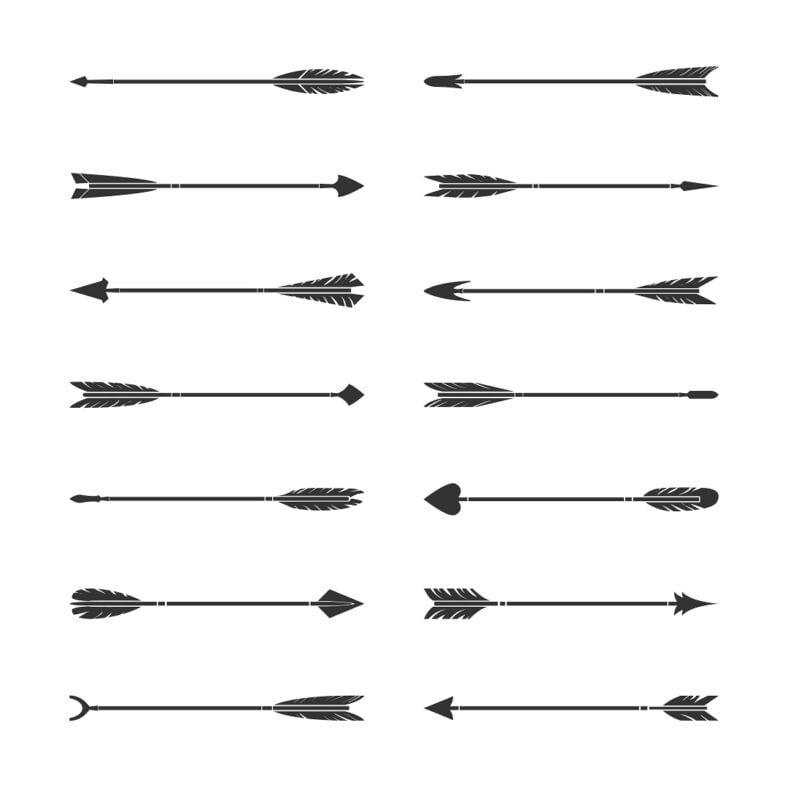
Fletching helps stabilize the arrow in flight. Vanes and feathers come in different shapes, sizes, and offsets. Broadhead setups may need enough steering to keep flight stable, while target setups may prioritize consistency and clearance.
After changing arrows, nocks, vanes, point weight, or broadheads, recheck tune and point of impact. A setup that worked with one arrow build may not behave the same with another.
Hunting vs Target Arrows
Target arrows are often chosen for consistency and group size. Hunting arrows must also account for broadhead flight, legal requirements, durability, and ethical shot performance. A hunting setup should be tested with the broadheads or practice heads you plan to use.
For bowhunting field setup, see our ground bowhunting guide. Arrow selection matters, but practice, range judgment, and shot discipline matter too.
Safety Checks Before Shooting
Inspect every arrow before shooting. Look for cracks, splinters, loose inserts, damaged nocks, bent shafts, loose points, and damaged fletching. If an arrow looks questionable, do not shoot it.
Archery safety also includes safe direction, backstop, range commands, and equipment checks. See our archery safety rules guide for a broader beginner checklist. For organized safety education, USA Archery safety resources are a useful reference.
FAQ
What happens if arrow spine is too weak?
An arrow with too weak a spine may flex too much, tune poorly, and group inconsistently. In severe mismatches, it can be unsafe. Check a current spine chart before shooting.
What happens if arrow spine is too stiff?
An overly stiff arrow can also tune poorly and produce inconsistent flight. Correct spine depends on the full setup, not just one number.
Can an arrow be too short?
Yes. An arrow that is too short can create a serious safety issue at full draw. Have arrow length measured for your bow, draw length, rest, and point setup.
Can I use the same arrow for target practice and hunting?
Sometimes, but the setup must be checked with the points or broadheads you actually plan to use. Broadhead flight can differ from field-point flight, so test carefully before hunting.
Final Takeaway
Choose arrows by matching spine, length, total weight, point weight, material, and purpose to your bow setup. Use current manufacturer charts, inspect arrows before shooting, and get help from a qualified archery shop when anything is unclear.