


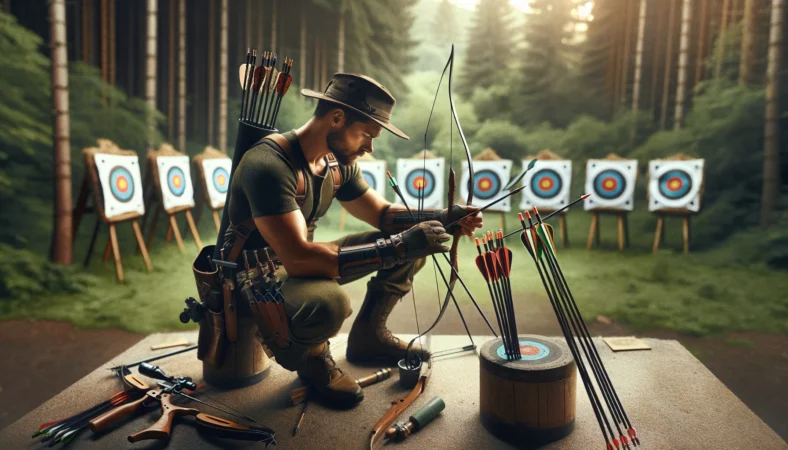
A good arrow setup matches your bow, draw length, draw weight, point weight, and intended use. The safest starting point is to follow the bow manufacturer’s minimum arrow-weight guidance, use an arrow spine chart from the arrow maker, and confirm the finished setup with careful tuning. Arrow weight matters, but it should never be chosen by speed alone. A setup that is correctly spined, consistent, and safe for your bow will shoot better than one built around a single number.
Table of contents
Quick Answer
For most archers, the right arrow setup is not the lightest or heaviest arrow available. It is the arrow that matches the bow’s draw weight and draw length, has the correct spine, meets the bow maker’s minimum weight requirement, and tunes cleanly with your rest, nock, vanes, and point or broadhead. If you are unsure, start with the arrow manufacturer’s spine chart and have a pro shop confirm the setup before shooting broadheads or hunting.
Archery gear is safest when it is fitted and used correctly. For general participation and safety context, USA Archery is a useful starting point for formal instruction and program resources.
Arrow Setup Terms
Before changing arrows, it helps to know the terms. Spine describes how much the arrow shaft flexes. GPI means grains per inch and describes shaft weight before components. Total arrow weight includes the shaft, point, insert, nock, vanes, and any wrap. Point weight is the weight at the front, such as a field point or broadhead. Front of center describes how much weight is forward of the arrow’s midpoint.
Total arrow weight
Total arrow weight is the finished arrow, not just the shaft. A shaft may look light on paper, but heavier inserts, wraps, vanes, and points can change the final number. Weigh a finished arrow if you need a real figure.
Arrow length
Arrow length affects spine and safety. Cutting an arrow shorter makes it act stiffer, and an arrow that is too short can be dangerous. Arrow length should be set with your draw length, rest, broadhead clearance, and bow setup in mind.
Why Arrow Spine Comes First
Arrow spine is one of the biggest setup decisions because it affects how the arrow flexes during the shot. Too weak or too stiff can cause poor flight, inconsistent groups, tuning frustration, and broadhead problems. Draw weight, draw length, arrow length, point weight, and cam aggressiveness all influence the needed spine.
Do not guess spine from a forum comment or a friend’s setup. Use the arrow maker’s current spine chart and enter your actual bow specs. If your setup is near the edge between two spine categories, ask a pro shop or experienced coach before buying a full dozen.
Arrow Weight and Grains Per Inch
Arrow weight affects speed, trajectory, sound, and energy transfer. A lighter arrow usually flies faster and flatter, but it can be louder and may be harder on the bow if it falls below the manufacturer’s minimum weight. A heavier arrow usually flies slower, may be quieter, and can carry momentum well, but it requires better range judgment because the trajectory drops more.
Light setups
Light setups can help target archers or 3D shooters who want flatter trajectory within rules and equipment limits. The risk is going too light for the bow or building a setup that is fast but difficult to tune. Never go below the bow maker’s minimum arrow weight.
Moderate setups
A moderate setup is the best starting point for many archers. It balances speed, tuning, trajectory, and forgiveness. If you are new, start with a safe middle-ground arrow that matches the spine chart rather than chasing the extreme ends.
Heavy setups
Heavy setups are popular with some bowhunters because they can be quieter and can carry momentum well. They also drop more with distance, so the archer needs accurate range knowledge and consistent shot discipline. A heavier arrow is not automatically better if it is poorly spined or badly tuned.
Front of Center and Point Weight
Front of center, often called FOC, describes the balance point of the finished arrow. Adding point weight or a heavier insert moves more weight forward. That can improve stability for some setups, but it also changes dynamic spine and may require a stiffer shaft.
Change point weight carefully. Going from a light field point to a much heavier broadhead can change tune and impact. If you hunt, make sure field points and broadheads are matched and tested before the season.
Target vs Hunting Setups
Target and practice arrows
Target arrows are often chosen for consistency, straightness, spine match, and repeatable grouping. For many casual target shooters, durability and cost matter too. A consistent dozen that fits your bow is better than a premium shaft chosen with the wrong spine.
Hunting arrows
Hunting arrows need to be safe, consistent, and tuned with the exact broadhead or point system you will use. Broadheads reveal tuning problems faster than field points, so do not assume a field-point group means your hunting setup is ready. Keep shots inside your practiced ethical range and follow current state equipment rules.
Tuning and Consistency Checks
After choosing a safe spine and weight, tune the bow and arrows together. Check nock fit, vane clearance, rest position, cam timing if relevant, and paper or bare-shaft feedback if you know how to use those methods. If the process feels confusing, a pro shop can save time and prevent unsafe trial-and-error.
- Use the same arrow length across the set.
- Weigh finished arrows if consistency matters.
- Spin-test broadheads and inserts for wobble.
- Check vanes for damage and clearance marks.
- Confirm broadhead and field-point impact before hunting.
For broader bow setup work, see our bow tuning for beginners guide and our recurve vs compound bow comparison.
Safety Rules Before Changing Arrows
Every arrow setup change should stay inside the bow and arrow maker’s published limits. Do not shoot cracked shafts, arrows that are too short, mismatched nocks, loose inserts, or arrows below the bow’s minimum weight. Inspect arrows after impacts, especially carbon shafts, and discard damaged arrows rather than trying to save a few dollars.
Archery setup advice online should be treated as general education, not a substitute for hands-on fitting. A qualified pro shop can measure draw length, verify draw weight, check arrow clearance, and make sure the setup is safe before you shoot broadheads.
Frequently Asked Questions
What arrow weight should I use for archery?
Use an arrow that matches your bow specs, correct spine, and manufacturer minimum weight. Many archers do best with a moderate setup instead of the lightest or heaviest option.
Is a heavier arrow better for hunting?
Not automatically. A heavier arrow can be quieter and carry momentum well, but it also drops more and still needs correct spine and tuning. A poorly tuned heavy arrow is not a good hunting setup.
Can I use the same arrows for target and hunting?
You can practice with the same shaft family, but hunting setups must be tested with the actual broadheads or points you will use. Confirm broadhead flight before hunting.
What happens if my arrow spine is wrong?
The arrow may flex poorly, group inconsistently, show tuning problems, or fly badly with broadheads. Use the arrow maker’s spine chart and get help if your setup falls between recommendations.
Final Takeaway
Arrow setups work best when spine, finished weight, point weight, length, and bow tune all agree. Start with the manufacturer’s charts, stay above the bow’s minimum arrow weight, inspect every shaft, and test the finished setup before relying on it. For most archers, the best arrow is not the fastest or heaviest. It is the arrow that is safe, consistent, and tuned for the bow in your hands.