


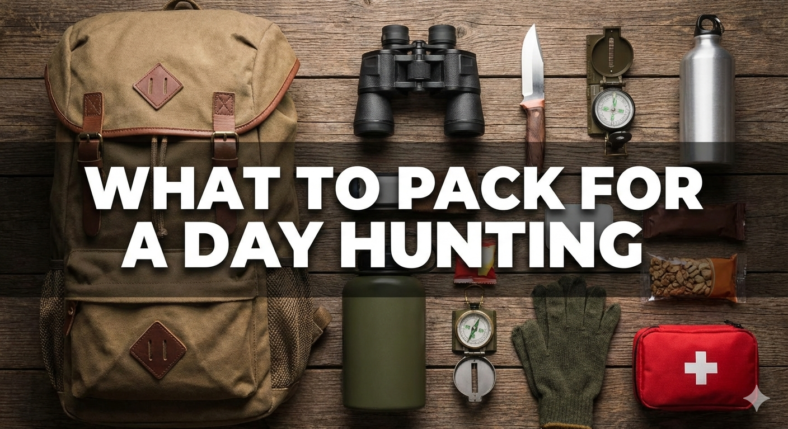
For a one-day hunt, pack the gear that keeps you legal, visible, hydrated, oriented, warm enough, and able to handle small problems without overloading your pack. The exact list changes by species, season, state rules, weather, terrain, and how far you will be from the truck. Use this as a field checklist, then confirm current regulations and property rules before you leave.
Table of Contents
Quick Answer
For a day hunt, pack your license and tags, required blaze orange or visibility gear, water, snacks, first aid, navigation, communication, weather layers, headlamp, knife or field-care items, gloves, bags, and any species-specific gear required by the hunt. Keep the pack light enough to carry all day, but do not cut safety, legal, or weather-preparation items just to save a few ounces.

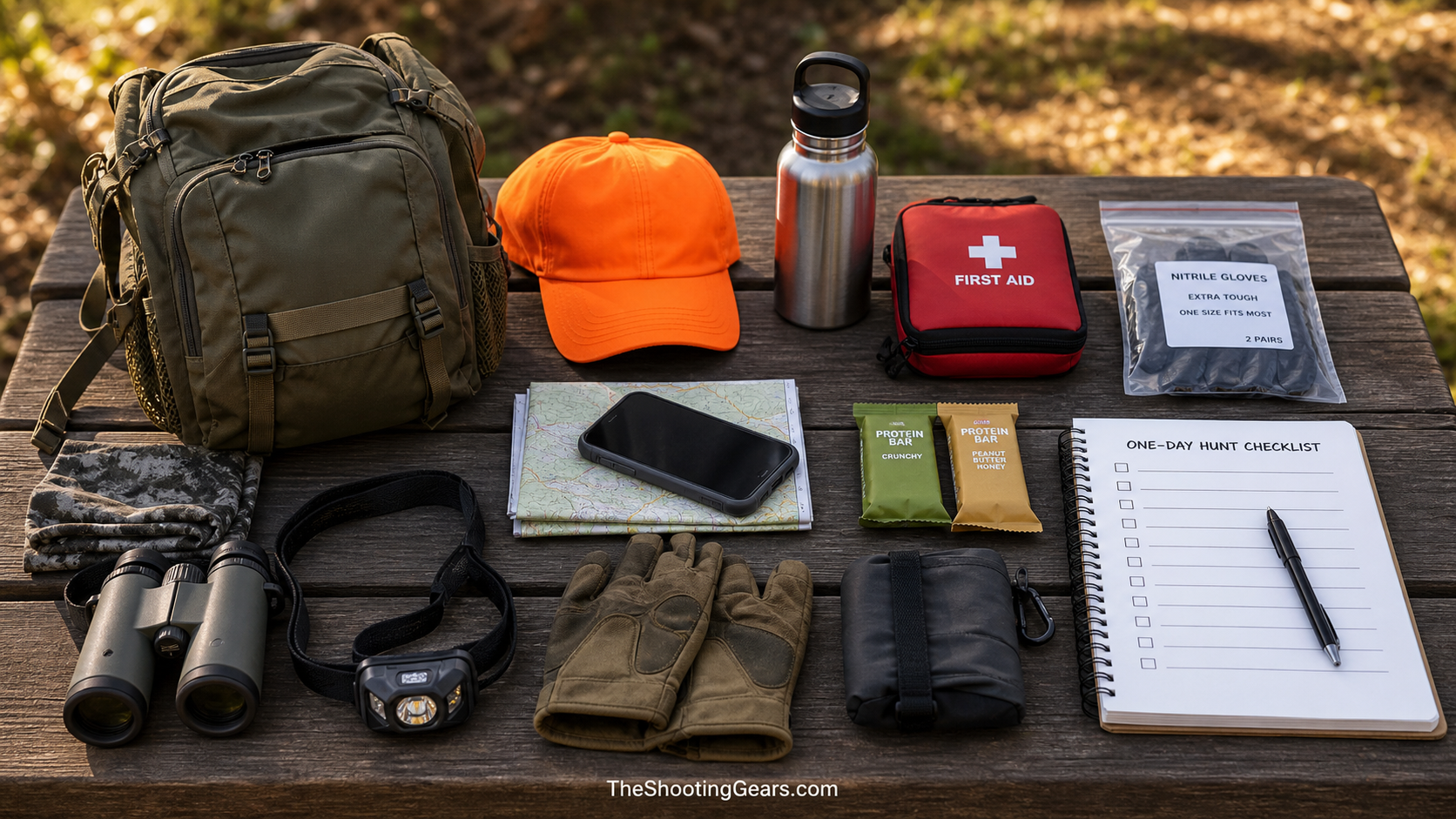
Day Hunting Pack Checklist
- License, tags, permits, and ID: Keep them dry and easy to reach.
- Current regulations: Save or print season dates, limits, legal methods, and property rules.
- Visibility gear: Pack required blaze orange or other visibility items for your state and hunt type.
- Water and snacks: Carry more water than you expect to need, especially in warm weather or steep terrain.
- Navigation: Bring a charged phone, map, compass, GPS, or offline map plan.
- Communication: Tell someone your plan and carry a way to contact help if coverage allows.
- First aid and emergency items: Include blister care, bandages, medications, fire starter, and an emergency blanket.
- Weather layer: Pack rain, wind, or insulation layers based on the forecast.
- Headlamp: Carry a headlamp even for morning-only or afternoon-only hunts.
- Field-care items: Gloves, bags, wipes, and a knife where appropriate and legal.
The National Park Service Ten Essentials framework is useful for thinking beyond hunting gear: navigation, light, sun/weather protection, first aid, shelter, water, food, and repair items all matter outdoors. Hunter education resources such as Hunter Ed are also helpful reminders that field preparation and safe decisions go together.
Legal and Safety Items
Start with what proves you are legal and what keeps you visible. A license, tag, permit, written permission where needed, and saved regulation summary should be packed before any comfort item. Do not rely on memory for season dates, legal methods, tagging rules, or public-land boundaries. Regulations can change by state, unit, species, season, and property type.
Visibility and Identification
Blaze orange or other visibility requirements vary, so check your state wildlife agency before hunting. Even where it is not required, visibility can matter around other hunters, access roads, and low-light movement. Keep tags, ID, and permission paperwork in a waterproof pouch or phone folder that works offline.
First Aid and Emergency Basics
A small first-aid kit should cover cuts, blisters, minor sprains, personal medication, and basic discomfort. Add a whistle, fire starter, emergency blanket, and a simple repair item such as tape or cord. The goal is not to pack for every disaster; it is to avoid turning a small problem into a long walkout problem.
If you are new or returning after a long break, hunter education organizations such as IHEA-USA are a useful starting point for safety mindset, responsible planning, and understanding why preparation matters before the hunt begins.
Navigation and Communication
Carry a navigation plan that still works if cell service drops. Offline maps, a paper map, compass, GPS, or marked access points can keep a short hunt from becoming confusing after dark. If you use a phone, start with a full battery and consider a small power bank for cold weather or long sits.
Tell someone where you are going, where you plan to park, and when you expect to return. If your route changes, update that person when possible. This simple habit is one of the most valuable things in your pack even though it weighs nothing.
Water, Food, and Weather Protection
Water is easy to underpack because day hunts feel short. Bring enough for the weather, terrain, and distance from the vehicle. Add compact snacks that will not crush easily and that you will actually eat when cold, tired, or focused on the hunt.
Layer for the Worst Part of the Day
Pack for the coldest, wettest, or windiest part of the hunt, not just the weather at the truck. A light rain layer, gloves, warm hat, or insulating layer can make a long sit safer and more comfortable. Avoid cotton layers when wet weather or sweating is likely.
Field Care and Cleanup
If your hunt could involve field care, pack disposable gloves, game bags or legal transport materials, wipes, a sharp knife, and a small trash bag. Keep these items separate from food and clothing. Know the tagging, evidence-of-sex, transport, and check-in requirements before the hunt, because those rules are not the same everywhere.
For bird, small-game, or waterfowl hunts, your field-care kit may look different from a deer hunt. Keep the list species-specific rather than carrying every tool you own.
How to Organize the Pack
Put high-use and safety items where you can reach them without dumping the pack. License, tags, headlamp, first aid, gloves, water, and navigation should be easy to find. Less urgent gear can ride deeper in the pack. Use small pouches so loose items do not sink to the bottom.
Light but Not Bare
The best day-hunting pack is not the heaviest one or the emptiest one. It is the pack that covers likely needs without making you slow, noisy, or uncomfortable. After each hunt, remove what you did not use, replace what you did use, and keep the legal/safety core consistent.
Common Packing Mistakes
- Forgetting tags, permits, or written permission.
- Assuming last year’s regulations are still current.
- Skipping water because the hunt is “only a few hours.”
- Carrying a headlamp with weak or untested batteries.
- Overpacking comfort gear while underpacking emergency basics.
- Leaving field-care gloves or bags in another pack.
- Failing to tell someone the hunt plan.
FAQ
What should every day hunter pack first?
Pack license, tags, required visibility gear, water, navigation, communication, first aid, weather protection, and a headlamp first. Then add species-specific items.
Do I need a full survival kit for a day hunt?
You do not need a huge pack, but you should carry basic emergency items for weather, darkness, injury, and navigation problems. A day hunt can still become longer than planned.
Should I pack different gear for public land?
Often, yes. Public land may require extra attention to boundaries, parking rules, hunter visibility, pack-out distance, and current agency regulations.
How much water should I bring?
Bring enough for the weather, terrain, and expected time out, with extra margin for a delayed return. Heat, steep terrain, and long walks increase the need quickly.
Final Takeaway
A good day-hunting pack is built around legal readiness, safety, weather, navigation, hydration, and field care. Keep it light, but do not make it fragile. Confirm current rules, tell someone your plan, and pack the items that help you come home safely even when the hunt changes.

