


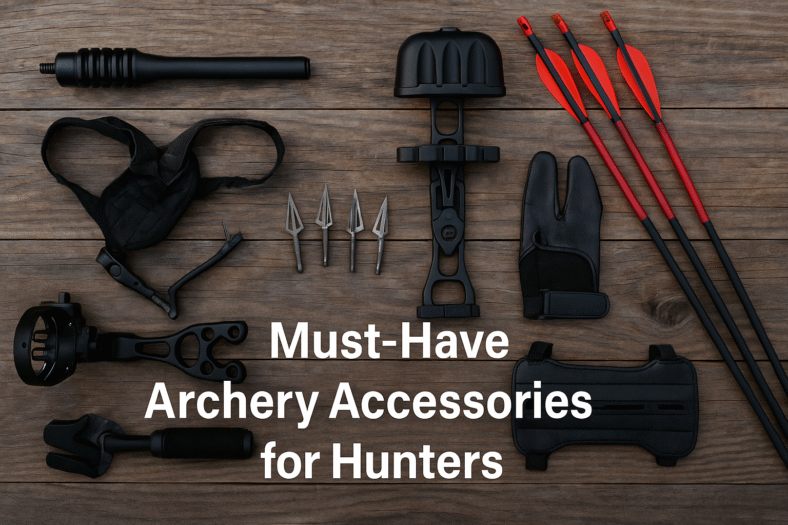
The most useful archery accessories for hunters are the items that help you shoot safely, keep arrows organized, protect broadheads, and solve small field problems before they become hunt-ending problems. You do not need every gadget in a catalog. You need a compact kit that supports your bow setup, your arrows, your local rules, and the way you actually hunt.
This checklist is written for bowhunters who want practical, field-ready accessories rather than hype. Start with safety and bow compatibility first, then add comfort and convenience items only when they earn space in your pack.
Table of contents
Quick Answer
A strong bowhunting accessory kit usually includes a quiver, rangefinder, release aid or finger tab, broadhead wrench, arrow puller, bow sling, small repair kit, arm guard, bow hanger or hook, and a compact field checklist. If you shoot traditional gear, swap the release aid for the tab or glove that matches your setup. If you hunt from a stand, prioritize safe storage, quiet handling, and a way to keep broadheads protected.
The best accessory is the one you have practiced with before the season opens. New gear should be tested at the range, from hunting positions, and with the exact arrows or broadheads you plan to carry.
10 Archery Accessories Worth Carrying
1. Quiet Quiver
A quiver keeps arrows protected, organized, and easy to reach. For hunting, the main priorities are secure arrow retention, broadhead coverage, quiet attachment, and a fit that does not change how the bow balances too much. Some hunters prefer a bow-mounted quiver for mobility, while stand hunters may remove the quiver once settled.
Check that the hood fully covers sharp broadheads and that arrows do not rattle while walking. A quiver that is loud, loose, or awkward will bother you more in the field than it did in the store.
2. Rangefinder
A rangefinder helps remove guessing from distance judgment. Bowhunting has less margin for range error than many rifle setups, so knowing the distance to lanes, trees, and likely shot windows can make your practice more honest. Range common landmarks before animals arrive, not while you are rushing.
For more detail on distance tools, see our guide to choosing a hunting rangefinder.
3. Release Aid, Finger Tab, Or Shooting Glove
Compound bowhunters commonly use a release aid. Traditional archers may use a finger tab or glove. The goal is consistency: the same anchor, the same trigger or finger pressure, and the same follow-through every time. Do not switch release style right before a hunt unless you have rebuilt your practice around it.
Carry a backup release if your hunt depends on one. A lost or broken release can end a hunt quickly if you have not practiced an alternative.
4. Broadhead Wrench
A broadhead wrench helps install or remove broadheads without putting fingers near sharp blades. It is a small item, but it supports one of the most important safety habits in bowhunting: handling broadheads with respect. Keep it in the same pocket as your spare blades or broadhead case so it is easy to find.
If you are comparing head styles, our types of arrowheads guide explains the basic differences without treating one design as perfect for every hunter.
5. Arrow Puller
An arrow puller saves your hands during practice and helps remove arrows more cleanly from dense targets. It is especially useful when you are shooting high-volume sessions or practicing with small-diameter shafts. Better practice habits lead to better field confidence, and this is one accessory that makes practice less frustrating.
6. Bow Sling
A bow sling helps secure the bow while walking, climbing, glassing, or using both hands for another task. Wrist slings can also help some shooters keep a relaxed bow hand during the shot. Pick the style based on how you hunt: a simple wrist sling for shooting form, or a shoulder/back sling for moving through terrain.
7. Small Bow Repair Kit
A compact repair kit can include Allen keys that match your bow, serving thread, wax, spare nocks, spare D-loop material if appropriate, and a small microfiber cloth. Keep it realistic. The field kit is for minor fixes and inspection, not for major tuning or unsafe repairs.
If a limb, cam, string, cable, or riser looks damaged, stop shooting and have the bow inspected by a qualified shop. Do not try to force a hunt with questionable equipment.
8. Arm Guard
An arm guard protects clothing and skin from string contact. It is useful for new archers, bulky cold-weather sleeves, and traditional setups where string path can be less forgiving. It also keeps sleeve fabric from interfering with the shot.
9. Bow Hanger Or Hook
A bow hanger or hook keeps the bow accessible in a stand or blind without laying it on the ground. The right setup should hold the bow securely, quietly, and within comfortable reach. Practice moving from rest to ready without scraping, clanking, or making a rushed movement.
10. Compact Field Checklist
A checklist is not exciting, but it prevents forgotten essentials. Use it before leaving home and again before walking in. Include license, tag, release or tab, rangefinder, arrows, broadhead wrench, light, knife, first-aid basics, water, and weather-specific clothing.
For a broader pack system, compare this list with our day hunting packing checklist.
How To Choose Archery Accessories
Choose accessories around your bow type, arrow setup, hunting method, and practice routine. A compound bowhunter in a tree stand may need different gear than a traditional archer still-hunting public land. The accessory should solve a real problem: safety, consistency, organization, quiet movement, or field readiness.
- Compatibility: Make sure the accessory fits your bow, arrows, broadheads, and hunting style.
- Noise: Test for rattles and contact points before the hunt.
- Weight: Avoid adding items you will not use.
- Practice value: Prioritize gear that helps you train more consistently.
- Safety: Protect broadheads, keep arrows controlled, and avoid risky field repairs.
A Simple Bowhunting Packing System
Separate accessories into three groups: on-bow, on-body, and in-pack. On-bow items include the quiver, sight, rest, stabilizer, and sling if used. On-body items include release, rangefinder, tag, knife, and safety gear. In-pack items include repair kit, water, first-aid basics, spare layers, and the checklist.
This system makes it easier to find weak points. If a must-have item lives loose in a pocket, give it a dedicated pouch. If your pack is heavy with items you never touch, remove them before the next practice hike.
Safety And Legal Notes
Follow your state hunting regulations for legal equipment, season dates, tagging, blaze orange or pink rules where required, and broadhead requirements. Rules vary by location and can change. Bowhunter education resources such as Bowhunter Ed are useful for reviewing safety basics, responsible shot selection, and field conduct.
The Archery Trade Association is also a helpful industry resource for archery participation, safety culture, and equipment education. Use those broader resources alongside your bow manual and your local wildlife agency’s current regulations.
FAQ
What archery accessories should a beginner hunter buy first?
Start with a safe quiver, release aid or tab/glove, arm guard if needed, rangefinder, broadhead wrench, and a small repair kit. Add comfort items later after you know what your actual hunting setup needs.
Do bowhunters really need a rangefinder?
A rangefinder is not always legally required, but it is very useful because small distance errors matter in archery. If you carry one, practice ranging landmarks before an animal arrives.
Should I carry a backup release?
Compound bowhunters should strongly consider a backup release, especially on travel hunts. Make sure the backup is adjusted and practiced with before the season.
Can too many accessories hurt bowhunting performance?
Yes. Extra weight, noise, and complexity can hurt more than they help. Keep accessories that improve safety, consistency, organization, or readiness, and remove items you never use.
Final Takeaway
The best archery accessories for hunters are practical, quiet, safe, and practiced with before the hunt. Build your kit around a secure quiver, reliable distance checking, consistent release method, broadhead safety, basic repair capability, and a simple checklist. That gives you a cleaner setup and fewer surprises in the field.