
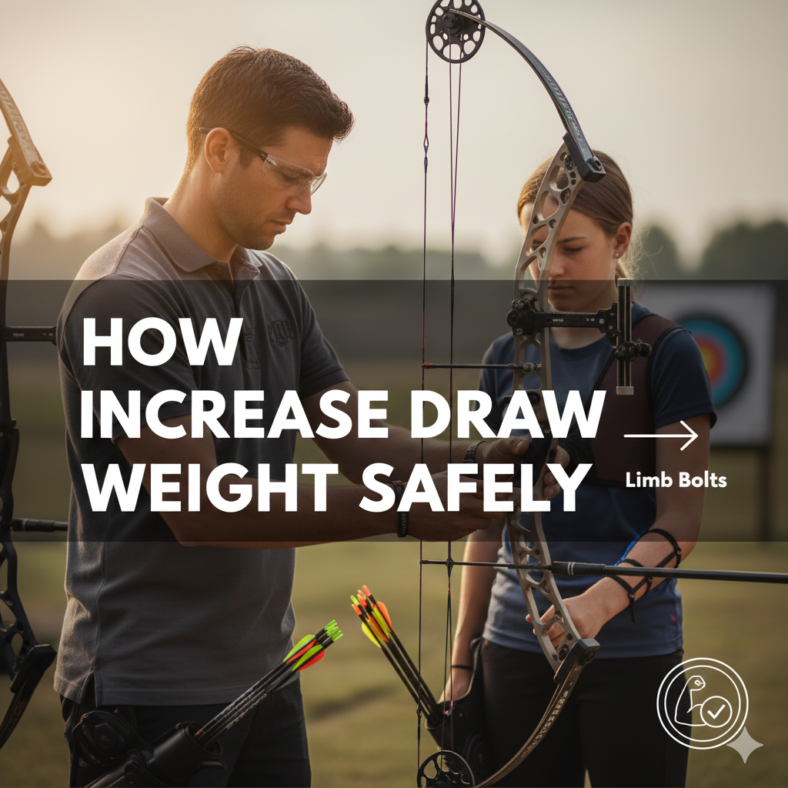
To increase your bow’s draw weight safely, make small, gradual changes inside the limits set by your bow’s manufacturer manual, build strength over time, and ask a pro shop or qualified coach to check anything you are unsure about. More draw weight is not automatically better. The right weight is the one you can draw, hold, aim, and release with controlled form.
This guide explains a cautious approach for compound and recurve bows. It does not replace your exact bow manual, a certified coach, or a qualified bow technician. Stop and reassess if you feel pain, lose control, or cannot repeat your shot sequence cleanly.
Table of Contents
Why a Safe, Gradual Approach Matters
Increasing draw weight too quickly can create bad form, fatigue, and discomfort. Many archers call this overbowing: using more weight than you can draw and hold smoothly. When the weight is too high, the archer often raises the bow awkwardly, collapses at full draw, rushes the shot, or loses back tension.
Draw weight also affects equipment setup. Changing it can influence arrow spine match, tuning, and sight marks. That is why the safest path is gradual: change little, shoot enough to judge control, then recheck the setup before going higher.

Know Your Bow’s Limits First
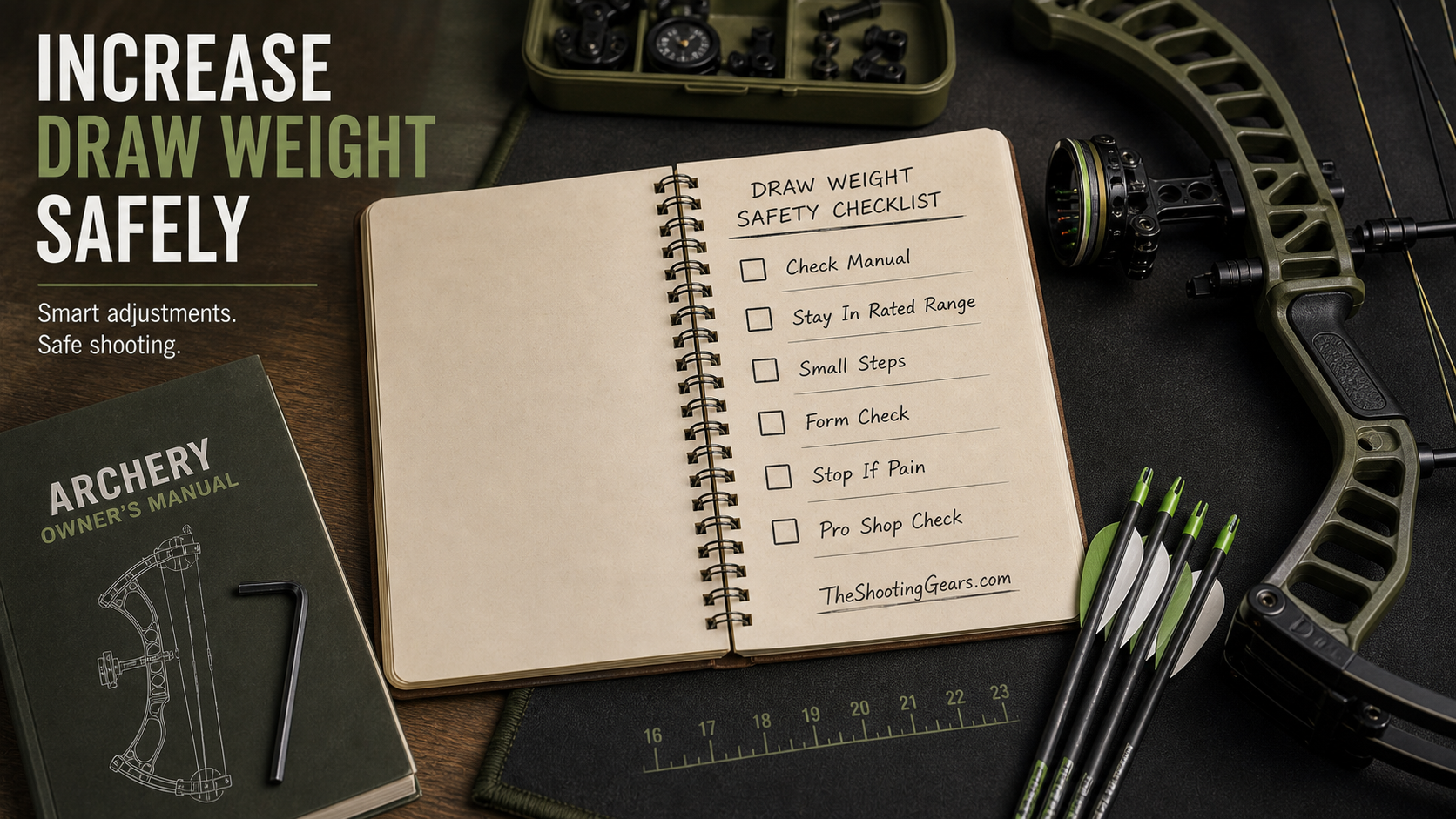
Every bow has a manufacturer-defined safe range. Your manual tells you the rated draw-weight range and the correct adjustment method for that exact model. Do not exceed those limits, do not improvise with tools, and do not follow a generic turn count from a different bow.
| Before changing weight | Why it matters |
|---|---|
| Read the exact model manual | Limits and methods vary by bow |
| Confirm current draw weight | You need a starting point before changing anything |
| Check arrow spine | Draw-weight changes can affect arrow match |
| Inspect string, cables, limbs, and hardware | Do not adjust a damaged or questionable bow |
| Ask a pro shop if unsure | Guessing around limb bolts or limbs is not worth the risk |
For archery safety and participation context, organizations such as USA Archery and World Archery are useful references. For your actual bow, however, the manual and a qualified technician remain the authority.
How Draw Weight Adjusts on Different Bows
Compound Bows
Many compound bows adjust within a limited range through the limb bolts. The available range is not unlimited, and the safe number of turns depends on the exact model. Changing limb-bolt tension can also affect tune, timing, sight marks, and arrow match. If you are not completely sure, have a pro shop make or verify the change.
Recurve Bows
Recurve archers usually increase draw weight by changing limbs, especially on takedown recurves. That makes the step clearer: choose compatible limbs in a manageable weight jump, confirm the fit with the manufacturer or shop, and give your form time to adapt.
Work That May Require a Bow Press
This article does not give bow-press or disassembly instructions. If the change touches cams, string, cables, modules, or anything that requires special tools, take the bow to a pro shop. The goal is controlled progress, not risky mechanical work.
A Gradual Strength-Building Approach
Adding draw weight is partly an equipment change and partly a strength and form change. Make one small adjustment at a time, shoot at that setting for several sessions, and watch what happens to your draw cycle, anchor, hold, and release. If the shot sequence gets worse, the new weight is not helping yet.
Keep a simple log while you progress. Write down the date, the draw weight setting, arrow setup, how many arrows you shot, and whether your form stayed controlled. A short note helps you spot patterns before they become habits, and it gives a coach or technician better information if you need help.
Keep Form First
Good form should survive the increase. You should be able to draw without sky-drawing, settle into anchor, hold steady, and let down safely if needed. If you cannot let down under control, the weight is too much for that moment.
Recheck Arrows and Sight Marks
Draw-weight changes can change arrow behavior. If you increase weight, review your arrow spine and point setup. Our arrow spine guide explains why spine depends on the full setup, not one number.
When to Stop or Get Help
Stop a session and reassess if you feel shoulder, elbow, wrist, or back pain; if you shake heavily at full draw; if you cannot reach anchor smoothly; or if the bow makes a new noise. These are general safety cautions, not medical advice. For ongoing pain or suspected injury, talk with a qualified medical professional.
Do not push through pain to reach a number. A lighter draw weight with clean form is more useful than a heavier draw weight you cannot control. If you are working with a young archer, fit and comfort matter even more; do not rush strength development.
Also remember that hunting rules, target rules, and personal goals can differ. Choose the lowest draw weight that meets your real use case while keeping safe, repeatable control.
When to See a Pro Shop or Coach
- You are unsure of the bow’s safe adjustment range.
- The adjustment requires a bow press or tools not described in the manual.
- Your form breaks down after the weight change.
- Arrow flight changes and you are not sure whether spine or tuning is the issue.
- The bow was damaged, dry fired, or hit hard.
A coach can help with form and strength progression. A pro shop can check the mechanical setup. Both are useful when you are increasing weight because they catch problems a generic article cannot see.
Related Archery Setup Guides
Draw weight connects directly to setup and safety. Read our bow tuning for beginners guide before changing hardware, review archery safety rules, and check how to choose arrow spine after any meaningful weight change.
Frequently Asked Questions
How much draw weight should I add at a time?
Add weight in small steps within your bow’s rated range, then shoot at the new setting long enough to judge control. Avoid universal turn counts or fixed pound jumps unless they come from your exact manual or a qualified technician.
What is overbowing?
Overbowing means using more draw weight than you can control with good form. It can cause shaky drawing, rushed shots, poor anchor, fatigue, and discomfort.
Can I adjust my compound bow draw weight myself?
Some compound bows allow limited limb-bolt adjustment, but only within the manufacturer’s stated range. If you are unsure, or if the work affects tuning or requires special tools, use a pro shop.
Should I stop if my shoulder hurts when I draw?
Yes. Stop, lower the weight or workload, and reassess. For ongoing pain or possible injury, consult a qualified medical professional.
How do recurve archers increase draw weight?
Most recurve archers increase draw weight by switching to heavier compatible limbs. Step up gradually and confirm limb compatibility with the riser, manufacturer, or a pro shop.