


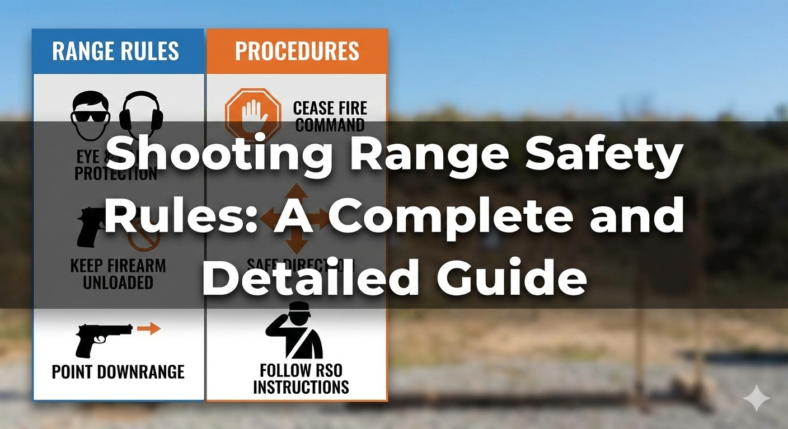
Shooting range safety comes down to a small set of rules followed every single time: keep the muzzle pointed in a safe direction, keep your finger off the trigger until you are ready to fire, treat every firearm as loaded, know your target and what is beyond it, and follow the range officer’s commands without exception. These habits do not change with experience level. A first-time shooter and a lifelong competitor follow the same core rules because range safety depends on consistency, not skill.
This guide explains the universal handling rules, how range commands work, what to do before and during a cease-fire, why eye and ear protection matter, and the hygiene steps that reduce lead exposure at indoor ranges. Range rules vary by facility, so always read and follow the posted rules and the range officer’s instructions at the range you are using.
Table of Contents
The Core Firearm Safety Rules
The core firearm safety rules are the foundation of every range, and they apply whether you are handling a rifle, pistol, or shotgun. Most range incidents trace back to breaking one of these basics, so they are worth knowing before you ever step up to the firing line. The National Shooting Sports Foundation’s firearm safety rules are a useful authority reference for these habits.
Always Point the Muzzle in a Safe Direction
A safe direction is one where an accidental discharge would not strike a person or cause unintended harm. At a range, that almost always means pointing the muzzle downrange toward the backstop or target line. Never let the muzzle cross your body or another person, including while picking up, setting down, or carrying a firearm.
Keep Your Finger Off the Trigger Until Ready to Fire
Rest your trigger finger straight along the frame or receiver, outside the trigger guard, until your sights are on the target and you have decided to shoot. This single habit prevents many unintentional discharges and pairs naturally with safe stance and grip practice.
Treat Every Firearm as If It Is Loaded
Handle every firearm as though it can fire, even one you believe is empty. Visually and physically confirm the chamber is clear when you pick one up, and do not rely only on someone else’s word that it is unloaded.
Know Your Target and What Is Beyond It
Be sure of your target and the area behind and around it before firing. At a supervised range the backstop handles this, but you are still responsible for placing shots where the range allows and not firing at anything other than your authorized target.
How Range Commands Work
Range commands are verbal instructions a range safety officer uses to control what everyone on the line does at the same time. Following them immediately is one of the most important safety behaviors at any supervised range because they keep all shooters synchronized.
Common Commands You May Hear
- Commence fire or the range is hot: shooters at the firing line may load and fire at authorized targets.
- Cease fire: stop shooting immediately, take your finger off the trigger, and wait for the next instruction. Anyone may call a cease-fire if they see a hazard.
- Make safe or unload and show clear: unload the firearm, remove the magazine if applicable, open the action, and confirm the chamber is empty.
- The range is cold: no one handles firearms. This is when shooters may go forward of the line to set or retrieve targets.
Exact command wording can vary by facility, so the range officer and posted range rules always override generic online guidance.
Never Touch a Firearm During a Cold Range
When the range is cold and people may be downrange, do not touch any firearm for any reason, even to case it or move it. Step back from the bench and keep your hands away until the range is called hot again.
Before You Step to the Firing Line
Before you approach the firing line, confirm a few things so you arrive ready and do not create a hazard while setting up. Good preparation reduces fumbling on the line, which is where many handling mistakes happen.
- Bring firearms to the range unloaded and cased unless the range directs otherwise.
- Read posted rules, ammunition restrictions, target rules, and lane procedures.
- Put on eye and ear protection before entering or approaching the active firing area.
- Keep ammunition, magazines, and gear organized so you do not need to turn around with a firearm in hand.
Cease-Fire Behavior
A cease-fire means stop firing now, and it can be called by the range officer or by any shooter who sees a problem. Stop shooting, remove your finger from the trigger, keep the muzzle pointed in a safe direction, and wait for instructions.
Do not finish your shot, do not turn around with the firearm in hand, and do not ask why before making the firearm safe if instructed. Once the situation is resolved, the range officer will call the range hot again before anyone resumes.
Eye and Ear Protection
Eye and ear protection are required at most ranges because gunfire produces noise that can permanently damage hearing and debris that can injure unprotected eyes. The OSHA eye and face protection overview is a helpful source for understanding why eye protection matters, although range-specific rules still come from the facility.
Hearing Protection
Use earplugs, earmuffs, or both together for higher protection, especially indoors or next to large-caliber firearms. Hearing damage from impulse noise can be permanent and is not always noticeable right away.
Eye Protection
Wear impact-rated safety glasses to guard against ejected casings, fragments, and unburned powder. Side coverage helps, and ordinary prescription glasses are not a substitute unless they meet an appropriate safety rating.
Indoor Range Lead and Noise Hygiene
Indoor ranges carry two extra considerations: lead exposure from primer residue and airborne particles, and concentrated noise in an enclosed space. The CDC/NIOSH indoor firing range guidance explains why ventilation, hygiene, and hearing protection matter in these spaces.
- Wash your hands and face before eating, drinking, or leaving the range.
- Avoid eating, drinking, or touching your face on the firing line.
- Keep range clothing separate from other laundry when practical.
- Use strong hearing protection indoors because reflected sound can make gunfire feel louder.
A Simple Range Safety Checklist
Use this quick checklist before and during a range trip. It is not a replacement for facility rules, but it helps keep the most important habits visible.
- Firearm transported unloaded and cased.
- Posted range rules and range officer instructions read and understood.
- Eye protection on and appropriate for impact risk.
- Ear protection on, doubled up indoors or near louder firearms when needed.
- Muzzle always pointed downrange in a safe direction.
- Finger off the trigger until ready to fire.
- Every firearm treated as loaded.
- Target and backstop confirmed before firing.
- Immediate stop on any cease-fire call.
- No firearm handling when the range is cold and people are downrange.
- Hands and face washed before eating or leaving the range.
Frequently Asked Questions
What are the most important shooting range safety rules?
The most important rules are to keep the muzzle pointed in a safe direction, keep your finger off the trigger until ready to fire, treat every firearm as loaded, know your target and what is beyond it, and follow the range officer’s commands immediately.
Can anyone call a cease-fire at a shooting range?
Yes. Any shooter who sees a hazard can call cease-fire. Everyone on the line should stop firing immediately, remove their finger from the trigger, and wait for instructions.
Do I need both eye and ear protection at the range?
Yes. Eye protection guards against ejected casings and fragments, and ear protection helps reduce hearing risk from gunfire noise. Wear both whenever you are on or near an active firing line.
Why is lead hygiene important at indoor ranges?
Indoor shooting can produce airborne lead particles and residue from primers. Washing your hands and face, avoiding food and drink on the line, and separating range clothing help reduce exposure.
Are shooting range rules the same everywhere?
The core handling rules are consistent, but each range sets its own rules for calibers, rapid fire, holster use, targets, and procedures. Always follow the posted rules and the range officer at the facility you are using.