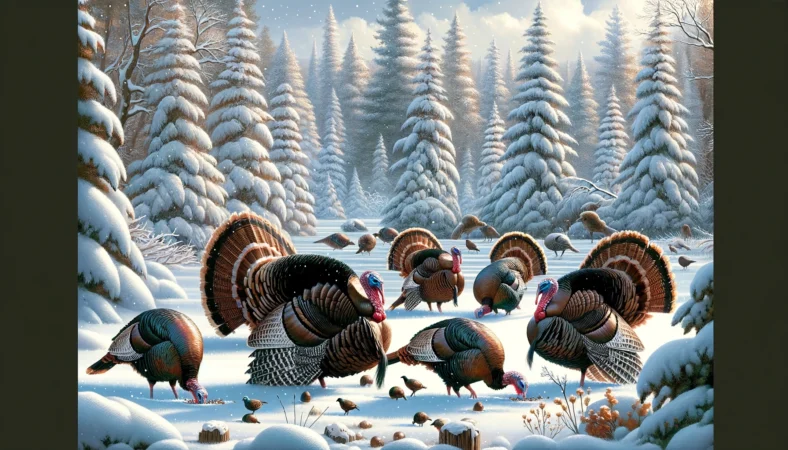
How Cold Weather Impacts Wild Turkeys: Food, Roosts, Snow, and Habitat

Cold weather affects wild turkeys by changing where they feed, how far they move, where they roost, and how much energy they conserve. Turkeys do not hibernate or migrate away from winter in most of their range. Instead, they adjust daily behavior around food access, snow depth, wind, temperature, cover, and predator pressure.

A normal cold snap is usually manageable for healthy wild turkeys. The harder problem is a long stretch of deep snow, crusted ice, poor mast, limited open feeding areas, or repeated disturbance that forces birds to burn energy. Habitat quality often matters more than temperature alone.

Table of contents

Quick Answer

Wild turkeys survive cold weather by flocking together, feeding on available mast and crop waste, roosting in trees, reducing unnecessary movement, using cover, and shifting to areas where food is easier to reach. Severe winter conditions become dangerous when snow or ice blocks food, birds lose body condition, or repeated disturbance forces them to move too much.

For hunters and landowners, the best winter support is good habitat: mast-producing trees, forest edges, roosting cover, openings, and low-disturbance areas. Feeding wild turkeys directly is not always legal or wise, so check state wildlife-agency guidance before doing it.

How Wild Turkeys Change Behavior In Winter

During winter, wild turkeys often form larger flocks and spend more time near reliable food and protective cover. They may use south-facing slopes, sheltered woods, agricultural edges, oak stands, or conifer cover depending on the region. Their routine becomes practical: find food, avoid predators, conserve energy, and roost safely.

The wild turkey species overview notes that turkeys use varied food sources and roost in trees, with winter habitat and food access becoming especially important in snowier parts of their range. Local habitat can make winter either manageable or costly.

Winter Food Sources

Hard Mast

Acorns, beechnuts, hickory nuts, and other hard mast can be important winter foods where available. A strong mast year can help turkeys maintain condition. A poor mast year can push birds toward fields, openings, and other food sources.

Crop Waste And Openings

Turkeys may feed on leftover corn, soybeans, grain, seeds, grasses, and other accessible foods around farm edges and openings. Snow depth matters. Food that is easy to find in November can become difficult to reach after repeated snow and freeze-thaw cycles.

Buds, Greenery, And Browse

When preferred foods are limited, turkeys may use buds, leaves, ferns, fruits, and other plant material. Their winter diet is flexible, but flexibility does not remove the need for good habitat.

Roosting And Shelter

Wild turkeys usually roost in trees at night. Roosting above the ground helps reduce risk from many predators and keeps birds out of the coldest ground-level exposure. In winter, sheltered roosts can help reduce wind stress and snow exposure.

Conifers, mature trees, sheltered ridges, and mixed woods can all matter, depending on local terrain. A good winter area gives turkeys both food and safe roosting nearby. If birds must travel too far between the two, they spend more energy.

Deep Snow And Ice

Deep snow makes walking harder and can cover food. Crusted ice can be even worse because it may block access to mast or crop waste while still forcing birds to work harder. When snow is soft and deep, turkeys may stay closer to roosting cover or use packed trails, wind-blown slopes, and exposed feeding areas.

Ice storms can also affect roosting and movement. Branches may become slick, cover may bend or break, and birds may need to shift to safer roosts. These events are usually local and temporary, but several hard events in a row can stress birds.

Energy Conservation

Winter survival is partly an energy budget. Turkeys need enough food to offset the calories they spend staying warm, moving through snow, avoiding predators, and maintaining body condition. When food is close to cover, birds can conserve energy. When food is scattered or buried, they must work harder.

This is why repeated disturbance can matter. People, dogs, vehicles, and unnecessary pressure can move birds away from safe food and cover. A single flush may not matter much. Repeated disturbance during severe weather can add avoidable stress.

Predator Pressure

Predators are part of the natural system, but winter conditions can change the odds. Snow can make turkeys more visible and can reveal travel routes. At the same time, flocking helps birds watch for danger with many sets of eyes.

Good roosting cover, escape routes, and daytime feeding areas with visibility can help. Turkeys are not helpless in winter, but habitat and weather shape how much risk they face.

Habitat Matters More Than Weather Alone

A cold week in good habitat may be less harmful than a milder winter in poor habitat. Turkeys need food, roosts, cover, and movement corridors. Forests with mast trees, mixed cover, and nearby openings are often more valuable than one single food source.

Conservation groups such as the National Wild Turkey Federation focus heavily on habitat because healthy habitat supports turkeys through the whole year, not only during hunting season. For related field context, see our guide to North American game birds.

How People Can Help Responsibly

The best long-term help is habitat improvement, not random feeding. Planting or protecting mast-producing trees, managing openings, reducing unnecessary disturbance, and supporting science-based wildlife management usually helps more than dumping grain in one spot.

Supplemental feeding can create disease, crowding, dependency, or legal problems in some places. Always check state wildlife agency guidance before feeding wild turkeys. If you hunt turkeys, keep regulation checks current and pair winter observation with our day hunting field checklist before spring or fall seasons.

Common Misunderstandings

Thinking Turkeys Hibernate

Wild turkeys stay active through winter. They adapt their movement, flocking, feeding, and roosting instead of hibernating.

Blaming Cold Alone

Cold matters, but food access, snow crust, cover, body condition, and disturbance often explain winter stress better than temperature alone.

Assuming Feeding Always Helps

Feeding may seem kind, but it can cause problems if done incorrectly or illegally. Habitat work and reduced disturbance are usually better first steps.

Treating Every Flock The Same

Winter conditions vary by region. A flock in the Northeast, the Midwest, the South, and the mountains may face very different snow, food, and roosting conditions.

FAQ

Do wild turkeys hibernate in winter?

No. Wild turkeys remain active year-round. In winter they change feeding, movement, flocking, and roosting behavior to conserve energy and find food.

What do wild turkeys eat in winter?

They may eat acorns, beechnuts, seeds, crop waste, fruits, buds, leaves, grasses, and other available foods. Local habitat and snow depth determine what is easiest to reach.

Can wild turkeys survive deep snow?

They can survive snow, but long periods of deep or crusted snow can make feeding and movement harder. Birds in good habitat with accessible food and cover have a better chance.

Should people feed wild turkeys in winter?

Not without checking local wildlife guidance. Supplemental feeding can cause legal, disease, crowding, and behavior problems. Habitat support is usually the better long-term approach.

Final Takeaway

Cold weather changes wild turkey behavior, but winter survival depends on more than temperature. Food access, roosting cover, snow depth, ice, flock behavior, predators, disturbance, and habitat quality all matter. If you want to help turkeys, focus on healthy habitat, responsible observation, and current wildlife-agency guidance rather than quick fixes.
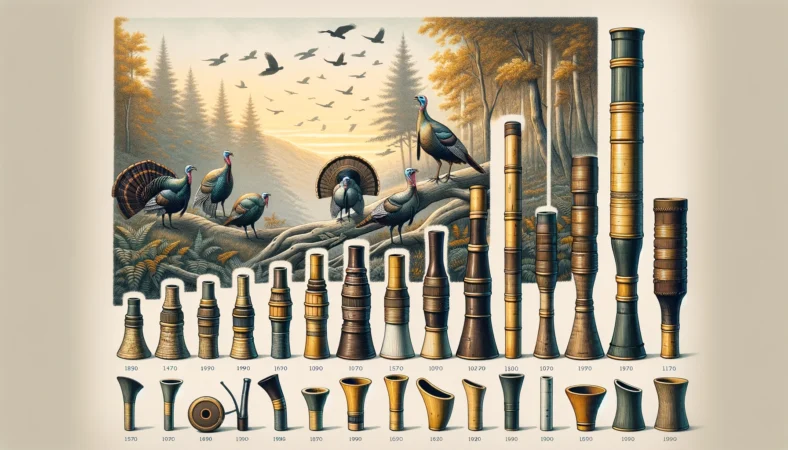
The Evolution of Tube Calls: Turkey Sounds, Materials, Practice, and Field Use

Tube turkey calls remain useful because they can make a wide range of turkey sounds from a small, simple device. A tube call uses a hollow body and a stretched reed or latex surface to create yelps, clucks, purrs, cuts, and even gobbles when the caller learns mouth pressure, air control, and hand position.

The story of tube calls is less about one invention date and more about hunters refining simple sound-making tools over time. Early homemade calls, modern synthetic reeds, better bodies, and cleaner tuning all serve the same purpose: imitate real turkey vocalizations well enough to communicate, not just make noise.

Table of contents

Quick Answer

A tube call is a small turkey call that uses a stretched reed over a hollow tube or barrel. It has evolved from simple homemade calling tools into a more refined modern call with better materials, more consistent reeds, and easier tuning. It is valued because one call can produce several turkey vocalizations, but it takes more practice than many beginner-friendly box or push-pull calls.

For hunters, the biggest advantage is versatility. The biggest downside is consistency. A tube call can sound excellent in skilled hands, but it can also sound harsh or unnatural if the caller blows too hard, stretches the reed poorly, or overcalls.

What Is A Tube Turkey Call?

A tube turkey call is a hollow calling device with a reed or latex material stretched across part of the opening. The hunter pushes air across the reed and shapes the sound with lips, tongue, throat, and hand position. The turkey call reference overview describes tube calls as devices that use a small hollow barrel with latex fixed across part of the top.

The tube call is different from a box call or pot call because the caller’s mouth and air control do much of the work. That makes it expressive, but it also raises the learning curve.

Why Tube Calls Still Matter

Tube calls remain popular with many turkey hunters because they can cover soft and loud calling from one compact tool. They can be carried easily, adjusted quickly, and used to create emotion in the call: pleading yelps, sharp cuts, soft purrs, and aggressive gobbles.

They also help hunters learn the rhythm of turkey language. Realism is not only the sound itself. It is timing, volume, spacing, and knowing when to stop. A simple call used well often beats a louder call used too much.

Early Turkey Calling And Homemade Tools

Turkey hunters have long built calls from available materials. Some calling traditions used wingbones, wood, reeds, slate, boxes, and other handmade tools. Tube-style calls fit that same practical pattern: hunters wanted a compact tool that could imitate turkey vocalizations without carrying several different calls.

Because many early calls were homemade or regional, the exact history is not always cleanly documented. What matters for today’s hunter is the same principle those early callers understood: the call should sound like a turkey, fit the situation, and not overpower the woods.

How Materials Changed Tube Calls

Body Material

Tube bodies can be made from wood, plastic, metal, acrylic, or other materials. The body shape, chamber size, and edge design all influence tone and volume. Modern manufacturing makes calls more consistent than many homemade versions, but hand-tuned calls still appeal to hunters who like a custom feel.

Reed Material

Reed material is central to the call. Latex and similar materials make it easier to tune tension and replace worn reeds. A fresh, properly stretched reed can sound lively. A damaged or poorly stretched reed can make the call difficult to control.

Tuning And Consistency

Modern tube calls often make reed replacement and tuning easier. That helps hunters keep a call consistent across a season. Still, the user matters more than the hardware. A well-tuned call needs practice before opening morning.

Turkey Sounds A Tube Call Can Make

Wild turkeys use many vocalizations, including yelps, clucks, purrs, cuts, cackles, kee-kees, putts, and gobbles. The wild turkey overview notes a wide range of turkey calls and vocal behavior. A tube call can imitate many of these sounds, but not every caller will master all of them quickly.

Yelps

Yelps are one of the most useful turkey sounds. A tube call can make plain yelps, excited yelps, and pleading yelps depending on air pressure and rhythm.

Clucks And Purrs

Soft clucks and purrs are useful when birds are close or calm. These require control. Too much air can turn a soft call into a sharp, unnatural sound.

Cuts And Gobbles

Tube calls can produce sharp cuts and gobbles, but hunters should use them carefully. Gobbling can be unsafe on public land or around other hunters because it may attract people as well as turkeys.

Why Tube Calls Take Practice

A tube call is sensitive to reed tension, lip seal, air direction, and hand position. Small changes can make the call sound better or worse. This is why beginners may struggle at first even if the call itself is good.

The best practice method is simple: listen to real turkeys, practice short sequences, record yourself, and focus on rhythm before volume. Calling louder is rarely the fix for poor calling. Better timing and less calling usually help more.

When To Use A Tube Call

  • When you want one compact call that can make several sounds.
  • When birds are vocal and you need expressive yelps or cuts.
  • When you want a different sound from common box or pot calls.
  • When you have practiced enough to control volume and tone.
  • When wet conditions make some friction calls less reliable.

For newer hunters, tube calls pair well with a simpler box or pot call. Use the easier call as a baseline, then add the tube call when you can make clean, controlled sounds.

Calling Ethics And Field Judgment

Good turkey calling is not about making constant noise. It is about reading the bird, terrain, pressure, and safety situation. Overcalling can educate birds, pull them away from natural movement, or make the setup feel unnatural.

Safety matters too. Avoid gobbling on public land or near other hunters. Follow current seasons, legal methods, and local rules. If you are new to turkey hunting, combine calling practice with basic field planning from our crossbow turkey hunting essentials guide and broader wildlife context from our North American game birds article.

Common Tube Call Mistakes

Using Too Much Air

Blowing too hard can make the call harsh. Start with controlled air and build volume only when the sound stays clean.

Ignoring Reed Condition

A worn, loose, torn, or poorly stretched reed can ruin tone. Check the reed before the hunt and carry a backup call.

Overcalling

Too much calling can sound unnatural. Call, listen, and let the bird respond. Silence is part of the conversation.

Practicing Only During The Hunt

Tube calls reward practice. Learn the call before opening day so you can use it calmly when a bird is close.

FAQ

Are tube turkey calls good for beginners?

They can be, but they require practice. Many beginners find box calls or push-pull calls easier at first, then add a tube call after learning basic turkey sounds.

What sounds can a tube call make?

A tube call can make yelps, clucks, purrs, cuts, cackles, and gobbles when tuned and used correctly. Control matters more than volume.

Do tube call reeds need replacement?

Yes, reeds can wear, stretch, tear, or lose tone. Replace or retune the reed when the call becomes hard to control or sounds flat.

Is it safe to gobble with a tube call?

Use caution. Gobbling can attract other hunters, especially on public land. Many hunters avoid gobbling for safety reasons unless they are in a controlled private-land situation.

Final Takeaway

The evolution of tube calls shows how a simple hunting tool can stay useful across generations. Better materials and tuning have improved consistency, but the real value still comes from the hunter’s ear, restraint, and practice. Learn real turkey sounds, call less than you think you need to, and use the tube call as one part of a safe, ethical turkey hunting setup.

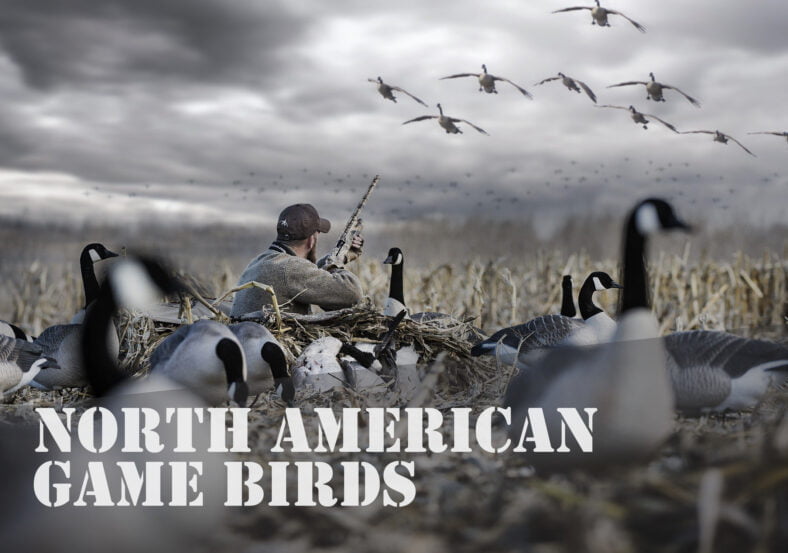
North American Game Birds: Upland Birds, Ducks, and Geese

North American game birds include upland birds such as pheasants, quail, grouse, and doves, plus waterfowl such as ducks and geese. They live in different habitats, behave differently, and are managed under different hunting rules, so identification matters before any hunt.

This guide is a plain-language overview for hunters and wildlife watchers. It is not a season-date or bag-limit guide. Always check your state wildlife agency and federal migratory-bird rules before hunting.

Table of contents

Quick Answer

The major North American game bird groups are upland birds, migratory birds, and waterfowl. Pheasants, quail, grouse, and wild turkeys are usually discussed as upland game birds. Ducks and geese are waterfowl. Doves and some other birds may fall under migratory-bird rules, depending on species and location.

For hunters, the most important thing is not memorizing every bird name. It is learning clear identification, legal status, safe shooting zones, habitat, and local regulations before entering the field.

Upland Birds vs Waterfowl

Upland game birds are often hunted in fields, grasslands, brush, timber edges, or agricultural cover. Many flush from the ground and are hunted with walking, dogs, or careful habitat scouting.

Waterfowl are tied to wetlands, lakes, rivers, marshes, grain fields, and migration routes. Ducks and geese are federally regulated migratory birds, so hunters need to follow both federal and state rules. The U.S. Fish and Wildlife Service Migratory Bird Program is a key authority source for migratory-bird management.

Pheasants

Ring-necked pheasants are one of the most recognizable upland birds in North America, especially in farmland and grassland regions. Roosters have bright coloring and long tails, while hens are more muted and blend into cover.

Pheasant hunting often depends on habitat: grass, crop edges, shelterbelts, ditches, and weedy cover. Identification is important because many areas have sex-specific rules or restrictions.

Quail

Quail are smaller upland birds that often live in coveys. Bobwhite quail are well known in the eastern and central United States, while scaled quail, Gambel’s quail, and California quail are associated with different western and southwestern habitats.

Quail identification can involve size, calls, head markings, habitat, and region. Because quail are small and fast, hunters need careful muzzle control, clear shooting lanes, and strong awareness of dogs and partners.

Grouse

Grouse include birds such as ruffed grouse, spruce grouse, sharp-tailed grouse, sage-grouse, and others. Habitat varies widely: thick young forest, northern conifers, prairie, sagebrush, and mountain edges can all support different grouse species.

Grouse hunting often rewards slow walking, good listening, and attention to cover. Some grouse populations are sensitive to habitat and conservation concerns, so local regulations and agency updates matter.

Doves

Mourning doves are common migratory game birds in many states. They are fast, agile, and often hunted around fields, water, flyways, and feeding areas during legal seasons.

Dove hunting requires strong species identification and careful attention to shooting direction because birds can come from many angles. Always know what is beyond the bird before shooting.

Ducks And Geese

Ducks and geese are waterfowl and may be found on marshes, lakes, rivers, flooded timber, coastal areas, and agricultural fields. Identification can involve size, wing pattern, sound, flock shape, flight style, and habitat.

Waterfowl hunting has specific legal requirements that can include licenses, stamps, non-toxic shot, season frameworks, species limits, and possession rules. Our duck hunting gear checklist is useful for gear planning, but regulations should come from official sources.

Field Identification Tips

  • Habitat: Wetland, crop edge, timber, prairie, brush, or sage can narrow likely species.
  • Flight style: Some birds flush explosively; others glide, dart, or fly in organized flocks.
  • Size and shape: Compare body size, tail length, wing shape, and neck length.
  • Sound: Calls and wing noise can help, but do not rely on sound alone.
  • Color pattern: Use clear visible marks, not a rushed guess in poor light.

For broader field observation skills, see our guide to tracking animals and reading signs. Reading habitat helps with birds as well as big game.

Habitat And Scouting Clues

Game birds are tied closely to food, cover, water, and seasonal movement. Pheasants may use grass near crop fields, ditches, cattails, or shelterbelts. Quail need cover that lets coveys feed, hide, and escape. Grouse may use young forest, brush, prairie, sage, or conifer cover depending on species and region.

Waterfowl scouting is different. Ducks and geese often follow water, weather, pressure, food, and migration timing. A pond that is empty one day can be active after a weather shift, while a pressured marsh can change quickly once birds adjust to hunting activity.

Good scouting should also include access and safety. Know property boundaries, parking areas, dog restrictions, retrieval challenges, and where other hunters are likely to be. A productive-looking spot is not worth using if the shooting angles are unsafe.

Before-You-Hunt Checklist

  • Confirm the bird species you may legally hunt.
  • Check current season dates, stamps, licenses, and possession rules.
  • Confirm legal shot type, firearm rules, and public-land requirements.
  • Review safe zones of fire with partners before anyone loads.
  • Carry water, eye protection, blaze clothing where required, and a small first-aid kit.
  • If hunting with a dog, plan for heat, cold, water, hazards, and recovery.

Preparation prevents rushed decisions. Bird hunts can move quickly once birds flush or approach, so rules and shooting lanes should be clear before the first opportunity appears.

If identification is uncertain, do not shoot. Some birds share similar size, color, or flight behavior, and lighting can make field marks harder to read. A responsible hunter waits for a clear, legal, and safe opportunity.

That pause protects wildlife, hunting partners, dogs, and the reputation of ethical hunters.

It also gives beginners time to build confidence through better observation and safer decision-making in changing field conditions.

Safety, Ethics, And Regulations

Game-bird hunting often involves moving hunters, dogs, fast flushes, and changing shooting angles. Keep the muzzle in a safe direction, know where partners and dogs are, and never shoot at a bird if the background is unsafe.

The Hunter Ed safety resources are helpful for reviewing field safety and responsible hunting basics. For migratory birds, check the U.S. Fish and Wildlife Service and your state agency before each season.

FAQ

What are the most common game birds in North America?

Common groups include pheasants, quail, grouse, doves, ducks, geese, and wild turkeys. Exact availability depends on region, habitat, and regulations.

What is an upland game bird?

An upland game bird is generally a land-based game bird found in fields, grasslands, brush, timber, or similar cover rather than open water.

Are ducks and geese game birds?

Yes, ducks and geese are game birds, but they are usually managed as migratory waterfowl with specific federal and state rules.

Why do game-bird regulations change?

Regulations can change because of population surveys, habitat conditions, migration data, conservation goals, and state or federal management decisions.

Final Takeaway

North American game birds include upland birds, doves, ducks, geese, and other region-specific species. Learn the habitat, field marks, behavior, and rules for each bird before hunting, and use official sources for current seasons and legal requirements.

Exit mobile version