
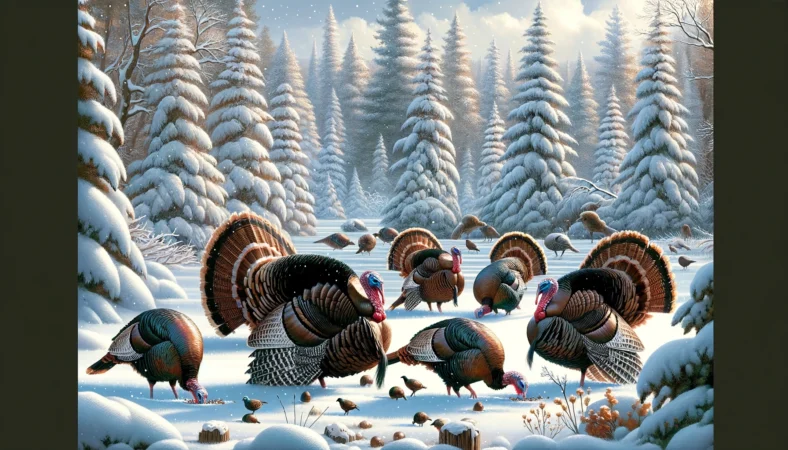
How Cold Weather Impacts Wild Turkeys: Food, Roosts, Snow, and Habitat

Cold weather affects wild turkeys by changing where they feed, how far they move, where they roost, and how much energy they conserve. Turkeys do not hibernate or migrate away from winter in most of their range. Instead, they adjust daily behavior around food access, snow depth, wind, temperature, cover, and predator pressure.

A normal cold snap is usually manageable for healthy wild turkeys. The harder problem is a long stretch of deep snow, crusted ice, poor mast, limited open feeding areas, or repeated disturbance that forces birds to burn energy. Habitat quality often matters more than temperature alone.

Table of contents

Quick Answer

Wild turkeys survive cold weather by flocking together, feeding on available mast and crop waste, roosting in trees, reducing unnecessary movement, using cover, and shifting to areas where food is easier to reach. Severe winter conditions become dangerous when snow or ice blocks food, birds lose body condition, or repeated disturbance forces them to move too much.

For hunters and landowners, the best winter support is good habitat: mast-producing trees, forest edges, roosting cover, openings, and low-disturbance areas. Feeding wild turkeys directly is not always legal or wise, so check state wildlife-agency guidance before doing it.

How Wild Turkeys Change Behavior In Winter

During winter, wild turkeys often form larger flocks and spend more time near reliable food and protective cover. They may use south-facing slopes, sheltered woods, agricultural edges, oak stands, or conifer cover depending on the region. Their routine becomes practical: find food, avoid predators, conserve energy, and roost safely.

The wild turkey species overview notes that turkeys use varied food sources and roost in trees, with winter habitat and food access becoming especially important in snowier parts of their range. Local habitat can make winter either manageable or costly.

Winter Food Sources

Hard Mast

Acorns, beechnuts, hickory nuts, and other hard mast can be important winter foods where available. A strong mast year can help turkeys maintain condition. A poor mast year can push birds toward fields, openings, and other food sources.

Crop Waste And Openings

Turkeys may feed on leftover corn, soybeans, grain, seeds, grasses, and other accessible foods around farm edges and openings. Snow depth matters. Food that is easy to find in November can become difficult to reach after repeated snow and freeze-thaw cycles.

Buds, Greenery, And Browse

When preferred foods are limited, turkeys may use buds, leaves, ferns, fruits, and other plant material. Their winter diet is flexible, but flexibility does not remove the need for good habitat.

Roosting And Shelter

Wild turkeys usually roost in trees at night. Roosting above the ground helps reduce risk from many predators and keeps birds out of the coldest ground-level exposure. In winter, sheltered roosts can help reduce wind stress and snow exposure.

Conifers, mature trees, sheltered ridges, and mixed woods can all matter, depending on local terrain. A good winter area gives turkeys both food and safe roosting nearby. If birds must travel too far between the two, they spend more energy.

Deep Snow And Ice

Deep snow makes walking harder and can cover food. Crusted ice can be even worse because it may block access to mast or crop waste while still forcing birds to work harder. When snow is soft and deep, turkeys may stay closer to roosting cover or use packed trails, wind-blown slopes, and exposed feeding areas.

Ice storms can also affect roosting and movement. Branches may become slick, cover may bend or break, and birds may need to shift to safer roosts. These events are usually local and temporary, but several hard events in a row can stress birds.

Energy Conservation

Winter survival is partly an energy budget. Turkeys need enough food to offset the calories they spend staying warm, moving through snow, avoiding predators, and maintaining body condition. When food is close to cover, birds can conserve energy. When food is scattered or buried, they must work harder.

This is why repeated disturbance can matter. People, dogs, vehicles, and unnecessary pressure can move birds away from safe food and cover. A single flush may not matter much. Repeated disturbance during severe weather can add avoidable stress.

Predator Pressure

Predators are part of the natural system, but winter conditions can change the odds. Snow can make turkeys more visible and can reveal travel routes. At the same time, flocking helps birds watch for danger with many sets of eyes.

Good roosting cover, escape routes, and daytime feeding areas with visibility can help. Turkeys are not helpless in winter, but habitat and weather shape how much risk they face.

Habitat Matters More Than Weather Alone

A cold week in good habitat may be less harmful than a milder winter in poor habitat. Turkeys need food, roosts, cover, and movement corridors. Forests with mast trees, mixed cover, and nearby openings are often more valuable than one single food source.

Conservation groups such as the National Wild Turkey Federation focus heavily on habitat because healthy habitat supports turkeys through the whole year, not only during hunting season. For related field context, see our guide to North American game birds.

How People Can Help Responsibly

The best long-term help is habitat improvement, not random feeding. Planting or protecting mast-producing trees, managing openings, reducing unnecessary disturbance, and supporting science-based wildlife management usually helps more than dumping grain in one spot.

Supplemental feeding can create disease, crowding, dependency, or legal problems in some places. Always check state wildlife agency guidance before feeding wild turkeys. If you hunt turkeys, keep regulation checks current and pair winter observation with our day hunting field checklist before spring or fall seasons.

Common Misunderstandings

Thinking Turkeys Hibernate

Wild turkeys stay active through winter. They adapt their movement, flocking, feeding, and roosting instead of hibernating.

Blaming Cold Alone

Cold matters, but food access, snow crust, cover, body condition, and disturbance often explain winter stress better than temperature alone.

Assuming Feeding Always Helps

Feeding may seem kind, but it can cause problems if done incorrectly or illegally. Habitat work and reduced disturbance are usually better first steps.

Treating Every Flock The Same

Winter conditions vary by region. A flock in the Northeast, the Midwest, the South, and the mountains may face very different snow, food, and roosting conditions.

FAQ

Do wild turkeys hibernate in winter?

No. Wild turkeys remain active year-round. In winter they change feeding, movement, flocking, and roosting behavior to conserve energy and find food.

What do wild turkeys eat in winter?

They may eat acorns, beechnuts, seeds, crop waste, fruits, buds, leaves, grasses, and other available foods. Local habitat and snow depth determine what is easiest to reach.

Can wild turkeys survive deep snow?

They can survive snow, but long periods of deep or crusted snow can make feeding and movement harder. Birds in good habitat with accessible food and cover have a better chance.

Should people feed wild turkeys in winter?

Not without checking local wildlife guidance. Supplemental feeding can cause legal, disease, crowding, and behavior problems. Habitat support is usually the better long-term approach.

Final Takeaway

Cold weather changes wild turkey behavior, but winter survival depends on more than temperature. Food access, roosting cover, snow depth, ice, flock behavior, predators, disturbance, and habitat quality all matter. If you want to help turkeys, focus on healthy habitat, responsible observation, and current wildlife-agency guidance rather than quick fixes.
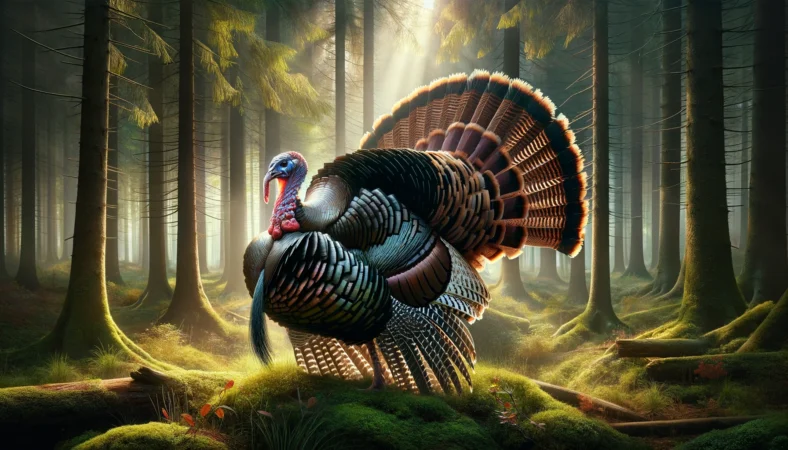
A Closer Look at the Wild Turkey

The wild turkey is one of North America’s best-known wildlife conservation success stories. Once reduced across much of its range, the species now lives in forests, farm edges, grasslands, and suburban green spaces across large parts of the United States, Canada, and Mexico.

Wild turkeys matter because they connect habitat, hunting tradition, wildlife watching, and forest ecology. Understanding their behavior, food, range, and conservation history helps hunters, landowners, birders, and outdoor families appreciate the bird beyond the holiday table.

Table of contents

Quick Facts About Wild Turkeys

The wild turkey is a large ground-dwelling bird that can fly short distances, roosts in trees, feeds on plants and small animals, and communicates with a wide range of calls. Males are called toms or gobblers, females are hens, and young turkeys are poults.

Wild Turkey Snapshot

  • Scientific name: Meleagris gallopavo.
  • Native range: North America.
  • Main habitat: forests, edges, fields, openings, and mixed cover.
  • Diet: acorns, seeds, insects, fruit, grasses, and small animals.
  • Daily habit: feed on the ground and roost in trees at night.
  • Best-known sound: the male gobble during breeding season.

What Is A Wild Turkey?

The wild turkey is a native North American bird and the wild ancestor of the domestic turkey. It is built for walking, scratching, short bursts of flight, and living around mixed food and cover.

Wild Turkey Vs Domestic Turkey

Wild turkeys are leaner, more alert, and much better flyers than domestic turkeys bred for meat production. Domestic birds are usually heavier and less capable of sustained escape flight. Wild turkeys survive by moving through cover, roosting above ground, and reacting quickly to predators.

Why They Are Important

Wild turkeys are important to hunters, birdwatchers, land managers, and ecosystems. They are also a symbol of successful wildlife restoration. Their recovery shows what habitat work, regulated hunting, and state wildlife management can accomplish.

Wild Turkey Appearance

Wild turkeys are large birds with long legs, rounded bodies, bare heads, and bronze or iridescent feathering. From a distance they may look dark, but in the sun their feathers can flash copper, green, gold, and purple tones.

Males

Male wild turkeys, often called toms or gobblers, are larger than hens. They may display a fan-shaped tail, beard-like feathers from the chest, and a fleshy head and neck that can change color during display.

Females

Hens are usually smaller and less brightly marked. Their more muted colors help them blend into nesting cover. This camouflage matters because hens nest on the ground and must avoid predators while incubating eggs.

Poults

Young turkeys are called poults. They are vulnerable in the first weeks of life and need insect-rich habitat, low cover, and dry conditions to survive well.

Behavior And Communication

Wild turkeys are social birds with complex behavior. They flock during parts of the year, separate during breeding and nesting periods, and use calls and body language to communicate.

Gobbling

The gobble is the most famous wild turkey sound. Male turkeys use it most often in spring to attract hens and announce their presence. A gobble can carry a long distance in quiet woods, especially at dawn.

Strutting

Strutting is the classic male display. A tom fans his tail, drops his wings, puffs his body, and moves slowly to impress hens and challenge rivals. It is one of the most recognizable sights in spring turkey country.

Roosting

Wild turkeys usually roost in trees at night. Roosting helps them avoid many ground predators. In the morning, they fly down and begin feeding, moving, and calling.

Habitat And Range

Wild turkeys do best where several habitat types meet. They use mature trees for roosting, openings for feeding and brood-rearing, and cover for nesting and protection.

Forest Edges

Edges between woods, fields, meadows, and brush often provide food and cover close together. This is why turkeys are often seen near field borders, logging roads, pastures, and oak ridges.

Seasonal Movement

Turkeys may shift patterns by season based on food, weather, nesting, and flock behavior. In fall and winter, food sources such as acorns and agricultural waste can shape daily movement.

Current Range

The Cornell Lab of Ornithology wild turkey profile notes that wild turkeys are widespread across much of North America. Local abundance still depends on habitat quality, weather, predation, and management.

Diet And Foraging

Wild turkeys are opportunistic omnivores. They scratch through leaves, grass, and soil to find food, and their diet changes by season.

Plant Foods

Turkeys eat acorns, beechnuts, seeds, berries, grasses, buds, and agricultural grains. Mast crops such as acorns can be especially important in fall and winter.

Animal Foods

Insects are important, especially for poults. Turkeys may also eat small reptiles, snails, and other small animals when available. Protein-rich insects help young birds grow quickly.

Foraging Behavior

Turkeys often scratch leaf litter to expose food. This behavior can help mix soil and leaf material, though their broader ecological role depends on habitat and population density.

Life Cycle And Nesting

Spring is the most visible season for wild turkey behavior because males gobble and strut, hens nest, and broods appear later as the weather warms.

Breeding Season

During breeding season, toms display and call to attract hens. Hunters and wildlife watchers often notice more vocal activity at dawn during this period. For a related calling topic, see our guide to the evolution of tube calls.

Nesting

Hens nest on the ground in concealed cover. Nest success can be affected by weather, predators, habitat structure, and disturbance. Good nesting cover is one reason habitat diversity matters.

Brood Rearing

After hatching, poults leave the nest quickly and follow the hen. They need insects, low vegetation, and protection from predators. Wet, cold weather can be hard on young birds.

The Wild Turkey Conservation Story

Wild turkeys declined sharply in parts of North America because of habitat loss and unregulated hunting. Their later recovery is widely viewed as a major wildlife management success.

Restoration Efforts

State wildlife agencies, conservation groups, regulated hunting, habitat work, and trap-and-transfer programs helped restore wild turkey populations. The National Wild Turkey Federation conservation work is one example of ongoing habitat and turkey-focused efforts.

Why Management Still Matters

Recovery does not mean turkeys can be ignored. Regional populations can rise or fall based on habitat, nest success, weather, disease, predators, and land-use change. Responsible management keeps the success story moving forward.

Responsible Hunting Role

Regulated hunting can support conservation through license funding, season limits, and habitat investment. Hunters should always follow current state rules and identify their target clearly before any shot.

Watching Wild Turkeys Responsibly

Wild turkeys are fascinating to watch, but they are still wild animals. Keep distance, avoid feeding them, and do not pressure nesting hens or young broods.

Do Not Feed Wild Turkeys

Feeding wildlife can create dependency, crowding, disease risk, and conflicts around homes or roads. Natural food and habitat are better than handouts.

Give Flocks Room

Watch from a respectful distance with binoculars or a spotting scope. If birds change direction, stop feeding, or appear alert because of your presence, you are too close. Our monocular vs binocular comparison can help choose an optic for wildlife viewing.

Respect Seasons And Regulations

If you hunt turkeys, use your state wildlife agency as the source for current season dates, permits, legal equipment, and reporting requirements. Rules change by state and season.

FAQ

Can wild turkeys fly?

Yes. Wild turkeys can fly short distances and often fly up into trees to roost. They are not long-distance soaring birds, but they are much stronger flyers than many people expect.

Are wild turkeys aggressive?

They usually avoid people, but individual birds may act bold or aggressive, especially around mating season or where people have fed them. Give them space and do not encourage them with food.

What do wild turkeys eat?

Wild turkeys eat acorns, seeds, berries, grasses, insects, small reptiles, and other available foods. Their diet changes by season and habitat.

Where do wild turkeys sleep?

Wild turkeys usually sleep in trees. Roosting above ground helps protect them from many predators.

How can landowners help wild turkeys?

Landowners can help by supporting diverse habitat: mature trees for roosting, nesting cover, brood habitat with insects, and natural food sources such as mast-producing trees and native plants.

Final Thoughts

The wild turkey is more than a familiar bird. It is a symbol of habitat, conservation, and outdoor tradition across North America. Whether you watch them, hunt them, photograph them, or simply hear a gobble at sunrise, understanding their life history makes the experience richer.

Exit mobile version