Axis Deer vs Whitetail: Key Differences for Identification

Axis deer and whitetail deer are both popular deer species to discuss among hunters and wildlife watchers, but they are very different animals. Whitetails are native and widespread across much of North America. Axis deer are native to Asia and exist in the United States mainly as introduced populations, especially in parts of Texas and on managed properties.

This comparison focuses on identification, habitat, behavior, and hunting context. It does not replace current state regulations, landowner rules, or wildlife-agency guidance.

Table of contents

Quick Answer

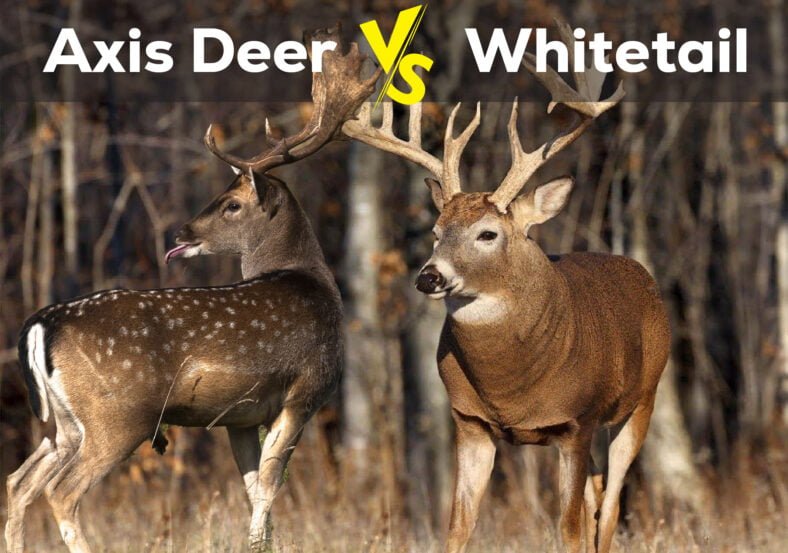
Axis deer are spotted, non-native deer with a reddish coat, white spots, and antlers that usually have a different shape from whitetails. Whitetail deer are native, widespread, and known for the white underside of the tail they raise when alarmed. In the United States, whitetails are managed as native wildlife, while axis deer rules vary by state, property, and management context.

The easiest field differences are coat pattern, tail behavior, antler shape, body profile, and location. If hunting, always confirm legal status and rules before making decisions.

Axis Deer vs Whitetail Comparison Table

FactorAxis DeerWhitetail Deer
Native rangeNative to Asia; introduced in parts of the U.S.Native and widespread in North America
CoatReddish-brown with white spots as adultsBrown or grayish seasonally; fawns have spots
Tail clueDoes not use the classic whitetail flag in the same wayRaises white underside of tail when alarmed
AntlersOften have a long, sweeping, three-point style per sideBranching antlers with many regional/body-age variations
Common U.S. contextLocalized, especially Texas and managed propertiesCommon across much of the United States

Axis Deer Overview

Axis deer, also called chital, are known for their spotted adult coat and graceful build. Unlike many native deer, adults keep visible white spots. They are social animals and may form groups depending on habitat and pressure.

In the United States, axis deer are not native. They are best known from Texas and certain managed or private-land situations. Because introduced-species rules can differ from native deer rules, hunters should check local regulations and landowner requirements carefully.

Whitetail Deer Overview

White-tailed deer are the most familiar deer for many American hunters. They live in forests, farm edges, brush, river bottoms, suburbs, and mixed cover. Their adaptability helps explain why they are so widespread.

The National Park Service white-tailed deer overview is a useful reference for basic biology and identification. For broader deer context, see our guide to types of deer in America.

Field Identification

  • Coat: Adult axis deer usually keep white spots; adult whitetails usually do not.
  • Tail: Whitetails are famous for flagging a white tail when alarmed.
  • Antlers: Axis antlers often look long and sweeping; whitetail antlers vary but branch differently.
  • Location: Whitetails are widespread; axis deer are localized in the U.S.
  • Behavior: Both can be alert and wary, but habitat and pressure shape behavior strongly.

Do not rely on one clue alone. Use coat, tail, antlers, body shape, location, and legal context together.

Habitat And Range

Whitetails are habitat generalists. They can thrive in woodlots, crop edges, brush country, wetlands, suburbs, and mixed landscapes. Axis deer in the United States are more localized and often tied to ranches, private lands, and regions where introduced populations have become established.

Habitat affects hunting style. Whitetail hunting often revolves around bedding cover, food sources, travel corridors, wind, and seasonal pressure. Axis deer hunting may involve different property rules, herd behavior, and management goals depending on where the animals live.

Behavior Differences

Whitetails are often discussed around seasonal patterns such as rut timing, bedding-to-feeding movement, and pressure changes. They may become highly nocturnal or cautious in pressured areas, and their behavior can shift sharply across the season.

Axis deer can behave differently because they are an introduced species living in localized environments. Herd structure, breeding timing, water needs, pressure, and property management can all affect movement. In practical terms, do not assume axis deer will follow the same seasonal pattern as local whitetails.

Antler Differences

Axis bucks often carry antlers with a long main beam and a simpler three-point-per-side look when mature. Whitetail antlers usually branch differently and can vary widely by age, nutrition, genetics, and region.

Antlers can help with identification, but they should not be the only clue. Young animals, broken antlers, brush, distance, and poor light can all make antler-based identification less reliable. Use coat pattern, tail, body shape, location, and legal context together.

Quick Field Checklist

  • Look for adult spots and reddish coat on axis deer.
  • Watch for the white tail flag on whitetails.
  • Compare antler shape only after checking body and coat clues.
  • Use location and known local species as context, not proof.
  • Do not make a hunting decision unless identification and legality are both clear.

This checklist is especially useful in brush, low light, or mixed-species areas where one quick glimpse can be misleading.

If the animal is partly hidden, moving fast, or seen only briefly, wait for a better look. Careful identification is part of ethical hunting and responsible wildlife observation.

It also helps prevent serious mistakes that cannot be undone.

Hunting Context

Whitetail seasons are usually structured by state wildlife agencies with defined dates, weapon rules, tags, and harvest limits. Axis deer may be managed differently depending on state and property status. Do not assume the same rules apply to both species.

Ethical hunting still requires clear identification, safe backstop, legal permission, suitable equipment, and restraint when the shot is not right. For fieldcraft, our tracking animals and reading signs guide is a useful companion.

Texas Parks and Wildlife offers public information on exotic and native wildlife management, but exact hunting rules should always be checked through the current official regulation pages for the location you plan to hunt.

Rules differ because native wildlife, introduced species, private-land management, conservation goals, and property rights can all interact. A hunt that is legal in one county or property setting may not be legal in another. The safest planning habit is to verify before every trip, even if you hunted the area before.

FAQ

Are axis deer native to America?

No. Axis deer are native to Asia and were introduced in parts of the United States.

Do adult axis deer keep their spots?

Yes. Adult axis deer are known for keeping white spots, which helps distinguish them from adult whitetails.

Are axis deer and whitetail hunting rules the same?

Not necessarily. Whitetail deer and axis deer may be managed differently. Check current state regulations and property rules before hunting.

What is the easiest way to tell them apart?

Look for the adult axis deer’s spotted coat and the whitetail’s white tail flag. Antler shape, body profile, and location also help.

Final Takeaway

Axis deer and whitetail deer differ in origin, range, coat pattern, tail behavior, and management context. Whitetails are native and widespread across much of North America, while axis deer are introduced and localized in the United States. For hunting, identify carefully and verify the current rules for the exact location.
Types of Deer in America: Whitetail, Mule Deer, Elk, Moose

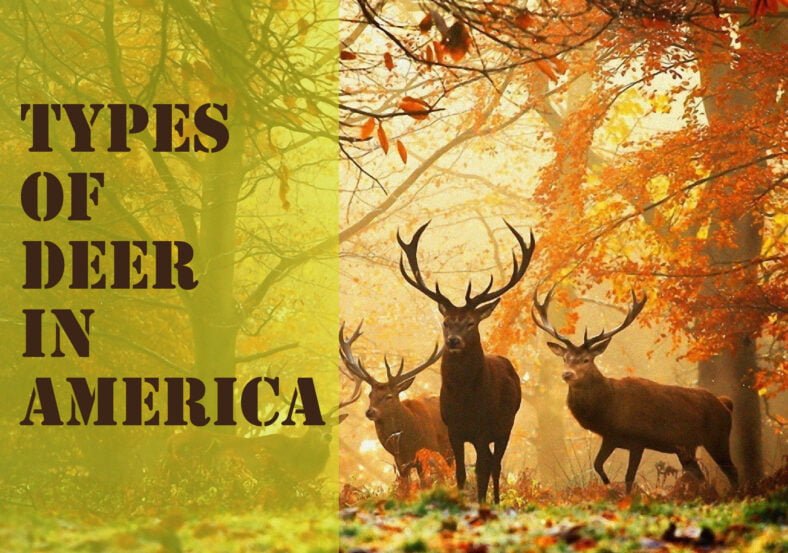
North America has several deer species, and each one fits a different habitat, body size, and range. The most familiar are white-tailed deer and mule deer, but hunters and wildlife watchers may also hear about black-tailed deer, elk, moose, caribou, and introduced species such as axis deer.

This guide gives a plain-language overview of deer and deer relatives in America. It is meant for wildlife education and hunting context, not as a state regulation guide. Seasons, tags, and legal definitions vary by location.

Table of contents

Quick Answer

The main deer species and deer relatives in America include white-tailed deer, mule deer, black-tailed deer, elk, moose, caribou, and several introduced species in limited areas. White-tailed deer are the most widespread in the United States, while mule deer and black-tailed deer are more associated with western habitats.

For hunters, identification matters because rules, seasons, tags, and legal harvest opportunities can differ by species and state. Always check your state wildlife agency before hunting.

White-Tailed Deer

White-tailed deer are common across much of the United States and parts of Canada, Mexico, and Central America. They are named for the white underside of the tail, which is often raised like a flag when the deer is alarmed.

Whitetails live in forests, farm edges, brush, suburbs, river bottoms, and mixed habitats. They are adaptable, which is one reason they are so familiar to hunters and landowners. The National Park Service overview of white-tailed deer is a useful high-authority reference for general biology.

Mule Deer

Mule deer are named for their large mule-like ears. They are strongly associated with western North America and often live in open country, foothills, sagebrush, mountains, and broken terrain.

Compared with whitetails, mule deer often have a different body profile, ear shape, tail pattern, and escape style. They are known for a stiff-legged bounding movement called stotting. Our mule deer vs whitetail deer guide goes deeper on that comparison.

Black-Tailed Deer

Black-tailed deer are closely related to mule deer and are generally found along the Pacific Coast and nearby western regions. They are often associated with thick coastal forests, brushy terrain, and edge habitats.

Identification can be tricky in areas where ranges and subspecies overlap. Look at tail pattern, ear size, habitat, body size, and local wildlife-agency guidance rather than relying on one feature alone.

Elk

Elk are one of the largest members of the deer family in North America. Bulls can carry large antlers, and herds may use mountains, forests, meadows, and open ranges depending on season and region.

Elk are not just “big deer” in practical hunting terms. Their size, habitat, movement, and legal tags are different from whitetails or mule deer. For planning context, see our elk hunting pack article if you are researching field gear separately.

Moose

Moose are the largest members of the deer family. They are associated with northern forests, wetlands, willow areas, and cold-region habitat. Their long legs, large bodies, hanging nose, and broad antlers on mature bulls make them visually distinct.

Moose should be respected from a distance. They are powerful animals and can be dangerous when stressed, especially cows with calves or bulls during the rut.

Caribou

Caribou, also known as reindeer in domestic contexts, are deer of northern regions. In North America, caribou are associated with tundra, boreal forest, and migratory herds, depending on the population.

The U.S. Fish and Wildlife Service caribou profile is a good source for conservation-focused information. Hunting opportunities and protections vary widely by location and population.

Introduced Deer Species

Some areas of the United States have introduced or non-native deer species, such as axis deer, fallow deer, sika deer, or other exotics on private lands or localized ranges. These species are not evenly distributed across America.

Because introduced species are managed differently by state and property type, do not assume standard deer rules apply. Check current regulations and landowner rules before hunting any exotic or non-native deer species.

Why Deer Identification Matters

Correct identification helps hunters follow the law, choose the right tag, and make ethical decisions. It also helps wildlife watchers understand what they are seeing. A quick glance is not always enough, especially in low light, thick cover, or regions where species overlap.

When you are uncertain, slow down and use multiple clues: tail, ears, body size, antler shape, movement, habitat, and location. For hunting, uncertainty should mean no shot.

Habitat Clues By Deer Type

Habitat will not identify every animal by itself, but it can narrow the possibilities. Whitetails are comfortable in mixed woods, agriculture, river bottoms, brush, and suburban edges. Mule deer are more associated with western open country, sage, foothills, canyons, and mountain terrain. Blacktails often use dense coastal cover and brushy western habitats.

Elk may use meadows, timber, burns, high basins, and migration corridors depending on the season. Moose are often tied to willows, wetlands, boreal forest, lakes, and cold northern habitat. Caribou are more specialized and connected to northern tundra or boreal ecosystems, depending on the herd.

Use habitat as a clue, not proof. Local range maps and wildlife-agency resources are still the best way to confirm which species are expected in a specific area.

Management goals can also differ by species. One state may focus on whitetail population balance, another may manage mule deer migration corridors, and another may protect sensitive caribou habitat. That is another reason current local information matters more than a generic national summary.

For beginners, studying photos before the season helps, but field identification should always be slow, deliberate, and confirmed through several visible clues.

How To Identify Deer In The Field

  • Tail: Whitetails often flag a white tail; mule deer and blacktails have different tail patterns.
  • Ears: Mule deer usually have larger ears than whitetails.
  • Habitat: Whitetails are adaptable; mule deer are strongly western; moose and caribou are northern or region-specific.
  • Body size: Elk and moose are much larger than deer like whitetails and mule deer.
  • Antlers: Antler shape can help, but it should not be the only identification feature.

For field observation skills, our guide on tracking animals and reading sign can help you connect tracks, habitat, and behavior.

FAQ

What is the most common deer in America?

White-tailed deer are generally the most widespread and familiar deer species in the United States.

Are mule deer and whitetail deer the same?

No. They are different deer species with different ears, tails, body traits, behavior, and common habitats.

Are elk and moose types of deer?

Yes. Elk and moose are members of the deer family, but they are much larger and managed differently than animals commonly called deer.

Are deer hunting rules the same for every species?

No. Rules vary by state, species, season, tag, weapon type, and property. Always check current wildlife-agency regulations before hunting.

Final Takeaway

The main deer types in America include white-tailed deer, mule deer, black-tailed deer, elk, moose, caribou, and localized introduced species. Learn the key identification traits, respect local regulations, and use reliable wildlife-agency sources before turning species knowledge into a hunting plan.

North American Game Birds: Upland Birds, Ducks, and Geese

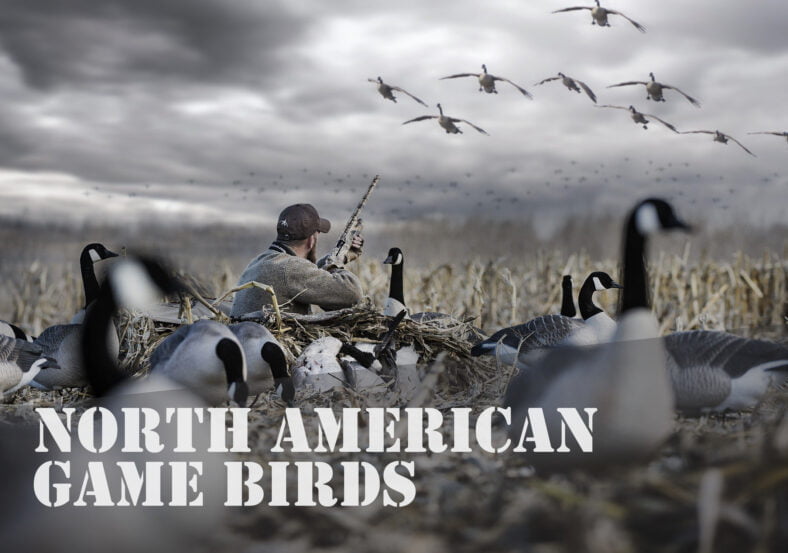
North American game birds include upland birds such as pheasants, quail, grouse, and doves, plus waterfowl such as ducks and geese. They live in different habitats, behave differently, and are managed under different hunting rules, so identification matters before any hunt.

This guide is a plain-language overview for hunters and wildlife watchers. It is not a season-date or bag-limit guide. Always check your state wildlife agency and federal migratory-bird rules before hunting.

Table of contents

Quick Answer

The major North American game bird groups are upland birds, migratory birds, and waterfowl. Pheasants, quail, grouse, and wild turkeys are usually discussed as upland game birds. Ducks and geese are waterfowl. Doves and some other birds may fall under migratory-bird rules, depending on species and location.

For hunters, the most important thing is not memorizing every bird name. It is learning clear identification, legal status, safe shooting zones, habitat, and local regulations before entering the field.

Upland Birds vs Waterfowl

Upland game birds are often hunted in fields, grasslands, brush, timber edges, or agricultural cover. Many flush from the ground and are hunted with walking, dogs, or careful habitat scouting.

Waterfowl are tied to wetlands, lakes, rivers, marshes, grain fields, and migration routes. Ducks and geese are federally regulated migratory birds, so hunters need to follow both federal and state rules. The U.S. Fish and Wildlife Service Migratory Bird Program is a key authority source for migratory-bird management.

Pheasants

Ring-necked pheasants are one of the most recognizable upland birds in North America, especially in farmland and grassland regions. Roosters have bright coloring and long tails, while hens are more muted and blend into cover.

Pheasant hunting often depends on habitat: grass, crop edges, shelterbelts, ditches, and weedy cover. Identification is important because many areas have sex-specific rules or restrictions.

Quail

Quail are smaller upland birds that often live in coveys. Bobwhite quail are well known in the eastern and central United States, while scaled quail, Gambel’s quail, and California quail are associated with different western and southwestern habitats.

Quail identification can involve size, calls, head markings, habitat, and region. Because quail are small and fast, hunters need careful muzzle control, clear shooting lanes, and strong awareness of dogs and partners.

Grouse

Grouse include birds such as ruffed grouse, spruce grouse, sharp-tailed grouse, sage-grouse, and others. Habitat varies widely: thick young forest, northern conifers, prairie, sagebrush, and mountain edges can all support different grouse species.

Grouse hunting often rewards slow walking, good listening, and attention to cover. Some grouse populations are sensitive to habitat and conservation concerns, so local regulations and agency updates matter.

Doves

Mourning doves are common migratory game birds in many states. They are fast, agile, and often hunted around fields, water, flyways, and feeding areas during legal seasons.

Dove hunting requires strong species identification and careful attention to shooting direction because birds can come from many angles. Always know what is beyond the bird before shooting.

Ducks And Geese

Ducks and geese are waterfowl and may be found on marshes, lakes, rivers, flooded timber, coastal areas, and agricultural fields. Identification can involve size, wing pattern, sound, flock shape, flight style, and habitat.

Waterfowl hunting has specific legal requirements that can include licenses, stamps, non-toxic shot, season frameworks, species limits, and possession rules. Our duck hunting gear checklist is useful for gear planning, but regulations should come from official sources.

Field Identification Tips

  • Habitat: Wetland, crop edge, timber, prairie, brush, or sage can narrow likely species.
  • Flight style: Some birds flush explosively; others glide, dart, or fly in organized flocks.
  • Size and shape: Compare body size, tail length, wing shape, and neck length.
  • Sound: Calls and wing noise can help, but do not rely on sound alone.
  • Color pattern: Use clear visible marks, not a rushed guess in poor light.

For broader field observation skills, see our guide to tracking animals and reading signs. Reading habitat helps with birds as well as big game.

Habitat And Scouting Clues

Game birds are tied closely to food, cover, water, and seasonal movement. Pheasants may use grass near crop fields, ditches, cattails, or shelterbelts. Quail need cover that lets coveys feed, hide, and escape. Grouse may use young forest, brush, prairie, sage, or conifer cover depending on species and region.

Waterfowl scouting is different. Ducks and geese often follow water, weather, pressure, food, and migration timing. A pond that is empty one day can be active after a weather shift, while a pressured marsh can change quickly once birds adjust to hunting activity.

Good scouting should also include access and safety. Know property boundaries, parking areas, dog restrictions, retrieval challenges, and where other hunters are likely to be. A productive-looking spot is not worth using if the shooting angles are unsafe.

Before-You-Hunt Checklist

  • Confirm the bird species you may legally hunt.
  • Check current season dates, stamps, licenses, and possession rules.
  • Confirm legal shot type, firearm rules, and public-land requirements.
  • Review safe zones of fire with partners before anyone loads.
  • Carry water, eye protection, blaze clothing where required, and a small first-aid kit.
  • If hunting with a dog, plan for heat, cold, water, hazards, and recovery.

Preparation prevents rushed decisions. Bird hunts can move quickly once birds flush or approach, so rules and shooting lanes should be clear before the first opportunity appears.

If identification is uncertain, do not shoot. Some birds share similar size, color, or flight behavior, and lighting can make field marks harder to read. A responsible hunter waits for a clear, legal, and safe opportunity.

That pause protects wildlife, hunting partners, dogs, and the reputation of ethical hunters.

It also gives beginners time to build confidence through better observation and safer decision-making in changing field conditions.

Safety, Ethics, And Regulations

Game-bird hunting often involves moving hunters, dogs, fast flushes, and changing shooting angles. Keep the muzzle in a safe direction, know where partners and dogs are, and never shoot at a bird if the background is unsafe.

The Hunter Ed safety resources are helpful for reviewing field safety and responsible hunting basics. For migratory birds, check the U.S. Fish and Wildlife Service and your state agency before each season.

FAQ

What are the most common game birds in North America?

Common groups include pheasants, quail, grouse, doves, ducks, geese, and wild turkeys. Exact availability depends on region, habitat, and regulations.

What is an upland game bird?

An upland game bird is generally a land-based game bird found in fields, grasslands, brush, timber, or similar cover rather than open water.

Are ducks and geese game birds?

Yes, ducks and geese are game birds, but they are usually managed as migratory waterfowl with specific federal and state rules.

Why do game-bird regulations change?

Regulations can change because of population surveys, habitat conditions, migration data, conservation goals, and state or federal management decisions.

Final Takeaway

North American game birds include upland birds, doves, ducks, geese, and other region-specific species. Learn the habitat, field marks, behavior, and rules for each bird before hunting, and use official sources for current seasons and legal requirements.

Wild Animals in Texas: Common Mammals, Birds, Reptiles, and More

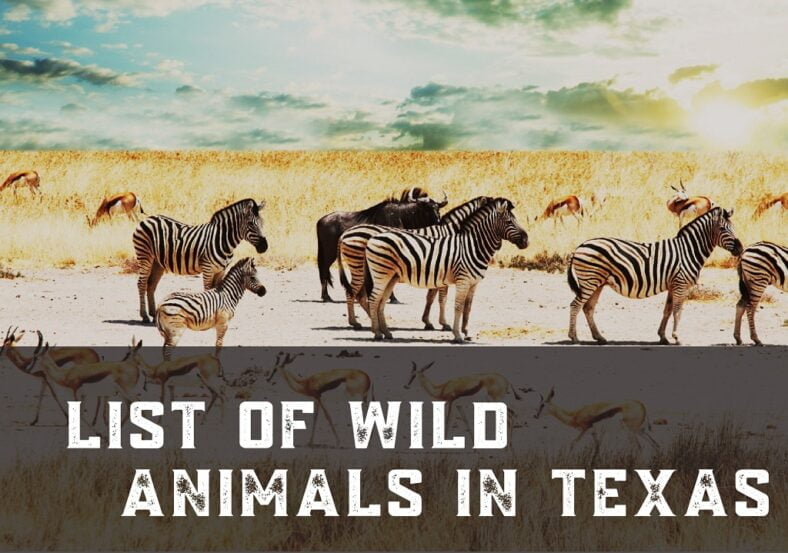
Texas has one of the most varied wildlife mixes in the United States. Deserts, prairies, pine woods, coastal marshes, rivers, hill country, and brush country all support different wild animals. That is why a Texas wildlife list can include deer, coyotes, bobcats, alligators, armadillos, javelinas, waterfowl, snakes, songbirds, and many more species.

This guide is a beginner-friendly overview for wildlife watchers, landowners, hikers, hunters, and outdoor families. It is not a hunting-regulation guide. If you plan to hunt, trap, relocate, or handle wildlife, check current Texas Parks and Wildlife Department rules first.

Table of contents

Quick Answer

Common wild animals in Texas include white-tailed deer, mule deer, coyotes, bobcats, raccoons, armadillos, javelinas, feral hogs, rabbits, squirrels, alligators, snakes, turtles, quail, doves, ducks, geese, turkeys, hawks, owls, and many songbirds. The exact animals you see depend heavily on region and habitat.

Texas is large enough that no single list fits every county. A coastal marsh, West Texas canyon, East Texas pine forest, and Hill Country ranch can feel like different wildlife worlds.

Common Texas Mammals

White-tailed deer are one of the best-known Texas mammals. Mule deer are also found in parts of western Texas. Other common mammals include raccoons, opossums, rabbits, squirrels, skunks, armadillos, foxes, coyotes, bobcats, and bats.

Some mammals are seen often near roads, fields, feeders, creeks, or neighborhoods. Others are mostly noticed by tracks, scat, trail cameras, or nighttime movement. For deer identification context, see our guide to types of deer in America.

Birds And Game Birds

Texas supports a wide range of birds, from songbirds and raptors to waterfowl and upland game birds. Mourning doves, quail, ducks, geese, wild turkeys, hawks, owls, herons, egrets, and migratory songbirds can all be part of the Texas outdoor experience.

The Texas Parks and Wildlife Department species pages are a useful official starting point for learning about wildlife in the state. For a broader bird-hunting overview, read our North American game birds guide.

Reptiles And Amphibians

Texas has snakes, turtles, lizards, frogs, toads, salamanders, and alligators. Some snakes are venomous, but many are not. The safest habit is to give all snakes room and avoid handling wildlife you cannot identify confidently.

Alligators are associated with wetlands, rivers, lakes, and coastal areas, especially in eastern and southeastern parts of the state. Keep distance, supervise pets and children near water, and follow posted local guidance.

Predators And Furbearers

Texas predators and furbearers can include coyotes, bobcats, foxes, raccoons, skunks, opossums, and other species depending on region. Mountain lions are present in parts of Texas but are rarely seen by most people.

Predators play a role in ecosystems, and sightings do not always mean there is a problem. Avoid feeding wildlife, secure trash, protect small pets, and contact local authorities or wildlife professionals when an animal creates a safety concern.

Introduced And Exotic Animals

Texas also has introduced and exotic animals in some areas, including feral hogs, axis deer, blackbuck, nilgai, and other species on private or managed lands. These animals are not all managed the same way as native wildlife.

Because rules vary by species, property, and region, do not assume that one animal’s rules apply to another. For deer comparison context, see our axis deer vs whitetail article.

Texas Habitats To Know

  • East Texas pine woods: Deer, squirrels, raccoons, songbirds, and forest wildlife.
  • Hill Country: Deer, turkeys, foxes, songbirds, reptiles, and introduced species in some places.
  • West Texas desert and mountains: Mule deer, javelinas, reptiles, raptors, and specialized desert wildlife.
  • Coastal marshes: Waterfowl, shorebirds, alligators, fish, and wetland species.
  • Prairies and agricultural areas: Doves, quail, deer, coyotes, rabbits, and grassland birds.

The National Park Service animals overview is a helpful general resource for understanding wildlife and habitats across public lands.

How To Identify Wildlife You See

Start with where you are. Region and habitat narrow the possibilities quickly. A large animal seen in Hill Country brush is a different identification puzzle than a bird seen on the Gulf Coast or a reptile seen near an East Texas wetland.

Then look for size, body shape, tail, ears, color pattern, movement, tracks, and behavior. For birds, pay attention to wing shape, flock behavior, sound, and habitat. For mammals, tracks and feeding sign may be easier to read than a brief nighttime sighting.

Do not approach an animal just to identify it. Use binoculars, a field guide, a camera from a safe distance, or official wildlife resources. If the animal may be injured, sick, venomous, or aggressive, keep distance and contact the appropriate local authority.

What Not To Do Around Texas Wildlife

  • Do not feed wild animals around homes, camps, parks, or roads.
  • Do not pick up young animals that appear alone unless an official tells you to intervene.
  • Do not handle snakes, bats, raccoons, skunks, or sick-looking animals.
  • Do not release pets or domestic animals into the wild.
  • Do not move wildlife across properties or counties without understanding the law.

Many wildlife conflicts begin with good intentions: feeding, rescuing, relocating, or getting too close for a photo. The safer choice is usually distance, observation, and official guidance.

Texas also changes quickly by season. Drought, floods, migration, breeding seasons, acorn crops, water levels, and human pressure can all change where animals appear. A species that seems rare on one property may be common a few miles away in better habitat.

That is why local observation, current maps, and official resources should work together before outdoor decisions in the field each season in Texas.

Wildlife Safety Notes

Most wildlife should be observed from a distance. Do not feed wild animals, approach young animals, pick up snakes, corner predators, or assume a calm-looking animal is safe. Give animals space and keep pets controlled.

If you find injured wildlife, nuisance animals, or animals behaving strangely, use local wildlife authorities or licensed professionals instead of trying to handle the situation yourself.

FAQ

What is the most common wild animal in Texas?

There is no single answer for every region, but white-tailed deer, raccoons, squirrels, rabbits, coyotes, armadillos, and many bird species are familiar across large parts of Texas.

What dangerous wild animals live in Texas?

Texas has venomous snakes, alligators in some regions, large mammals, and predators that deserve respect. Most problems are avoided by keeping distance, not feeding wildlife, and using caution around water, brush, and unknown animals.

Are axis deer wild animals in Texas?

Axis deer are introduced animals found in parts of Texas, especially on private or managed lands. Their rules and management context can differ from native whitetails.

Where should I verify Texas wildlife rules?

Use Texas Parks and Wildlife Department resources for current official information about wildlife, hunting, fishing, permits, and regulations.

Final Takeaway

Texas wildlife is diverse because the state has many habitats. Deer, birds, reptiles, predators, small mammals, wetland animals, and introduced species all play a role. Learn by region, observe from a safe distance, and use Texas Parks and Wildlife Department resources before making hunting or management decisions.

Exit mobile version