


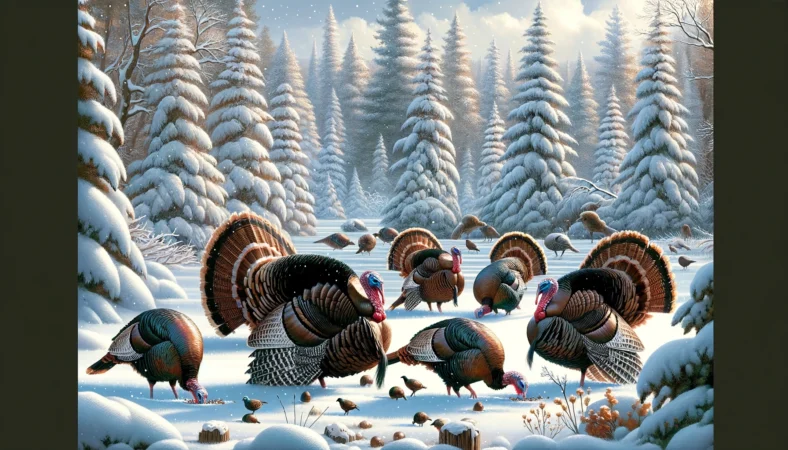
Cold weather affects wild turkeys by changing where they feed, how far they move, where they roost, and how much energy they conserve. Turkeys do not hibernate or migrate away from winter in most of their range. Instead, they adjust daily behavior around food access, snow depth, wind, temperature, cover, and predator pressure.
A normal cold snap is usually manageable for healthy wild turkeys. The harder problem is a long stretch of deep snow, crusted ice, poor mast, limited open feeding areas, or repeated disturbance that forces birds to burn energy. Habitat quality often matters more than temperature alone.
Table of contents
Quick Answer
Wild turkeys survive cold weather by flocking together, feeding on available mast and crop waste, roosting in trees, reducing unnecessary movement, using cover, and shifting to areas where food is easier to reach. Severe winter conditions become dangerous when snow or ice blocks food, birds lose body condition, or repeated disturbance forces them to move too much.
For hunters and landowners, the best winter support is good habitat: mast-producing trees, forest edges, roosting cover, openings, and low-disturbance areas. Feeding wild turkeys directly is not always legal or wise, so check state wildlife-agency guidance before doing it.
How Wild Turkeys Change Behavior In Winter
During winter, wild turkeys often form larger flocks and spend more time near reliable food and protective cover. They may use south-facing slopes, sheltered woods, agricultural edges, oak stands, or conifer cover depending on the region. Their routine becomes practical: find food, avoid predators, conserve energy, and roost safely.
The wild turkey species overview notes that turkeys use varied food sources and roost in trees, with winter habitat and food access becoming especially important in snowier parts of their range. Local habitat can make winter either manageable or costly.
Winter Food Sources
Hard Mast
Acorns, beechnuts, hickory nuts, and other hard mast can be important winter foods where available. A strong mast year can help turkeys maintain condition. A poor mast year can push birds toward fields, openings, and other food sources.
Crop Waste And Openings
Turkeys may feed on leftover corn, soybeans, grain, seeds, grasses, and other accessible foods around farm edges and openings. Snow depth matters. Food that is easy to find in November can become difficult to reach after repeated snow and freeze-thaw cycles.
Buds, Greenery, And Browse
When preferred foods are limited, turkeys may use buds, leaves, ferns, fruits, and other plant material. Their winter diet is flexible, but flexibility does not remove the need for good habitat.
Roosting And Shelter
Wild turkeys usually roost in trees at night. Roosting above the ground helps reduce risk from many predators and keeps birds out of the coldest ground-level exposure. In winter, sheltered roosts can help reduce wind stress and snow exposure.
Conifers, mature trees, sheltered ridges, and mixed woods can all matter, depending on local terrain. A good winter area gives turkeys both food and safe roosting nearby. If birds must travel too far between the two, they spend more energy.
Deep Snow And Ice
Deep snow makes walking harder and can cover food. Crusted ice can be even worse because it may block access to mast or crop waste while still forcing birds to work harder. When snow is soft and deep, turkeys may stay closer to roosting cover or use packed trails, wind-blown slopes, and exposed feeding areas.
Ice storms can also affect roosting and movement. Branches may become slick, cover may bend or break, and birds may need to shift to safer roosts. These events are usually local and temporary, but several hard events in a row can stress birds.
Energy Conservation
Winter survival is partly an energy budget. Turkeys need enough food to offset the calories they spend staying warm, moving through snow, avoiding predators, and maintaining body condition. When food is close to cover, birds can conserve energy. When food is scattered or buried, they must work harder.
This is why repeated disturbance can matter. People, dogs, vehicles, and unnecessary pressure can move birds away from safe food and cover. A single flush may not matter much. Repeated disturbance during severe weather can add avoidable stress.
Predator Pressure
Predators are part of the natural system, but winter conditions can change the odds. Snow can make turkeys more visible and can reveal travel routes. At the same time, flocking helps birds watch for danger with many sets of eyes.
Good roosting cover, escape routes, and daytime feeding areas with visibility can help. Turkeys are not helpless in winter, but habitat and weather shape how much risk they face.
Habitat Matters More Than Weather Alone
A cold week in good habitat may be less harmful than a milder winter in poor habitat. Turkeys need food, roosts, cover, and movement corridors. Forests with mast trees, mixed cover, and nearby openings are often more valuable than one single food source.
Conservation groups such as the National Wild Turkey Federation focus heavily on habitat because healthy habitat supports turkeys through the whole year, not only during hunting season. For related field context, see our guide to North American game birds.
How People Can Help Responsibly
The best long-term help is habitat improvement, not random feeding. Planting or protecting mast-producing trees, managing openings, reducing unnecessary disturbance, and supporting science-based wildlife management usually helps more than dumping grain in one spot.
Supplemental feeding can create disease, crowding, dependency, or legal problems in some places. Always check state wildlife agency guidance before feeding wild turkeys. If you hunt turkeys, keep regulation checks current and pair winter observation with our day hunting field checklist before spring or fall seasons.
Common Misunderstandings
Thinking Turkeys Hibernate
Wild turkeys stay active through winter. They adapt their movement, flocking, feeding, and roosting instead of hibernating.
Blaming Cold Alone
Cold matters, but food access, snow crust, cover, body condition, and disturbance often explain winter stress better than temperature alone.
Assuming Feeding Always Helps
Feeding may seem kind, but it can cause problems if done incorrectly or illegally. Habitat work and reduced disturbance are usually better first steps.
Treating Every Flock The Same
Winter conditions vary by region. A flock in the Northeast, the Midwest, the South, and the mountains may face very different snow, food, and roosting conditions.
FAQ
Do wild turkeys hibernate in winter?
No. Wild turkeys remain active year-round. In winter they change feeding, movement, flocking, and roosting behavior to conserve energy and find food.
What do wild turkeys eat in winter?
They may eat acorns, beechnuts, seeds, crop waste, fruits, buds, leaves, grasses, and other available foods. Local habitat and snow depth determine what is easiest to reach.
Can wild turkeys survive deep snow?
They can survive snow, but long periods of deep or crusted snow can make feeding and movement harder. Birds in good habitat with accessible food and cover have a better chance.
Should people feed wild turkeys in winter?
Not without checking local wildlife guidance. Supplemental feeding can cause legal, disease, crowding, and behavior problems. Habitat support is usually the better long-term approach.
Final Takeaway
Cold weather changes wild turkey behavior, but winter survival depends on more than temperature. Food access, roosting cover, snow depth, ice, flock behavior, predators, disturbance, and habitat quality all matter. If you want to help turkeys, focus on healthy habitat, responsible observation, and current wildlife-agency guidance rather than quick fixes.