How to Choose a Holster for Hidden Gun Carrying?

Learn How to Choose a Holster for Hidden Gun Carrying: Usually, when it comes to self-defense, the main emphasis is on the right choice of firearms. At the same time, it is forgotten that even the best gun will be completely useless if it lies in some drawer at a time when you really need it.

For some reason, people, having spent a lot of effort and time getting permission to carry their guns, prefer to leave their personal defender at home. At the same time, the inconvenience that the gun on the body causes them is called the main reason.

Buying a firearm is expensive. Hundreds of dollars are spent on acquiring the model you need. And it’s hard to resist the temptation to save a few dollars on such trifles as a holster. But it’s a trifle, the detail is important! One director once said: “A detail is something whose presence no one notices, but the absence of which is immediately evident.” And choosing the right holster for your gun is just an example of the importance of the part.

A holster is a kind of shaking absorber. Ever had to drive a car with bad shock absorbers? Just a few minutes of such a ride is enough, and your body begins to react painfully to every hole or bulge on the road.

How to Choose a Holster

A solid, heavy, uncomfortable holster shape makes the body react in exactly the same way. It does not matter where you fix it on your body – nerve endings are everywhere. A gun in a poorly fitted holster is like a pebble in a shoe. Annoyance from him drives you crazy until you remove this pebble.

How to Choose a Holster

Also, with a gun. Too often, he is accused of inconvenience. Consider it too heavy or large. As a result, an expensive gun is left at home, sold at a loss for themselves, or replaced with a small and inefficient one.

And the reason lies elsewhere. Very often, the problem can be solved with a simple and fairly inexpensive replacement for the holster. Their choice in the market is wide enough, so you should remember the following:

Shape and Functionality

In addition to comfort, a good leather holster should have some other important qualities. One of its elements should completely close and protect the trigger from contact with external objects, including the index finger.

The holster must hold the gun in itself until the moment when you intentionally do not pull it out. The holster and gun should be in the exact place where you fastened them until you decide to move them. This quality enhances usability and guarantees the speed of extraction of weapons.

Successful combination with clothes

In most states, for legal and practical reasons, the kydex holster must hide the gun from prying eyes constantly. This means that others do not need to identify the weapons you have.

You can pick up a gun and holster for him, based on your existing wardrobe. Pocket Pistols were developed following such a strategy. Or you can buy a pistol with a holster and start updating your wardrobe so that the clothes are combined with weapons.

For example, in order to carry a large gun, you will need a holster worn on a strong belt. And this is not in any pants you can stick. Usually, the gun’s size helps clarify which holster and clothes are best suited to others.

On the body or not

Most weapons can be divided into two categories – they are mounted on the body or not. The first includes holsters for wearing on the outside of the belt, for wearing on the inside of the trousers, on the ankle, on the shoulder, on the stomach.

The main advantage is that the gun is literally with you, and it can be easily reached. You are in complete control of your weapons. The disadvantages include the physical discomfort that a gun on the body can cause. In addition, there is a high probability that a holster with a gun will be noticed at the first “mess in clothes.”

Holsters that are not mounted on the body allow you to carry weapons with you, but not on yourself. These include specially designed handbags, wallets, and even diaries. Advantage – you can wear any clothes without parting with the gun, but without showing it off. When the weapon is in the bag, the chances of being noticed are much lower, and its owner is freer to move.

The disadvantage of this, it takes more time to remove the gun if necessary. It must also be remembered that such a holster must be closed so that weapons cannot be used without your permission. There is no perfect holster for everyone. People lead a different lifestyle.

An ideal ankle holster for living in a barracks will cause a lot of painful inconvenience for someone sitting at a computer for 10 hours a day. When choosing a holster, you need to analyze how most of your day goes.

Price – Get what you paid for

Please understand that never a $10 holster bought at a $ 4.99 sale will be the best solution to the problem of wearing an $800 gun. There is a good rule – a reliable holster for daily carrying a gun should cost about 10-15% of its value. First of all, you need to look for the products of a company that produces high-quality thigh holsters for the brand of your gun.

Conclusion

A conveniently selected holster guarantees many years of service. If you have a persistent feeling that the gun you bought is not suitable, still try to choose two or three models of holsters for it before abandoning this weapon.

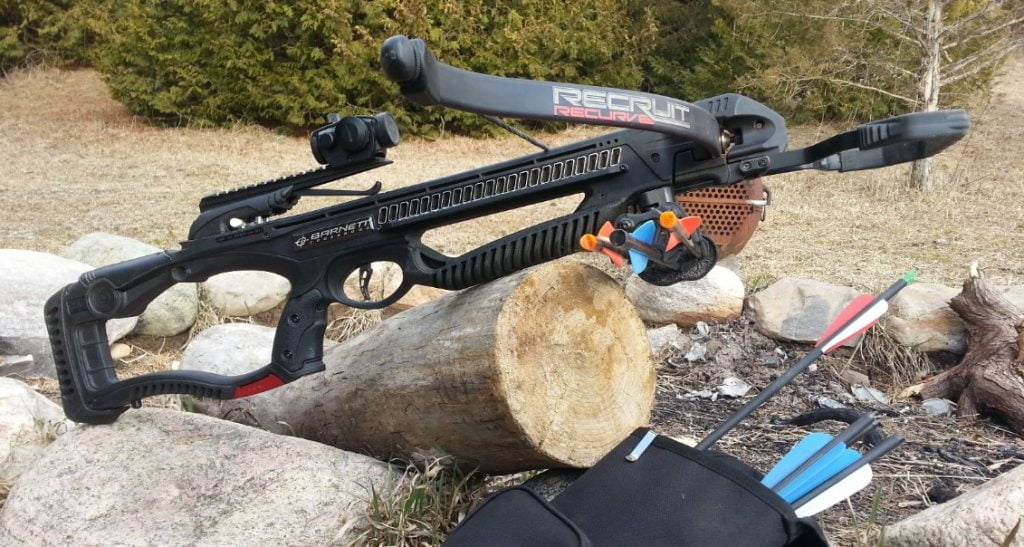
What is a Recurve Crossbow?

What is a Recurve Crossbow: A Recurve crossbow appeared a very long time ago. Both manual and siege devices for throwing were used.

What is a Recurve Crossbow?

To our time, he has experienced many improvements, but his general appearance has been preserved.

Advantage

Its main advantage is the traditional look, every connoisseur of reconstruction and role-playing games will appreciate them.

Its simplicity allows you to make it universal for many tasks. They can be divided into several groups: for reconstruction, for entertainment and sports, for hunting.

Medieval crossbow

The medieval crossbow is a standard for reconstruction and active role-playing games. His bed is made of hardwood (oak, beech), which are impregnated with oil.

The lock or trigger consists of forged steel. Arc or shoulders made of fiberglass, a bowstring of many flax threads. Bolts are used from 25 to 30 cm.

Force

A force of about 20 kg allows you to shoot at distances from 10 to 15 meters. The arrowheads can be pointed, or rubber, so as not to injure anyone.

Interloper Scorpion

Crossbow Interloper Scorpion – a modern variation of a takedown recurve bow, used for entertainment. Thanks to modern materials: the bed is made of strong aluminum, the shoulders are made of composite materials, the lock and the stirrup are made of strong steel.

The wooden butt is very reliably made and varnished. A sold model to this day for everyone. Personally, he sympathizes with me in terms of lightness and simplicity.

Bowstrings

Bowstrings can be changed in the field. Compound bow arrows are used 14 and 16 inches. Suitable for hunting small game: bird, beavers.

Effort changes: 20kg, 43kg, 68kg. Starting from a teenager to an adult, the effort is selected individually. A bestseller in entertainment shooting ranges, shooting is made in special isolon blocks. A good gift option for any contingent.

Interloper Mongoose

Crossbow Interloper Mongoose – a good model for hunting. The speed on this crossbow reaches 100 m / s with a force of 102 kg.

These are very serious indicators, shooting up to 100 meters is provided. But a reasonable distance for hunting in the region of 30-50 meters. A bed of strong aluminum, thick. This is a very reliable crossbow in terms of tough operation.

Shoulders standard

Shoulders standard 43 kg, 102 kg are bought separately. The crossbow has a 4/32 optical sight and a quick-detachable shako. For accurate long-distance shooting, I recommend using manual tensioners.

Any Recurve crossbow must be pulled evenly, otherwise, there will be a horizontal spread of arrows. On this model there is a reinforced lock for shoulders in 102 kg, it is very reliable. Of the minuses, a very wide range of shoulders, it is inconvenient to move around in the forest.

Conclusion

Always choose a crossbow based on your goals and budget, if you do not understand anything about this, contact our https://theshootinggears.com/ blog. We will be happy to assist you in choosing a recurve crossbow and accessories.

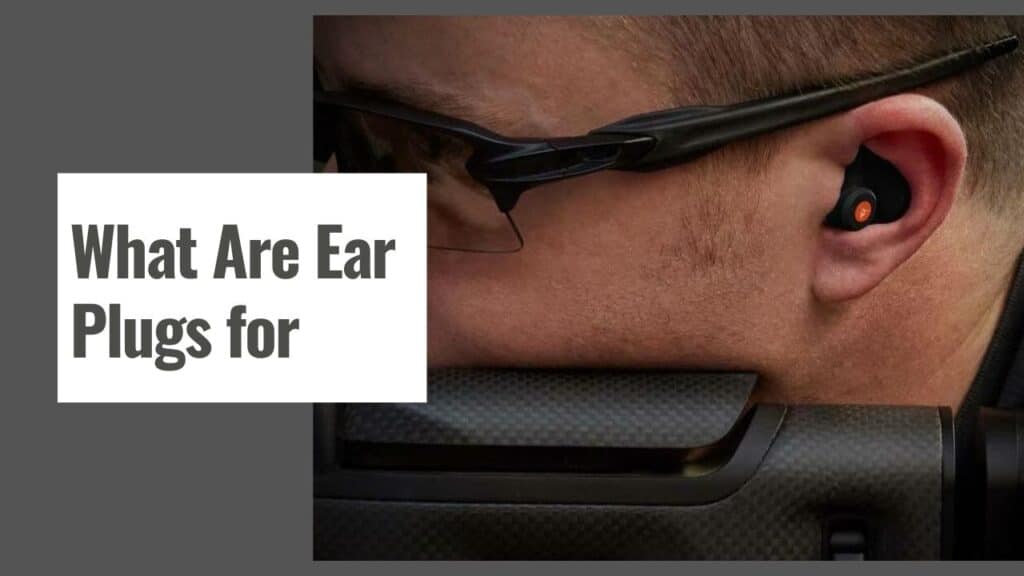
What Are Ear Plugs for?

What are ear plugs for: Do you know that in certain circumstances, earplugs help eliminate insomnia, minimize the harmful effects of the aquatic and sound environment, and reduce the risk of cardiovascular and other diseases? What else are earplugs for? We have prepared the full answer for you in our article.

What Are Ear Plugs for?

Get acquainted with the ancient invention of humanity, which makes our modern life more comfortable, enjoyable, and safe. The term “earplugs” has domestic roots. In fact, this is an abbreviation for everyone to understand the phrase “take care of your ears.”

Initially, the so-called products made of special fabric, which was used to protect the ears. Today, this name is a household name. Shooting earplugs are understood to mean any products designed to minimize the harmful effects of an aggressive environment on the hearing organs.

In fact, only recently have people managed to solve the problem of eliminating noise. Today, people rely on advanced silicone devices instead of ineffective cotton balls, as the former offer a wide range of applications.

Modern Earplugs: Varieties and Features

What earplugs are available in our time? Let’s differentiate between standard and custom models. While standard earplugs have a universal shape, individual models are custom-made based on an individual’s ear cast. The Istok-Audio Group of Companies offers highly sought-after individual models that provide excellent waterproofing and soundproofing capabilities.

They are a unique product that:

  • Made of soft material (hypoallergenic silicone) using 3D technology;
  • Is individual – the shape of the product repeats the bends of the auditory canal of a particular person;
  • High quality;
  • Guarantees convenience and comfort during daily use;
  • Happy with a long service life (about three years);

Another obvious advantage of the product in question is its affordable price.

Who Needs Earplugs?

Although earplugs were initially designed to provide rest and protect against external noise during travel (such as in a car, plane, or train), their usage has significantly expanded in recent times.

The products in question bring invaluable benefits:

  • lovers of a comfortable and relaxing sleep;
  • builders who have to work with “loud” tools;
  • divers, professional swimmers, pool visitors;
  • skydivers and many other athletes;
  • bikers and motorcyclists;
  • musicians and connoisseurs of concert performances;
  • frequent guests of noisy bars and night clubs;
  • for shooters and hunters;
  • visitors to sporting events;
  • Workers of noisy industries.

Universal earplugs are suitable for use in different situations. They are relevant for residents of any cities, as they provide an opportunity to protect your ears from the loud noise of public transport, the metro, high-profile neighbors, and so on.

Why Are Earplugs Needed?

Everyone knows that loud sounds are dangerous for the hearing organs. A person has to spend a lot of time in a noisy city, in public transport. How to protect your ears from aggressive environmental influences?

The answer is obvious: you need to use high-quality earplugs. They are a real find for those who suffer from increased sensitivity to loud sounds, and even more so for those who work in noisy production. Such products interfere with the development of hearing loss, help to maintain hearing. And this is not their only purpose.

Earplugs save water treatment enthusiasts from infection. In addition, waterproofing models reduce the risk of otitis media and prevent the exacerbation of their chronic forms.

Conclusion

Take care of your own health. This resource is extremely difficult to replenish if lost.

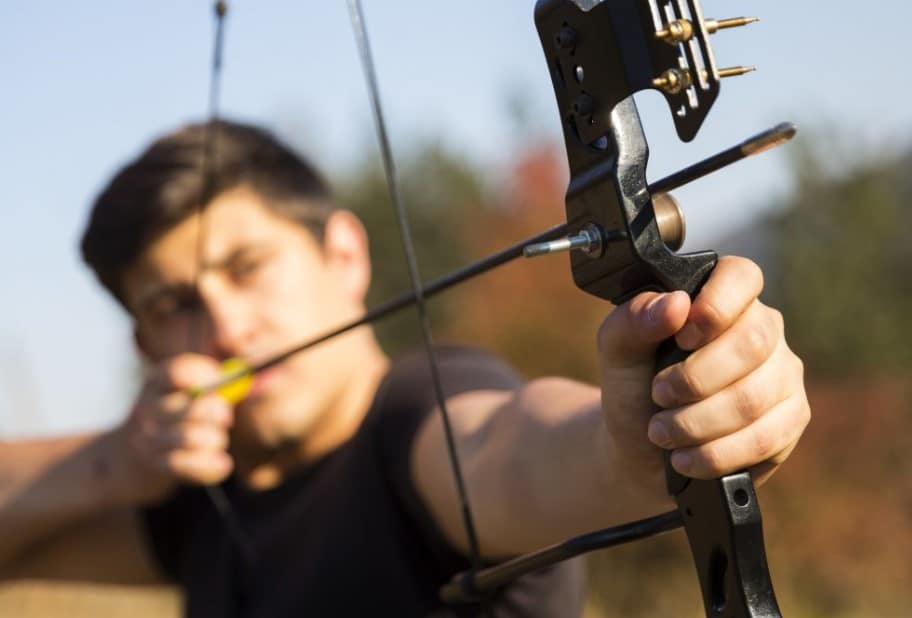
The Common Types of Arrowheads

Types of Arrowheads: A good option when choosing an arrowhead. It does not have a high price, meets all the regulatory authorities’ requirements, and is also widely known in the market as reliable and durable.

Types of Arrowheads

Let’s try to understand the variety of existing (and existing) arrowheads.

Standard Sports

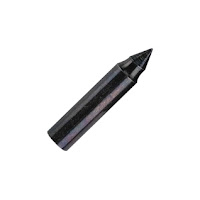
The most popular today, both among Olympians, and among bloggers, and even among the “traditionalists.” They have 2 sharpening angles, and theoretically, such a form when hit by a person will cause minimal damage (which is actually very, very controversial).

At least when meeting with law enforcement officials, it can be proved that the tip of the sport is not a cold weapon, unlike, for example, hunting. In addition, such a tip is easily pulled out of the boom catcher.

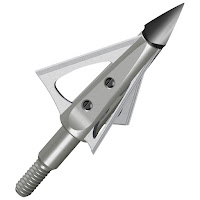
Hunting with Blades

These tips look really horrific. And if you also imagine how they fly off the beginner recurve bow at a speed of 50-80 m/s. It is recommended to use arrows with hunting tips directly for their intended purpose, that is, for hunting.

After all, if you shoot an arrow with a similar tip into an isolon block or another boom trap, then getting an arrow will be quite problematic.

Subulate

Historically, the tips with several blades were the first to be used; however, as always happens in war, a new type of armor was soon invented – chain mail.

Reference. Chain mail is military armor woven from metal rings. Its advantage is that the armor is “soft” and does not constrain the warrior’s movements, unlike, for example, the all-metal shell.

However, weapons were also invented against chain mail. Archers began to use awl-shaped tips, which were essentially a long sharpened needle, which found the smallest holes between the rings of chain mail and hit the enemy.

Chisel vs. Heavy

In order to cope with heavy armor, a new tip shape was needed, and it was soon invented. So, the arrow ended with the likeness of a chisel tool and successfully pierced both cast chest armor and helmets.

Who Whistled?

And if you make a hole on the arrowhead in a certain way, then the ammunition will emit a fairly loud and sharp whistle during the flight.

However, an arrow with such a “whistling” tip due to the greater mass of the tip and energy costs for sound will fly differently, so such shells were used mainly for delivering a variety of signals.

Shoot, Not Kill

In modern role-playing games, archers participate along with other troops. And in order not to inflict solid wounds on the alleged rival, at the end of the boom, the so-called “humanizer” masters – several layers of rubber.

There are also solid-cast tips – “humanizers.” Note that in this case, the recurve bow arrow significantly changes its balance, so before the game, it is worth practicing with these arrows.

One of the simplest options is to attach a rubber tube to the end of the boom so that the tube remains “hung” on the boom for several centimeters.

However, despite the seemingly solid rubber layer, a restriction on the strength of bows is imposed, and even after that, the “hit” ones can boast of a solid size with bruises.

Blunt Tips

It would seem that the arrowheads should be sharp by default, but there are blunt tips. They were used by our ancestors for hunting fur animals, so as not to spoil the skin.

And if, as a result, the trip ends with a flat transverse platform, this will significantly worsen the airflow around the boom. That is, preliminary training with such arrows is necessary.

Cut It

From the word “cut.” Indeed, the tips represent a slightly extended flat sharpened surface that easily or inflicts considerable damage to the enemy (game) or cuts off the ship’s equipment, so it will be difficult to control the ship.

Incendiary

Everything is simple here. At the end of the boom, combustible material is wound, which is subsequently ignited and, together with the boom, is sent, for example, to a thatched roof or other easily inflammable material.

Bursting

Probably, everyone remembers the Rambo film, in which Sylvester Stallone, using a bow and arrows with warheads, successfully cracked down on enemy equipment.

It would seem – a fiction, but at one time, peculiar explosive cartridges were organized in the arrowheads. Perhaps they did not cause much damage, but the horses were scared, notably.

Types of Sports Short Weapon

Types of sports short weapon: The word “pistol” is used for the generic name of any type of short weapon, including revolvers, single-shot pistols, semi-automatic pistols, and gas or compressed air pistols. Their design and caliber vary considerably, from a .45 caliber centerfire pistol to .177 (4.5 mm) caliber air rifles or guns.

Table of Contents

Types of Sports Short Weapon

There is not going to be a detailed description of each model, and we will refer mainly to the most interesting aspect of each one, related to sports shooting. The consultation of specific treaties in this regard is recommended for the interested party.

Revolvers

Manufacturers produce them in almost all sports calibers from .22 to .45. The revolver houses the cartridges in a cylinder, and the hammer mounts as it rotates. In the single-action type, you can manually rotate the cylinder, while in the double-action type, you rotate it by pressing the trigger. As the rotation occurs, one of the chambers aligns with the barrel. The mechanism operates relatively slowly, both during cocking and when firing the shot.

Despite this drawback, the revolver offers several advantages. Its design allows for a favorable angle of the stock, which improves wrist inclination and enhances control during shooting. Additionally, since it sits low in the hand, the handgun transmits the recoil more directly to the arm, minimizing muzzle rise. Furthermore, the absence of moving parts ensures that the bullet’s trajectory remains unaltered after ignition.

Semi-automatic Pistol

Manufacturers produce them in all sports calibers. The shooter typically inserts the cartridges into the pistol through the stock, where the magazines house them. The explosion of the first cartridge drives the bolt block (also known as a “slide”) backward. Simultaneously, the extractor removes the empty case from the chamber, while an ejector drives it out of the gun.

During this block movement, the trigger mechanism reassembles. As the block moves forward, it retrieves a bullet from the magazine and inserts it into the chamber, preparing the pistol for the next shot.

Semi-automatic pistols are suitable for various competition modalities, particularly those with limited time per shot. They are widely used in shooting ranges. The designs vary significantly, with some featuring magazines in the stock and others positioned under the barrel in front of the trigger guard. These variations naturally result in different centers of gravity.

The handle angles vary from almost 90º of the military type to those of variable angle, which, together with the possibility of having more or less anatomical grips allow a better adaptation to the shooter’s hand.

Single-shot Pistol (Single Shot)

The name implies that it is possible to load only one cartridge at a time. From a sports perspective, we can distinguish two types: those designed for the Olympic specialty of Free Kick at 50 meters and any other single shot used for precision and slow fire modalities.

Manufacturers design Free Kick pistols for maximum precision, allowing shooters to use only .22 LR caliber ammunition. They are to the liking of the shooter, with few legal limitations. This type of shooting is the equivalent of “Formula 1” shooting with short arms. Small caliber single-shot pistols, not included in so-called free pistols, have their scope in shooting schools.

Compressed Air and Gas pistols

In shooting, only .177 (4.5 mm) caliber is permitted with projectile exit speed limitations. This type of pistol obtains the energy to propel the bullet, commonly referred to as “pellets,” from the compressed air in a chamber. The cylinder, operated manually through a loading lever, drives the bullet using the stored air.

Modern competition pistols acquire the air or gas (CO2) charge from a built-in tank, allowing them to deliver a large number of shots without the need for manual reloading.

Choosing a Gun

To choose a gun, you have to take into account at least three factors:

  1. The type of shooting you want to practice
  2. The available budget
  3. The physical characteristics of the shooter

Many clubs introduce pneumatic pistol shooting training as a safety measure and due to legislative restrictions. It is recommended to start firearm shooting by practicing with a Club pistol before you purchase your own. Ideally, start with a .22 LR caliber pistol, which offers versatility for various sports disciplines. This allows you to determine your preference or aptitude before selecting a more specialized pistol.

If you prefer a thick caliber from the start, you should choose a centerfire pistol or revolver. It’s important to note that, in this situation, the learning process becomes more expensive in every way. However, regardless of the scenario, you must follow the axiom: “a bad weapon never makes a good shooter.” This means that right from the start, you should select a weapon that ensures a minimum level of results.

10 Undeniable Health Benefits Of Archery

Top Health Benefits Of Archery: Any sport is famous for the development of muscle corset, improves the functionality of the body, brings up positive character traits in a person. This time we decided to ask ourselves the question:

  • What does archery give us?
  • What benefits does it bring to our health?

Let’s start in order.

What Are We Shooting at?

What are we shooting at? Right, with your hands. The triceps on both hands personally remain developed even after a two-year break. I don’t know about you, but I really like pumped up hands even for girls. This is much better than sagging skin.

Not to note, the strengthening of the spinal muscles would be wrong. Therefore, the second place is awarded to them. Did your parents often tell you about slouching in childhood? Having studied at the University of Physical Culture and having seen many athletes in my lifetime, I can safely say that dancers and archers have excellent posture.

I did not go into the details of dance art, but I can tell you about the subtleties of the spinal muscle development in children when shooting from archery. Onion tension and its retention are due to the right scapula’s muscle groups, latissimus dorsi, and oblique abdominal muscles. At the same time, during one training, the archer makes at least a hundred shots. When repeating the same exercise every day, from year to year, the state of the muscles involved in this naturally begins to please us.

Also, your hips, buttocks, abs and calf muscles will also please, since when shooting from archery, a large load falls on them. At one time, before archery, I was involved in athletics for nine years. And, believe me, I have something to compare.

Health Benefits Of Archery

Do not forget about the strengthening of the pectoral muscles. Continuous onion stretching and push-up exercises during training will do the trick.

1. This is a Type of Physical Activity

It is in our time of rapid technological progress when people spend most of their lives at the computer or behind the wheel of a car, the problem of lack of movement is especially acute. And traditional archery just makes it possible to move the shooter actively. Special equipment allows you to shoot from any position (standing, sitting, lying), in motion (on the go, on the run, with somersault), and even from a horse at full gallop.

2. Asymmetrical Development of the Musculoskeletal System

This shooting provides asymmetrical development of the musculoskeletal system of a person due to its two-sided nature. Shooting is carried out with the bow held in both the left and the right hand. The muscles of the left and right side of the body train the same way. This ensures the preservation of correct posture and positively affects the work of internal organs and the musculoskeletal system.

3. Both Hands, Both Hemispheres Develop Harmoniously

The close connection of the work of the hands (including excellent motor skills) with the activity of the cerebral hemispheres has long been known. And since in traditional shooting the shooter performs symmetrical movements with both hands, both hemispheres develop harmoniously. This increases the overall efficiency of a person in any field of activity.

4. Increase the Physical Strength of the Shooter

Unlimited scope opens up to increase the physical strength of the shooter. In the process of opening the onion, all muscle groups of the shoulder girdle are involved. With proper breathing, the shooter actively works the abdominal muscles. The muscles of the legs carry a certain load. Not to mention the intense work of the whole body when shooting from a horse or when passing an obstacle course. Thoughtfully choosing bows of varying tension (elasticity) for training and increasing the complexity of the exercises when shooting in motion, the shooter becomes stronger and more resilient.

5. There Are No Restrictions on Age and State of Health

You can do it from the moment the child’s growth and strength allow you to hold and open the bow. And as long as you are able to do this.

6. Low Tension

Using bows of low tension, you can get a moderate load to recover from injuries or operations, or to maintain physical fitness at the required level that meets your goals.

7. Archery Helps Preserve Vision

During the shooting process, the shooter must clearly fix with his eyes the point of the desired hit of the arrow at the target. This actively trains the human visual apparatus. This effect is especially noticeable when shooting at different targets or at a fast-moving target, as well as during the movement of the shooter.

8. Improving the Orientation of Man in Space

Skillfully using the ability to shoot in the range of 360 degrees, performing a shot during a somersault, in a jump, from a turn, the shooter increases his ability to position himself relative to surrounding objects.

9. Traditional Shooting Helps Relieve Stress

The alternation of physical stress and concentration with an instant transition to a state of rest and relaxation helps strengthen the nervous system.

10. Extends Active Longevity

The need for constant use of excellent motor skills is the best way to increase brain activity. The list of usefulnesses that traditional archery carries in itself can be continued for a long time. In antiquity, whole treatises were written about the control of consciousness and the leading role of the subconscious, about breathing control and energy concentration when firing. Of course, all this cannot be accommodated in the framework of one article, but gradually we will talk about this on our site.

Therefore, we note another plus of archery is an incredible psychological preparation. After a year of training in the archery section, the child becomes more focused, determined, and attentive. Imagine what discipline and order a trainer should inculcate for everyone to strictly observe the safety precautions of behavior during shooting and being at the shooting range. Or here’s a situation from life. World Cup or any other competition. Let be

Another plus of archery is the incredible psychological preparation of even the Olympic Games. There is a finale. Whoever is an athlete will understand that it’s hard not first to consider the finals. But it is necessary. It is necessary to work out each shot so that all arrows fly into the “top ten.” Not to endure, relax, and make a mistake is an inadmissible luxury. Your every wrong move can affect the fired arrow. And that’s it. You lose.

At such hours, the nerves are on edge. At such moments, the trainers standing behind them and watching what is happening are ready to run after the valerian. In such seconds, you should be in maximum control of yourself. If you could – you’re the best. This is what I call psychological preparation. When a person can control himself. In a life already outside of a sports career, I personally often came in handy for this.

At the annual parent-teacher meetings, mothers who send their children to our sections ask one and the same question: if the child continually stretches the bow with the same muscle group on the back, will it not be that one side of it will be developed more. We answer: no. Trainers pay much attention to the full development of the body. First of all, this is general physical training (OFP) during the first year of study.

Pull-ups, push-ups, swinging the press, exercise machines, running, swimming at the training camp – all this will lead to the general formation of the child. In subsequent years, to the RPP and constant stretching of the onion by the right group of back muscles, similar exercises on stretching the onion by the left group of back muscles during warm-up and hitch are added.

Conclusion

What else? Perhaps it is impossible to get past the development of vital systems. Constant monitoring of breathing during shooting allows you to develop the respiratory and cardiovascular systems. We temper them, we feel good. Perhaps that’s all—health to you. Train and enjoy archery.

How to Choose the Right Bow?

How to Choose the Right Bow: Archery is a sport that suits everyone because it is a good experience for everyone. This sport has many disciplines and types of bows, and you will be able to choose exactly the one that you like.

Would you like to ride a horse and shoot a recursive bow? Maybe you would like to go to the mountains and shoot at targets with a block bow? You can do that too.

Do you just want to relax and shoot a bow in your backyard? Would you like to ride a horse and shoot a recursive bow?

Maybe you would like to go to the mountains and shoot at targets with a block bow? You can do that too. Do you just want to relax and shoot a bow in your backyard?

How to Choose the Right Bow

Archery is an individual, and you can choose the bow that is right for you. You can shoot with a recursive, crossbow, block bow, or all three.

The choice depends only on you because you can not say that one bow is better or worse than another.

Each bow is interesting to shoot, and each has certain characteristics that make it special. Despite the fact that opinions differ, you will be able to choose exactly what you have long dreamed of.

Recursive bow

Recursive bows have a nice curve and a classic look. These bows are most often seen in movies such as The Hunger Games or in the hands of Olympic champions like Brady Ellison. Although the Katniss bow from The Hunger Games is not like Alison’s bow, they are both recursive and just great for shooting.

Recursive bows have many advantages. They can be classic wood, made of metal, fiberglass, or carbon fiber. From these bows, you can shoot with sight and without. If you shoot without aiming, then your bow will already be called “barebou” (naked bow). Recursive bows have many types, so you should try a few to choose yours.

Shooting from a recursive bow is easy and fun. It combines you with the basics of archery and helps you find your Zen when your body, brain, and bow become one and hit the target clearly. Shooting from a recursive bow is as natural and comfortable as breathing and walking.

Read Also: What Do You Need to Start Shooting a Bow?

Crossbow

A crossbow is cool, and it’s hard to argue with that. They look like guests from the past and tools of the future, so they are so fun to shoot. Probably that’s why zombie hunter Daryl Dixon from “The Walking Dead” chose the crossbow.

Characteristic features distinguish and make crossbows do not look like recursive and block bows. For example, archers do not hold a crossbow at full range. Crossbows have a mechanical clamp that holds the bowstring behind you.

This bonus means that you can aim longer, and your hands do not strain. Crossbows also have a mechanical trigger to which an optical sight can be attached for a more accurate hit. All these features are undoubted advantages when shooting, and you will shoot faster and easily hit the “apple.”

Block Bows

A block bow is a kind of compromise between a crossbow and a recursive bow. They are easier to shoot than recursive bows, and they provide more freedom of action than crossbows.

Block bows differ from recursive ones in that they have a system of blocks that allows reducing tension forces. This is called resetting the force of the bowstring. For example, if the tension of your bow is 20 kilograms and it has 80% letof, you have only 4 kilograms at full extraction. It allows shooters to aim and practice longer.

Today, block arches are designed in such a way that they are as accurate and pleasant to use. They are great for hunting and various types of competitions.

Conclusion

Choosing a bow is a very individual and special thing. You need to approach this responsibly and try all possible options. Only then will you be able to understand what you want from the bow.

To do this, contact specialized shops or clubs, where qualified staff and experienced shooters will help with advice and choice. By choosing the right bow, you will be able to achieve the highest results and be satisfied. So, go ahead!

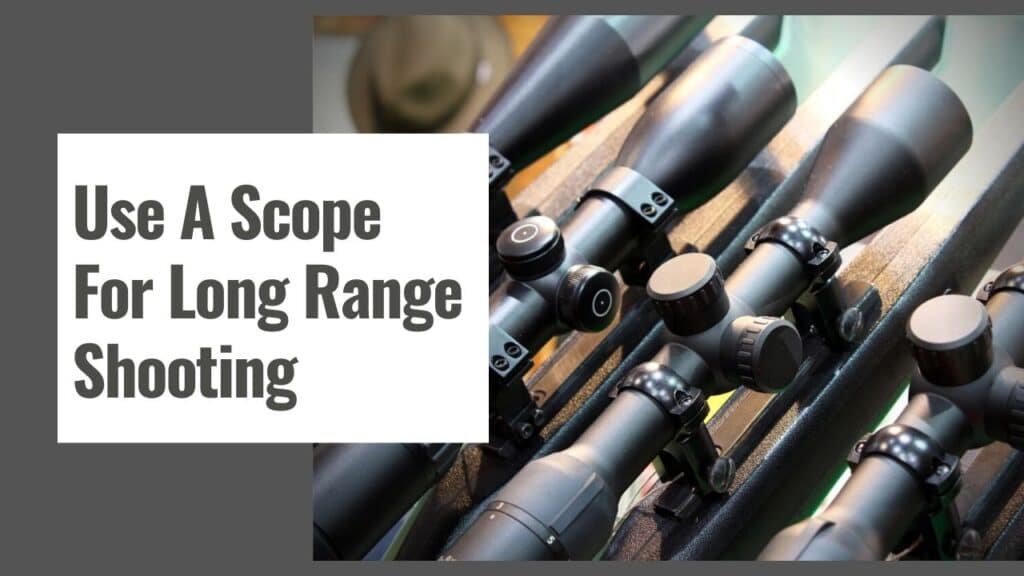
Learning How To Use A Scope For Long Range Shooting

Learning How To Use A Scope For Long Range Shooting: Those who enjoy target shooting can get themselves into a new challenge with long range shooting. Target shooting is mostly 100 yards, at best 200. Once you target at a distance of 300 yards or above, you are getting yourself into the world of long range shooting.

It is full of fun and challenging. With the weapon, a scope is also an absolute necessity in long range shooting. Make sure you know how to use it to hit the bullseye. To make it easier, let us explain how to aptly use a scope in the case of long range shooting.

How To Use A Scope For Long Range Shooting

Step One- Get a Scope With the Right Features

The right kind of scope can make or break the deal for you in the long range. It will be best if you have a long range scope that can cover that distance. Such scopes have BDC reticle, turrets, and parallax knob.

So, the reticle handles wind and helps the bullet to go 300 yards and above to hit the bullseye. And the turrets are for changing the windage and elevation at ¼ MOA increments.

Lastly, the parallax knob removes the parallax, so that it doesn’t affect the final result.

Step Two- Mount the Scope Right

The long distance scopes are designed by keeping long range shooting weapons in mind. To check whether you have mounted it correctly or not, look carefully if, or if not, the vertical crosshair and centerline are in alignment.

Step Three – Eyepiece and Rangefinder

Your scope needs both an eyepiece ad a rangefinder. The eyepiece will offer a much needed clear view at a long distance, and the rangefinder will make measuring the distance easy.

Step Four- Turrets

Now you need to adjust the scope with the turrets. You have to keep in mind that it works at ¼ MOA increments at 100 yards.

This specific number is going to lead you to an accurate calculation. You have to analyze how far you are from the bullseye and adjust the scope by ¼ inch with every click.

Whether you want to go above 100 till 1000 or below is your choice.

Step Five- Zeroing At Different Distance

Zeroing a scope is about practice. Set up the paper target. Start at 25 yards by shooting 3-5 bullets at one go. Continue till you hit the bullseye consistently at 25 yards.

When you reach perfection, then increase the distance to a 100-yard, Repeat the same process, and perfect it.

Then move further out till you do not perfect the maximum range you are thinking of covering. It can be 300 or 1000 yards.

It will take time, but once you are perfect zeroing at a very long distance, there is no looking back for you. Just make sure the bullets you are using in zeroing scope practice sessions, and the bullets you are using in long range shooting are the same. If they are different, the result will be way off the mark.

So, using a scope properly is all about proper alignment of the scope and thoughtful planning. Add a lot of practice to that combo, and you are going to be a pro at adjusting the scope in long range shooting.

How to Zero a Scope for 308?

How to Zero a Scope for 308: Zeroing a rifle is complicated to understand. But once you know the method, it is full of fun. Even the learning process and practice sessions are exciting.

308 is the best in hunting and target shooting. In both cases, precision and accuracy are the keys. And for that, you need a high-quality scope and the knowledge of How to Zero a Scope for 308.

Zeroing is sighting in the scope. The bullet you are shooting is going to hit straight to the target. It will not change its path. So aligning the scope with the target is the only way you have.

Tools

You have the 308 and the scope. For sighting in, you need a target to hit. Paper targets and sandbags are the best options for you.

Between the two, go for the paper targets as they have grids on them. You might need a lot of them as they are going to give you the much-needed information to analyze and improve.

Step One – 25 Yards

Starting with a shorter distance is the best way to zero the scope. So, begin at a distance of 25 yards. It is not too close to start target practice, neither far at all.

Always take 3-5 shots. Then check the paper target. The distance of your bullet from the bullseye will tell you how good you were.

Make adjustments in the scope if you are way off the mark. After one session, go back to the 25 yards, if possible, by setting up a new paper target.

Do not stop the 3-5 bullet shot sessions and checking, analyzing the results unless you hit the bullseye, or at least go close to it every time.

Step Two – 50 Yards

We will have to mention it here that from here on, it is all about increasing the distance and perfecting the zeroing.

After perfecting 25 yards, jump straight to 50 yards. Set the paper target, fire 3-5 bullets one after another. Check how close or far you hit the mark. Do not stop unless you perfect it.

Step Three – 100 Yards

Time to try a longer distance after perfecting the shorter ones. A 100- yard is the best way to start. The process is the same; only the distance is 100.

Keep in mind that this will improve your long-range shooting skills. The rule of never stopping until perfecting remains the same.

Step Four – 200 Yards

If you are really into hunting, 200 yards or above is going to be helpful. Target shooting might not need zeroing above 100.

But for hunting going 200 yards or above is necessary. It will be difficult but will be fruitful once you perfect it.

Adjustment

It is impossible to hit the bullseye in the first attempt. It is the same in every step mentioned above. So, you will have to know how to adjust the scope.

You need to work with windage and elevation to adjust. Windage is all about going left to the right, and elevation, up and down. You will have knobs to adjust them, and they change by just ¼ MOA.

So you can already gauge that zeroing is all about practice and adjustment according to the result. Try it to understand how fun and useful it can be in hunting and target shooting.

You must know: How to Remove Rust from Gun?

How to Choose the Right Reticle for Your Rifle Scope?

How to Choose the Right Reticle for Your Rifle Scope: For a hunter or target shooter, a scope is as essential as a rifle. A scope is not just about a stylish device mounted on your weapon. It is much more than that.

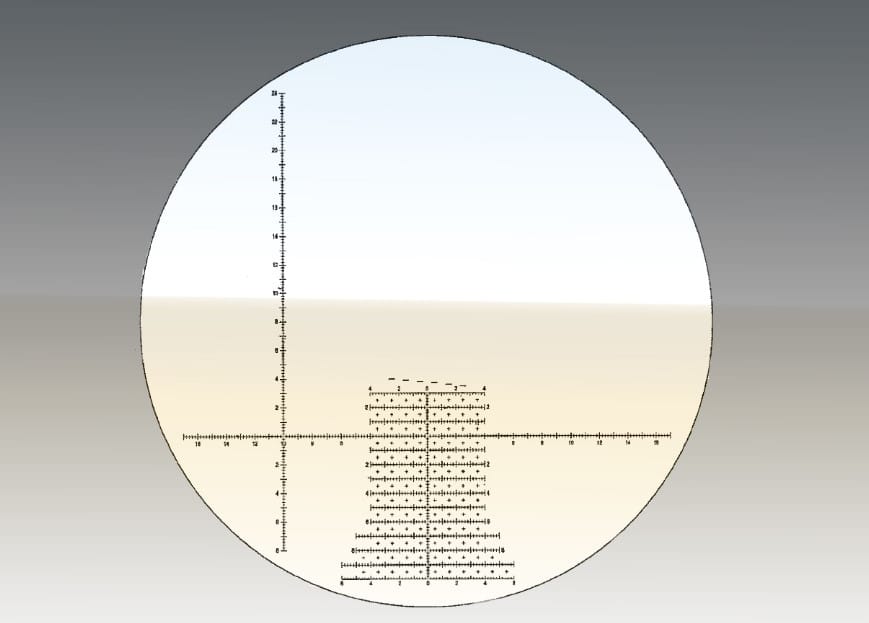
The fine lines on the lens help you to aim at the target. No matter how far the objective is, these lines work as a guideline.

The fine lines on the glass are called a reticle. So, here we are going to tell you about How to Choose the Right Reticle for Your Rifle Scope.

Reticle

The marks on the lens are reticles. Earlier, reticles were made of animal and human hair. But hair is not very long-lasting. So, instead of hair, platinum or tungsten were used to create the fine lines on lens. At present, things have gotten more advanced.

So, we now have glass etched reticles. These reticles don’t use any wire. Instead, the lens has fine lines etched on it. So, they have become more detailed and intricate, and targeting accuracy has touched the rooftop.

Between the two, due to the mechanism and sturdiness, etched glass reticles are better. But they are way too pricey. And wire reticles are not.

Instead, they are high in quality and are within budget. So, here is our first suggestion for you. Go for the glass etched reticles if you have the budget. Or choose the wire reticles if you don’t want to spend much.

Types Of Crosshairs

There are more types of reticles than you can think of. You have original reticle with horizontal and vertical crosshairs, and dot reticle with a red dot in the center.

Then you have a duplex reticle with thicker lines thinning out at the center, and mil-dot reticle with four dots in every crosshair with a 1 MRAD distance.

And you have more. You have the unusual ones like German reticle with thick lines only in the right, left and bottom, thinning out at the center. The upper line is thin from start to the center in it.

Then there is the Christmas Tree reticle where you see lines that take the shape of a Christmas tree. But the best is the Ballistic Drop Compensating Reticle.

No other reticle can be as accurate as a BDC reticle. It calculates the bullet drop to a T.  There are a few dots on the bottom crosshair, and there lie all the techniques.

Size Of The Fine Lines

The crosshairs are either thin or thick, thinning out at the center. Between the two, we suggest the latter. Because the thick lines are easy to view, catch your attention easily.

Due to the thinning out at the center, your eyes drag to the center, making aiming easy for you.

Firearm

The reticle is not a separate device. It is on the scope. So make sure you are buying a scope reticle that suits your firearm. The right reticle becomes right only when it supports the gun you are mounting the scope on.
There are a few more things one must consider in a reticle like illumination, focal plane, and more. But what we discussed in detail is enough for you to get the right reticle. So, now, you do not need to buy a random one without proper knowledge.

Exit mobile version