


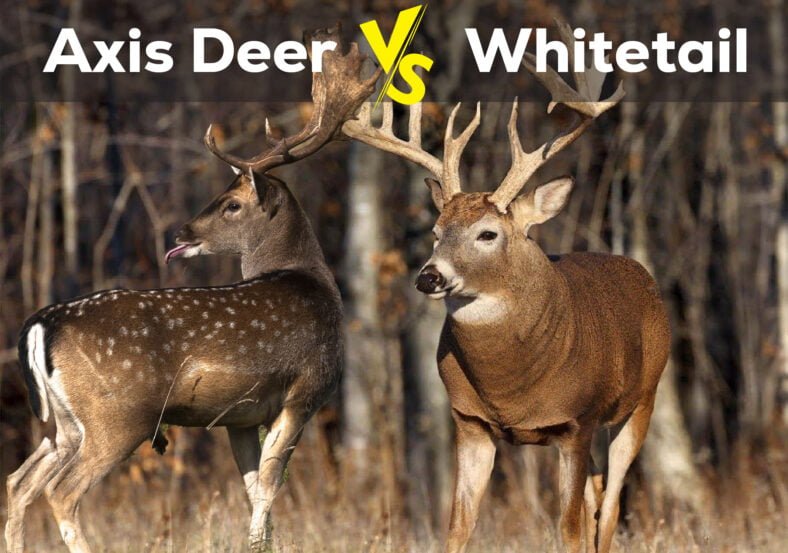
Axis deer and whitetail deer are both popular deer species to discuss among hunters and wildlife watchers, but they are very different animals. Whitetails are native and widespread across much of North America. Axis deer are native to Asia and exist in the United States mainly as introduced populations, especially in parts of Texas and on managed properties.
This comparison focuses on identification, habitat, behavior, and hunting context. It does not replace current state regulations, landowner rules, or wildlife-agency guidance.
Table of contents
Quick Answer
Axis deer are spotted, non-native deer with a reddish coat, white spots, and antlers that usually have a different shape from whitetails. Whitetail deer are native, widespread, and known for the white underside of the tail they raise when alarmed. In the United States, whitetails are managed as native wildlife, while axis deer rules vary by state, property, and management context.
The easiest field differences are coat pattern, tail behavior, antler shape, body profile, and location. If hunting, always confirm legal status and rules before making decisions.
Axis Deer vs Whitetail Comparison Table
| Factor | Axis Deer | Whitetail Deer |
|---|---|---|
| Native range | Native to Asia; introduced in parts of the U.S. | Native and widespread in North America |
| Coat | Reddish-brown with white spots as adults | Brown or grayish seasonally; fawns have spots |
| Tail clue | Does not use the classic whitetail flag in the same way | Raises white underside of tail when alarmed |
| Antlers | Often have a long, sweeping, three-point style per side | Branching antlers with many regional/body-age variations |
| Common U.S. context | Localized, especially Texas and managed properties | Common across much of the United States |
Axis Deer Overview
Axis deer, also called chital, are known for their spotted adult coat and graceful build. Unlike many native deer, adults keep visible white spots. They are social animals and may form groups depending on habitat and pressure.
In the United States, axis deer are not native. They are best known from Texas and certain managed or private-land situations. Because introduced-species rules can differ from native deer rules, hunters should check local regulations and landowner requirements carefully.
Whitetail Deer Overview
White-tailed deer are the most familiar deer for many American hunters. They live in forests, farm edges, brush, river bottoms, suburbs, and mixed cover. Their adaptability helps explain why they are so widespread.
The National Park Service white-tailed deer overview is a useful reference for basic biology and identification. For broader deer context, see our guide to types of deer in America.
Field Identification
- Coat: Adult axis deer usually keep white spots; adult whitetails usually do not.
- Tail: Whitetails are famous for flagging a white tail when alarmed.
- Antlers: Axis antlers often look long and sweeping; whitetail antlers vary but branch differently.
- Location: Whitetails are widespread; axis deer are localized in the U.S.
- Behavior: Both can be alert and wary, but habitat and pressure shape behavior strongly.
Do not rely on one clue alone. Use coat, tail, antlers, body shape, location, and legal context together.
Habitat And Range
Whitetails are habitat generalists. They can thrive in woodlots, crop edges, brush country, wetlands, suburbs, and mixed landscapes. Axis deer in the United States are more localized and often tied to ranches, private lands, and regions where introduced populations have become established.
Habitat affects hunting style. Whitetail hunting often revolves around bedding cover, food sources, travel corridors, wind, and seasonal pressure. Axis deer hunting may involve different property rules, herd behavior, and management goals depending on where the animals live.
Behavior Differences
Whitetails are often discussed around seasonal patterns such as rut timing, bedding-to-feeding movement, and pressure changes. They may become highly nocturnal or cautious in pressured areas, and their behavior can shift sharply across the season.
Axis deer can behave differently because they are an introduced species living in localized environments. Herd structure, breeding timing, water needs, pressure, and property management can all affect movement. In practical terms, do not assume axis deer will follow the same seasonal pattern as local whitetails.
Antler Differences
Axis bucks often carry antlers with a long main beam and a simpler three-point-per-side look when mature. Whitetail antlers usually branch differently and can vary widely by age, nutrition, genetics, and region.
Antlers can help with identification, but they should not be the only clue. Young animals, broken antlers, brush, distance, and poor light can all make antler-based identification less reliable. Use coat pattern, tail, body shape, location, and legal context together.
Quick Field Checklist
- Look for adult spots and reddish coat on axis deer.
- Watch for the white tail flag on whitetails.
- Compare antler shape only after checking body and coat clues.
- Use location and known local species as context, not proof.
- Do not make a hunting decision unless identification and legality are both clear.
This checklist is especially useful in brush, low light, or mixed-species areas where one quick glimpse can be misleading.
If the animal is partly hidden, moving fast, or seen only briefly, wait for a better look. Careful identification is part of ethical hunting and responsible wildlife observation.
It also helps prevent serious mistakes that cannot be undone.
Hunting Context
Whitetail seasons are usually structured by state wildlife agencies with defined dates, weapon rules, tags, and harvest limits. Axis deer may be managed differently depending on state and property status. Do not assume the same rules apply to both species.
Ethical hunting still requires clear identification, safe backstop, legal permission, suitable equipment, and restraint when the shot is not right. For fieldcraft, our tracking animals and reading signs guide is a useful companion.
Texas Parks and Wildlife offers public information on exotic and native wildlife management, but exact hunting rules should always be checked through the current official regulation pages for the location you plan to hunt.
Rules differ because native wildlife, introduced species, private-land management, conservation goals, and property rights can all interact. A hunt that is legal in one county or property setting may not be legal in another. The safest planning habit is to verify before every trip, even if you hunted the area before.
FAQ
Are axis deer native to America?
No. Axis deer are native to Asia and were introduced in parts of the United States.
Do adult axis deer keep their spots?
Yes. Adult axis deer are known for keeping white spots, which helps distinguish them from adult whitetails.
Are axis deer and whitetail hunting rules the same?
Not necessarily. Whitetail deer and axis deer may be managed differently. Check current state regulations and property rules before hunting.
What is the easiest way to tell them apart?
Look for the adult axis deer’s spotted coat and the whitetail’s white tail flag. Antler shape, body profile, and location also help.
Final Takeaway
Axis deer and whitetail deer differ in origin, range, coat pattern, tail behavior, and management context. Whitetails are native and widespread across much of North America, while axis deer are introduced and localized in the United States. For hunting, identify carefully and verify the current rules for the exact location.