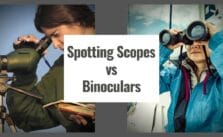
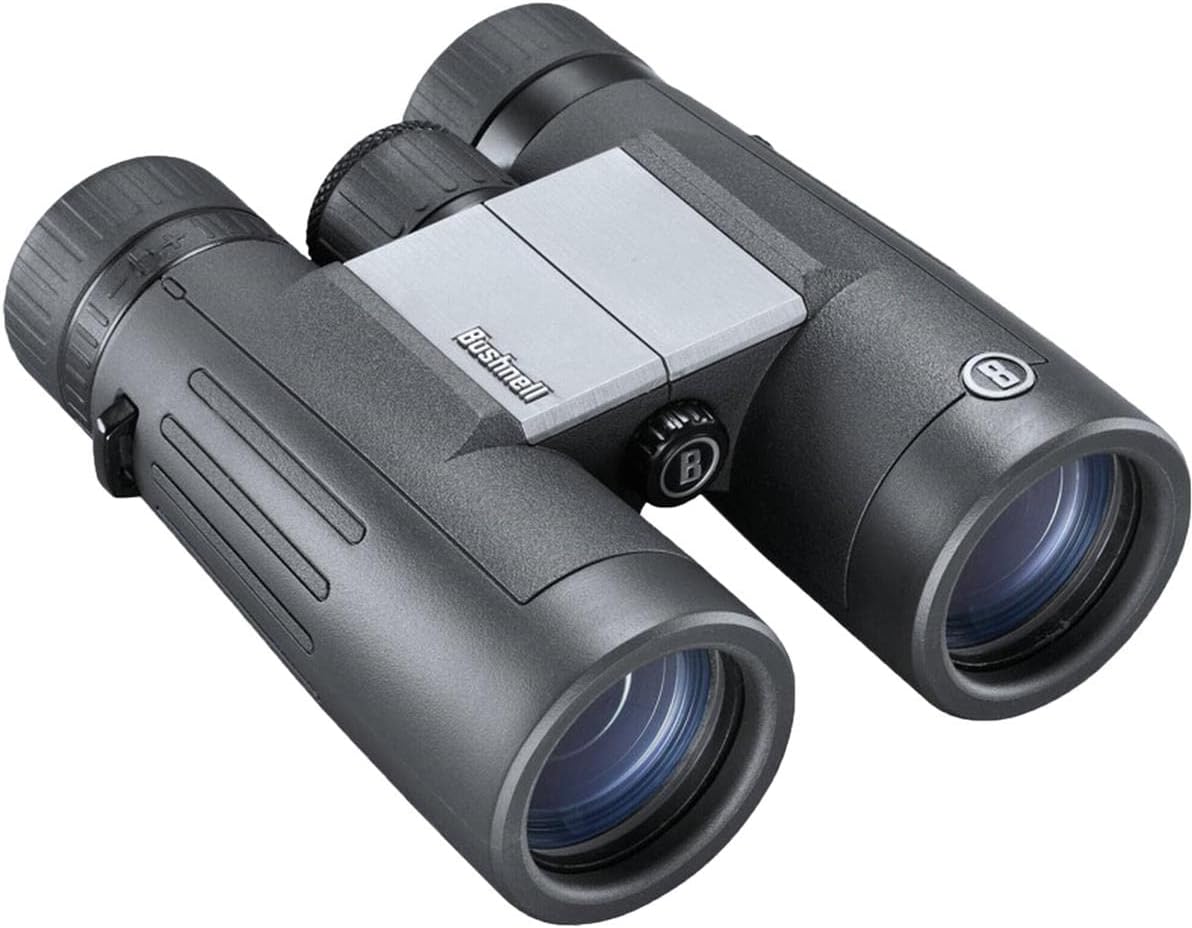
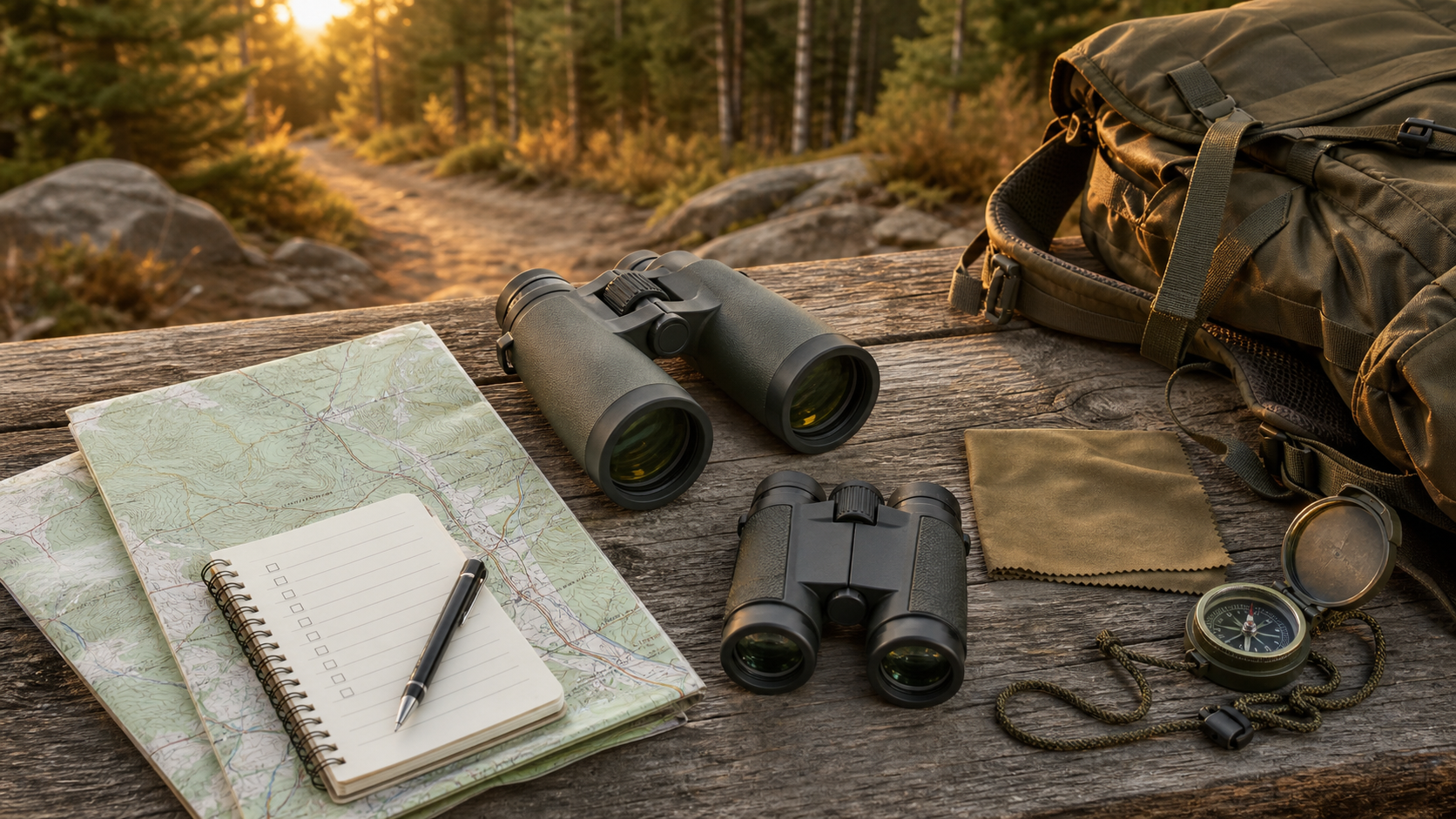
Choose binoculars when you need fast, handheld scanning and a wider view. Choose a spotting scope when you need more magnification for distant targets, birds, wildlife, or terrain and you are willing to use a tripod. Most hunters, birders, and range users eventually understand the split this way: binoculars find things faster; spotting scopes inspect distant detail better.
This comparison explains the practical difference between spotting scopes and binoculars without turning the page into a product roundup. If you are shopping later, use this guide to decide which optic type fits the job before comparing brands, prices, or models.
Table of Contents
Quick Comparison
Factor
Binoculars
Spotting scope
Best role
Fast scanning, walking, glassing, general observation
Detailed viewing at longer distance
Typical handling
Handheld
Tripod or steady support
Field of view
Usually wider and easier to scan
Usually narrower, especially at higher magnification
Magnification
Moderate and easier to stabilize by hand
Higher magnification for detail work
Portability
Easier to carry all day
Bulkier once scope and tripod are included
Best for beginners
Usually the first optic to buy
Better as a second optic when distance detail matters
What Binoculars Do Better
Binoculars use two optical tubes so both eyes can view at once. In the field, that makes them comfortable for scanning, tracking movement, and checking a wide area without setting up a tripod.
Faster scanning
Binoculars are usually the better tool when you are searching for movement, following birds, glassing a hillside, or checking multiple lanes at a range. You can raise them quickly, scan, lower them, and move without rebuilding your setup.
Better portability
A pair of binoculars is usually easier to carry than a spotting scope plus tripod. That matters on long walks, public-land hunts, scouting trips, travel, and casual nature observation.
More forgiving handheld use
Moderate magnification is easier to hold steady. Once magnification gets high, every hand movement is more obvious. This is one reason binoculars are often the first optic for beginners.
What Spotting Scopes Do Better
A spotting scope is built for higher-magnification observation. It is not as fast or as portable as binoculars, but it can show detail that ordinary handheld binoculars may not resolve at distance.
More detail at distance
Use a spotting scope when your main question is not “where is it?†but “what exactly am I looking at?†This can matter for reading target impacts, judging distant wildlife detail, watching birds from a fixed position, or glassing terrain from an overlook.
Tripod-supported viewing
Higher magnification works best when the optic is steady. A tripod turns a spotting scope from a shaky high-power tube into a useful observation tool. The tradeoff is that tripod setup adds weight, bulk, and time.
Better for fixed observation
If you are staying in one spot and need to study a distant subject, the spotting scope has the advantage. If you are moving constantly or scanning close-to-medium range, binoculars are usually easier.
Which Should You Buy First?
Most people should buy binoculars first unless they already know they need high magnification from a fixed position. Binoculars cover more everyday use: scouting, hiking, birdwatching, hunting, travel, and general outdoor viewing.
A spotting scope makes more sense when you already have binoculars and keep running into the same problem: the subject is too far away for the detail you need. At that point, a scope and tripod can be a useful second optic.
Use-Case Guide
For hunting
Binoculars are usually the first hunting optic because they are faster and easier to carry. A spotting scope can be useful for open-country glassing, long-distance observation, or situations where you plan to sit and study terrain for a while.
For birdwatching and wildlife viewing
Binoculars are better for moving subjects and casual birding. A spotting scope is stronger from a fixed location, such as shorebirds, waterfowl, raptors, or distant wildlife where detail matters more than speed.
For shooting range use
At closer ranges, binoculars may be enough for quick target checks. At longer distances, a spotting scope on a stable tripod can make it easier to see impacts without walking downrange. Always follow range commands and never use optics as a substitute for safe range procedure.
Mistakes To Avoid
Buying a spotting scope when you really need a lightweight scanning optic.
Buying high-magnification binoculars that are too shaky to handhold comfortably.
Forgetting that a spotting scope usually needs a tripod to perform well.
Comparing only magnification and ignoring field of view, weight, eye relief, and low-light needs.
Assuming one optic is always better; the right choice depends on the task.
Frequently Asked Questions
Are spotting scopes better than binoculars?
Spotting scopes are better for detailed long-distance viewing from a steady position. Binoculars are better for handheld scanning, portability, and general outdoor use. Neither is automatically better for every person.
Can binoculars replace a spotting scope?
Binoculars can replace a spotting scope for general scanning and moderate-distance viewing. They usually cannot match a tripod-mounted spotting scope when you need high magnification and fine detail at longer distances.
Do spotting scopes need a tripod?
Most spotting scopes are much more useful on a tripod or stable support. Higher magnification makes hand movement obvious, so support matters more as power increases.
What is better for beginners?
Binoculars are usually better for beginners because they are easier to carry, easier to aim, and more useful across many outdoor activities. A spotting scope is a good second optic when distance detail becomes the limiting factor.
Final Recommendation
If you can only choose one, start with binoculars for general outdoor use. Add a spotting scope when you need a tripod-supported optic for distant detail. The simplest rule is still the best one: binoculars help you find and follow; spotting scopes help you study from farther away.
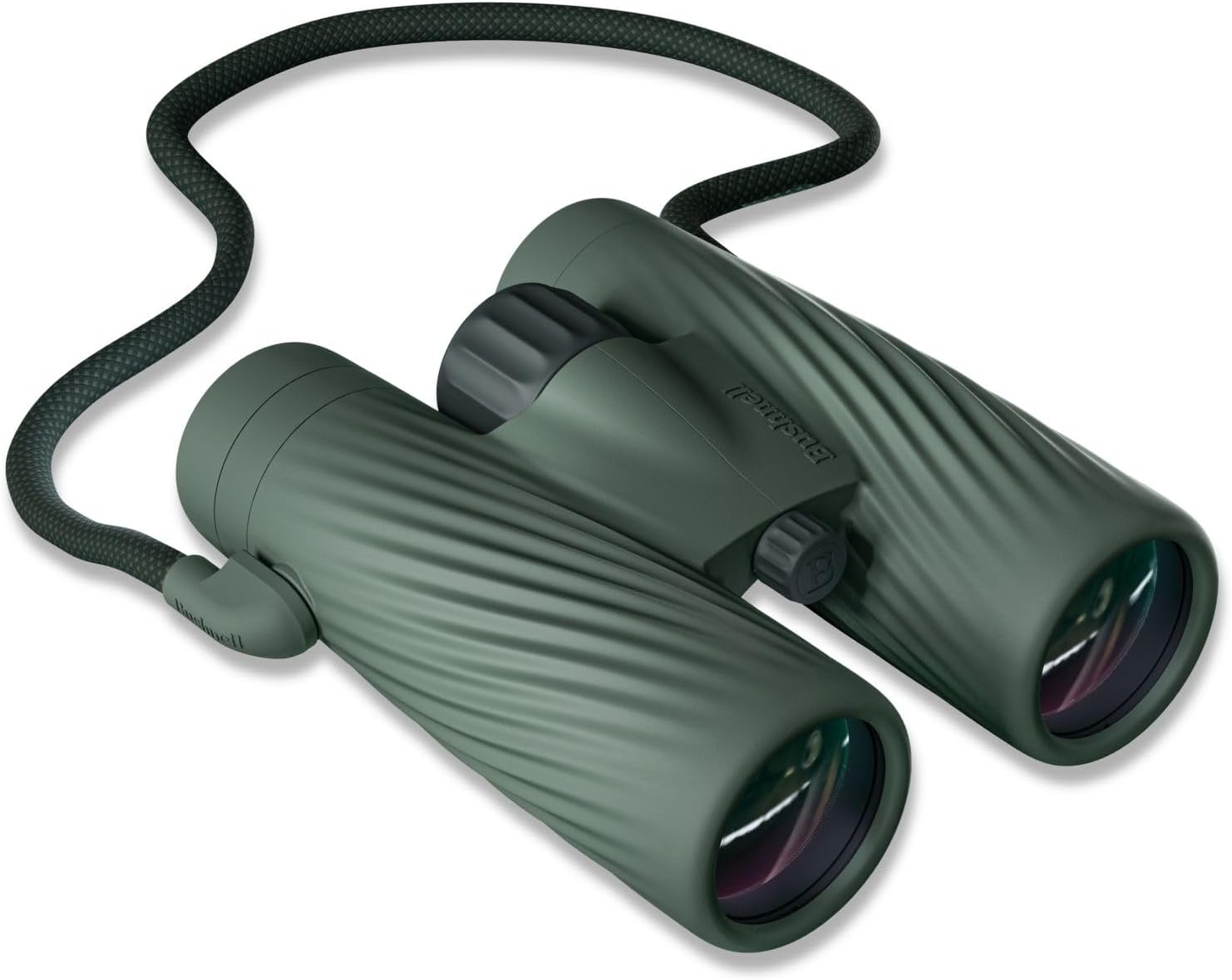
The best Bushnell binoculars for hunting are the ones that match your terrain, light, and carrying style. For most hunters, a current 10×42 model such as the Bushnell A5 10×42, Bushnell H2O 10×42, or Bushnell Prime 10×42 is the safest starting point. If you hunt tight woods or want a steadier view, consider an 8×42. If you glass open country and can hold the view steady, a 12×50 can make sense.
This best Bushnell binoculars guide is research-based and built from current Amazon product pages plus authority optics guidance. We do not claim hands-on field testing. Product availability, exact packaging, and specs can change, so always check the Amazon product page before buying.
We rebuilt this best Bushnell binoculars page around direct Amazon product pages, current Bushnell product identities, and useful buyer roles. Older or unclear models were not kept just to reach a round number. The final list includes ten options because we found enough direct Amazon product pages to support a broader comparison without using search links.
The main comparison factors were magnification, objective size, waterproof/fogproof positioning, packability, likely hunting use case, and whether a direct Amazon product page was available. We also used external authority guidance for optics basics: REI’s binocular buying guide explains common binocular numbers and features, while Nikon’s exit pupil guide helps explain why objective size and magnification affect low-light comfort.
Best Bushnell Binoculars Compared
Best overall current pick: Bushnell A5 10×42 Binoculars
Best for: hunters who want a current full-size Bushnell with waterproofing, phase/dielectric-coated prisms, and a balanced 10×42 format.
The Bushnell A5 10×42 is the strongest all-around starting point here because it keeps the familiar hunting-friendly 10×42 format while staying current in Bushnell’s lineup. For most buyers, this is the format to compare against every other option: enough reach for fields and edges, enough objective size for normal dawn and dusk use, and still manageable for handheld glassing.
For hunting, the main question is not only magnification. A binocular also needs to feel steady in your hands, be comfortable enough to use for more than a few seconds, and fit the light and weather you normally face. This pick is useful when its role matches your conditions, but it is not automatically better than the others just because it has a different magnification number.
Configuration
10×42
Best role
Best overall current pick
Main tradeoff
not the lightest option in this list
Pros
Clear buyer role in the Bushnell lineup.
Direct Amazon product page verified during repair.
Useful option when the configuration matches your hunting style.
Cons
not the lightest option in this list.
Specifications and availability can change on Amazon.
Not a hands-on field-test claim from The Shooting Gears.
Skip this if: another pick better matches your main use. Choose 8x for steadier scanning and wider view, 10x for a common all-around hunting balance, 12x for more reach in open country, 32mm for packability, 42mm for all-around use, and 50mm when you accept more bulk.
Best for: daylight scouting, travel, hiking, and buyers who want less bulk in the pack.
The Bushnell A3 10×32 is the packable pick for hunters who carry binoculars all day but do most serious glassing in daylight. The smaller 32mm objective helps reduce bulk, which matters on long walks, scouting trips, and travel, but it is not the model I would choose first for the last few minutes of legal light.
For hunting, the main question is not only magnification. A binocular also needs to feel steady in your hands, be comfortable enough to use for more than a few seconds, and fit the light and weather you normally face. This pick is useful when its role matches your conditions, but it is not automatically better than the others just because it has a different magnification number.
Configuration
10×32
Best role
Best lightweight packable pick
Main tradeoff
32mm objective is not the best low-light choice
Pros
Clear buyer role in the Bushnell lineup.
Direct Amazon product page verified during repair.
Useful option when the configuration matches your hunting style.
Cons
32mm objective is not the best low-light choice.
Specifications and availability can change on Amazon.
Not a hands-on field-test claim from The Shooting Gears.
Skip this if: another pick better matches your main use. Choose 8x for steadier scanning and wider view, 10x for a common all-around hunting balance, 12x for more reach in open country, 32mm for packability, 42mm for all-around use, and 50mm when you accept more bulk.
Best for: wet-weather use, boating-adjacent glassing, hiking, and budget-minded buyers.
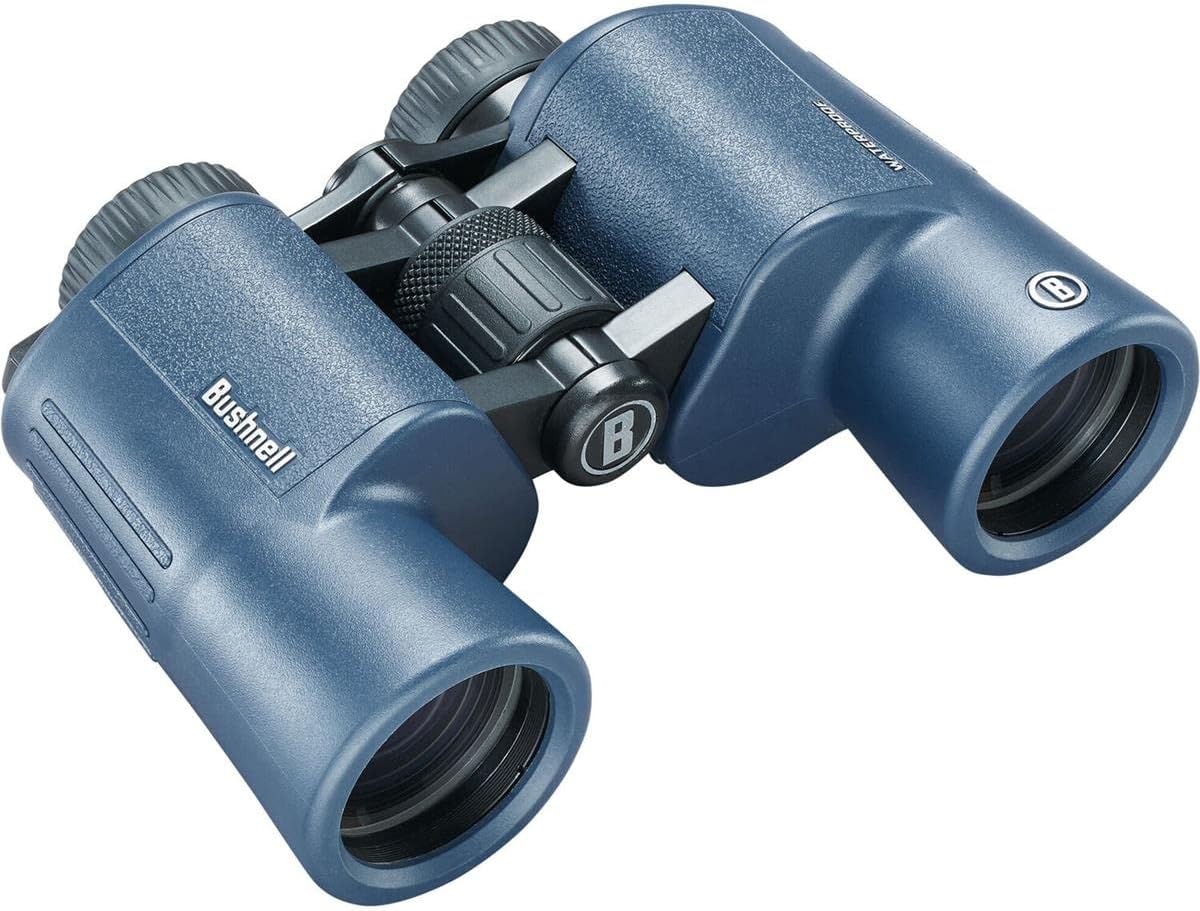
The Bushnell H2O 10×42 belongs near the top for buyers who care about wet-weather confidence without jumping straight into a premium price bracket. It makes the most sense for hunters who move between blinds, boats, damp timber, and truck gear bags where binoculars can get bumped, splashed, or packed away quickly.
For hunting, the main question is not only magnification. A binocular also needs to feel steady in your hands, be comfortable enough to use for more than a few seconds, and fit the light and weather you normally face. This pick is useful when its role matches your conditions, but it is not automatically better than the others just because it has a different magnification number.
Configuration
10×42
Best role
Best value waterproof 10×42
Main tradeoff
not a premium glass/coating model
Pros
Clear buyer role in the Bushnell lineup.
Direct Amazon product page verified during repair.
Useful option when the configuration matches your hunting style.
Cons
not a premium glass/coating model.
Specifications and availability can change on Amazon.
Not a hands-on field-test claim from The Shooting Gears.
Skip this if: another pick better matches your main use. Choose 8x for steadier scanning and wider view, 10x for a common all-around hunting balance, 12x for more reach in open country, 32mm for packability, 42mm for all-around use, and 50mm when you accept more bulk.
Best for: buyers who want a simple waterproof/fogproof Bushnell for hunting, birdwatching, and outdoor use.
The Bushnell Prime 10×42 is a practical lower-cost 10×42 option when you want the common hunting configuration but do not need the newest A-Series positioning. It is best viewed as a budget-conscious all-rounder: good for general scouting and field use, but still worth comparing carefully against the H2O and A5 if weather sealing or optical upgrades matter to you.
For hunting, the main question is not only magnification. A binocular also needs to feel steady in your hands, be comfortable enough to use for more than a few seconds, and fit the light and weather you normally face. This pick is useful when its role matches your conditions, but it is not automatically better than the others just because it has a different magnification number.
Configuration
10×42
Best role
Best lower-cost 10×42
Main tradeoff
less specialized than the newer A-Series or higher-end glass options
Pros
Clear buyer role in the Bushnell lineup.
Direct Amazon product page verified during repair.
Useful option when the configuration matches your hunting style.
Cons
less specialized than the newer A-Series or higher-end glass options.
Specifications and availability can change on Amazon.
Not a hands-on field-test claim from The Shooting Gears.
Skip this if: another pick better matches your main use. Choose 8x for steadier scanning and wider view, 10x for a common all-around hunting balance, 12x for more reach in open country, 32mm for packability, 42mm for all-around use, and 50mm when you accept more bulk.
Best for: hunting, camping, travel, and readers who want a more refined current Bushnell 10×42.
The Bushnell Engage X 10×42 is the better fit when you want a more refined crossover hunting binocular while staying inside the Bushnell family. It is the one I would compare against the A5 when comfort, coatings, and overall field feel matter more than simply choosing the cheapest 10×42 listing.
For hunting, the main question is not only magnification. A binocular also needs to feel steady in your hands, be comfortable enough to use for more than a few seconds, and fit the light and weather you normally face. This pick is useful when its role matches your conditions, but it is not automatically better than the others just because it has a different magnification number.
Configuration
10×42
Best role
Best premium-style crossover
Main tradeoff
confirm price/value against the A5 and H2O before buying
Pros
Clear buyer role in the Bushnell lineup.
Direct Amazon product page verified during repair.
Useful option when the configuration matches your hunting style.
Cons
confirm price/value against the A5 and H2O before buying.
Specifications and availability can change on Amazon.
Not a hands-on field-test claim from The Shooting Gears.
Skip this if: another pick better matches your main use. Choose 8x for steadier scanning and wider view, 10x for a common all-around hunting balance, 12x for more reach in open country, 32mm for packability, 42mm for all-around use, and 50mm when you accept more bulk.
Best for: buyers who want a larger 50mm objective and do not mind more size and weight.
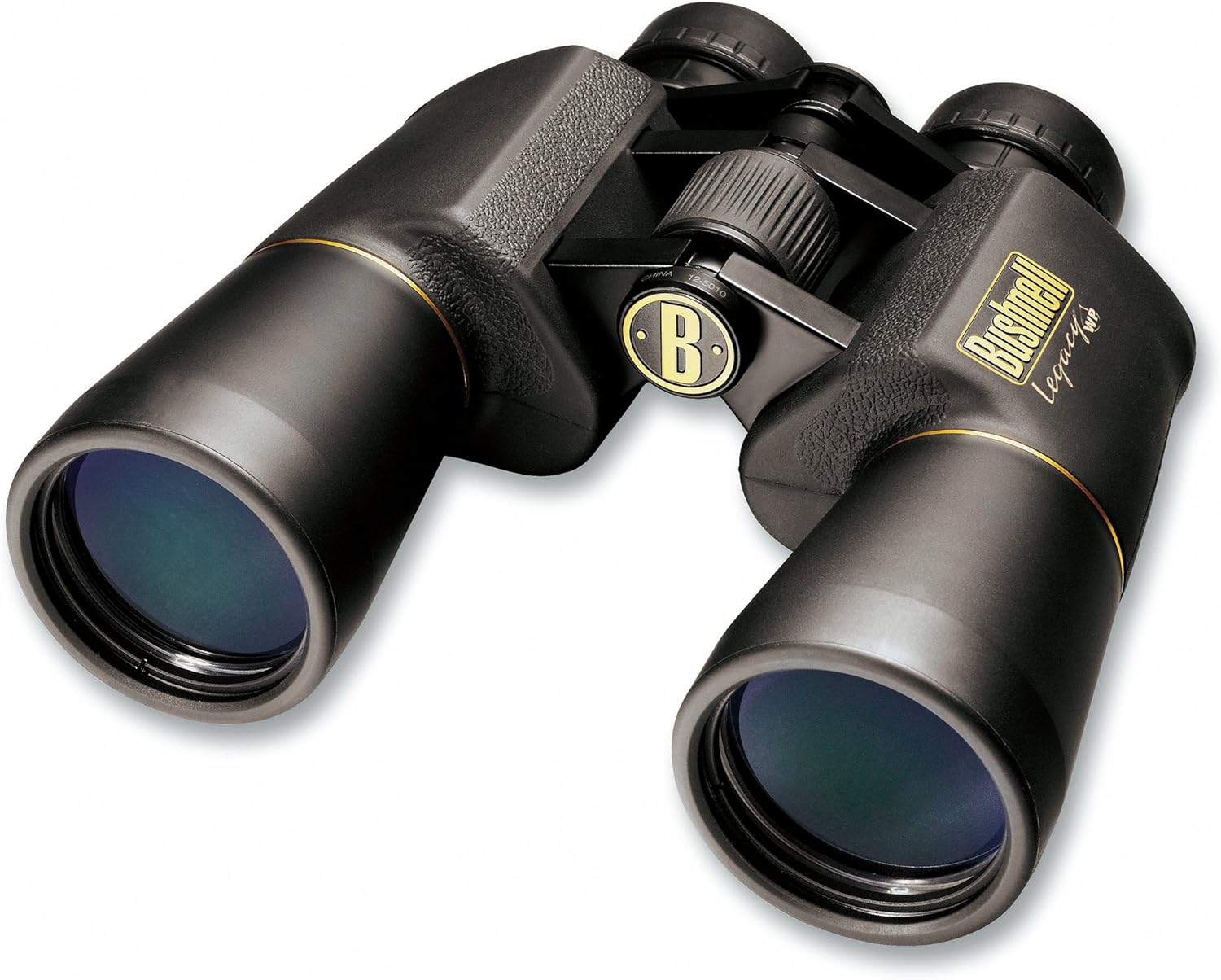
The Bushnell Legacy 10×50 Binoculars fits this list because it gives Bushnell buyers a clear, current role instead of repeating old marketplace models with uncertain relevance. Its 10×50 configuration should be judged by how you actually glass: terrain distance, hand steadiness, pack weight, weather, and whether you need a wider view or more reach.
For hunting, the main question is not only magnification. A binocular also needs to feel steady in your hands, be comfortable enough to use for more than a few seconds, and fit the light and weather you normally face. This pick is useful when its role matches your conditions, but it is not automatically better than the others just because it has a different magnification number.
Configuration
10×50
Best role
Best classic 10×50 Porro option
Main tradeoff
bulkier than roof-prism 10×42 models
Pros
Clear buyer role in the Bushnell lineup.
Direct Amazon product page verified during repair.
Useful option when the configuration matches your hunting style.
Cons
bulkier than roof-prism 10×42 models.
Specifications and availability can change on Amazon.
Not a hands-on field-test claim from The Shooting Gears.
Skip this if: another pick better matches your main use. Choose 8x for steadier scanning and wider view, 10x for a common all-around hunting balance, 12x for more reach in open country, 32mm for packability, 42mm for all-around use, and 50mm when you accept more bulk.
Best for: open-country glassing where extra magnification matters and the included harness is useful.
The Bushnell R5 12×50 Binoculars with Vault Lite Harness fits this list because it gives Bushnell buyers a clear, current role instead of repeating old marketplace models with uncertain relevance. Its 12×50 configuration should be judged by how you actually glass: terrain distance, hand steadiness, pack weight, weather, and whether you need a wider view or more reach.
For hunting, the main question is not only magnification. A binocular also needs to feel steady in your hands, be comfortable enough to use for more than a few seconds, and fit the light and weather you normally face. This pick is useful when its role matches your conditions, but it is not automatically better than the others just because it has a different magnification number.
Configuration
12×50
Best role
Best long-range current Bushnell pick
Main tradeoff
harder to hold steady than 8x or 10x for many buyers
Pros
Clear buyer role in the Bushnell lineup.
Direct Amazon product page verified during repair.
Useful option when the configuration matches your hunting style.
Cons
harder to hold steady than 8x or 10x for many buyers.
Specifications and availability can change on Amazon.
Not a hands-on field-test claim from The Shooting Gears.
Skip this if: another pick better matches your main use. Choose 8x for steadier scanning and wider view, 10x for a common all-around hunting balance, 12x for more reach in open country, 32mm for packability, 42mm for all-around use, and 50mm when you accept more bulk.
Best for: woodland hunting, scanning, beginners, and buyers who prefer a steadier handheld view.
The Bushnell H2O 8x42mm Binoculars fits this list because it gives Bushnell buyers a clear, current role instead of repeating old marketplace models with uncertain relevance. Its 8×42 configuration should be judged by how you actually glass: terrain distance, hand steadiness, pack weight, weather, and whether you need a wider view or more reach.
For hunting, the main question is not only magnification. A binocular also needs to feel steady in your hands, be comfortable enough to use for more than a few seconds, and fit the light and weather you normally face. This pick is useful when its role matches your conditions, but it is not automatically better than the others just because it has a different magnification number.
Configuration
8×42
Best role
Best wide-view 8×42 option
Main tradeoff
less reach than 10x or 12x options
Pros
Clear buyer role in the Bushnell lineup.
Direct Amazon product page verified during repair.
Useful option when the configuration matches your hunting style.
Cons
less reach than 10x or 12x options.
Specifications and availability can change on Amazon.
Not a hands-on field-test claim from The Shooting Gears.
Skip this if: another pick better matches your main use. Choose 8x for steadier scanning and wider view, 10x for a common all-around hunting balance, 12x for more reach in open country, 32mm for packability, 42mm for all-around use, and 50mm when you accept more bulk.
Best for: casual hunting, hiking, and backup binocular use where cost matters.
The Bushnell PowerView 2 8x42mm Binoculars fits this list because it gives Bushnell buyers a clear, current role instead of repeating old marketplace models with uncertain relevance. Its 8×42 configuration should be judged by how you actually glass: terrain distance, hand steadiness, pack weight, weather, and whether you need a wider view or more reach.
For hunting, the main question is not only magnification. A binocular also needs to feel steady in your hands, be comfortable enough to use for more than a few seconds, and fit the light and weather you normally face. This pick is useful when its role matches your conditions, but it is not automatically better than the others just because it has a different magnification number.
Configuration
8×42
Best role
Best budget 8×42 alternative
Main tradeoff
not as weather-focused as H2O or A-Series picks
Pros
Clear buyer role in the Bushnell lineup.
Direct Amazon product page verified during repair.
Useful option when the configuration matches your hunting style.
Cons
not as weather-focused as H2O or A-Series picks.
Specifications and availability can change on Amazon.
Not a hands-on field-test claim from The Shooting Gears.
Skip this if: another pick better matches your main use. Choose 8x for steadier scanning and wider view, 10x for a common all-around hunting balance, 12x for more reach in open country, 32mm for packability, 42mm for all-around use, and 50mm when you accept more bulk.
Best for: buyers who want a familiar low-cost full-size Bushnell for simple daylight viewing.
The Bushnell Falcon 10×50 Wide-Angle Binoculars fits this list because it gives Bushnell buyers a clear, current role instead of repeating old marketplace models with uncertain relevance. Its 10×50 configuration should be judged by how you actually glass: terrain distance, hand steadiness, pack weight, weather, and whether you need a wider view or more reach.
For hunting, the main question is not only magnification. A binocular also needs to feel steady in your hands, be comfortable enough to use for more than a few seconds, and fit the light and weather you normally face. This pick is useful when its role matches your conditions, but it is not automatically better than the others just because it has a different magnification number.
Configuration
10×50
Best role
Best classic budget 10×50
Main tradeoff
older-style design and not the premium hunting pick
Pros
Clear buyer role in the Bushnell lineup.
Direct Amazon product page verified during repair.
Useful option when the configuration matches your hunting style.
Cons
older-style design and not the premium hunting pick.
Specifications and availability can change on Amazon.
Not a hands-on field-test claim from The Shooting Gears.
Skip this if: another pick better matches your main use. Choose 8x for steadier scanning and wider view, 10x for a common all-around hunting balance, 12x for more reach in open country, 32mm for packability, 42mm for all-around use, and 50mm when you accept more bulk.
Start with the binocular numbers. In a 10×42 binocular, 10x is the magnification and 42mm is the objective lens diameter. More magnification can show distant detail, but it can also make the view harder to hold steady. A larger objective can help with a brighter-feeling view, but it usually adds size and weight; our objective-lens explainer is useful if you want the tradeoff in plain language.
For whitetail woods, an 8×42 can be easier to scan with and steadier by hand. If you are still deciding between formats, our deer-hunting binocular guide goes deeper on terrain and magnification. For mixed hunting and scouting, 10×42 is a practical middle ground. For open country, 12×50 can help with reach, but only if you can manage the shake or brace the binocular. Compact 10×32 binoculars save weight for hiking, but they are not the first pick for low-light glassing.
Eye relief matters if you wear glasses. Waterproofing matters if your binoculars ride in a pack, truck, boat, blind, or wet treestand. Weight matters because the binocular you leave at home helps nobody. The best Bushnell binoculars for your hunt are the ones you will actually carry, hold steady, and trust in the weather you face. Before buying, compare the product page, your hunting terrain, and your comfort with the size in hand.
For a second opinion on the optics basics, compare this buying guide with Audubon’s binocular guide. For definitions, the general optics references for exit pupil and eye relief are useful when you want to understand why a 10×42, 8×42, or 12×50 binocular feels different in the field.
FAQ
What are the best Bushnell binoculars for hunting?
The best Bushnell binoculars for most hunters are usually a current 10×42 model because 10×42 balances reach, brightness, size, and handheld control. In this guide, the A5, H2O, Prime, and Engage X are the main 10×42 options to compare first.
Are 10×42 Bushnell binoculars good for hunting?
Yes, 10×42 is one of the most common all-around hunting configurations because it balances reach, objective size, and manageable weight. It is not perfect for every hunter, but it is a practical starting point.
Is 8×42 or 10×42 better for deer hunting?
Use 8×42 if you hunt tighter cover, want a steadier handheld image, or value a wider view. Use 10×42 if you often glass across fields, power lines, clear cuts, or more open terrain.
Are 12×50 binoculars too much for hunting?
Not always. A 12×50 can be useful for open-country glassing, but it is harder to hold steady than 8x or 10x. Many hunters prefer to brace it or use it from a fixed position.
Should I choose waterproof binoculars?
For hunting, waterproof or weather-resistant binoculars are usually worth prioritizing. Rain, fog, snow, boat spray, and wet packs are normal field risks, so check the product page for the exact waterproof/fogproof wording.
Do bigger objective lenses always mean better binoculars?
No. Bigger objective lenses can help with light gathering, but they add size and weight. A 50mm binocular can be useful, but a lighter 42mm or 32mm model may be better if you walk a lot.
Final Verdict
If you want one current Bushnell option to start with, the best Bushnell binoculars shortlist begins with a 10×42 that fits your budget and weather needs. For night-use comparisons, do not treat these daytime hunting binoculars as a substitute for dedicated gear; see our night vision monocular vs binocular guide before buying specialized low-light equipment. The A5, H2O, Prime, and Engage X all serve that core buyer group in different ways. If you prioritize less weight, look at the A3 10×32. If you prioritize steadier scanning, choose an 8×42. If you want more reach for open country, consider the R5 12×50.