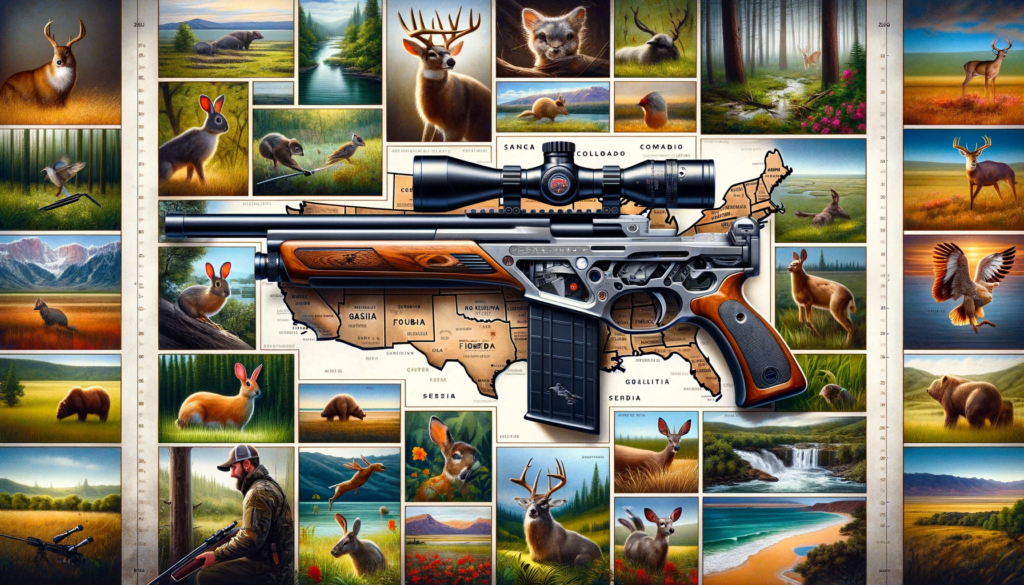
A Comprehensive Insight into Airgun Hunting Laws by State

As we traverse through the thrilling yet complex terrain of airgun hunting, we find ourselves at the crossroads of tradition and modernity. But as one ventures into this realm, a pertinent question arises – are you familiar with the regulations that govern airgun hunting in various states? If not, fasten your seat belts as we embark on an insightful expedition that promises not only knowledge but an immersive experience.

Airgun Hunting Laws by State: A Prelude to the Voyage

The Necessity of Knowing the Laws

In the grand scheme of hunting, being conversant with the laws isn’t just about abiding by them, but a testament to one’s commitment to the principles of ethical hunting. Imagine leading the way as a responsible citizen and a guiding figure for fellow hunters!

The Allure of Airguns

Airguns have been the darling of hunters for generations. What is it that sets them apart? Is it their subdued noise levels or the economical ammunition costs that lure enthusiasts? Let’s unravel the rich narrative that surrounds these fascinating devices.

Tracing the Roots of Airguns

The Dawn of Airguns

Join me as we step back in time, to a period where airguns were a nascent invention, narrating a tale rich with history and evolution. Ready to delve into this engrossing saga?

The Journey of Innovation

Visualize a timeline where airguns transition from being basic, manual devices to sophisticated marvels of technology, a transformation that mirrors a riveting tale of innovation and growth.

Federal Framework

Did it ever occur to you that the federal government plays a role in shaping the regulations that surround airgun hunting? Surprising, isn’t it? Together, let’s dissect the federal stance on airgun regulations.

Airgun Hunting Laws by State: Diving into State-Wise Norms

Colorado

Ah, Colorado! A state that echoes with the melodies of nature. But what happens when you venture out with an airgun here? Embark on a journey with me as we explore the intricate laws that outline airgun hunting in this picturesque state.

Florida

Florida, where the sun kisses the ocean and where hunting traditions are steeped deep. Ready to dive into the world of airgun hunting in the Sunshine State? Stick around as we unravel the nuances that dictate the hunting scene here.

Georgia

The Peach State beckons with its lush landscapes and vibrant hunting culture. Curious about the role airguns play here? Let’s take a guided tour through the intricate web of laws that govern airgun hunting in Georgia.

Hawaii

The tropical paradise of Hawaii offers more than just breathtaking vistas. Prepare to navigate the intriguing and somewhat complex terrain of airgun hunting laws in this paradise. Ready for the adventure?

Idaho

Idaho, known for its rugged mountains and recreational hotspots, offers a diverse range of hunting opportunities. But what lies in store for airgun enthusiasts in this breathtaking state? Let’s journey through the mountainous trails of Idaho’s airgun hunting regulations.

Licenses and Permits

Before embarking on your hunting adventure in Idaho, you might wonder, “What are the license and permit requirements?” Let’s unravel the mysteries behind the legal paperwork you would need to have in place.

Small Game Hunting

Picture yourself in the sprawling wilderness of Idaho, airgun in hand, on a quest for small game. Let’s dissect the nuances of small game hunting with airguns in this state, providing you with a clear picture of what awaits.

Illinois


Subsequently, we divert our attention to the vibrant core of the Midwest – Illinois. In a region famed for its myriad ecological landscapes, how do the legal frameworks guide airgun hunting? Join me as we delve deeply into the intricacies of airgun hunting regulations in Illinois.

Regulatory Overview

Embark on a guided tour through the regulatory framework that governs airgun hunting in Illinois. A world where the laws weave a rich tapestry of rules and guidelines that help maintain the delicate ecological balance.

Big Game Hunting

Imagine the thrill of big game hunting in Illinois with your trusty airgun. But what does the law state about such adventures? Let’s delve deeper into the realms of big game hunting with airguns in this state, offering you a detailed analysis of the rules and restrictions.

Conclusion

Towards a Harmonious Future

As we wrap up this enlightening journey, one can’t help but ponder the road ahead for airgun hunting. Let us envisage a future where laws blend seamlessly with both tradition and modern advancements, fostering a harmonious hunting culture.

FAQs

  1. Can I hunt with an airgun in any state?
    • While airgun hunting is permissible in many states, the regulations vary considerably. It is advisable to consult the local wildlife agency for the most current information.
  2. Are airguns categorized as firearms?
    • Generally, airguns are not classified as firearms since they utilize air or CO2 to propel projectiles, as opposed to an explosive charge. However, state-specific laws can alter this classification.
  3. What species are legal to hunt with an airgun?
    • The range of game permissible to hunt with airguns is largely dictated by state-specific regulations, encompassing a spectrum from small to large game, subject to certain conditions.
  4. What are the favored calibers in airgun hunting?
    • The choice of calibers is diverse, often ranging from .177 to .50, dependent on the game species targeted and the respective state regulations governing airgun hunting.
  5. Are there organizations championing airgun hunting rights?
    • Indeed, organizations like the American Airgun Hunter and the National Airgun Shooting Sports Association actively advocate for airgun hunting rights while fostering responsible and ethical hunting practices.

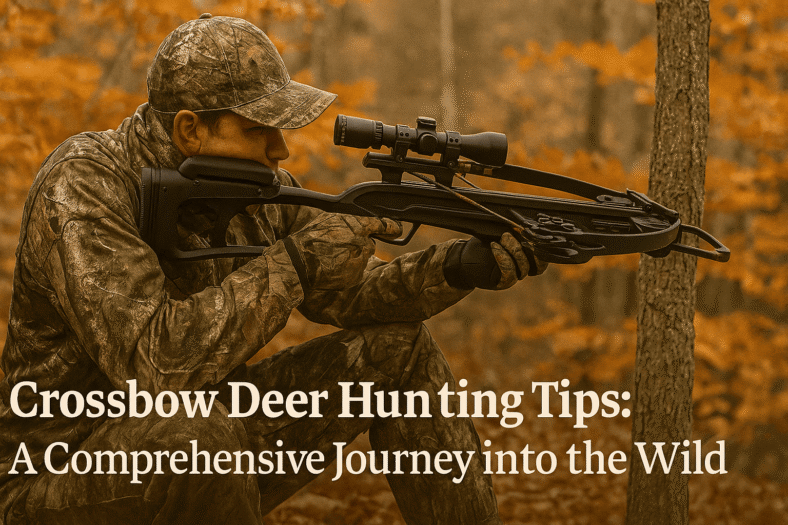
Crossbow Deer Hunting Tips: Safety, Setup, and Shot Planning

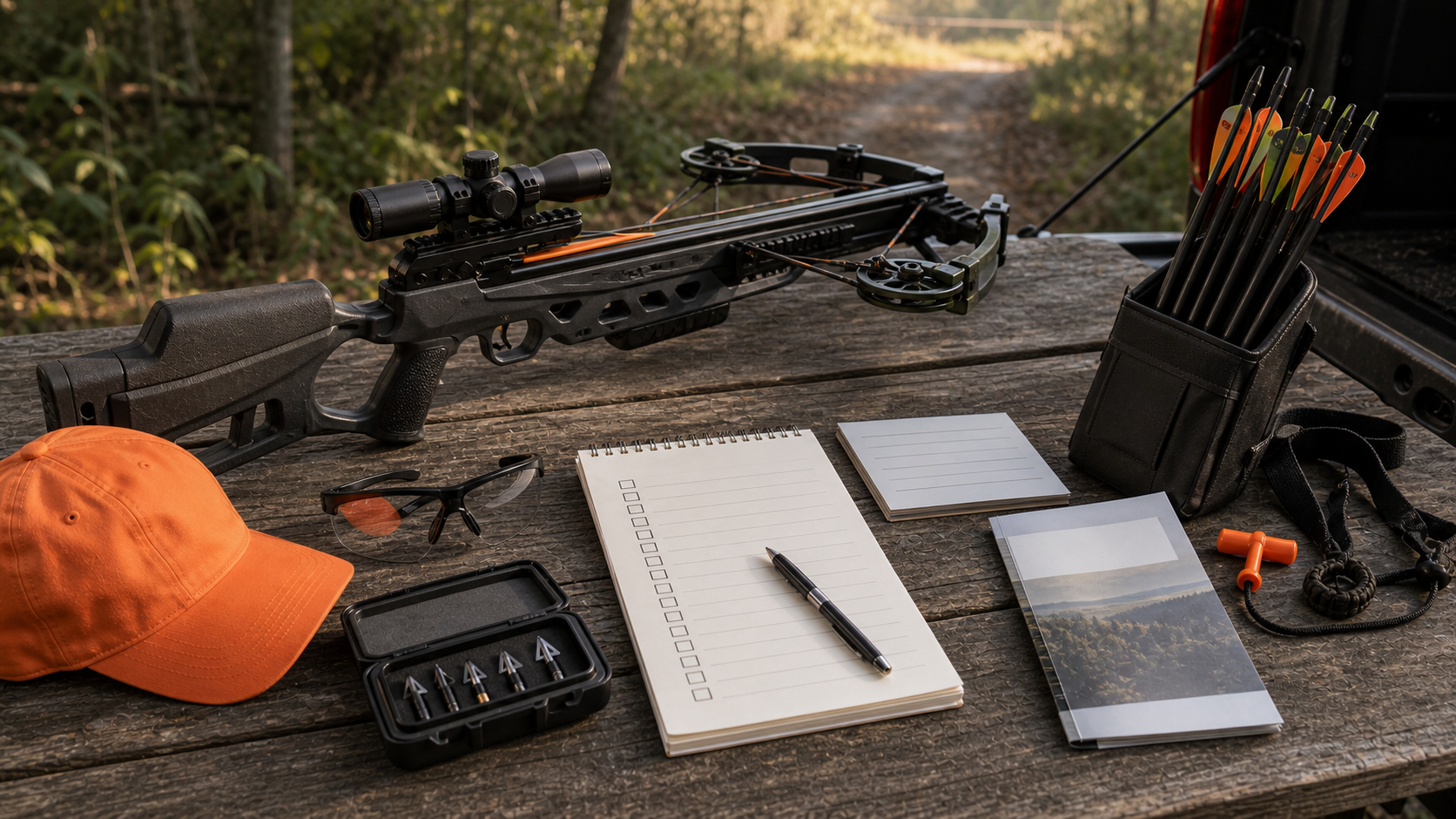
Crossbow deer hunting starts with three checks before you ever sit in a stand: current state regulations, hunter-safety fundamentals, and the setup instructions in your exact crossbow manual. Those three sources decide what is legal, what is safe, and what your equipment is built to do.

This guide covers legal checks, manual-first setup, pre-season practice, and ethical shot planning. It does not give state-specific legal advice, model-specific bolt numbers, guaranteed harvest claims, or product recommendations. Use it as a planning framework, then verify the details for your state, property, crossbow model, and season.

Table of Contents
  1. Quick Answer: How To Prepare For Crossbow Deer Hunting
  2. Check Crossbow Laws Before You Hunt
  3. Start With The Crossbow Manual
  4. Practice Before Deer Season
  5. Plan Ethical Shot Opportunities
  6. Crossbow Deer Hunting Checklist
  7. Common Crossbow Deer Hunting Mistakes
  8. Related Deer Hunting Guides
  9. Frequently Asked Questions

Quick Answer: How To Prepare For Crossbow Deer Hunting

Prepare for crossbow deer hunting by confirming your current legal requirements, reading your crossbow manual, checking bolt and broadhead compatibility, practicing with the actual hunting setup, and setting a personal effective range before the season. A responsible hunter passes any shot that is obstructed, low-light, outside practiced limits, or legally uncertain.

The best crossbow deer hunting tips are not shortcuts. They are habits: verify the rules, handle the crossbow safely, practice early, keep equipment compatible, and let shot discipline matter more than excitement.

Check Crossbow Laws Before You Hunt

Crossbow legality for deer hunting changes by state, season, age or eligibility rules, property type, and equipment definition. Start with your state wildlife agency’s current deer regulations every year. Do not assume a crossbow rule from one state, forum, video, or old article applies where you hunt.

Hunter education is also part of responsible preparation. IHEA-USA provides hunter-education context, and Hunter-Ed explains why hunter education matters for safety, responsibility, and laws.

State Rules, Seasons, Tags, And Legal Equipment

Confirm season dates, tags, reporting, legal equipment, broadhead rules, hunter orange, and crossbow-specific restrictions from official sources. For example, Texas Parks and Wildlife publishes current hunting means and methods, but that is only a Texas example. Check your own state’s current rulebook before you hunt.

Public Land, Private Land, And Access Rules

Land access can add another layer of rules. Public land units, managed areas, leases, and private property may limit stand placement, parking, access hours, trimming, recovery routes, or use of equipment. If you are hunting public land, our public land deer hunting guide is a useful next read.

Start With The Crossbow Manual

Your crossbow manual is the authority for that model. Crossbows differ in draw weight, power stroke, bolt requirements, nock style, cocking method, decocking method, safety mechanism, and maintenance boundaries. General advice should never override the manufacturer’s instructions for your exact crossbow.

Bolt Weight, Length, Nock, And Spine Compatibility

Bolts need to match the manufacturer’s specifications for weight, length, nock style, and spine. Using bolts that are too light, the wrong length, or the wrong nock type can be unsafe and can damage the crossbow. For buying background, see our source-checked guide to crossbow bolts for deer hunting, but always confirm compatibility against your manual.

Broadhead Compatibility And Practice Heads

Broadheads must fit your crossbow setup and state rules. Practice with a setup that matches your hunting weight and point of impact, while handling broadheads carefully and storing them in a protective case. Do not assume a broadhead is safe or legal simply because it fits on the end of a bolt.

Cocking, Decocking, And Dry-Fire Cautions

Follow the manufacturer-approved cocking and decocking process. Dry-firing a crossbow can be dangerous and can damage equipment. Keep fingers and thumbs below the rail and away from the string path, keep the crossbow pointed in a safe direction, and never improvise a decocking method because it seems faster.

A safer crossbow hunt starts with current rules, a manual-first setup, compatible bolts, and a personal shot limit.

Practice Before Deer Season

Practice well before deer season so opening day is not your first real test with the hunting setup. Shoot at known distances with a safe target and backstop. Confirm your scope or sight, your bolts, and your broadhead-weight setup before you rely on them in the field.

Confirm Ranges With The Hunting Setup

Practice with the bolts, point weight, and crossbow you plan to hunt with. Point of impact can change when bolt weight, broadhead style, or range changes. Keep notes on where your groups stay consistent instead of relying on the maximum distance printed in marketing material.

Know Your Personal Limit Before Taking A Shot

Your personal effective range is the distance where you can place shots consistently under realistic conditions. It is usually shorter than the distance a crossbow can physically launch a bolt. Decide that limit during practice, not when a deer is in front of you.

Plan Ethical Shot Opportunities

Ethical shot planning means staying inside your demonstrated ability, the crossbow manufacturer’s instructions, and current legal rules. Wait for a clear, legal, high-confidence opportunity with no obstruction and a safe background. If the shot is low-light, rushed, blocked by brush, or outside your practiced limit, pass.

For broader first-season context, pair this page with our deer hunting tips for beginners. The crossbow is only one part of a safe hunt; scouting, access, weather, recovery planning, and restraint all matter too.

Crossbow Deer Hunting Checklist

Planning StepWhat To ConfirmWhy It Matters
RulesState crossbow, deer, tag, reporting, and orange requirementsPrevents outdated or location-wrong assumptions
ManualManufacturer setup, cocking, decocking, and bolt requirementsKeeps setup model-specific and safer
BoltsWeight, length, spine, and nock match the manualWrong bolts can be unsafe or damage equipment
BroadheadsCompatible with setup and legal for the seasonPrevents bad assumptions about equipment
PracticeKnown ranges, safe backstop, actual hunting setupBuilds a real personal shot limit
Shot disciplineClear, legal, high-confidence opportunity onlySupports ethical hunting and safety

Common Crossbow Deer Hunting Mistakes

The most common mistakes are assuming crossbows are legal without checking rules, buying bolts before reading the manual, practicing with a different setup than the one used for hunting, ignoring decocking instructions, and taking long or obstructed shots beyond practiced ability.

Another mistake is turning equipment confidence into shot confidence. A fast crossbow does not make a poor angle, poor visibility, or uncertain background acceptable. The responsible choice is often to wait.

Frequently Asked Questions

Are crossbows legal for deer hunting?

It depends on the state, season, and sometimes the hunter or property type. Check your state wildlife agency’s current deer regulations before planning a crossbow hunt.

What bolts should I use for crossbow deer hunting?

Use bolts that match your crossbow manufacturer’s specifications for weight, length, spine, and nock style. There is no single correct bolt for every crossbow.

Can I use any broadhead with a crossbow?

No. Broadhead compatibility depends on your crossbow and current state equipment rules. Check the manufacturer’s guidance and legal requirements before hunting.

How far should I shoot at a deer with a crossbow?

Only as far as you can place shots consistently under realistic conditions with your hunting setup. Decide that personal limit during practice and pass shots outside it.

Should I decock a crossbow by firing it?

Follow your manufacturer’s instructions. Dry-firing can damage a crossbow and can be dangerous, so use the approved decocking method for your model.

Fair Chase Hunting: A Deep Dive into Sustainable Practices

Introduction

Initiation into the Journey

Embark on a journey through time and explore the intricate world of fair chase hunting. Initially, we will unravel the rich tapestry of its history and gradually navigate the nuances of modern practices.

Section 1: History Unveiled

Historical Overview

  • From Ancient Roots Begin by tracing the footsteps of ancient hunters. Here, we delve deeply into the evolving practices over the centuries, moving seamlessly to the present era.
  • Movement and Mentors Subsequently, we turn our focus to prominent figures and movements. These pivotal elements shaped fair chase hunting, crafting its modern identity.
  • Modern Transition Finally, in this section, we bridge the gap between traditional methods and present-day principles, painting a vivid picture of the transition.

Philosophical Grounds

  • Ethics and Morality Furthermore, we explore the moral compass guiding hunters. This section analyzes the respect and reverence that underline the ethical hunting practice.
  • Societal Shifts Likewise, we evaluate societal perspectives. Over time, views on hunting have transformed significantly, warranting a closer look.
  • Modern Discourses Consequently, we dive into present-day discussions that encapsulate philosophical debates, offering readers a glimpse into contemporary dialogues.

Section 2: In-depth Analysis of Principles

Principle Definitions

  • Wildlife Respect Additionally, we examine the deep connection between hunters and wildlife, illustrating the sanctity of this relationship.
  • Balanced Harvesting Moreover, this segment scrutinizes the balanced approach advocated by fair chase principles, promising sustainability and ethical harvesting.
  • Skill and Knowledge Pursuit Similarly, we elaborate on the skills and knowledge that are essential for a hunter, portraying the detailed artistry involved in fair chase hunting.

Adapting to Different Environments

  • Habitat Understanding Hence, we guide readers through various habitats, depicting their influential role in shaping fair chase hunting practices.
  • Impact of Seasonal Variations Furthermore, we analyze the impact of seasonal changes on hunting strategies, providing detailed insights into this aspect.
  • Weather Patterns Consequently, this segment explores the role weather patterns play, highlighting their significance in determining hunting strategies.

Section 3: Your Guide to Fair Chase Hunting

Before the Hunt

  • Research and Planning Initially, we discuss the role of meticulous planning and research, outlining their critical roles in a successful hunt.
  • Understanding Regulations Additionally, this section navigates through legal frameworks and necessary licenses, preparing prospective hunters for the journey ahead.
  • Mastery Over Equipment Subsequently, we shift our focus to equipment handling, emphasizing the importance of skill and expertise in this domain.

During the Hunt

  • Skill Application Moreover, we detail the application of skill and patience, portraying hunting as both a craft and a sport.
  • Ethical Considerations Hence, this segment dives deep into the moral considerations that govern a hunt, transcending mere rules and engaging in a rich moral dialogue.
  • Boundary Respect Similarly, we discuss the vital aspect of recognizing and respecting boundaries during the hunt, fostering a harmonious interaction with nature.

After the Hunt

  • Ethical Disposal Additionally, we describe responsible methods to manage the harvest, advocating respect and sustainability in practice.
  • Community Bonding Furthermore, we touch upon the communal aspects of hunting, emphasizing the joy of sharing the bounty and fostering community bonds.
  • Learning and Reflecting Finally, we dive into the learning journey each hunting expedition offers, focusing on personal growth and the evolution of a hunter.

Section 4: Benefits Explored

Ecological Advantages

  • Conservation Efforts Here, we examine the contribution of fair chase hunting to conservation initiatives, depicting its role in fostering sustainability.
  • Biodiversity Protection Furthermore, we explore hunting’s role in safeguarding biodiversity and habitats, highlighting its contribution to preserving natural ecosystems.
  • Facilitating Research Consequently, we discuss the contributions of fair chase hunting in scientific research, providing invaluable data for wildlife management and conservation.

Societal Gains

  • Community Engagement Moreover, we discuss hunting’s positive influence on community engagements and its substantial economic contributions.
  • Educational Initiatives Additionally, we explore educational avenues, focusing on campaigns that foster awareness and responsible hunting.
  • Fostering Nature Relationship Finally, in this section, we talk about the deeper connections developed with nature, resulting from responsible and respectful hunting practices.

Section 5: Challenges Addressed

Critiques Addressed

  • Ethical Debates Initially, we engage readers in an intense discussion, presenting various perspectives surrounding the ethical debates in hunting.
  • Alternative Strategies Subsequently, we examine alternative conservation methods, analyzing their effectiveness in comparison to hunting practices.
  • Maintaining Balance Consequently, we discuss the delicate balance that exists between recreation and conservation, fostering a dialogue on sustainable practices.

Future Prospects

  • Emerging Trends Moreover, we take a closer look at emerging trends in fair chase hunting, predicting the trajectory of future developments.
  • Policy Developments Furthermore, we delve into the potential policy developments, presenting a detailed roadmap for the future of fair chase hunting.
  • Community Roles Finally, we explore the roles individuals can play in promoting fair chase hunting, encouraging community collaborations and initiatives.

Conclusion

Looking Ahead

Envision a sustainable future for hunting, fostering a community that encourages responsible and ethical practices.

FAQs

  1. What is the core of Fair Chase Hunting?
    Ans. The core is grounded in sustainable, ethical, and responsible practices, prioritizing wildlife welfare and environmental conservation.
  2. Why is Fair Chase Hunting a current hot topic?
    Ans. Increasing wildlife conservation concerns have brought fair chase hunting to the limelight, promoting a balance between recreation and responsible practices.
  3. How can one transition to Fair Chase Hunting?
    Ans. A transition involves adopting ethical practices, enhancing skills, and understanding the delicate balance in wildlife ecosystems.
  4. Are community initiatives promoting Fair Chase Hunting?
    Ans. Yes, several initiatives focus on promoting fair chase hunting, encouraging education, awareness, and fostering a community of responsible hunters.
  5. What positive contributions does this type of hunting bring to society?
    Ans. It fosters community bonding, economic contributions, educational initiatives, and deeper connections with nature.
  6. What future developments are anticipated in Fair Chase Hunting?
    Ans. The future promises a harmonious balance between hunters and nature, focusing on sustainability, ethics, and fostering a deeper understanding and respect for wildlife habitats.

Precision in the Wild: Crossbow Turkey Hunting Essentials

Introduction

Crossbow turkey hunting combines traditional hunting skills with modern technology, offering a unique challenge and rewarding experience in the pursuit of wild turkeys. This guide provides an overview of essential strategies, gear, and considerations for hunters looking to master the art of crossbow turkey hunting.

Understanding Turkey Behavior

Habitat and Patterns

Turkeys roost in trees at night and are most active during the early morning and late afternoon. They frequent areas where food is abundant, including fields, forests, and edges. Understanding these patterns is crucial for setting up a successful hunt.

Vocalizations

Turkeys communicate through a series of calls, including gobbles, clucks, and purrs. Familiarizing yourself with these sounds can help you locate turkeys and lure them into range.

Crossbow Hunting Gear

Selecting a Crossbow

Look for a crossbow with sufficient power to ensure a humane kill, typically with a draw weight of at least 150 pounds. Modern crossbows also offer features like scopes and noise-dampening technology to enhance accuracy and stealth.

Broadheads

Use broadheads designed for turkey hunting, which feature larger cutting diameters to maximize impact. Fixed or mechanical broadheads are both effective, but ensure they are sharp and well-maintained.

Camouflage and Concealment

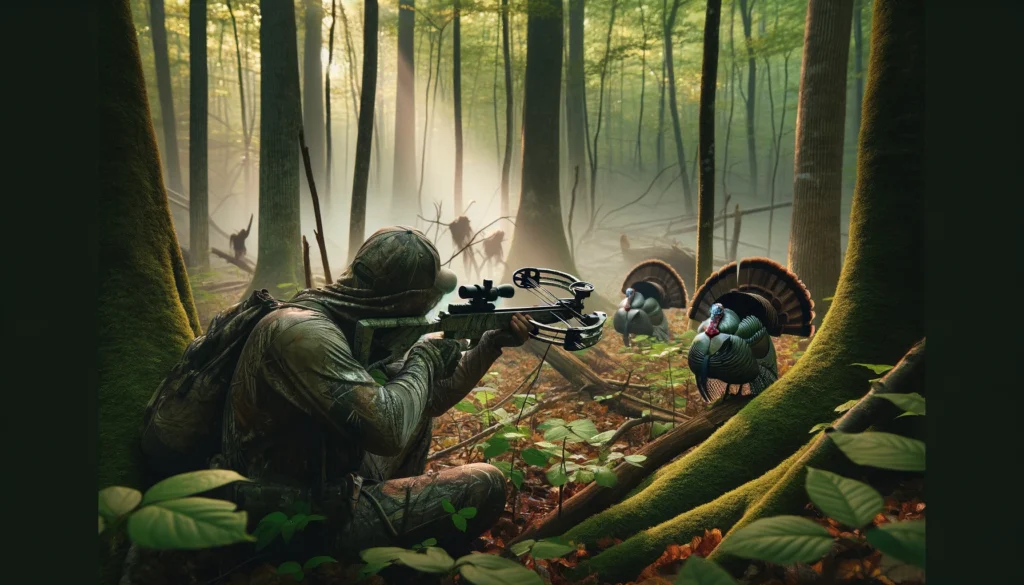
Turkeys have keen eyesight, making effective camouflage essential. Match your camo pattern to your hunting environment and consider using a blind to conceal your movements.

Tactics for Success

Decoy Setup

Deploying decoys can enhance your chances of attracting a turkey within crossbow range. Use a combination of hen and jake (young male) decoys to trigger a dominant tom’s territorial instincts.

Calling

Use turkey calls sparingly and with variety to mimic natural turkey behavior. Overcalling can make turkeys wary, so observe their response and adjust accordingly.

Patience and Positioning

Turkeys can take time to approach, requiring patience. Position yourself with a clear view of the decoys and anticipated turkey path, ensuring you have a stable platform for your crossbow.

Safety and Ethics

Practice Ethical Hunting

Aim for a clean, ethical shot, targeting the vital areas of the turkey to ensure a quick and humane harvest. Know your crossbow’s effective range and limit shots to within this distance.

Safety Considerations

Always treat your crossbow with the same respect as a firearm. Keep the safety engaged until ready to shoot and be mindful of your target and beyond.

Conclusion

Crossbow turkey hunting offers an exciting blend of tradition and innovation, requiring skill, patience, and respect for the game and nature. By understanding turkey behavior, mastering your equipment, and employing strategic tactics, you can enjoy the thrill of the hunt while ensuring a respectful pursuit of these magnificent birds.


Frequently Asked Questions (FAQs)

1. Is a license required for crossbow turkey hunting?

Yes, most states require a hunting license and possibly additional permits for turkey hunting. Check local regulations for specific requirements.

2. Can I use a crossbow for turkey hunting in any state?

Crossbow regulations vary by state. Some states allow crossbows during specific seasons or for hunters with certain qualifications. Always verify the legal status in your area.

3. How close do I need to be to a turkey to ensure an effective shot with a crossbow?

While modern crossbows are capable of accurate shots at longer distances, limiting shots to within 30-40 yards can increase the likelihood of a precise, ethical kill.

4. What’s the best time of day for crossbow turkey hunting?

Early morning hours just after dawn and late afternoon before dusk are prime times for turkey activity, offering the best opportunities for hunting.

5. How do I practice for crossbow turkey hunting?

Practice shooting your crossbow at various distances to become comfortable with its operation and accuracy. Familiarize yourself with assembling and disassembling your equipment, especially if you plan to transport it to your hunting location.

Hunting Trip for Beginners: Your Ultimate Guide to a Memorable Adventure

Embarking on a hunting trip can be an exhilarating yet nerve-wracking experience for beginners. Fear not, as this extensive guide will equip you with the essential knowledge and tips to make your first hunting adventure a truly unforgettable one. Brace yourself as we venture into the thrilling wilderness!

Table of contents

Part 1: Understanding the Basics

1.1 The Essence of Hunting

1.1.1 Connection with Nature

  • Exploring the deep woods
    • Understanding the flora and fauna
    • The serenity and challenges of the outdoors
  • An age-old tradition
    • Historical perspective of hunting
    • Hunting as a rite of passage

1.1.2 Safety First

  • Understanding firearm safety
    • The fundamentals of gun handling
    • Identifying safe shooting zones
  • Approach with caution
    • Recognizing animal behaviors
    • Safe distances and retreat strategies

1.2 Choosing Beginners Gear for Hunting Trip

1.2.1 Essential Gear

  • The right apparel
    • Clothing for different climates
    • Camouflage and visibility considerations
  • Choosing your weapon
    • Firearms vs. bow and arrow
    • A beginner’s guide to weapon maintenance

1.2.2 Advanced Gear

  • Optical devices
    • Scopes and binoculars
    • Using drones for scouting
  • Communication tools
    • Walkie-talkies vs. mobile phones
    • Emergency signaling devices

Part 2: Preparing for the Hunt

2.1 Setting Up the Camp

2.1.1 Finding the Right Spot

  • Terrain analysis
    • Reading topographical maps
    • Understanding weather patterns
  • Proximity to water sources
    • Importance of water in attracting game
    • Setting up near rivers and lakes

2.1.2 Camp Essentials

  • Shelter setup
    • Tents vs. makeshift shelters
    • Tips for a comfortable sleep in the wild
  • Meal prepping
    • Hunting trip recipes
    • Cooking over an open fire

2.2 Strategy Development

2.2.1 Stalking Your Prey

  • Understanding animal behavior
    • Studying different species
    • Recognizing signs and tracks
  • Best time to hunt
    • Dawn vs. dusk
    • Seasonal considerations

2.2.2 Making the Kill

  • Shooting techniques
    • Stance and breathing control
    • Making ethical shots
  • Ethical hunting practices
    • Fair chase principles
    • Wound tracking and recovery

Part 3: Enjoying the Hunt

3.1 The Thrills of the Hunt

3.1.1 The Chase

  • Adrenaline-pumping experiences
    • The excitement of the first encounter
    • The thrill of the chase
  • The joy of the catch
    • Emotional preparation
    • Celebrating your success

3.1.2 Being One with Nature

  • A spiritual connection
    • Meditative moments in the wild
    • The deeper philosophy of hunting
  • The beauty of wildlife
    • Observing nature’s wonders
    • Wildlife photography and journaling

3.2 Post-Hunt Activities

3.2.1 Celebrating the Catch

  • Tradition and rituals
    • Hunters’ storytelling
    • Rituals around the world
  • Savoring the meal
    • Field dressing your game
    • Wilderness cooking techniques

3.2.2 Sharing Your Experiences

  • Storytelling around the campfire
    • Crafting engaging tales
    • Sharing lessons and experiences
  • Capturing the moments

Conclusion

As we draw closer to the conclusion of this “Hunting Trip for Beginners” guide, it is our aspiration that you are now equipped with a rich reservoir of knowledge and a budding enthusiasm to undertake your inaugural hunting adventure. The hunting sphere is expansive, presenting an array of experiences that are not only exhilarating but also foster a profound connection with nature. Are you ready to immerse yourself in a journey characterized by exhilaration, education, and a newfound respect for the majestic outdoors?

FAQs

  1. What is the best season for hunting?
    Ans. The best season for hunting varies greatly depending on the region and the type of game you are pursuing. Generally, autumn is considered a prime time as it offers cool weather and marks the beginning of the mating season for many species, making them more active and visible.
  2. Is it necessary to have a guide for my first hunting trip?
    Ans. While not a requirement, having a guide for your initial trips can be incredibly beneficial. They can impart valuable insights, safety tips, and techniques that can elevate your hunting experience.
  3. What type of firearm is best suited for beginners?
    Ans. A bolt-action rifle is often touted as a suitable choice for beginners due to its simplicity and reliability. Nevertheless, the choice of firearm should also depend on the specific game you are targeting.
  4. How do I ensure my safety during a hunting trip?
    Ans. Ensuring safety should be a priority. Always adhere to the fundamental rules of firearm safety, stay vigilant about your surroundings, and maintain proper communication devices to reach emergency services if required.
  5. Can I go hunting alone as a beginner?
    Ans. Heading out alone on your first hunting trip is not advisable. It is safer and more educational to have an experienced hunter alongside, guiding you and helping you navigate potential hazards.

Airgun Deer Hunting: A Comprehensive Guide to Modern Game Pursuit

Introduction

In a world where tradition and technology intertwine, we find ourselves standing at the crossroads of an evolving hunting landscape. In the limelight today, is the emerging trend of airgun deer hunting, a pursuit that blends age-old techniques with modern technology. But what exactly makes airgun deer hunting a sought-after practice among enthusiasts? What does it offer that traditional methods don’t? Allow me to unravel the fascinating journey of airgun deer hunting, where we will explore its nuances, techniques, and its soaring popularity.

Why Choose Airguns for Deer Hunting

  • A New Era of Hunting
    • Modern technology meeting traditions
    • Benefits of choosing airguns: A detailed analysis
    • The camaraderie in airgun hunting communities

Chapter 1: Gearing Up for the Hunt

Selecting the Perfect Airgun

An expedition as thrilling as deer hunting necessitates a weapon that complements your skills and the challenges that come your way.

  • Types of Airguns
    • Springers: Old but Gold
    • PCP Airguns: The New Sensation
    • Choosing based on your skill level
  • Caliber and Power
    • Importance of selecting the right caliber
    • Understanding muzzle velocity
  • Top Brands in the Market
    • A closer look at leading manufacturers
    • Customer reviews and recommendations

Essential Accessories for Airgun Hunting

From having a clear sight of your target to ensuring your safety during the hunt, accessories play a vital role in a successful deer hunting expedition.

  • Scopes and Optics
    • Zooming into the best scopes
    • Laser rangefinders: A worthy investment?
  • Safety Gears
    • Importance of a good pair of gloves
    • Eye protection: Not to be missed

Chapter 2: Legalities and Responsibilities

Before embarking on your hunting journey, it’s crucial to be well-versed with the legal landscape and the responsibilities that come with it.

Understanding Licenses and Regulations

  • Procuring the Right Licenses
    • Where and how to apply?
    • Understanding regional variations
  • Adhering to Hunting Laws
    • Respecting seasonal restrictions
    • Legal shooting hours: A brief guide

Ethical Hunting Practices

Being a responsible hunter goes beyond adhering to the laws. It encompasses respecting the environment, wildlife, and promoting conservation.

  • Conservation Efforts
    • Understanding deer population dynamics
    • Contributing to conservation funds
  • Respect for Wildlife
    • The ethos of ‘Fair Chase’
    • Quick and humane kills: A priority

Chapter 3: Strategies and Preparations

A well-laid plan often forms the cornerstone of a successful hunting expedition. From scouting the hunting grounds to setting up the camp, every aspect is crucial.

Scouting and Analysis

  • Studying the Terrain
    • Utilizing topographic maps
    • The role of weather patterns in hunting
  • Understanding Deer Behavior
    • Studying deer movement patterns
    • Insights into their feeding habits

Setting Up the Hunting Camp

A proper hunting camp can significantly enhance your hunting experience, offering comfort and necessary amenities in the wilderness.

  • Choosing the Ideal Location
    • Proximity to water sources: A consideration
    • Ensuring safety: Avoiding predator territories
  • Essential Gear for the Camp
    • Shelter: Choosing between tents and blinds
    • Essentials for a hunting camp kitchen

Chapter 4: The Thrills of the Hunt

As you delve deeper into the world of airgun deer hunting, mastering various techniques and strategies becomes vital.

Mastering Stalking Techniques

Stalking involves moving silently and unnoticeably, getting as close to the deer as possible for a precise shot.

  • Silent Movement
    • Clothing considerations for silent stalking
    • Footwear: Making a quiet approach
  • Spot and Stalk Strategy
    • Developing a keen eye for spotting deer
    • Stalking techniques: Tips and tricks

Ambush Tactics

Sometimes, the best strategy is to wait silently for your prey to come to you. Learn how to set up effective ambushes and make successful kills.

  • Setting Up Hides
    • Building natural blinds
    • Utilizing commercial blinds: Pros and Cons
  • Patience and Precision
    • Mastering the art of waiting
    • Reading signs and making the right move

Making the Shot and After

The moment of truth in any hunting expedition is making the shot. It’s a culmination of all your efforts, skills, and strategies.

  • Aiming for a Humane Shot
    • Understanding the anatomy of deer
    • Importance of shot placement
  • After the Shot
    • Tracking the deer: Techniques and tips
    • Handling the game: A detailed guide

Conclusion

As we wind up this enlightening journey through the intricate world of airgun deer hunting, it is apparent that the sport is not just about the hunt but encompasses a broader spectrum of learning and experiences. Are you ready to embark on this rewarding journey that promises not just an adrenaline rush but also a deeper connection with nature?

FAQs

  1. Can beginners try airgun deer hunting?
    • Certainly! With proper guidance and adequate preparation, even beginners can enjoy the sport.
  2. Is it essential to have a guide during the hunt?
    • While not mandatory, having a guide, especially during the initial hunts can be a valuable resource.
  3. What are the main advantages of airgun hunting over traditional firearm hunting?
    • Airgun hunting offers a quieter and more precise hunting experience, fostering ethical hunting practices.
  4. Are airguns suitable for long-distance shots?
    • Typically, airguns are ideal for medium-range shots. For long-distance shots, understanding your airgun’s ballistic performance is vital.
  5. How can one ensure safety during an airgun deer hunting expedition?
    • Safety should be a priority, which includes adhering to firearm safety rules, wearing appropriate gear, and being aware of your surroundings.
  6. What role does weather play in deer hunting?
    • Weather can influence deer movements. Hunters should learn to use weather patterns to their advantage for a successful hunt.
  7. Is there a community of airgun deer hunters where one can learn and share experiences?
    • Yes, many online forums and communities unite airgun deer hunters where experiences and knowledge are shared.

Coyotes Hunting Prey: Behavior, Food Sources, and Movement Clues

Coyotes hunt by matching opportunity with efficiency. They look for vulnerable prey, use wind and cover, adjust to human pressure, and switch between solo hunting, pairs, and loose family-group behavior depending on food, season, and location.

This guide explains coyote prey strategies as wildlife behavior, not as guaranteed hunting tactics. Coyote movement changes with weather, food sources, breeding season, pup-rearing, human pressure, and local habitat, so treat every pattern as a clue to observe rather than a promise.

Table of Contents

Quick Answer

Coyotes usually target easy meals first: rodents, rabbits, carrion, fruit, insects, and occasionally larger prey when conditions favor them. Their hunting strategy is flexible. In open ground they may use sight and sound, in cover they may work edges and wind, and near people they often become more nocturnal or cautious.

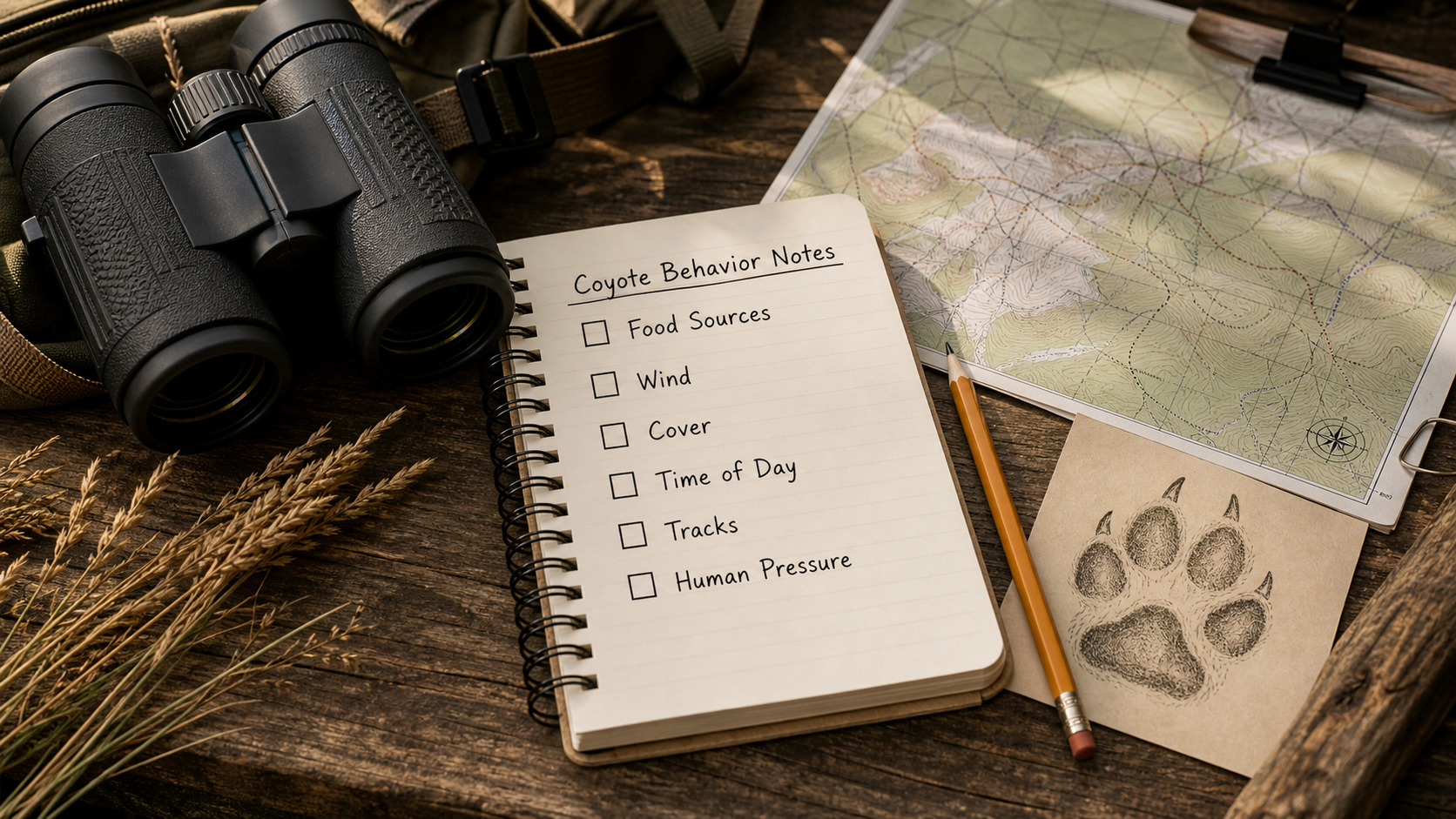
When reading coyote behavior, note food sources, wind, cover, time of day, tracks, and human pressure instead of relying on one pattern.

Coyote Behavior Notes Checklist

Good coyote observation starts with the landscape. Instead of asking only where coyotes are, ask why they would be there. Food, cover, wind, water, denning areas, human disturbance, and travel corridors usually explain more than a single track or howl.

  • Food sources: rodents, rabbits, carrion, fruit, livestock afterbirth, insects, and seasonal prey.
  • Cover: brush, creek bottoms, field edges, shelterbelts, timber, tall grass, and terrain breaks.
  • Wind: coyotes often use scent information, especially in cover or around food.
  • Time: activity can shift toward dawn, dusk, or night where human pressure is high.
  • Tracks and scat: repeated sign matters more than one isolated mark.
  • Human pressure: roads, farms, pets, hunters, and neighborhoods can change movement.

What Coyotes Eat

Coyotes are opportunistic omnivores. They eat small mammals, birds, reptiles, insects, fruit, carrion, and human-associated foods when available. The coyote species overview is a helpful broad reference for diet and range, while local wildlife agencies are better for local behavior and management concerns.

Small Prey Often Comes First

Rodents and rabbits are common targets because they are available and efficient to pursue. A coyote hunting mice in a field may pause, listen, pounce, and repeat. Around brush or field edges, it may travel slowly and check scent, movement, and sound before committing energy to a chase.

Larger Prey Is Context Specific

Coyotes can affect young, sick, injured, or vulnerable animals, but it is too simple to say they always hunt large prey the same way. Snow, drought, cover, prey health, scavenging opportunities, livestock practices, and local predator-prey balance all matter.

How Coyotes Find Prey

Coyotes use a mix of scent, hearing, sight, memory, and travel routes. In open country, they may scan and listen. In thick cover, scent and edge movement can matter more. Near farms, they may learn where rodents, carrion, or easy food appear regularly.

The most important idea is flexibility. Coyotes are successful because they adapt. A method that works in a quiet pasture may fail near a busy road or pressured public land. Food availability often explains the pattern better than the animal’s personality.

Solo, Pair, and Group Hunting

Many coyotes hunt alone, especially when pursuing small prey. Pairs may travel together during breeding season or around territories. Family groups can be more visible at certain times of year, but that does not mean every group is actively coordinating a large-prey hunt.

Howling also gets misread. A few coyotes can sound like more animals than are actually present. Vocalizations may relate to contact, territory, social behavior, or location, not only hunting. The Humane Society’s coyote encounter guidance is useful for understanding human-coyote conflict and safe responses around people and pets.

Habitat, Wind, and Human Pressure

Habitat shapes strategy. Open fields give coyotes visibility but less concealment. Creek bottoms and brushy edges give cover and travel routes. Suburban edges may provide food, but people, pets, traffic, and noise change behavior. Coyotes often adjust movement to avoid risk while still checking reliable food areas.

Why Pressure Changes Patterns

Repeated disturbance can make coyotes shift time, routes, and cover. That is why old sign is weaker evidence than current sign. A place that held activity last month may be quiet now if food moved, cover changed, livestock practices changed, or people increased pressure.

Seasonal Pattern Changes

Coyote behavior can shift through the year. Breeding season, denning, pup-rearing, harvest seasons, winter stress, and changing food availability all influence movement. In some areas, coyotes become more visible when cover is low or snow shows tracks. In others, food abundance can spread them out.

If you are studying coyote behavior for hunting, wildlife watching, or land management, use current local signs and rules. Seasons and legal methods vary widely, so confirm coyote hunting regulations with your state wildlife agency before taking action.

Reading Current Sign

Current sign is more useful than a dramatic story. Tracks near fresh mud, scat on travel routes, repeated camera activity, fresh hair, bird alarm behavior, and recent howling can all suggest coyote use. But one clue by itself is weak. Look for a pattern that connects food, cover, wind, and travel.

Also separate coyote behavior from domestic dog activity when possible. Tracks, scat location, travel lines, and repeated timing can help, but identification is not always perfect. If you are making wildlife management decisions around livestock, pets, or neighborhoods, contact local wildlife professionals rather than relying on guesswork from sign alone.

Ethical Observation and Hunting Context

Understanding predator behavior should lead to better decisions, not shortcuts. Around homes and pets, remove attractants, secure trash, supervise small animals, and follow local wildlife guidance. In hunting contexts, confirm laws, land permission, safe backstops, and firearm or archery safety before any shot.

For general hunter responsibility and preparation, resources such as Hunter Ed can help reinforce safety, planning, and ethical decision-making. Local wildlife biologists and state agencies are better sources for local population and management questions.

FAQ

What prey do coyotes hunt most?

Coyotes often target rodents, rabbits, birds, insects, carrion, and seasonal food. Their diet changes by location and availability.

Do coyotes hunt alone or in packs?

Many coyotes hunt alone, especially for small prey. Pairs and family groups can occur, but group travel does not always mean coordinated hunting.

What time are coyotes most active?

Coyotes can be active day or night, but they often shift toward dawn, dusk, or nighttime where human pressure is high.

Does howling mean coyotes are hunting?

Not necessarily. Howling can be social contact, territorial communication, or location signaling. It is only one clue, not proof of a hunt.

Final Takeaway

Coyote hunting behavior is flexible because coyotes are flexible. Watch food sources, cover, wind, current sign, and human pressure together. The more you read the whole landscape, the better you will understand why coyotes move the way they do.

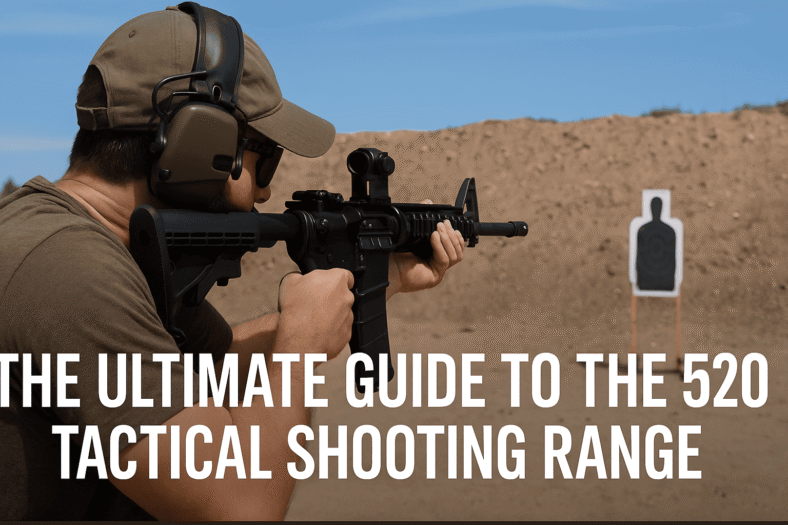
The Ultimate Guide to the 520 Tactical Shooting Range

Initiating an exhilarating voyage into the core of the marksmanship universe, the 520 Tactical Shooting Range serves as a magnet attracting enthusiasts across various expertise levels. Firstly, we peel back the numerous facets that establish this range as an exceptional haven for both novices and experienced sharpshooters. Subsequently, as you brace yourself to undertake a ballistic adventure, we invite you to delve deeper. Consequently, are you prepared to navigate through this riveting journey? Let’s proceed!

Section 1: The Genesis of 520 Tactical Shooting Range

Background History

A Brief Overview

Dive into the annals of history where the seeds of the 520 Tactical Shooting Range were sown. What inspired its inception? Let’s journey back in time to uncover the events that sparked the birth of this sanctuary for shooting aficionados.

Leaders in the Making

Embarking on a journey through time, we first encounter the innovative visionaries and pioneering minds who transformed a mere dream into a venerated reality. Initially beginning with rough sketches and blueprints, we gradually transition to the grand unveilings, a testament to their unwavering dedication and ingenuity. Along this journey, we will delve into the significant milestones that have punctuated the remarkable growth of this esteemed establishment.

The Evolution over the Years

Upgrades and Enhancements

Experience, first-hand, a facility that is continually evolving, seamlessly incorporating the latest technologies and methodologies to offer an unparalleled experience. Initially equipped with state-of-the-art facilities, it has now embraced revamped ranges, guiding visitors on a transformative journey that showcases the various developments that have molded the facility’s present grandeur. Moreover, this ever-adapting center stands as a testimony to the perfect amalgamation of tradition and innovation, ensuring a dynamic and superior experience with each visit.

Testimonials: Stories from Veterans

Hear the resonant voices of veterans who have witnessed the transformation firsthand. Glean insights from personal narratives that paint a vivid picture of the growth and expansion of the range over the years.

Section 2: The Facilities

The Ranges

Indoor Ranges

Venture first into the realm of indoor ranges, where sophistication seamlessly merges with functionality. Subsequently, immerse yourself in the nuanced features that ensure a controlled and pristine environment, thereby facilitating precision and the honing of skills.

Outdoor Ranges

Experience the breathtaking outdoor ranges, where nature and technology harmonize to create a one-of-a-kind shooting backdrop. We’ll explore the meticulously crafted zones that offer both challenge and exhilaration.

Amenities and Services

Pro Shop: A Shopper’s Delight

Commence your journey with a shopping spree in a sanctuary brimming with the choicest equipment and gear. Initially, explore beginner kits that offer a solid foundation for newcomers. Subsequently, as you advance, uncover an extensive selection that caters to all levels of expertise, ensuring every need is met seamlessly.

The 520 Café: Refueling Station

After honing your skills, it’s time to refuel. Discover the culinary delights awaiting at the 520 Café, where gastronomy meets the camaraderie of the shooting community.

Section 3: Training and Events

Training Programs

Beginner’s Guide

Embarking on your shooting journey? Discover programs meticulously crafted to nurture novices into adept shooters. From safety protocols to basic techniques, we lay the foundation for a promising shooting career.

Advanced Training: Hone Your Skills

For the seasoned aficionados, the journey of perfection never ceases. Uncover the advanced training regimes that promise to elevate your skillset to new heights.

Events and Competitions

Annual Championships

Explore the grandeur of the annual championships, where passion meets competition. From preparation to execution, get an insider’s view of the events that have become the hallmark of the range.

Community Events: Bonding Over Bullets

Discover the community events fostering unity and friendship. Whether it’s friendly competitions or festive celebrations, the range is a melting pot of vibrant community activities.

Conclusion

The Shooting Oasis

A Recap

As we conclude, let’s revisit the vibrant journey traversed. A recap that resonates with the pulsating heart of the 520 Tactical Shooting Range, a sanctuary where camaraderie meets passion.

Looking Ahead: The Future Prospects

What does the future hold for this illustrious range? From prospective expansions to technology integrations, delve into the roadmap charting the path of future glory.

FAQs

  1. What sets the 520 Tactical Shooting Range apart from others?Answer: A rich history, continuous advancements, comprehensive training programs, and a vibrant community make the 520 Tactical Shooting Range a unique and unparalleled destination for shooting enthusiasts.
  2. What kind of training programs are available?Answer: A diverse spectrum of training programs await, ranging from beginner-friendly courses to advanced skill enhancement sessions, ensuring a learning curve that is both challenging and rewarding.
  3. What facilities are available at the range?Answer: The range showcases well-furnished indoor and outdoor shooting arenas, a well-stocked Pro Shop offering the latest gear and accessories, and the 520 Café, a gastronomic retreat to unwind and share tales over delightful meals.
  4. Are there community events organized at the range?Answer: Absolutely! The range prides itself on hosting a vibrant array of community events, fostering unity and camaraderie amongst enthusiasts through friendly competitions, festivals, and social gatherings.
  5. What does the future entail for the 520 Tactical Shooting Range?Answer: The future shines bright with prospects of further expansions, technological integrations, and an ever-evolving array of events and competitions, promising an enriched and dynamic experience for years to come.

Sporting Clay Shooting Tips: A Comprehensive Guide to Mastering the Sport

Sporting clay shooting is more than a mere test of skill; it’s a pulse-quickening adventure that intricately weaves together technique, precision, and strategy. Embark on an enriching journey through the subtleties of this enthralling activity with our “Sporting Clay Shooting Tips” guide. Whether you are a budding enthusiast keen to grasp the basics or a veteran shooter aiming to polish your abilities, this guide serves as your stepping stone to mastering the world of sporting clay shooting. Ready to give it a try? Let’s delve in!

Table of contents

Sporting Clay Shooting Tips: Getting Started

A Brief Dive into the History of Sporting Clays

  • Origin and Evolution
    • Embarking initially on a journey through time, immerse yourself in the illustrious history and progression of sporting clays, an athletic pastime that first graced the early 20th century. Subsequently, unravel the fascinating narrative of its exponential growth and transformation spanning numerous decades.
  • Comparing with Other Shooting Sports
    • Discover the unique aspects that differentiate sporting clays from other shooting disciplines such as trap and skeet shooting.
  • The Importance of Safety
    • Recognizing the critical importance of safety in the sport is an initial step. Furthermore, adhering to established guidelines from equipment handling to shooting protocols is paramount. Consequently, this ensures a secure and enjoyable experience for all participants.

The Essential Gear

  • Selecting the Right Firearm
    • Navigating Through the Selection: A Step-by-Step Guide to Finding Your Ideal Shotgun Suited to Your Unique Style and Preferences.
    • Tips for maintaining and storing your firearm to ensure longevity and performance.
  • Understanding Ammunition
    • Delving deeply into the varied assortment of ammunition available, it is crucial to skillfully select the appropriate type that precisely aligns with your shooting necessities.
    • Tips for storing ammunition safely and effectively.
  • Choosing the Right Attire and Protective Gear
    • Guidance on selecting attire that offers comfort and protection.
    • Essential protective gear, including eyewear and hearing protection, to safeguard you during shooting.

Sporting Clay Shooting Tips: The Shooting Environment

  • Different Types of Shooting Ranges
    • Delving into the diverse landscape of shooting ranges, one can swiftly recognize the multitude of offerings available. Initially, one might notice the different environments these facilities boast, from indoor settings to expansive outdoor spaces. Moreover, each range presents a unique set of amenities and equipment, catering to both novices and seasoned professionals. Furthermore, visitors can anticipate personalized experiences, with a range of programs and training sessions designed to enhance skills and knowledge. Ultimately, by exploring the various shooting ranges available, individuals can find a venue that aligns with their specific preferences and needs.
    • Tips for selecting the right range for your skill level and shooting goals.
  • A Closer Look at Different Types of Targets
    • Understanding the diverse range of targets used in sporting clays and strategies to tackle each.
    • Tips for improving accuracy and precision when shooting different targets.
  • Understanding the Courses
    • Navigating through the various courses, it becomes evident that each one presents its own unique blend of challenges and excitement. Initially, one may notice the nuanced difficulties inherent to each course, gradually unveiling the depths of engagement they offer. Furthermore, as you delve deeper, the exhilaration accompanying each course becomes increasingly apparent, promising not only a test of skills but also an invigorating experience. Consequently, as you explore each course more thoroughly, you will be greeted with a harmonious blend of both challenge and excitement that caters to a wide range of preferences and abilities.
    • Tips for navigating courses and strategies to enhance your shooting experience.

Honing Your Skills

The Basics of Stance and Grip

  • Finding the Perfect Stance
    • To begin with, achieving a stable and comfortable stance is crucial when it comes to enhancing accuracy. Furthermore, adopting the appropriate stance can play a significant role in reducing fatigue over time. Consequently, following expert guidance on this matter can not only facilitate improved precision but also promote a more comfortable and fatigue-resistant experience.
    • Tips for adjusting your stance to suit different shooting situations.
  • Mastering the Grip
    • Firstly, to enhance control and accuracy, it’s essential to master certain techniques. Furthermore, incorporating specific tips will allow you to achieve a grip that is both firm and relaxed.
    • Insights into the role of grip in achieving successful shots.
  • Balancing Art
    • Exploring the art of balance and its role in achieving precise and accurate shots.
    • Exercises and practices to enhance your balance and stability during shooting.

Techniques for Achieving the Perfect Shot

  • Aiming Techniques
    • Transitioning from one aiming technique to another, embark on a journey of exploration to unearth the method that resonates most with your personal style.
    • Tips for improving your aiming skills and achieving better shot accuracy.
  • Trigger Discipline
    • Delving deeply into the nuances of trigger discipline, it is evident that cultivating this skill can significantly bolster both control and precision.
    • Tips for developing a smooth and controlled trigger pull for successful shots.
  • The Follow-Through
    • Understanding the importance of follow-through in achieving accurate and successful shots.
    • Tips for mastering the follow-through for improved shooting performance.

Advanced Techniques for Seasoned Shooters

  • Reading the Targets
    • Strategies for effectively reading targets and predicting their trajectory for successful shots.
    • Tips for enhancing your target reading skills through practice and experience.
  • Mastering Timing and Rhythm
    • Techniques for developing a sense of timing and rhythm to enhance your shooting performance.
    • Tips for adapting to different shooting scenarios and achieving successful shots.
  • Adapting to Different Ranges and Courses
    • Strategies for adapting to different ranges and courses to enhance your shooting experience.
    • Tips for navigating diverse courses and achieving success in different shooting environments.

Sporting Clay Shooting Tips: Beyond the Basics

Training and Practice

  • Developing a Training Routine
    • Guidance on establishing a training routine that helps you hone your skills effectively.
    • Tips for selecting training drills that suit your skill level and shooting goals.
  • Simulated Game Shooting
    • An exploration of simulated game shooting and its benefits in enhancing your real-world shooting skills.
    • Tips for making the most of simulated game shooting experiences.
  • Developing a Competitive Edge
    • Strategies for developing a competitive edge in the world of sporting clays.
    • Tips for staying ahead of the competition and achieving success in tournaments and competitions.

Mental Preparation

  • Building Mental Resilience
    • Insights into developing mental resilience to handle the pressures and challenges of the sport.
    • Tips for enhancing focus and concentration for improved performance.
  • Handling Pressure Effectively
    • Strategies for effectively handling pressure during competitions and high-stake situations.
    • Tips for staying calm and focused under pressure to achieve successful shots.
  • Enhancing Focus and Concentration
    • Techniques for enhancing focus and concentration to improve your shooting performance.
    • Tips for developing a mental routine that helps you stay focused and achieve success.

Engaging with the Community

  • Joining Clubs and Communities
    • Guidance on finding and joining clubs and communities that align with your interests and goals.
    • Tips for making the most of your membership in clubs and communities.
  • Participating in Tournaments
    • Insights into the world of sporting clay tournaments and how to participate successfully.
    • Tips for preparing for tournaments and achieving success on the big stage.
  • Networking and Mentorship
    • Strategies for networking with other enthusiasts and finding mentors to guide you in your journey.
    • Tips for making the most of mentorship opportunities to enhance your skills and knowledge.

Conclusion

As we draw to a close on our detailed exploration of the fascinating world of sporting clay shooting, we hope you are equipped with a robust arsenal of tips and techniques to elevate your game. The path to mastery is a thrilling one, filled with challenges and opportunities to learn and grow. Armed with this comprehensive guide, you are well on your way to becoming a master of the sport. Remember, the journey is as important as the destination. Ready, aim, fire!

FAQ

Most Asked Question

  1. What is the best shotgun for sporting clays?
    • Answer: The best shotgun largely depends on personal preference, but renowned brands like Beretta, Browning, and Remington are popular choices. You should consider factors like weight, balance, and fit when choosing a shotgun.
  2. How can I improve my aim in clay shooting?
    • Answer: Improving your aim involves regular practice, understanding the trajectory of clays, and mastering the art of leading. Consider working with an experienced instructor to get personalized advice and guidance.
  3. What should I wear to a clay shooting range?
    • Answer: When going to a clay shooting range, wear comfortable, weather-appropriate attire, and don’t forget protective gear such as shooting glasses and ear protection. A hat with a brim and sturdy shoes are also recommended.
  4. How do I get involved in competitive clay shooting?
    • Answer: To get involved in competitive clay shooting, start by joining local shooting clubs or communities. Participate in tournaments, even at a novice level, and network with experienced shooters to learn and grow in the sport.
  5. What are the benefits of engaging in sporting clay shooting?
    • Answer: Engaging in sporting clay shooting offers numerous benefits including enhanced focus, improved hand-eye coordination, and the thrill of mastering a challenging skill. It’s also a great way to socialize and connect with a community of like-minded enthusiasts.

Other Asked Question

  1. What types of exercises can enhance my shooting performance?
    • Answer: Incorporating exercises that enhance core strength, stability, and flexibility can be beneficial. Practices like yoga, Pilates, and regular cardiovascular exercises can contribute to better performance in the field.
  2. How can I find clubs or communities near me?
    • Answer: Finding clubs or communities near you can be done through online directories, social media groups, or by getting in touch with established organizations in the field of sporting clays. Local gun ranges may also have information on clubs and communities in your area.
  3. Can beginners enter competitions?
    • Answer: Absolutely, many competitions have categories for beginners or novice shooters. It’s a great way to gain experience, learn from seasoned shooters, and enjoy the thrill of competition.
  4. What is the role of a mentor in sporting clay shooting?
    • Answer: A mentor can guide you in honing your skills, provide valuable insights and tips, and help you navigate the complexities of the sport. They can be a source of encouragement and motivation as you progress in your journey.
  5. Are there courses or certifications for sporting clay shooting?
    • Answer: Yes, there are courses and certifications that provide structured training and education in sporting clay shooting. These can be valuable resources for those looking to deepen their knowledge and skills in the sport.

Safety Rules for Firearms: A Comprehensive Guide for Responsible Ownership

Given the ‘Safety Rules for Firearms,’ the undeniable impact of guns is evident. They play pivotal roles in security, sports, and tragically, in adverse events as well. This underlines the essentiality of mastering and implementing core safety measures.

Table of contents

1. The Golden Rule: Always Treat Every Firearm as Loaded

The ‘Why’ Behind the Rule

Firearms, by design, are meant to project force. Treating every gun as loaded ensures you always approach them with the respect and caution they command.

Complacency: A Dangerous Foe

Over time, the lines between a loaded and unloaded firearm can blur in the mind of an owner. This breeds negligence. Always counteract this tendency by reinforcing this golden rule.

Lessons from Tragedy

Real-life incidents have repeatedly shown the dire consequences of ignoring this rule. From accidents at home to mishaps at ranges, the evidence is clear: assumption is a deadly oversight.

2. Muzzle Discipline: Point Only Where You Intend to Shoot

The Cruciality of Aiming

Intention is everything. Wherever the muzzle points, potential destruction can follow. Ensure that direction is always intentional and safe.

Accidental Targets & Surrounding Awareness

Beyond your target, what lies in the background? Are there potential risks or unintended targets? Always be hyper-aware of your surroundings.

Tales of Unintended Discharge

The media is replete with stories of stray bullets causing collateral damage. It’s a sobering reminder of the responsibilities tied to muzzle direction.

3. Finger Off the Trigger: The Last Line of Defense

The Trigger’s Power

The trigger is the final gateway to a firearm’s function. Keeping fingers off it until ready to shoot is paramount.

Human Reflexes & Unexpected Dangers

Surprise, fear, or even a simple stumble can cause an involuntary squeeze of the hand. If your finger is on the trigger, that reflex can be disastrous.

Safety Mechanisms are Secondary

Relying solely on a gun’s safety mechanism is a mistake. Mechanical devices can fail. Your behavior should be the primary safety feature.

4. Maintenance & Storage: The Unsung Pillars of Safety

Regular Maintenance: Beyond Functionality

Regularly cleaning and inspecting your firearm not only ensures its longevity but also its safe operation. A malfunctioning firearm is unpredictable and dangerous.

Secure Storage: Safeguarding Against Unauthorized Access

Guns should be stored securely, away from children and unauthorized users. Investing in a good safe or lock is an investment in safety.

Ammunition Storage: Keeping Powder Dry and Separate

Storing ammunition separately reduces the chance of accidental discharge and also preserves the quality of the bullets.

5. Educate & Advocate: Spreading the Safety Message

Education: The First Step to Ownership

Before owning a firearm, education is vital. This encompasses not just rules but also hands-on training.

Advocacy: Creating a Culture of Safety

Gun owners have a responsibility to promote safety, ensuring that everyone in their circle understands and respects firearm rules.

Organizations & Resources

Several organizations, like the NRA, offer courses and resources on gun safety. Tap into these resources and constantly update your knowledge.


Conclusion

Under the umbrella of ‘Safety Rules for Firearms,’ a firearm, when held by a responsible owner, can serve as a tool for security, sport, or sustenance. The cornerstone of this is a foundation of knowledge, coupled with respect, and an unwavering commitment to safety.

FAQs

  1. Why are there so many rules for gun safety?
    • Firearms are powerful tools that can quickly become deadly if mishandled. Multiple layers of safety rules ensure every potential risk is addressed.
  2. Can a gun go off if dropped?
    • While modern firearms have safety mechanisms to prevent this, no mechanism is foolproof. It’s best to always handle firearms with care.
  3. How should children be educated about firearms?
    • Begin with a conversation about the potential dangers. If you own firearms, ensure they see them being stored and handled safely. For older children, consider formal safety training.
  4. What’s the most common cause of firearm accidents?
    • Complacency and lack of education are leading causes. Many incidents arise from the false belief that a gun is unloaded or from mishandling.
  5. Is it safe to store a loaded gun in a home?
    • For home defense, some choose to keep a firearm loaded. However, it must be stored in a way that prevents unauthorized access, especially from children.
Exit mobile version