How to Survive an Alligator Attack: Essential Safety Tips

Introduction

Alligator encounters, while rare, can be dangerous if not handled properly. Whether you’re living in or visiting areas where alligators are native, understanding how to minimize risks and react during an encounter can be life-saving. Here’s a comprehensive guide on how to survive an alligator attack.


1. Avoiding Alligator Encounters

1.1 Be Aware of Your Environment

  • Know Their Habitat: Alligators can be found in freshwater environments like ponds, marshes, and rivers. Always be vigilant when you are near these areas.

1.2 Avoid Water Edges

  • Stay Clear of Water: Alligators are ambush predators that can attack near the water’s edge. Avoid lingering at the shores of bodies of water and do not swim outside of designated swimming areas.

2. Prevention is Key

2.1 Do Not Feed Alligators

  • Avoid Attracting Attention: Feeding alligators can cause them to associate humans with food, increasing the danger of future encounters. It’s illegal in many places because it is so hazardous.

2.2 Keep Pets and Children Away

  • Extra Precaution: Keep pets on leashes and away from the water’s edge, and watch children closely when they are near water.

3. Recognizing Warning Signs

3.1 Alligator Behavior

  • Warning Signs: An alligator may hiss or open its mouth as a warning if you are too close. Recognizing these signs can give you time to back away safely.

4. If You Encounter an Alligator

4.1 Do Not Run Away

  • Walk Backwards Slowly: If you spot an alligator, do not turn your back or run. Alligators can run very fast over short distances. Instead, slowly back away until you are a safe distance from the alligator.

4.2 If Attacked, Fight Back

  • Target Sensitive Areas: If an alligator makes contact, fight back by hitting or poking it in the eyes or snout. These are sensitive areas, and your resistance might make the alligator release you and retreat.

5. After an Encounter

5.1 Seek Immediate Medical Attention

  • Treat Injuries: Alligator bites can cause serious injuries and infections. Even minor injuries should be treated by a healthcare professional as soon as possible.

5.2 Report the Encounter

  • Inform Authorities: Always report any aggressive alligator encounters to wildlife officials. This helps manage potentially dangerous animals and prevent future incidents.

6. Educating Yourself and Others

6.1 Learning About Alligator Biology and Behavior

  • Understanding Alligators: Educate yourself about alligator biology, behavior, and ecology. Knowing how these animals behave and react in their natural habitat can help you make informed decisions when you’re in or near their environments.

6.2 Community Education

  • Spreading Knowledge: Share knowledge about alligator safety with family, friends, and community members, especially those new to areas where alligators are common. Community education can dramatically reduce the likelihood of dangerous encounters.

7. Safe Fishing Practices

7.1 Be Cautious When Fishing

  • Avoid Attracting Alligators: Be mindful when cleaning fish or disposing of fish remains. Alligators are attracted to easy food sources. Dispose of fish scraps in designated disposal sites, not in the water.

7.2 Use Elevated Platforms

  • Elevated Fishing Locations: When possible, fish from piers or other elevated structures. These locations can reduce the risk of encountering alligators while fishing near their habitats.

8. Camping Near Alligator Habitats

8.1 Campsite Selection

  • Choose Safe Locations: When camping near bodies of water known to host alligators, select campsites at a safe distance from the water’s edge. Avoid areas with signs of alligator activity such as slides or tracks.

8.2 Secure Food and Garbage

  • Avoid Attracting Wildlife: Secure food and garbage at night or when not attended. Unsecured food can attract alligators and other wildlife to your campsite.

9. Handling an Injured Alligator

9.1 Do Not Approach

  • Safety First: Never attempt to approach or handle an injured alligator. An injured animal can be unpredictable and more dangerous.

9.2 Contact Wildlife Authorities

  • Professional Assistance: If you encounter an injured alligator, contact local wildlife authorities. Trained professionals can handle the situation more safely and appropriately.

10. Advocating for Alligator Conservation

10.1 Support Conservation Efforts

  • Promoting Healthy Populations: Support local and national conservation efforts that aim to preserve alligator habitats and maintain healthy alligator populations. Healthy ecosystems contribute to natural alligator behavior, reducing negative interactions with humans.

10.2 Participate in Conservation Programs

  • Active Involvement: Participate in programs that protect alligator habitats or promote human-wildlife coexistence. Your involvement can make a significant difference in the management and conservation of these powerful creatures.

Conclusion

Understanding how to avoid and react to alligator encounters is crucial for anyone living in or visiting their habitats. By taking preventive measures and knowing how to react during an encounter, you can greatly increase your chances of safely coexisting with these ancient reptiles.


Frequently Asked Questions (FAQs)

What time of day are alligators most active?

  • Alligators are typically most active between dusk and dawn, so it is best to avoid being near water during these times.

Can alligators climb fences or walls?

  • Alligators are poor climbers, but they can reach up if the barrier is too low. Ensure that fences around bodies of water are at least 4-5 feet high with no substantial gaps at the bottom.

Is it safe to swim in waters where alligators live?

  • Swimming in designated swimming areas during daylight hours is generally safe. Always adhere to local wildlife advisories and avoid swimming in areas known to have large alligator populations.

How do I teach children about alligator safety?

  • Educate children about the importance of keeping a distance from all water bodies in alligator territories, never feeding wildlife, and always having an adult present. Interactive educational tools, such as books and videos, can also help make the learning process engaging and effective.

What should I do if an alligator approaches my boat?

  • Remain calm, keep your limbs inside the boat, and slowly move away from the alligator if possible. Do not attempt to touch or feed the alligator, as this can provoke aggressive behavior.

Can alligators recognize human behavior?

  • Alligators may become accustomed to human presence, especially if they are regularly fed by people. This can lead them to associate humans with food, potentially leading to more aggressive behavior. Always maintain a safe and respectful distance to discourage this association.

How to Survive a Mountain Lion Attack: Essential Safety Tips

Introduction

Encountering a mountain lion in the wild is a rare but potentially dangerous situation. These powerful predators, also known as cougars or pumas, are generally elusive, but if you spend time in their habitats, knowing how to respond during an encounter is crucial. This guide provides essential tips to increase your chances of safely handling a mountain lion encounter.


1. Prevention and Awareness

1.1 Understanding Mountain Lion Behavior

  • Territorial Nature: Mountain lions are territorial animals. Understanding their behavior can help you avoid inadvertently threatening them.

1.2 Hiking in Groups

  • Safety in Numbers: Always hike in groups when you are in mountain lion territory. Mountain lions are less likely to approach groups.

2. Making Yourself Less Appealing

2.1 Do Not Run

  • Triggering Chase: Running may trigger a mountain lion’s instinct to chase. Instead, stand tall and maintain eye contact.

2.2 Make Yourself Big

  • Intimidation Tactics: Raise your arms or open your jacket wide to appear larger. The goal is to make yourself seem like a less appealing target.

3. Defensive Actions

3.1 Maintain Eye Contact

  • Assert Dominance: Do not turn your back or look away from the mountain lion. Maintaining eye contact shows dominance.

3.2 Speak Loudly and Firmly

  • Use Your Voice: Speak in a loud, firm voice to further assert your presence and dominance. Avoid high-pitched sounds or screaming, which could trigger predatory instincts.

4. If the Encounter Escalates

4.1 Use Rocks or Sticks

  • Improvise Weapons: If available, throw rocks, branches, or whatever you can find without crouching down or turning away from the mountain lion.

4.2 Fight Back If Attacked

  • Last Resort: In the unlikely event of an attack, fight back. Use whatever objects are at hand and aim for the mountain lion’s face and eyes.

5. After an Encounter

5.1 Report the Encounter

  • Inform Authorities: Always report any encounters with mountain lions to local wildlife authorities. Reporting can help manage potentially dangerous wildlife behavior and aid in public safety measures.

5.2 Review and Reflect

  • Learn from the Experience: Review what happened during the encounter to understand how you might improve your response in future situations.

6. Choosing Safe Campsites

6.1 Selecting a Location

  • Avoid Dense Cover: Choose campsites away from thick brush or dense cover, which are preferred hiding spots for mountain lions. Open areas with good visibility can reduce the chances of a surprise encounter.

6.2 Keeping a Clean Camp

  • Reduce Attractants: Ensure that all food items, toiletries, and garbage are stored in bear-proof containers or hung between trees at a height. The scent of these items can attract mountain lions indirectly by attracting smaller wildlife, which are prey for these predators.

7. Traveling with Children and Pets

7.1 Extra Precautions

  • Keep Close: Always keep children within sight and close by. Do not let them wander off or play in mountain lion territory without supervision. Teach them what to do if they ever see a mountain lion.

7.2 Pet Safety

  • On Leash: Keep pets on a leash. Roaming pets can attract mountain lions and may lead them back to you.

8. Understanding Mountain Lion Tracks and Signs

8.1 Identifying Signs

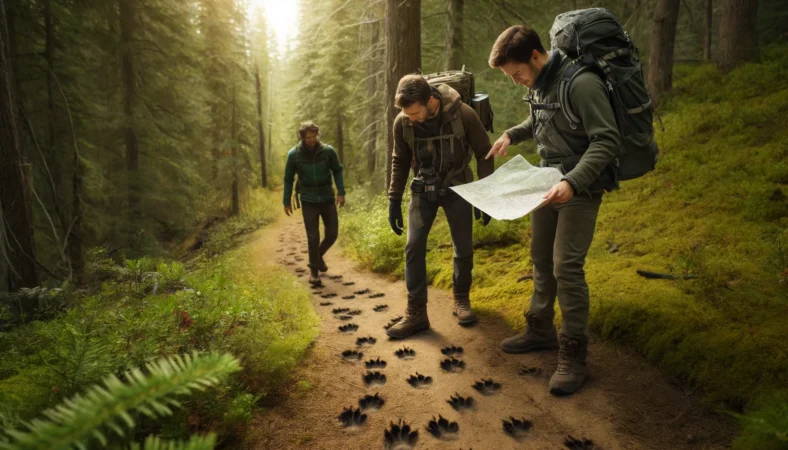
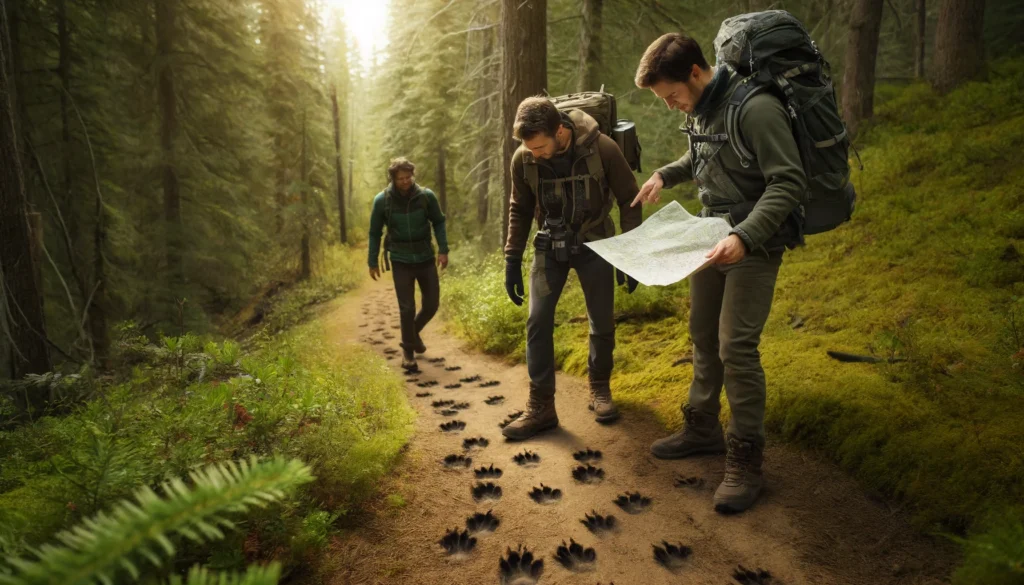
  • Learn to Recognize Tracks: Mountain lion tracks are generally round with no claw marks, as their claws are retractable. Learning to recognize these tracks and signs of scat or scratch marks on trees can alert you to mountain lion activity in the area.

8.2 Monitoring Wildlife Activity

  • Using Trail Cameras: In areas frequently used for hiking or camping, consider setting up trail cameras to monitor wildlife activity, including mountain lion movements. This can provide valuable information for avoiding encounters.

9. Legal Considerations and Wildlife Protection

9.1 Understanding Hunting Laws

  • Legal Restrictions: In many places, mountain lions are protected under local, state, or federal laws. Be aware of and respect all wildlife laws, which are designed to balance predator management and ecosystem health.

9.2 Promoting Conservation

  • Support Conservation Efforts: Engage in or support conservation programs that aim to protect mountain lion habitats and promote a healthy balance between human activities and wildlife.

10. Emergency Preparedness

10.1 First Aid Training

  • Be Prepared for Injuries: Basic first aid knowledge and a well-equipped first aid kit can be vital in the event of an attack or any injury in the wilderness. Consider taking a wilderness first aid course.

10.2 Emergency Communication

  • Plan for No Cell Service: In many remote areas, cell service may be unreliable. Carry a satellite phone, GPS beacon, or similar device to ensure you can call for help in an emergency.

Conclusion

While a mountain lion attack is unlikely, being prepared can significantly improve your safety and reaction in the event of an encounter. Remember, the key to dealing with wildlife encounters is to stay calm, make yourself appear less vulnerable, and take proactive measures to protect yourself and others.


Frequently Asked Questions (FAQs)

What should I do if I see a mountain lion from a distance?

  • Keep your distance and do not approach the animal. Try to back away slowly and safely, making sure the mountain lion has a clear escape route.

Can I hike safely in mountain lion territory?

  • Yes, hiking in mountain lion territory can be safe if you take precautions, stay alert, and follow the guidelines outlined above to avoid and handle encounters.

How can I avoid accidentally attracting mountain lions?

  • Keep food and garbage securely stored, especially at night. Avoid hiking or jogging at dawn, dusk, or night when mountain lions are most active.

How effective are pepper sprays in deterring mountain lion attacks?

  • Pepper spray, specifically designed for bears, can be effective against mountain lions at close range. Ensure it is easily accessible and you know how to use it under pressure.

What are the best practices for group hiking in mountain lion areas?

  • Stay together as a group, making noise as you move through trails to reduce the chances of surprising a mountain lion. Large groups are less likely to be attacked.

Why Earth Day Should Matter to Hunters: Conservation and Stewardship

Introduction

Earth Day serves as a global reminder of our collective responsibility to preserve and enhance the natural environment. For hunters, this day holds particular significance. Hunting is intimately connected to the health of ecosystems and wildlife populations, making Earth Day an opportunity to reflect on conservation practices and the role hunters play in environmental stewardship.


1. The Role of Hunters in Conservation

1.1 Funding Conservation Efforts

  • License Fees and Excise Taxes: Hunters contribute financially to conservation through hunting licenses, permits, and excise taxes on hunting gear. These funds are crucial for wildlife management and habitat conservation programs.

1.2 Habitat Restoration

  • Active Participation: Many hunters participate in habitat restoration projects, such as planting native vegetation, creating water sources, and controlling invasive species, which help sustain biodiversity.

2. Sustainable Hunting Practices

2.1 Population Control

  • Maintaining Balance: By adhering to regulated hunting seasons and bag limits, hunters help maintain healthy wildlife populations, preventing overpopulation and its negative impacts on habitats.

2.2 Ethical Hunting

  • Promoting Ethical Practices: Ethical hunting involves taking only what you need, ensuring a quick and humane kill, and using as much of the animal as possible. These practices minimize waste and respect the natural resources.

3. Education and Advocacy

3.1 Raising Awareness

  • Educational Outreach: Hunters often serve as educators and advocates for conservation, sharing knowledge about wildlife management and the importance of protecting natural habitats with the broader community.

3.2 Supporting Conservation Organizations

  • Engagement and Support: Many hunters support or are actively involved in wildlife conservation organizations, which play a critical role in protecting ecosystems and educating the public about the importance of conservation.

4. Hunters as Environmental Monitors

4.1 Observing Changes

  • Citizen Science: Hunters are often among the first to notice changes in wildlife populations and habitat conditions. They can provide valuable data to wildlife biologists and conservationists, aiding in early detection of environmental issues.

4.2 Advocating for Sustainable Practices

  • Policy Influence: Hunters can use their firsthand knowledge of environmental changes to advocate for sustainable land and wildlife management policies that benefit both the environment and the sport.

5. The Impact of Climate Change

5.1 Addressing the Effects

  • Adaptive Strategies: Hunters must adapt to changes brought by climate change, such as shifts in wildlife migration patterns and altered habitats, by supporting adaptive wildlife management strategies that ensure the sustainability of hunting practices.

5.2 Reducing Carbon Footprint

  • Environmental Responsibility: Hunters can lead by example by adopting practices that reduce their carbon footprint, such as using more fuel-efficient vehicles for hunting trips or investing in renewable energy sources.

6. Promoting Wildlife Conservation Initiatives

6.1 Support for Protected Areas

  • Advocacy for Expansion: Hunters can advocate for the establishment and expansion of protected areas that safeguard critical habitats and wildlife corridors, ensuring the survival of game and non-game species alike.

6.2 Participating in Wildlife Censuses

  • Data Collection: Participating in wildlife censuses and other scientific surveys can help manage animal populations more effectively, providing crucial data that informs sustainable hunting and conservation policies.

7. Cultivating a Culture of Respect

7.1 Respecting Wildlife and Nature

  • Cultural Shift: Promote a culture that respects wildlife and natural resources among hunters and the broader community. This respect fosters a deeper appreciation for the environment and motivates more people to engage in conservation efforts.

7.2 Role Modeling

  • Leading by Example: Hunters can lead by example by demonstrating responsible behaviors and practices that prioritize ecosystem health and animal welfare. This leadership can inspire new generations of hunters and conservationists.

8. Enhancing Local Economies

8.1 Economic Benefits of Conservation

  • Boosting Local Economies: By supporting habitats that attract diverse species, conservation efforts can boost local economies through eco-tourism and hunting tourism, providing financial incentives to preserve and expand natural areas.

8.2 Investment in Research and Development

  • Funding Conservation Research: Hunters can contribute to or fund research that develops new methods or technologies for sustainable hunting and wildlife management, helping to advance conservation science.

9. Fostering Collaborative Efforts

9.1 Partnerships with Conservation Groups

  • Building Alliances: By forming partnerships with conservation groups, government agencies, and other stakeholders, hunters can help create more effective and comprehensive conservation strategies.

9.2 Community-Based Conservation

  • Engagement in Local Initiatives: Hunters can play a significant role in community-based conservation initiatives, which often require the buy-in and participation of local populations to succeed.

10. Commitment to Continuous Education

10.1 Lifelong Learning

  • Ongoing Education: Commit to continuous education on the latest wildlife management and conservation practices. Staying informed helps hunters adapt to evolving challenges and enhance their conservation efforts.

10.2 Public Education Campaigns

  • Spreading Knowledge: Engage in or support public education campaigns that raise awareness about the importance of biodiversity, the ecological benefits of well-managed hunter populations, and the critical role hunters play in conservation.

Conclusion

Earth Day underscores the vital connection between hunters and conservation. By embracing their role as stewards of the earth, hunters not only ensure the continuation of their sport but also contribute to the broader goal of environmental preservation. This day serves as a reminder of the importance of sustainable practices and the impact individuals can have on global conservation efforts.


Frequently Asked Questions (FAQs)

Why is biodiversity important to hunters?

  • Biodiversity ensures the health and stability of ecosystems, which support robust wildlife populations necessary for hunting. Diverse habitats support a variety of game species, enhancing hunting opportunities and experiences.

How can hunters participate in Earth Day?

  • Hunters can engage in local cleanup events, habitat restoration projects, or educational programs to teach others about the role of ethical hunting in conservation. Participation in Earth Day activities reinforces the commitment to sustainability and conservation.

What are the long-term benefits of conservation-minded hunting?

  • Long-term benefits include sustained wildlife populations, healthier ecosystems, and secured hunting opportunities for future generations. Conservation-minded practices ensure that natural resources are managed responsibly and remain abundant.

Can hunters really make a difference in conservation?

  • Absolutely. Hunters are often on the front lines of conservation, significantly impacting wildlife management and habitat preservation through their actions and financial contributions.

What can young hunters learn from Earth Day?

  • Young hunters can learn the importance of environmental stewardship and the ethical responsibilities that come with hunting. Earth Day provides a platform to educate them on sustainable practices and the role of hunters in maintaining ecological balance.

How can non-hunters support conservation efforts on Earth Day?

  • Non-hunters can support conservation efforts by participating in local clean-ups, learning about and advocating for wildlife conservation, and supporting policies that protect natural habitats and biodiversity.

Top 7 Best Airsoft Snipers For the Budget

Airsoft sniping is an exhilarating aspect of airsoft sports that combines precision, patience, and skill. For many enthusiasts, finding the right best airsoft snipers rifle is a gateway to mastering the art of long-range shooting.

However, for budget-conscious enthusiasts, it’s crucial to find a model that offers the best value without compromising on performance. In this article, we’ll explore the top 7 best airsoft snipers that won’t break the bank.

What Are Airsoft Snipers?

Airsoft snipers are specialized airsoft guns designed for long-range shooting. They are typically equipped with high-precision barrels and powerful springs to achieve greater accuracy and range compared to standard airsoft rifles.

Importance of Precision and Range in Sniping

Precision and range are the heartbeats of successful airsoft sniping. A good sniper rifle must be capable of hitting targets at long distances with minimal shots, making these features paramount, especially for players who participate in competitive and tactical airsoft matches.

Key Features of Budget Airsoft Snipers

Accuracy and Range

For a budget airsoft sniper, maintaining high accuracy and an effective range is essential. These features ensure that the player can compete on equal footing with opponents wielding more expensive gear.

Build Quality and Durability

Durability is crucial as it determines how well the rifle will hold up in various playing conditions. A well-built sniper rifle can withstand the rigors of frequent use, which is particularly important for players who participate in regular matches.

Upgradeability

Many budget snipers come with basic setups that are highly upgradeable. This allows players to enhance their rifles as their skills improve or as funds become available, making it a practical long-term investment.

Top 7 Best Budget Airsoft Snipers

Here are the top 7 budget-friendly airsoft snipers that offer the best balance between cost and performance:

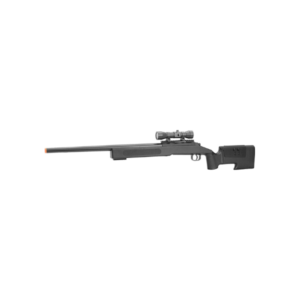
1.The BBTac Airsoft Sniper Rifle M62

The BBTac Airsoft Sniper Rifle M62 is a bolt action, powerful spring airsoft gun designed to provide high performance in airsoft skirmishes. It shoots 0.20g BBs with high power, ensuring a strong presence on the field.

The rifle is constructed from ABS polymer, enhancing its durability while maintaining a light weight of 4 pounds. It features a precision-made barrel for increased accuracy and a fast-loading clip system for efficient reloading during battles.

The realistic bolt action mechanism adds to the authenticity of the sniping experience.

This rifle is a good choice for those looking for a budget-friendly airsoft sniper rifle that offers a balance of performance, realism, and durability. It’s particularly suitable for beginners to intermediate players in airsoft sniping.

Pros

  • Durable
  • Reliable under various conditions
  • Great value

Cons

  • Heavier than some models

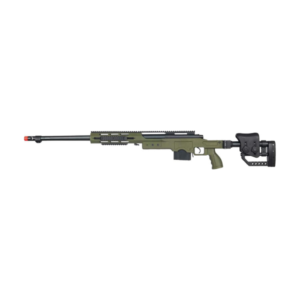
2.MB4411G Bolt Action Spring Sniper Rifle (OD)

The Well MB4411G Bolt Action Sniper Rifle is a formidable choice for airsoft enthusiasts seeking a high-performance, spring-powered sniper rifle.

Inspired by the L96 sniper model, this rifle features a fluted metal outer barrel and a polymer body equipped with a quad rail system for attaching tactical accessories.

It comes with a foldable stock that includes an adjustable cheek riser, enhancing comfort for long-distance shooting. The ergonomic pistol grip is designed for optimal handling and comfort. The sniper does not come with an optic, allowing users to customize their scope choice.

The Well MB4411G is an excellent choice for serious airsoft players who value precision and reliability in their sniper rifle and are willing to invest in a high-powered, well-built model.

Its heavy, solid construction and high customizability make it a versatile and formidable weapon in airsoft sniping.

Pros

  • Includes accessories
  • Easy to upgrade

Cons

  • Initial calibration may be needed

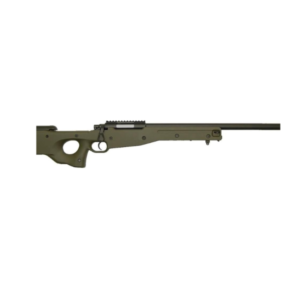
3.L96 AWP Spring Airsoft Sniper Gun OD

The L96 AWP Spring Airsoft Sniper Gun is a replica of the iconic L96 sniper rifle, renowned for its use in military and tactical applications.

This airsoft version is designed for precision shooting in airsoft sports, featuring a spring-powered mechanism that ensures reliable performance and consistency.

The sniper gun is often praised for its accuracy and long-range capabilities, making it a popular choice among airsoft enthusiasts. It usually comes in an olive drab (OD) color, which adds to its military aesthetic.

The L96 AWP Spring Airsoft Sniper Gun is an excellent choice for players who enjoy the role of a sniper in airsoft games and appreciate the blend of realism and performance.

Its design and capabilities make it ideal for those looking for an authentic and effective long-range airsoft rifle.

Pros

  • Superior range
  • Excellent in competitive settings

Cons

  • Basic stock scope

4. L96 AWP Spring Airsoft Sniper Gun OD

The Double Eagle Field Marksman Bolt Action Spring Airsoft Sniper Rifle is designed for airsoft enthusiasts who value precision and reliability.

This model features a high-strength ABS polymer stock paired with a full metal barrel, bolt, and trigger, offering a robust construction and consistent performance. It achieves a velocity of 400-420 FPS with 0.20g BBs, making it one of the more powerful sniper rifles in the budget category.

The adjustable hop-up system allows for better accuracy and range customization, enhancing its effectiveness in various airsoft scenarios.

Overall, the Double Eagle Field Marksman Bolt Action Spring Airsoft Sniper Rifle is a solid choice for those entering the world of airsoft sniping.

It offers a good mix of performance, durability, and affordability, though it does require some additional investment in accessories and regular maintenance to ensure optimal performance.

Pros

  • Strong Performance
  • Durability

Cons

  • Scope and Accessories Not Included

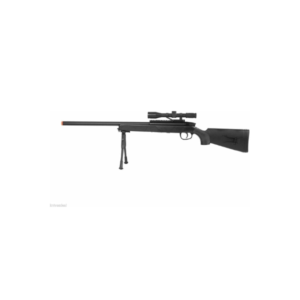
5.Zm51 Spring Airsoft Gun Sniper Rifle fps-400 w/bipod

The ZM51 Spring Airsoft Sniper Rifle is a full-scale replica designed for airsoft enthusiasts who appreciate a powerful and precise sniping experience. This spring-powered rifle boasts a powerful bolt action mechanism and achieves a velocity of 400 FPS when using 0.12g BBs.

It features heavy-duty ABS plastic construction along with a precision, one-piece aluminum barrel. The rifle is equipped with an integrated top R.I.S. rail, allowing for easy attachment of the included tactical accessories like a red dot scope and a folding bi-pod. The package also includes a speed loader and a gun sling, enhancing its value.

The ZM51 Spring Airsoft Sniper Rifle is an appealing choice for novice airsoft players and those on a budget, offering a complete package that allows for immediate field use.

Its powerful shooting capability and included accessories make it a compelling option, though upgrading certain components like the scope may be necessary for enhanced performance.

Pros

  • High Velocity
  • Accessories Included
  • Durable Construction

Cons

  • Regular maintenance is needed to ensure consistent performance

6. BBTacAirsoft Gun

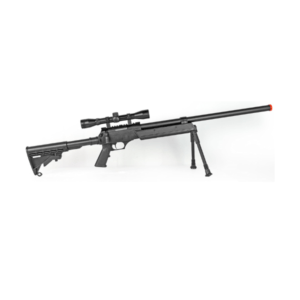
The BBTac Airsoft Gun is a comprehensive sniper rifle package that boasts high precision and power. It’s designed for serious airsoft enthusiasts looking for a reliable, ready-to-play solution.

This full-metal APS SR-2 modular bolt action sniper rifle comes with a robust spring-piston system, delivering an impressive 470 FPS using 0.2g BB pellets.

The package includes a 3-9×32 zoom scope for long-distance targeting and a metallic adjustable bipod for stable shooting. The rifle is built with a metal barrel and frame, ensuring durability and a realistic sniper experience.

This BBTac Airsoft Sniper Rifle is ideal for airsoft players who need a high-performance rifle with precision shooting capabilities for competitive scenarios.

Its comprehensive package is particularly appealing for those who want a significant upgrade from beginner or intermediate models.

Pros

  • High Precision and Power
  • Quality Scope Included
  • Durable Construction

Cons

  • Expensive than simpler airsoft guns
  • Plastic Components

7.UKARMS P1147 AK47 Tactical Airsoft Spring Rifle with Laser & Flashlight

The UKARMS P1147 AK47 Tactical Airsoft Spring Rifle is a 1:1 scale replica of the AK-47, designed for airsoft enthusiasts who appreciate the iconic look and feel of this legendary rifle.

It’s equipped with a laser sight and flashlight, enhancing functionality and playability in various lighting conditions. This model is manually operated, which means it does not require batteries, adding to its appeal for those who prefer the reliability of spring action.

The rifle is made with lightweight, durable materials, making it suitable for outdoor airsoft battles.

The UKARMS P1147 AK47 Tactical Airsoft Spring Rifle is a solid choice for those new to airsoft or younger players looking for a fun, straightforward airsoft gun with tactical features.

While it offers great aesthetics and additional accessories, its performance and durability are more suited to casual play rather than serious tactical airsoft engagements.

Pros

  • Authentic Design
  • Lightweight Construction Easy to handle
  • Cost-Effective

Cons

  • Lack of Upgradability

Conclusion

Choosing the right airsoft sniper rifle doesn’t have to be an expensive endeavor. With the right information and a clear understanding of your needs, you can select a budget-friendly model that offers great performance and potential for growth.

Hunting in the Fog: Strategies for Success and Safety

Introduction

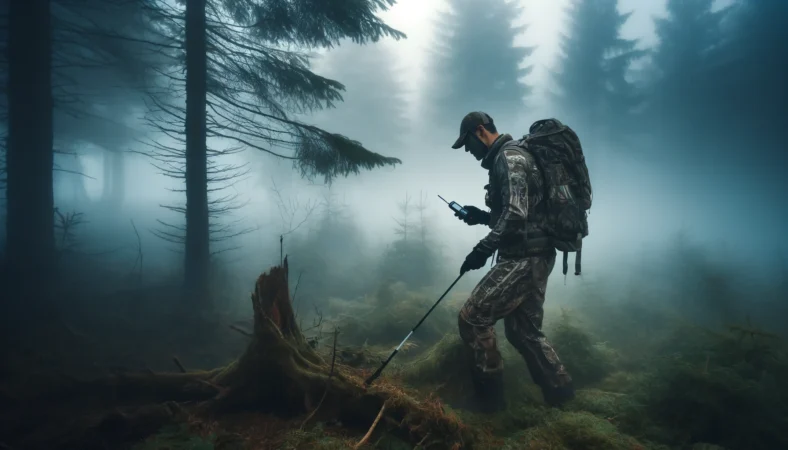
Hunting in foggy conditions presents unique challenges and opportunities for hunters. The reduced visibility can complicate navigation and targeting, but it can also provide cover, making it easier to approach game undetected. This guide will explore essential strategies for hunting effectively and safely in the fog.


1. Preparation and Planning

1.1 Check Weather Conditions

  • Understanding the Forecast: Before heading out, check the weather forecast to ensure you’re prepared for the expected conditions. Fog can change rapidly, so it’s important to stay informed.

1.2 Appropriate Gear

  • Visibility Aids: Use fog-rated scopes or red-dot sights that can help improve target acquisition in limited visibility. Also, carry a reliable GPS device and a compass to aid navigation when landmarks are obscured.

2. Safety Precautions

2.1 Stay Visible

  • Wear Reflective Clothing: To prevent accidents, especially if hunting in a group, wear high-visibility or reflective clothing that stands out against the fog.

2.2 Communicate Regularly

  • Check-ins: If hunting with others, maintain regular communication to keep track of each other’s locations and status. Use radios or smartphones to stay in contact.

3. Adjusting Hunting Techniques

3.1 Slower Movement

  • Stealth Approach: Move slowly and carefully. Fog can muffle sound, allowing you to approach game more closely than usual, but sudden movements can still startle wildlife.

3.2 Close-Range Hunting

  • Limit Shots to Visible Range: Only take shots at distances where you can clearly see and identify your target. This reduces the risk of mistaken targets and ensures a humane kill.

4. Navigation Skills

4.1 Use of Landmarks

  • Orienting Strategies: Familiarize yourself with the hunting area’s landmarks before the fog sets in. Use these fixed points to navigate and orient yourself when visibility decreases.

4.2 Advanced Navigation Tools

  • GPS and Mapping Apps: Utilize GPS devices and mapping apps that can help you track your position and plot safe routes in low visibility.

5. Enhancing Sensory Awareness

5.1 Listening Skills

  • Heightened Hearing: Pay close attention to sounds. In foggy conditions, sounds can help you locate game or navigate when visibility is poor.

5.2 Minimize Noise

  • Quiet Gear: Ensure your gear is quiet, securing anything that might clink or rustle, which could alert game to your presence.

6. Ethical Considerations

6.1 Responsible Hunting

  • Ethical Practices: Be extra cautious about target identification and backstop awareness. Fog can distort perception, making it crucial to be certain of your target and what’s beyond it.

6.2 Impact on Wildlife

  • Disturbance Minimization: Understand how your presence affects wildlife, especially under unusual conditions like fog. Minimize stress and disturbance to animals.

7. Legal and Regulatory Compliance

7.1 Adhering to Hunting Laws

  • Legal Requirements: Always ensure that your hunting methods and the tools you use comply with local hunting laws, which may have specific regulations about hunting in reduced visibility conditions like fog.

7.2 Area-Specific Regulations

  • Understanding Restrictions: Some areas might have specific restrictions or guidelines for hunting in fog, particularly concerning the use of firearms and the type of game allowed. Always check these details before planning your hunt.

8. Post-Hunt Practices

8.1 Effective Game Recovery

  • Tracking Techniques: In foggy conditions, tracking wounded game can be particularly challenging. It’s essential to mark the location and follow any signs meticulously. Using brightly colored marking tape can help in retracing steps and ensuring no game is lost.

8.2 Handling and Processing Game

  • Care and Hygiene: Process any harvested game as soon as possible to prevent spoilage, which can be accelerated by damp, foggy conditions. Ensure you’re carrying the necessary tools to do so efficiently and hygienically.

9. Personal Health and Comfort

9.1 Protecting Yourself from the Elements

  • Appropriate Clothing: Wear layers that can protect you from moisture while maintaining body warmth. Fog can be cold and damp, so water-resistant outer layers are advisable.

9.2 Managing Fatigue and Visibility

  • Rest and Eye Care: Hunting in fog can strain the eyes and increase fatigue due to heightened concentration. Take regular breaks, and if necessary, use eye drops to keep your vision clear and prevent discomfort.

10. Advanced Planning and Simulation

10.1 Scenario Planning

  • Anticipate Challenges: Consider all possible scenarios that could arise while hunting in fog, from losing your way to encountering other hunters. Plan your responses to these situations in advance.

10.2 Training and Simulations

  • Practice Runs: If possible, visit the hunting area prior to your actual hunt on a foggy day for a dry run. Practice navigating and locating landmarks to build confidence and familiarity with the environment.

Conclusion

Hunting in the fog requires careful preparation, acute awareness, and adaptation to the environment. By employing the strategies outlined above, hunters can enjoy successful outings that are both fruitful and safe. Remember, the key to fog hunting is patience, precision, and preparedness.


Frequently Asked Questions (FAQs)

How does fog affect the behavior of animals?

  • Animals may become more active during lighter fog conditions as it provides them with cover from predators, including humans.

What are the best types of firearms and ammunition for foggy conditions?

  • Opt for firearms with shorter range and higher precision. Use ammunition that performs well at shorter distances to ensure effective shots.

Can hunting dogs be helpful in fog?

  • Yes, well-trained hunting dogs can be invaluable in fog, using their keen sense of smell to track game when visual contact is limited.

Is it better to hunt alone or with a partner in fog?

  • Hunting with a partner is advisable in foggy conditions for safety reasons. Communication devices can help maintain contact if visibility becomes too restricted.

How can I improve my visibility without compromising stealth?

  • Using low-light optics like thermal or infrared scopes can improve visibility while maintaining stealth. However, ensure these are legal in your hunting area before use.

What first aid considerations should I take into account when hunting in fog?

  • Carry a well-equipped first aid kit tailored for both minor injuries and major emergencies. Given the reduced visibility, prepare for possible navigational mishaps or falls, which are more common in such conditions.

Optimal Shot Placement for Feral Hogs: A Hunter’s Guide

Introduction

Hunting feral hogs requires not only skill and patience but also a deep understanding of the animal’s anatomy to ensure ethical and effective shot placement. Feral hogs are resilient creatures with a tough hide and a strong skeletal structure, which can make them challenging targets. This guide provides insights into the most humane and efficient ways to target feral hogs to ensure a quick and ethical harvest.


1. Understanding Hog Anatomy

1.1 Vital Areas

  • Heart and Lungs: Located just behind the front leg and slightly lower in the chest, this area offers the most reliable shot for a quick and humane kill. Aiming here disrupts major blood vessels and both lungs, leading to a rapid decrease in oxygen and blood pressure.

1.2 Less Effective Targets

  • Head Shots: While lethal, headshots can be risky due to the hog’s small and mobile target area. Misses can result in non-lethal wounds, which are inhumane and can lead to prolonged suffering.

2. Preferred Firearms and Ammunition

2.1 Rifle Choices

  • High Caliber Rifles: For hogs, .270, .308, and .30-06 calibers are effective, providing enough power to penetrate the tough hide and reach vital organs.

2.2 Ammunition Types

  • Expanding Bullets: Soft-point or hollow-point bullets are recommended as they expand upon impact, maximizing internal damage while minimizing the risk of over-penetration.

3. Shot Placement Techniques

3.1 Broadside Shot

  • Optimal Angle: This is the most favorable shooting position, where the hog’s side is fully exposed to you. Aim for the heart-lung area just behind and above the front leg.

3.2 Quartering Away Shot

  • Angle Consideration: When the hog is facing away from you at an angle, aim for the heart-lung area from the side or slightly behind. This shot can allow the bullet to enter a larger area of vital organs.

4. Factors Affecting Shot Effectiveness

4.1 Distance and Accuracy

  • Manageable Ranges: The effectiveness of a shot diminishes with distance. It’s important to shoot within a range where you can maintain accuracy to hit the vital zones.

4.2 Animal Movement

  • Timing and Patience: Wait for the moment when the hog is calm and ideally positioned to increase the likelihood of a successful and ethical shot.

5. Ethical Considerations

5.1 Minimizing Suffering

  • Responsibility of the Hunter: Every hunter has a responsibility to ensure that their actions cause the least amount of suffering to the animal. This involves precise shot placement and being prepared to follow up with additional shots if necessary.

5.2 Respect for Wildlife

  • Conservation Awareness: Understanding the role of feral hogs in the ecosystem and their impact can help foster a respectful approach to hunting these animals.

6. Tracking and Recovery

6.1 Importance of Following Up

  • Ethical Duty: After taking a shot, it’s crucial to track the hog to ensure it is quickly recovered. Even well-placed shots can sometimes require tracking to find the animal.

6.2 Tracking Tips

  • Blood Trails: Learn to recognize and follow blood trails. Blood color and pattern can indicate the nature of the wound, helping you understand how far the animal might have traveled and how urgently you need to follow up.

7. Handling After the Kill

7.1 Field Dressing

  • Immediate Action: Begin field dressing as soon as possible to preserve the meat quality and prevent spoilage. Removing internal organs and cooling the body quickly is crucial, especially in warm climates.

7.2 Safe Handling

  • Hygiene and Safety: Use gloves while handling the carcass and ensure your tools are sanitized to prevent contamination. Be aware of zoonotic diseases that can be transmitted from feral hogs to humans.

8. Legal and Regulatory Compliance

8.1 Understanding Local Laws

  • Hunting Regulations: Make sure you are familiar with local hunting laws, including seasons, licensing requirements, and bag limits. This information is crucial to ensure that your hunting activities are legal and regulated.

8.2 Reporting Harvests

  • Contribution to Conservation: Some regions require hunters to report their harvests, which helps wildlife officials manage populations and study wildlife health. Participating in these efforts supports sustainable hunting practices.

9. Enhancing Skills with Advanced Techniques

9.1 Long-Range Shooting

  • Skill Development: For hunters interested in long-range shooting, investing time in learning about ballistics, wind reading, and advanced optics can enhance accuracy over greater distances.

9.2 Using Technology

  • Modern Aids: Consider using technological aids like ballistic calculators, thermal imaging scopes, and GPS devices to enhance your hunting efficiency and effectiveness.

10. Community Engagement and Education

10.1 Joining Hunting Groups

  • Shared Knowledge: Participate in local or online hunting communities to exchange knowledge, learn from experienced hunters, and stay updated on the latest hunting strategies and conservation news.

10.2 Educating Others

  • Promoting Responsible Hunting: Share your knowledge and experiences with new hunters or the general public to promote ethical hunting practices and a positive understanding of the role of hunting in conservation.

Conclusion

Successful feral hog hunting relies on precise shot placement, appropriate equipment, and an ethical approach to wildlife. By focusing on the vital areas and using the right firearms and ammunition, hunters can achieve quick, humane kills, minimizing the suffering of the animal and ensuring respect for the natural world.


Frequently Asked Questions (FAQs)

What should I do if I’m unsure about a shot?

  • If you’re unsure about making a clean shot, it’s better to wait for a better opportunity than to risk wounding the animal.

How can I practice for better accuracy?

  • Regular target practice under various conditions can improve your shooting skills. Additionally, using a shooting simulator or engaging in field shooting exercises can help simulate hunting scenarios.

How do I deal with variable wind conditions when shooting?

  • Practice shooting in various wind conditions to understand how it affects bullet trajectory. Learning to read wind speed and direction can significantly improve your accuracy in the field.

What are the best practices for disposing of unused parts of the hog carcass?

  • Follow local guidelines for disposing of animal remains. This often involves burying inedible parts at a sufficient depth to prevent attracting predators or scavengers, or taking them to designated disposal facilities.

The Best Trail Hiking Shoes in 2025

When you’re gearing up for a hike, the right pair of trail hiking shoes can make all the difference. Whether you’re trekking through rugged mountains, crossing streams, or just enjoying a casual day out on local trails, your footwear plays a pivotal role in your adventure.

It not only affects your comfort but also impacts your performance and safety. Let’s delve into what makes some trail hiking shoes stand out from the rest, ensuring your next hike is as enjoyable as possible.

What Makes a Great Trail Hiking Shoe?

Key Features to Consider

Selecting the perfect trail hiking shoe involves understanding the key features that contribute to a reliable and comfortable experience:
Durability: Look for shoes that can withstand varied and rough terrain.
Comfort and Fit: A snug, yet comfortable fit prevents blisters and discomfort.
Grip and Traction: Essential for maintaining stability on slippery or uneven surfaces.
Weight: Lighter shoes reduce fatigue on longer hikes.
Water Resistance: Keeps your feet dry in wet conditions, enhancing overall comfort.

Materials and Technology

Modern hiking shoes utilize a variety of materials and advanced technologies to enhance performance:
Materials: Synthetic fabrics for breathability and leather for durability are commonly used.
Technology: Innovations like cushioned midsoles for shock absorption and reinforced toe caps for protection are key developments enhancing hiker experience.

1.The Salomon Men’s Speedcross 4 Trail Running Shoe

The Salomon Men’s Speedcross 4 is a highly regarded trail running shoe designed specifically for tackling tough terrains. Known for its exceptional grip and robust design, it is tailored to enhance performance in soft, muddy, or rugged conditions.

The Speedcross 4 features an aggressive lug pattern on the outsole which provides unparalleled traction, and it is equipped with a precise-fit SensiFit system that cradles the foot securely, offering a snug and supportive fit.

Pros:

Exceptional Traction: The shoe is equipped with a Wet Traction Contagrip outsole that delivers superior grip in muddy, wet, or slippery conditions, making it ideal for technical trails.
Snug and Secure Fit: Features Salomon’s SensiFit system which wraps the foot for a precise and secure fit, minimizing in-shoe movement and reducing the risk of blisters.
Lightweight Protection: Despite its robust build, the shoe remains relatively lightweight and includes a protective mudguard around the base of the foot, as well as a reinforced toe cap for additional protection against debris.
Quicklace System: Comes with Salomon’s Quicklace system which allows for easy adjustments and a secure fit, making it quick and conven ient to put on and take off the shoes.

Cons:

Less Breathable: The heavy-duty construction can compromise breathability, potentially leading to warmer feet in hot weather conditions.
Narrow Fit: Some users find the fit a bit too narrow, which might not be suitable for those with wider feet.
Stiff Sole: The sole can feel stiff to some users, which might affect comfort during long runs or if used on very hard surfaces.

The Salomon Men’s Speedcross 4 Trail Running Shoe is highly recommended for trail runners who need a reliable, high-performance shoe that excels in adverse conditions and rough terrain.

Its drawbacks, such as breathability and fit, are important considerations but often outweighed by its benefits, especially for those prioritizing traction and durability in their trail running gear.

2.The Merrell Men’s Moab 2 Vent Hiking Shoe

The Merrell Men’s Moab 2 Vent Hiking Shoe is a staple in the outdoor footwear market, renowned for its comfort and durability. Designed for hikers who value breathability and stability, the Moab 2 Vent features a performance suede leather and mesh upper, along with a Vibram traction outsole.

It’s engineered to provide superior comfort right out of the box and is suitable for various hiking conditions, particularly in dry, warm environments due to its excellent ventilation.

Pros:

High Breathability: The mesh upper ensures your feet stay cool and dry in hot conditions, making it ideal for warm-weather hiking.
Comfort and Support: Includes a Merrell air cushion in the heel that absorbs shock and adds stability, along with a supportive footbed.
Durability: Constructed with performance suede leather that stands up well against wear and tear.
Excellent Traction: Equipped with a Vibram TC5+ outsole that provides high-performance durability, stability, and slip-resistance.
Versatility: These shoes are versatile enough for both casual day hikes and more demanding trails.

Cons:

Not Waterproof: The breathable mesh upper, while excellent for ventilation, does not provide protection against wet conditions.
Bulky for Some Users: Some users find the shoe a bit heavy and bulky, which might not be ideal for those who prefer lightweight footwear for fast hiking.
Break-in Period: Some users report a break-in period is necessary to achieve optimal comfort.
Dust and Debris Infiltration: The same mesh that provides breathability can allow fine dust and debris to enter the shoe in very dry, sandy conditions.

The Merrell Men’s Moab 2 Vent Hiking Shoe is an excellent choice for hikers looking for durable, breathable, and supportive footwear suitable for a variety of dry terrains.

While it may not be the best choice for wet conditions, its comfort, stability, and quality construction make it a favorite among many outdoor enthusiasts.

3.The Altra Lone Peak 5 Trail Running Shoe

The Altra Lone Peak 5 is a popular trail running shoe known for its zero-drop platform and a foot-shaped toe box that allows for a more natural foot position and toe splay.

This model is designed to provide a balance of comfort and stability on rugged terrains, featuring Altra’s signature cushioning and trail-specific features.

It’s built to accommodate the biomechanics of the human body more naturally, which promotes better alignment and reduces the risk of injury.

Pros:

Zero-Drop Platform: Encourages natural foot alignment and low-impact landing, which can be beneficial for maintaining stability and reducing fatigue on long runs.
FootShape Toe Box: Offers ample room for toes to spread naturally, enhancing balance and propulsion on uneven surfaces.
Excellent Traction: Equipped with MaxTrac™ outsole and TrailClaw™ canted lugs positioned strategically beneath the metatarsals to provide enhanced traction in uphill climbs and downhill descents.
Responsive Cushioning: Features Altra EGO™ midsole, which adapts to the ground and provides responsive yet soft cushioning.
Versatile Use: Performs well across a variety of trail conditions, from muddy to rocky paths, making it a versatile choice for different types of trail runners.

Cons:

Durability Concerns: Some users report that the durability of the upper mesh and the outsole may not stand up to extreme wear or very rugged terrain over long periods.
Sizing Issues: As with many specialized running shoes, getting the right fit can be tricky; some users suggest that it runs slightly larger than expected.
Adaptation Period: For those new to zero-drop footwear, there may be an adjustment period as the body adapts to the shoe’s structure, which could initially lead to discomfort or strain.
Water Resistance: While it handles light moisture well, it’s not fully waterproof, which might be a drawback for running in wet conditions.

The Altra Lone Peak 5 Trail Running Shoe is an excellent choice for trail runners who prioritize natural foot movement and comfort.

Its zero-drop design and spacious toe box make it stand out from traditional trail runners, offering a unique approach to foot mechanics on the trail.

However, prospective buyers should consider the adaptation period to zero-drop running and evaluate the shoe’s durability for their specific usage conditions.

4.The Adidas Outdoor Men’s Terrex Swift R2 GTX

The Adidas Outdoor Men’s Terrex Swift R2 GTX is a robust trail-running shoe that is engineered for fast movement over rugged terrain. Featuring a Gore-Tex waterproof membrane and a durable, grippy outsole, this shoe is designed to tackle diverse weather conditions and trail challenges.

The Terrex Swift R2 GTX blends lightweight construction with protective features, making it a preferred choice for outdoor enthusiasts who need reliable footwear for dynamic activities.

Pros:

Waterproof and Breathable: Equipped with a Gore-Tex lining that ensures waterproof performance while maintaining breathability to keep feet dry and comfortable in all conditions.
Superior Traction: Features a Traxion outsole that provides optimal grip in all directions, reducing slips and falls on wet and dry surfaces alike.
Durability: Constructed with ripstop materials and TPU overlays that offer enhanced durability and abrasion resistance, ideal for rough terrains.
Lightweight and Comfortable: Despite its rugged build, the shoe manages to remain relatively lightweight, and it includes a cushioned midsole for long-lasting comfort during extended wear.
Quick Lace System: Comes with a speed lacing system that allows for fast and secure lacing adjustments, making it easy to put on and take off.

Cons:

Stiff Sole: Some users may find the sole to be too stiff, which can impact comfort during longer hikes or runs, particularly on very hard surfaces.
Narrow Fit: The shoe tends to have a narrow fit, which might not be suitable for those with wider feet or who prefer a roomier toe box.
Breathability Limitations: While the Gore-Tex membrane offers excellent water resistance, it might limit breathability to some extent, especially in very hot weather.

The Adidas Outdoor Men’s Terrex Swift R2 GTX is a high-performance trail shoe that excels in providing protection, traction, and waterproofing, making it a solid choice for trekkers and trail runners who face unpredictable weather and challenging terrains.

Its quick lace system and durable construction are significant advantages, though potential buyers should consider the fit and flexibility according to their personal preferences and needs.

5.The Columbia Women’s Newton Ridge Plus Waterproof Hiking Boot

The Columbia Women’s Newton Ridge Plus Waterproof Hiking Boot is designed for female hikers who need a durable, supportive, and waterproof option for varied terrains.

This boot combines leather and synthetic materials for a balanced construction that offers both protection and comfort. Its waterproof performance, combined with a high-traction outsole, makes it a reliable choice for both amateur and seasoned hikers facing different weather conditions and rugged landscapes.

Pros:

Waterproof: Features a seam-sealed construction and waterproof materials that keep feet dry in wet conditions.
Durable Construction: Built with a combination of leather and mesh, providing durability without sacrificing breathability.
High Traction: The Omni-Grip non-marking traction rubber outsole offers stable and reliable grip on a variety of surfaces.
Lightweight: Despite its robust design, this boot is relatively lightweight, which helps in reducing fatigue during long treks.
Comfortable Fit: Includes a Techlite lightweight midsole for long-lasting comfort, superior cushioning, and high energy return.

Cons:

Break-In Period: Some users report a break-in period is necessary to achieve optimal comfort, which can be a drawback for those needing immediate ease of use.
Insulation Limitations: While waterproof, the boots are not heavily insulated, which might not make them the best choice for very cold weather hiking.
Sizing Issues: There can be inconsistencies in sizing, with some users finding the boots to run small or narrow, necessitating ordering a size up.
Aesthetic Design: Some users may find the design a bit bulky, which could impact preference for those seeking a more streamlined look.

The Columbia Women’s Newton Ridge Plus Waterproof Hiking Boot is a solid choice for hikers looking for a waterproof, durable, and comfortable boot at a reasonable price point.

It offers excellent support and traction, making it suitable for various hiking adventures. However, potential buyers should consider the break-in period and sizing issues when making their purchase. Overall, it’s a reliable boot that provides good value for its features.

6.La Sportiva Men’s Bushido II Trail Running Shoe

The La Sportiva Men’s Bushido II Trail Running Shoe is a highly technical and stable shoe designed for serious trail runners tackling tough terrains.

Known for its aggressive traction and precision fit, the Bushido II offers excellent stability and support without compromising on comfort.

This model features enhancements that improve on the original Bushido’s design, including added cushion and more responsive materials, making it a top choice for competitive trail running.

Pros:

Exceptional Stability and Support: The Bushido II is engineered with internal slip-on construction that wraps the foot like a sock, providing a snug fit and enhanced stability.
Superior Traction: Equipped with FriXion XT V-Groove2 soles that deliver impressive grip on various surfaces, including wet rocks and muddy trails.
Protective Features: Includes thermoplastic polyurethane (TPU) toe caps and a rock guard in the midsole for extra protection against trail debris.
Breathable and Lightweight: Despite its robust construction, the shoe manages to remain breathable and lightweight, which is crucial for long-distance running.
Enhanced Cushioning: The updated model features additional cushioning, providing better shock absorption and comfort during runs.

Cons:

Narrow Fit: The Bushido II has a narrow fit, which may not be suitable for runners with wider feet or those who prefer a roomier toe box.
Limited Cushion for Ultra Distances: While improved, the cushioning may still be insufficient for ultra-long distances, particularly for runners who prefer plush underfoot padding.
Stiffness: Some runners find the shoe to be somewhat stiff, which could require a break-in period to achieve optimal comfort.

The La Sportiva Men’s Bushido II Trail Running Shoe is ideal for trail runners who need a reliable, durable shoe with excellent traction and stability.

It performs well in technical terrains and offers significant protective features. However, potential buyers should be aware of its narrow fit and relative stiffness, which could affect comfort for some users.

Despite these considerations, its performance capabilities make it a standout choice in the competitive trail running shoe market.

7.KEEN Men’s Targhee II Mid Waterproof Hiking Boot

The KEEN Men’s Targhee II Mid Waterproof Hiking Boot is a robust and durable choice for hikers seeking reliable footwear for a variety of outdoor activities.

This mid-cut boot is designed to offer a high level of protection, support, and comfort, making it suitable for hiking, trekking, and other outdoor adventures.

Its waterproof construction ensures that your feet stay dry in wet conditions, while the aggressive outsole provides excellent traction on different terrains.

Pros:

Waterproof Performance: Features KEEN.DRY waterproof, breathable membrane that keeps moisture out and allows your feet to breathe, ideal for wet conditions.
Enhanced Traction: The boot includes a non-marking rubber outsole with 4mm multi-directional lugs, offering superior traction and grip on rocky and slippery surfaces.
Support and Comfort: Designed with a dual-density, compression-molded EVA midsole and a padded collar and tongue, it offers ample support and cushioning for long hikes.
Protection: The mid-cut height provides excellent ankle support, and the protective toe cap helps prevent injuries from rocks and roots.
Durability: Constructed with high-quality leather and performance mesh, the Targhee II is built to withstand rugged use.

Cons:

Fit and Sizing: Some users find the sizing to be off, with the boot running a half size smaller than usual. It is recommended to size up for a better fit.
Weight: Compared to some modern hiking boots, the Targhee II might feel slightly heavier, which could be a drawback for those preferring lightweight options.
Break-In Period: There may be a brief break-in period required to achieve optimal comfort, as reported by some users.
Breathability Issues: While the KEEN.DRY membrane offers good waterproofing, some hikers might find the boots less breathable in very hot and humid conditions.

The KEEN Men’s Targhee II Mid Waterproof Hiking Boot is a solid choice for outdoor enthusiasts who need a reliable, supportive, and protective boot for various terrains and conditions.

While it provides excellent waterproofing and traction, potential buyers should be mindful of the fit and weight to ensure it meets their specific hiking needs and preferences.

8.The Brooks Cascadia 15

The Brooks Cascadia 15 is a well-regarded trail running shoe known for its durability, comfort, and excellent traction on varied terrains. It’s designed for runners who need a reliable shoe that can handle long distances and rugged trails.

The Cascadia 15 features Brooks’ standard technologies, such as the BioMoGo DNA midsole for adaptive cushioning and the Pivot Post System for stable, secure footing in rough terrain.

Pros:

Superior Traction: Equipped with a TrailTack rubber outsole that provides exceptional grip and traction on both wet and dry surfaces.
Enhanced Durability: Features a rugged construction with a reinforced upper that protects against trail debris and extends the shoe’s lifespan.
Stability on Uneven Terrain: The Pivot Post System acts like a stabilizing suspension system, offering increased control and stability over uneven ground.
Comfortable Cushioning: Incorporates BioMoGo DNA midsole cushioning that dynamically adapts to every step and stride for comfort throughout the run.
Environmentally Conscious: The BioMoGo DNA material is biodegradable, adding an eco-friendly aspect to its advanced technological design.

Cons:

Weight: Some runners may find the Cascadia 15 slightly heavier than other trail running shoes, which could affect speed and agility.
Breathability: While the upper is durable, it may not be as breathable as some runners would like, potentially leading to discomfort in hot weather conditions.
Narrow Fit: The shoe tends to run narrow, which could be a concern for runners with wider feet or those who prefer a roomier toe box.
Stiffness: Some users report that the shoe feels a bit stiff, especially during the initial uses, which may require a break-in period.

The Brooks Cascadia 15 is a robust trail running shoe that excels in providing stability, traction, and durability on challenging terrains.

It’s well-suited for trail runners who require a shoe that can endure long distances and tough conditions. While it offers significant protective features and adaptive cushioning, potential buyers should consider its weight, breathability, and fit to ensure it meets their specific running needs and preferences.

9.The North Face Men’s Hedgehog Fastpack II WP

The North Face Men’s Hedgehog Fastpack II WP is a rugged, waterproof hiking shoe designed for hikers who need dependable footwear for moderate to difficult terrain.

This shoe combines a waterproof DryVent™ membrane with a durable leather and mesh upper, making it suitable for all-weather hikes. It’s crafted to offer a balance between comfort, protection, and agility, catering especially to those who prefer a lightweight yet protective hiking shoe.

Pros:

Waterproof Protection: Features a DryVent™ membrane that ensures excellent water resistance while maintaining breathability, keeping feet dry in wet conditions.
Durability: Constructed with a combination of PU-coated leather and abrasion-resistant mesh, providing a good balance of toughness and breathability.
Comfort: Equipped with an OrthoLite® footbed that offers long-lasting cushioning and comfort throughout the hike.
Traction: The Vibram® TS Trek outsole delivers superior grip and durability on various terrains, from slippery mud to rocky paths.
Lightweight Design: Despite its robust features, the shoe remains relatively light, enhancing mobility on long treks.

Cons:

Fit Issues: Some users report that the shoe runs small, suggesting a need to size up for a better fit.
Stiffness: The shoe may feel stiff initially, requiring a break-in period before achieving optimal comfort.
Insulation: While waterproof, the shoe does not provide substantial insulation, which might not make it suitable for cold weather conditions.
Breathability Limitations: Despite having a breathable membrane, in high temperatures, the shoes might not offer enough air circulation for some users.

The North Face Men’s Hedgehog Fastpack II WP is an excellent choice for hikers looking for a lightweight, waterproof, and durable hiking shoe. It’s well-suited for various outdoor conditions, providing reliable protection and comfort.

However, potential buyers should consider the shoe’s sizing and initial stiffness. Overall, it’s a dependable shoe for serious hikers who require performance and protection on their adventures.

10.The HOKA ONE ONE Speedgoat 4

The HOKA ONE ONE Speedgoat 4 is a high-performance trail running shoe that’s part of a line known for its exceptional cushioning and stability on rugged terrain.

Designed in collaboration with world-class ultrarunner Karl Meltzer, the Speedgoat 4 is built to handle technical trails, providing both comfort and aggressive grip.

This version continues to refine the features that have made the Speedgoat a favorite among trail runners, including a more breathable upper and a slightly wider forefoot for better stability.

Pros:

Exceptional Cushioning: Features a thick EVA midsole that provides significant shock absorption and underfoot protection, which is ideal for long-distance runs on rough trails.
Superior Traction: Equipped with Vibram® Megagrip rubber outsole that offers outstanding grip in both dry and wet conditions, enhancing safety and performance on slippery surfaces.
Enhanced Fit: The updated mesh upper provides increased breathability and a more accommodating fit, especially in the forefoot area, making it comfortable for wider feet.
Durability: Constructed with high-quality materials that hold up well against the demands of rugged terrain, ensuring longevity and reliability.
Stability: Despite its ample cushioning, the shoe maintains a stable ride, which is crucial on uneven trails.

Cons:

Weight: Some users might find the shoe slightly heavier compared to other trail runners, due to its robust construction and extensive cushioning.
Stiffness: Initially, some runners may experience stiffness, particularly around the forefoot, requiring a brief break-in period.
Price: As a high-end trail running shoe, the Speedgoat 4 comes at a premium price point, which might not be suitable for casual runners.
Aesthetic Design: The bulky appearance typical of HOKA shoes may not appeal to everyone, especially those who prefer a more traditional running shoe look.

The HOKA ONE ONE Speedgoat 4 is a standout trail running shoe that offers excellent cushioning, durability, and traction, making it ideal for runners tackling challenging terrains and long distances.

It’s well-suited for those who prioritize performance and comfort over a lightweight design. Prospective buyers should consider the fit and feel, particularly in terms of initial stiffness and the shoe’s overall bulk, to ensure it meets their specific needs and preferences.

Conclusion

Choosing the best trail hiking shoes is a critical step for any outdoor enthusiast. These shoes are more than just footwear; they are a tool that bridges the gap between you and the rugged beauty of nature. As you venture through various landscapes, from rocky paths to muddy trails, the right hiking shoes will provide the stability, comfort, and protection your feet need. It’s essential to consider factors like durability, support, and weather resistance when making your selection.


Changing a Rifle Stock: A Safe Overview Before You Start


Changing a rifle stock means removing the barreled action from its current stock and securing it into a new one, and the first and most important step is always to confirm the rifle is completely unloaded and the action is clear before touching anything. A stock swap can be straightforward on some rifles and involved on others, and getting the fit, fastener tension, and any bedding correct matters for both safety and accuracy. This overview explains what the job involves, what affects accuracy, and when to hand the work to a qualified gunsmith. It does not provide model-specific disassembly steps, torque values, or bedding instructions, because those belong to your rifle’s manual or a professional.

Table of contents

Safety First: Clear the Rifle Before Anything

Before any work on a rifle, treat it as loaded until you have proven otherwise. Remove the magazine if present, open the action, and visually and physically confirm the chamber is empty. Keep the muzzle pointed in a safe direction and your finger off the trigger throughout. These are the foundation of the basic firearm safety rules published by the National Shooting Sports Foundation, and they apply to maintenance work as much as to shooting.

Work in a clean, well-lit space with no ammunition on the bench, so there is no chance of a round being near the action while you handle it. If at any point you are unsure whether the rifle is clear, stop and recheck.

What a Stock Swap Actually Involves

At a high level, a stock swap separates the barreled action from the stock and reinstalls it in a new stock. The action is usually held by one or more action screws, and on many rifles the trigger guard or floorplate assembly is part of that fastening. The new stock must be made or inletted for your specific action so everything lines up and seats correctly.

The details vary a lot between designs. Some rifles drop into a new stock easily, while others need fitting, careful screw tensioning in a specific sequence, or bedding work to mate the action to the stock properly. Because these specifics differ by model and can affect safety and accuracy, the exact procedure, sequence, and any tensioning values should come from your rifle’s owner manual or a qualified gunsmith, not from a generic guide.

Stock Types and Why Fit Differs

Stocks come in several broad categories, and the category affects how a swap goes.

  • Wood stocks: Traditional and attractive, but can be sensitive to moisture and may need fitting or bedding for a precise action mate.
  • Synthetic stocks: Lightweight and weather-resistant. Quality and stiffness vary, which can influence how the action settles.
  • Laminate stocks: Layered wood that is more stable than solid wood, often used where a steady, rigid platform is wanted.
  • Chassis systems: Metal frames, common on precision rifles, that often use a more standardized action interface but still require correct fit and assembly for your specific action.

Whatever the type, the stock must be correct for your exact make and model. A stock that is close but not inletted for your action is a problem, not a shortcut.

What Affects Accuracy After a Swap

A stock change can improve or hurt accuracy depending on how well the action mates to the new stock. The general factors that matter are how evenly and securely the action is seated, whether the barrel is free-floated or contacting the stock as the design intends, and whether the action surfaces bear against the stock consistently. Inconsistent contact or uneven fastening can shift point of impact.

Bedding, which is the process of creating a precise mating surface between the action and stock, is often what makes a swap shoot well. Bedding is a skilled task with materials and steps that vary by setup, and doing it poorly can permanently damage a stock or action fit. If accuracy is a priority, this is a strong reason to involve a gunsmith.

When to Use a Gunsmith or Pro Shop

A qualified gunsmith is the right call whenever the job goes beyond a clean, manufacturer-documented drop-in. Use a professional when any of the following apply.

  • The new stock needs fitting, inletting, or bedding to seat the action correctly.
  • The manual specifies fastener tensioning steps or tools you do not have or are not confident using.
  • The rifle has an integrated trigger, magazine, or safety arrangement that complicates removal.
  • Accuracy matters and you want the action bedded properly.
  • Anything about clearing, disassembly, or reassembly is unclear to you.

A gunsmith also confirms the rifle functions safely after the swap, including that the action seats correctly and the safety and trigger behave as designed. That verification is part of why professional help is worth it on anything beyond a simple, documented change.

General Considerations Before You Buy a Stock

  • Confirm exact compatibility with your rifle’s make, model, and action, including barrel contour and any magazine or trigger guard system.
  • Decide your goal, whether weight reduction, weather resistance, fit and ergonomics, or a precision platform, since that guides the stock type.
  • Keep the manual handy, because the manufacturer’s instructions are the authority for removal, fitting, and reassembly of your specific rifle.
  • Budget for professional fitting if the stock is not a documented drop-in, rather than forcing a fit at home.

Frequently Asked Questions

Can I change a rifle stock myself?

Sometimes, if the new stock is a documented drop-in for your exact rifle and you first confirm the rifle is fully unloaded. If the job needs fitting, bedding, or fastener tensioning you are unsure about, use a gunsmith. Always follow your rifle’s manual for the specific procedure.

Will a new stock improve accuracy?

It can, if the action mates to the new stock consistently and the barrel sits as the design intends. A poorly fitted stock can also hurt accuracy. Proper bedding is often what makes a swap shoot well, and that is best done by a gunsmith.

What is bedding and do I need it?

Bedding creates a precise mating surface between the action and stock for consistent contact. Whether you need it depends on the stock and your accuracy goals. It is a skilled task that can damage parts if done poorly, so it is commonly left to a professional.

How do I know a stock fits my rifle?

Match the stock to your rifle’s exact make, model, and action, plus barrel contour and any magazine or trigger guard system. A stock that is not inletted for your specific action is not compatible. Check the stock maker’s fitment list and your rifle manual.

Final Takeaway

A rifle stock swap starts and ends with safety: confirm the rifle is unloaded and the action is clear before you begin, and verify safe function when you finish. A clean drop-in for your exact rifle may be within reach at home using your manual, but fitting, bedding, and fastener tensioning are skilled tasks where a qualified gunsmith protects both your equipment and your accuracy. When the procedure goes beyond what your manual clearly documents, hand it to a professional.

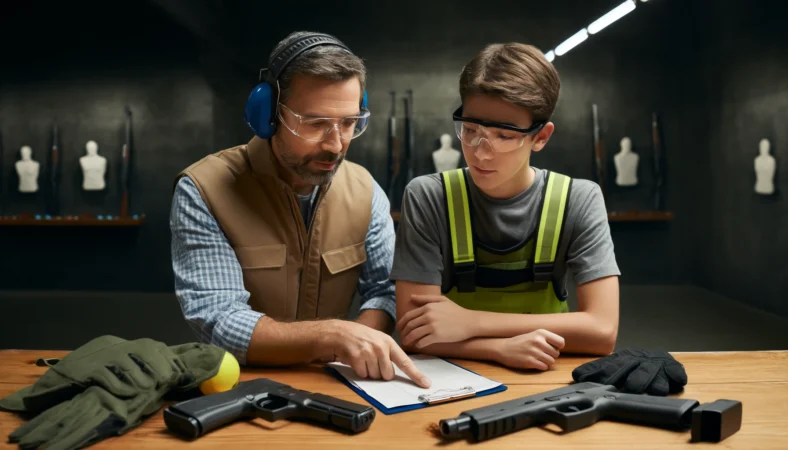
Guidelines on How Not to Introduce Your Kids to Guns

Introduction

Introducing children to firearms carries a significant responsibility. It’s crucial to approach this topic with care to ensure safety and instill a proper understanding of gun use and safety. This guide focuses on common mistakes to avoid when introducing your kids to guns, providing a safer and more responsible way to educate them about firearms.


1. Avoiding Premature Introductions

1.1 Assessing Maturity

  • Emotional Readiness: Children must be mature enough to understand the serious nature of handling firearms. Introducing guns too early can be risky if the child does not grasp the permanence of actions taken with a gun.

1.2 Developmental Considerations

  • Understanding Consequences: Ensure the child can comprehend and respect the safety protocols and the potential consequences of improper gun use.

2. Not Overlooking Educational Foundations

2.1 Importance of Education Before Exposure

  • Basic Safety Education: Before handling any firearm, children should be thoroughly educated on gun safety rules such as “Never point a gun at something you do not intend to shoot” and “Always treat guns as if they are loaded.”

2.2 Use of Simulations and Models

  • Learning Tools: Utilize toy models and controlled environments to explain how guns work and to practice safety procedures without using real firearms.

3. Ensuring Proper Supervision

3.1 Constant Adult Supervision

  • No Unsupervised Handling: Never allow a child to handle a firearm without strict adult supervision. Even with toy guns or during educational sessions, adult oversight is crucial.

3.2 Role of Professional Instructors

  • Guidance from Experts: Consider involving certified firearms instructors who specialize in teaching children. Their expertise ensures that correct and safe handling practices are taught.

4. Avoiding Casual Attitudes Toward Firearms

4.1 Seriousness of Gun Use

  • Not a Toy: Do not treat firearms as toys or trivialize their potential danger. Maintain a serious demeanor when discussing or handling guns to model appropriate respect and caution.

4.2 Media Influence

  • Clarifying Realities: Address how firearms are portrayed in media and entertainment. Ensure children understand the difference between fictional representations of guns and real-life firearm safety and responsibility.

5. Not Skipping Practical Safety Measures

5.1 Safe Storage

  • Access Control: Firearms should always be stored in a secure manner, inaccessible to children. Use gun safes, locks, and other security measures to prevent unauthorized access.

5.2 Regular Safety Drills

  • Practice Makes Perfect: Conduct regular safety drills and quizzes to reinforce safety knowledge and ensure that children understand how to act responsibly around firearms.

6. Failing to Set a Good Example

6.1 Modeling Responsible Behavior

  • Lead by Example: Demonstrate responsible gun ownership and handling at all times. Children often emulate adult behaviors, and showing consistent diligence and respect for gun safety can profoundly influence their attitudes.

6.2 Discussing the Ethical Use of Guns

  • Ethical Considerations: Discuss scenarios where firearm use is legally and morally justified. Emphasize the importance of ethical decision-making regarding gun use.

7. Neglecting Legal and Ethical Education

7.1 Understanding Local Laws

  • Compliance with Regulations: Educate both yourself and your child about local and national firearms laws, including ownership, transportation, and usage. It’s vital for children to understand the legal context surrounding gun use.

7.2 Discussing Moral Implications

  • Responsible Gun Use: Engage in discussions about the ethical use of firearms, emphasizing situations where they should and should not be used. Teach children the importance of using guns solely as a means of protection or for legal sporting activities.

8. Skipping Regular Reviews and Updates

8.1 Keeping Information Current

  • Ongoing Education: As children grow and laws change, it’s important to regularly review and update the information you’ve taught about firearms. This includes revisiting safety protocols and legal requirements.

8.2 Adaptive Learning Strategies

  • Evolving Lessons: Adjust lessons on gun safety and handling as children mature, ensuring the information is age-appropriate and relevant to their understanding and experience level.

9. Overlooking Psychological Impact

9.1 Assessing Impact

  • Emotional Readiness: Continually assess the emotional impact that learning about and handling guns may have on a child. Some children may become fearful or anxious, while others may become overly fascinated. Tailor your approach to fit their emotional responses and readiness.

9.2 Providing Support

  • Emotional Guidance: Be prepared to offer emotional support and discuss feelings about guns openly. Address any fears, misconceptions, or unhealthy attitudes that may arise during their learning process.

10. Ignoring the Importance of Non-Firearm Defense Skills

10.1 Broader Self-Defense

  • Alternative Methods: Teach children about non-firearm methods of self-defense. Understanding a range of defensive strategies can provide them with options that don’t involve lethal force.

10.2 Promoting Overall Safety Awareness

  • Situational Awareness: Encourage a broader awareness of personal safety and surroundings, which can help prevent situations where a firearm might be thought necessary.

Conclusion

Introducing your kids to guns is a serious decision that should be approached with utmost caution and responsibility. By avoiding these common mistakes, you can ensure that your child’s introduction to firearms is safe, educational, and respectful of the power and responsibility that come with gun ownership.


Frequently Asked Questions (FAQs)

At what age is it appropriate to introduce children to firearms?

  • There is no one-size-fits-all answer, as maturity and readiness can vary greatly among children. Generally, it is advisable to wait until a child can fully understand and respect the serious nature of handling firearms, typically not before the age of 12.

How can I reinforce gun safety at home?

  • Reinforce gun safety by regularly discussing safety rules, using gun safes and locks, and demonstrating responsible gun handling. Make gun safety a regular topic of conversation and practice, not just a one-time lesson.

What if my child is not interested in learning about guns?

  • Respect their feelings and do not force the education. It’s important for children to feel comfortable and willing to learn about firearms. You can revisit the conversation when they are older or if their interest changes.

How can I make learning about gun safety more engaging for kids?

  • Incorporate interactive elements such as quizzes, practical demonstrations, and even virtual simulations where appropriate. Make learning about firearm safety educational but also engaging and interactive to help maintain their interest and focus.

Is it safe to take children to a shooting range?

  • Yes, with proper precautions. Ensure the range is family-friendly and accustomed to handling young shooters. Begin with theoretical education and closely supervised practical training, ensuring all safety measures are strictly adhered to.

Essential Outdoor Knots and Hitches: Practical Field Guide

The best outdoor knots are the ones you can tie correctly, untie after use, and match to the job. For camping, hunting, boating, tarp pitching, and general field repairs, a small set of reliable knots is more useful than memorizing dozens you never practice. This guide covers practical knots and hitches for common outdoor tasks, with one important limit: do not use this article as climbing, rescue, towing, or life-safety instruction. Those uses require formal training, rated gear, and current safety standards.

Table of contents

Quick Picks by Outdoor Use

Outdoor taskUseful knot or hitchWhy it helps
Tarp ridgelineTrucker’s hitch or taut-line hitchCreates adjustable tension
Tie a line to a tree or postTwo half hitchesSimple, secure for light camp use
Make a fixed loopBowlineForms a loop that is usually easy to untie
Bundle gearSquare knot with backup or constrictor knotControls loose cord around a bundle
Join similar cordDouble fisherman’s knotStronger than a simple square knot for cord joining
Temporary camp repairClove hitch or rolling hitchFast attachment to poles or lines

For most hunters and campers, the priority is not learning twenty knots at once. Learn a few high-use knots first, then add specialized knots after you can tie the basics without thinking.

Safety Limits Before Tying Knots

Knots reduce rope strength, behave differently in different materials, and can fail if tied, dressed, loaded, or backed up incorrectly. This article is for everyday outdoor utility tasks such as tarps, guy lines, bundles, light camp organization, and non-critical repairs. It is not a substitute for instruction in climbing, rescue, towing, tree work, boating safety, or any use where failure could injure someone.

If you need knot diagrams or want to compare names and families, the list of knots reference is useful background. For step-by-step animated tying practice, Animated Knots is a helpful visual resource.

Basic Knot Terms

Knowing a few terms makes knot instructions easier to follow. The standing part is the long part of the rope that is not moving. The working end is the end you use to tie. A bight is a U-shaped bend in the rope. Dressing a knot means arranging it neatly so the strands sit correctly. Setting a knot means tightening it carefully before use.

Use the right cord for the job

Paracord, bank line, utility cord, webbing, and rope all handle differently. A knot that grips well in one material may slip in another. Slick cord, wet cord, and stiff rope deserve extra caution and testing before you trust them around camp.

Camp and Tarp Knots

Taut-line hitch

The taut-line hitch is useful for tent and tarp guy lines because it can slide for adjustment and then grip under light tension. It is a good knot to know when wind, rain, or uneven ground forces you to adjust shelter tension after setup.

Trucker’s hitch

The trucker’s hitch gives mechanical advantage for tightening a line. Campers often use it for tarp ridgelines, light loads, and gear tie-downs. Use it with reasonable tension, inspect the cord, and avoid using it for heavy or life-safety loads unless you have proper training and rated equipment.

Square knot

The square knot is easy to remember and useful for tying two ends of the same cord around a bundle. It is often misused, so keep it for light binding tasks and back it up when needed. Do not use it for critical loads or joining ropes where failure matters.

Useful Hitches

Clove hitch

The clove hitch is quick for attaching a line to a pole, stake, or branch. It is handy for camp chores, but it can slip or loosen if the load changes. Use it where you can inspect it and add backup half hitches if needed.

Two half hitches

Two half hitches are simple and useful for securing a line around a tree, post, or ring. They are easy to learn and easy to inspect, which makes them a strong beginner choice for light outdoor tasks.

Rolling hitch

The rolling hitch can grip along another rope or pole when the pull comes from one direction. It can help with adjusting a tarp line or adding a temporary attachment point. Test it carefully, because slick cord can make it slip.

Loop Knots

Bowline

The bowline makes a fixed loop that is often easy to untie after loading. It is useful for light camp tasks, tying around a post, or making a loop at the end of a line. Learn to dress it neatly and add a backup if the line is slick or the load changes.

Figure-eight loop

A figure-eight loop is easy to inspect because the shape is recognizable. It can be useful when you need a simple loop in the end of a cord. As with all knots, do not treat it as a life-safety knot without proper instruction and rated gear.

Knots for Joining Cord

Double fisherman’s knot

The double fisherman’s knot is commonly used to join similar cord. It is more secure than a square knot for many cord-joining tasks, but it can become hard to untie after loading. Use matching cord sizes when possible and pull both sides tight before trusting it.

Sheet bend

The sheet bend can join two lines, especially when they are different sizes. It is useful knowledge around camp, but it should be dressed correctly and backed up for slippery materials. Practice it slowly until you can recognize the finished shape.

How to Practice Knots So They Stick

Practice with short cord at home before you need the knot outside. Tie each knot slowly, dress it neatly, set it, then untie it and repeat. After that, practice in real conditions: cold fingers, gloves, low light, and damp cord. Those conditions show whether you truly know the knot.

Build a small knot kit with two colors of cord so you can see the path of the working end. Keep it with your field gear and review knots before a trip. For broader camp readiness, pair knot practice with our bushcraft skills guide.

Common Mistakes to Avoid

  • Using a knot for a life-safety task after only reading about it online.
  • Leaving knots messy instead of dressing and setting them.
  • Assuming a knot works the same in slick cord, wet rope, and webbing.
  • Using damaged cord because the knot itself looks correct.
  • Overtightening utility knots until they are impossible to untie.
  • Forgetting to inspect knots after wind, rain, or load changes.

Knots are part of a larger outdoor system. A good tarp knot helps only if your site choice, weather plan, and gear organization are also sound. Our guide to building a hunting trip kit covers the broader preparation side.

Frequently Asked Questions

What knot should every camper learn first?

Start with two half hitches, the taut-line hitch, and the bowline. Those three cover many light camp tasks: tying to a post, adjusting a guy line, and making a fixed loop.

Is a square knot good for joining rope?

A square knot is better for light binding than for joining rope under important load. It can capsize or slip when misused. For joining similar cord, a double fisherman’s knot is often a better utility option.

Can I use these knots for climbing?

No. This article is not climbing instruction. Climbing, rescue, tree work, towing, and other life-safety uses require formal training, rated equipment, and current standards.
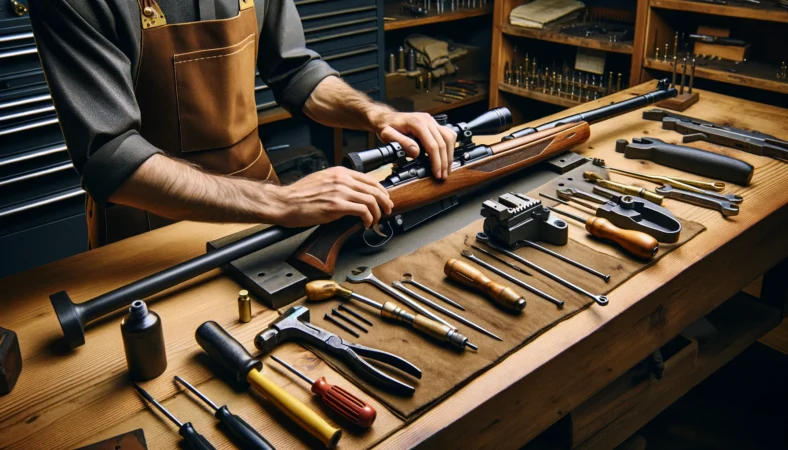
How often should I practice outdoor knots?

Practice before each trip and any time you add a new knot to your kit. A few minutes of repetition at home is better than trying to remember a knot in wind, rain, or darkness.

Final Takeaway

You do not need twenty knots to be useful outdoors. Learn a small set well: two half hitches, taut-line hitch, trucker’s hitch, clove hitch, bowline, figure-eight loop, double fisherman’s knot, and sheet bend. Practice them until you can tie, inspect, and untie them confidently. Then use them for the right job, with the right cord, and within safe limits.

Exit mobile version