


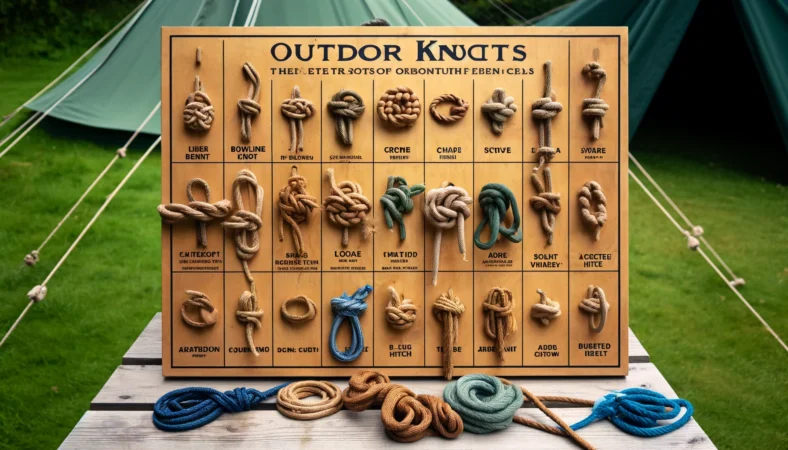
The best outdoor knots are the ones you can tie correctly, untie after use, and match to the job. For camping, hunting, boating, tarp pitching, and general field repairs, a small set of reliable knots is more useful than memorizing dozens you never practice. This guide covers practical knots and hitches for common outdoor tasks, with one important limit: do not use this article as climbing, rescue, towing, or life-safety instruction. Those uses require formal training, rated gear, and current safety standards.
Table of contents
Quick Picks by Outdoor Use
| Outdoor task | Useful knot or hitch | Why it helps |
|---|---|---|
| Tarp ridgeline | Trucker’s hitch or taut-line hitch | Creates adjustable tension |
| Tie a line to a tree or post | Two half hitches | Simple, secure for light camp use |
| Make a fixed loop | Bowline | Forms a loop that is usually easy to untie |
| Bundle gear | Square knot with backup or constrictor knot | Controls loose cord around a bundle |
| Join similar cord | Double fisherman’s knot | Stronger than a simple square knot for cord joining |
| Temporary camp repair | Clove hitch or rolling hitch | Fast attachment to poles or lines |
For most hunters and campers, the priority is not learning twenty knots at once. Learn a few high-use knots first, then add specialized knots after you can tie the basics without thinking.
Safety Limits Before Tying Knots
Knots reduce rope strength, behave differently in different materials, and can fail if tied, dressed, loaded, or backed up incorrectly. This article is for everyday outdoor utility tasks such as tarps, guy lines, bundles, light camp organization, and non-critical repairs. It is not a substitute for instruction in climbing, rescue, towing, tree work, boating safety, or any use where failure could injure someone.
If you need knot diagrams or want to compare names and families, the list of knots reference is useful background. For step-by-step animated tying practice, Animated Knots is a helpful visual resource.
Basic Knot Terms
Knowing a few terms makes knot instructions easier to follow. The standing part is the long part of the rope that is not moving. The working end is the end you use to tie. A bight is a U-shaped bend in the rope. Dressing a knot means arranging it neatly so the strands sit correctly. Setting a knot means tightening it carefully before use.
Use the right cord for the job
Paracord, bank line, utility cord, webbing, and rope all handle differently. A knot that grips well in one material may slip in another. Slick cord, wet cord, and stiff rope deserve extra caution and testing before you trust them around camp.
Camp and Tarp Knots
Taut-line hitch
The taut-line hitch is useful for tent and tarp guy lines because it can slide for adjustment and then grip under light tension. It is a good knot to know when wind, rain, or uneven ground forces you to adjust shelter tension after setup.
Trucker’s hitch
The trucker’s hitch gives mechanical advantage for tightening a line. Campers often use it for tarp ridgelines, light loads, and gear tie-downs. Use it with reasonable tension, inspect the cord, and avoid using it for heavy or life-safety loads unless you have proper training and rated equipment.
Square knot
The square knot is easy to remember and useful for tying two ends of the same cord around a bundle. It is often misused, so keep it for light binding tasks and back it up when needed. Do not use it for critical loads or joining ropes where failure matters.
Useful Hitches
Clove hitch
The clove hitch is quick for attaching a line to a pole, stake, or branch. It is handy for camp chores, but it can slip or loosen if the load changes. Use it where you can inspect it and add backup half hitches if needed.
Two half hitches
Two half hitches are simple and useful for securing a line around a tree, post, or ring. They are easy to learn and easy to inspect, which makes them a strong beginner choice for light outdoor tasks.
Rolling hitch
The rolling hitch can grip along another rope or pole when the pull comes from one direction. It can help with adjusting a tarp line or adding a temporary attachment point. Test it carefully, because slick cord can make it slip.
Loop Knots
Bowline
The bowline makes a fixed loop that is often easy to untie after loading. It is useful for light camp tasks, tying around a post, or making a loop at the end of a line. Learn to dress it neatly and add a backup if the line is slick or the load changes.
Figure-eight loop
A figure-eight loop is easy to inspect because the shape is recognizable. It can be useful when you need a simple loop in the end of a cord. As with all knots, do not treat it as a life-safety knot without proper instruction and rated gear.
Knots for Joining Cord
Double fisherman’s knot
The double fisherman’s knot is commonly used to join similar cord. It is more secure than a square knot for many cord-joining tasks, but it can become hard to untie after loading. Use matching cord sizes when possible and pull both sides tight before trusting it.
Sheet bend
The sheet bend can join two lines, especially when they are different sizes. It is useful knowledge around camp, but it should be dressed correctly and backed up for slippery materials. Practice it slowly until you can recognize the finished shape.
How to Practice Knots So They Stick
Practice with short cord at home before you need the knot outside. Tie each knot slowly, dress it neatly, set it, then untie it and repeat. After that, practice in real conditions: cold fingers, gloves, low light, and damp cord. Those conditions show whether you truly know the knot.
Build a small knot kit with two colors of cord so you can see the path of the working end. Keep it with your field gear and review knots before a trip. For broader camp readiness, pair knot practice with our bushcraft skills guide.
Common Mistakes to Avoid
- Using a knot for a life-safety task after only reading about it online.
- Leaving knots messy instead of dressing and setting them.
- Assuming a knot works the same in slick cord, wet rope, and webbing.
- Using damaged cord because the knot itself looks correct.
- Overtightening utility knots until they are impossible to untie.
- Forgetting to inspect knots after wind, rain, or load changes.
Knots are part of a larger outdoor system. A good tarp knot helps only if your site choice, weather plan, and gear organization are also sound. Our guide to building a hunting trip kit covers the broader preparation side.
Frequently Asked Questions
What knot should every camper learn first?
Start with two half hitches, the taut-line hitch, and the bowline. Those three cover many light camp tasks: tying to a post, adjusting a guy line, and making a fixed loop.
Is a square knot good for joining rope?
A square knot is better for light binding than for joining rope under important load. It can capsize or slip when misused. For joining similar cord, a double fisherman’s knot is often a better utility option.
Can I use these knots for climbing?
No. This article is not climbing instruction. Climbing, rescue, tree work, towing, and other life-safety uses require formal training, rated equipment, and current standards.
How often should I practice outdoor knots?
Practice before each trip and any time you add a new knot to your kit. A few minutes of repetition at home is better than trying to remember a knot in wind, rain, or darkness.
Final Takeaway
You do not need twenty knots to be useful outdoors. Learn a small set well: two half hitches, taut-line hitch, trucker’s hitch, clove hitch, bowline, figure-eight loop, double fisherman’s knot, and sheet bend. Practice them until you can tie, inspect, and untie them confidently. Then use them for the right job, with the right cord, and within safe limits.