


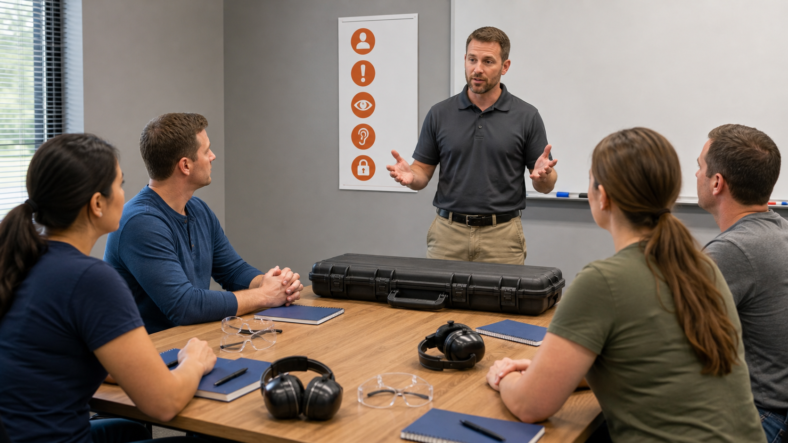
A gun safety course helps beginners learn firearm safety rules, range etiquette, protective gear habits, and storage basics under supervision. The main benefit is simple: you learn from a qualified instructor instead of guessing, and you build safer habits before practicing on your own.
This guide explains what beginner firearm safety courses usually cover, why they matter, and how to choose a credible program. It is general education only and does not replace local laws, instructor guidance, range rules, or manufacturer instructions.
Table of Contents
What a Gun Safety Course Teaches Beginners
A beginner gun safety course usually starts with the core safety rules. Students learn safe muzzle direction, trigger discipline, how to follow range commands, and why they must verify a firearm’s condition before handling it. The NSSF firearm safety rules are a useful public reference for these fundamentals.
Courses may also introduce safe loading and unloading concepts, eye and ear protection, range etiquette, storage basics, and what to do when something feels unclear or unsafe. The exact curriculum varies, so read the course description before enrolling.
| Course Topic | Beginner Benefit | What to Confirm |
|---|---|---|
| Core safety rules | Builds safe handling habits | Rules are taught before live-fire practice |
| Range commands | Reduces confusion on the firing line | Instructor explains local range procedures |
| Eye and ear protection | Normalizes protective gear | Fit and required PPE are covered |
| Storage basics | Connects range safety to home safety | Secure storage resources are included |
Why Firearm Safety Education Matters
Safety education matters because beginners form habits quickly. A structured class gives new shooters a safer starting point than informal trial and error. It also helps students understand that responsible ownership is not just about one range visit; it includes storage, transport, maintenance, and ongoing respect for safety rules.
For storage education, programs such as Project ChildSafe provide safety resources focused on secure storage and responsible ownership. If your course includes storage habits, ask whether it points students to manufacturer instructions and recognized safety resources.
How to Choose a Credible Gun Safety Course
Choose a course connected to a recognized organization, licensed range, state hunter education program, or qualified instructor. A credible course should be clear about instructor qualifications, beginner level, safety rules, range format, and what students will and will not do.
- Check who teaches the course and what qualifications they list.
- Confirm the class is appropriate for true beginners.
- Ask whether eye and ear protection requirements are explained before range time.
- Confirm whether live-fire practice is included, optional, or not part of the course.
- Check current local requirements if you need a certificate for a specific purpose.
Hunter education programs are another established safety-education path. The Hunter-Ed study guide is one public example of structured outdoor safety education, though state-specific requirements vary.
Course Red Flags to Avoid
A safety course should feel calm, structured, and rule-first. Be cautious if a course emphasizes speed, bravado, or advanced skills before covering basic safety. Beginners should not be pressured into handling tasks they do not understand.
- No clear instructor qualifications.
- No written safety rules or range procedures.
- No mention of eye and ear protection.
- Vague promises that one class makes someone fully trained.
- Pressure to skip beginner material and jump to advanced drills.
What to Do After the Course
After a course, keep practicing safety habits slowly and deliberately. Review range rules before each visit, keep protective gear organized, and ask qualified help when something is unfamiliar. A class is a starting point, not the finish line.
Useful next steps include reviewing our shooting range safety rules, learning why eye and ear protection matters, and checking your gun storage safety habits.
Frequently Asked Questions
Do beginners need a gun safety course?
A beginner course is strongly recommended because it gives new shooters supervised instruction and a safer foundation. Whether a course is legally required depends on your location and purpose, so check current local rules.
What happens in a beginner gun safety course?
Most beginner courses cover core safety rules, safe handling concepts, range commands, protective gear, storage basics, and sometimes supervised range practice. The exact format depends on the provider.
How do I know a course is legitimate?
Look for clear instructor qualifications, recognized program backing, written safety procedures, beginner-appropriate curriculum, and transparent information about what the class includes.
Will a gun safety course cover local laws?
Some courses include a general rules overview, but requirements vary and can change. Verify current requirements through official local sources before relying on a certificate for any purpose.
Is one safety course enough?
One course is a good starting point, but safety is an ongoing habit. Continue practicing under supervision, reviewing rules, using proper protective gear, and storing firearms securely.
Final Safety Reminder
A good gun safety course should make safety feel practical, repeatable, and serious. Choose credible instruction, follow range rules, use protective gear, store firearms securely, and ask qualified help before guessing.

