


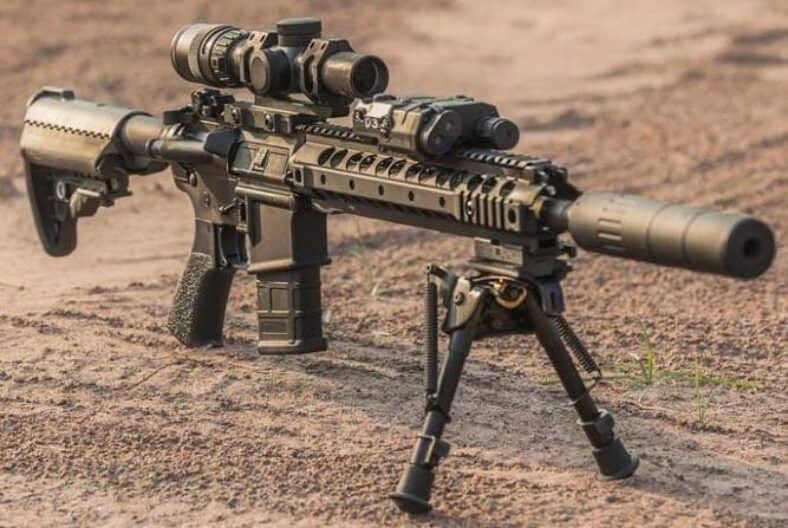
A bipod can improve shooting accuracy by giving the rifle a steadier front support, but it does not replace safe handling, good position, trigger control, or verified zero. The main advantages are stability, repeatable rifle height, reduced fatigue, and better control from prone or supported positions.
This guide explains when a bipod helps, when it can hurt, and how to use one safely. Always follow range rules, your firearm manual, and the NSSF firearm safety rules before any live-fire practice.
Table of Contents
Quick Bipod Checklist
| Check | What to confirm | Why it matters |
|---|---|---|
| Attachment | Bipod fits the rifle’s sling stud, rail, or mount correctly | A loose bipod can shift point of impact. |
| Height | Leg height matches your prone, bench, or field position | Wrong height creates strain and poor alignment. |
| Surface | Feet grip the ground or bench consistently | Sliding or bouncing hurts repeatability. |
| Load | Use consistent forward pressure when appropriate | Inconsistent pressure changes recoil behavior. |
| Rear support | Use a stable rear bag or hand position | A bipod supports the front, not the whole rifle. |
| Zero check | Confirm zero from the position you will use | Bench zero and bipod/prone zero may not feel identical. |
| Safety | Keep muzzle direction and backstop clear | Stability does not replace safe shooting decisions. |
Better Stability
The biggest advantage of a bipod is front-end stability. It reduces wobble compared with unsupported shooting and gives the rifle a consistent point of contact with the ground, bench, or shooting mat. That can make it easier to see the target, hold the reticle steady, and call shots.
A bipod helps most when the shooter also has a stable rear support. A rear bag, consistent shoulder pressure, and relaxed body position all matter. If the rear of the rifle is floating or the shooter is muscling the stock, the bipod alone will not fix accuracy.
Repeatable Shooting Position
A bipod can make position setup more repeatable. The rifle sits at a predictable height, the support point is consistent, and the shooter can build a natural point of aim more easily. This is useful for zeroing, group testing, prone practice, and some hunting setups.
For formal marksmanship development and competitive shooting pathways, USA Shooting is a useful authority source. Practical accuracy still comes from verified practice, not from the accessory alone.
Recoil Management
A good bipod setup can help the rifle track more predictably under recoil. Many shooters apply gentle forward pressure into the bipod so the rifle loads consistently before the shot. The key word is consistently. Changing pressure from shot to shot can change how the rifle moves.
Ammunition and firearm standards are separate from bipod technique, but SAAMI is a useful reference for ammunition terminology and standards. At the range, your own group data is what proves whether a bipod setup is helping.
Field Use
In hunting or field shooting, a bipod can help when the ground allows a stable prone or seated position. It may be less useful in tall grass, steep terrain, brush, or situations where quick movement is needed. Adjustable legs, swivel/cant features, and durable feet can matter more in the field than on a flat bench.
Do not let a bipod tempt you into shots you cannot identify, backstop, or hold ethically. A steadier rifle is still only one part of a safe shot.
When a Bipod Can Hurt Accuracy
A bipod can hurt accuracy if it is loose, mounted poorly, too tall, too short, or used with inconsistent pressure. Hard benches can cause some bipods to hop. Soft ground can make legs sink. Uneven terrain can cant the rifle unless the bipod or shooter position compensates.
Test the rifle from the positions you actually use. If groups open up with the bipod, compare setup, rear support, pressure, and surface before blaming the rifle or ammunition.
Common Bipod Mistakes
- Using a bipod without stable rear support.
- Mounting the bipod loosely or on the wrong adapter.
- Changing forward pressure from shot to shot.
- Using the wrong leg height for the position.
- Forgetting to confirm zero from the bipod position.
Related Guides
- How To Improve Shooting Accuracy
- Shooting Stance for Beginners
- How To Use a Rifle Scope for Accuracy
- Essential Shooting Gear Checklist
FAQ
Does a bipod make a rifle more accurate?
A bipod can make the shooter and rifle system steadier, which may improve practical accuracy. It does not change the rifle’s mechanical accuracy by itself.
Should I zero a rifle from a bipod?
If you plan to shoot from a bipod, confirm zero from that position. Changes in support and recoil behavior can affect how the setup feels and groups.
What bipod height is best?
The best height depends on position and terrain. Low bipods can work well for prone shooting on flat ground, while taller legs may help in grass, uneven ground, or seated positions.
Do I still need a rear bag with a bipod?
For precision work, rear support is very helpful. A bipod stabilizes the front of the rifle, but the rear of the stock still needs consistent support.
Final Recommendation
A bipod is useful when it supports a stable, repeatable, safe shooting position. Choose the right height, mount it securely, use consistent pressure, confirm zero from that position, and remember that the bipod supports fundamentals rather than replacing them.

