
Pistol Crossbow Pros and Cons: Uses, Limits, and Safety

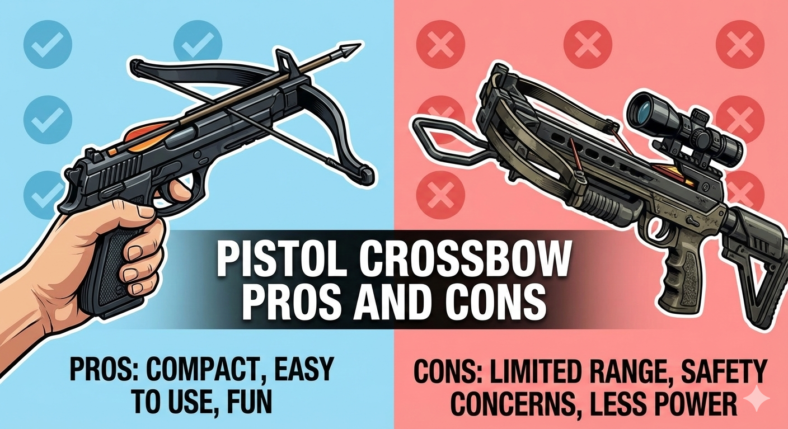
A pistol crossbow is a small, compact crossbow that is light, inexpensive, and much lower in power than a full-size hunting crossbow. Its best use is short-range target practice or casual plinking where that activity is legal and safe. The biggest drawback is also simple: most pistol crossbows are underpowered for hunting deer or other big game, and many places restrict how crossbows can be owned, carried, or used. This guide explains the real pros and cons, the safety rules that matter, and why you should verify local rules before buying or shooting one.

Table of contents

What a Pistol Crossbow Is

A pistol crossbow is a scaled-down crossbow built around a compact frame, short power stroke, and short bolts. It is usually easier to carry and store than a full-size model, but the small design limits power, range, and consistency. That tradeoff drives almost every benefit and drawback.

If you are comparing it with a full-size hunting setup, start with the bigger picture in our guide on how to choose a crossbow. A pistol crossbow is a different tool with different expectations.

Pros of a Pistol Crossbow

  • Compact and light: Easy to carry, pack, and store for casual short-range use.
  • Low cost of entry: Usually less expensive than full-size crossbows or compound bows.
  • Simple to operate: Basic models are approachable for supervised beginners.
  • Fun for target practice: Well suited to short-range plinking where it is legal and safely set up.
  • Quiet recreation: Quieter than firearms, though still not silent and still not safe to use casually.

Cons and Limitations

  • Low power: A short power stroke and lower draw weight mean much less energy than a full-size crossbow.
  • Short effective range: Accuracy and bolt energy fall off quickly with distance.
  • Not suited to big game: Most models are not appropriate for deer or larger animals.
  • Dry-fire risk: Releasing the string without a correctly matched bolt can damage the bow and injure the user.
  • Variable build quality: Low-cost models can have inconsistent parts, rough triggers, or weak sights.
  • Still capable of injury: Small size does not make it a toy.

Pistol Crossbows and Hunting

Pistol crossbows are generally not appropriate for hunting big game such as deer. A humane shot requires reliable penetration and enough energy to reach vital organs, and most pistol crossbows are not built for that job. Trying to use one beyond its realistic capability increases the risk of wounding an animal instead of making a clean harvest.

The legal side is separate and just as important. Many jurisdictions set minimum draw weight, bolt, broadhead, or equipment rules for hunting, and some do not allow certain crossbow types for certain game. Always confirm the current rule with your state or local wildlife agency before any hunting use. This article is general background, not legal advice.

If your real goal is deer hunting, start with a full-size hunting setup and our crossbow deer hunting tips instead of trying to stretch a compact pistol crossbow beyond its intended use.

Safety Rules That Matter

A pistol crossbow stores real energy and deserves the same mindset as any projectile tool. The NSSF firearm safety rules translate well as general habits: point it in a safe direction, keep your finger off the trigger until ready to shoot, and be sure of your target and what is beyond it. Crossbows also have their own specific safety concerns.

  • Never dry-fire it: Always use the correct bolt type and follow the manual.
  • Keep hands clear of the string path: Fingers above the rail can be badly injured.
  • Use matched bolts: Use the length, weight, and style the manufacturer specifies.
  • Inspect bolts before shooting: Do not shoot cracked, bent, or damaged bolts.
  • Use a safe backstop: A casual target setup still needs a safe area behind it.
  • Supervise new users: Small size can make people underestimate the risk.

For broader archery habits, review our archery safety rules before setting up a practice area.

Laws on owning, carrying, transporting, and using pistol crossbows vary widely by country, state, city, and land type. Rules may also differ between backyard target shooting, public land, private land, and hunting. The U.S. Fish and Wildlife Service state agency links can help U.S. readers find state wildlife agencies, but you should still verify the exact rule for your location and intended use.

If a use is not clearly allowed, treat it as not allowed until you verify it through an official source. Do not rely on forum posts, product listings, or old articles for legal decisions.

Who a Pistol Crossbow Is For

A pistol crossbow is best for someone who wants a compact, inexpensive tool for short-range target shooting where legal. It is not a replacement for a full-size hunting crossbow, not a long-range precision tool, and not something to carry casually in public. Match the tool to honest expectations and it can be enjoyable; expect too much from it and it becomes frustrating or unsafe.

Frequently Asked Questions

Can you hunt deer with a pistol crossbow?

Generally no. Most pistol crossbows are underpowered for an ethical deer shot, and many areas set equipment rules that they may not meet. Confirm current rules with your state or local wildlife agency and choose equipment capable of a humane harvest.

Is a pistol crossbow a toy?

No. It may be small, but it launches a bolt with enough force to cause serious injury. Treat it as a real projectile tool and follow the manual every time.

Why is dry-firing dangerous?

Dry-firing releases stored energy without a bolt to absorb it. That can damage the limbs, string, or rail and may injure the user. Always use a correctly matched bolt and follow the maker’s instructions.

Are pistol crossbows legal to own?

It depends where you live. Ownership, age, transport, shooting location, and hunting rules vary by jurisdiction. Verify current rules through official local or state sources before buying or using one.

Final Takeaway

A pistol crossbow is compact, affordable, and fun for casual short-range target practice where legal. Its limits are just as important: low power, short effective range, dry-fire risk, and poor suitability for big-game hunting. Use matched bolts, keep fingers out of the string path, follow the manual, set up a safe backstop, and verify the law before assuming any use is allowed.

Sporting Clay Shooting Tips for Beginners

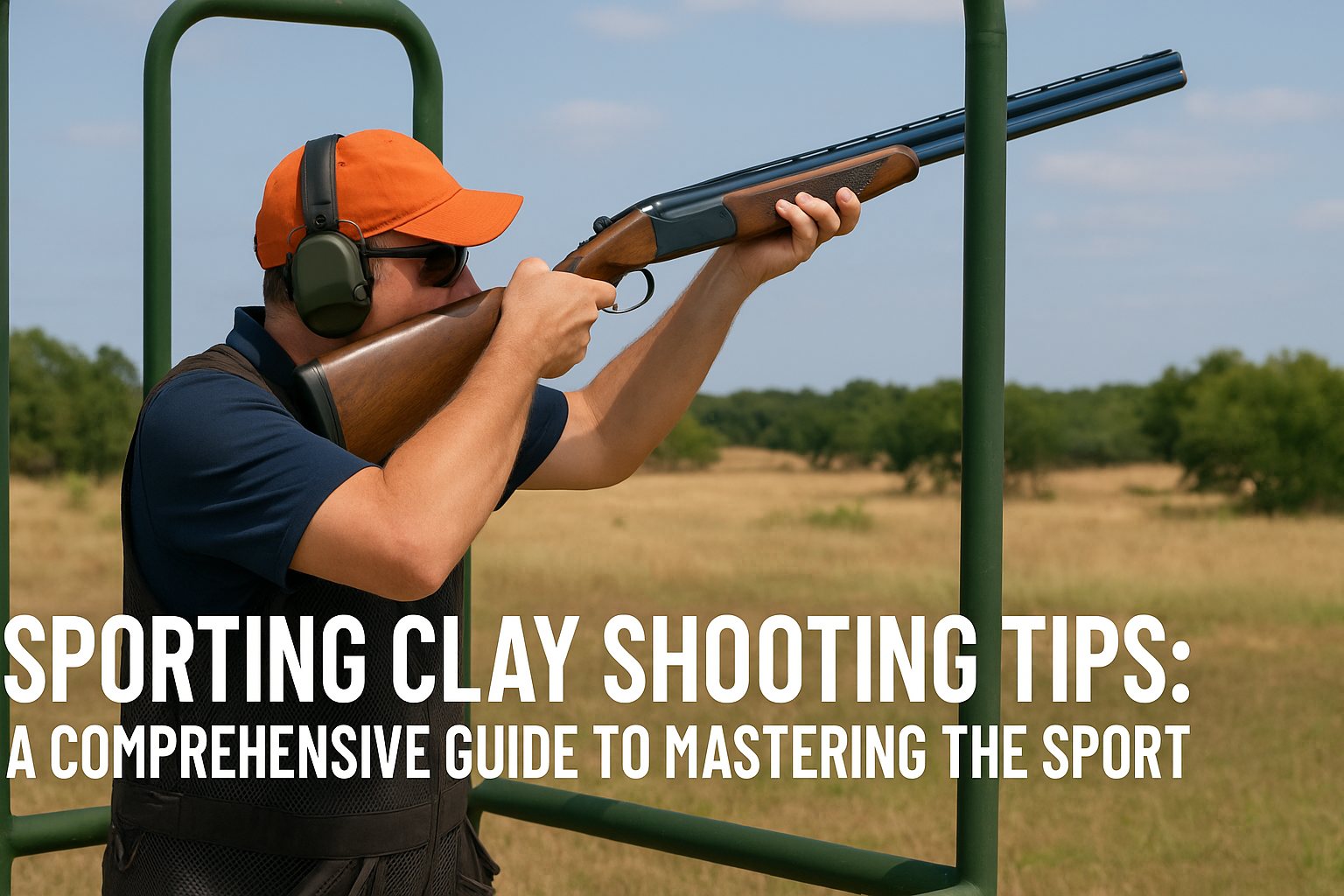
Sporting clay shooting improves fastest when you build the basics in the right order: handle the shotgun safely, use eye and ear protection, start from a balanced stance, look hard at the target instead of the barrel, move the gun smoothly, and keep the swing going after the shot. Do not chase every advanced lead method on day one. A simple, repeatable routine will help more than trying to muscle the gun or guess at every clay.

Think of sporting clays as a field-style course for shotgunners. Targets can cross, rise, drop, quarter away, curl, or come straight toward you, so the goal is not one magic trick. The goal is to learn how to read each presentation, choose a clean hold point, move with the target, and break the bird while following the range rules. If you are new, take a lesson or shoot with an experienced range officer before you try to fix every miss alone.

Table of contents

Start With Safety First

Before thinking about scores, treat the course like a live-fire environment. Keep the muzzle pointed in a safe direction, keep your finger off the trigger until you are ready to call for the bird, keep the action open when moving between stations, and only load when it is your turn and the station rules allow it. The NSSF firearm safety rules are a good baseline because they are simple, memorable, and apply whether you are on a sporting clays course, trap field, or private range.

Sporting clays also requires good hearing and eye protection. Fragments from broken clays, shot from another station, dust, and ejected hulls can all become a problem. If you are still deciding what to bring, our eye and ear protection guide explains why protection matters before the first shot is fired.

Gear And Range Prep

You do not need a tournament-grade shotgun to start. You need a safe shotgun that fits you, cycles reliably, and is allowed by the range. Many sporting clays shooters use 12 gauge or 20 gauge shotguns, often over-under or semi-automatic models, but fit matters more than brand. If the stock is too long, too short, or hard to mount consistently, you will fight the gun every station.

Bring more shells than you think you need, but confirm the range rules for shot size, load limits, and allowed ammunition before you arrive. Some courses have specific restrictions to protect equipment and keep shot fall zones predictable. A small range bag, water, a hat, lens cloth, choke tubes if your shotgun uses them, and a simple score card are enough for a useful practice session. For a broader checklist, see our range gear checklist.

Stance, Mount, And Balance

A good sporting clays stance starts with balance. Stand with your feet about shoulder-width apart, put a little more weight toward the front foot, and point your body where the shot will finish, not where the target first appears. If your feet are aimed at the trap house but the bird breaks far to the right, your upper body will lock up near the shot point.

Mount the shotgun to your cheek and shoulder, not your shoulder first and cheek second. The cheek weld helps your eye sit in the same place every time. When the gun mount changes, the sight picture changes, and misses start to feel random. Practice slow mounts at home only with an unloaded firearm in a safe direction and after following all safety checks. At the range, ask an instructor to watch your mount from the side; small changes can make a big difference.

Target Focus And Lead

Most new sporting clays shooters look at the barrel too much. The clay is moving; the barrel is only a reference. Train your eyes to pick up the target early, lock onto the leading edge, and let the gun move with your eyes. If your focus snaps back to the bead at the moment of the shot, the swing often stops and the clay keeps moving.

Lead is the space between the target and where the shot pattern meets it. There are several methods, including swing-through, sustained lead, and pull-away. Beginners usually do best by choosing one method for a station and staying with it long enough to see a pattern. If you miss behind, you may need more lead or a smoother move. If you miss ahead, you may be rushing the gun or reading the angle wrong.

The best practical tip is to watch the first pair carefully before shooting when the course allows it. Find where the target first becomes visible, where it is clearest, where it starts to lose speed or edge, and where you want to break it. That gives you a plan before the gun ever moves.

Common Sporting Clay Target Presentations

Crossing Targets

Crossers move left to right or right to left across your view. Pick a hold point that lets you move into the target without chasing it from behind. Keep the gun moving through the shot and follow through after the trigger press.

Quartering Targets

Quartering targets are easy to misread because they look slower or faster depending on the angle. Watch whether the target is moving away, toward you, or across you. A bird that looks almost straight may still need a small amount of lead.

Incoming Targets

Incoming targets can make shooters lift their head because the clay seems close. Stay in the gun, keep your cheek down, and break the target before it gets too close or starts dropping sharply.

Rabbit Targets

Rabbit targets roll and bounce on edge, so their speed can change suddenly. Keep your eyes on the leading edge and avoid stabbing at the trigger when the target hops. Smooth movement matters more than speed.

A Simple Practice Plan

Do not measure a practice day only by the final score. Track one or two skills at a time. For example, spend one round focused on gun mount and follow-through, then another round focused on reading the target before calling pull. If you change stance, lead, hold point, and choke after every miss, you will not know what actually helped.

A useful beginner practice plan is simple: shoot one station slowly, write down the target type, note whether you missed ahead, behind, high, or low, then repeat the station if the range allows it. When you find a target that gives you trouble, ask for a coach or experienced shooter to watch your eyes, feet, and gun speed. For more fundamentals that transfer across shooting disciplines, our guide on trigger control and accuracy is a helpful companion.

Range Etiquette

Good etiquette keeps the squad moving and makes the course safer for everyone. Be ready when it is your turn, but do not load early. Stand behind the shooter when someone else is on station. Keep conversation low while another shooter is preparing. Pick up hulls only when it is safe and allowed by the range. If you are unsure about a station rule, ask the range staff before shooting.

Organizations such as NSSA-NSCA and USA Shooting can also help readers understand the organized shooting-sports side of clay target disciplines. Local clubs may follow their own house rules, so always treat posted range instructions as the final word for that course.

FAQ

What shotgun is best for sporting clays?

The best shotgun is one that fits you, is safe, and works reliably with the ammunition allowed at your range. Over-under and semi-automatic shotguns are common, but fit, balance, recoil comfort, and consistent mount matter more than buying the most expensive model.

How can a beginner improve at sporting clays?

Start with safety, then work on one skill at a time. Focus on stance, gun mount, target focus, and follow-through before making big changes to choke or technique. A short lesson with a qualified instructor can save a lot of wasted shells.

Should I look at the barrel or the clay?

Look at the clay. The barrel should stay in your peripheral vision. When your eyes focus on the barrel, your swing often slows down and you are more likely to miss behind moving targets.

What should I wear for sporting clays?

Wear eye protection, hearing protection, comfortable weather-appropriate clothing, and shoes with stable traction. A brimmed hat can help with sun and flying fragments. Avoid clothing that catches the stock during your gun mount.

How is sporting clays different from trap and skeet?

Trap and skeet follow more fixed target patterns, while sporting clays is built to show a wider variety of angles, speeds, heights, and target types. That variety is why sporting clays often feels closer to field shooting practice.

Final Takeaway

The fastest path to better sporting clay scores is not complicated: stay safe, make a plan for each station, keep your eyes on the target, move the gun smoothly, and follow through. Once those basics become repeatable, target reading and lead decisions get easier. Start slow, keep notes, and let each round teach you one clear lesson.

Exit mobile version