


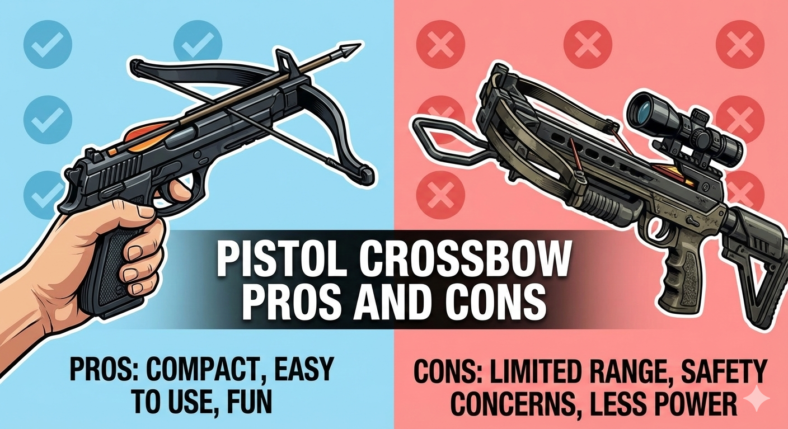
A pistol crossbow is a small, compact crossbow that is light, inexpensive, and much lower in power than a full-size hunting crossbow. Its best use is short-range target practice or casual plinking where that activity is legal and safe. The biggest drawback is also simple: most pistol crossbows are underpowered for hunting deer or other big game, and many places restrict how crossbows can be owned, carried, or used. This guide explains the real pros and cons, the safety rules that matter, and why you should verify local rules before buying or shooting one.
Table of contents
What a Pistol Crossbow Is
A pistol crossbow is a scaled-down crossbow built around a compact frame, short power stroke, and short bolts. It is usually easier to carry and store than a full-size model, but the small design limits power, range, and consistency. That tradeoff drives almost every benefit and drawback.
If you are comparing it with a full-size hunting setup, start with the bigger picture in our guide on how to choose a crossbow. A pistol crossbow is a different tool with different expectations.
Pros of a Pistol Crossbow
- Compact and light: Easy to carry, pack, and store for casual short-range use.
- Low cost of entry: Usually less expensive than full-size crossbows or compound bows.
- Simple to operate: Basic models are approachable for supervised beginners.
- Fun for target practice: Well suited to short-range plinking where it is legal and safely set up.
- Quiet recreation: Quieter than firearms, though still not silent and still not safe to use casually.
Cons and Limitations
- Low power: A short power stroke and lower draw weight mean much less energy than a full-size crossbow.
- Short effective range: Accuracy and bolt energy fall off quickly with distance.
- Not suited to big game: Most models are not appropriate for deer or larger animals.
- Dry-fire risk: Releasing the string without a correctly matched bolt can damage the bow and injure the user.
- Variable build quality: Low-cost models can have inconsistent parts, rough triggers, or weak sights.
- Still capable of injury: Small size does not make it a toy.
Pistol Crossbows and Hunting
Pistol crossbows are generally not appropriate for hunting big game such as deer. A humane shot requires reliable penetration and enough energy to reach vital organs, and most pistol crossbows are not built for that job. Trying to use one beyond its realistic capability increases the risk of wounding an animal instead of making a clean harvest.
The legal side is separate and just as important. Many jurisdictions set minimum draw weight, bolt, broadhead, or equipment rules for hunting, and some do not allow certain crossbow types for certain game. Always confirm the current rule with your state or local wildlife agency before any hunting use. This article is general background, not legal advice.
If your real goal is deer hunting, start with a full-size hunting setup and our crossbow deer hunting tips instead of trying to stretch a compact pistol crossbow beyond its intended use.
Safety Rules That Matter
A pistol crossbow stores real energy and deserves the same mindset as any projectile tool. The NSSF firearm safety rules translate well as general habits: point it in a safe direction, keep your finger off the trigger until ready to shoot, and be sure of your target and what is beyond it. Crossbows also have their own specific safety concerns.
- Never dry-fire it: Always use the correct bolt type and follow the manual.
- Keep hands clear of the string path: Fingers above the rail can be badly injured.
- Use matched bolts: Use the length, weight, and style the manufacturer specifies.
- Inspect bolts before shooting: Do not shoot cracked, bent, or damaged bolts.
- Use a safe backstop: A casual target setup still needs a safe area behind it.
- Supervise new users: Small size can make people underestimate the risk.
For broader archery habits, review our archery safety rules before setting up a practice area.
Legal Status Varies by Location
Laws on owning, carrying, transporting, and using pistol crossbows vary widely by country, state, city, and land type. Rules may also differ between backyard target shooting, public land, private land, and hunting. The U.S. Fish and Wildlife Service state agency links can help U.S. readers find state wildlife agencies, but you should still verify the exact rule for your location and intended use.
If a use is not clearly allowed, treat it as not allowed until you verify it through an official source. Do not rely on forum posts, product listings, or old articles for legal decisions.
Who a Pistol Crossbow Is For
A pistol crossbow is best for someone who wants a compact, inexpensive tool for short-range target shooting where legal. It is not a replacement for a full-size hunting crossbow, not a long-range precision tool, and not something to carry casually in public. Match the tool to honest expectations and it can be enjoyable; expect too much from it and it becomes frustrating or unsafe.
Frequently Asked Questions
Can you hunt deer with a pistol crossbow?
Generally no. Most pistol crossbows are underpowered for an ethical deer shot, and many areas set equipment rules that they may not meet. Confirm current rules with your state or local wildlife agency and choose equipment capable of a humane harvest.
Is a pistol crossbow a toy?
No. It may be small, but it launches a bolt with enough force to cause serious injury. Treat it as a real projectile tool and follow the manual every time.
Why is dry-firing dangerous?
Dry-firing releases stored energy without a bolt to absorb it. That can damage the limbs, string, or rail and may injure the user. Always use a correctly matched bolt and follow the maker’s instructions.
Are pistol crossbows legal to own?
It depends where you live. Ownership, age, transport, shooting location, and hunting rules vary by jurisdiction. Verify current rules through official local or state sources before buying or using one.
Final Takeaway
A pistol crossbow is compact, affordable, and fun for casual short-range target practice where legal. Its limits are just as important: low power, short effective range, dry-fire risk, and poor suitability for big-game hunting. Use matched bolts, keep fingers out of the string path, follow the manual, set up a safe backstop, and verify the law before assuming any use is allowed.