


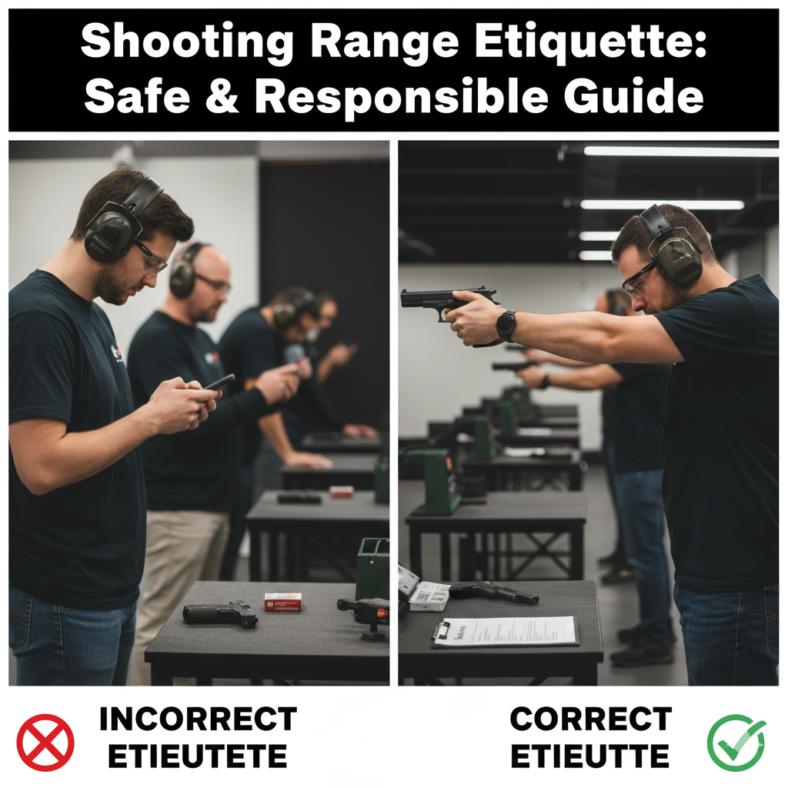
Shooting range etiquette is the set of safety habits and respectful behaviors that keep a shared range calm, predictable, and safe. Good etiquette means you follow the range rules, control your muzzle, keep your finger off the trigger until ready to shoot, listen to the range officer, handle firearms only at the right time, and respect the people shooting around you.
The short version: treat every firearm as loaded, keep the muzzle pointed in a safe direction, keep your finger off the trigger until your sights are on target, know your target and what is beyond it, and never handle firearms during a ceasefire. Etiquette is not extra polish. At a range, etiquette is part of safety.
Table of contents
Quick Answer
Good shooting range etiquette means being safe, predictable, and respectful. Keep firearms pointed downrange, keep actions open when required, obey ceasefires immediately, do not touch guns while people are downrange, wear eye and ear protection, ask before handling anyone else’s firearm, and clean up your lane before leaving.
If you are unsure about a rule, ask the range officer before acting. No one expects a beginner to know everything. What experienced shooters do expect is honesty, calm behavior, and willingness to follow instructions. A safe beginner is welcome at most ranges; an overconfident unsafe shooter is not.
Before You Go to the Range
Good etiquette starts before you arrive. Read the range rules, confirm hours, check whether the range allows your firearm or ammunition type, and bring required safety gear. Some ranges restrict steel-core ammunition, shotguns, rapid fire, holster work, drawing from concealment, or certain target types. Knowing those rules early prevents awkward or unsafe surprises.
Pack Required Safety Gear
Bring eye protection and hearing protection for everyone in your group. For indoor ranges or loud firearms, many shooters use ear plugs under earmuffs. Our guide on how to double up ear protection at indoor ranges explains why that extra layer is useful. A simple range bag should also include targets, tape or stapler if allowed, ammunition, chamber flags if required, basic tools, and identification or membership items.
Transport Firearms Safely
Follow your local laws and the range’s arrival procedure. Firearms should arrive unloaded unless the range rules say otherwise, and cases should stay closed until you are at the proper handling area or firing lane. If you are new, ask staff where and when to uncase your firearm.
Arriving at the Range
When you arrive, slow down. Check in, read posted rules, and watch how the range operates. Some ranges are controlled by a range safety officer. Others rely more on shooters coordinating with each other. Either way, your first job is to understand whether the range is hot or cold before touching gear.
Do Not Rush to the Bench
Rushing causes mistakes. Place bags where they belong, keep muzzles controlled, and wait for the proper time to set up. If other shooters are already present, give them space and avoid stepping in front of the firing line unless the range is cold and everyone has agreed.
Ask Before Taking Photos or Video
Some shooters do not want to be recorded, and some ranges have policies about cameras. Ask first. Never distract someone who is loading, firing, clearing, or receiving instruction.
Muzzle and Trigger Discipline
Muzzle and trigger discipline are the heart of range etiquette. The NSSF firearm safety rules are a helpful reference because they keep the core habits simple and repeatable. At the range, those habits should be visible in everything you do.
Muzzle Direction
Keep the muzzle pointed in a safe direction, usually downrange, whenever a firearm is uncased. Do not sweep other people while turning, setting a firearm down, loading, clearing, or showing it to someone. If you need to move with a firearm, ask the range officer or follow the posted procedure.
Trigger Finger
Keep your finger outside the trigger guard until you are ready to fire. This includes when you are loading, unloading, clearing a malfunction, talking, adjusting your stance, or setting the firearm down. A straight trigger finger is one of the simplest signs that a shooter is paying attention.
Ceasefire and Cold-Range Behavior
A ceasefire means stop shooting immediately. Depending on the range, you may need to unload, open the action, insert a chamber flag, step back from the bench, and wait for instructions. During a cold range, people may be downrange changing targets. That is the wrong time to handle firearms, ammunition, magazines, or anything on the shooting bench unless the range officer says otherwise.
Hands Off Means Hands Off
Many ranges require shooters to step behind a line during ceasefire. Respect that rule even if your firearm is unloaded. Other shooters cannot always see your chamber, but they can see whether you are touching the gun. Predictable behavior builds trust.
Call Problems Clearly
If you see an unsafe condition, call it out calmly and clearly. If someone is downrange, if an animal enters the impact area, if a target frame falls, or if a shooter appears confused during a hot range, get the range officer’s attention or call for a ceasefire according to local rules.
Bench and Lane Etiquette
Your lane is not a private island. Brass, noise, muzzle blast, smoke, targets, bags, and conversations can affect the shooters beside you. Keep your gear contained, control where your brass goes when possible, and avoid crowding another shooter’s bench.
Respect Other Shooters’ Gear
Do not touch another person’s firearm, ammunition, optic, suppressor, target, or range bag without permission. If someone offers to let you inspect or shoot a firearm, wait for them to show you its condition and explain how they want it handled.
Watch Muzzle Blast and Ejection
Large brakes, short barrels, and certain shooting positions can be unpleasant for nearby lanes. If the range is not crowded, leave space when possible. If your brass is hitting someone, adjust if safe and practical, or apologize and coordinate.
Communication and Range Commands
Good communication keeps a range calm. Listen for commands, repeat important calls when needed, and avoid loud side conversations while people are shooting or receiving instruction. If you do not understand a command, ask before acting.
Common Commands
Commands vary by range, but common examples include “range is hot,” “range is cold,” “ceasefire,” “make safe,” “commence fire,” and “all clear.” Treat every command as important. The exact wording matters less than immediate attention and safe response.
Teaching or Helping Others
If you bring a new shooter, stay close and keep the session simple. Explain safety rules before arriving, start with one firearm, and avoid overwhelming them. Our shooting stance guide for beginners can help new shooters understand basic body position before they try to go fast.
Etiquette for New Shooters
New shooters should not feel embarrassed about asking questions. The safest approach is to tell the range officer or instructor that you are new. Most problems happen when someone pretends to know a procedure and guesses wrong.
Start Slow
Load fewer rounds at first, use a simple target distance, and focus on safety habits instead of speed. Learn how to load, unload, clear, bench, and case the firearm before worrying about tight groups. For a broader safety checklist, see our essential range gear checklist.
Accept Corrections Well
If staff or another responsible shooter corrects a safety issue, take it seriously. A calm correction is not an insult. It is part of keeping everyone safe.
Cleanup and Shared-Space Habits
Leaving a clean lane is basic range respect. Pick up targets, tape, boxes, loose trash, and brass according to range policy. Some ranges allow shooters to keep their own brass. Others collect brass or separate calibers. Follow the local rule.
Leave Targets and Frames Usable
Use approved targets and place them where the backstop can safely catch rounds. Do not shoot posts, target frames, hangers, signs, lights, cameras, or range equipment. Damaging shared equipment raises costs for everyone and can create safety hazards.
Respect Time Limits
If the range is busy and lanes are limited, be efficient. Shoot your session, clean your area, and move gear out of the way before long conversations. Courtesy keeps the line moving and makes the range better for everyone.
FAQ
What is the most important shooting range etiquette rule?
The most important rule is safe firearm handling: keep the muzzle in a safe direction, keep your finger off the trigger until ready to shoot, and obey ceasefire commands immediately. Respectful behavior starts with safety.
Can I touch my gun during a ceasefire?
Usually no. At many ranges, you must not touch firearms, ammunition, magazines, or bench gear during a cold range while people are downrange. Follow the range officer’s instructions and posted rules.
Should beginners tell the range officer they are new?
Yes. Telling the range officer you are new is smart, not embarrassing. It helps staff explain the local rules and prevent mistakes before they happen.
Is it rude to give another shooter advice?
Unasked advice can be distracting, especially if someone is actively shooting. If there is a safety issue, speak up or notify the range officer. For non-safety advice, ask politely first or leave them alone.
Do I need both ear plugs and earmuffs at the range?
Not always, but doubling up is a good idea for many indoor ranges and loud firearms. Ear plugs plus earmuffs can improve comfort and add backup protection when one layer shifts.
Final Thoughts
Shooting range etiquette is really about making safety easy for everyone to see. Be predictable, listen carefully, control your muzzle, respect ceasefires, wear proper protection, and leave the range cleaner than you found it. When shooters follow those habits, the range becomes safer, calmer, and more welcoming for beginners and experienced shooters alike.