


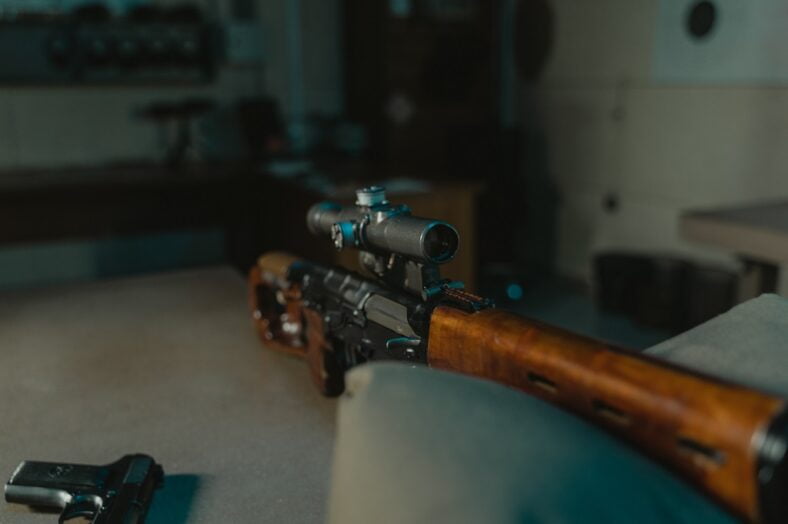
To mount a rifle scope correctly, start with an unloaded firearm, confirm the base and rings fit the rifle and scope tube, set the scope for natural eye relief, level the reticle, tighten screws evenly with the manufacturer-recommended torque, then bore-sight and confirm zero at the range. The job is not just putting a scope in rings. Small setup mistakes can create a shifting zero, poor cheek weld, scope bite, or damaged optics.
Table of contents
Before You Start
Safety comes first. Confirm the rifle is unloaded, remove ammunition from the workspace, keep the muzzle pointed in a safe direction, and follow the NSSF firearm safety rules throughout the process. Scope mounting is workshop work, not a rushed range-table job.
Also read the instructions for the rifle, base, rings, and scope. Torque values, screw sizes, ring-cap design, and thread-locker guidance can vary. If the instructions conflict with general advice, follow the manufacturer instructions or ask a qualified gunsmith.
Tools and Parts to Gather
- Correct scope base or rail for the rifle
- Correct rings for the scope tube diameter
- Inch-pound torque driver
- Correct bits for the screws
- Bubble levels or a scope leveling kit
- Degreasing cloth or clean rag
- Blue thread locker only if the manufacturer recommends it
- Bore-sighting tool or a safe bore-sighting method
Do not substitute a large general-purpose wrench for a torque driver. Scope tubes and small screws can be damaged by guessing.
Match the Base and Rings
Confirm that the base fits the rifle and that the rings match the scope tube diameter. Ring height should clear the objective bell and bolt while keeping the scope low enough for a stable cheek weld. Rings that are too high often make the rifle feel awkward and reduce consistency.
If you are still choosing an optic or mounting system, compare the setup needs in our guide on how to choose a rifle scope. The best scope on paper will still perform poorly if the mounting system does not fit the rifle and shooter.
Set Eye Relief
Place the scope loosely in the rings, shoulder the rifle in your natural position, and slide the scope forward or back until you see a full, clear image without stretching your neck. Eye relief matters for comfort, field of view, and safety, especially on rifles with more recoil.
Do this from the shooting position you actually use, not from an awkward bench-only posture. Our guide to what eye relief means explains why this step is so important.
Level the Reticle
Level the rifle first, then rotate the scope until the reticle is level. Do not rely only on what looks straight in your shoulder. A canted reticle can cause confusing windage and elevation errors as distance increases.
A telescopic sight is an optical instrument. Small alignment errors may not look serious at home, but they can become obvious when you dial elevation or shoot beyond close range.
Tighten With Proper Torque
Tighten base and ring screws gradually and evenly. For ring caps, alternate screws in small increments so the scope stays centered and the gaps remain even where the ring design allows it. Stop at the torque value specified by the ring or scope maker.
Too much torque can crush or stress the scope tube. Too little torque can allow the scope to shift under recoil. Both problems can look like bad accuracy, so treat torque as part of the accuracy system, not a minor detail.
After tightening, shoulder the rifle one more time before leaving the bench. Confirm the reticle did not rotate, eye relief still feels natural, and the magnification ring, bolt handle, and safety controls all have room to work.
Bore-Sight and Zero
Bore-sighting helps get the first shots on paper, but it does not replace live-fire zeroing. After mounting, bore-sight safely, then go to the range and confirm zero with a stable rest, safe backstop, and careful adjustments.
If you need the full range process, follow our step-by-step rifle scope sight-in guide. If shots shift when your head position changes, check our scope parallax adjustment guide before assuming the mount is the only problem.
Common Mistakes to Avoid
- Mounting the scope too high and losing cheek weld
- Setting eye relief from an unnatural position
- Leveling the reticle by eye only
- Over-tightening ring screws
- Leaving base screws loose
- Using the wrong rings for the scope tube
- Skipping bore-sighting and wasting ammunition
- Failing to recheck screws after the first range session
For a deeper troubleshooting list, see our related article on rifle scope mounting mistakes.
Frequently Asked Questions
Can I mount a rifle scope without a gunsmith?
Yes, if you have the correct parts, a torque driver, leveling tools, and safe handling habits. If you are unsure about fit, torque, alignment, or firearm safety, use a qualified gunsmith.
Do I need a torque wrench for scope rings?
Yes. A small inch-pound torque driver helps prevent both over-tightening and under-tightening. Guessing by hand is one of the most common causes of mounting problems.
How high should a scope be mounted?
As low as practical while still clearing the objective bell, barrel, and bolt. The correct height should let you keep a natural cheek weld and see a full image through the scope.
Does bore-sighting mean the rifle is zeroed?
No. Bore-sighting only gets you close. You still need to confirm and adjust zero with live fire at the range before relying on the rifle.
Final Takeaway
Mounting a scope properly is about fit, alignment, and repeatability. Use the correct base and rings, set eye relief from your real shooting position, level the reticle, tighten with the right torque, bore-sight before live fire, and confirm zero at the range. If the setup feels uncertain, a qualified gunsmith is a better choice than risking a damaged optic or a rifle that will not hold zero.