


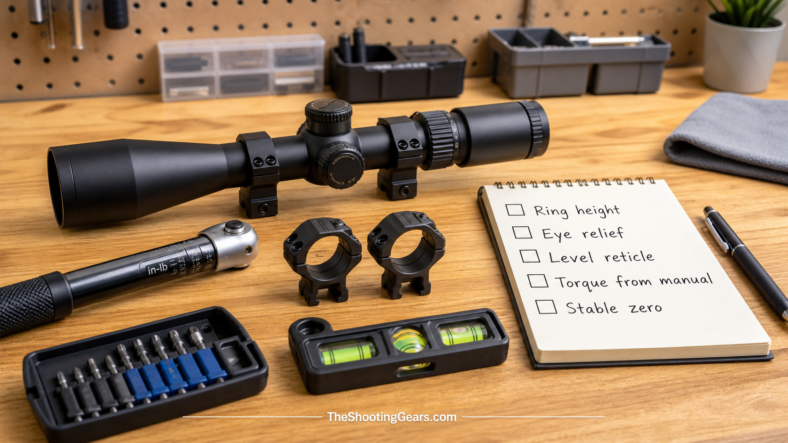
Most rifle scope mounting mistakes come from treating the job like simple screw tightening instead of precision setup. The common problems are wrong ring height, poor eye relief, a canted reticle, uneven ring pressure, incorrect torque, loose bases, skipped bore-sighting, and no follow-up check after the first range session. Any one of those can create shifting zero, uncomfortable shooting, damaged optics, or frustrating misses. This guide explains the mistakes beginners make and how to avoid them without guessing.
Table of contents
- Quick mounting checklist
- Choosing the wrong rings or base
- Setting eye relief incorrectly
- Failing to level the reticle
- Over-tightening or under-tightening screws
- Uneven ring pressure
- Skipping bore-sighting and first-shot checks
- Not rechecking after the first range trip
- Frequently asked questions
- Final takeaway
Quick Mounting Checklist
- Confirm the base fits your rifle and the rings fit your scope tube.
- Choose ring height that clears the barrel and bolt while keeping a natural cheek weld.
- Set eye relief from your normal shooting position before tightening the rings.
- Level the rifle and reticle with proper tools, not just your eye.
- Use a torque driver and follow the scope, ring, and base maker’s instructions.
- Tighten ring screws gradually and evenly.
- Bore-sight before live fire, then confirm zero safely at the range.
- Recheck screws and zero after the first session.
Always start with safe firearm handling. Keep the rifle unloaded during setup, point it in a safe direction, and follow the NSSF firearm safety rules any time a firearm is handled.
Choosing the Wrong Rings or Base
The first mistake happens before the scope is even on the rifle. Rings must match the scope tube diameter, and the base must match the rifle’s mounting system. A mismatch can stress the tube, place the optic too high, or prevent the scope from holding zero.
Ring height matters too. Very high rings may clear everything, but they can force your head off the stock and make a consistent cheek weld difficult. The goal is enough clearance for the objective bell, barrel, and bolt handle while keeping your eye naturally aligned behind the optic.
Setting Eye Relief Incorrectly
Eye relief is the distance between your eye and the eyepiece where you see a full, clear image. If the scope sits too far forward or too far back, you may crawl the stock, strain your neck, lose field of view, or risk scope bite on a harder-recoiling rifle.
Set eye relief from your real shooting position, not from a bench-only posture. Shoulder the rifle naturally, settle your cheek weld, and move the scope until the image is clear without stretching your neck. Our guide to eye relief and optics comfort explains the concept in more detail.
Failing to Level the Reticle
A canted reticle can cause misses, especially as distance increases. If the vertical crosshair is not truly vertical, dialing elevation may also add unwanted windage. The problem is easy to miss because the scope may look straight when the rifle is held at a slight angle.
Use leveling tools and take your time. Level the rifle first, then level the reticle, and check your natural hold before final torque. A telescopic sight is an optical instrument, so small alignment errors can show up later as real point-of-impact problems.
Over-Tightening or Under-Tightening Screws
Many beginners think tighter is safer. It is not. Over-tightening ring screws can dent or stress the scope tube, while under-tightening can let the optic shift under recoil. Both can produce accuracy problems that look like ammunition or rifle trouble.
Use an inch-pound torque driver and follow the instructions from the scope, ring, and base manufacturers. Do not guess, and do not use a large general-purpose wrench where a small torque driver is needed.
Uneven Ring Pressure
Another common mistake is tightening one screw all the way before touching the others. That can pull the cap unevenly, rotate the scope, or place uneven pressure on the tube. Tighten screws gradually in a crisscross pattern and keep the ring gaps even where the ring design allows it.
If the scope rotates while tightening, pause and correct it before final torque. It is much easier to fix alignment during setup than to chase a crooked reticle at the range.
Skipping Bore-Sighting and First-Shot Checks
Bore-sighting does not replace live-fire zeroing, but it can save time and ammunition. It helps get the first shots on paper so you can make controlled adjustments instead of guessing where the rifle is hitting.
Once you reach the range, use a safe backstop, follow all range rules, and make careful adjustments. If you need a full zeroing process, use our step-by-step rifle scope sight-in guide.
If the rifle is zeroed but your point of impact still shifts with head position, review our guide to adjusting scope parallax before blaming the mount.
Not Rechecking After the First Range Trip
The job is not finished the moment the rifle is zeroed. Recoil, transport, and settling parts can reveal a loose base screw, uneven ring pressure, or a scope that was not fully secure. After the first range session, inspect the setup again and confirm zero before relying on it for hunting or serious practice.
Keep notes on torque values, ammunition, zero distance, and any changes you make. Those notes help you diagnose future problems instead of starting over every time.
Frequently Asked Questions
Can I mount a rifle scope myself?
Yes, if you have the correct parts, safe handling habits, and the right tools. If you are unsure about ring fit, torque, alignment, or safety, use a qualified gunsmith or experienced instructor.
What is the biggest beginner scope-mounting mistake?
The biggest mistake is guessing instead of measuring: guessing ring height, guessing eye relief, guessing level, and guessing torque. A scope mount should be set up deliberately with the correct tools.
Can over-tightening damage a scope?
Yes. Excessive torque can dent or stress the tube and may affect internal movement. Always follow the manufacturer torque instructions for the rings and scope.
Do I need to bore-sight before zeroing?
It is strongly recommended. Bore-sighting helps get initial shots on paper, but you still need live-fire zeroing at the range before relying on the rifle.
Final Takeaway
Good scope mounting is about alignment, fit, and repeatability. Choose the right base and rings, set eye relief from a natural shooting position, level the reticle, use proper torque, tighten screws evenly, bore-sight before live fire, and recheck the setup after the first range trip. If any part of the process feels uncertain, getting help from a qualified gunsmith is cheaper than damaging an optic or chasing a shifting zero.