


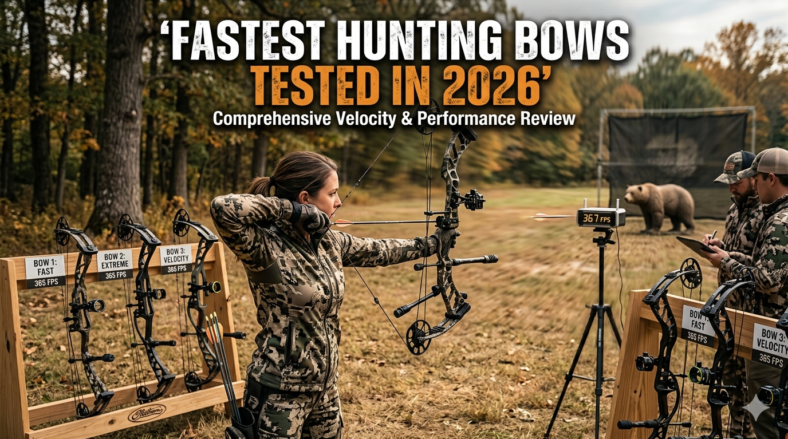
Fast hunting bows can be useful, but the fastest bow on paper is not automatically the best bow for hunting. Speed ratings are usually measured under controlled standards, while real hunting setups use heavier arrows, broadheads, peep sights, silencers, rests, quivers, and draw settings that can change real-world performance.
The better question is this: does the bow give you enough speed while still being quiet, accurate, legal for your state, comfortable at your draw length, and easy to control under hunting pressure? This guide explains how bow speed ratings work, what slows a bow down in the field, and how to judge speed without buying on one number alone.
Table of Contents
Quick Answer
A fast hunting bow is worth considering when it still fits your draw length, draw weight, arrow weight, broadhead plan, and shooting ability. For most bowhunters, a bow that is accurate, quiet, and easy to hold on target is a better choice than a bow that chases the highest speed rating but feels harsh or hard to tune.
Use advertised speed as a comparison point, not a promise. Then confirm your real setup through a bow shop, chronograph session, paper tune, broadhead check, and local hunting regulations.
What a Bow Speed Rating Really Means
Most compound bow speed numbers come from standardized test conditions. The common IBO-style rating is often based on a 70-pound draw weight, 30-inch draw length, and a 350-grain arrow. Those settings make comparison easier, but they are not the same as every hunter’s setup.
That is why two hunters can buy the same bow and see different speeds. A shorter draw length, lower draw weight, heavier arrow, or extra string accessories can all lower the actual number. This does not mean the bow is bad. It means the hunting setup is different from the rating setup.
IBO-style speed is a benchmark
A benchmark helps you compare bows in the same class. It does not tell you how the bow will feel at full draw, how loud it will be, how it tunes with broadheads, or how forgiving it will be from a tree stand or ground blind.
ATA, IBO, and education sources matter
For background on archery industry terms and hunter education, useful sources include the Archery Trade Association, International Bowhunting Organization, Bowhunter Ed, and Hunter Ed. Use these as education references, then check the manual and local regulations for your own equipment and state.
Why Hunting Setup Speed Is Usually Lower
Real hunting arrows are often heavier than the light arrows used in rating conditions. A heavier arrow may fly slower, but it can also improve quietness, stability, and penetration potential when matched correctly with the bow and broadhead.
Accessories also matter. A peep sight, D-loop, string silencers, a hunting rest, and broadhead-ready arrow build can all affect speed. Some changes are small by themselves, but together they can make a noticeable difference from the advertised number.
Draw length changes speed
Shorter draw length usually reduces arrow speed because the bow stores less energy before the shot. A hunter with a 27-inch draw should not expect the same number as a rating based on a 30-inch draw.
Arrow weight changes speed
Heavier arrows generally move slower than lighter arrows from the same bow. The right arrow is not just the fastest one. It must match spine, total weight, broadhead choice, and the bow manufacturer’s minimum arrow-weight guidance.
Tuning affects usable speed
A fast bow that is poorly tuned can group badly, especially with fixed-blade broadheads. A slightly slower setup that tunes cleanly and groups well is usually more useful in the field than a faster setup that is hard to repeat.
Speed Versus Control for Bowhunting
Speed can flatten trajectory and reduce small range-estimation mistakes, but control still decides whether the shot is ethical. A bowhunter needs to draw smoothly, anchor consistently, hold steady, settle the pin, and execute without punching the trigger.
Some high-speed bows use aggressive cams that feel firmer through the draw cycle. That can be fine for experienced archers, but it may be a poor fit for a hunter who struggles to draw from a seated position, in cold clothing, or after waiting for hours.
Brace height and forgiveness
Shorter brace height can help speed, but it can also make form mistakes show up more easily. Hunters who shoot from awkward angles may prefer a bow that feels more forgiving, even if it is not the fastest option on a spec sheet.
Noise and vibration
Fast bows can still be quiet when tuned well, but noise and vibration should be checked before hunting. A quiet, stable bow gives the hunter more confidence and may be easier to shoot cleanly when the moment comes.
What to Check Before Buying a Fast Hunting Bow
Use the speed number as the start of the review, not the end. A bow that fits poorly or requires more draw weight than you can control will not help you in the woods.
- Draw length range: confirm the bow adjusts to your measured draw length without forcing your anchor.
- Draw weight range: choose a weight you can draw smoothly in hunting clothing.
- Minimum arrow weight: follow the manufacturer manual and never shoot below the approved arrow weight.
- Broadhead tuning: check that your hunting broadheads group with field points before the season.
- Let-off and valley: make sure you can hold at full draw without rushing the shot.
- Local rules: confirm draw-weight, equipment, and season rules with your state wildlife agency.
Use a bow shop or qualified technician
A good bow shop can help measure draw length, set draw weight, inspect timing, choose arrows, and tune broadheads. That help matters more than a small speed difference on paper.
Check related gear, not just the bow
Fast setups also need the right sight, release, rest, arrows, and practice plan. For related setup decisions, see our guides on how many pins a bow sight should have, bow hunting for beginners, and youth archery gear.
How Much Speed Different Hunters Need
There is no single speed number that fits every hunter. The right range depends on draw length, arrow weight, hunting distance, species, state rules, and how well the hunter can shoot the setup repeatedly.
Whitetail tree stand hunters
Many whitetail shots happen at modest distances. A balanced bow that draws smoothly, stays quiet, and groups broadheads well can be more useful than a harsh bow with a higher rating.
Western spot-and-stalk hunters
Open-country hunters may value flatter trajectory, but they still need a setup they can shoot from uneven ground and under wind pressure. Speed helps only when accuracy and shot discipline are already solid.
Newer bowhunters
Newer hunters should usually prioritize fit, tune, and repeatable form before chasing maximum speed. Our compound bow beginner guide can help with entry-level buying questions, but confirm current products and specs before purchase.
Safety and Legality Checks
Fast bows still require safe handling, legal equipment, and realistic shot limits. Before hunting, confirm your state rules, complete any required education, and practice with the same arrow and broadhead setup you plan to carry.
For bowhunting education and safety basics, check Bowhunter Ed and your state wildlife agency. For broader hunting education, Hunter Ed is also useful. Trophy-record organizations such as Pope and Young can help readers understand ethical bowhunting culture, but local regulations still control what is legal where you hunt.
Do not ignore the manual
The bow manual should control setup limits, approved arrow weight, maintenance intervals, and safety warnings. If a forum comment or product listing conflicts with the manual, trust the manual and a qualified technician.
Practice with hunting arrows
Final practice should include the same arrow weight, broadhead type, release, clothing, and shooting positions you expect to use. A speed rating does not replace proof that your exact setup groups well.
FAQ
Is the fastest hunting bow the better choice?
No. A faster bow can help with trajectory, but the best hunting bow is the one you can draw, hold, tune, and shoot accurately with your hunting arrows.
Why is my bow slower than the advertised speed?
Your draw length, draw weight, arrow weight, string accessories, and tune may differ from rating conditions. That is normal and should be expected.
Does a heavier hunting arrow make a bow worse?
No. A heavier arrow is usually slower, but it may be quieter and more stable when matched correctly. Follow your bow manual and use an arrow build that fits the bow, broadhead, and hunting plan.
Should beginners buy a speed bow?
Some beginners can handle faster bows, but many are better served by a smoother, more forgiving setup. Fit and repeatable form matter first.
How should I compare two fast hunting bows?
Compare draw cycle, valley, hold, noise, tune, arrow setup, warranty, shop support, and broadhead grouping. Speed should be one part of the decision, not the whole decision.
Bottom Line
A fast hunting bow is useful only when the whole setup works. Look past the headline speed number and check fit, arrow weight, tune, legal requirements, broadhead accuracy, and real shooting comfort. The bow that helps you make a calm, repeatable, ethical shot is the better hunting tool.