Pulsar Helion 2 XP50 Pro Review

Table of contents

Purpose of the Thermal Imager Pulsar Helion 2 XP50 PRO

The Pulsar Helion 2 XP50 PRO thermal imager is an observation device that can be used in any light conditions, including complete darkness, in conditions of precipitation, fog, smog, sandstorms, and smoke screens.

Shrubs and foliage, under certain conditions, although they hide the object of observation, leave opportunities for its detection by a thermal imaging device. The thermal imager is designed for civilian use; it can be useful for rescue and law enforcement services, travelers and hunters.

Pulsar Helion 2 XP50 Pro Package Content

  • Thermal imager
  • Quick start guide
  • IPS7 rechargeable battery
  • Optics cleaning cloth
  • USB cable
  • Warranty card
  • Carrying case
  • Battery charger with mains adapter
  • Hand strap

Features

  • Four observation modes: forest, rocks, identification, custom
  • Three calibration modes: manual, semi-automatic, automatic
  • Eight color observation palettes
  • Defective pixel removal function
  • Image Detail Boost
  • Function
  • Display off function
  • Upgradable software

From My Point of View, Only a Few Features Need Comments:

1. Viewing Modes: The thermal imager has three viewing modes with preset brightness and contrast settings. Depending on environmental parameters such as humidity, air temperature and landscape, different brightness and contrast values ​​of the thermal imager allow you to better see the details of the thermal image.

The fourth mode is custom: in it, you can save your brightness and contrast values, which have the best effect on the rendering of the image for the current weather conditions.

 2. Image Detail Boost Technology is based on a combination of proprietary image processing algorithms that improve image clarity and enhance overall image detail. The application of “Image Boost” makes the picture sharper and more detailed, allowing you to increase the ability to identify objects.

Optics

Differences from the previous top Helion model: lens, sensor, display. Everything has become better and more modern.

The resolution of the new sensor is 640 * 480 with a pixel size of 17 microns; the material from which the sensor is made is amorphous silicon (a-Si), a parameter that characterizes the sensitivity of the NETD sensor is less than 25 mK, and the previous Pulsar Helion model without the PRO prefix had a NETD value less 40 mK, the difference in sensitivity is almost twice. Let me remind you that the smaller the NET, the more sensitive the thermal imaging sensor is.

The lens of the new PRO model is faster than the previous model; it has the same focal length of 50 mm, but the relative aperture is now 1.0 versus 1.2 for the old model, and the physical lens size is 50 mm versus 42 mm for the previous Helion2 XP50.

The eyepiece unit has also become better: the resolution of the new HD AMOLED microdisplay in the PRO model is now 1024*768 pixels, and it was 640*480.

Appearance

The appearance has changed compared to the previous model of the thermal imager. Firstly, the lens stands out, has become larger, and is noticeable. Secondly, it is the body and body material.

Outwardly, the Helion 2 XP50 resembles a spaceship: the monocular is made in the style of modern high-tech using a high-strength and lightweight magnesium alloy. The weight of the thermal imager is 500 grams, dimensions in millimeters are 242*75*60.

Operating Time and Power Supply

Helion series thermal imagers use their B-Pack power supply system. Its essence is the use of quick-change battery packs of various capacities of our own design. The Pulsar Helion 2 XP50 PRO is equipped with an IPS7 battery with a capacity of 6.4 ampere-hours.

The operating time from this type of battery pack is approximately 8 hours. When using the IPS14 block, the operating time is more than 12 hours. The battery packs can be changed in a few seconds.

Controls

Thermal imager Pulsar Helion controls the body of the thermal imager.

Controlling the thermal imager Pulsar Helion 2 XP50 PRO is simple and intuitive. To use the device, it is enough to know the location of just one “on” button, and turning on the device, you need to rotate the ring at the eyepiece to make the diopter adjustment so that the numbers are on the screen become clear.

This is done once and allows you to focus on the object of observation (by rotating the lens setting).

This is minimal enough. You may no longer need any other Pulsar Helion buttons. However, they are there, but interacting with the device is very simple, so you probably don’t even have to open the instructions.

Positioning of Pulsar Helion 2 XP50 PRO

Pulsar produces several thermal imaging devices for observation: Pulsar Axion compact thermal imagers, Pulsar Accolade LRF XP50 PRO premium thermal imaging binoculars, Pulsar Helion line of thermal imaging monoculars, in which the Pulsar Helion 2 XP50 PRO model is the most advanced of all Pulsar monoculars.

It is no exaggeration to say that the Pulsar Helion 2 XP50 PRO is a premium product with the fastest lens and the most sensitive sensor of all thermal imagers. Therefore, if you are looking for the best surveillance device, this is the Pulsar Helion 2 XP50 PRO series.

Impressions

There are many emotions, and all are positive:

  • The device is a “bomb.”
  • Its picture is magnificent.
  • Its appearance and ergonomics are beyond praise.

The Pulsar Helion 2 XP50 PRO is the top rated thermal imaging monocular in the global thermal imaging market. None of the competitors come close to this thermal imager regarding image quality or service capabilities.

The changes in the PRO version are significant: The new sensor and the new lens are worth it to upgrade to the PRO version from the previous version of the Pulsar Helion. Additionally, the PRO version offers enhanced features and improved performance.

Swhacker SWH00207 Cut Broadheads Set Review

Table of contents

Broadhead is one of the most necessary pieces of equipment for hunters. You can become a more effective and powerful hunter by selecting the correct mechanical broadhead. However, it can be not easy when there are so many options on the market with different features and pricing. However, if you’re looking for a unique blade design that can cut through the hair and bones, you can go for Swhacker SWH00207 Broadheads Set.

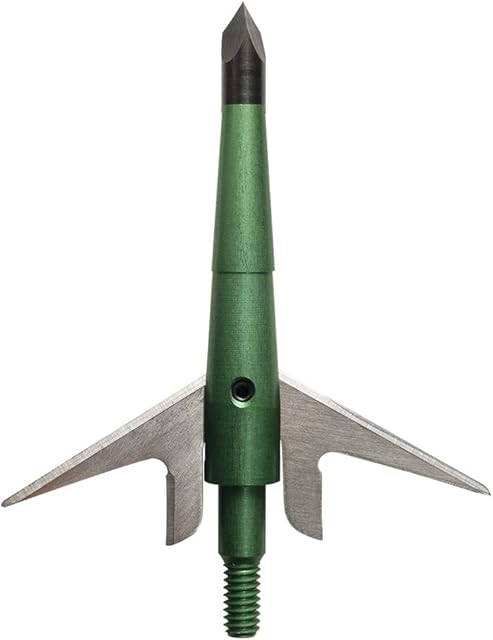
Swhacker 207 2-Inch Cut 2-Blade Broadhead is fast, accurate, and durable. This set contains 3 stainless steel broadheads with 0.032″ thickness and honed razor sharpness. Moreover, these green broadheads are 100 Grain expandable and featured high carbon steel points.

Today, we will review Swhacker SWH00207, covering every necessary detail. So, to learn more about these broadheads, keep reading this article.

Swhacker SWH00207 Broadheads Features

Design

Swhacker SWH00207 Broadheads come with 2 sets of cutting blades. The first set is wing blades, and the latter is the main blades. The beauty of the design is that the first edges compel the second edges to open once within the animal. This broadhead could have a cutting diameter of up to 2 inches.

Wing Blades: Wing blades are generally smaller than main blades and require less energy to penetrate. These blades usually face most obstacles while entering and cutting the hide, dirt, hair, and bones. You can also open this broadhead with these blades.

Main Blades: These blades are bigger than wing blades, so they don’t face obstacles during entering. These blades remain untouched during initial penetration and in the body cavity. Therefore, these blades stay sharp for internal organs. 

Specification 

These broadheads are made of stainless steel materials. Their points are hardened with high-carbon steel.

Besides, the ferrules are also constructed with anodized aircraft aluminum. Each broadhead is 2 broad blade heads with 0.032″ in thickness, 100 grain, 2-inch cut 55ft. lbs of kinetic energy.

Function

Swhacker SWH00207 broadheads regularly provide accurate shots with excellent penetration, resulting in a large wound channel and a healthy blood trail. Therefore, hunters love these mechanical broadheads very much.

Uses

Swhacker SWH00207 broadhead is suitable for both adults(men or women). However, these Swhacker broadheads are designed for hunters who have worked with small to medium-sized games, such as deer.

We discovered that the arrows were dependable across any distance due to their aerodynamics and a mechanical design that never fails to deploy. Also, you can use it in archery and airsoft as well.

Final Verdict

Swhacker is known for its innovative and unique designs for the greatest expandable and mechanical broadheads. The two sets of edges beneath a hardened, two-blade razor-sharp contact point are the key to every broadhead they make.

This article has gathered all of the information we could discover about Swhacker SWH00207 broadheads and what makes them unique, followed by thorough user reviews.

Check More

Primos 65807 Gen 2 Trigger Stick Review

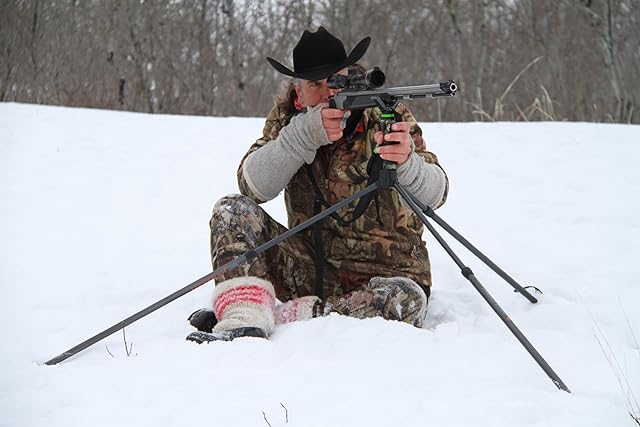
The Primos 65807 Gen2 tripod stand is the most solid and practical tripod design on the market. It is the best shooting stick for hunting that does not require a seat to be stable and comfortable.

Moreover, the Tri-Pod stand is designed for all-day comfort shooting! It is usable with rifles, shotguns, and crossbows. It opens and closes quickly with the pull of a finger.

Therefore, this Gen 2 Jim Shockey Edition Deluxe Tri Pod is the ideal shooting rest for any hunter.

Primos 65807 Gen 2 Trigger Stick Features

Height

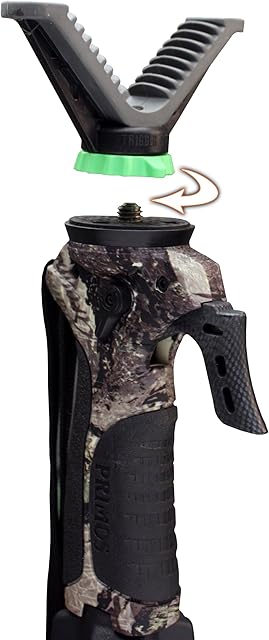
The Primos Gen 2 Jim Shockey Edition Deluxe Tripod also features an improved fluid handle movement with a removable V yoke.

With a height range of 24 to 62 inches, the hunter can sit or stand easily. Besides, you can adjust to your desired height with the pull of a trigger, and to lock the height, you need to flip the switch.

V-Yoke

The fluid twisting handle and detachable V yoke of the deluxe tripod ensure that you will always be on target with your shots when using it. You can also attach cameras and spotting scopes to the V Yoke without difficulty.

This versatile tripod has a quick attach mounting system, making it easy to remove and replace your camera from the tripod.

Whisper Quiet Telescoping

The Primos Trigger Stick Gen 2 is a lightweight gun rest and optical gear mount that you can use while sitting, kneeling, or standing. It allows for one-handed adjustments from 24 to 62 inches, thanks to the trigger release that locks into place with just one hand.

The Trigger Stick is constructed of solid aluminum to allow a more portable and stable platform. With this GEN 2 Trigger Stick’s coating, you can operate telescoping legs with a single fingertip in complete silence.

Aluminum Leg

The new Gen 2 Jim Shockey Edition Deluxe Tripod is the answer for ease of mobility and comfort. The tripod can also be used as a shooting stick. Primos also has updated its 7075 aluminum legs for easy travel, along with a wrist strap for convenient carrying.

Final Verdict

The  Primos 65807 Gen 2 Trigger Stick’s lightweight design and height-adjustable features make it easy to find your perfect shooting setup. Its improved design provides better stability, accuracy, and control while shooting, standing, kneeling, or sitting.

Besides, there’s no need to buy something specific stick for each specific device, thanks to the adjustable height options that let you perfectly adjust the height while shooting.

Therefore, minimize fatigue and maximize accuracy with the Primos Trigger Stick! From one-handed shooting to binoculars or spotting scopes, you’ll appreciate the Trigger Stick’s lightweight design and height-adjustable features.

The Trigger Stick is easy-to-use, lightweight, and designed with precision in mind. Overall, if you love hunting, you’re going to love this gadget!

Check More

Mountain Hunting in Kazakhstan: Planning Guide

Mountain hunting in Kazakhstan can be a serious, high-altitude adventure, but it is not a trip to plan casually. The country has huge mountain country, remote hunting areas, changing weather, protected landscapes, and paperwork that must be confirmed before you ever pack gear or book flights.

This updated guide turns the old trip story into a practical planning checklist. It does not replace a licensed outfitter, local wildlife authority, customs broker, or current legal advice. Use it to understand the questions you must answer before hunting in Kazakhstan.

Table of Contents

Quick Answer

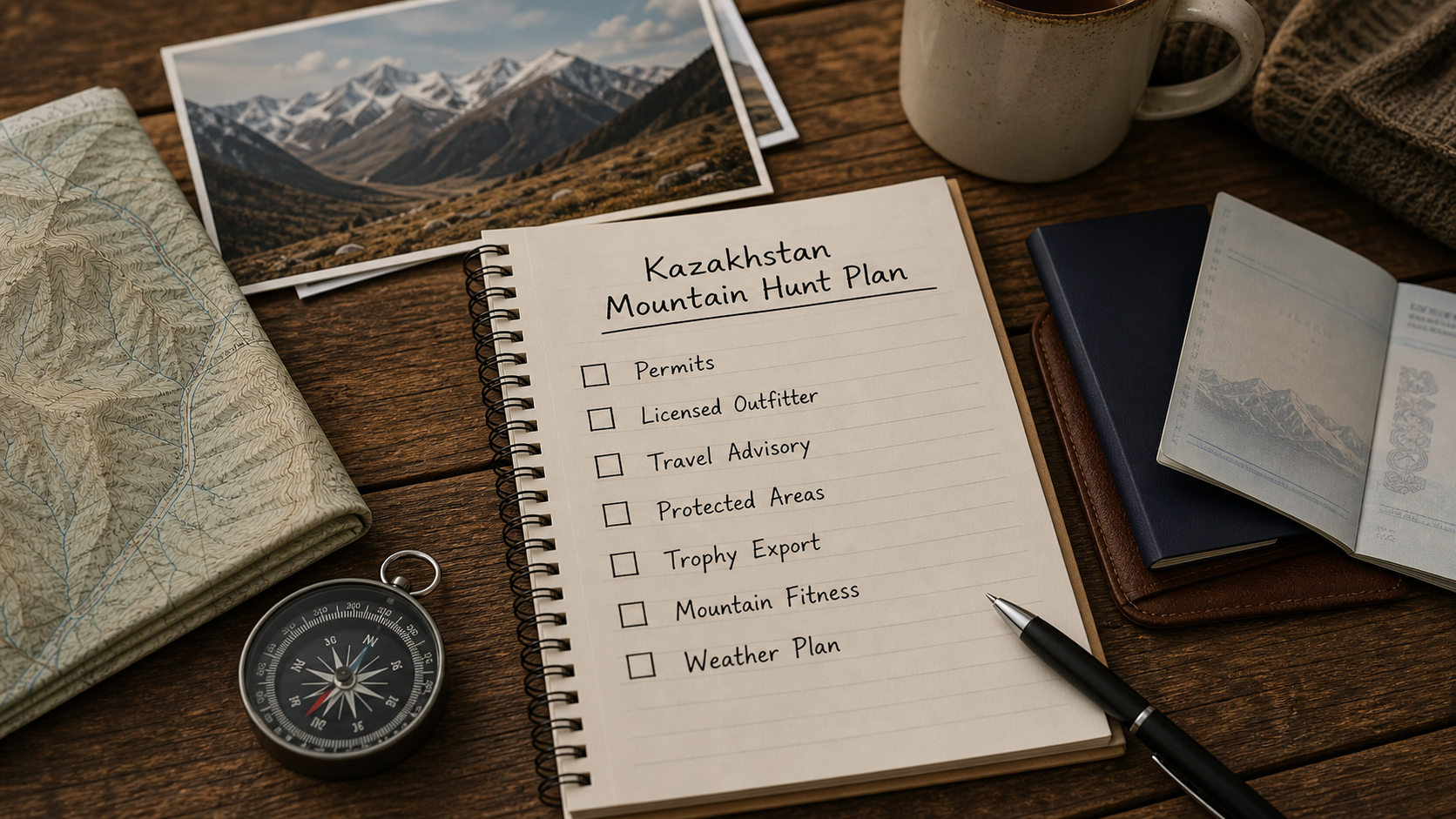
Kazakhstan mountain hunting is best approached as an international expedition, not a normal weekend hunt. Before booking, confirm the hunting area, legal species, licensed outfitter, permit process, travel advisory, protected-area boundaries, trophy/export paperwork, firearm or bow transport rules, and emergency plan.

For travel risk, start with the current U.S. State Department Kazakhstan Travel Advisory. For conservation boundaries and protected landscapes, check country-level resources such as Protected Planet’s Kazakhstan profile. If a trophy export is involved, verify whether CITES or other wildlife trade paperwork applies before the hunt.

Why Kazakhstan Draws Mountain Hunters

Kazakhstan appeals to mountain hunters because the landscape is big, remote, and physically demanding. Depending on the region and legal program, hunters may be looking at steep climbs, glassing from ridges, long vehicle approaches, horseback support, and weather that changes quickly. The attraction is not only the trophy. It is the scale of the country, the altitude, the camp experience, and the challenge of moving safely in unfamiliar terrain.

That same appeal is also the risk. A beautiful mountain hunt can become a poor decision if the outfitter is vague, the permit process is unclear, the hunting boundary is not documented, or the travel plan has no backup. Treat the destination with respect before treating it as an adventure.

What to Confirm Before Booking

Before paying a deposit, get clear written answers. Ask what species is being hunted, what legal quota or permit supports the hunt, who holds the license, what land or concession is involved, and what paperwork you receive before arrival. A serious outfitter should be able to explain the process without vague promises.

  • Legal species: Confirm the exact species and whether the hunt is currently open.
  • Hunting area: Ask for the region, boundary, concession, or reserve relationship in writing.
  • Outfitter credentials: Verify who is licensed, who guides, and who handles permits.
  • Weapon import: Confirm firearm, ammunition, bow, or optic transport rules before flights.
  • Trophy/export process: Confirm veterinary, customs, CITES, and shipping steps if applicable.
  • Emergency plan: Ask about satellite communication, evacuation, medical care, and weather delays.

Do not accept “we handle everything” as the only answer. Good operators may handle much of the process, but you still need to understand what documents exist, whose name is on them, and what happens if a border, airline, or wildlife officer asks questions.

The legal side is the most important part of any Kazakhstan mountain hunt. You need to know whether the outfitter is operating legally, whether the animal is covered by a valid quota or permit, and whether you can legally transport your equipment into and out of the country.

If a protected or internationally regulated species is involved, trophy export may require additional paperwork. CITES requirements can change by species and country, so verify the exact scientific/common species name before the hunt and confirm the export path with the outfitter and destination authorities. The official CITES Appendices page is the starting point for checking whether international wildlife trade controls may apply.

Also verify local protected-area rules. Kazakhstan has many protected and conserved areas, and the exact boundary matters. A hunt that is legal in one concession or management area may be illegal in another. Protected Planet’s country data shows why hunters should take boundaries seriously before assuming open mountain country is huntable.

Travel Safety and Remote Country

International hunting travel has two layers of risk: normal travel risk and remote-country risk. Before departure, review the current travel advisory, passport validity, visa or entry rules, medical insurance, local contacts, and communication options. In the mountains, ask how the guide team handles weather, vehicle failure, altitude issues, injury, and delayed extraction.

Do not assume mobile service will exist. A satellite communicator, medical evacuation plan, and clear camp check-in routine are not luxuries on a remote mountain hunt. They are part of the plan.

Gear and Fitness Realities

Kazakhstan mountain hunts can punish weak boots, poor layering, and unrealistic fitness. Your gear list should be built around terrain, temperature swings, snow or rain, wind, long glassing sessions, and recovery from steep climbs. A flatland packing list is not enough.

Boots and Clothing

Break in mountain boots before the trip. Bring a layering system that handles sweat on climbs and cold during glassing. Ask the outfitter what previous hunters actually wore during that same season, not only what looks good on a generic gear list.

Optics and Glassing

Good binoculars, a stable tripod, and a spotting scope can matter more than extra gadgets. In mountain country, finding the animal is often harder than taking the shot. Plan for long periods of glassing in wind and cold.

Fitness and Altitude

Train with elevation, pack weight, and repeated climbs if possible. If you have medical concerns, talk to a physician before booking. A guide can slow the pace, but they cannot make up for poor preparation in steep country.

Ethical Hunting Expectations

Ethical international hunting starts before the shot. Confirm that the hunt supports legal wildlife management, does not cross protected boundaries, uses a qualified local team, and has a clear plan for meat, recovery, and documentation. If the outfitter cannot explain where the animal may be hunted and how the paperwork works, walk away.

In the field, take only shots you have practiced for and that conditions allow. Mountain wind, distance, angle, fatigue, and excitement can all distort judgment. Passing a poor shot is part of doing the trip right.

FAQ

Is mountain hunting in Kazakhstan good for beginners?

Usually no. It is better for hunters who already understand mountain travel, physical preparation, optics, and international paperwork. A beginner should build experience closer to home first.

Do you need a local outfitter in Kazakhstan?

For most visiting hunters, yes. A licensed outfitter or local operator is essential for permits, area access, language, logistics, and field safety. Verify credentials before paying.

Should you check CITES before a Kazakhstan hunt?

Yes, if any trophy or wildlife part may be exported. CITES rules depend on the species and country, so check the exact species and paperwork before the hunt.

What is the biggest planning mistake?

The biggest mistake is treating the hunt like a normal outfitted trip and not verifying permits, travel risk, protected-area boundaries, export rules, and emergency plans in writing.

What gear matters most?

Boots, layering, optics, communication, and weatherproof organization matter most. The best gear list depends on season, region, elevation, and outfitter logistics.

Final Recommendation

Mountain hunting in Kazakhstan can be memorable for the landscape, challenge, and people you share camp with. But the trip only makes sense when the paperwork, travel plan, outfitter, conservation boundaries, and emergency plan are clear before you go.

Choose the operator carefully, verify current rules from official sources, train for the mountains, and keep ethics ahead of excitement. That is how a hard international hunt becomes a good story instead of a preventable problem.

Hoppe’s M-Pro 7 LPX Gun Oil Review

Table of contents


Hoppe’s M-Pro 7 LPX Gun Oil Review: Having a reliable weapon is essential for any shooter. But over time, a gun’s components can get rusty, unclean, and clogged. So, like any machinery, guns also need regular maintenance and cleaning.

Therefore, frequent deep cleanings and reducing dirt and carbon build-up are necessary to bring a weapon back to its former glory.

Hoppe’s M-Pro 7 LPX Gun Oil Review

However, there are tons of options, methods, and ways for cleaning a firearm. But, the most effective way to enable a gun to perform at its best is to apply improved oils and lubricants to it.

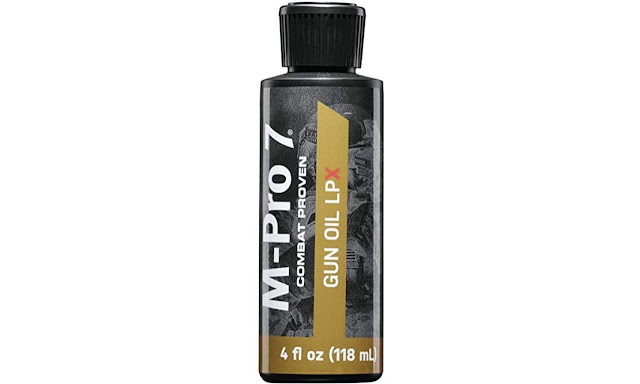
M-Pro 7 is one of the best gun oils for rifles among the many great companies producing new and improved oils and lubricants. So, today we are going to review Hoppe’s M-Pro 7 LPX Gun Oil in this article.

Long-Lasting

M-Pro 7 Gun Oil is one of the best gun lubrications available in the market that you can definitely put at the top of your choice list. As a heavy-duty gun oil, it provides unbeatable durability and protection to the gun elements. M-Pro 7 is the most impressive long-term protection available compared to its rivals.

Just a tiny drop can give long protection against sand, saltwater, humidity, moisture, and the typical wear and tear that a handgun experiences.

After using M-Pro 7, you’ll have long-lasting dust and dirt-repelling layer that won’t wash off your surface. As a result, it’s perfect for both long-term gun storage and routine gun cleaning.

Formulation

M-Pro 7 used cutting-edge technology to form this oil. Due to its cutting-edge technology, this heavy-duty gun oil doesn’t run off or evaporate rapidly. Besides, it comprises high-quality synthetic oils with a silicon-free formula that efficiently prevents gumming and splitting.

Moreover, M-Pro 7 LPX Gun Oil makes shooting safer and keeps the environment safe. Therefore, it doesn’t include dangerous chemicals. Due to its Greenpeace formulation, this lubricant avoids potentially harmful substances without sacrificing performance.
Odor-Free

M-Pro 7 LPX Gun Oil is odorless and non-hazardous. This biodegradable heavy-duty gun oil contains no ammonia and cleans up to four times faster than conventional ammonia-based cleansers.

Pros

  • It’s ideal for both long-term storage of firearms and regular maintenance cleaning
  • Synthetic oils of the highest grade, free of silicon.
  • No ammonia is present in this heavy-duty gun oil.
  • There is no expiration date on this biodegradable oil.
  • It is odorless

Cons

  • It is a little bit pricy

FAQs

Q. Is there an expiration date for M-Pro 7 LPX Gun Oil?

Ans: No, since this is a biodegradable product, it doesn’t have any expiry date. You can use this oil for a longer period.

Q. Is it effective for handguns?

Ans: Yes, it is. This gun oil works well on every handgun, rifle, and shotgun.

Q. Can I use this oil on Air rifles?

Ans: Hence M Pro7 is a metal lubricant and protectant. You can use it on any metal weapon, even air rifles.

Final Verdict

M Pro7 LPX Gun Oil is overall a very good gun oil considering the safety and reliability. The temperature range for this 4-ounce bottle is -85 F to 462 F.

In addition to handguns, military firearms can benefit from using this oil. In fact, it’s an excellent substitute for conventional gun oils, dry lubricants, and CLPs.

[su_button url=”https://www.amazon.com/dp/B0031D0G4I?tag=shootinggea0f-20&linkCode=ogi&th=1&psc=1″ target=”blank” style=”default” background=”#0091cd” size=”10″ center=”yes” radius=”10″ icon=”icon: hand-o-right” rel=”nofollow”]Check Latest Price on Amazon.com![/su_button]

Sage and Braker CLP Review in 2025

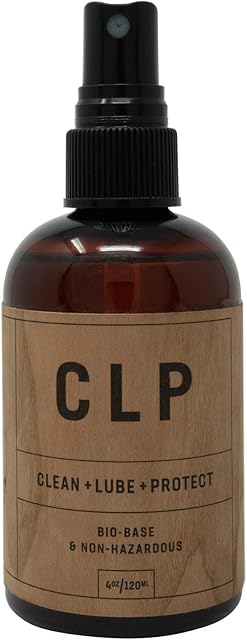
Sage and Braker CLP Review: Sage & Braker has been a well-reputed name in the gun cleaning products industry through the generations.

They got into the industry because they are passionate about firearms cleaning products and love to help people keep firearms around for their children and grandchildren.

Table of contents

Sage & Braker CLP Review

The Sage & Braker CLP was initiated with the United States military in mind. After speaking with military people regularly, the company discovered that keeping their rifles clean was challenging because the oil in ordinary CLP collects dust and sand.

Therefore, Sage & Braker set out this most effective CLP on the market that significantly decreases dirt from your firearm’s surface.

Formulation

Usually, CLPs leave an oily behind, don’t clean well, and employ dangerous chemicals. But this is not the case with Sage & Braker.

They use a deep-penetrating solvent that spikes every surface on a micro-scale to provide a more thorough and effective treatment to carbon, lead, and copper fouling.

The rigorous cleaning of this CLP will remove crud from your firearms which have developed after years of neglect. Moreover, this best gun cleaning oil also avoids harsh chemicals that can poison people while using it.

Protection Against Carbon

Allowing second-rate CLPs to damage the integrity of your weapons is not a good idea. Therefore, Sage & Braker’s CLP will prove standout.

It will fully protect your firearms from rust and corrosion and manage carbon and pollution while your weapon is used.

Besides, this CLP also considerably reduces static that promotes the affection of carbon and pollutants. Therefore, you can rely on your firearms and expect them to function when you need them the most.

Reduce Operation Temperatures

This gun oil is highly reliable and made with the shooter in mind. It can coat and protect your pistol’s bore and all moving parts.

Besides, it also improves heat dissipation in the firearm’s operating components, reducing weapon operation temperatures.

Also, its composition ensures that the powder in your cartridge burns completely, resulting in a more consistent FPS and a more accurate shot.

Non-toxic Solution

There are no strong-smelling chemicals that will harm the blueing and finish of your precious guns. It is a non-toxic and biodegradable solution. So you can rest comfortably knowing that cleaning your firearms isn’t harming your weapon, health, and the environment as well.

Final Verdict

CLP by Sage & Braker is a bio-based lube. It is generally of higher quality than standard gun oils and solvents.

This true gun cleaner produced in the USA comes with a fresh pine scent and can clean carbon’s and copper’s deepest crud off your firearm. Besides, this non-hazardous lubricate also prolongs your weapon’s life cycle and reliability.

Overall, it puts your firearm in top-notch condition; therefore, you need to worry no longer about rust and corrosion damage. And so, it makes you ready for action whenever you are.

[su_button url=”https://www.amazon.com/dp/B01BLS2P1Q?tag=shootinggea0f-20&linkCode=osi&th=1&psc=1″ target=”blank” style=”default” background=”#0091cd” size=”10″ center=”yes” radius=”10″ icon=”icon: hand-o-right” rel=”nofollow”]Check Latest Price on Amazon.com![/su_button]

Spotting Scope vs Telescope: Which One Should You Use?

Choose a spotting scope for daytime outdoor viewing, hunting observation, birding, target checks, and rugged field use. Choose a telescope for astronomy, night-sky viewing, and high-magnification observation of the moon, planets, and deep-sky objects. A spotting scope is the practical field tool; a telescope is the better astronomy tool.

This comparison explains the difference without turning the page into a product roundup. The best choice depends on what you want to observe, where you will use the optic, and whether you need portability, weather resistance, angled/straight viewing, or astronomy-style mounting.

Table of Contents

Quick Comparison

FactorSpotting scopeTelescope
Best roleDaytime field observationAstronomy and night-sky observation
Typical subjectsTargets, birds, wildlife, terrain, distant objects in daylightMoon, planets, stars, nebulae, astronomy targets
PortabilityUsually more field-friendlyVaries, but many astronomy setups are bulkier
Weather useOften built for outdoor field conditionsDepends on model; many are less field-rugged
MountingTripod or compact field supportAstronomy mount or tripod designed for sky tracking
Beginner choiceBetter for hunters, birders, range users, and hikersBetter for astronomy learners

What A Spotting Scope Does Better

A spotting scope is designed as a compact field optic. It usually gives more magnification than typical binoculars while staying more portable and field-oriented than most astronomy telescopes.

Daytime field viewing

Spotting scopes are strong for daylight tasks: checking distant targets, observing wildlife, scanning terrain from a fixed point, or studying birds from a blind, overlook, or shoreline.

Portability and ruggedness

Many spotting scopes are built for outdoor movement, compact tripods, and field conditions. They are still more demanding than binoculars, but they are usually easier to carry and deploy than a full astronomy telescope setup.

Range and hunting observation

For shooting ranges and hunting glassing points, a spotting scope makes more sense than a telescope. It is easier to aim at ground-level subjects, easier to pack, and more aligned with daytime outdoor use.

What A Telescope Does Better

A telescope is the better choice when the job is astronomy. Telescopes are built around sky viewing, specialized mounts, and higher-magnification or larger-aperture setups that are not usually practical for a hunter or range user.

Astronomy and night-sky detail

If your main goal is looking at the moon, planets, stars, or other sky objects, a telescope is the correct tool. NASA’s Hubble overview is a useful reminder that telescope design is fundamentally tied to observing distant astronomical objects.

Aperture and specialized mounts

Many telescopes use larger apertures and astronomy mounts that make sense for sky viewing. Those advantages matter at night, but they also make many telescopes less convenient for a backpack, blind, truck seat, or shooting bench.

Not ideal for quick field scanning

A telescope can sometimes view daytime objects, but it is usually not the best tool for moving wildlife, range checks, or rough outdoor use. A spotting scope is faster and more practical in those situations.

Which Should You Buy First?

Buy a spotting scope first if your main use is hunting, target shooting, birding, wildlife observation, or outdoor travel. Buy a telescope first if your main use is astronomy. If your use case includes both, decide which activity you will actually do more often.

For many outdoor users, binoculars come first, a spotting scope comes second, and a telescope is only necessary if astronomy becomes a separate hobby. For astronomy users, the order is different: a telescope and stable mount matter more than a compact field optic.

Use-Case Guide

For hunting and scouting

Use a spotting scope. It is easier to carry, easier to aim at terrestrial subjects, and better matched to daylight field observation.

For target shooting

Use a spotting scope on a stable tripod or bench support. It can help you check targets without walking downrange, but it never replaces range commands or safe range procedure.

For birding and wildlife

Use a spotting scope when you are stationary and need detail at distance. Use binoculars for scanning and moving subjects. A telescope is rarely the first choice for this use.

For astronomy

Use a telescope. A spotting scope can show the moon or bright objects casually, but it is not the right long-term replacement for an astronomy telescope and mount.

Mistakes To Avoid

  • Buying a telescope for hunting or shooting-range target checks.
  • Buying a spotting scope and expecting it to perform like a dedicated astronomy telescope.
  • Ignoring tripod or mount quality.
  • Comparing magnification only and ignoring field use, weight, eye relief, and viewing angle.
  • Forgetting that daylight field use and night-sky use are different jobs.

Frequently Asked Questions

Can a spotting scope be used for astronomy?

Yes, casually. A spotting scope can view the moon and some bright objects, but it is not a full substitute for an astronomy telescope if night-sky viewing is your main hobby.

Can a telescope be used as a spotting scope?

Sometimes, but it is usually awkward. Many telescopes are less rugged, less portable, and less convenient for daytime terrestrial viewing than a spotting scope.

Which is better for shooting range use?

A spotting scope is usually better for range use because it is designed for terrestrial viewing and works well on a bench or tripod. A telescope is better saved for astronomy.

Which is better for beginners?

For outdoor viewing, a spotting scope is easier to justify. For astronomy, a beginner telescope is the better match. The right beginner tool depends on whether your first priority is daytime field use or night-sky viewing.

Final Recommendation

For hunting, birding, wildlife observation, and shooting-range target checks, choose a spotting scope. For the moon, planets, stars, and astronomy, choose a telescope. The simplest decision rule is this: spotting scopes are for daytime field detail; telescopes are for the sky.

Where to Shoot a Whitetail Deer With a Crossbow

The ethical answer is simple: with a crossbow, only take a whitetail deer shot when the deer is calm, broadside or slightly quartering away, within your proven effective range, and there is a clear path to the heart-lung area with a safe backstop beyond. If the angle, distance, movement, or recovery plan is uncertain, pass the shot.

This guide is about ethical shot selection, not forcing a risky opportunity. Crossbow bolts kill by cutting tissue and causing blood loss, so shot angle, penetration, broadhead sharpness, and recovery discipline matter more than bravado.

Table of Contents
  1. Quick Answer
  2. Before You Think About Aiming
  3. Best Crossbow Shot Angles
  4. Shots to Pass
  5. Know Your Proven Range
  6. Crossbow Deer Shot Checklist
  7. After the Shot
  8. Common Mistakes
  9. Frequently Asked Questions
  10. Final Recommendation

Quick Answer

The best crossbow shot on a whitetail deer is usually a calm broadside or slight quartering-away shot aimed through the vital chest area, with the exact hold adjusted for angle and height. Avoid frontal, hard-quartering-to, running, obstructed, and long shots beyond your practiced limit.

Why Crossbow Shot Placement Is Different

A crossbow bolt does not create the same effect as a high-powered rifle bullet. It relies on sharp broadhead cutting, penetration, and a clear path through vital tissue. That makes angle and discipline especially important. A small change in deer position can turn a good opportunity into a shot you should pass.

Crossbows can be accurate, but accuracy on a target is not the same as field judgment on a live deer. Clothing, rest position, tree-stand angle, animal movement, brush, low light, and nerves all reduce the margin for error. Build your hunting limit around real field practice, not the advertised speed of the crossbow.

Before You Think About Aiming

Good shot placement starts before the deer appears. Confirm your state crossbow rules, legal light, tag requirements, broadhead rules, and property boundaries. Crossbow regulations vary widely, so use your state wildlife agency as the final authority.

Also confirm your equipment. A crossbow should be sighted in with the same bolts and broadheads you plan to hunt with, and the shooter should know the actual point of impact at hunting distances. For general equipment safety, review resources such as the National Bowhunter Education Foundation crossbow safety page.

Best Crossbow Shot Angles

Broadside

A broadside deer gives the clearest path through the chest cavity. Wait until the front leg position and body angle leave a clean path, and avoid forcing the shot through heavy shoulder bone. The goal is a fast, humane kill and a trackable recovery.

Slightly Quartering Away

A slight quartering-away angle can be very effective when the bolt can pass forward through the chest. The key is thinking about the exit path, not just the entry point. If the angle becomes steep or uncertain, wait for the deer to turn.

From an Elevated Stand

Tree-stand height changes the angle through the deer. Do not simply aim at the same visual spot you would from ground level. Think through the path of the bolt and avoid steep angles that reduce the chance of both-lung penetration.

Before taking a crossbow shot, confirm angle, distance, legal light, backstop, broadhead readiness, and recovery plan.

Shots to Pass

Passing a shot is part of ethical hunting. Do not shoot because you are excited, cold, or afraid the deer will leave. A poor shot can wound an animal and create a difficult recovery.

  • Frontal shots, especially with a crossbow.
  • Hard quartering-to shots where the shoulder blocks the chest path.
  • Running or alert deer that may jump the string.
  • Shots through brush, grass, limbs, or unknown cover.
  • Long shots beyond your proven range.
  • Steep downward shots where the path may hit only one lung.

Bowhunting education materials often emphasize patience, close-range discipline, and ethical shot selection. If you use online education references such as Bowhunter Ed, pair them with your state rules and in-person practice.

Know Your Proven Range

Your ethical range is not the farthest distance your crossbow can launch a bolt. It is the distance where you can repeatedly place hunting broadheads into the vital-size target from realistic positions, under pressure, with the same rest and clothing you will use in the field.

Practice from sitting, kneeling, elevated, and awkward positions if those match your hunt. Practice with a rangefinder, because guessing distance is a common source of missed or poor hits. If you cannot verify the range, do not shoot.

Crossbow Deer Shot Checklist

  • Is the deer legal and clearly identified?
  • Is the deer calm enough for a clean shot?
  • Is the angle broadside or slightly quartering away?
  • Is the distance inside your practiced limit?
  • Is there a clear path with no brush or limbs?
  • Is there a safe backstop and no people, roads, buildings, or livestock beyond?
  • Do you have a recovery plan and enough daylight?

After the Shot

After the shot, watch and listen carefully. Mark where the deer was standing and the direction it traveled. Do not rush into the area blindly. Give the animal appropriate time, inspect sign carefully, and follow local best practices for recovery.

If sign is poor or the hit is uncertain, consider calling an experienced tracker where legal. Recovery discipline is part of ethical hunting, not an afterthought.

Common Mistakes

  • Aiming at the deer as if crossbow bolts behave like rifle bullets.
  • Taking frontal or hard-quartering-to shots.
  • Shooting beyond practiced broadhead range.
  • Ignoring stand angle and exit path.
  • Forgetting to check state crossbow rules before the hunt.
  • Leaving without a recovery plan.

Frequently Asked Questions

Where should you aim at a deer with a crossbow?

Only take a shot that gives a clear path through the heart-lung area, usually on a calm broadside or slightly quartering-away deer. The exact hold depends on angle, height, and distance.

Should you take a frontal shot with a crossbow?

No. Frontal shots leave little margin for error and can be poor choices with crossbow bolts. Wait for a better angle.

How far should you shoot a deer with a crossbow?

Your limit is the distance where you can consistently place hunting broadheads from realistic field positions. If you have not proven that distance in practice, it is too far for hunting.

What if the deer is quartering toward you?

Pass the shot. Quartering-toward angles often put heavy bone and shoulder structure in the way of the chest path, especially for archery equipment.

Final Recommendation

The best crossbow shot on a whitetail is the one you are willing to pass if conditions are not right. Wait for a calm broadside or slight quartering-away deer, stay inside your proven range, think through the bolt path, and commit to a careful recovery. Ethical restraint is what turns crossbow shot placement into responsible hunting.

When Does Coyote Season Start?

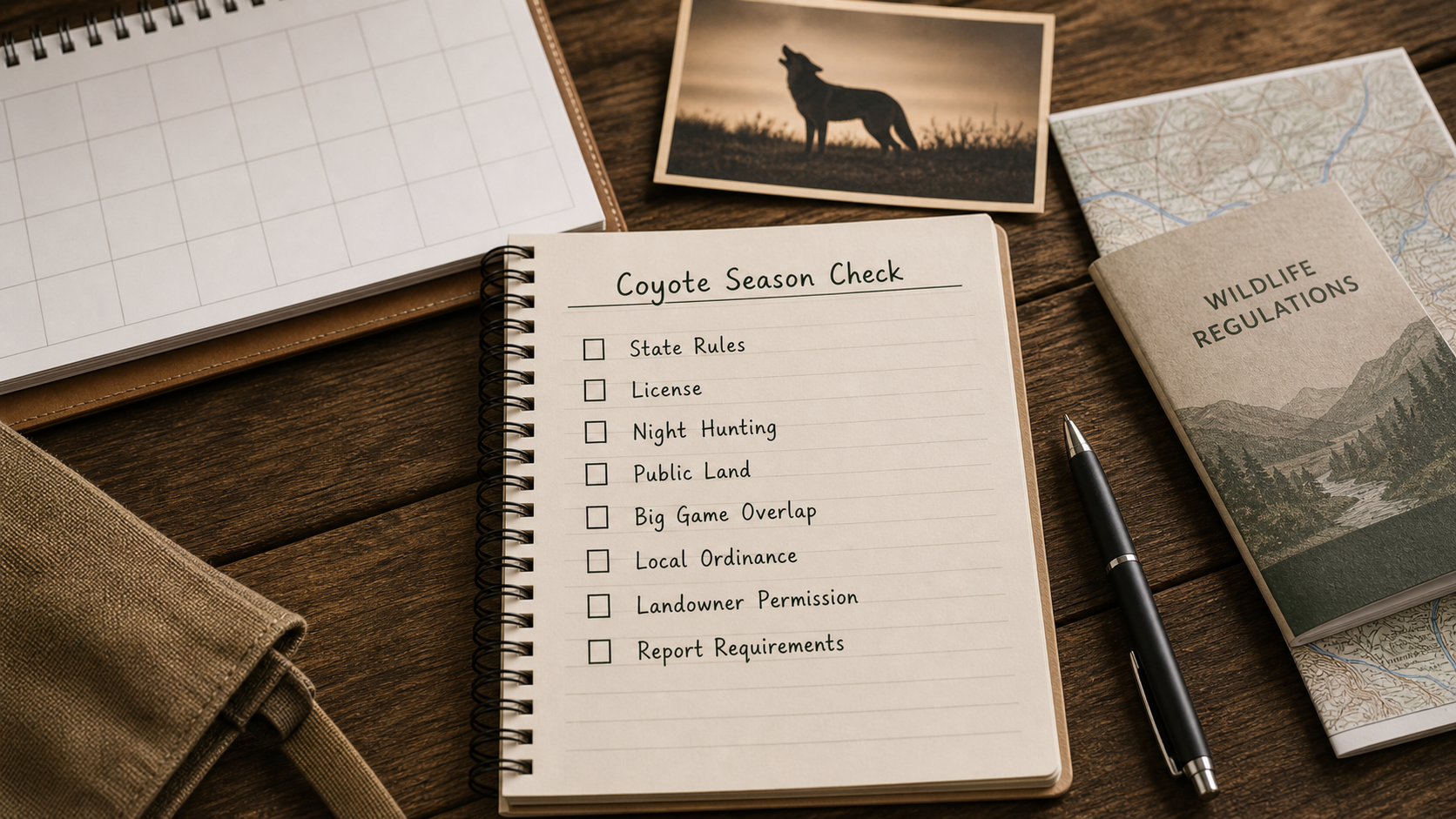
When does coyote season start? There is no single national start date. Coyote hunting seasons are set by each state, and many states treat coyotes differently from deer, turkey, waterfowl, or other game animals. Some states allow coyote hunting year-round, while others add license rules, night-hunting limits, public-land restrictions, weapon rules, or seasonal overlap rules.

The safest answer is simple: check your state wildlife agency before every hunt. Coyote regulations can change by state, property type, season, method, and time of day, so an old date from a forum or blog post is not enough.

Table of Contents

Quick Answer

In many places, coyote season is open for much or all of the year. But that does not mean the same rule applies everywhere, or that you can ignore license, land, night-hunting, firearm, trapping, or local restrictions.

For example, Texas Parks and Wildlife lists coyotes under nongame animals and explains that nongame species have no closed seasons or bag limits on private property, while still noting license and restriction details. Pennsylvania’s Game Commission lists coyotes with no closed season, but adds different license context depending on big-game seasons. California’s Department of Fish and Wildlife publishes nongame and furbearer season/limit information separately. Those examples show why your state page matters more than a generic answer.

Why There Is No One Coyote Season

Coyotes are managed differently across the United States because states classify them differently. One state may treat coyotes as nongame animals, another may manage them under furbearer or predator rules, and another may allow year-round hunting but restrict night methods, lights, suppressors, bait, electronic calls, or public-land access.

That means the phrase “coyote season” can refer to several different things: when hunting is legal, when trapping is legal, when night hunting is legal, when public land is open, or when certain licenses are valid. Before planning a hunt, identify which version you actually need.

State Examples

These examples are not a substitute for checking your own state, but they show how different the rules can be.

Texas

The Texas Parks and Wildlife Department’s Nongame, Exotic, Endangered, Threatened & Protected Species page lists coyotes as nongame animals and explains the no-closed-season framework for nongame species on private property. It also includes important notes about licenses, private-property authorization, night hunting courtesy, public-land restrictions, and live coyote transport.

Pennsylvania

The Pennsylvania Game Commission’s Seasons and Bag Limits page lists coyotes with no closed season and no limit, but it also explains license context around big-game seasons. That is a good reminder that “open” does not mean “no rules.”

California

The California Department of Fish and Wildlife maintains a Nongame and Furbearer Hunting page with current season and license information. If you hunt in California, use that page and the current regulations instead of assuming the rules match another state.

What to Check Before Hunting

Before hunting coyotes, confirm these items from the state wildlife agency and the land manager or landowner:

  • Season: Is coyote hunting open now, and does the rule differ for hunting versus trapping?
  • License: Do you need a hunting license, furtaker license, predator permit, or other validation?
  • Land type: Are the rules different on private land, public land, WMAs, federal land, or leased land?
  • Night hunting: Are lights, thermal optics, night vision, or electronic calls legal?
  • Weapon rules: Are rifles, shotguns, rimfires, suppressors, airguns, or archery equipment restricted?
  • Big-game overlap: Do rules change during deer, bear, elk, turkey, or other big-game seasons?
  • Local rules: Do county, city, discharge, road, or noise ordinances apply?
  • Reporting: Is harvest reporting, tagging, or check-in required?

Best Times of Year for Coyote Hunting

Legal season and best hunting timing are not the same thing. Even where coyotes are open year-round, many hunters prefer late fall and winter because visibility can improve, food patterns change, and calling can be productive. Winter also avoids some conflict with warm-weather insects and heavy cover.

Spring and summer require extra caution. In many areas, coyotes may be raising pups or moving differently. Heat, snakes, livestock activity, crop work, and public-land use can also change the practical side of hunting. If your goal is predator management around livestock, coordinate with the landowner and follow state rules closely.

Night Hunting, Public Land, and Local Rules

Night hunting is where many coyote hunters make rule mistakes. A state may allow coyote hunting but restrict lights, night vision, thermal optics, shooting hours, firearm type, road access, or public-land hunting. Some public lands also have their own posted rules even when private land is more flexible.

Local ordinances matter too. Being legal under state wildlife rules does not automatically mean you can discharge a firearm near a road, residence, town boundary, or subdivision. Check the hunting regulation, land manager rule, and local law before the first stand.

Ethical Coyote Hunting

Coyotes are not pests to treat carelessly. They are wild animals, and ethical hunting still matters. Make clean shots, know your backstop, avoid unsafe night setups, respect landowners, and do not leave a mess at the stand. If you are hunting for predator management, be honest about your goals and follow the law.

Ethical hunting also means knowing when not to shoot. If the background is unsafe, the animal is too far, the light is poor, or you are uncertain about the rule, pass the shot.

FAQ

Is coyote season open year-round?

In some states, yes. In others, the answer depends on license, land type, hunting method, season overlap, or local rules. Always check your state wildlife agency.

Do you need a license to hunt coyotes?

Usually yes, but there are exceptions in some states or situations. For example, Texas has specific private-property language for depredating coyotes. Check your state rule before hunting.

Can you hunt coyotes at night?

Sometimes, but night rules vary heavily. Lights, thermal optics, night vision, firearm type, shooting hours, and public land may all be regulated.

What is the best month for coyote hunting?

Many hunters like late fall and winter because calling and visibility can improve, but the best month depends on local pressure, weather, cover, land access, and legal rules.

Where should you check coyote season dates?

Check your state wildlife agency’s current hunting regulations first, then confirm public-land or local restrictions if you are not hunting private land.

Final Recommendation

Coyote season starts whenever your state regulation says it starts, and in many states that may mean there is no closed season. But a season answer is only the first step. Confirm your license, land type, night-hunting rules, weapon rules, big-game overlap, and local ordinances before you hunt.

If you remember one thing, make it this: coyotes may be open in many places, but coyote hunting is never rule-free.

What Is Snipe Hunting? Real Bird Hunt vs the Prank

Snipe hunting can mean two very different things. Real snipe hunting is the legal pursuit of small migratory shorebirds such as Wilson’s snipe in wetland habitat. A “snipe hunt” can also mean a prank where someone is sent to catch an imaginary animal. This article explains both meanings, then focuses on the real hunting basics.

If you plan to hunt real snipe, do not rely on old rules or general advice. Seasons, licenses, bag limits, nontoxic shot rules, and public-land requirements can change. Always confirm current regulations for the state and property you will hunt.

Table of Contents
  1. Quick Answer
  2. Real Snipe Hunting vs the Prank
  3. What Is a Snipe?
  4. Where Snipe Live
  5. Rules and Safety Checks
  6. Snipe Hunting Gear Checklist
  7. Basic Snipe Hunting Method
  8. Common Mistakes
  9. Frequently Asked Questions
  10. Final Recommendation

Quick Answer

Real snipe hunting is usually a wetland walk-up hunt for fast, zigzag-flying migratory birds. Hunters look for muddy edges, marshy pasture, wet meadows, and shallow water areas, then flush birds on foot with careful attention to rules, safe shooting lanes, and bird identification.

Real Snipe Hunting vs the Prank

The phrase “snipe hunt” is famous as a camp prank, but snipe are real birds. The joke usually involves sending a new camper or friend into the dark with a bag and an impossible task. That folklore meaning is separate from legal migratory bird hunting.

If you are researching the joke, the snipe hunt folklore entry gives useful background. If you are researching real hunting, focus on bird identification, habitat, hunting rules, and safe field practice.

What Is a Snipe?

In North America, hunters most often mean Wilson’s snipe. It is a small, camouflaged, long-billed shorebird that uses wet ground, marsh edges, and muddy feeding areas. Its flight can be quick and erratic, which is why snipe hunting has a reputation for being challenging.

For basic species background, see the Wilson’s snipe reference. When hunting, do not rely on a single photo. Learn shape, flight, habitat, behavior, and legal identification details before entering the field.

Where Snipe Live

Snipe are associated with wet, soft ground where they can probe for food. Productive places can include marsh edges, wet pastures, seep areas, ditches, rice-field edges, mud flats, and grassy wetland margins. They often hold tight until approached, then flush quickly.

The habitat is part of what makes the hunt different from upland walking. Footing may be slick, water depth can change quickly, and visibility can be limited by grass or reeds. Move slowly and plan your route so every possible shot has a safe direction.

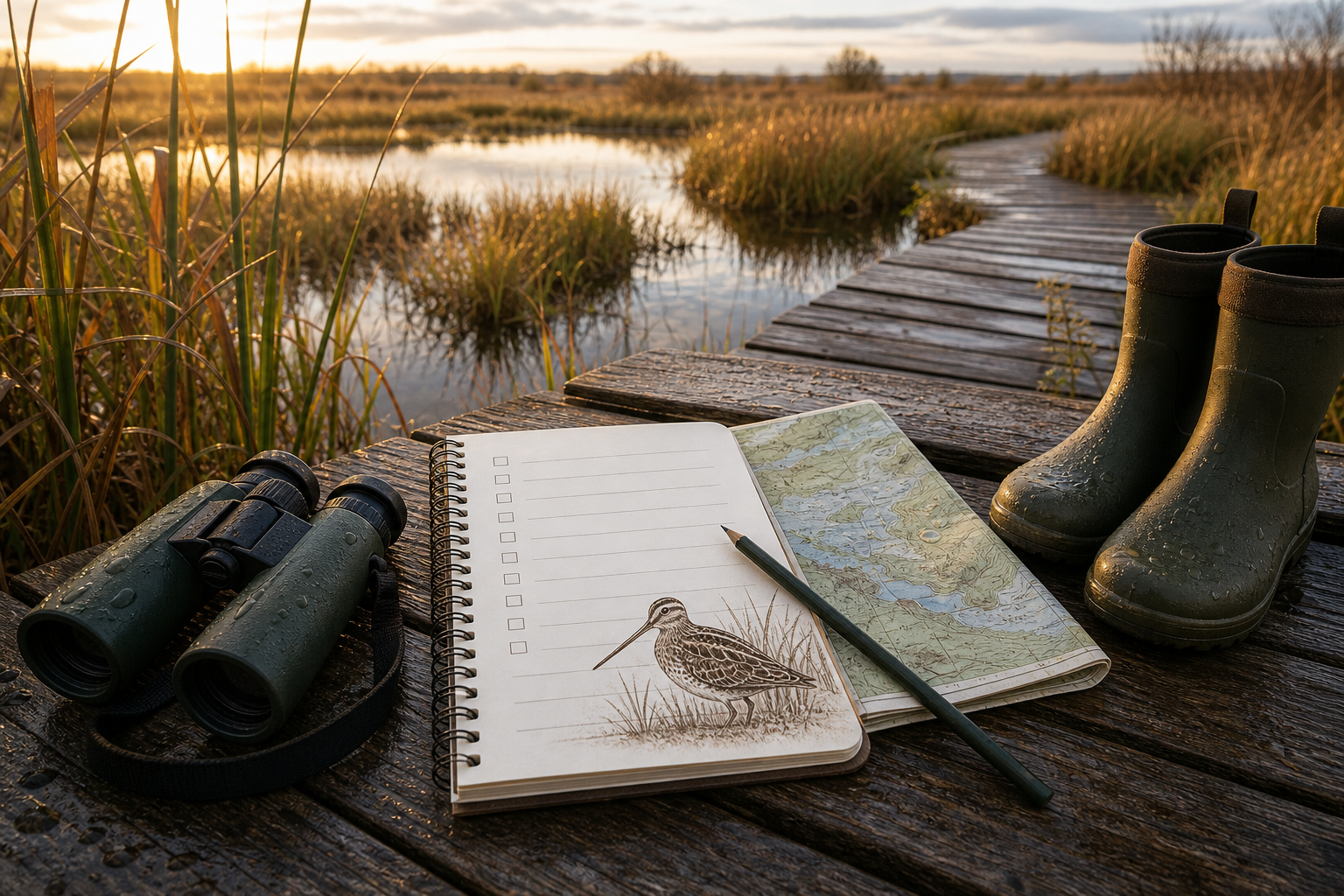
A useful snipe hunt starts with habitat, identification, regulations, footing, and safe shooting lanes.

Rules and Safety Checks

Snipe are migratory game birds, so hunting them is regulation-heavy compared with casual small-game assumptions. Check your state hunting guide for open dates, daily limits, possession limits, legal shooting hours, license/stamp requirements, public-land rules, and ammunition restrictions.

State pages are the source that matters in the field. For example, New York maintains a migratory game bird regulations page. Use the equivalent official page for your own state before hunting.

Bird Identification Comes First

Do not shoot at a small bird simply because it flushed from wet grass. Confirm species, legal season, safe direction, and what lies beyond the bird. If identification is uncertain, pass the shot and use the encounter as scouting information.

Beginners should spend time watching snipe habitat before hunting it. Notice how birds flush, how they hold in cover, and how wetland edges change with rain and water levels. That scouting helps you avoid guessing in the moment and makes the hunt more ethical.

It also helps to compare legal snipe with look-alike wetland birds before the season. A pocket guide, state wildlife booklet, or mentor can prevent mistakes that a short online description cannot cover. If your identification is only “small brown bird in a marsh,” you are not ready to shoot.

Snipe Hunting Gear Checklist

  • Current license, stamps, and regulation notes for your state.
  • Waterproof boots or waders suited to the depth and footing.
  • Binoculars for checking wetland edges and other hunters.
  • High-visibility clothing where required or wise for shared land.
  • Eye and hearing protection.
  • Small first-aid kit, water, and weather protection.
  • Map or GPS app with property boundaries and safe exit routes.

Basic Snipe Hunting Method

Walk Wet Edges Slowly

A common method is to walk wet meadow edges, marsh margins, and muddy strips slowly enough that birds flush within view. Keep the muzzle or bow direction safe at all times, and avoid pushing toward houses, roads, livestock, or other hunters.

Use a Partner Safely

Two hunters can cover more ground, but only if they agree on lanes before moving. Walk in a predictable line, communicate turns, and never swing across another person. If the cover makes safe spacing unclear, slow down or hunt separately.

Expect Fast, Erratic Flushes

Snipe may flush suddenly and fly in a twisting pattern. That challenge is part of the appeal, but it is also why discipline matters. A rushed shot at a poorly identified bird or unsafe angle is not worth taking.

When in doubt, let the bird go and reset your position.

Common Mistakes

  • Confusing the camp prank with real bird hunting rules.
  • Assuming all wetland birds are legal snipe.
  • Ignoring state-specific migratory bird regulations.
  • Walking marsh edges without a safe exit route.
  • Shooting at low angles without knowing what lies beyond the bird.
  • Hunting wet ground without suitable boots, weather protection, or communication.

Frequently Asked Questions

Is snipe hunting real?

Yes. Snipe are real birds, and legal snipe hunting exists in many places. The phrase also has a prank meaning, so context matters.

Is snipe the same as woodcock?

No. Snipe and woodcock are different birds, even though both can be associated with wet or soft-ground habitat and long bills. Check species identification carefully before hunting.

Do I need special rules for snipe hunting?

Usually yes. Snipe are migratory game birds, so rules may include seasons, limits, stamps, ammunition restrictions, and shooting-hour requirements. Confirm your state rules before every season.

Where should beginners look for snipe?

Beginners should look for legal hunting areas with wet meadow edges, muddy margins, and marshy habitat, then scout carefully before hunting. A mentor who already knows migratory bird identification is very helpful.

Final Recommendation

Snipe hunting is real, but it is not a casual guessing game. Learn the bird, separate the folklore joke from the legal hunt, verify state rules, and focus on safe wetland movement and positive identification. If you are not certain about the bird, rule, or shot angle, do not shoot.

Exit mobile version