Essential Gears for Trap Shooting

Essential Gears for Trap Shooting: Trapshooting is one of the most prestigious sports. This circumstance imposes serious requirements on all attributes and equipment. What is necessary for a person who decides to engage in sports and hunting, shooting, taking into account its special status? We will talk about this now.

"</p

Essential Gears for Trap Shooting

Shooting Vest

This item of clothing is the most important part of the rifle ammunition. Its main function is to provide maximum comfort during preparation for a shot and its direct production. Comfort is achieved by the specifics of tailoring and the correct size. The shooting vest must fit snugly around the shooter’s body and, at the same time, not impede his movement.

For a clear fixation of the weapon “in the shoulder” during the throw-in, the upper part of the front floor (right or left) is trimmed with leather or a special fabric that prevents slipping of the inserted gun.

One of the main functions of the vest is to unload the arms. The shooter needs to have a significant amount of cartridges (from 30 to 50 pieces) and various accessories required during a shooting in the series. Therefore, the vest has many special pockets, including for carrying cartridges.

In sports and hunting or shooting, various types of shooting vests are used. This is due to the specifics and rules of various shooting exercises.

So, for example, in sporting, where the use of cartridges with different weights and sizes of shot is allowed, the shooting vest must have two-volume pockets. This allows you to have four types of cartridges with you and not mix them.

On sporting vests, additional pockets are often made for storing replaceable muzzle restrictions, which are widely used in this exercise. Sporting rules regulate the position of the gun when ready to fire.

Therefore, on the shooting vest, there is a special, clearly visible line (mark), above which the heel of the butt must not be raised before the target leaves. This mark is located in the front, 25 cm below the shoulder line. For a right-hander – on the right, for a left-hander – respectively on the left.

Similar restrictions exist for other exercises, such as skeet shooting and nordic trap. Only in this case, the mark on the shooting vest is at the waistline.

In the exercise “sporting compact,” the exact requirements are imposed on the vest as in sporting, except for the presence of the mark, since the position of the gun during preparation for the shot is free.

Many people shoot different exercises. Do you need a separate shooting vest for each in this case? Of course, there is no such need. It should be noted, however, that the sporting vest is equally applicable to all exercises. And when shooting sporting in an Olympic vest, you will most likely feel the discomfort of not having enough pockets.

Almost all the leading foreign manufacturers of sporting and hunting weapons have touched the development of shooting vests.

Which Shooting Vest to Buy?

Beretta, Browning, Orvis, Allen Company. They are excellent from a functional point of view and will differ only in the brand name, color, and finishing details. Therefore, the choice is only a matter of your taste.

As a rule, there are several vests in a keen shooter’s wardrobe. These are summer, demi-season, and winter options. The fundamental differences lie in the density of the fabric and the degree of insulation.

In summer, during extreme heat, instead of a shooting vest, you can use special large pockets attached to the waist belt. They house cartridges and other accessories. It is also desirable to have different sizes for summer and winter trap shooting vests because in winter, shooting at plates is carried out in a jacket, and in summer, in a T-shirt.

Shooting Cap

This equipment attribute does not have such an essential functional value as a shooting vest and is more auxiliary. All trap shooting exercises are carried out in natural conditions – in the open air. The main function of the cap is to protect the shooter from environmental influences (sunlight, rain, cold, etc.).

The type and shape of the shooting cap is a baseball cap. This is no coincidence – the long visor limits a part of the visible space. It thereby contributes to the maximum concentration of the shooter’s attention on the exposure of the shooting saucer.

When choosing a shooting cap, you should pay attention to the color of the lower part of the visor. It doesn’t have to be bright.

Shooting Glasses

Shooting glasses provide maximum comfort for the eyes in various lighting levels. But that’s not the point. Some qualities fundamentally distinguish shooting glasses from ordinary sunglasses.

First of all, it can distinguish a flying target against any background to make it more contrasting, and therefore more visible. This is achieved through the use of different color filters.

For example, a red filter changes the color of the saucer target from red to bright orange, while the background remains virtually unchanged.

Three main colors are used to produce light filters – dark gray (almost black), red and yellow. And accordingly, the conditions for their use are bright sun, partly cloudy, overcast (twilight).

Many companies equip shooting glasses with many light filters with different shades (more than ten). This allows the shooter to adapt to any lighting conditions, the color of the target used, the background on which it flies.

Shooting glasses also have a protective function. They protect the eyes from mechanical damage. Therefore, light filters are made only of high-strength polymers. The use of glass is prohibited. The strength of the polymer used is so great that shooting glasses do not get through holes from a shot with a small lead shot from a distance of 10 meters.

Shooting glasses are a must-have item for a shooter’s equipment. You may not be allowed to participate in trapshooting competitions or even on the shooting range if you do not have eye protection.

But even if at a particular competition the organizers do not impose strict restrictions on the availability of glasses, then, first of all, you must take care of protecting your eyes yourself. Unfortunately, fragments have an unpredictable trajectory, and cases of contact with the face and eyes are quite frequent.

Shooters with poor eyesight have the opportunity to buy glasses for shooting with diopters.

Shooting Headphones

The main and perhaps the only function of shooting headphones is to protect the ears. And this protection should never be neglected. At all shooting stands, weapons are used as a rule of 12 gauge, which creates a high sound pressure.

Practice shows that each shooter in one visit to the stand, on average, fires from 100 to 200 shots. And taking into account the fact that five more people can alternately shoot with him on the shooting platform, it is not difficult to calculate how much load can fall on his ears.

If you do not use headphones for shooting, then it is simply impossible to avoid the “bell ringing” and often migraines in the head.

What Shooting Headphones to Buy?

Many companies are engaged in the production of headphones for shooting. The most notable among them is Peltor (Sweden). She has orders from such weapons giants as “Beretta” and “Browning.” The lineup of the company is extensive.

It is mainly classified according to the degree of sound insulation. Their weight and size parameters depend on this: the higher the level of noise protection, the heavier and more significant the headphones.

The design of the headphones provides for an adjustment to the size of the head and the ability to “fold” to a miniature size.

Peltor and other manufacturers produce two types of headphones – passive and active shooting headphones  (electronic). The principle of operation of the former is based on the use of various soundproofing materials.

In addition, active headphones for shooting use an electronic system that suppresses a powerful sound signal from a shot, and a weak sound (for example, the voice of an instructor) passes and amplifies.

Of course, active shooting headphones are more comfortable. With reliable protection of the hearing organs, they do not interfere with hearing well, especially when training with a trap shooting trainer. You will quickly get tired of taking off your headphones every time to hear recommendations.

There is one nuance to consider when choosing headphones for clay pigeon shooting. Headphones with large shells (high level of noise protection) are not always convenient since the comb of the butt can touch the shell of the headphones during the throw-up.

Shooting Earplugs

Earplugs are the simplest and most affordable hearing protection. They can always be found in pharmacies, hardware stores, and, of course, at shooting complexes. This attribute is considered disposable, although if you find used last year’s earplugs in the remote pocket of your shooting vest, then do not hesitate – they will fulfill their function like new.

There is a variant of earplugs for shooting, which are made exclusively for the customer’s ears. The technology is as follows – a specialist inserts a small cotton swab into the ear opening to protect the eardrum, prepares a two-component mass, and pours it into the ear.

After ten minutes, the mass hardens, and you become the owner of individual trapshooting earplugs. These earplugs are more soundproof than conventional earplugs. Individual earplugs can be made active by inserting a special electronic unit during pouring.

Despite the undoubted convenience, compact size, and lack of inconvenience in hot weather, earplugs are much less prevalent among shooters. This is probably due to their worst sound insulation.

Shooting Gloves

At first glance, this may seem like an ordinary foppishness. But as soon as you put on tight gloves made of thin leather, take a gun for clay pigeon shooting, it becomes clear that this is not the case.

The grip of the palms with the grooved surface of the neck, and the stock, and the forend increases; this creates a feeling of special comfort – the gun “merges” with the hands into a single whole.

This is very important, especially in hot weather. When the palms become wet with sweat, the gun “slips” in the hands, especially when throwing up, gloves exclude this.

For the manufacture of summer shooting gloves for clay pigeon shooting, only fragile leather is used, which practically does not disturb the sensitivity of the palms.

Gloves are also available for saucer shooting in winter conditions. Of course, their main task is protection from the cold.

As a rule, they are sewn from thick wool or material such as “wind stopper,” “gore-tex,” which do not let the cold pass, and the membrane removes moisture. The palm side is trimmed with leather.

There is no need to talk about sensitivity in winter gloves, so a special longitudinal incision is made on the index finger through which the trigger is pressed.

Shooting Shoes

Shooting shoes must be comfortable and provide good stability, even on uneven surfaces. The shooting area is far from always level. It can be located on a rocky slope, sand, in a ravine, etc. In this regard, it is imperative that the sole has a well-defined tread and is comprehensive.

The most suitable footwear is a lightweight mountain or hiking boots. The degree of insulation is determined by the season.

In the autumn-winter and winter-spring seasons, shoes made of gore-tex material are very comfortable. It does not get wet and protects well from the cold. In the hot period, “moccasins” will be comfortable, always with wide soles. Shooting safety regulations prohibit the use of open shoes.

All shoes (winter, summer, and demi-season) must provide the exact angle of inclination of the foot to the surface of the pound; that is, the height of the heel about the sole is the same throughout the shoe. This will help the shooter maintain one stance while preparing to fire.

Another small shooting attribute has a lot to do with footwear – a shoe pad for a shotgun. The first function is to relieve the hands. To not constantly hold the gun in his hands while waiting for his next shot, the shooter rests his trunks on the shoe lining.

The second function is to protect the shoes from powder carbon deposits, which accumulate abundantly on the muzzle of the barrels during shooting. The protection is made of thick leather and is fastened to the left or right boot laces.

Safety Pins

Do not be surprised. This accessory is essential in the shooter’s life. You understand this when you find yourself in a competition and have nothing to fasten your back number to your shooting vest.

Therefore, you should always have four pins in stock. Exactly four! Since a number fastened on two pins in the strong wind will slap you on the back or the back of the head.

And for many, this attribute is used on an ongoing basis since these pins are “lucky”.

Towel

A small towel attached to your rifle vest is useful in hot weather and rain. In summer, especially during shooting competitions, palms sweat a lot.

Not only the weather effects but also the excitement. The gun “slides” in the hands. And this interferes with the shooting at the plates.

Therefore, periodically you need to use a towel. When it rains, the situation is similar. We have to wipe the wet parts of the rifle (first of all, the butt and forend, for which the shooter holds).

Backpack Chair

If you plan on shooting sporting or sporting double shooting exercises, it is helpful to have a backpack chair.

The specificity of saucer shooting in these exercises involves long transitions from one shooting site to another. During major events, this trip can take several hours, which is very tiring. And to be able to rest and recover before shooting at the following shooting site, it is advisable to sit at least a little.

The backpack will relieve your hands very effectively. After all, at a time, you will need to carry up to one and a half hundred cartridges and all the necessary shooting attributes replaceable muzzle constrictions, glasses, headphones, gloves, an umbrella, etc.

In addition, on such a trip it is extremely important to have a filled thermos and a couple of sandwiches. There will be no other bite to eat on the shooting route.

Gun Case

All sporting rifles, as a rule, are sold together with a case, in which, in addition to the rifle itself, interchangeable muzzle constrictions, a zip, a simple set of keys, and screwdrivers are placed. But in this form, the gun is only convenient to transport.

On the shooting complex, you will need a soft case for the gun. This is very convenient since the gun is put into it when assembled. You do not have to disassemble and reassemble it between shooting series.

On most shooting complexes, internal rules prescribe the carrying of weapons only in a shrouded form. This improves safety and protects the gun from accidental mechanical damage. The practice has shown that such damage is often obtained when carrying a gun if it is not covered.

Soft cases are made from various materials. Most often, it is synthetics with a soft interior or leather with a fur lining. All soft cases have a running strap that relieves hands when carrying the gun.

In conclusion

I would like to say about the usual clothes that we wear to ensure optimal heat regulation of the body, and at the same time, the one that will best suit the trapshooting practice.

Any clothes, to some extent, hinder the movement of a person, but we cannot do without them. In the summer, everything is quite simple Minimum clothing – maximum ease of movement. In hot weather, clothing most often serves as protection from the scorching rays of the sun. It is clear that the most suitable is a light T-shirt, light trousers or breeches.

The international federation rules introduce specific regulations into summer clothes – a kind of “dress code” for the shooter. The shooter must wear a shirt or T-shirt with sleeves that at least cover the shoulder. Shorts should be no more than 10 cm from the knee.

Summer is not always and not for everyone. Wind and rain with a temperature is almost a standard situation for the North American temperate latitudes.

In such weather, a thoughtful approach to the choice of clothing is already required. The main task is to create the most comfortable conditions for shooting at plates: not to get wet and not to freeze. The cold feeling will distract and will not allow you to “one hundred percent” concentrate your attention while preparing for a shot.

It is advisable to wear light thermal underwear and a light suit made of “gore-tex” material in such weather. The jacket should not hinder hand movement.

Competitions, especially in the sporting exercise, can take place from morning to evening. And the weather can change from tormenting sun to cold rain. Therefore, it will be appropriate to have several sets of clothing with you for all occasions.

Winter is an active preparatory period for the upcoming competition season (it starts mid-spring and ends at the end of September). Winter shooting conditions certainly complicate the training process. The problem is related to the need to dress warmly. Otherwise, the training process becomes impossible.

As we have already said, any clothing hinders movement and winter – especially. And here, a thoughtful professional approach is very important. Modern materials – Polartec, fleece, neoprene – have very high thermal insulation properties with a minimum thickness.

Only from these materials, you need to choose clothes. Thick virgin wool sweaters or sheepskin coats will not work. They can provide enough warmth, but they will make you unable to perform difficult coordination movements when the gun is fired. The thinner the clothes, the easier it is to shoot.

Combining the warmest thermal underwear, a fleece-neoprene suit, and a suit with a windproof membrane will provide good protection from the cold and will not hinder movement.

For winter conditions, it is advisable to have a long-sleeved shooting jacket made of windproof fabric. The sleeves must be connected to the jacket with an easy-to-stretch insert. This will ensure that your hands move freely.

During shooting, hands are the first to freeze. As a rule, even insulated shooting gloves are not enough. This problem can be solved with the help of special heating elements – hand warmers.

They are a metal container the size of a telephone, in which the exothermic oxidation reaction of gasoline takes place. Time of efficient work until the next refueling is about two hours. Heating elements are placed in a fur sleeve or fur mittens, which are fastened to a shooting vest. It is convenient to keep your hands warm in between shots.

Sporting is always a natural environment. The better you adapt to it, the more successful you will be. Do not forget that there is no bad weather – there are inappropriate clothes!
How to Choose a Crossbow – Find The Right One

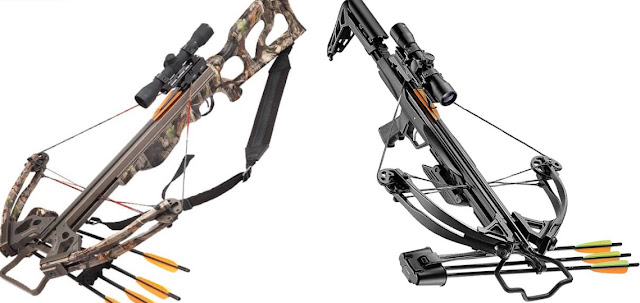
How to Choose a Crossbow: If you want to buy a crossbow exclusively for entertaining target shooting, then your choice can fall on almost any crossbow available to your pocket. It can be both a budget block crossbow and a recursive crossbow.

Well, if you have a serious amount, then it can be a crossbow from leading manufacturers with serious indicators both in speed and in the stability of the shot.

How to Choose a Crossbow

For Sports and Sniping

The choice of a crossbow for sports 3D shooting and accurate shooting at long distances requires a more specific, I would say, careful approach to the choice of one model or another.

Your budget plays an important part here, however. If you are ready to purchase a budget model, then I do not see anything wrong with this; crossbows with a low price category can easily acquaint you with the specifics of shooting, give you an understanding of the process itself, and, ultimately, can unleash your potential arrow. If you are ready to immediately invest in a good purchase of an expensive crossbow model.

For Hunting

It’s a really hard chore to choose a crossbow for hunting. And there can be no question of any budget models of crossbows! The hunting crossbow must be a reliable, powerful, and accurate hunting machine.

Types of Crossbows

Which one to choose? Block or recursive?

There are pluses everywhere. Yes! Namely, the pros, since the evolution of modern crossbows, have absorbed all the best. And looking for cons in one or another crossbow scheme will be a thankless task.

The first thing I want to say right away, and this question torments many: “Which crossbow is more powerful – recursive or block?”

And the answer to this question is: “Of course, a block crossbow!” It will be more powerful with the same tension on the shoulders; it will give out the arrow departure speed by orders of magnitude more than the recursive one.

But, at the same time, you must clearly understand that the simplicity of a recursive crossbow guarantees an accurate shot; it is an accurate shot that solves the task assigned to the crossbow when hunting.

But, again, with a block crossbow, you get small shoulders, which is beneficial in the process of running hunting.

Also, do not forget that the block crossbow, thanks to the blocking scheme, has a so-called force release. Such crossbows experience less stress, the strength of the bowstring at the lock of the crossbow is significantly less. In this connection, the accuracy and range of the shot increase.

The block scheme is undoubtedly more complicated than the traditional, recursive one, and, one way or another, you will have to face the problems of block synchronization and to set up the entire scheme as a whole.

Still, having gained experience and knowledge in the future, you can easily solve such problems, with a strong understanding that the block system is no less reliable than the recursive one.

Shoulders

There are three types of shoulders, and this applies to both recursive and block crossbows. The first type is the shoulders with a small ATA (swing), the second – with an average ATA, and the third – with a large ATA. Behind all these dimensions, there are very significant nuances.

Small shoulders have less parasitic vibrations, but at the same time, due to the sharper angle of the bowstring at the lock, such shoulders are less accurate. While wider shoulders can shoot an arrow much more accurately but, at the same time, the vibration of the longer shoulders will be much more.

Crossbows are equipped with vibration dampening mechanisms by the manufacturers in that respect.

Tactical Bullpup or Classic Rifle Scheme

As I said, the evolution of the crossbow industry is replacing everything that is unprofitable, unreliable, and unusable. And, on the contrary, it seeks to implement everything that will make the crossbow more accurate, more powerful, and more comfortable.

And, just about comfort, I want to tell you. In contrast to the rifle one, the new bullpup scheme allows you to preserve the effectiveness of the crossbow, significantly reducing its length, and this is not just a primitive desire to reduce the size of the crossbow.

Thanks to such innovations, crossbows are becoming more applied. Since the overall balance of the crossbow is well distributed and, unlike the classic scheme, there are no problems with the overweight of the front part of the crossbow block. When fired, the crossbow stays in place and does not “bite” forward downward.

Therefore, bullpup makes it much more comfortable, and most importantly, accurate, to shoot not only from the stop but also from the hands.

In this regard, before choosing a crossbow, pay attention to this important nuance.

Guide

As a rule, most crossbow manufacturers make a guide from milled aluminum, but every year, innovative technologies and materials are more and more introduced into crossbow construction. In this connection, you can easily find good crossbows with guides from other materials.

Lock

The first thing I want to say: all, without exception, the trigger locks on all, without exception, crossbows, are originally designed for the load of work with adult shoulders.

In other words, when buying a crossbow with shoulders of 42 kg, you can always count on the reliability of the lock of your crossbow with the shoulders of the same manufacturer, but with even greater effort.

The second, of which, of course, I would like to say, is the scheme for attaching the release lock to the guide. There are two types of attachment.

First, when the lock is built into the guide itself, such a scheme is flawlessly reliable and has no flaws, the load of the shoulders transmitted by the bowstring to the lock of such a crossbow does not in any way affect the lock mechanism itself, the shot occurs without the backlash of the mechanism, accurately and reliably!

The second design solution is a scheme when the lock and guide are parallel to each other, while the lock and guide are attached to the stock of the crossbow independently of each other. Many copies have been broken in disputes about the reliability of a particular system.

Still, practice and time have proven that both of these design solutions are reliable and have a right to exist. For example, a giant like Barnett always uses a parallel scheme for attaching the trigger to the rail, justifying this by the fact that most of our hunts take place during the cold season, and this scheme minimizes the effect of cold on the state of the metal that gets from heat to cold.

Butt

The butt is an integral part of every crossbow. And adjusting fitting your butt to your anthropometric data is the most important task facing the shooter; therefore, initially, it would be nice if your crossbow can change the position of the stock, the so-called adjustable retractable butt. With him, you do not have to make a collective farm in an attempt to fit the butt for yourself.

Sights

All crossbows are equipped with sights, as a rule, these are Picatinny strips, on which you can install any type of sights, be it a collimator or a classic telescopic sight, just as, without any problems, both night vision and thermal sights can be used on the crossbow.

As you can imagine, the weight of these sights is very different and varies from a hundred grams to a kilogram or more, and this weight, inevitably, can affect the overall balance of your crossbow.

In this regard, it will be much more convenient for you if your crossbow is equipped with an adjustable forend. This will allow you to easily solve all the issues related to adjusting the balance you need.

Crossbow Tensioner

All crossbows are equipped with manual tensioners. With the help of the tensioner, you can easily load even the most powerful crossbow.

Also, there are mechanical tensioners; they are usually used on crossbows with a specific bowstring angle to fit correctly into the crossbow lock. Mechanical tensioners are widely used by women and men with disabilities.

And, of course, you can pull many crossbows just with your hands, but there is a chance that when you cocked the crossbow, you can slightly distort the bowstring, which, inevitably, will affect the accuracy of the shot. With practice, you will eventually learn to load the crossbow correctly manually, and your shot will become accurate.

Crossbow Weight

If you’re shooting for fun, the weight of the crossbow doesn’t matter at all. If you shoot a sniper, then I would choose a more massive and heavier crossbow, but as for hunting – here, weight is of great importance.

Running hunting, hunting from an ambush – in these conditions, the dimensions and weight of the crossbow can and will play a key role.

It is difficult to imagine a comfortable hunt; besides, do not forget that on your already not light crossbow, there will still be a sight, a flashlight, perhaps a bipod, all this will add weight to an already heavy one crossbow. In this connection, you should weigh the pros and cons in advance.

Boom Travel Speed

There is a perfect proverb: “Better to hit slowly than miss quickly.”

Most modern crossbows are overly powerful, mainly due to fierce competition in the crossbow market. Marketing and, again, marketing, big names with high-speed characteristics – a very good advertisement for the sale of a crossbow. While comfortable, accurate, and most importantly, lethal, the shot fades into the background.

Therefore, you should know that there are very few simultaneously fast and accurate crossbows on the market; you can count them on your fingers, and even then – with one hand! And, on the contrary, there are many very fast crossbows, but one can only dream of firing accuracy from them.

The speed characteristics of crossbows are made up of three components. The first is the strength of the arcs (shoulders) of the crossbow; the more energy in the bent shoulders, the faster the arrow flies.

The second is the length of the guide, and the longer it is, the greater the acceleration of the boom will be, and, accordingly, the departure will be much faster than on crossbows with a shorter guide length.

The third is the design features of the shape of the blocks. Here you need to understand that there are aggressive teardrop-shaped blocks, and there are, more friendly, blocks of an almost round shape.

My advice to you: do not chase prohibitive speed; crossbows with speeds from 340 to 370 fps are very suitable for hunting and sniping. Your shot from such a crossbow will be flawlessly accurate, and the power of such a crossbow is more than enough to get the largest animal inhabiting the territory of the USA.

Crossbow Shooting Distance

If you are shooting for fun in the countryside, the distance you shoot at is usually within 10-15 meters. However, for sniping, the shooting distance can vary from 30 to 100 meters depending on the pulling force of your crossbow.

When hunting, your range will be between 10 and 45 meters. A crossbow is not a firearm, and the arrow’s flight speed is much slower than that of a bullet.

In this regard, the specificity of hunting with a crossbow lies in the fact that you, first of all, know how to hide the animals, know how to approach the object of your hunt silently, or be able to let the animal into the distance of the shot imperceptibly.

The crossbow is perfect for hunting from an ambush on salt licks and lured grounds, where, again, the shot distance rarely exceeds 20-25 meters.

The Use of Broadheads

For entertainment and sniping, broadheads are completely useless. But hunting without broadheads is impossible!

Here, you need to know two things. First, every broadhead must be shot. Even if your sport-tipped arrows perform well on the target, this does not mean at all that you will get the same flawlessly accurate result by winding a broadhead on one of these arrows. Remember, arrows with broadheads require separate zeroing at ranges.

The second thing you should know:

  • A broadhead is not a bullet.
  • A broadhead hit will not cause a dynamic impact.
  • On the contrary, a broadhead is designed to make the animal calmly fall asleep from copious blood loss.

Therefore, the accuracy of a broadhead shot from a crossbow is of the utmost importance. The shooter, as a rule, seeks to hit the lungs of the animal, and the broadhead, making a through wound channel, causes a sharp drop in blood pressure, from which the blood ceases in sufficient quantities to enter the animal’s brain, and, as I said, the animal falls asleep.

Under unfortunate circumstances, when the animal, after being hit by an arrow, still managed to hide from sight, a reliable broadhead, thanks to its cutting qualities, will give you a chance to get the animal, since after being hit, there will be a good, clearly readable blood trail.

How to Choose a Compound Bow – Beginner’s Guide

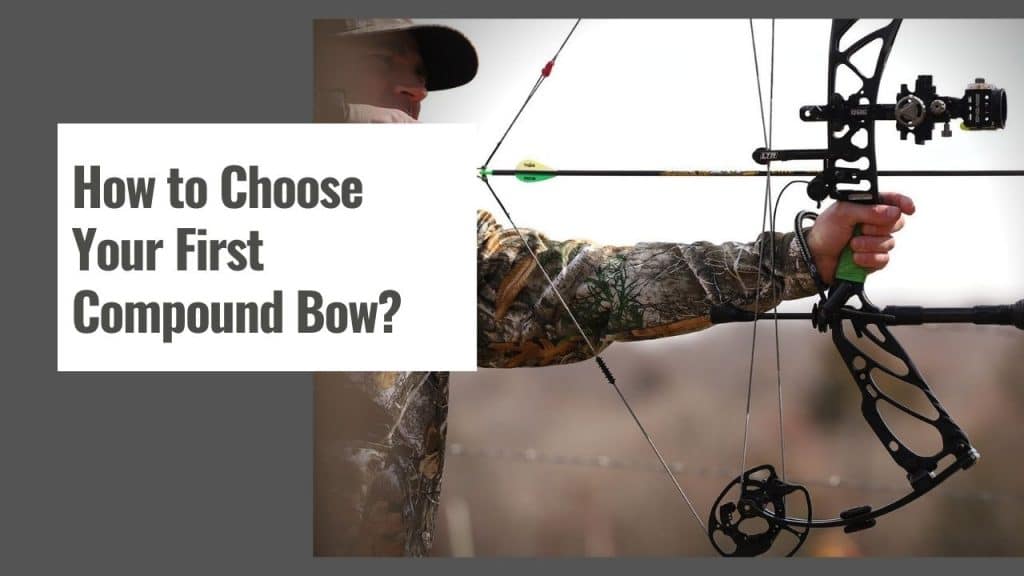
How to Choose a Compound Bow: Archery quickly became a popular sport in the USA; all kinds of tournaments, 3D competitions, and championships, which are ubiquitous in many cities of our country, confirm this.

But not only sports attract people to the ranks of Archery, many hunters with great interest and pleasure realize their potential, getting the desired trophies with the help of a bow and arrow, and specially equipped hunting enclosures make hunting with a bow legal in the USA.

In connection with the above, it is not difficult to understand that the number of fans of archery is getting more and more every day. And one of the main questions for beginners to become: “What is the best compound bow for beginners?”

And the most correct and at the same time simple answer to this question: “The best one from which you shoot the best”!

One of the most difficult stages in choosing the first bow is immersing a beginner in an abundance of information full of preconceived ideas about specific brands, their systems, and characteristics, based solely on someone else’s opinion; or, as in most cases, on the marketing imposition of professional traders.

All this, of course, has the right to life, but first of all, you must understand the simple truth: “Each sandpiper praises his swamp.”

How to Choose a Compound Bow?

Now About the Main Thing – the Choice of the First Bow

Choosing a compound bow is a very personal matter. And here, many factors play a role, ranging from your financial capabilities, ending with your anthropometric data and the specific tasks that you set for yourself and your bow.

In this regard, you need to know which characteristics of the bow will be your assistants and allies on the way to mastering archery.

Therefore, before making a final decision, you have to understand some of the nuances that ardent marketers are unlikely to focus on.

So, let’s begin!

1. Brace Height

The base of the onion is the first thing to pay attention to. The base is the distance from the bow handle to the bowstring when the bow is at rest. Bows come in short bases, medium and large.

The theory regarding bow base length was that a bow with a short base was harder to shoot more accurately. And this is true, this is because on bows with a short base, for example, 6 inches, the arrow during the shot is on the bowstring much longer than on a bow with a longer base, and therefore, the arrow has more time to collide with the shooter errors during the shot.

Twisting the handle, pulling the release, all this will inevitably affect the release of the arrow from the bowstring and, as a result, an inaccurate hit. Bows with a longer base are considered quite the opposite, as more comfortable and accurate.

Since the compound arrow comes off the bowstring faster and does not have time to take on the shooter’s mistakes when shooting, as a result, you get a more accurate hit. In this regard, to make it easier and more comfortable for you to master the archery technique, be sure to focus on a bow with a base of at least 7 inches.

2. Axle-to-axle Bow Length

The question will undoubtedly arise: choose a long or short bow?

Short bows very quickly won recognition among shooters, and they began to be especially popular and in-demand among hunters. And this trend has dominated the market for just a few years and has been well received by both users and compound bow manufacturers.

After all, short bows are lighter, more maneuverable, more convenient on all kinds of trends and ambushes, they are also preferable in conditions of hunting from the approach or when hunting an animal.

I also want to say that most of the modern short bows that we have tested in the field have proven themselves very well.

But nonetheless! It should be remembered that shorter bows tend to react when the handle is twisted. At the moment of stretching and holding the bow while aiming, the bow’s handle may deviate slightly from the axis of the shot, which inevitably affects the accuracy of the shot.

As for bows with a longer axel, they are indisputable and unambiguous, more precisely, and, especially, this is noticeable at longer distances. However, if you don’t prepare to shoot beyond 30 meters, then the short-axle bow will easily show excellent accuracy.

3. Rating Fps – Bow Speed

Everyone goes through it!

A beginner behaves like this: “I want the fastest bow in the world; the faster, the better! Want Want Want! And no matter how much money this bow will cost me. ”

And only after a while, with experience, practice, and understanding of the whole process, the speed begins to fade into the background or even into the background. Screaming advertising slogans 310fps, 320fps were relevant 15 years ago. And now we live in a universe where a budget bow can easily produce 330fps, and this does not surprise anyone.

But let’s get back to the question of choosing the first compound bow in terms of speed. And here we do not have a definite answer, as perhaps a speed bow with an aggressive blocking system will work for you, but maybe not.

You just need to ask yourself the question: “In what conditions will I operate this or that bow?” Target shooters are interested in a smooth and comfortable stretch cycle, where every adjustment is fine-tuned to the smallest detail.

For several reasons, 3D shooters, on the contrary, tend towards faster and more aggressive bows, but in either case, the choice remains purely individual. As for the hunters, here too, there are some nuances that it is advisable to foresee before purchasing a bow.

One example: if on warm summer days or in the hall, you train with your bow and feel all its rigidity and aggressiveness, imagine how it would look like while hunting, sitting on a hitch, given that you have been sitting motionless for a long time, and at the same time, of course, you are slightly frozen.

Even if you, in which we doubt, manage to stretch your aggressive bow, you will not be able to do it quietly and imperceptibly for the object of the hunt.

Just remember, it is not for nothing that they say that the best is the enemy of the good, and therefore, aggressiveness and speed can sometimes play a callous joke on you.

4. Physical Weight – Bow Weight

In addition to getting shorter and shorter, bows also get lighter and lighter. And in the age of carbon bows, the weight has become incredibly light indeed. The same goes for accessories for bows, the manufacturer tries to make them as light as possible.

And this is undoubtedly great, but only in those cases when you are going to hunt, where you have to march over rough terrain, or in the mountains, in search of mountain goats, or the taiga, chasing a moose.

Therefore, when considering the weight of your new bow, think about how far you will have to travel with it to achieve your coveted trophy.

In all other cases, we advise you to take a closer look at standard weight bows, and it is better to give preference to heavier bows since heavy bows with a good heavy attachment, undoubtedly, shoot much more accurately than light ones.

And this fact is directly related to residual vibrations when fired, light bows react very strongly to vibrations, which, in turn, affects the loss of accuracy.

5. Draw Lengths – Bow Stretch

A beginner needs to know as accurately as possible the length of his stretch, which will later be installed on a new bow.

The fact is that if you make a mistake and set the stretch too long, this will inevitably create problems when shooting and, as a fact, will adversely affect the accuracy, you simply cannot find a suitable attachment point, and a shot in the thrust will become completely impossible.

Therefore, pay special attention when choosing the right stretch for you according to your anthropometric data.

In conclusion, I would Like to Say

Shooting comfort is the key to success. Your muscles and your bow must work in harmony, and only in this case, you will be able to master the shooting technique in the shortest possible time and feel the beauty of an accurate shot!

So, if you want to find the bow for shooting, you need to decide on the goals and objectives that you want to achieve by shooting with this bow, and then you will be able to choose the exact bow from which you will accurately hit targets best.

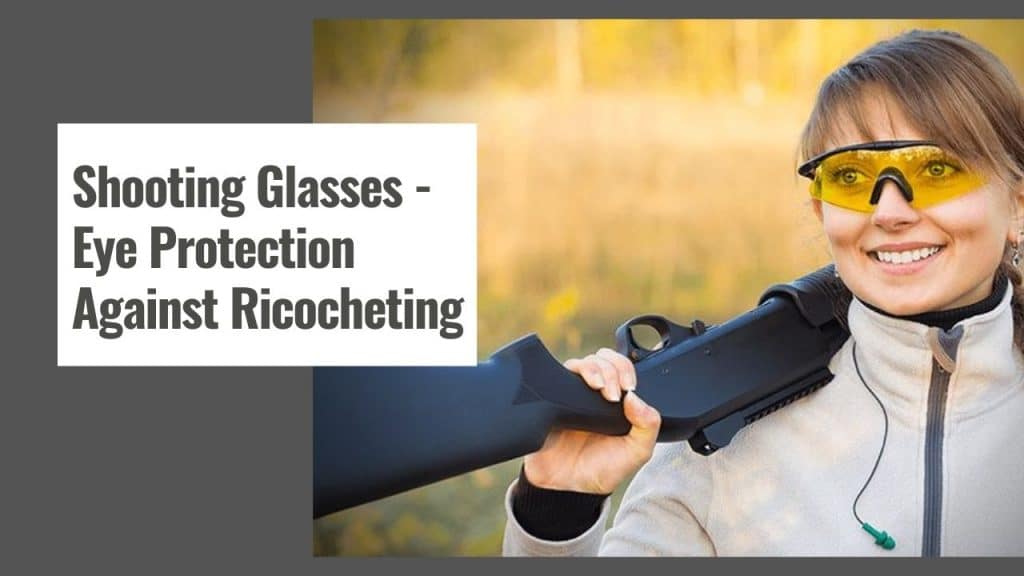
Shooting Glasses – Eye Protection Against Ricocheting

Shooting Glasses – Eye Protection Against Ricocheting: Vision is one of the senses that is most significant. Thanks to it, it is possible to distinguish colors, shapes, and sizes. It also allows you to track the movement of surrounding objects, evaluate your body movements, and orient yourself in space.

Therefore, it should be specially protected. The eyes are exposed to injuries and contusions in many everyday situations.

Sport shooters, through their activity, contact with weapons and ammunition, increase the risk of eye damage. When firing firearms, pneumatic weapons, or even playing ASG, many uncontrolled situations can occur.

Shooting Glasses – Eye Protection Against Ricocheting

Ricochet

The most common is a ricochet, i.e., the return of the entire projectile or its element (such as shrapnel and parts of the mantle) after bouncing off the target towards the shooter.

Ricochets do not only happen when firing firearms. Pellets fired from airguns or even the plastic balls used in the Air Soft Gun like to return to the shooter. It is a phenomenon that is very difficult to predict and even more difficult to control.

Hot Powder Gases

The action of hot gunpowder gasses also causes injury to the eyes. When firing a firearm, the projectile leaving the weapon’s barrel is moved by highly compressed gases resulting from the combustion of gunpowder.

It happens that these gases are directed to the face of the shooter after leaving the barrel due to a rapid shift to the wind or for other unforeseen reasons. As a result of this process, facial skin burns and eye damage may occur.

Hot Scale Blow

Another threat is incorrect, uncontrolled ejection of the bullet casing towards the shooter’s face. When properly ejected, the case should leave the castle chamber as a result of the retraction of the slide, and, with the force of inertia, it should fall at a certain distance from the shooter.

Sometimes, however, it will jump back; sometimes, after bouncing off an obstacle, it will come back and hit the shooter. It also happens that even a correctly ejected casing hits and injures the shooter at an adjacent shooting position. The husk, apart from the fact that it moves at a very high speed, is also very hot.

Weapon Explosion

Very rarely, but there are also accidents related to barrel blowing or even the explosion of the entire weapon. Here, too, the eyes are particularly vulnerable to trauma.

The shooter, while assembling the shot, holds the gun at eye level, usually at a short distance. An explosion in such a situation is almost certain to damage the organ of vision.

Means of Eye Protection in Shooting

There are many dangers related to firing firearms and pneumatic weapons. However, by applying the basic safety rules on the shooting range, they can be reduced to a minimum. The regulations introduced by the United States Sports Shooting Association in force at every shooting range in the USA called General safety rules in the shooting.

So, to prevent injuries and eye damage, special shooting glasses should be worn. These are glasses made of shatter-free material, most often polycarbonate specially developed for this purpose. There are many patterns of shooting glasses; each shooter can choose one that is appropriate for his anatomy.

Glasses are produced in various sizes, with adjustable nose pads and temples of various lengths. The glasses can have a traditional shape, as well as similar to sports glasses – curved, protecting the eyes also from the side.

Often such glasses have in addition to the typical colorless interchangeable lenses in different colors. For example, you can buy tinted ones for outdoor shooting in bright sunlight or yellow ones that improve visual acuity in more difficult lighting conditions.

Also, for People With Visual Impairments

Shooting glasses can also be worn by people with visual impairments. There are models on the market where you can remove neutral glasses and replace them with corrective lenses made by optics. Some can be worn over or under prescription glasses that you use every day.

Many models have specially profiled temples that are adapted to be worn together with hearing protectors, which are also mandatory at a sports shooting range. There are also those whose specially profiled temples allow you to fold up for a shot from a long weapon easily.

Shooting with this type of weapon requires very firm adhesion with almost the entire face surface to the rifle stock and at the same time observing the sights. Ordinary, unshaped glasses in such conditions make it difficult to aim properly, especially by optical sights.

Remember that the eyes are an extremely delicate organ; it is worth taking care of them by using appropriate means of protection. Regardless of whether we shoot with firearms, airguns, or play ASG, putting on protective goggles should be the first thing to do after entering the shooting range.

You may also like to read

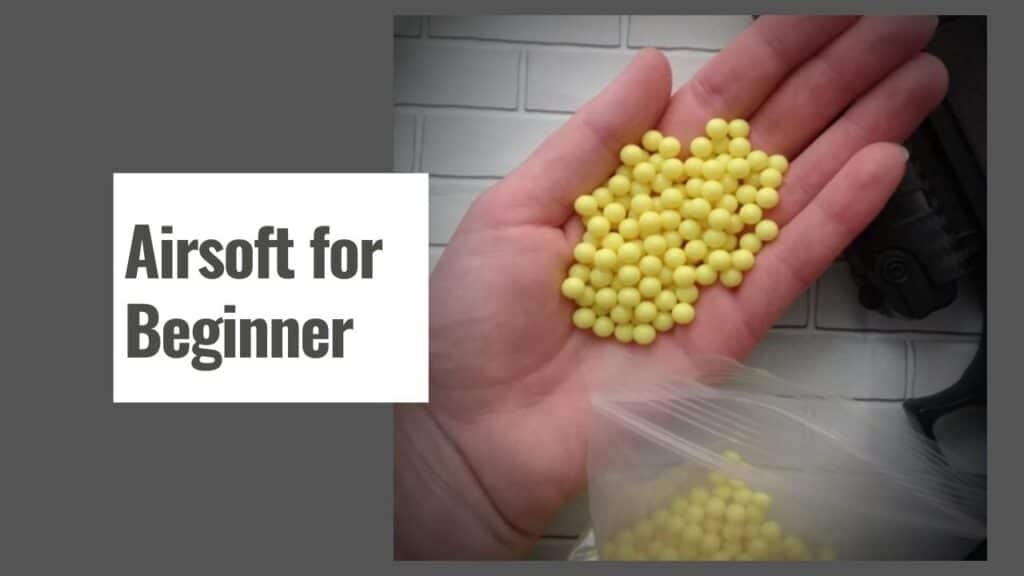
What Is Airsoft? Airsoft History, Community and Types

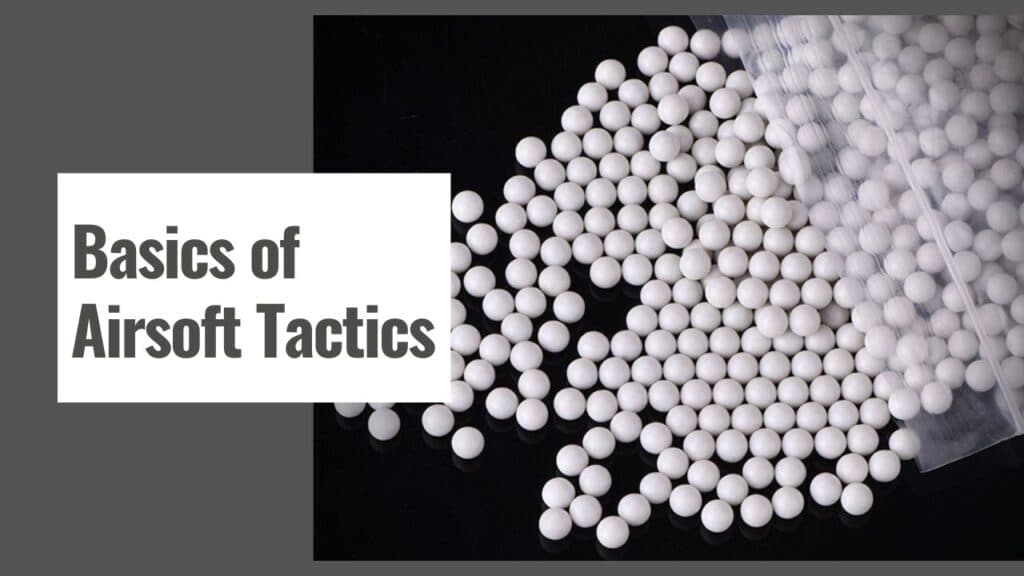
What Is Airsoft: Airsoft is a command military tactical game in which pneumatic weapons are used to defeat an opponent, shooting 6 mm or 8 mm plastic balls (the so-called “soft” pneumatics).

The term “Airsoft” itself is an adaptation, by analogy with the word “Paintball”. Abroad, this military-tactical game (after this VTI) is called “Airsoft” (“soft air” – that is, “soft” pneumatics in contrast to the classic “Airgun” pneumatics 4.5 mm).

Airsoft History

Airsoft guns appeared in Japan in the 1970s under the trademark “soft air guns” – “soft air guns.” They ran on a freon-silicone gas mixture, which was later supplanted by a propane-silicone gas known to us as “Green Gas,” which was weaker than CO2. The pistols fired plastic balls (BB’s) and were intended for recreational shooting enthusiasts. Due to the strict restrictions of Japan’s weapon legislation, this was one of the few ways to have a pistol, and even more so to shoot from it.

Later, at the turn of the 1980s – 1990s, “soft pneumatics” came to Great Britain, which began to be used as a game weapon. Currently, Airsoft / Airsoft, as a hobby and leisure time, is widespread throughout the world, and airsoft equipment is used, among other things, for training military personnel and law enforcement officers.

Purpose of the Game

The main goal of airsoft, as a form of leisure, is indicated in the very first paragraphs of most of the rules:

“The meaning of the game is a collective rest in the bosom of nature, neutralization of negative emotions and aggressive aspirations, the joy of mutual communication of worthy people.”

Despite the variety of forms, scenarios, and varieties of airsoft, perhaps this particular point is indestructible and briefly expresses why exactly it is needed.

Read More: Shooting Glasses

Basic Provisions and Rules of Airsoft

There are several editions of the Airsoft Rules. They can have cosmetic differences or vice versa; they can be very different.

We will not give the full texts of these collections within the framework of the article; we will list only the main provisions:

  1. As a “weapon” is used, “soft pneumatics” shooting plastic balls 6 mm or 8 mm with shot energy of no more than 3 J, as well as pyrotechnics and cold weapons made of rubber.
  2. It is imperative to have glasses of the proper level of protection, which can withstand hitting point-blank from the “weapon” with the maximum initial speed of the ball. It is forbidden to take off glasses anywhere in the landfill.
  3. The game is played on fairness. The player who was hit by a ball, next to which a grenade exploded, or who was struck with “melee weapons” must independently acknowledge the hit and designate himself “dead”. Then he must go to a specially designated place – respawn / starting point.
  4. Participants must show respect for each other, which is manifested in following the rules and avoiding conflicts and disputes.
  5. The game is played according to a pre-agreed scenario and rules.
  6. Only adults 18 years of age or older are allowed to participate.
  7. Participation of persons in a state of alcoholic or drug intoxication is prohibited.
  8. A military uniform or a similar camouflage suit is required. Frankly, civilian equipment is not allowed.
  9. Disputes with the organizer and ignoring his orders as part of the gameplay are prohibited.
  10. The use of elements of hand-to-hand combat is prohibited.

Equipment and Weapons for Airsoft

There are a very large number of different models of uniforms and weapons for airsoft. Here we will briefly highlight the main points.

The weapon shoots 6 mm plastic balls, 8 mm caliber models (mostly Japanese) are very rare. The first copies were made in Japan, but now the market is flooded with products from Asia (China, Taiwan), which first copied Japanese models, and now have seriously expanded the range. The market is constantly evolving. Weapons are:

  • spring (manual spring cocking before each shot)
  • electro-pneumatic (EPO / AEG, the most common type)
  • gas (powered by green gas or CO2)
  • HPV (high-pressure air, compressed air – the most advanced and expensive system)

Various certified pyrotechnics are also used: hand grenades, booby-traps, smoke bombs, under-barrel grenade launchers, RPGs, and mortars, which add variety and entourage—also used “cold weapons” – rubber knives and axes.

The variety of equipment is very large, so we will not even try to write about it in this article. To get goggles, a uniform, a vest, a mask, gloves – these are the first steps and then grow overgrown and overgrown with equipment.

Airsoft Community and Teams

The most important thing in airsoft is, of course, its participants. The impression of the game directly depends on them. Airsoft was conceived as a game of friends and worthy people. This is not surprising because honesty is at its core, which means that an opponent is a priori respected, who is not an “enemy”, but a hobbyist, even if he acts as an opponent.

However, due to the massive development, many participants come to airsoft, and it happens that individuals come across who do not follow the rules and do not respect other players and themselves. Players caught in violation are subjected to general ridicule and ostracism, are not allowed to play (receive a “ban”). The organizers monitor compliance with the rules, but this should also be done by any participant who is not indifferent to his hobbies.

At the emergence of a hobby, the main platforms for communication were Internet forums, which were created by regions, teams, parties. Now the era of forums has passed, and all communication has smoothly flowed into social networks: groups of organizers, teams, events, directions.

The airsoft team is the basic unit of the community. She has a commander, a uniform, symbols ( stripe, flag), often a certain weapon. A team in different editions of the rules is a combination of 5 or 10 people. The team can adhere to the image of real/existing military formations (modeling or reconstruction) or not do it, but use various equipment to their liking.

Of course, any player can participate alone, and many do this quite deliberately. But the majority of players sooner or later conclude that playing in a team is more interesting. Concerted actions, tactics, mutual assistance, and camaraderie – all this constitutes a completely different level of the game. And many join teams or create new ones from like-minded people.

Read More: Basics of Airsoft Tactics

Airsoft Polygons

The variety of polygons used for games is quite large. And if earlier these were mostly “wild” sites, where airsoft players ran without any notification of local authorities, then with the development, more and more events are held at specialized sites or in agreement with municipalities or landlords.

Generally Speaking, the Following Types Can Be Distinguished

No Man’s Land

Wilderness is just a piece of territory where a group of players gathers and holds an event. It can be woodland, hills, mountains, or other terrains. It is selected according to the principle: “fewer strangers, interesting relief.” As a rule, local authorities are not notified, or the police department is informed that an event is being held here, and there is no need to come to the calls of vigilant citizens. Such polygons are not equipped; they are used by small groups of players for training or small fighters if there is a shortage of polygons in the region.

Abandoned

Any abandoned and conditionally nobody’s (because, as a rule, the owner of the land is) a complex of buildings, a former military unit, a factory, a pioneer camp, or an unfinished / abandoned village. Polygon, which is interesting for its buildings. As a rule, it is quite dangerous since there is a risk of injury if you are not careful. Events are held by agreement with the owners, or the players simply come as “savages.” In the latter case, there may be problems with the locals/police/owners.

Polygon Cqb (Close Quarters Battle – Close Combat)

A place where battles take place only inside the building. This can be an inactive factory floor, a hangar, a large warehouse. The battles take place at short distances, so the dynamics are very high. If this is an inhabited polygon, then the organizers equip it with various objects and shelters, there is recreation – it is convenient and comfortable to play on such polygons.

Military Training

Events at such training grounds are held in agreement with the command of the military unit. These are mostly big and significant events. The polygons are equipped for exercises and are operating facilities in the state. providing. The saturation of the polygon depends on the affiliation to the department – it can be large military training grounds with trenches, dugouts, and buildings, it can be the territory of military units or small training camps.

Read More: The 10 Best Air Rifles for Hunting Small and Big Game

An Extremely Rare Type

A specialized training ground for airsoft/paintball fights created by the owner. It features a good and well-developed infrastructure, which was created for the convenience of customers. Objects and fortifications at the training ground were built and located, taking into account the specifics of military tactical games and in such a way as to allow options for different scenarios and dispositions.

Conclusion

This content has only scratched the cover of the basics of airsoft. Of course, the topic is extensive, and we consider various aspects in more detail within a series of articles.

We hope that the material was useful to readers who first encounter the concept of “airsoft” and would like to get a general idea of the subject of the conversation.


You may also like to read

What Do You Need to Start Shooting a Bow?

What Do You Need to Start Shooting a Bow: Are you looking for it? What do you need to start shooting a bow? First, you need to choose whether you want to shoot on your own, say in the country, or prefer to practice in a place organized for archery.

What Do You Need to Start Shooting a Bow?

The summer cottage always looks preferable at first, but it limits the possibilities.

Which bow to choose?

Classical versus compound is a matter of personal preference. If you have sports ambitions, you can count on participation in the Olympic Games with the classics. The compound is not yet included in the Olympics program. But it is easier to learn to get out of the youth compound bow.

True, it is much more powerful than a classic bow and shooting “at fences,” and other entertainments in the country are not suitable for him. If you dream of going hunting with a bow – the compound is what you need. Although it is somewhat heavier than a classic bow, it is much more compact.

Of course, you need arrows!

“Some inexpensive for me!” Of course, it’s best not to waste your money! For shooting in the field, it makes no sense to buy arrows that are designed to participate in the world championships.

But any savings must be conscious. With their external resemblance to more expensive counterparts, the cheapest aluminum arrows are made of a soft alloy. They need to be straightened after every shot!

It is very difficult to do this on your own without skills and tools. The price of this service from a specialist will negate all the advantages of the initial low cost. The cheapest aluminum is very suitable for children and for shooting at distances within 12 m.

Regular aluminum arrows and the cheapest carbon ones are roughly worth each other. Aluminum can more easily endure being hit by pebbles in the ground or a tip in a shield, but carbon does not bend from shooting at a hard shield or when hitting a tree.

Aluminum/carbon arrows and expensive carbon arrows are designed for competition shooting for maximum performance. Those qualities of these arrows that add value to them are not needed in all other shooting types. Although, of course, if we ignore the question of price, the X10 is the best arrows of any kind of shooting.

Don’t forget about the shelf!

The shelf in the bow is where the arrow rests. In ancient bows and some modern traditional ones, this is the arrow’s finger. But for accurate shooting, special devices are used – more or less complex in design. Before choosing the coolest and most spectacular shelf, decide how you will pull the string.

If with fingers, then this is one type of shelves. If a release, then another. In practice, these two different types of shelves cannot replace each other. This is the arrow’s specificity, fired in various ways, and its interaction with the bow.

Release, fingertip or glove

The fingertip and glove are used to protect the fingers when shooting with the fingers—mostly classic bow. Athletes prefer fingertips, hunters prefer gloves. We do not recommend shooting with your fingers from the compound!

Yes, it looks easier at first. But this method of shooting negates all the compound’s advantage inaccuracy. Better use the release, believe me, it was invented and used for good reason! There are several types of releases. The most popular are the so-called “T-shaped” releases, which are held by fingers.

The shot is fired by pressing either the thumb on the trigger or button or, on some models, pressing the ring, middle or pinky fingers. Another type of release popular with archers is a pendant or, as it is also called, a wrist release.

Do you need a sight?

If you are hoping to shoot partridges in flight, as you do with a hunting rifle, a scope is not needed. This method of shooting is called intuitive. It does not align the aiming points. The bow is guided by feeling like throwing a stone.

When shooting from a static position, no matter whether it is hunting or in competition, the scope increases the shooting accuracy so much that there is no justification for refusing it. Regarding scopes, the rule is ironic: “the more expensive the fur, the better it is!”

Even if you don’t see the difference, be sure that a $350 scope is much better and more reliable than a $100 scope (provided that both scopes are compared in the same store) And it doesn’t matter if it is a hunting scope or a tournament scope, in each class, there is a more expensive scope better than the cheaper ones.

Peep sight or diopter?

This small accessory is only used in the compound.

Osprey (lens)

For shooting with greater accuracy, especially at long distances, a scope is used in the compound. This is a lens that gives magnification from 2x to 8x. What concerns the difference in prices for scopes fully applies to osprey. It can be used with success with a $40 osprey, but a $450 Swarovski scope is obviously better! So here, the choice depends on your financial capabilities.

A string, it is a knitting, it is a loop

Even if you have no idea why you should tie a bow to your hand, buy this part! Believe me, with time, and you will see the difference (especially since it is not expensive).

Quiver

You can’t put arrows in your pocket, so our ancestors invented the quiver. And Fred Bear figured out how to combine a quiver with a bow. Therefore, we now have a choice whether to wear a quiver on the belt, like athletes or on a bow, like hunters.

But if a quiver on a belt is only a matter of aesthetics when choosing a model, then a quiver on a bow is chosen according to a greater number of parameters. First and foremost is reliability. Better to buy quivers that are made by bowmaker firms. These quivers fit the special mounting holes and fittings on the bows.

Removable quiver, This quality can be useful, but it implies some cumbersome design: weight and overall dimensions. Previously, quivers for 8 or more arrows were popular, but now they are convinced that there is no need to have such a number of arrows with you.

Stabilizer

For a bow to look really cool, it needs a stabilizer! Don’t even try to argue! It’s nothing that you don’t understand what the stabilizer does, and you will always cause perplexed looks if you start shooting without the stabilizer.

A stabilizer in a bow is like a tie in a suit. Accordingly, you need to buy it. Imagine how ridiculous it will look if you buy a $ 50 tie for a $3500 suit. A modern advanced stabilizer can save the image of an inexpensive bow, but not vice versa!

Also, stabilizers still help with shooting. For hunters, they are short with devices to compensate for the blow and sounds. For athletes – long, carbon fiber, with removable weights and a rear counterweight system or tees.

Bow case

It’s just a matter of common sense! Spend money on a bow and not protect it when transporting it to training or hunting! Soft covers are more convenient for transportation in public transport or a car, and they take up less space in the apartment. But for transportation on an airplane and even a train, you will need a hard case. It is better to purchase a special case for the bow.

Shield, or something that is always forgotten!

If you are going to use the bow for fun or training in the country or on trips to nature, you will need a shield. One arrow can be used thousands of times, provided that it is stuck into the object intended for this. And, believe me, a stump or a fence is not quite suitable for this purpose.

Conclusion

Aside from having a lot of fun with the shooting process itself, there are many more reasons why you should start mastering the bow. Here are also some benefits of archery that will no doubt convince you to start practicing the sport.

How to Choose an Optical Sight – 8 Things to Look

How to Choose an Optical Sight: Every hunter, having passed the five-year path from smooth-bore to rifled weapons, is faced with the task of choosing an optical sight. This article offers all the main points that you should pay attention to when choosing a scope.

Choosing an Optical Sight by Parameters

Let’s briefly consider the main parameters that manufacturers indicate:

1. Lens

The lens is the most important element in sight, usually consisting of two or more lenses. The main task is to collect light reflected from objects. From this, it turns out that the larger the lens diameter, the more light will enter the scope, which means that the image will be brighter. In almost all cases, the name of the device indicates the optical diameter of the objective.

If hunting at the twilight time is supposed to be, the best telescopic sight will have a wide lens diameter. Diameters from 50 mm are considered high values. On the other hand, the larger the diameter, the longer and heavier the scope, which in some situations, will complicate aiming, for example, in running hunting.

The quality of the lens manufacturing determines how detailed the image will be. Several layers of anti-reflection coating are applied to the lenses to prevent light from entering the lens from being reflected back. Each manufacturer uses different types of anti-reflection coating.

The concept of parallax adjustment is emphasized separately. Beams passing through the lens are focused on the plane where the reticle is located. The misalignment of planes is called parallax and looks like an indistinct image of the object, and for detuning on the sights, you can find the lens focusing mechanism.

In scopes, focusing is located on the lens in the form of a ring or on the center’s side. The mechanism’s lateral arrangement allows for more accurate focusing, and, as a rule, such scopes are more expensive. The type of focus can be indicated in the names.

If the sight does not have any of the presented types, then it is set at a certain distance. Most often, these are sights designed for shooting at a distance of up to 100 meters.

2. Magnification

Magnification is a ratio of how many times an object’s size differs when viewed with the naked eye and through an optical sight. Like the lens diameter, magnification is indicated in the names. The sights are divided into two options – constant and variable magnification.

Constant magnification sights are more convenient to use for specific distances, and they are easier to handle and more reliable in design due to the lack of moving elements. Variable scopes are suitable for different distances depending on the zoom range. How to select the correct multiplicity can be found in the corresponding article.

3. Removal of the exit pupil

An eyepiece, like a lens, consists of multiple lenses. The optimal image is obtained by placing the eye at the optimal distance from the eyepiece’s outermost lens. The characteristic of removing the exit pupil indicates the convenience and safety of using the scope.

When fired, the recoil causes the scope to move towards the eye, and the higher the value of the exit pupil removal, the safer for the eye. If the eye is located closer or further, then black “moons” appear during viewing relative to the set value.

Modern sights have an offset in the range of 70-90 mm, which belongs to the safety class. But don’t underestimate the impact of recoil when choosing a scope for a Magnum class weapon.

4. Output Lens Diameter

Exit pupil diameter is a characteristic directly related to the structure of the human eye. At different light levels, the human eye shrinks or enlarges the pupil diameter to control light output. With a lack of light, the pupil expands to 7 mm, with sufficient illumination, the diameter is 3-4 mm in the case of optical sight.

The optimal light transmission will be in the case when the diameter of the exit lens and the diameter of the pupil coincide, and thereby the entire luminous flux will fall into the eye.

The exit pupil diameter can be calculated independently by dividing the lens diameter value by the multiple. The formula for calculating the exit pupil diameter helps to choose the magnification of sights for use in the dark. For example, with a lens diameter of 50 mm, the optimal magnification should be 7-8 times.

5. Line of Sight

In the description of sights, there is a characteristic of the field of view of the optical sight. This value means what plane the sight sees at a certain magnification. The field of view is indicated in angular or linear units and depends on the lens parameters and magnification.

In the scope of variable magnification, the field of view will be higher at minimum magnifications. The example below shows the angular and linear values ​​of the field of view of the Yukon Jaeger 3-9×40 sight:

6. Aiming reticle

Reticles are a separate topic in scope selection. Each manufacturer develops its own reticle options. The grids are divided into simplified hunting variations and tactical ones with a lot of marks.

The standard aiming reticle has horizontal and vertical guides, along which the shooter estimates the weapon’s blockage. For hunting, shooting is fundamentally fast, especially when the animal is moving.

Therefore, the aiming reticle of hunting scopes is a simplified view. There are grids with different line thicknesses or the presence in the center of a collimator mark in the form of a point or across, which is convenient to use when shooting at a moving target. When hunting long distances, bullet drop and crosswind corrected nets, such as Mil-Dot, are used. Examples of hunting nets:

The tactical reticle is used for accurate shooting at stationary targets. They are used to calculate the ballistic trajectory of a bullet, measure distances, and, as a rule, have a large number of corrective marks. Examples of tactical nets.

Grid backlighting is used to increase the visibility of lines or a central mark on a contrasting background or at dusk. Depending on the manufacturer, the backlight can be of different colors, but the common one is red.

For scopes of variable magnification, there is the concept of the reticle’s location in the first or second focal plane of the lens. For changing the magnification insight, the movable mechanism of the lens turning system is responsible.

If the reticle is located in the lens’s focus, which means in the first focal plane, then when the image is enlarged, the reticle also increases.

It turns out that the calculation of the distance is available for any multiplicity since the sect changes proportionally. When the reticle is positioned in the eyepiece’s focus, which means in the second focal plane, the reticle size does not change.

The first option is suitable for ballistic reticle and is used in expensive sights. Sights with a reticle arrangement in the second focal plane are cheaper to manufacture and are convenient for hunting tasks.

7. Mount types

Optical sights are cylindrical in shape. To mount the scope, the use of landing rings is common, with the exception of sights with an integrated bracket or landing tire. A bracket is individually selected for each gun, but the following parameters are always taken into account:

  • Landing diameter of the sight. For fastening through rings, the diameter of the tube must be known. Common diameters are 25.4 and 30 mm, less often – 34 and 36 mm.
  • The outer diameter of the objective. The bracket height is selected so that there is a gap between the lens and the barrel. When measuring the lens’s outer diameter, the protective cap, and focus wheel, if any on the scope, are taken into account.
  • A safe distance from the eye. Depending on the seat’s location on the weapon, the sight is set at a distance from the eye, which is set by the exit pupil removal parameter.

8. Case features

When choosing an optical sight, pay attention to the features of the case. These include resistance to mechanical stress, protection against water ingress, the presence of inertial gases inside to prevent fogging during temperature extremes, a protective coating.

The drums for entering corrections, which can be open or closed, are considered separately. The closed type assumes the presence of protective covers to prevent accidental movement, which is mainly for using sights for hunting. The open type of drums implies frequent input of corrections, and latches are used to prevent shifting.

How to Choose an Optical Sight for Hunting

When hunting, there are no exact values ​​of distances to the target, in contrast to trap shooting. Aiming is complicated by the possible movement of a hunter or an animal. The higher the speed, the lower the fold you need to use. At low magnification, the wide field of view allows faster aiming with a lead.

For example, a sight for driven hunting should have a small magnification range. The beast moves quickly over short distances, so a wide-angle of view is the main factor. Sights up to 4 times have this, and the 1-4x “pen” is considered popular. Since driven hunting, according to the rules, is carried out only in the daytime, the lens’s wide diameter can be neglected.

During the running hunt, it is assumed that the hunter will move when tracking the animal. As in driven hunting, the increased insight needs to be selected as little as possible due to the difficulty of shooting from hands.

But some animals do not let the hunter get close, so the multiplicity is selected with the expectation of using it at short and medium distances. For such cases, it is more convenient to use fixed sights with a low magnification value, for example 4x, or variable type with a range from 1x-2x to 6x-8x. Optical sights for running hunting differ from driven ones also by the increased diameter of the objective, since shooting can be carried out at twilight.

High multiplicity values ​​are used in motionless hunts, for example, from an ambush. The hunter uses tripod and bipod supports to reduce vibrations. The selection of magnification depends on the distance, but it is common to use high values ​​up to 12x, 16x. To maintain aperture ratio at high magnifications, the sights have impressive lenses up to 50-60 mm in diameter.

Sights with magnification over 16x are used exclusively for mountain hunting. Mountain hunting involves shooting at a great distance from the beast, which requires serious preparation. Scopes are often chosen with up to 24x range and ballistic reticle.

There are universal scopes for use in different types of hunting. Usually, these are scopes of variable magnification with a wide range. The minimum value is intended for shooting at short distances and is 2x-5x. The maximum value is intended for shooting at long distances and corresponds to 10x-20x.

The Best Riflescopes on the Market

Of course, riflescopes are divided into price classes, so we have selected in this section the best scopes for the hunter’s estimated budget.

Final Recommendations

Before choosing an optical sight, it is necessary to compare the estimated parameters and budget. For convenience, use the following list:

  1. First, it is necessary to compare the estimated firing distances and the target’s size, after which the multiplicity is selected.
  2. The lens diameter is selected based on the requirements of shooting at twilight time.
  3. Choose your reticle with a focus on target movement speed, ballistic performance, and personal preference.
  4. Decide if you need reticle illumination.
  5. If you have a large caliber, then check the sight’s eye relief, it should be higher than 70 mm.
  6. Depending on the shooting conditions, choose a sight according to the degree of protection against water ingress and the presence of gases inside the case.

You should watch : What Optic Should You Use?

Underbarrel Flashlight – Briefly About the Important

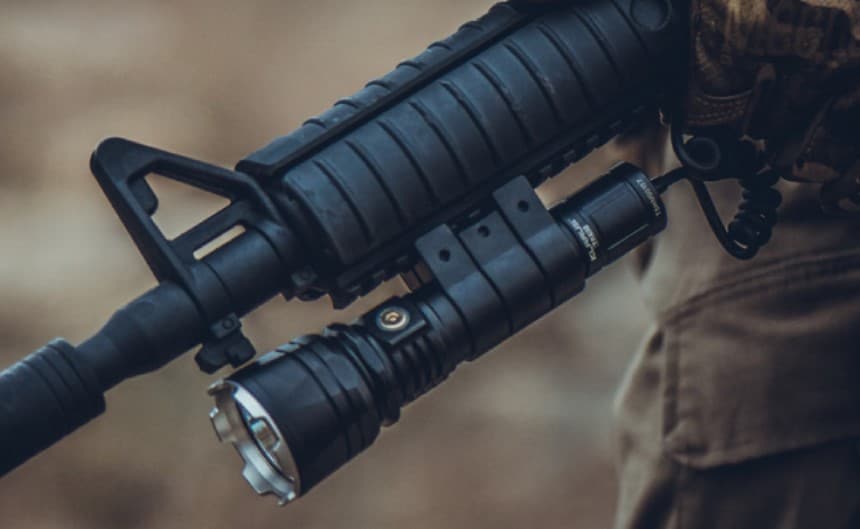
Underbarrel Flashlight: An underbarrel flashlight is a device that should be in the arsenal of any hunter. Hunting with the use of an under-barrel flashlight is widespread. Therefore, in this article, we will consider the main parameters that you should pay attention to when choosing.

Basic Terms of Underbarrel Flashlight and Their Influence on The Choice

In the characteristics of lanterns, you can find terms, whose meanings have different meanings when choosing:

Light flow

The luminous flux usually indicates the first parameter in lumens, which indicates the total amount of light emitted by the lantern.

It is a mistake to think that the luminous flux indicates the distance of the beam propagation, rather it is an indicator of the “power” of the lamp. Factors such as the focus of the beam, lens type, and reflector affect the illumination distance.

Source type

The type of source is often indicated together with the luminous flux value. In modern lanterns, LEDs are installed more powerful and resistant to frost and moisture than incandescent lamps.

This is an important factor when choosing a hunting flashlight, as it will often be used in wet conditions. LED sources do not give heat, which means that the lens will not crack at temperature changes.

You Should Also Read: How to Choose a Night Vision Scope

Light range

Light range is the characteristic that hunters often pay attention to. It is worth evaluating the range parameter based on the illumination because the flashlight can be seen at long distances, at which the hunter cannot distinguish the target.

This should be taken into account since you can accidentally frighten off the beast when working with a long-range flashlight and will not approach a sufficient distance for a shot.

OTF and peak luminous intensity

OTF characteristics and peak luminous intensity refer to standardized ANSI parameters and represent the luminous flux at the exit of the lens and the intensity’s value at the point of maximum illumination of the lamp.

These characteristics are not so important when choosing. Therefore many manufacturers do not indicate them.

Divergence angle

One of the important characteristics is the angle of divergence of the beam or light spot, indicated in degrees or meters at 100 meters.

When observing, you can see that the lantern has two spots – the central one (bright and narrow) and the side around the central one (wide and dim).

This is due to the propagation of light and reflection from the reflector. There are lanterns with a special lens shape, in which the side spot is hardly distinguishable.

You Should Also Read: When Does Coyote Season Start?

Energy consumption

The power consumption of the flashlight will be important. The higher the luminous flux, the more the lamp consumes.

To save power, most models have several lighting modes. When choosing a flashlight for long-term use, consider options with more hours of operation.

Differences Between Hunting Lights

Handlamps are used in many areas, including hunting. Differences between a hunting flashlight and others:

The Presence of Amount for Weapons

The name of the under-barrel lights implies installation on the barrel. The flashlight must be mounted on the body, or the standard tube diameter is 25.4 mm.

Tactical and Remote Button

The flashlight is located on the weapon, so the way it is turned on and off is important. The tactical button assumes the flashlight’s constant operation, the remote button – power supply only when held.

Increased Resistance to Impact and Recoil

In addition to difficult weather conditions, the flashlight must withstand the recoil of the gun.

No Focus Ring

Beam focusing is used in tourist flashlights, and when hunting, fast aiming at short distances is important without additional settings.

Additionally, it is worth highlighting a variety of tactical laser-type flashlights or laser flashlights. The emitter, as the name implies, is a laser, predominantly green. The luminescence range is significantly higher than diode lamps since the laser beam has a higher reflectance value.

The flow of particles can be adjusted, and the beam can be adjusted to a point, similar to laser designators, and due to direct propagation, there is no side spot.

Laser flashlights are most often used in tandem with optical daytime sights. The green light is less susceptible to animals and can be used continuously in comparison with LED lights.

You Should Also Read: The 10 Best Night Vision Binoculars for Hunting

How to Use the Flashlight When Hunting

When hunting at night, the under-barrel flashlight is not necessarily used as a path illumination, as the visible beam of light can frighten the animal away. The application is related to the blinding property.

Hearing a rustle, the hunter aims his gun in the direction of the sound and sharp turns on the flashlight.

The blinded animal stands motionless for several seconds, but this is enough to make a shot. In this case, it is convenient to use the remote button, which is located under the forend.

The flashlight work will be provided only when the button is held down to turn on and off the flashlight quickly.

Despite the possibility of the flashlight “hitting” at long distances, the recommended shooting distance for night hunting does not exceed 100 meters, so as not to miss the wounded animal.

The use of an underbarrel flashlight is popular due to the device’s low cost, in contrast to expensive night vision devices.

How to Mount an Underbarrel Flashlight

The underbarrel lights can be divided into two types according to the type of attachment – with an integrated bracket for the Weaver rail and with a seat. The lantern seat is often a cylindrical shape with a cross-sectional diameter of 25.4 mm (1 inch).

It is possible to mount the underbarrel lamp without an integrated bracket in one of two ways: Create a Weaver landing strip on the weapon using the appropriate brackets and install the ring’s lantern. Using the X-shaped bracket, we simultaneously clam.


You may also like to read

Basics of Airsoft Tactics – All about You Should Know

Basics of Airsoft Tactics: Airsoft is a command military tactical game. In this article, we will look at the basics of airsoft tactics, so to speak, the basics.

The material is aimed at new players – after all, knowing the basics will allow you to act on the battlefield in a meaningful and more effective way, which means that the fighter will not be a burden, but one of the team’s screws that can influence the course of the game.

Basics of Airsoft Tactics

So, how do you play airsoft? What should you pay attention to, and what should you keep in mind first?

First, let’s select the main blocks:

  • Personal preparation
  • Weapons and equipment
  • Pre-game briefing
  • Teamwork
  • Battlefield behavior
  • Radio exchange

Personal Training of an Airsoft Player

Let’s consider the indicated topics in more detail.

Good Physical Form

Despite the fact that airsoft is just a game (albeit close to reality), you still need to have some stamina and physical data in order to be successful during the day phase, which lasts from 3 to 6 hours.

This is the duration of the “resurrection” or classic scenario game. Do not forget that you will need to move in equipment and with a game “weapon,” which is plus 8-15 kilograms to your weight. Short but quick runs from cover to cover will alternate with marches on foot, defense of positions, and other fun activities.

What do you need to be able to do? Normal physical training: jogging for 1-2 km., Pulling up 3-5 times on the horizontal bar, 20-30 squats, 20-30 push-ups. If you cope with such training, then there should be no difficulties with resurrection. Quite enough for a start, we will not talk about the limits.

Personal Qualities

Be sure to read the editions of the airsoft rules according to which the game is played. Without this knowledge, you shouldn’t go to the event at all. Basically, all editions of the rules are similar to each other. Still, depending on the region and the organizer, they may differ in terms of tolerances for tuning and other points.

Honesty

You must be prepared to confess against any hit on you. This is perhaps the most important point. And psychologically, not everyone is ready for this.

The ball flew in at the end, or it is not clear from where, the grenade exploded nearby, but nothing hit you – you need to admit yourself “dead” under any circumstances, even if you go far into the “ghoul,” or it seems to you that no one has seen the hit.

Airsoft is a fair game. And it is not so important that cheating is punishable, how important is the moment that the meaning of the game is lost, and the impression for other players is spoiled.

The outcome of the Battle of Good and Evil (or a beaver with a donkey) does not depend on the result of the game, so you need to confess with a light heart and a clear conscience.

Adequacy

You need to have a cold head and a warm heart. Do not get lost in emotions, quickly assess the situation, make a decision, avoid conflicts with other players, and have initiative.

Do not be afraid to ask questions, participate in the discussion of the plan, express your ideas for teamwork, and take command on the battlefield. Inaction leads to defeat, and initiative can turn the tide of any “battle.” Surely you will not lose anything in the course of the game, but on the contrary – at least you will gain experience.

Weapons and Equipment

Let’s consider a variant designed for a daytime phase up to 6 hours – this is how long a classic scenario game can last. A recommended minimum list of equipment for an airsoft player:

  1. Protective glasses
  2. A uniform
  3. Headdress
  4. High top boots
  5. Weapon – electro-pneumatic machine gun (“drive”) with a firing speed of no more than 120 m / s + magazine (bunker) + weapon belt
  6. Lithium-polymer (Li-Po) battery with a capacity of 1200 mAh (in cold weather or during a long game, you will need a spare battery, or with a capacity of 2400 mAh)
  7. Protective mask (for combat at short distances)
  8. Unloading vest
  9. Protective gloves
  10. Balls package
  11. Airsoft grenades (2-4 pcs.)
  12. Flask with water
  13. First aid kit (tourniquet, plaster, bandage, antiseptic, pain reliever, personal medicine)
  14. Some food for a snack
  15. A radio station with a headset
  16. Tactical flashlight
  17. Wrist Watch
  18. Compass
  19. Tourist knife

With such equipment, you will be able to operate on the vast majority of Sunday games and in almost any condition effectively. With a 120 m/assault rifle, you don’t need a spare “barrel” to play in buildings, and a bunker store is enough to get you started. It is only later that you will be overgrown with mechas and other cool equipment. But that’s all later.

Be sure to fully equip yourself before the game, adjust your equipment, and try to move around in it. Think about how to adjust the unloading and how to place the pouches on the body so that it is convenient for you to operate.

Now that we have figured out what you need to come with let’s take a closer look at how to act in a “combat” situation.

Pre-game Briefing

Very often, both experienced and new players do not attach due importance to the briefing from the organizers and listen half-heartedly.

In the pre-game construction, the master brings important information that concerns the rules of the event, safety measures, the boundaries of the training ground, and, most importantly, communicates the scenario’s mechanics to the participants.

We recommend that you take the briefing as seriously as possible, listen carefully, and immediately ask questions if they arise.

So you will always be aware of the script’s tasks, where the ghoul is, and what you definitely cannot do. This knowledge will definitely be useful to you. There is even a saying that “Only cheaters read the rules” – but this is actually just a sad joke about most players’ attentiveness.

The second important part is the side command briefing. When the participants are deployed to their starting points, depending on the party’s size, the unit commanders or all players will take part in this briefing.

Here, issues of general strategy, specific tactical maneuvers are resolved, radiofrequency, and other important issues of the side’s behavior on the “battlefield” are determined. It is imperative to understand the general concept and tasks of you or your unit. This will make the game meaningful and help you achieve the most effective actions, which is the key to victory.

Teamwork in Airsoft

The next step is teamwork. Only coordinated actions of the side can lead to victory, and they will be possible only when all units of the side understand what is happening, keep in touch with each other and quickly change tactics depending on the situation.

To begin with, you must understand your role in the overall scheme. Either you are a saboteur with a personal task from the commander of the side, or you are acting as part of two or three players or a fighter of a unit with a commander at the head.

If you came to the game alone, be sure to approach the side commander so that he assigns you to the unit. You can also join a team or group of players on your own by just getting to know them. Airsoft players are friendly people and don’t bite. Newcomers are welcome here.

Once in the unit, carefully listen to the plan of action from the commander, ask questions.

Key points to know:

  • Command structure: commander, his deputy in case of “death” and so on;
  • The general concept of the unit’s actions throughout the game;
  • Radio channel/frequency for communication within the squad;
  • What to do after “resurrecting” after the game “death”;
  • Your role in the squad.

Having clarified the above questions, get a game card, if any, or study the command card, remembering the main landmarks.

During the game, always stick to the squad, do not lag behind, and do not clump together to create a group target. Maintain eye contact with the fighter closest to you and listen to introductions from the team leader.

Successful interaction in a detachment means being on the alert, responding to orders and changes in the situation in time, keeping in touch, briefly and clearly reporting changes in your sector of responsibility, at any time to understand the task of the unit and your own in particular.

A very important nuance – after the game “death” and the first trip to the “ghoul,” interaction and coherence often go to hell because players instead of looking for their unit are nailed to another group. The first thing to do after leaving the “ghoul” is to contact your immediate commander, request instructions, and find your squad as soon as possible.

Battlefield Behavior

Let’s move on to specific actions in the battle. Of course, we will not consider such nuances as with what grip to hold the machine gun and how best to go into the roll. But let’s touch on general questions that will be useful in the vast majority of situations.

  • Do not stick out, and do not stick out in-sight. Most of the game “deaths” occur as a result of the player not hiding. This usually happens due to the underestimation of the degree of threat. Always take cover, or lie down. Disguise yourself. When shooting from cover, minimize protruding parts of the body – keep your elbows pressed, do not protrude completely.
  • During combat, a fighter has only three types of actions: move/shoot/reload. You either approach/retreat using the cover, or fire at the enemy, or reload. Aimless sitting in place without action during a battle in 95% of cases will lead to the fact that some of the fighters will “die” in the attack, and the part that sat idle and did not support the attackers with fire will “die” after them, separately. This does not apply to defensive combat.
  • It is necessary to move under fire by minimizing the silhouette as much as possible, and as quickly as possible. The run from cover to cover should take no more than 3 seconds and a distance of no more than 5-8 meters – this way, the enemy will have fewer chances to react in a timely manner. Having visually inspected the area, draw up a movement plan.
  • Watch your sector. Don’t be distracted by a sector that is already being held by a teammate. The group should look 360 degrees around them. Sectors must be distributed among the fighters. This eliminates the possibility of a surprise attack to the rear or flank of your group. It is enough to assign one fighter to the rear patrol, and two fighters on the flanks (left and right), and the enemy will not be able to sneak up to you unnoticed. Ignoring this rule can lead to the destruction of most or even the entire squad.
  • Do not neglect the lying position. Most players either stand behind cover or, at most, sit. And they greatly simplify the enemy’s task – to get off a sitting or standing target is much easier than to target a lying fighter. In a prone position, your chances of survival, like camouflage, are greatly increased even in open areas. And do not forget about crawling – “in bellies.” So you can generally get close to the enemy’s position at a grenade throw distance. Even during the fight.
  • An attack should always be accompanied by fire support (except when using stealthy movements). According to the principle of twos, the easiest way to attack is the group is divided into two fighters (numbers 1 and 2). When the first number shoots for suppression, the second number advances to cover, after which he already fires for suppression, and his partner moves forward.
  • Always keep your distance when moving in a group or just in pairs. Depending on terrain and visibility, the distance between fighters should be between 5 and 15 meters. This increases the chances of the unit surviving in the event of an ambush for any type of group formation.
  • Always be on the alert and look around carefully and listen. And in defense, and on patrol, and in the offensive. The first one who discovers the “enemy” gets a serious advantage and initiative.
  • Never shoot from one position for a long time – it’s easier to neutralize you. On the defensive, think about reserve positions in advance and change them as needed.
  • Use airsoft simulated hand grenades to assault fortified positions or buildings. Trenches, ravines, dugouts, and premises are the right places to use grenades, where they will be most effective. In the forest and in open areas, the effectiveness of grenades decreases sharply.

Radio Exchange Rules in Airsoft

A walkie-talkie is just a must-have for any player. Without a walkie-talkie, you are not in control of the situation, you cannot communicate anything, and they cannot convey anything to you, except with a messenger or pigeon mail.

In order for the radio broadcast not to be a continuous booth and does not cause a desire to turn off the radio, you must follow simple rules:

  1. If you want to send a message, and there is already a radio exchange on the air, wait until it ends, do not wedge in if the interlocutors have not finished the conversation.
  2. When communicating, first clearly press the transmission key – PTT (Push-To-Talk), and only after a second (mental “once” in your head) start speaking into the microphone. If you do not pause, the first part of the phrase will be lost for the interlocutor.
  3. Be sure to say at the beginning of the program who is being called and who is calling, use the callsigns. For example: “Shooter-one, answer the dot.”
  4. Always convey your message as succinctly, concisely, and to the point as possible. Is always! First, think over what you want to say, build a sentence, and only then get in touch. You shouldn’t hold down the transmission key and start to form thoughts aloud: “Uh … well, here, in general, the enemy. Goes to the left, well, this is, from the west side, probably from the first brick building, and not, not brick, like concrete …” and stuff like that. So you clog the air, paralyzing the control and actually jamming the connection. Clear, clear, and concise commands and reports.
  5. Wait for confirmation of the information. If you send a message and there is no answer, duplicate the information and ask how you were understood. It will not be superfluous to complete the radio exchange by confirming the information and the phrase “End of communication.” This is usually done by the one who first got in touch.

And to conclude this section with a few more tips:

  • If you have frequency rather than channel radio stations, then choose a frequency for the squad, as far as possible from amateur bands such as LPD, so that it is more difficult to intercept you when scanning the air.
  • When playing in a small area, or during an extended game, put the radio in power saving mode (if available) – this way it will last longer on a single charge.
  • Keep the radio in the pouch, and not just hanging on the equipment – so there is less chance of damaging it with a hit from an airsoft “weapon.”
  • Consider using a headset while communicating via radio to ensure that only you can hear the transmission. This can prevent unmasking yourself during an ambush with a recognizable voice from the radio.
  • If your side is large, you will need a command frequency for command and your own frequencies for individual units. This is a headache for the commanders, but you also keep this moment in mind.

Conclusion

These tips are the basics of airsoft tactics that we suggest that new players learn first. We hope that the tips will be useful to you in the game. Play fair, act intelligently, work as a team, and airsoft will bring you only positive emotions and new experience. Good luck with your games!

Airsoft for Beginner – What You Needs to Know

Airsoft for Beginner: What a beginner needs to know: Airsoft is a modern popular military-sports team game using pneumatics (muzzle energy of which should not exceed 3 J) and airsoft bbs with a caliber of 6 to 8 mm, various by weight.

Airsoft for Beginner

The main type of weapon is an electro-pneumatic weapon, popularly called “drive.” There are CO2 weapon models and models in which the spring is erected using muscular force (spring rifles). Typically, games involve two or more teams.

Airsoft games allow you to plunge into the plot, which can unfold in different territories and training grounds. Therefore, the player is involved in a “military conflict” proceeding according to a certain scenario.

There is a high degree of copying of the troops of active military units around the world in airsoft. The game is played on fairness, while there are restrictions on weapons (mainly on the speed of the ball).

Painful Sensations During the Game

The most intriguing topic for all newcomers to airsoft is how painful it will be to hit a ball from an airsoft pistol. After the third or fourth game, this question, as a rule, is removed automatically due to the fact that you will understand that there is nothing wrong with the ball hitting.

It is important to observe the most important rule when playing airsoft – in no case, take off your goggles, even if they fog up or your eye suddenly itches. Eye contact is always fraught with injury; at best, it can end with a trip to the local emergency room.

Now for the pain from hitting different parts of the body. The feeling depends on the distance from which they shoot at you and the ball’s speed. Let’s take the ball’s speed for 120-130 m / s (basic tuning) and describe the sensations obtained experimentally. But the most painful and offensive hit on the phalanges of the fingers or on the nails is VERY painful.

Again, the pain does not last longer than 5-10 seconds, and then everything goes away. The authors of National Airsoft Magazine decided to conduct a full-scale experiment, not sparing their colleagues for it.

The results are obvious and, frankly, they are discouraging. The lighter the ball, the more mark it leaves on the skin when fired at point-blank range. The most bloodthirsty – 0.12th, the most “peaceful” – 0.28th.

The conclusion is simple – if you want to save colleagues, use heavier indoor balls. Of course, you can find a lot of materials about airsoft: from links to educational videos. I would like to tell you about my airsoft attitude, perhaps to share my experience for novice players.

If you have definitely decided to play airsoft for yourself, for a start, I advise everyone to watch the airsoft for dummies issues, which will be of interest to both a beginner and a developing player.

So, having watched the videos, you got an idea of ​​the basic equipment, learned about the rules of airsoft, roughly imagine what the “light” and “dark” sides of airsoft are and finally decided to become a player – formed, so to speak, the attitude and seriousness of intention.

I want to warn you right away that airsoft is not a cheap sport. For example, for a beginner’s kit, you will need about an impressive price. With reliable equipment, you will enjoy the game and will be less likely to get into an awkward situation. Next, decide – whether you will play in a team, or want to become a loner.

Outfit

Keep in mind that most of the game takes place in buildings, so it is important to choose a suitable color. For example, I chose a dark shape for myself – I am less visible in the building, which gives a great advantage.

Glasses are a mandatory attribute of equipment, they must be able to withstand a blow from a powerful airsoft weapon, and such a collision will sooner or later take place. I advise you not to take mesh glasses in order to avoid splinters of the balls falling through the holes. For playing in buildings, a protective mask is desirable, and they will save your teeth. Remember, safety comes first!

Knee and Elbow Pads

During the game, you have to move and fall a lot, and, you see, injuries are far from the most pleasant thing. Don’t forget protective gloves. The main thing is that knee pads, gloves, elbow pads are comfortable and have protective functions.

If possible, purchase a helmet, later you can hang a flashlight and other convenient little things on it. Outwardly, airsoft weapons are similar to combat ones. The assortment is huge, both the main weapon and the game pyrotechnics. You can choose for every taste.

A very important thing is the vest. It will provide you with the convenience of carrying additional equipment and magazines, as well as secondary weapons. The vest should not hinder your movements; at the same time, the vest should have the ability to quickly access the pouches in order to save you time during the battle.

Conclusion

In the conclusion of this article, I would like to advise – first try your hand at paid training grounds, where there is a rental in order to get to know airsoft better. And the phrase is popular among the players: “if you want to save on airsoft, spend more.”

Exit mobile version