


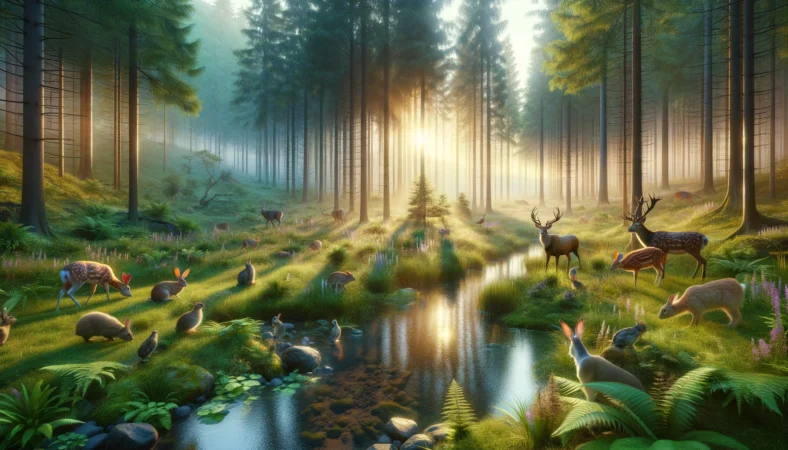
Forest hunting starts with identification, safety, and movement control. Before you hunt any animal in timber, confirm the season and species rules, know where other people may be, use the wind, move slowly, and only take shots with a safe background and a clear legal target.
Table of contents
Quick Forest Hunting Plan
Start with the map and the rulebook. Mark legal access, boundaries, trails, water, bedding cover, food sources, and safe exit routes. In the woods, move with the wind in mind, stop often, listen more than you walk, and avoid shooting through brush or at movement you cannot identify.
Pick one target species
Forest hunters may see deer, turkey, squirrels, rabbits, predators, and other wildlife on the same property. The rules are not the same for every animal. Decide what you are hunting before the trip and learn the legal season, method, limits, and identification details for that species.
Move less than you think
In thick timber, noise and motion travel farther than hunters expect. A slow step, a long pause, and a careful scan often work better than covering ground quickly. Use terrain, trunks, and shade to break up your outline.
Leave a clear recovery plan
Before any shot, think about where the animal may go, whether the background is safe, and whether you can legally recover it. Forest cover can hide sign quickly, so mark shot locations and last sightings carefully.
Rules and Species ID
Forest hunting rules vary by state, public-land unit, season, species, weapon, and method. The U.S. Forest Service has a useful hunting planning overview, but your state wildlife agency and land manager are the final sources for current rules.
Check the exact property
Do not assume every forest parcel follows the same rule. Some areas restrict bait, fires, vehicles, tree stands, night access, ammunition type, or hunting methods. Check the exact unit before you go.
Identify before aiming
Never shoot at sound, color, antler flash, wing movement, or a shape in brush. Confirm the animal, the legal status, and what is beyond it. Low light and thick cover make identification harder.
Know other-use pressure
Public forests may have hikers, dog walkers, horseback riders, mushroom hunters, timber workers, and other hunters. Wear required visibility clothing and avoid risky shots near trails, roads, camps, and boundaries.
Read Forest Habitat
Animals use forests for food, cover, travel, and bedding. Good hunting starts by learning which part of the forest serves which job.
Food sources
Look for acorns, browse, soft mast, crop edges, clear-cuts, berries, green shoots, and water. Food changes through the season, so old sign is not always current sign.
Cover and bedding
Thick cover, blowdowns, creek bends, young growth, cedar pockets, and south-facing slopes can all hold animals. Hunt near cover with care. Walking directly through bedding areas can damage the next sit.
Travel routes
Forest animals often use terrain to move safely. Watch saddles, benches, creek crossings, logging roads, fence gaps, and edges where open timber meets thick cover.
Wind, Noise, and Movement
Wind and noise shape forest hunts. Swirling wind, crunchy leaves, and close-range encounters make small mistakes easy to notice.
Use wind checks
Wind in timber can change with ridges, hollows, thermals, and weather shifts. Check it often. If the wind is carrying scent into the cover you plan to hunt, adjust the route or the setup.
Step with the forest
Move during light wind, falling leaves, distant noise, or natural sound. Stop when the woods go quiet. Avoid brushing against dry branches or letting gear scrape bark.
Pause to scan
After a short move, pause long enough for the woods to settle. Scan with your eyes before turning your head. Many animals are spotted after the hunter stops, not while walking.
Shot Safety in Timber
The National Shooting Sports Foundation’s firearm safety rules are a strong baseline for any firearm hunt. Bowhunters and crossbow hunters should apply the same target-identification and background discipline.
Do not shoot through brush
Branches can deflect arrows, bolts, and bullets. If the path is not clear, wait for a better lane. A blocked shot is not an ethical shot.
Know the background
Forest backgrounds can hide roads, houses, livestock, trails, and other hunters. Never take a skyline shot or a shot toward unknown cover.
Control close encounters
In timber, animals may appear at close range. Stay calm, confirm legality, and do not rush the shot just because the window is short.
Tracks, Sign, and Recovery
Forest sign can be rich but easy to misread. Fresh tracks, droppings, rubs, feathers, scratchings, beds, and trails all matter, but freshness and context matter more.
Separate fresh from old
A trail may look strong because animals used it last month. Check track edges, fresh droppings, disturbed leaves, and current food. Hunt current movement, not just old memories.
Mark sign during recovery
After a shot, mark the impact location and last sighting. Move from sign to sign. If the trail weakens, return to the last confirmed point instead of wandering.
Respect boundaries
If recovery crosses private land, follow your state rules and get permission where required. Plan for this before taking shots near property lines.
Simple Forest Hunting Gear
Forest gear should be quiet, legal, and easy to reach. Too much gear can slow movement and add noise.
Carry safety basics
Bring license, tags, map, compass or GPS, headlamp, first-aid kit, water, weather layer, and a way to communicate. For pack setup, see our guide on organizing your hunting backpack.
Quiet the pack
Wrap noisy tools, shorten loose straps, and keep metal items from touching. Test the pack at home by walking, kneeling, and shouldering or drawing safely.
Dress for visibility and weather
Follow blaze-orange or visibility rules for your season. Layer for sweat and cold stops. Wet clothing, wind, and long sits can turn a mild day uncomfortable.
Ethics and Low-Impact Habits
Good forest hunting leaves the land usable for wildlife, other hunters, and non-hunters. The Leave No Trace 7 Principles are useful for campsite, trash, trail, and access habits.
Pack out trash
Pick up spent shells, food wrappers, flagging where required, and broken gear. Leave the site cleaner than you found it.
Respect other users
Give other hunters room. Be courteous to hikers and land staff. A calm interaction protects access better than an argument at a trail or gate.
Use fair-chase judgment
Legal choices still need judgment. Avoid unsafe shots, respect wounded-game recovery, and do not treat wildlife as targets only. A good hunt includes restraint.
Common Mistakes
The most common forest hunting mistakes are simple: moving too fast, ignoring wind, shooting at poor lanes, and failing to check current rules.
Walking through the best cover
Do not scout or enter straight through bedding cover unless the plan calls for that risk. Use edges, terrain, and wind to protect the spot.
Trusting old sign
Old tracks and rubs can teach patterns, but current food and fresh movement decide today’s hunt. Check what changed since the last visit.
Forgetting the exit
A clean entry is only half the plan. Leave without crossing the main trail or bedding cover when possible, especially if you want to hunt the area again.
Related Guides
For first-season planning, start with our first-time hunting guide. For public access and pressure, read the public-land deer hunting guide. For shot and recovery decisions, see our guide to a suspected liver shot on a deer.
FAQ
What animals can you hunt in a forest?
It depends on the state, season, property, and license. Deer, turkey, squirrels, rabbits, predators, and other game may be legal in some forests and closed in others. Check current regulations before hunting.
How do you move quietly in the woods?
Take short steps, pause often, avoid dry branches, secure loose gear, and move when wind or natural sound covers noise. Slow movement usually beats fast movement.
Is forest hunting safe on public land?
It can be safe when hunters follow visibility rules, identify targets, know the background, avoid trails and roads, and respect other users. Never shoot at movement or sound.
Where should I look for animals in the forest?
Look near food, water, bedding cover, travel routes, edges, creek crossings, benches, saddles, and fresh sign. Current sign matters more than old sign.
Should I hunt from a stand or still-hunt?
Both can work. A stand is useful near predictable movement. Still-hunting can work when wind, noise, and visibility allow slow movement. Choose the method that fits the terrain and rules.