


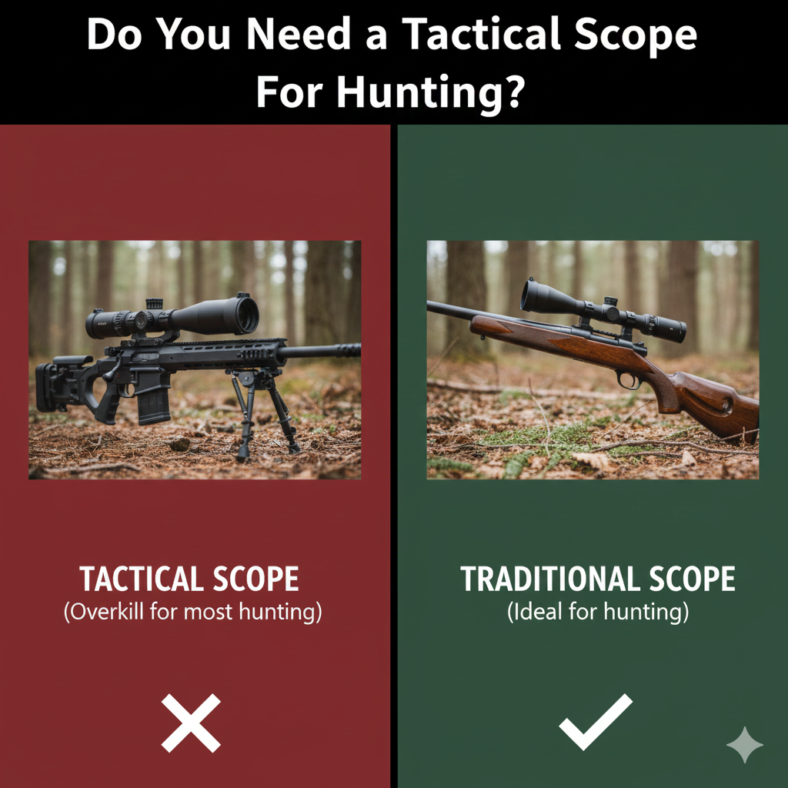
Most hunters do not need a tactical-style scope, but some scope features marketed under that label, such as exposed dialing turrets and detailed holdover reticles, can genuinely help a hunter who shoots at varied or longer known distances. The label matters less than the features. This guide reframes the question toward lawful hunting and walks through which heavier, more adjustable scope features earn their place in the field, which ones add weight and complexity you may never use, and how to match a scope to how you actually hunt.
Table of contents
- What Tactical-Style Scope Features Actually Are
- Exposed Turrets vs Capped Turrets for Hunting
- Reticles, Holdovers, and Dialing
- Weight, Tube Size, and Durability
- When Tactical-Style Features Help a Hunter
- When They Hurt More Than They Help
- Matching a Scope to Your Hunt
- Frequently Asked Questions
- Final Takeaway
What Tactical-Style Scope Features Actually Are
The phrase tactical-style scope usually describes a set of features rather than a single product type: exposed adjustment turrets you can dial by hand, a detailed reticle with holdover and ranging marks, a larger main tube, a wider elevation adjustment range, and rugged construction. None of these features is exclusive to any one use. They are simply tools, and each one has a clear tradeoff for a hunter who carries a rifle long distances and needs to make an ethical, well-placed shot.
Before comparing features, it helps to be clear about the goal in hunting: a clean, accurate, humane shot within your skill and equipment limits. The features below should be judged against that goal, not against marketing language. For broader firearm safety context, the NSSF firearm safety rules are a solid reference, and a hunter education course covers shot selection and field judgment.
Exposed Turrets vs Capped Turrets for Hunting
Exposed turrets let you dial elevation and windage adjustments by hand without removing a cap, which is useful if you regularly correct for distance by turning the turret to a known setting. Capped turrets cover the adjustments and protect them from accidental movement, which is why many traditional hunting scopes use them. The right choice depends on whether you dial or hold over.
The accidental-movement tradeoff
The main risk with exposed turrets in the field is bumping a turret while moving through brush or stowing the rifle, which can shift your zero without you noticing. Some exposed turrets include a locking feature or a zero stop that reduces this risk. If you choose an exposed-turret scope for hunting, look for a locking turret or develop a habit of checking your setting before a shot. That one habit can prevent a bumped turret from turning a good opportunity into a bad hit.
Reticles, Holdovers, and Dialing
A detailed reticle with holdover marks lets you aim above the center point for longer shots without touching a turret, which is fast and keeps both hands on the rifle. Dialing, by contrast, means turning the elevation turret to a calculated value so you can hold center. Both methods can work for hunting, and many hunters use a simple duplex reticle and a single zero for the ranges they actually shoot.
The key honest point is that more reticle detail and more adjustment options only help if you have practiced with them and know your rifle and load. A cluttered reticle you do not understand is slower than a simple one you do. No scope feature can promise accuracy on its own; placement comes from practice, a confirmed zero, and honest range estimation.
Weight, Tube Size, and Durability
Tactical-style scopes often use a larger 30mm or 34mm tube and heavier construction to support a wider adjustment range and rugged use. That durability is real, but so is the weight. A heavier scope on a rifle you carry for miles adds up, and for many hunters a lighter, simpler scope is the better all-day choice. Decide how much you value the wider adjustment range and toughness against the weight you will carry.
When Tactical-Style Features Help a Hunter
- You hunt open country where shots happen at varied, sometimes longer, known distances.
- You have practiced dialing or holding over and confirmed your come-ups at the range.
- You want a locking exposed turret and zero stop to dial confidently and return to zero.
- You value a wider elevation range for a flatter setup across distances.
When They Hurt More Than They Help
- You hunt thick cover or timber where shots are close and fast, where a simple reticle is quicker.
- You carry your rifle long distances and the extra weight is a burden.
- You have not practiced with turrets or a busy reticle, so the added complexity slows you down.
- Exposed turrets risk being bumped during your style of hunting and you have no locking feature.
Matching a Scope to Your Hunt
Start with your typical shot distance and terrain, then pick the simplest scope that covers it well. A hunter taking close shots in timber is well served by a low magnification scope with capped turrets and a simple reticle. A hunter making longer shots in open country may benefit from a holdover reticle or a locking dialing turret, provided they have practiced. Magnification matters too; for a primer, see our guide on rifle scope magnification for beginners. Whatever you choose, confirm your zero and practice before the season. If you cannot use the reticle or turrets calmly at the range, they do not belong in your hunting decision under pressure.
Frequently Asked Questions
Do you need a tactical scope for hunting?
Most hunters do not. A simple scope with a clear reticle and a confirmed zero covers typical hunting distances. Tactical-style features like exposed turrets or holdover reticles help only if you hunt varied or longer distances and have practiced with them.
Are exposed turrets a problem for hunting?
They can be, because a turret bumped in the field can shift your zero unnoticed. Choosing a scope with a locking turret or a zero stop, and checking your setting before a shot, reduces that risk.
Is dialing or holding over better for hunting?
Neither is universally better. Holding over keeps both hands on the rifle and is fast, while dialing lets you hold center at known distances. Use whichever you have practiced and trust, and confirm your data at the range first. Write down your zero, common distances, and any turret or holdover references so you are not trying to remember them when an animal is in front of you.
Does a heavier tactical-style scope improve accuracy?
No scope guarantees accuracy. A rugged scope holds zero well and offers more adjustment, but shot placement comes from practice, a confirmed zero, and honest range estimation. The extra weight is a real tradeoff for hunters who carry far.
Final Takeaway
You do not need a tactical-style scope to hunt well. Judge the individual features, exposed turrets, detailed reticles, larger tubes, against your terrain, your typical shot distance, and the practice you have actually put in. Many hunters are best served by a lighter, simpler scope with a confirmed zero, while open-country hunters who have trained with dialing or holdovers may benefit from those features. Confirm any equipment rules with your state wildlife agency and take a hunter education course to sharpen shot selection.