


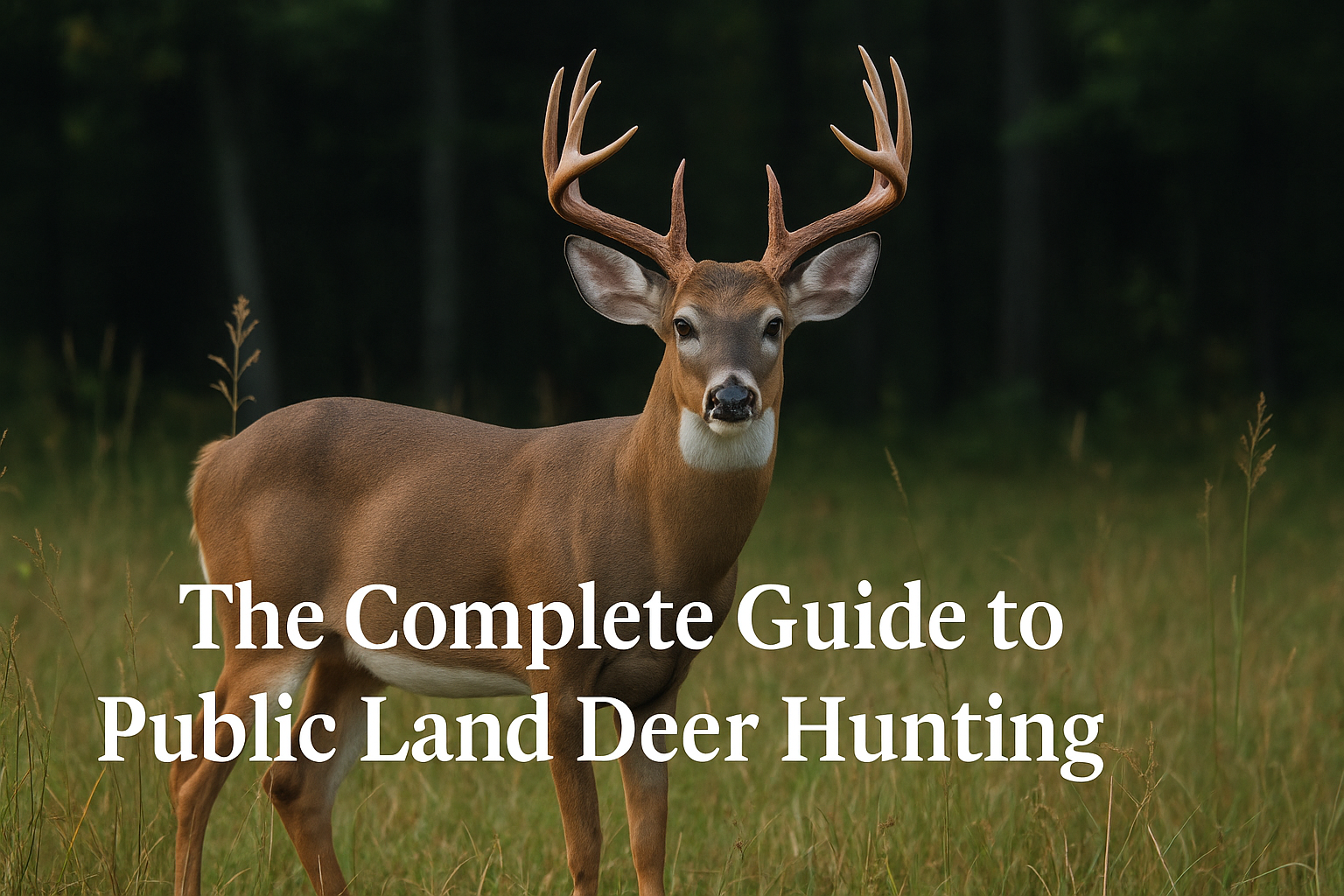
Public land deer hunting can be one of the most rewarding ways to hunt because access is open, the ground is shared, and success depends on preparation more than permission. It can also be frustrating if you treat public land like private land. The best public-land hunters scout more, walk farther when needed, study pressure, follow regulations closely, and keep backup plans ready.
The short version: find legal hunting land, confirm the rules for that exact property, scout deer sign and hunter access points, choose stand locations based on wind and pressure, and hunt with a safety-first plan. Public land is not about secret tricks. It is about doing the basics carefully in places where other hunters may be doing the obvious things.
Table of contents
Quick Answer
To hunt public-land deer well, start by confirming that the property is open to deer hunting during your season. Then identify access points, parking areas, terrain funnels, bedding cover, food sources, water, and escape routes. Scout more than one area so you are not locked into one spot when wind, pressure, or other hunters change the plan.
A good public-land setup usually balances deer movement with low human pressure. The easiest trail from the parking lot is rarely the best spot. Look for overlooked pockets, hard-to-reach edges, thick cover near food, terrain breaks, creek crossings, saddles, benches, and downwind access routes that let you enter without alerting deer.
What Public Land Means
Public land includes property owned or managed by federal, state, county, or local agencies. Some land is open to hunting with a normal state license. Other land may require a special permit, lottery draw, refuge-specific rules, check-in process, weapon restriction, or seasonal closure. Never assume that one public property has the same rules as another.
Common Public-Land Types
Hunters may encounter national forests, Bureau of Land Management land, wildlife management areas, state forests, state game lands, waterfowl production areas, national wildlife refuges, and county or municipal properties. The Bureau of Land Management hunting page and U.S. Forest Service hunting guidance are useful starting points for understanding federal-land access, but your state wildlife agency rules still control seasons, tags, and legal methods.
Why Public Land Hunts Differ
Public land adds one variable private-land hunters may not face as often: other people. Deer react to pressure from parking areas, trails, roads, food plots, popular ridges, and obvious stand trees. That does not mean you must always hike miles. Sometimes the best spot is an overlooked corner close to access that most hunters walk past. The key is to understand how people move and how deer avoid them.
Rules, Access, and Permits
Before scouting, verify the rules for the exact property. Check the state hunting regulation booklet, agency map, property signboard, and any special area page. Pay attention to open dates, weapon restrictions, blaze-orange rules, antler rules, check-in requirements, baiting rules, stand placement rules, camping restrictions, motorized access, and whether the property allows Sunday hunting if that matters in your state.
Confirm Boundaries
Public-land boundaries can be confusing, especially near private parcels, timber leases, utility corridors, and water access. Use official maps whenever possible, and cross-check with current property signs. Mapping apps are helpful, but they should not replace agency rules or posted boundaries. If a boundary is unclear, treat it conservatively until you can verify it.
Have Backup Properties
Public areas can fill quickly on opening weekend, during the rut, or after a fresh cold front. Build a list of backup locations before the season. A simple three-level plan works well: primary property, nearby backup property, and small overlooked property for crowded days. For broader trip planning, see our guide to hunting trip planning for beginners.
Digital Scouting
Digital scouting helps you eliminate poor spots before spending time in the woods. Start with access points, parking lots, roads, trails, creeks, ridges, field edges, recent timber cuts, bedding cover, and terrain funnels. Mark several potential stand locations, then study wind direction and entry routes before visiting.
Look for Terrain That Guides Movement
Deer often use terrain that offers security and efficient travel. Saddles, benches, creek crossings, inside corners, ridge points, drainage heads, and narrow strips of cover can all concentrate movement. On flat public land, focus more on vegetation edges, bedding cover, food transitions, water, and subtle elevation changes.
Map Hunter Pressure Too
Mark likely human routes just like you mark deer routes. Parking lots, easy trails, obvious field corners, old logging roads, and scenic overlooks can all collect pressure. Deer may shift to thicker cover, steeper terrain, or odd travel routes after pressure increases. This is where public-land scouting becomes a businesslike process: predict where people go, then predict how deer adjust.
Boots-On-Ground Scouting
Digital maps are only the first pass. Walk the property when legal and appropriate, ideally outside peak hunting hours or during the off-season. Confirm whether the promising map spot actually has deer sign, safe shooting lanes, legal access, and a realistic route in and out.
Scout Entry and Exit Routes
A stand location is only useful if you can reach it without ruining it. Look for quiet entry routes that use terrain, wind, water, or cover to hide your approach. A great-looking spot that requires walking through bedding cover every morning may educate deer before you ever climb into position.
Keep Notes
Track what you see: rubs, scrapes, trails, beds, droppings, tracks, acorns, browse, food sources, water, hunter sign, and wind behavior. Photos and short notes can save time later. If you keep a hunting journal, record the date, weather, wind, pressure, and deer movement so patterns become easier to see over multiple trips.
Deer Sign to Prioritize
Not all deer sign deserves the same attention. A huge rub beside a popular trail may be less useful than a faint trail between bedding cover and a secluded food source. Focus on sign that matches current season, fresh use, and huntable wind.
Fresh Tracks and Trails
Fresh tracks in mud, snow, or soft soil can tell you recent travel direction and size range. Trails are useful when they connect bedding, food, water, or terrain features. On pressured land, the best trail may be less obvious and closer to thick cover than the wide trail everyone notices.
Rubs, Scrapes, Food, and Bedding
Rubs and scrapes can help during pre-rut and rut, but they should be read with context. Food and bedding often matter more across the full season. Acorns, crop edges, browse, clear-cuts, and late-season food sources can shift deer movement quickly. During the rut, combine sign with terrain and doe movement; our article on hunting the rut covers that seasonal shift in more detail.
How to Hunt Around Pressure
Public-land pressure is not always bad. Other hunters can push deer into secure cover, secondary trails, and overlooked pockets. The mistake is pretending pressure does not exist. Pay attention to where trucks park, where boot tracks go, where stands appear, and when people enter or leave.
Hunt Overlooked Places
Small parcels, noisy access points, awkward corners, steep slopes, wet crossings, thick cover, and spots close to roads can all be overlooked. Many hunters assume they must hike far. Sometimes that is true. Other times, the best deer movement is in a place people dismiss because it does not look perfect on a map.
Adjust Timing
Pressure often changes deer movement after opening morning. Midday sits can be valuable when other hunters leave the woods. Evening hunts can work near food or transition cover if your exit route is clean. During the rut, all-day sits near funnels, doe bedding edges, and downwind travel routes may be worth the patience.
Stand and Ground Setup
Choose a setup that matches the property rules and your safety plan. Some areas allow portable tree stands, saddle setups, or ground blinds. Others restrict screw-in steps, cutting lanes, leaving stands overnight, or marking trees. Read the rules first, then keep your setup simple and mobile.
Tree Stand and Saddle Safety
If you hunt elevated, use a full-body harness and follow the stand manufacturer’s instructions. Inspect straps, platforms, ropes, and steps before each hunt. Public-land trees may look suitable from the ground but be unsafe when you climb. Dead trees, loose bark, hidden rot, and poor angles are not worth the risk.
Ground Setups
Ground setups can be very effective on public land because they are quiet, flexible, and less gear-heavy. Use natural cover, stay downwind, break up your outline, and clear only what is legal and necessary. A small stool or pad can make long sits more realistic. For ethics and shot discipline, review our guide to ethical hunting practices.
Public-Land Deer Hunting Gear
Public-land gear should help you move quietly, stay safe, and adapt. You do not need the most expensive setup, but you do need reliable basics: license and permits, legal weapon, safety harness if elevated, navigation, headlamp, knife, first-aid basics, water, weather-appropriate clothing, rangefinder if useful, drag or pack-out plan, and a way to contact help.
Pack Light but Complete
Heavy packs slow you down and make noise. Too little gear creates safety problems. Build your pack around the hunt length, weather, distance from the truck, and recovery plan. If you are new, our beginner outdoor shooting range equipment guide can help with basic safety gear habits, though hunting adds navigation, weather, and recovery needs.
Plan for Recovery
Before the shot, think through what happens after the shot. Know your tracking plan, tagging rules, local reporting requirements, and how you will move the deer legally and safely. In warm weather, recovery speed and meat care matter. In remote spots, a pack-out plan may be better than dragging over rough ground.
Safety and Ethics
Public land requires extra awareness because other hunters, hikers, dog walkers, horseback riders, or land managers may be present. Identify your target and what is beyond it. Wear required blaze orange. Avoid unsafe shot angles, skyline shots, and shots toward trails, roads, buildings, or unknown movement.
Respect Other Users
If another hunter is already set up, give space. Do not walk through someone’s active setup if you can reasonably avoid it. If a parking area is full, use a backup plan instead of forcing the same spot. Public land belongs to everyone, and the best hunters protect that access through good behavior.
Leave the Land Better
Pack out trash, follow stand removal rules, avoid unnecessary cutting, and report major violations through proper channels. Ethical public-land hunting protects future opportunity. The goal is not just to fill a tag; it is to keep public access respected and sustainable.
FAQ
Is public-land deer hunting harder than private-land hunting?
Public-land deer hunting can be harder because access is shared and deer may react to more human pressure. It can also be very productive if you scout well, understand pressure, and build multiple backup plans.
How far should I walk on public land?
Walk as far as the sign and pressure tell you to walk. Some good spots are deep. Others are overlooked pockets near access. Distance alone does not make a spot good; deer sign, wind, safety, and pressure matter more.
Can I leave a tree stand on public land?
It depends on the property rules. Some public lands allow stands to be left for a limited time with owner identification. Others require removal each day or prohibit certain equipment. Always check the exact agency rules before leaving gear.
What is the best time to hunt public land?
Opening days, cold fronts, rut periods, and late-season food patterns can all be productive. Midday can also be useful on pressured public land because other hunters may move deer when they enter or leave.
Do I need special permits for public-land deer hunting?
Sometimes. A normal hunting license may be enough on some properties, while refuges, military lands, quota hunts, and certain state areas may require special permits, drawings, or check-in steps. Verify before you hunt.
Final Thoughts
Public land deer hunting rewards hunters who prepare carefully and adapt without cutting corners. Confirm the rules, scout both deer movement and human pressure, choose safe setups, and keep backup plans ready. When you treat public land with respect and hunt it with patience, it can become one of the most valuable hunting opportunities available.