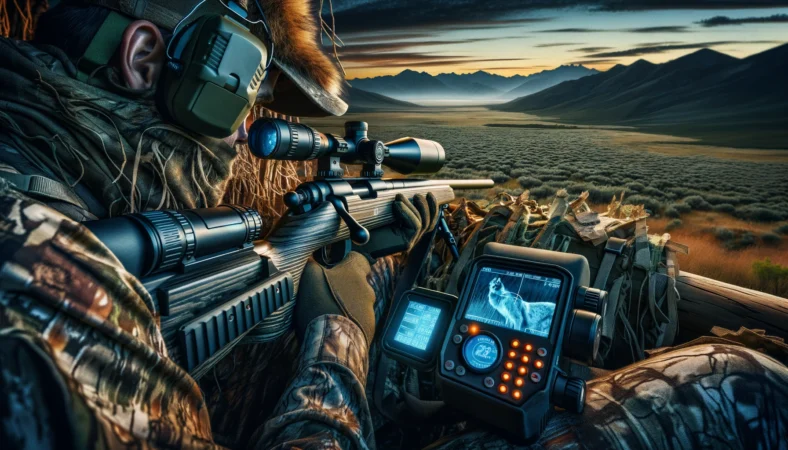

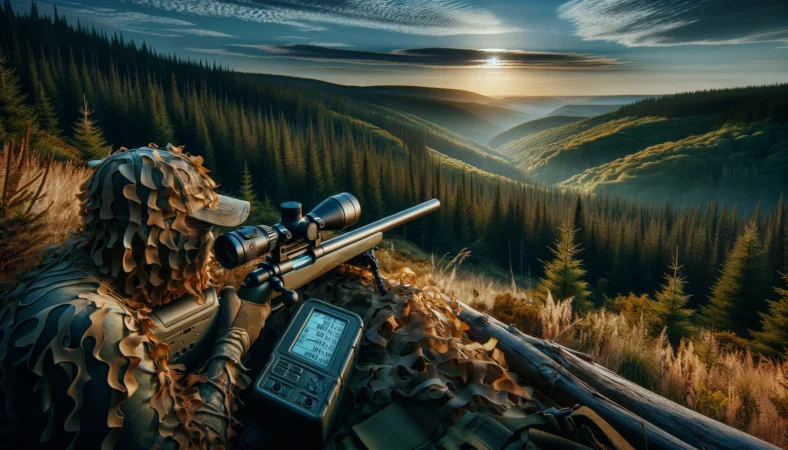
Predator hunting works best when the setup is simple, legal, and built around wind, cover, sound, and safe shot decisions. The goal is not to call louder or move more. It is to pick a stand that lets you see likely approach routes, keep your scent out of the animal’s path, and leave yourself a clear, ethical shot only when the target and background are certain.
Table of contents
Quick Setup Plan
For most predator stands, start downwind or crosswind of the cover you expect animals to use. Sit with shade or cover behind you, keep the caller away from your body if using one, watch the downwind side, and stop the stand if you cannot identify the animal or the background. This approach keeps the setup practical and keeps safety ahead of excitement.
Pick one job for each stand
Before you sit down, decide what the stand is meant to do. You may be calling a brushy creek bottom, watching a field edge, covering a pasture draw, or checking a travel route between bedding and feeding cover. A stand with one clear job is easier to hunt than a stand trying to cover every direction at once.
Expect predators to use cover
Coyotes, foxes, and bobcats often approach with cover, terrain breaks, shadows, or wind in their favor. Do not focus only on the most open lane. Watch edges, low spots, brush fingers, old roads, creek crossings, and the downwind side where an animal may try to check the sound before stepping into the open.
Keep the first stand simple
If you are repairing your strategy after poor results, simplify the next hunt. Use one calling sequence, one wind plan, one exit route, and one clear shooting lane. Too many sounds, too much movement, and too much gear often create more problems than they solve.
Rules and Ethics First
Predator hunting rules vary by state, season, land type, species, firearm, night-hunting method, electronic caller use, lights, suppressors, and bait. Always check your state wildlife agency and the land manager before the hunt. If you hunt public land, the U.S. Fish and Wildlife Service explains that hunting access and rules can vary across refuges and units on its National Wildlife Refuge hunting page.
Confirm species, season, and method
Do not assume every predator is open year-round or that every method is legal. Coyotes may be treated differently from bobcats, foxes, raccoons, or other furbearers. Night hunting, thermal devices, electronic calls, and centerfire rifles can also have separate rules. The safe habit is to check the current regulation before each season and again before traveling to a new state.
Use fair-chase judgment
Legal does not always mean wise. Keep fair-chase ethics in the decision. The Boone and Crockett Club’s Fair Chase Statement is a useful reminder that the hunt should give wild animals a real chance to avoid the hunter and should respect the land, the animal, and other people nearby.
Respect landowners and other hunters
Predator calling can carry across property lines. Know where you are allowed to hunt, where neighboring homes and livestock are located, and where other hunters may be set up. If a stand creates pressure near a boundary, road, house, barn, or trail, choose a different stand.
Wind and Stand Choice
Wind is the main planning tool. A good call sequence can fail quickly if your scent blows into the exact route a predator wants to use. Instead of fighting the wind, set the stand so the animal can approach naturally while you still watch the downwind side.
Use crosswind when possible
A crosswind setup often gives the best balance. The sound pulls from one direction, the animal tries to get scent from another, and you watch the likely downwind approach. It does not promise a shot, but it gives you a better view of the route an animal may choose.
Keep cover behind you
Sit with brush, a tree line, a fence row, a hay bale, or a slope behind you when possible. A clean backdrop breaks up your outline. Avoid sitting on a skyline or in bright open ground where small movements are easy to spot.
Plan the exit before calling
Predators can be close before you see them. Walk in quietly, close gates, avoid shining lights where they are not legal or safe, and leave by a route that does not spread scent through the cover you want to hunt next time. A noisy exit can burn a useful stand for later hunts.
Calling Plan
Calling should match the place, pressure, and season. Loud, constant sound is not always better. Many stands work best with a short opening sequence, a quiet pause, then a second sound or lower-volume repeat if nothing shows.
Start with the volume that fits the cover
In tight brush, start softer. A loud first sound can startle an animal that is already close. In open country or wind, more volume may be needed, but it should still sound natural for the distance. If you use an electronic caller, place it where the animal’s attention goes away from your body.
Give the stand time
Some coyotes come fast. Bobcats and foxes may take longer and use cover more carefully. If the area has pressure, animals may circle, pause, or hold up. Do not stand up the moment the first few minutes are quiet. Stay still and keep scanning before ending the set.
Change sounds with a reason
Switching sounds every minute can make the stand feel busy and unnatural. Change sounds when the first approach has had time to work, when you need to reach a different distance, or when the season suggests a different trigger. Keep notes on which sounds worked in which cover and weather.
Decoys and Movement
A decoy can help focus attention away from the hunter, but it can also add motion, setup time, scent, and one more thing to carry. Use it only when it helps the stand.
Place movement away from your body
If you use a motion decoy, place it near the caller and away from your seated position. The goal is to pull eyes toward the sound and movement, not toward your hands, face, or rifle. Keep the decoy low enough that it does not create unsafe shooting angles.
Skip decoys in tight or risky setups
In thick cover, near roads, near livestock, or near property boundaries, a decoy may not help. It may also bring attention to a spot where you do not have a safe lane. If the setup already has enough cover and natural movement, simple can be better.
Control your own movement
Predators see small changes. Keep your hands low, adjust the rifle or shotgun before starting the stand, and turn your head slowly. If you need to move, wait until the animal is blocked by cover or looking away.
Shot Safety and Target ID
Safety decides whether a shot should happen. The National Shooting Sports Foundation’s firearm safety rules are a good baseline: know your target, what is beyond it, and keep the muzzle pointed in a safe direction at all times.
Identify the animal fully
Do not shoot at movement, eyes, sound, or a shape in brush. Confirm the species and make sure it is legal to take. This matters even more near homes, farms, public land boundaries, and areas where dogs may be present.
Check the background
A predator may stop on a ridge, road edge, frozen pond, field entrance, or skyline. If the background is not safe, pass the shot. A missed opportunity is better than an unsafe shot.
Choose realistic lanes
Before calling, mark the lanes where you would actually shoot. Brush, fences, rocks, livestock, roads, and buildings can remove lanes that looked good from a distance. If the safe lanes are too narrow, move to a better stand.
Adjust by Season and Pressure
Predator behavior changes with food, breeding, weather, human pressure, and local prey movement. A stand that works in one month may be poor later in the year.
Early season
Young predators and lower hunting pressure can make early season more responsive. Keep stands clean and avoid overcalling one property. If you educate animals early, later hunts may become harder.
Cold weather
Cold weather can make food needs more important, but it can also make sound carry farther and expose noise from clothing and gear. Pack warmer layers, watch wind chill, and keep gloves thin enough to handle equipment safely.
Pressured areas
In pressured areas, animals may avoid common parking spots, obvious field edges, and loud call sequences. Try quieter entries, less-used wind angles, and stands that cover escape routes rather than only open feeding areas.
Gear Organization
Predator hunting gear should help you stay still and safe. Carry less than you think you need, but keep the right items easy to reach.
Carry the safety basics
Bring your license, required permits, headlamp if legal and needed, first-aid kit, navigation, communication device, and weather layer. If you hunt at night where legal, double-check light, visibility, and land-access rules before leaving home.
Keep the caller setup tidy
Loose remotes, extra batteries, cords, and decoys can create noise when you need to be still. Use one pouch for caller items and check batteries before walking in. If the caller fails, be ready to finish the stand quietly or use a mouth call if legal and safe.
Link the pack plan to the hunt
If your pack is hard to use, the stand becomes harder to hunt. For a better field layout, see our guide on how to organize your hunting backpack. New hunters can also review the first-time hunting guide before building a plan.
Common Mistakes
Predator stands fail for many reasons, but the same problems show up often: poor wind, too much movement, weak target ID, and stands placed where the animal has no safe approach route.
Calling from the wrong wind
If the wind carries your scent into the cover you expect animals to use, the stand is already weak. Move, wait for a better wind, or choose another property. Wind discipline matters more than a favorite calling spot.
Leaving too soon
Fast responses happen, but not every predator runs straight to the sound. Scan slowly before standing up. Many animals are spotted at the edge of cover after the hunter thinks the stand is over.
Using success language too freely
No tactic makes a predator show up on command. Weather, pressure, food, breeding behavior, human activity, and land access all matter. Write notes after each hunt and improve the next stand instead of chasing one magic trick.
Related Guides
For more field planning, read our guide to coyote hunting and prey strategies. If you hunt mixed public land or shared access, our public-land hunting guide has useful access and pressure reminders. For broader seasonal planning, start with deer hunting tips for beginners and adapt the scouting habits to your local predator rules.
FAQ
What is the most important part of a predator hunting setup?
Wind and safe visibility are usually the first two checks. A good stand lets you watch likely approach routes without sending scent into the cover and without creating unsafe shooting angles.
How long should I stay on a predator stand?
It depends on the species, cover, and pressure. Coyotes may respond quickly, while bobcats and cautious predators may take longer. Stay long enough to scan carefully before standing up, especially in brushy areas.
Are electronic calls legal for predator hunting?
Electronic caller rules vary by state, species, season, and land type. Check your current state wildlife regulations before using one, especially for bobcats, foxes, night hunting, and public land.
Should I always use a decoy?
No. A decoy can help in open setups, but it can be unnecessary in tight cover or unsafe near roads, livestock, or property lines. Use one only when it improves the stand.
How do I avoid unsafe shots while predator hunting?
Identify the animal fully, know what is behind it, and decide your safe lanes before calling. Never shoot at sound, eyes, movement, or a shape you cannot confirm.